Monthly Archives: October 2014

Walking in the Shoes of Democracy

When I returned from Greece this summer I noticed that my running shoes were very dusty.  Well, that’s an understatement.  They were no longer even white. I kept thinking I should wash them, but I simply couldn’t.  The last place we visited in Greece was the ancient Agora in Athens.   I spent the entire day in awe.  This was where the most influential political and philosophical minds of western civilization  waked, talked and puzzled.  The dirt on my shoes was from the same pathways and roads on which Aristotle, Plato and Socrates paced and argued. It was speculated that Aesop visited Athens and told his most famous fable, The Frogs who Desired a King, in this same Agora to  dissuade the citizens from attempting to depose Peisistratus for another ruler.   My shoes were coated with the dust of democracy!   Who was I to wash it away?  So left them dirty.

That is, until a friend of mine commented on how dirty my shoes were.  At that point I  finally relented and talked myself into washing them.  Into the washing machine they went.  But they came out just as dirty as they went in.  So I washed them again.  Still no change.  It became a challenge.  I took bleach and a toothbrush to them.  They remained a dull grey. Forever altered.  Baffled, I left my shoes to dry in the sun and like any good philosopher, contemplated my  dilemma.   Then it dawned on me.  The dust of democracy was embedded.  Democracy could not be washed away from my shoes any easier than it could from my consciousness.  For me, democracy is an honorable a way of life.    My shoes were a living representation of this precious philosophical and political stance.

As you may have guessed, I have stopped trying to clean my shoes.  I’ve decided they are perfect just the way they are.

agora 2957

Happiness and Teaching – Insights from Dewey

In earlier postings, I (Clive) talked about the need to see teaching and teacher education in very broad terms; to see ourselves as ultimately helping students develop a satisfying, enjoyable or “happy” way of life. This week I came across some wonderful quotes from John Dewey along these lines.

The first is from Democracy and Education (Macmillan, 1916); it emphasizes that we can’t separate our philosophy or theory of education from our philosophy of life.

“[P]hilosophy is at once an explicit formulation of the various interests of life and a propounding of points of view and methods through which a better balance of interests may be effected. Since education is the process through which the needed transformation may be accomplished…philosophy is the theory of education as deliberately conducted in practice” (p. 387).

Two further quotes are from Theory of the Moral Life (Holt, Rinehart & Winston, 1960, orig. 1908, revised 1932). They emphasize again the need for a comprehensive philosophy of life and education, and show the connection between this philosophy and human enjoyment, satisfaction, happiness.

“In isolation, one enjoyment cannot be said to be higher or lower than another…a satisfaction which is seen, by reflection based on large experience, to unify in a harmonious way [one’s] whole system of desires is higher in quality than a good which is such only in relation to a particular want in isolation [satisfactions of the former type together constitute “happiness”] (p. 44). … The office of reflection [is] the formation of a judgment of value in which particular satisfactions are placed as integral parts of conduct as a consistent harmonious whole” (p. 60).

Dewey notes, however, that our philosophy of life and education is never complete: it is always a work in progress.

“The business of reflection in determining the true good cannot be done once for all…. It needs to be done over and over and over again, in terms of the conditions and concrete situations as they arise” (p. 62).

I’m going to share these quotes with my students next week and see what they think – and learn from them. My philosophy of life and education is never complete!


What’s Up at the Public Library?

The other day, Natasha a student teacher in the literacy methods course mentioned the Dial a Story program offered by the Toronto Public Library system. Her recommendation reminded us to stay in touch with the wonderful outreach programs offered by public libraries. Dial A Story is a free service that provides stories for younger children (7 and under) and for older children (up to 12) twenty-four hours a day.  Stories rotate on a daily basis and are currently available in 15 languages including: French, English, Cantonese, Gujarati, Italian, Korean, Mandarin, Polish, Portuguese, Russian, Somali, Spanish, Tamil, Tagalog, and Urdu. Occasionally, Dial A Story features special guest readers such as Toronto Blue Jays baseball players and dancers from the National Ballet of Canada.  A big thank-you to Natasha for reminding to check out the many resources our public libraries have to offer!

http://www.torontopubliclibrary.ca/services/dial-a-story.jsp

phone1phone2

The Homework Debate

homework

As a  middle-school teacher, the issue of assigning homework was something I always grappled with. I often wondered:  When assigning homework, were my students really making the connections they were meant to be? Was the homework only helping the stronger students? Was the homework meaningful to the student’s learning? Was it at the appropriate level for them to complete independently? Was it fair to assign homework when I knew many of my students had other familial responsibilities? Would my class not be considered rigorous if I didn’t assign homework?

Alberta high school math teacher, David Martin, has grappling with some of the same issues. He feels homework seems to “buoy the strong and discourage the weak.” So, he has recently stopped assigning homework altogether.

An excerpt from the article presents common arguments for each side of the debate:

The news reinvigorated a debate about the value of homework — a conversation that has bubbled up and receded over the past five to seven years, gaining converts along the way. Even still, the issue remains divisive, with some parents campaigning hard for a homework-free experience that would give them their life back — and others worried about their children falling behind or failing to learn the discipline and time management required in high school and beyond. As one Collège de Saint-Ambroise parent said, “I’ll see how the year goes, but I’m very afraid. Homework is a way for us parents to evaluate whether things are going well, and to guide us in helping and supporting them.”

 What are your thoughts on assigning homework?

 Link to the full article:

http://news.nationalpost.com/2014/09/05/no-more-homework-growing-movement-especially-early-on-to-ban-after-school-assignments/

Literacy learning through music: A method of inspiration

All weekend I (Yiola) have experienced spontaneous musical encounters. Take for example sitting next to a 16 person chorus who spontaneously serenades my friends and me while dining at a local tex/mex restaurant. Or listening to my children sing Old Macdonald Had a Farm in the back seat of the car. These moments of ‘musical interlude’ have left me feeling inspired and intrigued about the power of music on the psyche, the emotions, and on teaching literacy.

A quick search online led me to several interesting and research-based articles on literacy learning through music. I will share these links with my student teachers. In my course we explore music education: music as a subject, music curriculum, music pedagogy, music integration. The links below add an exceptional layer of consideration for teaching music and literacy.

Click to access placing_music_en.pdf

Click to access impact_of_music_on_literacy.pdf

http://oneotareadingjournal.com/2012/learning-literacy-through-music/

Not only do research findings support literacy development through music, we also know that music, like an incredible book, touches the soul and ignites emotion. Brain development AND inspiration. A likely combination for student achievement.

I conclude this post with a brief video of another spontaneous musical encounter; this one between a 19 year old student and Billy Joel. I share this link not only for the music but for the power of relationship between student (confident, risk-taker) and expert (open, trusting, willing to explore possibilities). The music AND the experience gave me goosebumps. “That’s Michael Pollock. Remember that name”, says the teacher…

http://www.wimp.com/bravestudent/

Presenting with a Sense of Humor

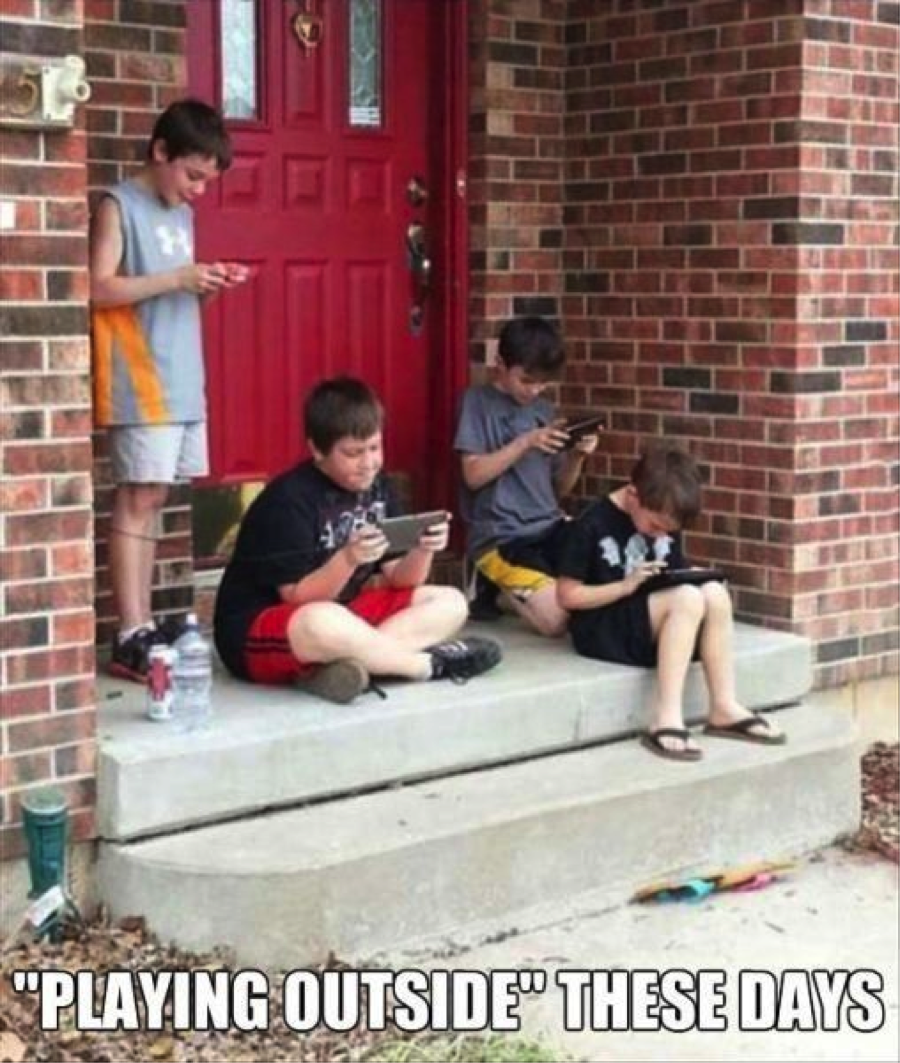
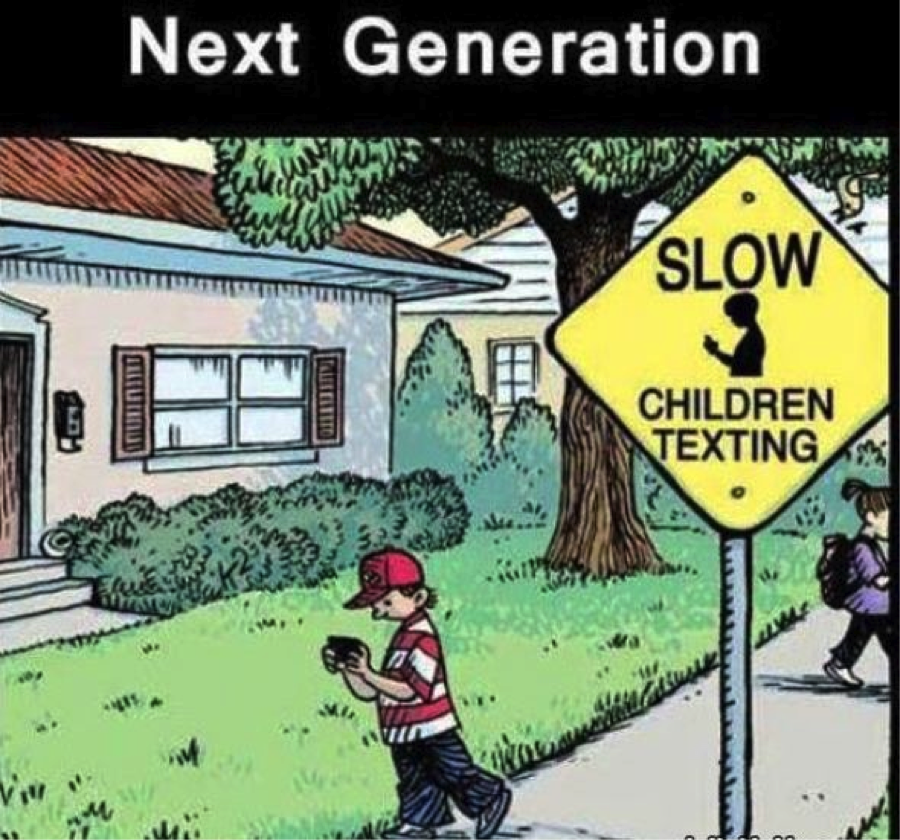
Amidst the  growing concern that students of this era are loosing their ability to personally communicate due to too much texting and gaming, here is proof they are at least, not loosing their sense of humor.  In this school talent show, eight grade five boys surprised and delighted their peers,  teachers and parents with a well choreographed, synchronized swimming routine- without the water.

http://www.frequency.com/video/these-kids-performed-synchronised/165638623

I love social media for moments just like this!


Stephen King on Teaching Writing

In an interview with the Atlantic Stephen King discussed his time as a high school English teacher. As a teacher of writing King recalled, “it went best for me when I could communicate my own enthusiasm. I can remember teaching Dracula to sophomores and practically screaming, ‘Look at all the different voices in this book! Stoker’s a ventriloquist! I love that!’ I don’t have much use for teachers who “perform,” like they’re onstage, but kids respond to enthusiasm. You can’t command a kid to have fun, but you can make the classroom a place that feels safe, where interesting things happen.” The link to the article is provided below:

http://m.theatlantic.com/education/archive/2014/09/writing-secrets-with-stephen-king/379870/