I (Pooja) have just returned from an extraordinary two days at the Rishi Valley School in India.There is simply too much for one blog post, so I will share my experiences over a few blog posts. In this blog, I will focus on the principles which guide the school along with a photos of the campus.
The alternative school is guided by principles of holistic education which aim for the growth of student’s intellectual, emotional, physical, artistic, creative, and spiritual potential. The educational philosophies of the Rishi Valley School include:
- To educate students so that they are able to explore both the world and their inner being
- To inculcate a love for nature and respect for all forms of life
- To create an atmosphere of affection, order and freedom without either fear or license
- Not to condition the students in any particular belief, either religious, political or social, so that their minds may remain free to ask fundamental questions, enquire and learn. (http://www.rishivalley.org/school/aims.htm)
The philosopher Jiddu Krishnamurti established the Rishi Valley School in 1962. There are now Krishnamuti schools across India and the world, but this was the first educational site. The school is located “in a sheltered valley in the interior of rural Andhra Pradesh…about 140 km north-east of Bangalore.” (http://www.rishivalley.org/school/aims.htm) When we first arrived we met with the school principal. He listened to us attentively, and when he spoke it was softly and always with purpose. He said something in that meeting that has stuck with me. He said that although the teachers differed in teaching approach, the important quality was that they approached their teaching from a place of care and love. By walking around the campus, speaking with teachers and students, and observing classes I witnessed this in so many ways. For example, each morning the students gather in an open-air auditorium for an assembly. My experiences with assemblies have usually included announcements, performances, or guest speakers. At the Rishi Valley school, the assembly is dedicated to singing. The students and faculty gather in a circle and sing for half an hour. At the end of the school day, after dinner, we gathered in the auditorium again to watch an absorbing documentary on particle physics called Particle Fever.
The following are a few photos of the campus and school activities. I believe they speak volumes about the principles from which the Rishi Valley School runs.
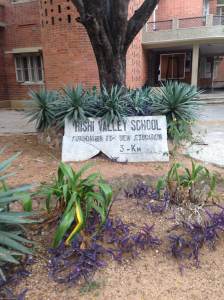
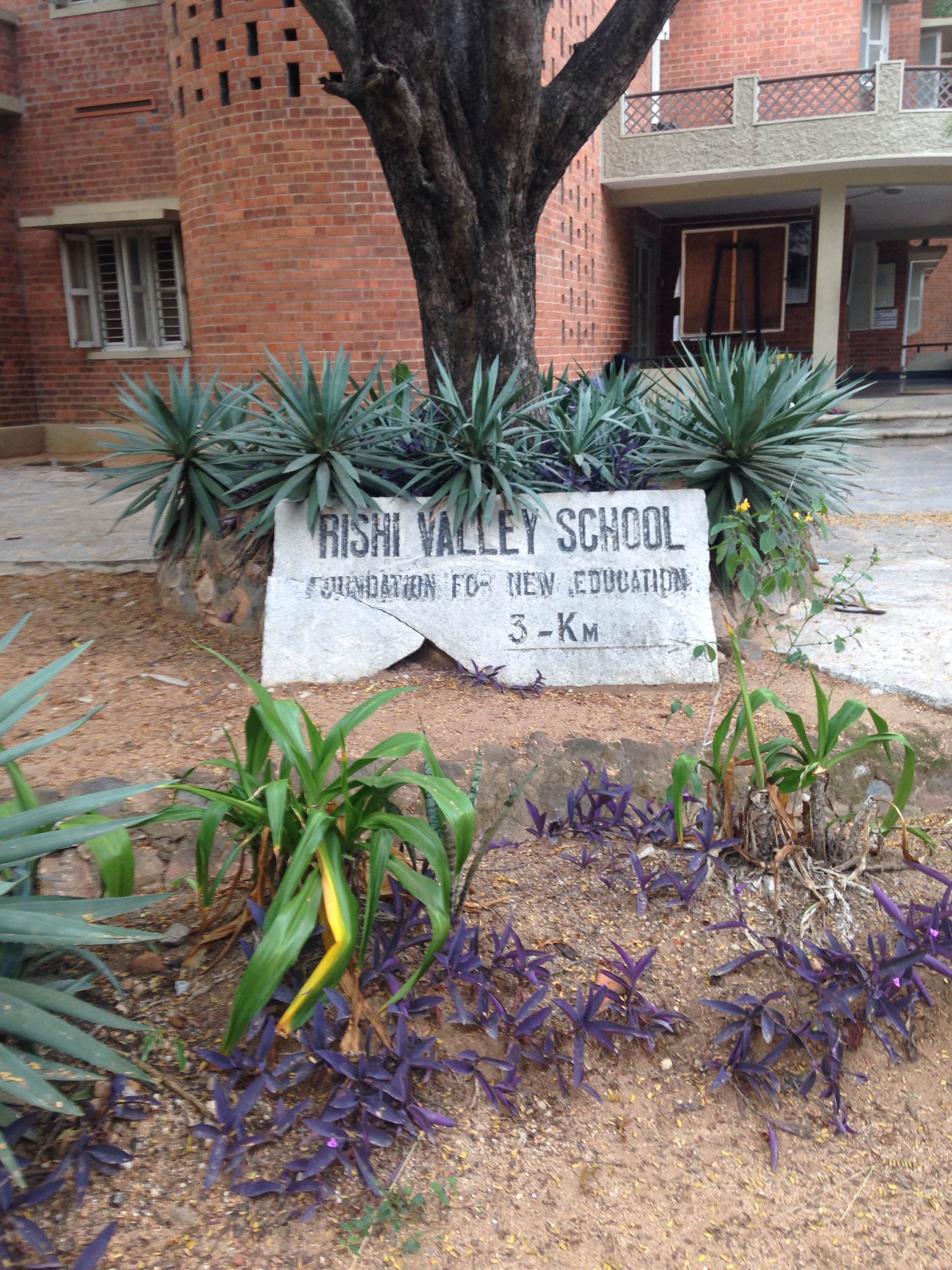
The Rishi Valley School is a boarding school serving student from grade 4-12. There are approximately 325 students and 60 faculty members who live on campus.
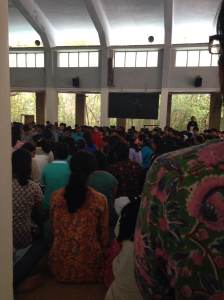
The morning all-school assembly. Students and faculty are seated on the ground.
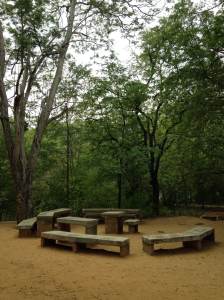
One of the many outdoor classrooms. My friend, a spoken-word artist, had the opportunity to facilitate a class here (More about that in the next blog!).

The student art gallery. It was common to see students around the campus working on their art; fine art, poetry, and music permeated the student culture.

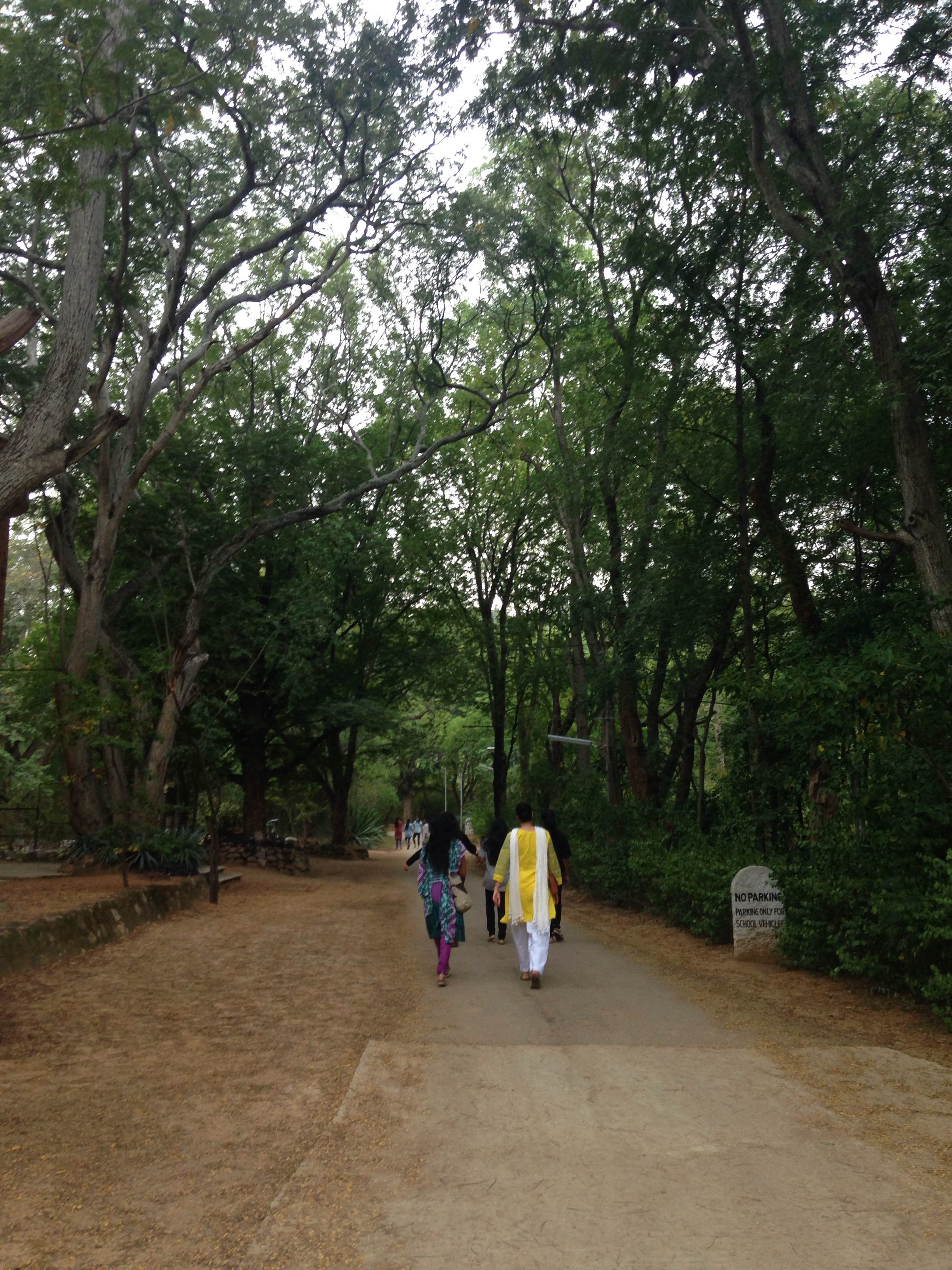
Walking to class is a meditative experience. The campus is spacious, situated on approximately 360 acres of land. There have been over 200 species of birds identified, with the Indian Government officially declaring the school a bird sanctuary.
To read more about the Rishi Valley School: http://www.rishivalley.org/default.html
 Building on Lydia’s post yesterday, I (Clare) want to highlight the site Goodreads. I check it regularly to read their suggestions and/or book reviews. It also allows groups to have a shared space. This would be a great place for student teachers in literacy courses to share books they have read with pupils. (They now include children’s literature in their genre list.)




 Literacy Teaching and Teacher Education