Monthly Archives: April 2015

Mining Social Media

A recent CBC news article caught my eye because it highlighted how researchers, in fields such as psychology and computer science, are increasingly mining social media (e.g. Tweets; Facebook profiles) to gain insight into people’s physical and mental health. The article questioned if this method of data mining represents a means to conduct “personality research, without talking to any actual people.”  Computer scientist Michal Kosinski, from Stanford University, points out that “by looking at your Facebook profile or your Twitter feed, we can very accurately predict very intimate traits that you may not be aware you’re revealing.” How do you feel about this type of research – does it represent an innovative approach to health research or an invasive monitoring of our online space?

Link to article: http://www.cbc.ca/news/health/what-facebook-twitter-posts-reveal-about-your-health-1.3000893

SocialMedia

Must Read Author: Richard Wagamese

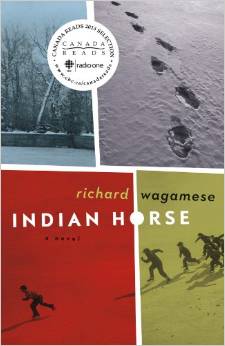
medicine walkI just finished reading a second book written by Canadian/Ojibway author Richard Wagamese. A friend in my book club suggested we read Wagamese’s book Medicine Walk. We were so captivated by the book we decided to read another, Indian Horse,  which was an official selection for CBC’s Canada Reads program in 2013. Wagamese describes a Canada I am not familiar with. He describes  the great Canadian outdoors so vividly that you feel like you’re  in rural Alberta. Wagamese writes so passionately about Canada’s  national sport, hockey, that you can smell the ice. He also writes about the painful history of Residential Schools.

My book club(myself included) believe Wagamese’s books would be a great addition indian horseto high school curriculums across the provinces. Wagamese sheds light on Canadian history in a very authentic way.

Interestingly, today the Huffington Post published a feature article on a recommendation made by a commissioner on the Truth an Reconciliation Commission that an education of Residential Schools be mandatory in high schools  across Canada. I strongly believe Wagamese’s books could be good start.

Read the article from the Huffington Post:

http://www.huffingtonpost.ca/2015/04/05/commissioner-wants-all-st_n_7007772.html?utm_hp_ref=canada

Implementing Change

I (Cathy) and my faculty development team have been tasked with gently suggesting  best practices for new faculty.  This is not not easy task and must be handled with sensitivity.   Administrator,  Ross Cooper, suggests the following five tips when sharing new ideas and practices with others:

Be contagious: Get genuinely excited about what you have to offer, which should come naturally if your ideas are valuable.

Involve as many stakeholders as you can: This is a point that may seem obvious, but it is one that is often ignored. David Weinberger writes, “The smartest person in the room is the room.” Keep this thought in mind, as in no way can a few people sitting behind their desks be able to operate more effectively on their own than with the help of various colleagues from throughout their organization.

Empower those with strengths that compliment yours:   Odds are there is at least one person in your organization/institution with strengths that compliment yours in every education-related area. Know who these players are and take advantage of them, especially if they are well respected by others.

Evoke emotions: According to John Kotter, one of the biggest mistakes you can make when attempting to achieve buy-in “is to communicate with all ‘head’ and no ‘heart.'”

Be Experiential: Try modeling inquiry-based learning by only revealing the research until you have clenched the attention and curiosity of your educators and made them realize that there just might be a way for them to improve upon a particular area of their practice.

Changes can not happen overnight.  \but these five steps might serve as a strtting pint for anyone who hopes of making an impact within a school district or institution.  http://blogs.edweek.org/edweek/finding_common_ground/2014/11/implementing_best_practice_overnight_is_not_best_practice.html

Writing is hard!

I (Clare) do a lot of writing. When my doctoral students comment about writing I always respond, “Writing is hard.” It takes time, is frustrating yet the finished product often makes me proud. Writing is  a thinking process. In the New York Times there was a great little article by Cheryl Strayed who brilliantly sums up the process. She notes:

I write to find out what I have to say. I edit to figure out how to say it right.

I love her insight so much I think I will put it on a post-it note by my computer. So when I am struggling with my writing I will be reminded why the process is often so challenging. Poochey And sometimes I rely on my little poochie for inspiration.