All posts by ckosnik

Defining Literacy

Literacy in the 21st century. What does it mean? Or perhaps the better question to ask is, what does it mean TO YOU?Children reading

  • If you are a writer, editor, public relations manager perhaps literacy means the the ability to read and write.
  • If you are a financial advisor perhaps literacy means the ability to understand “how money works in the world” (financial literacy).
  • If you are a journalist, analyst, or film maker perhaps literacy means the ability to “analyze, evaluate and create messages in a wide variety of media modes…” (media literacy).
  • If you are weather analyst, forest ranger, or environmentalist perhaps literacy means the ability to “understand ecological principals and the ways society  affects, or responds to environmental conditions” (environmental literacy).
  • In keeping with the Winter Olympics, if you are an athlete, perhaps literacy means the ability to “move with competence and confidence in a wide variety of physical activities in multiple environments” (physical literacy).
  • If you are an elementary school educator, literacy means all of the above. If you are a elementary school student, literacy means all of the above.
  • If you are a literacy teacher educator, literacy means… By Yiola
    * definitions taken from online google searches, mainly wikipedia.

Beatles, Popular Culture, Relevance, Perspective …

the Beatles

I (Clare) was reading in the newspaper that Sunday marks the 50th anniversary of the Beatles’ performance on “Ed Sullivan.” http://www.thestar.com/entertainment/2014/02/08/beatlemania_a_moment_in_time_never_to_be_repeated.html

 I probably should not admit it but I clearly remember the event. My entire family was gathered around the TV. “Nielsen says 45 percent of all TV sets in use at the time were tuned into the broadcast, with fans and the uninitiated alike gathered shoulder to shoulder in their living rooms.” The article on the Beatles commented that they “landed on a trigger point when they hit America. It was a pop culture sonic boom spurred by talent, timing and luck that’s still rattling the windows.”
So I had a few thoughts when I read the article about the Beatles:
·      For me there are a few key events in my youth that gripped the national (and often) world stage. Events where I remember so clearly where I was sitting when I heard the news, how I felt … . For example, I remember so vividly when the school principal announced on the PA (something rarely used) that JFK had been assassinated and I can recall as if it was yesterday sitting with my family watching the live footage of the first walk on the moon … I wonder what will be key events for our youth today?
·      In our highly diverse world, events in one culture/country can be viewed very differently in another (on a small scale, my grandmother was appalled by the Beatles and their long hair). As a classroom teacher I used to bring current events into the classroom because I felt it was important for the curriculum to go beyond the classroom walls. As a teacher educator who teaches literacy courses I spend a lot of time on non-fiction, in particular perspective in newspaper and news reporting. How can we prepare student teachers to bring current events (and global events) into the classroom for discussion and interrogation when there are such different views? (The current Olympics would be a good springboard for discussion). I know as an experienced teacher the skill and diplomacy needed to handle discussions that can be controversial. Current events need to be in the curriculum if we want to be relevant but it is not a simple task.
And for those of a certain age, listen to your favourite Beatles song today and sing along as if you are a teenager.  Clare

Olympics: Focus on the Athletes or Putin

I (Clare) always love watching the Olympics but this year is different. Olympic RingsActually, I was not even sure what day they began. The travesty of the Putin Games has really been off-putting: the $50 billion cost, the impact on the environment, the anti-homophobia rants and  …. The cost of the games is staggering when you think of the millions of Russians living below the poverty line. Is this a good way to spend so much money? I saw a little feature on the Olympic Village that left me shaking my head. The beds for the athletes are only cots. The athletes have devoted years to preparing for the games and have sacrificed so much but they will not even have a proper bed. Sorry to sound so simplistic but I think the focus should be on the athletes. I watched a few minutes of the parade of athletes in the opening ceremonies that further cemented my view that the focus of the games seems a bit misplaced. The women leading in each contingent are dressed in skin-tight white outfits with a very revealing slit. I live in a cold climate and you do not see women parading around in such revealing outfits. Do we really need sexy, hot babes at the opening ceremony?  All that said, I hope these games go off without any incidents and each athlete has a personal best. Clare

More Winter … Trying to Keep a Sense of Humour

We have had yet another huge snowstorm in Toronto. It is beautiful but the walking is treacherous and it is bone-chillingly cold. We have had too much weather. I (Clare) am trying to keep a sense of humour as this winter goes on and on. Here is a little cartoon from a local newspaper!

Two dogs in a snowstorm

Newer Modes of Communication Challenging the Written Word

Facebook logoSmartphones and templates offer a newer mode of communication and slowly, it seems, a new language is taking shape. Short, incomplete sentences with alternatively spelled words are dominating the domain. Incomplete thoughts… and abbreviations http://www.netlingo.com/acronyms.php are rapidly becoming familiar.

I’ve (Yiola) bin thinking about literacies and what txt and tweets and FB mean for literacy development. IDK what to make of this. It’s interesting cuz language changes. wordz change. punctuation ceases to exist.  LOL
youth 2day use symbols, short forms, a variety of new symbols to communicate.
I’m still wondering how #hashtag came to be the symbol that it is. #justdontunderstand
The exclamation point has indicated strong emotion. now we have 🙂  😉 and 😦
Is one more correct than the other?
Plz share some insights… i’d luv 2 hear ur thoughts on the implications for teachers, teacher educators, parents. I mean, how r we to communicate and facilitate language development if we r not in tune with social media discourses of youth today? Do we ignore it? Incorporate it? Explicitly teach the differences between formal / traditional language and social text?
ttys, yiola

Professional Identity

Today I (Clive) was teaching my School and Society (social foundations) course in the preservice program. Our topic was professional identity. What a class we had! We discussed:

·      Teachers’ perception of their role

·      Motivation and satisfaction

·      Challenges of teaching

·      Work-life balance

·      Confidence

·      Stance in relation to system mandates

I selected a number of quotes from our chapter on professional identity from our upcoming text: Growing as a Teacher (Sense Publishers). The students took turns reading these quotes aloud which proved to be very powerful. We brought the “voices” of the teachers into the class. Here are a few of the quotes we read:

Classroom teachers have an enormously challenging job; I didn’t realize that when I first started teaching, but now I do. And that hasn’t made me any less effective, if anything it’s made me somewhat more; because now I’m kinder to myself. I see that basically the teacher sets the atmosphere of the classroom, and if you’re constantly stressed out and trying to attain the impossible you become a frustrated and burnt out person. (Felicity, eighth year teacher)

The most important aspects of my role are ensuring that my students develop a positive sense of self; that they acquire a love of learning; and that they develop a world perspective, with compassion and understanding for other people. Embedded in that are social skills; but it’s bigger than that, because I want them to see beyond their own life and community. This view of my role is broader than it used to be. If you’d asked me when I started teaching I would have said the world citizenship component was important, but it didn’t play into my daily practice to the extent it does now. (Tanya, eighth year teacher)

Coming out of my inner-city pre-service program, where the emphasis was on being a change-maker and inspiring every kid, I had to learn that it can often be slow going and I have to not feel defeated if I fail to accomplish everything I hoped for. Because…you really, really need to enjoy teaching to last in the profession, and it’s draining and can get frustrating. I’ve always worked in inner-city schools, so I’m mentally prepared for it…[but] I’ve had to learn not to take things personally. Otherwise you go home and things rest in your mind and you get physically sick.  (Jessica, fifth year teacher)

Basing my teaching on where the students are and where they need to be [according to the standards-based approach], I found I ended up teaching to the test; and the whole fun and love of learning went out the door. So I changed my process, and asked: What am I teaching? What skills need to be taught? How can I get that across to them in a way that they’ll enjoy? And then after reflecting on it, and seeing where it didn’t work so well, I asked: What should I change?   (Lucy, fifth year teacher)
A Model Blog: Nick Burbules


   Nick BurbulesMy (Clive) recent experiences writing blogs and discussing them with my ITE class have made me think more about blogging as a writing and communication form. This in turn has led me to look more closely at the blogs posted at Progressive Blog Digest by my friend Nick Burbules, who I know through the Philosophy of Education Society. http://pbd.blogspot.ca/2014_02_01_archive.html
So far as I know, Nick established this site – and maintains it – on his own. (I’ll try to entice him to give us some back story.) It must take up a great deal of his time: it appears almost every day and is extraordinarily informative. It focuses mainly on US politics, taking a “progressive” approach to issues, while not avoiding all criticism of Democratic icons such as President Obama. The tone reminds me of Rachel Madow of MSNBC. http://www.msnbc.com/rachel-maddow-show
What is distinctive and so valuable about the site is that while Nick obviously has strong views, he doesn’t use it as a soap-box. His one-liners (often one-worders) are clever, funny and pointed. But they are followed by anywhere from one to half-a-dozen links that give followers immediate access to relevant information, examples and articles. I can imagine people spending a lot of time at this site, loving it, and learning a great deal. Which presumably is just what Nick wants.

Message to Researchers: Do Research But Do Not Expect Funding

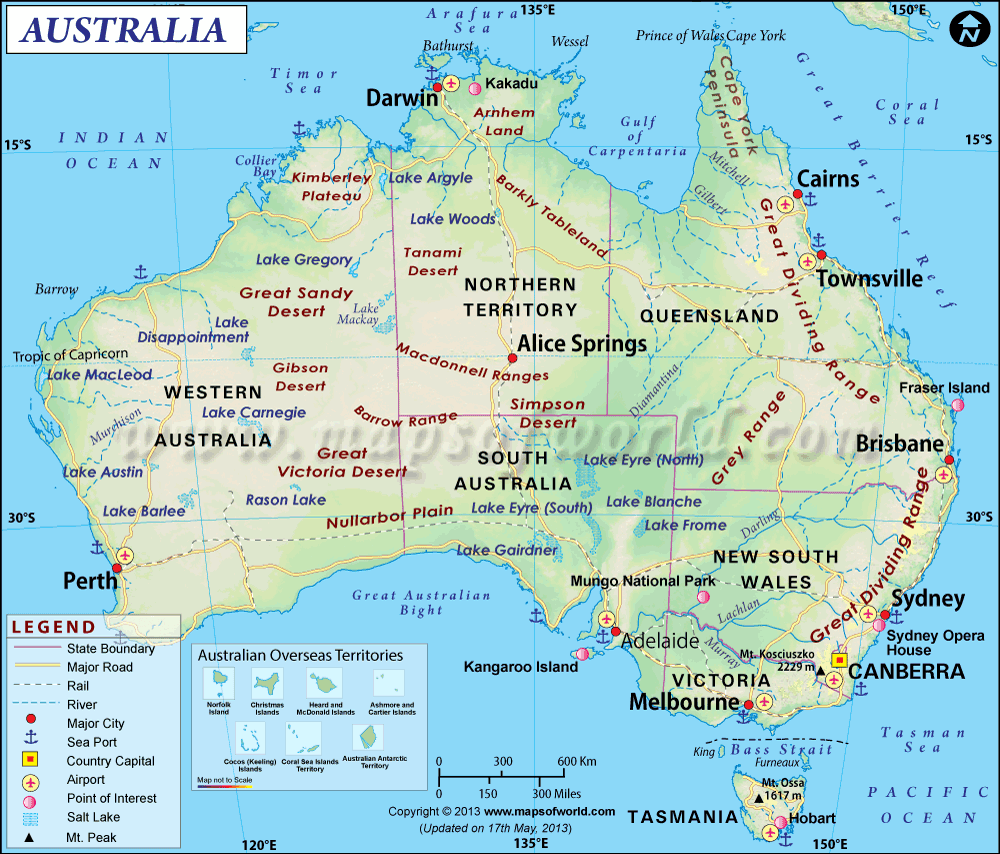
Australia Map 

                       Those of us in higher education know there is steadily increasing pressure to secure research grants. Ironically, at the same time access to funding is decreasing. In my own context, Canada, receiving a grant from our central funding agency, Social Sciences and Humanities Research Council (SSHRC), is getting more difficult. It is not just the increased competition but also, the pool of money seems to be shrinking. I (Clare) read with interest and some sadness about the challenges my colleagues in Australia are facing. The University World News reported:

·      In his speech, Hockey [Australian Federal Treasurer] shocked the nation’s scientists by announcing that the key independent research granting body, the Australian Research Council or ARC, would lose A$61 million from its “discovery programme” and A$42 million from its “linkage programme”.
·      Dr Ross Smith, president of Science and Technology Australia, which represents 68,000 scientists, said cutting A$103 million from the ARC’s budget would further limit its capacity to fund fundamental and applied research – at a time when the success rates for applications for world-class grants are already below 25%.
·      “Australian scientists are afraid this will lead to fewer jobs and training opportunities for our best and brightest. We are also concerned about funding for important humanities and social science research, given the cuts,” Smith said.
http://www.universityworldnews.com/article.php?story=20140109095651863 
My colleagues in the UK are facing untold difficulties securing research grants. It is ironic that federal governments fail to recognize that conducting quality research requires funding and that it is absolutely necessary. Many researchers are in a Catch 22 – show you are an active researcher but do not expect money to conduct research. The short-term effect of reduced research funding is being felt throughout universities world-wide. The long-term effect is yet to be tabulated but I suspect it will be significant. We need research to investigate issues/phenomena/topics because the findings deepen our knowledge on a vast range of topics (which in turn can guide policy decisions). Conducting research is hard work. (Not to mention the time involved in writing a grant proposal — usually 2-3 months.) Let’s not make it so difficult that our research base erodes. Clare

Family Literacy Day

Today is Family Literacy Day in Canada. http://abclifeliteracy.ca/fld/family-literacy-day
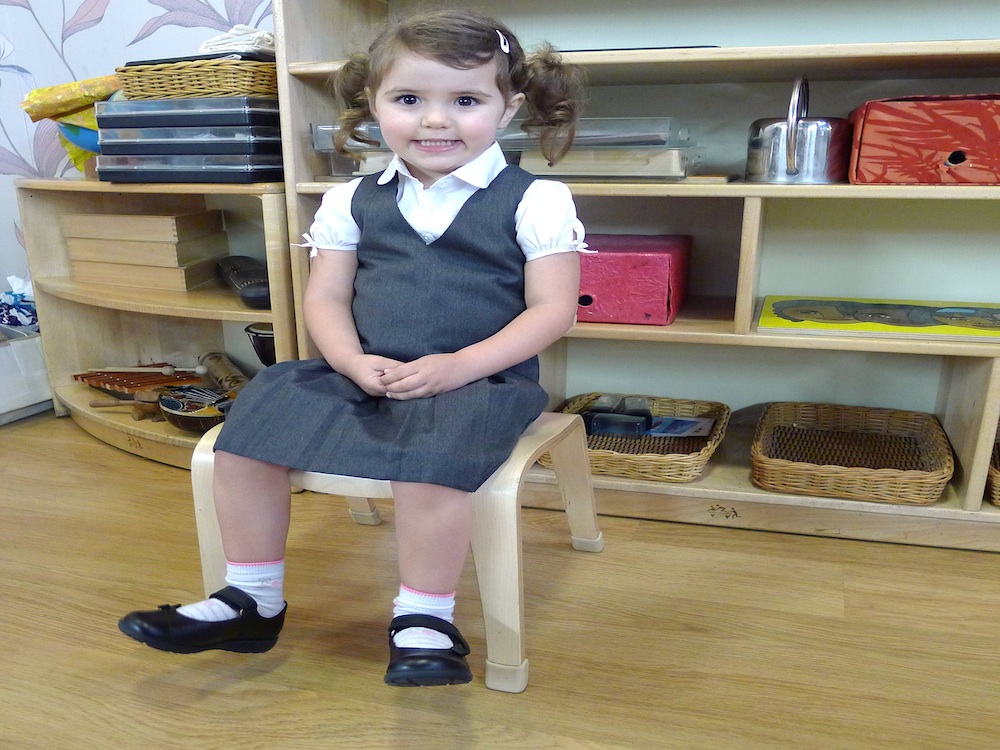
It is a day that recognizes the importance of families building literacy skills together.  Looking back, what did family literacy look like in your household? In what capacity did Young girl in schoolliteracy development occur? In my home I (Yiola) taught my parents the language of English and my parents taught me the value of English.
I find Family Literacy Day to be a very well intentioned initiative.  The ideas presented in the link on family literacy are interesting.  As a Teacher Educator who teaches from a critical perspective I cannot help but ask, how can the concept of family literacy be made accessible for all families? How do we make the concept more inclusive?  When thinking about ‘Daily Literacy Activities’ I wonder, what can we add to the list found on the website?
See: http://abclifeliteracy.ca/files/Daily_literacy_activities.pdf
I plan to share this list with my student teachers and ask them for additional activities to include that may draw in a variety of families.  I’m thinking of multilingual processes, digital opportunities, oral traditions.
Happy Family Literacy Day!
Yiola

Just Call Me Paul: The Ethnicity Saga Continues

On Monday I (Clive) shared my previous blog on multicultural education and stereotyping with my social foundations class. This proved to be a great literacy activity on blogging as a writing form that both teachers and students need to master, one that helps us clarify our ideas and make our communication more precise. It also renewed our conversation about how to approach ethnicity in the classroom. We went round the whole class, each person commenting in turn on the blog. No one chose to pass and everyone was interested in what others had to say. A couple were struck by my profile of “Mike”: they had no idea that people of Irish and Scots background might look down on each other. On the whole people liked the blog, but they continued to refine points and add personal stories.
We heard a new story of complex ethnicity from a class member of Indian ancestry who grew up in Madagascar, lived in a French-speaking environment for several years and became fluent in French, spent time in India where she was told she spoke Hindi with an accent, and then moved to Canada where she hopes to teach French as a second language. What is her ethnicity?
Then on Tuesday the wonderful personal essay “Just Call Me Paul” appeared in one of our local newspapers. http://www.theglobeandmail.com/life/facts-and-arguments/changing-my-name-doesnt-mean-im-betraying-my-identity/article16406166/

G. Paul Sileika’s grandparents migrated to Canada from Lithuania over 50 years ago. In the 1970s when multiculturalism was on the rise his parents decided to give him a name that “reflected their ancestral origins.” They named him Gintaras and called him Gint for short. With rich humor, no self-pity, and trenchant common-sense he talks about the impact of this decision on his life. The whole article is well worth reading.


What struck me especially was how he felt his identity was lost. “Before I can even begin to build rapport with someone or connect on a common interest, my name catches his or her attention. Before I can share my personal story one is already written for me.” Because the name was unfamiliar and difficult to pronounce correctly (the “G” is hard), many called him “you” or simply nothing. Long after finishing university he finally decided to switch to using his middle name – Paul – and hasn’t looked back. He says he believes in multiculturalism and is proud of his heritage, but wants to go by Paul in informal contexts and G. Paul in formal ones; if anyone asks what the G. stands for, he’s “happy to tell them.”


Of course, although you can change your name you can’t change your accent or physical appearance. But Paul’s story illustrates well how we should often move beyond such markers, rather than dwelling on them unduly – as so often happens in multiculturalism classes. While prejudice and discrimination must be studied in depth and actively opposed, there’s so much more to a person than the ethnicity of their parents and grandparents. We must also explore and celebrate their constantly emerging individual identity, of which their complex ethnic identity is just one part. Otherwise, like Paul, much of their identity may be lost.