Finally some “push-back” to PISA’s growing dominance of education. I (Clare) found this article in the Guardian newspaper very interesting. For full article see: http://www.theguardian.com/education/2014/may/06/oecd-pisa-tests-damaging-education-academics
In this letter to Dr Andreas Schleicher, director of the OECD’s Programme for International Student Assessment, academics from around the world express deep concern about the impact of Pisa tests and call for a halt to the next round of testing.
Excerpts from the letter are below:
We are frankly concerned about the negative consequences of the Pisa rankings. These are some of our concerns:
• While standardised testing has been used in many nations for decades (despite serious reservations about its validity and reliability), Pisa has contributed to an escalation in such testing and a dramatically increased reliance on quantitative measures. For example, in the US, Pisa has been invoked as a major justification for the recent “Race to the Top” programme, which has increased the use of standardised testing for student-, teacher-, and administrator evaluations, which rank and label students, as well as teachers and administrators according to the results of tests widely known to be imperfect (see, for example, Finland’s unexplained decline from the top of the Pisa table).
• In education policy, Pisa, with its three-year assessment cycle, has caused a shift of attention to short-term fixes designed to help a country quickly climb the rankings, despite research showing that enduring changes in education practice take decades, not a few years, to come to fruition. For example, we know that the status of teachers and the prestige of teaching as a profession have a strong influence on the quality of instruction, but that status varies strongly across cultures and is not easily influenced by short-term policy.
• By emphasising a narrow range of measurable aspects of education, Pisa takes attention away from the less measurable or immeasurable educational objectives like physical, moral, civic and artistic development, thereby dangerously narrowing our collective imagination regarding what education is and ought to be about.
• As an organisation of economic development, OECD is naturally biased in favour of the economic role of public [state] schools. But preparing young men and women for gainful employment is not the only, and not even the main goal of public education, which has to prepare students for participation in democratic self-government, moral action and a life of personal development, growth and wellbeing.
• Unlike United Nations (UN) organisations such as UNESCO or UNICEF that have clear and legitimate mandates to improve education and the lives of children around the world, OECD has no such mandate. Nor are there, at present, mechanisms of effective democratic participation in its education decision-making process.
• To carry out Pisa and a host of follow-up services, OECD has embraced “public-private partnerships” and entered into alliances with multi-national for-profit companies, which stand to gain financially from any deficits—real or perceived—unearthed by Pisa. Some of these companies provide educational services to American schools and school districts on a massive, for-profit basis, while also pursuing plans to develop for-profit elementary education in Africa, where OECD is now planning to introduce the Pisa programme.
• Finally, and most importantly: the new Pisa regime, with its continuous cycle of global testing, harms our children and impoverishes our classrooms, as it inevitably involves more and longer batteries of multiple-choice testing, more scripted “vendor”-made lessons, and less autonomy for teachers. In this way Pisa has further increased the already high stress level in schools, which endangers the wellbeing of students and teachers.
Category Archives: academics
Multifaceted Role of the Professor: Conducting Research Includes ….
As mentioned in a previous blog post, Clive and I (Clare) are interviewing teachers who are part of our longitudinal study of teachers. Many of our teachers have had life-changing events – including becoming a parent. The teacher we were interviewing in northeast US this past week is a new Mom and is home on maternity leave. We did a division of labour: while I was interviewing the teacher, Clive babysat the new baby who is four months old. The question is: who had more fun? Me doing the interview with an amazing teacher or Clive babysitting an adorable youngster? It was a toss up because we both had a great time. So for budding researchers …. Do not be surprised that your role includes some unexpected duties (which no one told you about in grad school) – such as babysitting.
On a more serious note, a number of teachers in our study over the last 7-10 years have become parents (including adopting a child). It is interesting to see how they change once they become moms or dads:
- Juggling being a new parent and a teacher has led to changes in practices and views. All have found the dual role draining.
- New parents definitely have to shorten their work days! Working morning, noon, and night and all weekend which many had done as new teachers was no longer feasible.
- They developed a number of strategies to streamline planning and marking.
- When we asked how their views and/or values changed now that they are a parent many have commented they have become more compassionate. They appreciate how much parents have to trust teachers to care for their child (as they would) and how vulnerable children are. Their views towards parents in many cases have becoming more understanding while with the students they say are more flexible.
- Interestingly, a number have commented that now as a parent, they are not as focused on covering the curriculum (standards or expectations); rather, they have become more focused on the individual child to ensure he/she is happy and thriving.
- Some have said they have become less critical of themselves. They can only do so much and do not feel so guilty putting boundaries around their personal life.
There is so much more to being a teacher than covering the curriculum. There is so much more to being a researcher than just working with the data. You have to be flexible and be willing to assume some untraditional duties – just ask Clive.
A Lack of Diversity in Higher Education Leadership
An interesting article was published last week about the lack of diversity to be found in university leadership. When looking at full-time faculty at universities across the U.S., 79% were white. The lack of diversity was found most among higher ranking faculty (tenure-track; leadership roles; presidents). For example, “while 44 percent of full-time faculty at degree-granting institutions are women, they hold only 29 percent of tenure-tracked positions at doctoral institutions — even though women outperform men 56 to 40 percent in national research grant awards.”
An excerpt from the article:
Thus, university leadership increasingly reflects neither the student body being led nor the world in which graduates will need to operate, a situation that engenders disadvantages and lost opportunities. Students benefit from having mentors and role models from their own racial, ethnic, or gender group — as do faculty who aspire to leadership positions. Institutional leaders can strongly influence institutional culture; having leaders from a wide range of backgrounds and experiences enriches the intellectual and cultural climate in which students learn. And exposure to and experience working with people from different cultural backgrounds better prepares students for the real-world working environment of their futures.
The excerpt above describes much of what is happening in the K-12 teaching force in North America. Although efforts are being made to diversify the teaching force, white female teachers remain the majority of K-12 teachers.
Read the entire blog here:
Raising the risk threshold
I (Clare) found this amazing website, The Research Whisperer, and their blog today is so relevant and wise.
Clare

 Sumo! (Photo by Tim Ellis: https://www.flickr.com/photos/tim_ellis)
When you get rejected from a journal or conference, or your grant doesn’t get up, do you retreat to your cave?
Do you have a bit of a tantrum and declare ‘What’s the POINT?’ to innocent passers-by?
I’ve done my fair share of this, and it’s all perfectly normal and healthy for a time. But you have to eventually leave the cave and stop yelling at passersby.
I was talking to a colleague about academic resilience recently – the ability to ‘bounce back’ after papers are heavily criticised or rejected, grants not awarded, or promotions not given.
I’ve seen people respond so differently to these events, though they all start with the same fallen expression.
Some take the entire process as an indictment on their work and position within the field, swear off wasting their time with it all, and disengage.
Others revisit the critique and feedback…
View original post 744 more words
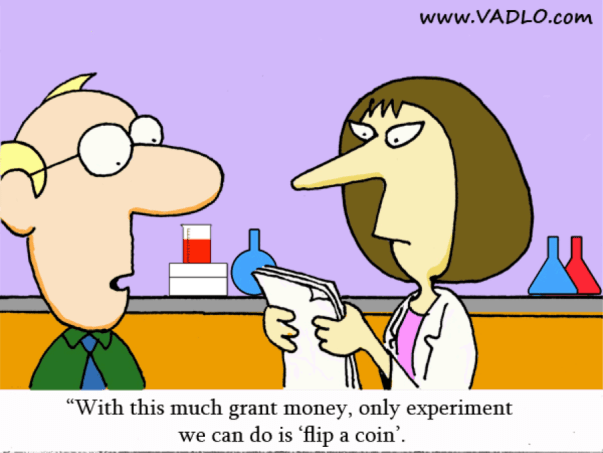
A Lighthearted Look at the Challenges of Securing Research Grants
 Literacy Teaching and Teacher Education