Category Archives: academics

A Message to Graduates:  Choose Love or Choose Fear

I (Cathy) was deeply moved by a key note address presented at Maharishi University in Iowa that was captured on Youtube (link below).  The convocation address was delivered by funny man Jim Carey who, quite unexpectedly, revealed a rarely witnessed serious and profound side of his personality. During the speech, Carey unveiled a compelling 20 foot-high painting that he claimed took him thousands of hours to complete.  He said he was “weeks and weeks alone on the scaffolding” painting the picture. The painting depicted the metaphoric players in our lives (and in our minds) that drag us down or keep us from reaching our dreams (e.g. misery, the party host, the clinger).  Carey told the graduates that “painting is one of the ways I free myself from concern.  A way to stop the world through total mental, physical, and spiritual involvement.”

Beyond the painting, Carey’s words were also stirring.  Carey stated:

“As far as I can tell it’s about letting the universe know what you want and working towards it while letting go of how it comes to pass. Your job is not to figure out how it’s gonna happen for you, but to open the door in your head and when the door opens in real life, just walk through it.  And don’t worry if you miss your cue, because there are always doors opening.  They keep opening. And when I say life doesn’t happen to you, it happens for you, I don’t really know if that’s true.  I’m just making a conscious choice to perceive challenges as something beneficial, so that I can deal with them in the most productive way.”

Cary concluded the speech by challenging the students to choose between fear or love to guide them in their life choices when they left the auditorium.

Thank you, Jim Carey.

http://omeleto.com/199433/

Teacher Educators’ Perspectives

At AERA this past year, Division K dramatically changed their Business Meeting. Rather than do “administrivia” they used the time to get feedback from teacher educators. In the Division K Summer Newsletter they reported on the feedback. I have copied and pasted some of the report below and included one chart on the most warranted criticisms of teacher educators. Here is the link to the newsletter so that you can read the entire report which provides good feedback for teacher educators. DivKSummer2015-1 Thanks Lin Goodwin our Division K Vice President for moving the discussion forward.

Teacher Educators Talk By: Roxanne Greitz Miller

Division K Program Co-Chair

Chapman University

At our Division K business meeting, we took things to the next level on last year’s theme – Not Business As Usual – and embarked on some original research with the members in

attendance as well additional ones who responded after the meeting electronically. Prior to the meeting, the following questions were posed by our Vice President, Lin Goodwin, as points to consider:

 Of the many criticisms leveled against university-based teacher education/teacher

educators, which do you feel is most warranted?

 Of the many criticisms leveled against university-based teacher education/teacher

educators, which do you feel is least warranted?

 What is one thing you think we should do to address the negative perceptions of university-based teacher education/teacher educators?

During our meeting, attended by 269 people (thank you!), members considered these questions and were able to enter their open ended responses via electronic polling, using either URL or QR code. After the meeting, the URL was distributed to the entire Division K membership for additional participation, and it was posted to our social media links as well. Polls were left open for a week after AERA, and, once closed, the open-ended responses were categorized into common themes and tabulated.

Most warranted criticisms of TE, poll results

DivisionKPieChart

Feedback: To Help the Author or Show Off What the Reviewer Knows?

checkmark imagesAll of us in academia are subject to the peer-review process. I (Clare) was revising a book chapter this past weekend and although rewriting is not pleasant, this time it was not a hard slog. The two reviewers provided sensible advice – give an example to clarify this point; please round out the point in this paragraph; connect the two tables … Their feedback was to improve the piece. This has been a good experience because the chapter is definitely clearer and more compelling. But this experience is not typical of the “peer review” feedback process. Far too many times I have had feedback that left me shaking my head. We submitted a paper to a journal and the feedback was a 3 page rant on the limits of a grounded theory method (which was appropriate for a study of literacy teacher educators’ experiences). What was the point of the feedback from someone who was clearly a quantitative researcher? Another time the feedback on a grant proposal which was studying teachers’ use of a digital technology – how their pedagogy and identity changed (or did not change) — was so off-base. The reviewer wanted us to include data on the children’s (student’s) use of technology in their personal lives. That is a different study. So why do reviewers provide comments that are not relevant or connected to the actual piece in hand? Did they not actually read it? Are they trying to show off what they know? (The latter is a bit ironic since the review is anonymous!)

I do not have answers to these questions. I would like to thank the reviewers who take the time (and park their ego at the door) to provide useful advice.

Then and now

I (Clare) found this post so interesting and relevant. In my university dissemination of research is strongly encouraged so I have tried to make better use of social media — this blog! With 26,000+ hits and counting our website has certainly helped us disseminate our research in ways we could not do with traditional print (e.g., peer reviewed journals).

Tseen Khoo's avatarThe Research Whisperer

Photo by Jeff Sheldon | unsplash.com Photo by Jeff Sheldon | unsplash.com

In the last five years or so, I’ve completely changed my attitude to communicating research.

Guess how much I used to do before?

None.

I published in journals and scholarly books. I presented at academic conferences and ran a research network. I dutifully applied for research funding. I thought of myself as a good, productive academic.

And that was it. I wasn’t really on Twitter and I blogged about our network activities – but only really for our members. I didn’t do community forums or write for other non-academic publication outlets.

Don’t believe me? Read on!

View original post 744 more words

Anti-Plagiarism Tools

plagarizing

At my (Cathy’s)  institution,  like most HE schools, plagiarism is an  issue.   According to Wikipedia, “Plagiarism is not a crime per se but in academia and industry, it is a serious ethical offense.”  I deliberately quote Wikipedia because that (sadly) seems to be a popular source for many students these days.  As the cartoon to the left implies, is copying from the internet plagiarism?  The many new sources for plagiarism checking indicates “yes”.  My institution supports a plagiarism locator called Turnitin.  It is a relatively simple tool to use. Once the text is submitted to the Digital Learning System, the tool highlights all words in sequence that can be located on the www and Google Scholar.  Hence, copying the words from Wikipedia becomes as evident as copying a paragraph from a journal article.  The professor has to look at the text and determine if the highlighted parts have been properly cited.  If not, the text is  plagiarized.  Although professors have access to this and can use it to check for plagiarism, it is used instead as a formative feedback took to encourage students to monitor their own work and how they are sourcing. Regarding Turnitin, Jennifer Haber, Professor of Communications at St. Petersburg College shares this email from one of her students:

Keeping an eye on the similarities percentage area keeps me aware of possible situations where I may be using too much (or even too little) outside resource information. Due to its ease of use and instructive benefit, I would say the service has played a significant part in my becoming a more improved writer. I would favorably recommend its use to any institution of learning.

This kind of feedback has sold Professor Haber on the use of this tool.  Besides Turnitin, many more of these tools are popping up on the internet.  Two popular sites are:  Best Plaigerism Checker and Proofreader  and  Plagiarisma.Net (links provider below).  With these kinds of free tools available and the  bad press plagiarism has been receiving, its  wonder that students still plagiarize.  Perhaps these tools will help reduce it happening in our schools.  Let’s hope so.

https://www.grammarly.com/plagiarismq=plagiarism&utm_source=google&utm_medium=cpc&utm_campaign=Search&utm_content=52804488846&utm_term=anti%20plagiarism%20checker%20free&matchtype=b&placement=&network=g&gclid=Cj0KEQjwmqyqBRC7zKnO_f6iodcBEiQA9T996EnCSJjGkjD4jvmQoquTIiBnRIyTkIHwt38N908eAMMaAvLd8P8HAQ

Plagiarisma.Net

http://www.turnitin.com/en_us/resources/blog/517-turnitin-educator-network/2381-what-students-say-about-turnitin

Educational Research: Small Scale or Large?

On Monday, Clare and I (Clive) had the privilege of attending an outstanding symposium at Brock University on self-Image Brock Symposiumstudy research on teacher education. It was organized by Tim Fletcher and Deirdre NiChroinin and funded by their respective institutions, Brock University and the University of Limerick. Highlighted speakers were Clare, Julian Kitchen, and Tom Russell. Apart from the local audience, the symposium was streamed live and will be archived for online access at : http://brockvideocentre.brocku.ca/videos/ (Under Self Study Symposium — 01:46:06).

One issue that came up was the validity of self-study inquiry versus research with a larger sample size. It was noted that there is pressure (from tenure and promotion committees as well as policy developers) to conduct research larger in scope than the typical self-study project. Some suggest that to increase the “significance” of self-study research it may be necessary to combine a number of smaller projects.

From the audience, I made a comment that was lost electronically and Tim and Deirdre have asked me to repeat it here. My comment was as follows:

Small scale research by individuals or small groups often provides a depth of understanding not available through large scale research. We must not assume that bigger is better. While large sample research is suitable for certain purposes, often something is lost when we move to a larger sample and have to ask simpler, one-shot questions, where the meaning of the questions and answers is often unclear. The typical self-study project enables us to probe in considerable depth the nature, purpose, and effectiveness of various teaching practices.

Dewey, Schon and, more recently, Zeichner, Cochran-Smith, and Lytle have emphasized how much practitioners learn on the job; and Bryk et al. in their recent book Learning to Improve (Harvard Education Press, 2015) maintain that quantitative researchers must join forces with on-site practitioner-inquirers to build a complex, publically available framework of educational concepts, principles, and practices (somewhat akin to Wikipedia). Both types of research are needed. We must not privilege one over the other.

Jo Lampert: National Exceptional Teachers for Disadvantaged Schools Program

IMG_0339I (Clare) invited Jo Lampert from Queensland University of Technology to talk to our research group about IMG_0340the National Exceptional Teachers for Disadvantaged Schools Program which she and Bruce Burnett direct. This is an amazing program which aims to prepare student teachers to work in high needs schools.

The Faculty of Education developed the National Exceptional Teachers for Disadvantaged Schools (NETDS) program in 2009 to address the significant social issue of educational disadvantage through a teacher education program that explicitly focused on the preparation of high-quality teacher graduates. NETDS ensures that the best suited pre-service teachers are equipped to teach and encouraged to select employment in low socio-economic status school settings.

Each year we identify our highest-quality pre-service teachers who participate in a specialised curriculum that better prepares them to teach within low socio-economic status schools. We’ve partnered with the Queensland Department of Education, Training and Employment and key low socio-economic status schools to help channel these exceptional pre-service teachers into sites where they can have the greatest impact.

Jo LampertWe learned:

  • Approximately 90% of NETDS graduates have secured employment with schools below the Australian mean Index of Community Socio-Educational Advantage level of 1,000.
  • Many graduates secure full-time employment in low socio-economic status schools before they graduate.
  • School partners have grown from 3 in 2009 to approximately 50 in 2014.
  • We’ve developed distinctive workshops focusing on ‘real world’ issues related to disadvantage.

For more information go to their website: https://www.qut.edu.au/education/about/projects/national-exceptional-teachers-for-disadvantaged-schools

New Faculty Preconference: An Amazing Community

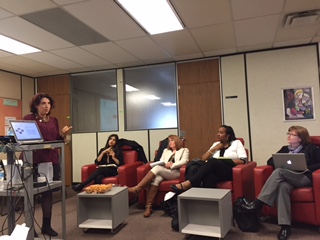
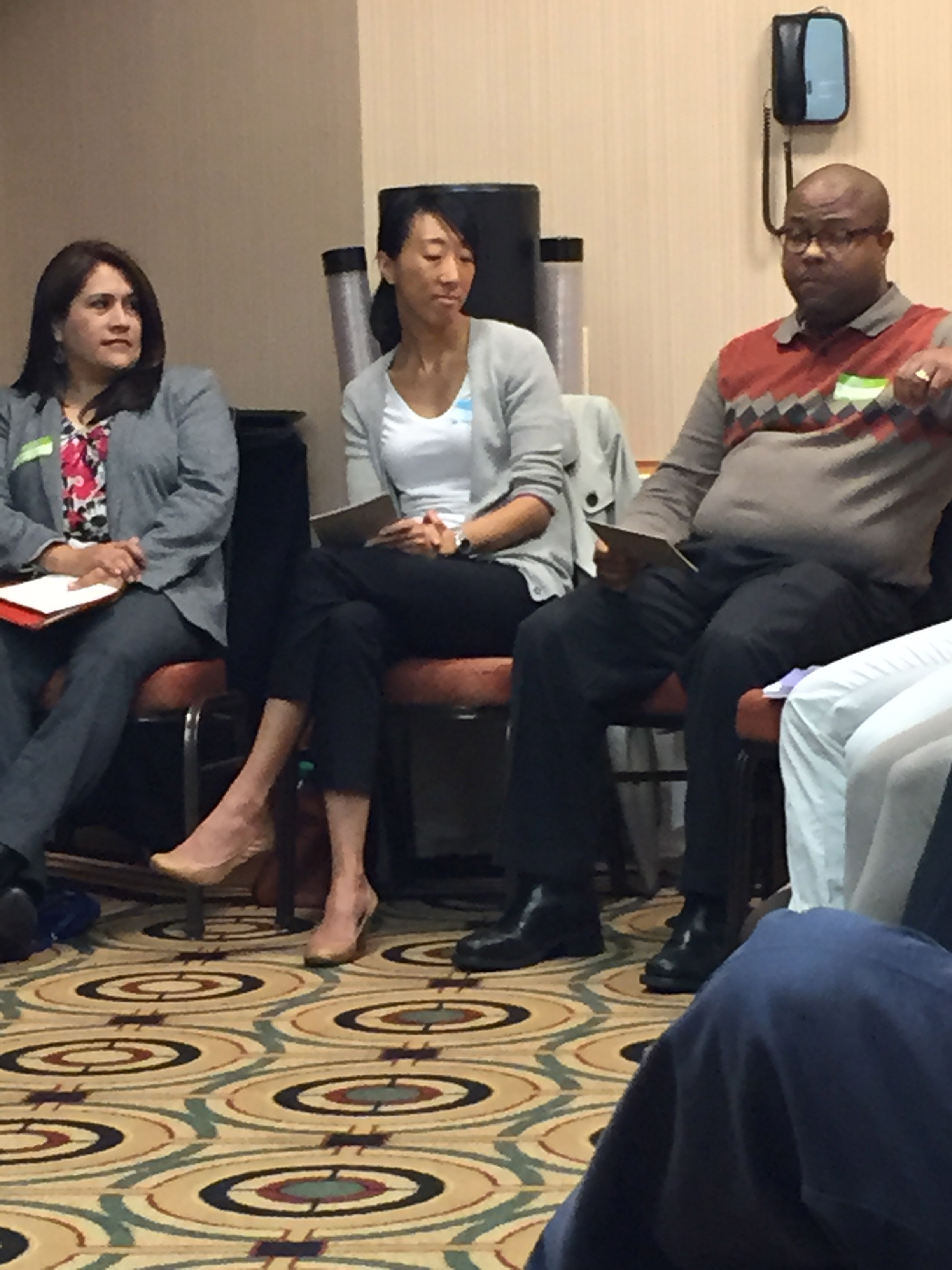
IMG_0304I (Clare) have just returned from AERA. One of the highlights of the conference for me was my work with new faculty. Division K (Teaching and Teacher Education) offers a preconference for new faculty and I was one of the organizers for it. Along with my fellow facilitators, Renee Clift, Rich Milner, Tom Dana, and Valerie Kinloch, we worked with 30 IMG_0289new faculty. On the first day of the preconference we began with the Facilitators sharing their stories – successes and challenges – which helped create an open environment. The participants then shared their stories. It was clear that all were committed to being the best faculty they could be, all had some successes the past year, and the transition to their new role has had some bumps. On the second day we broke into small groups where we addressed: mentoring (finding a mentor and/or academic community); tenure and promotion process; research and publishing; and balancing work and family life. We concluded with each person sharing a “take away” that is something they plan to work on over the next few months.

divknewfacI have been involved in the Division K Preconference for a number of years and this year was particularly special. The IMG_0297Facilitators had so much to share but they created space for the participants. We came together as a community and connections were made among all of us. This kind of support for new faculty is so important because as the literature reveals (e.g., Murray and Male’s work) that the transition from classroom teacher/graduate student to an academic position is not straightforward. There are issues of identity, workplace norms, pedagogy for higher education, academic community, pressure to publish, and …. I know that as a new faculty I would have appreciated having a mentor, a place to ask questions, and to know that what I was experiencing is “typical”.

It was great meeting these wonderfully talented new faculty who are the future of teacher education. I wish them all the best with their various endeavours. I feel that I have made 30 new friends!divknewfac2

Moving From Outsiders to Insiders: Working With a Teacher Research Group

I (Clare) have been involved in a teacher researcher group for the last 2 years. Along with Pooja and Shelley (regular IMG_2508contributors to this blog and pictured to the left) we have facilitated  a group in a secondary school. The work the teachers have done is outstanding! The three of us facilitators did a self-study of our work with this group. Since we did not know the teachers beforehand which was a bit unnerving we felt it was good to study our work. We now feel very much part of the group and feel we have become a learning community. We are presenting on our work with the teacher researcher group at AERA. Here is a draft of the paper Moving From Outsiders to Insiders: Working With a Teacher Research Group. It is still in “draft” form but if you are interested in teachers as researchers you might find this paper useful because we talk about logistics, identity, forming a community, and our learning. AERA 2015 EurekaPaperFinal

For those of you who read this blog and are at AERA I hope our paths cross.

Writing is hard!

I (Clare) do a lot of writing. When my doctoral students comment about writing I always respond, “Writing is hard.” It takes time, is frustrating yet the finished product often makes me proud. Writing is  a thinking process. In the New York Times there was a great little article by Cheryl Strayed who brilliantly sums up the process. She notes:

I write to find out what I have to say. I edit to figure out how to say it right.

I love her insight so much I think I will put it on a post-it note by my computer. So when I am struggling with my writing I will be reminded why the process is often so challenging. Poochey And sometimes I rely on my little poochie for inspiration.