Category Archives: academics

Little Free Libraries

“The “take a book, return a book” boxes are catching in even on places where Kindles and brick-and-mortar books abound.”

 I love the concept of the Little Free Library! The Little Free Library movement operates from a universally understood “take a book, return a book” policy. The first Little Free Library was built in 2009 in Hudson, Wisconsin. Since then, Little Free Libraries have been popping up all over the world:

There are now 18,000 of the little structures around the world, located in each of the 50 states and in 70 countries—from Ukraine to Uganda, Italy to Japan. They’re multiplying so quickly, in fact, that the understaffed and underfunded nonprofit struggle to keep its world map up to date.”

qatar

Little Free Library in Qatar

stclair

Little Free Library in Toronto (St. Clair Ave)


Find a Little Free Library near you!

 http://littlefreelibrary.org/ourmap

5 rookie researcher mistakes

As we get ready to start a new academic year, I (Clare) found this advice for new graduate students extremely helpful and accurate. Excellent suggestions relevant to all graduate students.

Thesis Whisperer's avatarThe Thesis Whisperer

One thing I have learned over the years I have been Whispering is, although the problems they face are similar, no two research students are alike. What works for one person may not work for another. For this reason I have developed a habit of ‘reverse advice’ lists, for example: “5 classic research presentation mistakes” “Are you getting in the way of your PhD?” , “5 ways to fail your PhD” and “5 ways to poster = fail”.

I like a reverse list because it highlights the problem more than the suggested solutions, leaving you free to choose your own.

This time of year I attend a lot of research student orientation sessions around RMIT, where I usually give my  ‘top five newbie mistakes’ talk. I tell students there’s no need to take notes because I have blogged it (yet another reason to keep up a blog by the way)…

View original post 1,182 more words

The Triple Focus

I (Pooja) came across a new book I am interested in reading , so I thought I’d share it with our blog community. The new book by Daniel Goleman and Peter Senge is entitled The Triple Focus: A New Approach to Education (2014) and makes a case that education should focus on three things:

  1. Self-awareness
  2. Empathy
  3. Understanding our relationship with the larger world
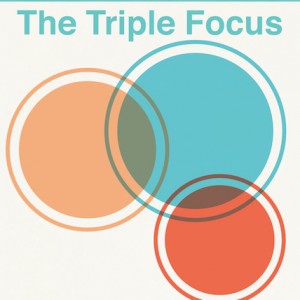
Triple-Focus-Cover1-300x300

This focus on self, other, and world in the classroom is something I am particularly interested in as I feel it is increasingingly necessary in today’s classrooms. Daniel Goleman explains:

 These skill sets interact very naturally. We feel that this complete inner tool kit should be a part of every child’s learning as the world they are growing into becomes more distracted, relationships more besieged, and everything more interconnected and complex.


Below is an excerpt from the new book:

Empathy and Academic Success

The key to compassion is being predisposed to help — and that can be learned.

There is an active school movement in character education and teaching ethics. But I don’t think it’s enough to have children just learn about ethical virtuosity, because we need to embody our ethical beliefs by acting on them. This begins with empathy.

There are three main kinds of empathy, each involving distinct sets of brain circuits. The first is cognitive empathy: understanding how other people see the world and how they think about it, and understanding their perspectives and mental models. This lets us put what we have to say in ways the other person will best understand.

The second is emotional empathy, a brain-to-brain linkage that gives us an instant inner sense of how the other person feels — sensing their emotions from moment to moment. This allows “chemistry” in our connections with people.

Those two are very important of course; they’re key to getting along with other people, but they’re not necessarily sufficient for caring. The third is called, technically,empathic concern — which naturally leads to empathic action.Unlike the other two kinds of empathy, this variety is based in the ancient mammalian circuitry for caring and for parenting, and it nurtures those qualities.

Read more at:

http://www.huffingtonpost.com/dan-goleman/triple-focus-excerpt_b_5638646.html?1407243583
Teacher inquiry: this just in from Piaget!

Yes, I (Clive) know I should get a life, but lately I’ve been reading Dewey, Vygotsky, and Piaget (there’s a constructivist connection).

Skimming through Piaget’s The Moral Judgment of the Child (R&KP, 1932) I came across this wonderful quote in the very last paragraph (p. 414).

“Educational experiment…is certainly more instructive for psychology than any amount of laboratory experiments…. But the type of experiment which such research would require can only be conducted by teachers or by the combined efforts of practical workers and educational psychologists. And it is not in our power to deduce the results to which this would lead.”

This captures so well what I was trying to say in my previous blog. Academics and teachers must inquire together, rather than taking pot-shots at each other.

It feels good to be backed up by the likes of Piaget.


Just for Fun- A Literacy Word Search

In the word search below, can you find…

1. The name of the theorist generally accredited with the origins of Social Constructivist Theory

2. The term used to identify a branch of linguistics which contends that meaning-making manifests through human interpretations of sign systems

3. The names of the two researchers accredited with constructing the four resource model

4. The term assigned to multiple modes of communication

5. The Literacy Theory that purports literacy and language are not neutral but political.

6. The name of a pedagogical approach designed by 10 scholars known as the New London Group in 1996

Scroll down for answers- but no peeking!


Z C X B N O L M R T Y Y I O P K
A C V N Q W R U T U J L A S D F
B V M N W E F L A S D F G H H J
Q Y W E M U L T I M O D A L O P
A G D G J K O I M N B V C X Z A
W O E T Y P U L U K J H G F D S
Z T X C V B N I M L H F D S A E
C S T G H K L T O U Y T E R W Q
V K N N L H O E I T R E W A Q P
R Y T Y U I P R I Z X C V B N M
Z L U K E M V A O P U Y T R E W
C X B N M L Q C R I T I C A L Q
Q W E R T Y U I I O P L K J H G
H G F D S A S E R T Y U I O M N
D F G H J K L S E M I O T I C S
Q S D C F R E E B O D Y C A T Y


Answers:  1.  VYGOTSKY 2.  SEMIOTICS  3.  LUKE, FREEBODY  4.  MULTIMODAL  5.  CRITICAL  6.  MULTILITERACIES


Interviews and the Research Process

I (Yiola) have used the method of interviews for data gathering for over a decade. I love it;the entire process is fascinating. From designing research questions, to finding suitable participants, to setting up interview dates, to meeting with participants, to reading the transcript and to sharing the transcript with the participants.

images


There is something special about qualitative interviews.  Perhaps what is special is the human connection, perhaps the interaction, perhaps the commitment demonstrated by the participants . I think perhaps all of the aforementioned make the interview process special. In my many years of interviewing participants,  what inspires me the most is the passion the participants demonstrate as they explain with detail and careful description their thoughts and experiences about education.  I can (and do) listen for hours. The participants I have worked with show appreciation for their involvement in the research and often express how much learning they receive from the experience. The latter is particularly true of participants in longitudinal studies.

The role of the researcher: what an honour and privilege to spend time with willing participants; to be privy to their time and thoughts. A special relationship develops between research and participant that is built on trust, respect and commitment.  This relationship takes time to foster and requires thoughtfulness.  The interview data is often the foundation of the research.  This data is built upon a deep understand of research literature, thoughtful research questions, carefully crafted interview questions, and committed research participants.  Relationship building is key when using interviews in the research process.


Good-bye Michael Gove!

Michael Gove Although I (Clare) live in Canada I am well aware of the challenges teachers and teacher educators in England are facing. We have a number of literacy/English teacher educators in our study of teacher educators who have recounted the  challenges they are facing (e.g., funding reduction, stringent/ridiculous accountability measures). At our Symposium on teacher education in London participants recounted how demoralized teacher educators felt.

The Secretary of State for Education, Michael Gove, who was instrumental in bringing in a number of draconian measures in education has been demoted to Chief Whip. http://www.theguardian.com/commentisfree/cartoon/2014/jul/17/steve-bell-cartoon-michael-gove-first-day-chief-whip He wanted to reshape education based on his own experiences in elite private schools – or as I see it, drag education back to the 19th century. He seemed to be waging war on schools of education by creating so many alternative routes into teaching that he was stripping teacher educators of their place in preparing teachers. His inability or unwillingness to listen to reason and research led to him implementing a number of measures that are so wrong headed it is mind-boggling. He was never a teacher nor did he do research on teaching and teacher education so how did he think that he knew how to prepare teachers?  When you compare his approach to the one used in Finland (see blog post on Thursday, July 17) the contrast is glaring. Respect and trust were not his modus operandi.

On his first day of his new job as party whip he got stuck in the toilet! Hmmmmm…….. Read into that what you like!

Let’s hope that the path he set for education will be altered by his successor so that education and teacher education can get back on track and become relevant and appropriate for the 21st century. There is a growing body of research on teacher education which should guide policy. It is time for policy-makers in England to refer to it.

Focus on Teaching the Student

As I continue to read the news about states exiting the Common Core standards to reclaim standard-setting autonomy, I am reminded of a quote from a participant from our SSHRC study on literacy teacher educators:

“You’re teaching the student. You’re not teaching the curriculum. The student should be in the middle and to try to stretch the curriculum to fit around that.” (Melissa)

 The Common Core Standards are national U.S. standards for English Language Arts and Mathematics grades K-12. The implementation of these standards began in 2011. However, in the past few months three states have formally withdrawn from the Common Core Standards (Indiana, Oklahoma, and South Carolina). Recently, Governor Bobby Jindal of Louisiana made public that he was also looking to formally withdraw from the Common Core Standards.

This turbulent time in the implementation of national standards reminds me of the stance several of our literacy teacher educators had on teaching directly to national mandates.  Several had lived through many curricula, and so tended to veer away from explicitly teaching the curriculum. Rather, they emphasized with their student teachers that the focus should always be on the student.

Below is a chart summarizing U.S. resisting the implementation of the Common Core:

commoncoreparticipation

Source:

http://dailysignal.com/2014/06/19/want-bobby-jindal-pulls-louisiana-common-core/

International Symposium on Literacy/English Teacher Education: A Focus on Digital Technology

With the symposium a few days behind us, I (Pooja) have had some time to reflect on what was discussed in London, England. Clare wrote a reflection post on day one of the symposium (https://literacyteaching.net/2014/06/06/symposium-day-1-reflections/), so I want to reflect a bit on day two. Day two started off with mini-presentations which asked presenters to focus on a central question: What is happening with digital technology in your context?

IMG_2564

Shawn Bullock, assistant professor at Simon Fraser University, raised some interesting issues related to digital technology and education:

  • Technological Determinism: A theory which asserts we need to stay current with technology to stay relevant in society; technology determines cultural values and society’s structures
  • Digital Publics: The theory that the nature of public space has changed significantly over the past years. The nature of public space has gone from persistent to replicable to searchable in the past few decades:

o   Persistent- recording (video, audio) events changed the nature of public space;

o   Replicable- recordings became replicable;

o   Searchable- today we can search for any recording

(danah boyd)

Understanding how the nature of public space has drastically changed over the years, Shawn posed an important question to the group: What is the role of education in theorizing privacy in the digital age?

IMG_2582

As the symposium was coming to a close, we were guided to reflect on the past two days. Many people realized that the rapid increase of standardization and data driven initiatives was happening across all contexts. However, many individuals commented that the conversations over the past two days were “energizing.” Being in conversation about big issues across international contexts made many teacher educators realize they were not alone. In fact, many commented they wanted to keep up the momentum by further collaborating and “making some noise” in teacher education.


IMG_2617


Once again, we’d like to thank TUG Agency for so graciously hosting us. TUG provided a vibrant and exciting atmosphere for our symposium to take place. Check out their website at: http://www.tugagency.com

Thank you!!!

The Canadian Society for the Study of Education

conference

This week The Canadian Society for  the Study of Education (CSSE) is being held in St. Catharines, Ontario at Brock University.

The team, Clare, Clive, Lydia, Cathy, Pooja, and me (Yiola) will be sharing a number of presentations over the course of the week. Some of these presentations include the following titles:

Teachers’ Professional Identity Development Over Their First 8 Years, With Implications for Preservice and Inservice Teacher Education

Teachers’ Ongoing Learning over Their First 8 Years, with Implications for In-Service Professional Education

Exploring literacy teacher educators’ negotiations of a critical stance in pre-service teacher education

Teachers’ critical literacy practices in the early years classroom

Instructional Practices of Critical Literacy within an Inquiry-Based Learning Environment

Presenting at conferences is a great way to share research with the community.  For more information about the CSSE conference click here:  

Conference