Category Archives: communication

Star Trek, Drafting & Pat Barker


Image Sue DymokeI (Clare) read this blog by my good friend Sue Dymoke. I thought she had many excellent points about writing. If you have not seen Sue’s website definitely check it out. https://suedymokepoetry.com/

Sue Dymoke's avatarSue Dymoke Poetry

WeShatner went to hear novelist Pat Barker speak on Thursday. She was in fine conversation with Sharon Monteith at Nottingham Playhouse in a benefit for Nottingham Unesco City of Literature funds to support literature/literacy initiatives across the city. She read from new work in progress, inspired by Homer’s Iliad, that brought alive the previously silent voices of two young women. In a wide ranging discussion afterwards, with some excellent questions from the audience, she talked about her writing processes. She urged the writers in the audience to go into the writing ‘wanting to surprise yourself’ because if you can’t do that then no-one else will be surprised by what you write. I love the element of risk implied in this approach: you are going out into the unknown in your writing, exploring, as Captain Kirk would say,’strange new worlds… new life and new civilisations, to boldly go where no (one)…

View original post 226 more words

The Graduation Speech Harvard Is Calling ‘The Most Powerful’ You’ll Ever Hear

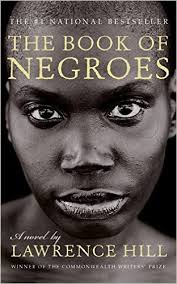
Authors and Amazing Tales: In Awe of Lawrence Hill

During the school year my night table fills with novels; one beautiful literary piece after the other, the books pile up. The vision is to retreat to my room early enough to read these marvellous texts at an enjoyable pace in order to get to the next… yet my  time during the academic term does not allow me the pleasure.  With the coming of summer and the end of an academic term I find some space where I can begin to read the books I attempted to read throughout the year.  This year, I begin with Lawrence Hill.  Most are familiar with Lawrence Hill, a Canadian writer whose most popular texts include: Blood: The Stuff of Life  and The Book of Negroes.

Unknown-2 Unknown

Blood: The stuff of life was turned into a lecture series. You can listen to excerpts of the Massey Lecture series here:

http://www.cbc.ca/radio/ideas/the-2013-cbc-massey-lectures-blood-the-stuff-of-life-1.2913671

Two incredible literary works that move me to think about humanity… and inhumanity. The Book of Negroes was turned into a  television mini series. Based on historical fiction The Book of Negroes is the story of young African girl, her voice, her journey in the 1700s from Mali, Africa to South Carolina, New York, Cape Breton, and London. How impactful a process to explore the novel — to try to make sense of history and our present — to think about narratives and then consider the media and digital implications for developing such an intense story into a visual series.  I think of how high school teachers could use this novel to explore so many issues and then to look at the decisions one makes when transforming such a sensitive story into film.

As I read Hill’s novels I cannot help but consider how  the narratives in these literary texts can be used to improve my own practice in teacher education. I ask myself: Can they inspire the reader to more deeply understand the intensity of the relational acts involved in teaching in classrooms?  Why do certain groups of children have a greater likelihood of failing at school? How do our systems shut people out without some of us ever realizing it? What kinds (if any) of understandings should teachers have about the histories of our communities before ever stepping into classrooms? How in teacher education can we support a deep understanding of children’s learning?

There is just so much to know while in pre-service and so much to teach in teacher education. What is most important? Why? When I think about the construction of teacher education programs I am now thinking less in terms of required courses and more in terms of broad understandings and the connections across disciplines and understandings. For example, as we teach about child and adolescent development (psychology) we must thing about language and literacy development (content) inclusive of social context (equity and foundations).  After all, when we enter classrooms we know that our work as teachers is dynamic, complex, forever evolving and completely relational.

Can you really tell when kids are lying? And why to celebrate when kids lie!

Kang1My (Clare) friend and colleague Kang Lee did a Ted Talk about children and lying. It is

incredible interesting and based on 20 years of research. As teachers and parents we will need to know about his research – the results are surprising. Here is the link to the Ted Talk: https://www.ted.comtalkskang_lee_can_you_really_tell_if_a_kid_is_lying?utm_source=tedcomshare&utm_medium=email&utm_campaign=tedspread

Are children poor liars? Do you think you can easily detect their lies? Developmental researcher Kang Lee studies what happens physiologically to children when they lie. They do it a lot, starting as young as two years old, and they’re actually really good at it. Lee explains why we should celebrate when kids start to lie and presents new lie-detection technology that could someday reveal our hidden emotions.

Here is a link to his blog: http://kangleelab.com/AboutLee.html

Fort McMurray Disaster — Fort McMoney a documentary game

I (Clare) like many Canadians are watching the news as the fire in Fort McMurray fire RCMPAlbertaspreads to 850 square kilometres with; thousands being airlifted. It is reported that the “The wildfire in Fort McMurray could be the costliest disaster in Canadian history as estimates for insured damages run as high as $9-billion. Thousands of homes and businesses in Alberta’s fifth largest population centre have been destroyed.” http://www.theglobeandmail.com/news/alberta/fort-mcmurray-exodus-swells-as-fires-rage-a-lot-of-people-are-working-to-get-you-out/article29883034/

This catastrophe is on a monumental scale but it has touched me in a different way. For two years I worked with a teacher research group, Eureka, and one of the teachers, Mike Farley, did his research on the use of Fort McMoney http://fortmcmoney.com/#/fortmcmoneyin his geography class. Over a period of time the students played the game and he studied their reaction to using the game and their learning.

His data showed that the game had a HUGE impact of their learning. Fort McMoney is s an interactive documentary game that lets you decide the future of the Alberta oil sands, and shape the city at its centre.

Through the research group I watched/played the game which gave me an insight into the community and the complexity of the issues of the oil sands. I emailed Mike when I heard the news about the fire. He said that he and his students were so upset by the events because they understood Fort McMurray and the impact on this fire community. This is an example of gaming that brings the real world into the classroom. His students probably have a much better understanding of this devastating fire as a result of the playing this highly interactive and informative game.


There is a long description from the Globe and Mail of the game below and it is well worth checking out the game. http://www.theglobeandmail.com/report-on-business/industry-news/energy-and-resources/what-is-fort-mcmoney/article15583598/

A frozen highway spools out ahead of you, in the distance giant factory facilities with spewing smokestacks are carved out of virgin forest. It looks cold, cold like one of those Soviet factory towns in the Arctic Circle.

That’s the scene that greets you when you boot up Fort McMoney, which is a virtual world that went live online Monday. There are many places to see and even more characters you can interrogate and interview. Scores will be kept and leaderboards maintained to reflect actions taken by visitors: the more curious you are the more points you collect. This world is also episodic, new places and people will arrive every week over the next four, and visitors can vote for changes they’d like to see based on what they experience inside Fort McMoney.

If you have a passing familiarity with modern video games, you will recognize this structure. But while it is a game, it’s not fiction, it’s an interactive documentary about that most consequential Canadian oil town: Fort McMurray. It was produced by The National Film Board with French, German and Canadian partners, including The Globe and Mail. (Columnists Eric Reguly and Margaret Wente will be writing about their evolving views as they play along. Read Ms. Wente’s first take here and read Mr. Reguly’s here.) The makers of Fort McMoney call it a game and call users “players,” but there will be no “winners,” or rather there is no way to “lose” the game.

(Also, for such an innovative project, the language to describe it is lacking; we need a new term like Game-Umentary, but one that isn’t terrible.)

Functionally, it owes some of its game design DNA to 2012’s episodic zombie adventure The Walking Dead from Telltale Games. The winner of multiple video game awards, Telltale’s creation follows a similar forking structure: Like in Fort McMoney, each player’s experience with the game will vary because each decision you make, each question or action you commit to, changes the sequence of the next thing you see or are able to do. In The Walking Dead that often meant people you met in the game got eaten by zombies, in Fort McMoney it just means you visit a different part of one of Canada’s fastest-growing boom towns.

Over the next month players can dig through about eight hours of interviews and conversations with the real residents of Fort McMurray, a city which lies at the heart of Canada’s oil sands. The game asks players to choose whether the city should help crank oil production up to 11, or if it should essentially shut down the industry. That’s where the SimCity element of this game comes in: How the city grows, and how that affects Canada’s energy future, will be displayed in a series of projections, updated each week by the latest referendum.

This laboratory of democracy is hosted in the “dashboard” part of the game, and this is where it strays from being a pure choose-your-own adventure story (if still a documentary, there are no actors here), and turns into a civics experiment. Players will be invited to debate, share their in-game discoveries and vote on policies for the town and its ever-present oil.

The issues the Fort McMoney asks players to vote on in the weekly polls are ones the real town faces: If you could, how would you vote to change things about the trajectory of Fort McMurray and Canada’s exploitation of the second largest energy reserve in the world? The results of player voting will create a hypothetical Fort McMurray, one in which the future has been directed by the votes of this digital public square, like in a classical Greek democracy. Only here, the amount of debating, sharing and exploring you do can net you a higher score, and thus a heavier vote during the polls. It’s why a documentary is keeping score at all, as a reward for spending time “playing” the game.

The elephant in the room is that this game/documentary is about oil in those sands, and the environmental and human cost of boiling it out of them. Fort McMoney starts by introducing you to people living on the margins of this rapid growth, the young woman who was hoping to clean work camps but instead works as a waitress, the alcoholic who collects cans (claiming to clear $52,000 in one year recycling the discarded booze containers of Fort McMurray’s residents). In short order you meet the mayor of the town, and eventually oil sands executives and other leaders.

Creator David Dufresne talks about our civilization’s “addiction to oil” when he talks about the conversation he wants this game to spark. This is the part the NFB, Dufresne and his whole team, are really excited about. As Dufresne explained during a recent live Q&A about the project: There are no shortage of great books, documentaries or journalism about the “tar sands.” He says he was drawn to Fort McMurray thanks in part to stories about the town in The Globe and Mail. But for all of that, do Canadians feel any urgency to take action? He hopes to change that by giving people something gorgeous to look at, deep to explore, fun to argue about and which creates consequences for the user’s decisions. He hopes his video game will convince people to be the change they want to see.


Why I love blogging: Take my creativity post and watch the learning grow

Writing blog posts is one of my most favourite things to do. I (Yiola) do not think I’m an entirely seasoned blogger but with time, practice, and learning I hope to become good at it one day. Why? Well, as an academic one of my goals is to share what I study and what I know with others. One way I do this is through my teaching. I am a teacher educator. My goals as a teacher educator are to prepare pre-service teachers to become excellent teachers by thinking about what they teach, how they teach and most importantly who they teach.  I am also a writer — but a very particular kind of writer. I have been taught to write in academic prose for journal articles and book chapters. Sometimes our articles and books are read by others in the field.  But… blogging… this is an entirely different genre and such a wonderful way to network and meet amazing people – some directly in the same field and others in slightly different but related fields – while sharing knowledge and information. Since writing on the academic / teaching blog I have met wonderful people and learned many things and taken away wonderful ideas. Let me share an example based on something that happened recently.

Some time ago I posted a blog about creativity in teacher education. Here is the link below:

Promoting creativity in teacher education

Last week I received an email from a person who is in the field of creativity who has also done some good work in the area. This person shared their insights on what I had written and provided supportive feedback and then also shared their work with me. What a delightful process! I am now sharing their work with you. The following link leads to a list of ways to infuse creativity into the classroom. I reviewed the link and like it for several reasons: 1. It’s foundations and theoretical underpinnings are closely linked to the work I shared with my student teachers in our classes on creativity  2. The list is very easy to view and accessible  3. I found the list inspiring and doable — so yes! I will now proceed to share this link with my student teachers and friends.

http://www.fusionyearbooks.com/blog/creative-classrooms/

This is but one example of how blogging in academia and in teacher education serves such good purpose. Yet another example of how digital technology and literacy work hand in hand to foster communication and learning. I am delighted when I receive messages with feedback, interest, and sharing. Looking forward to more connections and learning through this medium.

Why is a constructivist approach to teaching so difficult?

I (Clare) am writing with my research team a paper about literacy teacher educators who use a constructivist approach. I found this amazing quote from Virginia Richardson which seems to succinctly sum up the challenge. I thought I would share it with you because it helped clarify some of the issues. 12801662_10156708871645121_4206799058803873009_n

Constructivist teaching as a theory or practice, however, has only received attention for approximately one decade. Current interest and writing in constructivist teaching leave many issues unresolved. These issues relate, in part, to the difficulty in translating a theory of learning into a theory or practice of teaching, a conversion that has always been difficult and less than satisfactory. However, the nature of constructivism as an individual or group meaning-making process renders this conversion remarkably demanding (Richardson, 2003, p. 1623).

HOT off the press: Teaching Literature to Adolescents

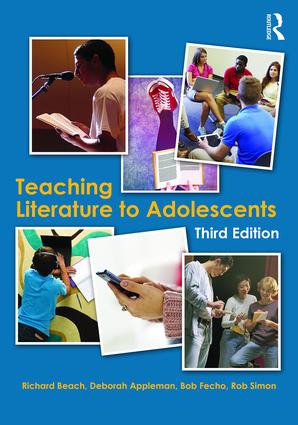
My good friend Rob Simon is one of the co-authors of the third edition of Teaching 9781138891241Literature to Adolescents. Co-authored with Richard Beach, Deborah Appleman, and Bob Fecho this is an amazing new text. As a professor of literacy methods courses I (Clare) am always on the lookout for texts that go beyond the typical plodding through various topics. This text appealed to me because it emphasizes a critical approach to reading and interpreting text. The aim is to engage students with authentic issues. Well done Rob and your fellow authors. This text will be a staple on my bookshelf. Here is the link to the Routledge site: https://www.routledge.com/products/9781138891241

Below is a summary of the book.

This popular textbook introduces prospective and practicing English teachers to current methods of teaching literature in middle and high school classrooms. It underscores the value of providing students with a range of different critical approaches and tools for interpreting texts and the need to organize literature instruction around topics and issues of interest to them. Throughout the textbook, readers are encouraged to raise and explore inquiry-based questions in response to authentic dilemmas and issues they face in the critical literature classroom. New in this edition, the text shows how these approaches to fostering responses to literature also work as rich tools to address the Common Core English Language Arts Standards.

Each chapter is organized around specific questions that English educators often hear in working with pre-service teachers. Suggested pedagogical methods are modelled by inviting readers to interact with the book through critical-inquiry methods for responding to texts. Readers are engaged in considering authentic dilemmas and issues facing literature teachers through inquiry-based responses to authentic case narratives. A Companion Website [http://teachingliterature.pbworks.com] provides resources and enrichment activities, inviting teachers to consider important issues in the context of their current or future classrooms.


Global Conversations in Literacy Research

One of the amazing things about our research team is we share common interests in literacy teaching and teacher education while at the same time we explore our own avenues of research. My areas of interest are in critical literacy pedagogy and teacher development.  I (yiola) have been enjoying and learning a great deal from another amazing literacy research based website and would like to share it with you.

Here is the link: https://globalconversationsinliteracy.wordpress.com

Global Conversations in Literacy Research (GCLR) is a series of interactive open access web seminars that feature cutting-edge literacy research conducted by international literacy researchers. GCLR is grounded in critical literacy, and sees as its mission to use networked technologies to connect global audiences in a virtual space that allows participants to exchange ideas on literacy theory, research, and practice. Each year, GCLR features scholars whose work addresses a range of literacy areas of interest to international audiences.

Some of my favourite researchers in critical literacy have shared webinars on the site.  I appreciate the global nature of the site and the sense of shared understandings through varied contexts.

An inspiring site — enjoy!

Butterfly Books: An amazing resource

It is common to find educators and parents in search of good books for children.  What makes a book good? What is a worthwhile read? What kinds of books do we want children to read? Why?  I have discovered a resource for thinking about and finding children’s books and am excited to share it with you.

Helen Antoniades, founder and operator of Butterfly Books, has embarked on a most inspiring journey in search of great books for children.

A front line social worker in Toronto, Ontario Canada, Helen has spent her adult life counselling children and adults from all walks of life. The  last 4 years of her practice was at the Hospital for Sick Children.  After 17 years of social work Helen, feeling burned out,  decided to start something new and explore her passion for healing others in an alternative way. Always passionate about books, she chose to share her knowledge of and experience with using books to help children understand and deal with issues in their lives.

Helen began her search by asking a lot of social worker colleagues for their go to books. Then she began asking friends in related fields. This interest grew into the blog, where she alternated “regular” pictures books with therapeutic books as suggested readings for children. As her journey continued Helen began exploring the “regular” books she was coming across and has broadened her scope to quality books that are reflective of diversity.  You can find Helen’s website at:

http://www.butterflychildrensbooks.com

Butterfly Book’s mission statement:

Butterfly Books is a children’s book subscription service whose goal is to make receiving a new book an eagerly anticipated, joyful event with an aim to foster and sustain a love of reading in children.
In addition to creating excitement about reading, the service will give children the opportunity to explore other worlds and experiences through books.  Part of the focus will therefore be on ensuring diversity of characters and topics within the books chosen.
This service is also a way to make giving books as a gift more inviting.  This personalized approach will connect families through the love of books and the satisfaction of a quality gift given and received. 
There is also a handy Facebook page with wall postings that share a book per week. It is an efficient and helpful way to access interesting books and gain insight to how they can be explored with children, often including book reviews.
Check out the website, like the FB page, and get connected with Butterfly Books!