Category Archives: curriculum; teachers

International Symposium on Literacy/English Teacher Education: A Focus on Digital Technology

With the symposium a few days behind us, I (Pooja) have had some time to reflect on what was discussed in London, England. Clare wrote a reflection post on day one of the symposium (https://literacyteaching.net/2014/06/06/symposium-day-1-reflections/), so I want to reflect a bit on day two. Day two started off with mini-presentations which asked presenters to focus on a central question: What is happening with digital technology in your context?

IMG_2564

Shawn Bullock, assistant professor at Simon Fraser University, raised some interesting issues related to digital technology and education:

  • Technological Determinism: A theory which asserts we need to stay current with technology to stay relevant in society; technology determines cultural values and society’s structures
  • Digital Publics: The theory that the nature of public space has changed significantly over the past years. The nature of public space has gone from persistent to replicable to searchable in the past few decades:

o   Persistent- recording (video, audio) events changed the nature of public space;

o   Replicable- recordings became replicable;

o   Searchable- today we can search for any recording

(danah boyd)

Understanding how the nature of public space has drastically changed over the years, Shawn posed an important question to the group: What is the role of education in theorizing privacy in the digital age?
IMG_2582

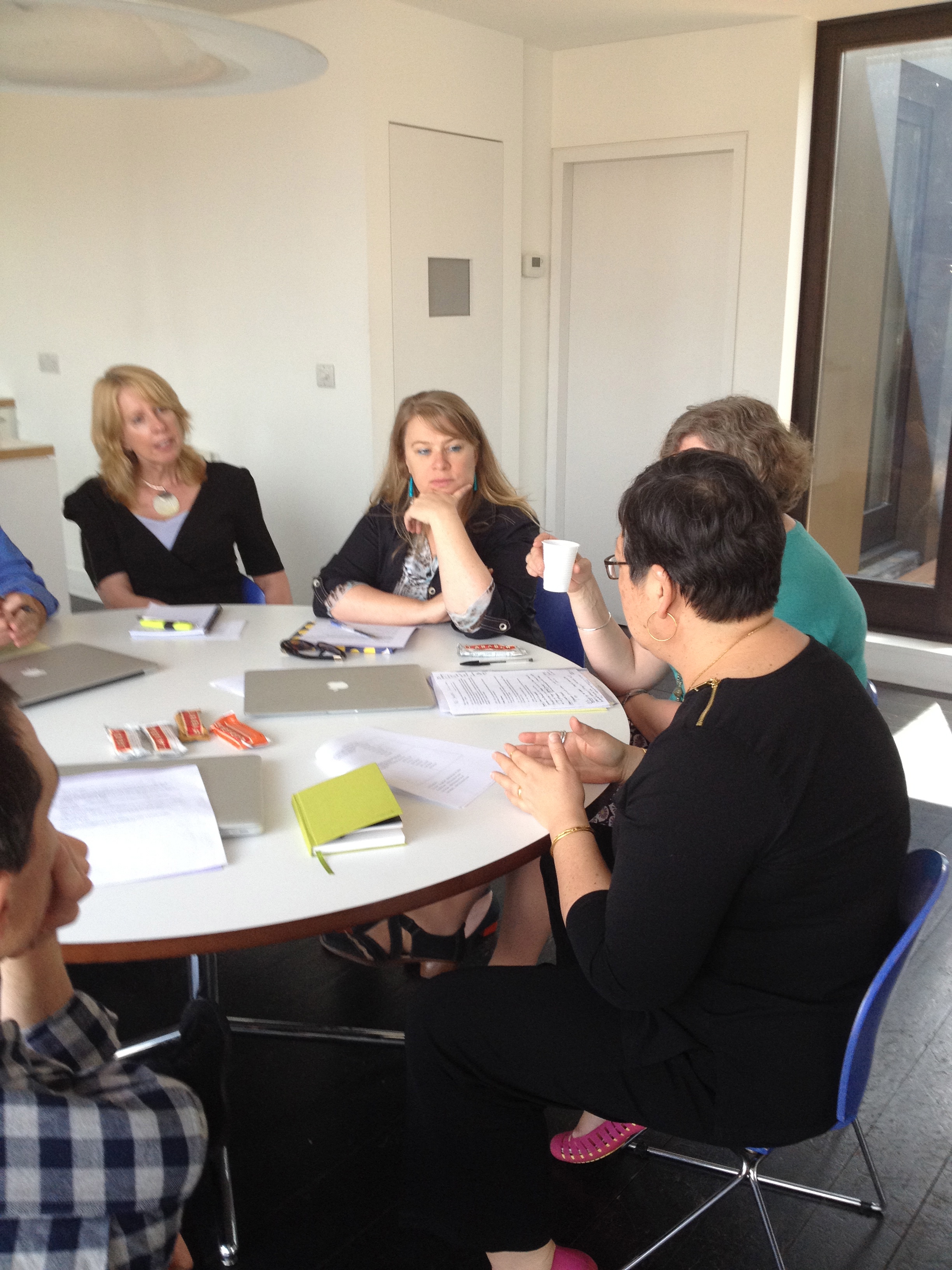
As the symposium was coming to a close, we were guided to reflect on the past two days. Many people realized that the rapid increase of standardization and data driven initiatives was happening across all contexts. However, many individuals commented that the conversations over the past two days were “energizing.” Being in conversation about big issues across international contexts made many teacher educators realize they were not alone. In fact, many commented they wanted to keep up the momentum by further collaborating and “making some noise” in teacher education.


IMG_2617


Once again, we’d like to thank TUG Agency for so graciously hosting us. TUG provided a vibrant and exciting atmosphere for our symposium to take place. Check out their website at: http://www.tugagency.com

Thank you!!!

Learning and Handwriting and the 21st Century

I (Yiola) have shared a number of posts that consider the changes and loss of  all that 21st century literacies bring.  I have shared media clips and links to spoken word poetry on the demise of social media.

It’s funny because I myself am an avid user of new literacies; most digital, critical, social… you name it, I  engage with it.  Yet, I strongly feel a sense of loss in communication, social consideration, and a certain kind of creativity and thinking.  Then, I came across this article:

An interesting article that reports handwriting — traditional handwriting – has benefits far surpassing penmanship. I am interested in the art of handwriting… its skill building potential… its power to foster literacy, communication and creative thinking. I am inspired.  For developing my children’s language and literacy I will use iPad Apps for building phonemic awareness but I will also continue to encourage and be excited about handwriting well into their young adult years and I will encourage my student teachers to do the same. What do you think?

Open Street Maps: Taking Action and Focusing on Multiple Perspectives

Nora Young, the host of CBC Radio’s Spark, was the keynote speaker of a conference I (Pooja) attended yesterday. She spoke about data science as a growing field of study, in fact, many universities have created departments of data science.  With the growth, Nora noted, comes a need for what she called critical data literacy. She illustrated the need for critical data literacy with an example of mapping technology. Google maps have quickly become the go-to application for finding directions and/or locating businesses on a map. However, being critically data literate,  guides us to  question like: who gets to decide what appears on a map? The answer is most often large multi-million dollar enterprises like Google.

To disrupt google’s monopoly of the growing online map industry, initiatives like Open Street Maps have been created. In January of 2014, The Guardian commented on the need for applications like Open Street Map. They likened it to  “a wiki-like map that anyone in the world can edit. If a store is missing from the map, it can be added in by a store owner or even a customer. In terms of display… each person or company who creates a map is free to render it how they like..” (Wroclawski, 2014) A site, which allows community members to add and edit a map of a community to which they belong, is powerful because it positions community members as experts.

I am looking forward to bringing this mapping technology into my classroom. I hope my students can create maps of their neighbourhoods.

A snapshot of a map made by community members:

openmap

Read more about Open Street Map:

http://www.theguardian.com/technology/2014/jan/14/why-the-world-needs openstreetmap

Full Day Kindergarten in Full Swing

Tis the season for parents  with children turning 4 years old to become acquainted with formal schooling and the Full Day Kindergarten (FDK) expectations. Ontario, Canada has implemented full day Kindergarten for all students across the province.  I (Yiola) am experiencing first-hand the excitement and apprehension of sending my child, a darling, vulnerable, sensitive, sweet girl (Sylvia Clare), to school for 6.5 hours a day, 5 days a week.

Jumping online, I have read reviews — some for and some against — FDK and many focusing on children’s language and literacy development.  See below for some examples:

Full-day kindergarten children score highest in vocabulary, self-regulation

http://www.theglobeandmail.com/news/national/education/full-day-kindergarten-offers-no-academic-advantage-study-says/article17715532/

As a parent, my worry is not so much if my Sylvia Clare’s academic achievement will be more or less. As a parent, my worries are related to her well-being. Will she be happy? Will she love herself even more? Will she make friends and learn how to work/play with others well? Will she come home each day and share stories of interesting things she did and learned.   I most certainly want to her read and write, but in good time. I feel there is no rush and I want a pressure-free learning environment for her.

In a recent article  http://www.mykawartha.com/news-story/4397024-why-full-day-kindergarten-has-better-prepared-our-kids-for-grade-1/,  educational consultant Joan Ruf comments:

“One of the wonderfully positive things about full-day kindergarten is the appreciation of the whole child,” she said, explaining the program is successfully marrying the concepts of academic and emotional growth. “So it’s not just about reading and math. It’s about how are they doing. What are they doing for themselves.”     This statement gives me some comfort.

Schools in Ontario are now inviting parents to attend FDK information sessions in order to prepare ‘us’ for the year ahead.  I will be writing about my experiences going through this process and journaling Sylvia Clare’s experiences as she begins FDK in September.

As a professor of education, through the researching and teaching and writing and sharing,   what lies at the centre of my work  are the children and their development as happy, healthy, thoughtful, literate human beings.

The issues surrounding FDK: its purpose, process, and outcomes are vast. With a political election looming the topic of FDK is front and centre and how it will be managed and maintained is up in the air.

A Mighty Girl

mightygirl

My twin niece and nephew are 4 years old. They both have loved books for as long as I can remember. They are currently learning how to string together sounds from the alphabet. As a super-involved aunt and literacy teacher, I try to expose them to a wide variety of texts. I want them to be exposed to texts which promote inclusivity, challenge stereotypes, and inspire creativity. For this reason I was delighted to find out about the Mighty Girl website.

“A Mighty Girl is the world’s largest collection of books, toys, and movies for parents, teachers, and others dedicated to raising smart, confident, and courageous girls.”

The Mighty Girl collection of books aims to disrupt the status quo of how girls are represented in fairytales. The collection of books strives to break the ‘damsel in distress’ mold, and so feature girls in alternative fairytales who are courageous, smart, and daring! I know I’ll be picking up a few of these books to read with my four-year-old niece and nephew! Some of the book titles include:

  • Not All Princesses Dress in Pink (Yolen & Stemple, 2010)
  • Dangerously Ever After (Slater, 2012)
  • Thunder Rose (Nolen, 2007)
  • The Seven Chinese Sisters (Tucker, 2003)

A full list of fairy/folktales on the Might Girl site:

http://www.amightygirl.com/books/fiction/fairy-tales-folktales

A Lack of Diversity in Higher Education Leadership

An interesting article was published last week about the lack of    diversity to be found in university leadership. When looking at full-time faculty at universities across the U.S., 79% were white. The lack of diversity was found most among higher ranking faculty (tenure-track; leadership roles; presidents).  For example, while 44 percent of full-time faculty at degree-granting institutions are women, they hold only 29 percent of tenure-tracked positions at doctoral institutions — even though women outperform men 56 to 40 percent in national research grant awards.”

An excerpt from the article:

Thus, university leadership increasingly reflects neither the student body being led nor the world in which graduates will need to operate, a situation that engenders disadvantages and lost opportunities. Students benefit from having mentors and role models from their own racial, ethnic, or gender group — as do faculty who aspire to leadership positions. Institutional leaders can strongly influence institutional culture; having leaders from a wide range of backgrounds and experiences enriches the intellectual and cultural climate in which students learn. And exposure to and experience working with people from different cultural backgrounds better prepares students for the real-world working environment of their futures.

The excerpt above describes much of what is happening in the K-12 teaching force in North America. Although efforts are being made to diversify the teaching force, white female teachers remain the majority of K-12 teachers.

Read the entire blog here:

http://www.huffingtonpost.com/dr-ricardo-azziz/back-to-the-future-college-presidents_b_5200573.html?utm_hp_ref=education&ir=Education

Mental Health Education in Teacher Education

Earlier this week I  (Yiola) participated in a Webinar on the teaching of mental health in teacher education. The webinar was called: Reading, Writing, Resiliency: A Briefing on the State of Teacher Education Toward Positive Mental Health.

This post is connected to Shelley’s recent post on Supporting Student Well-being through Mindfulness Practices as it looks closely at what Teacher Education programs are doing to prepare teachers to teach about Mental Health and Wellness.  It was interesting to read Shelley’s blog and learn about what she does and how mindfulness as a form of mental health practices are developed in her course on Special Education. I would love to hear what other teacher educators and classroom teachers do to promote and teach about well-being.

During the webinar I learned some interesting facts:

– parents are concerned and interested to learn more about in 2 key areas related to mental health education: 1) Abuse and its effects on mental health (bullying, emotional abuse, exclusion);  2) Health (depression, substance abuse)

– after (parents and) doctors, teachers are the next care professionals in line who are expected to address children’s mental health

– There is a gap between the strong perception of teachers responsibilities for addressing issues of mental health and their preparedness to do so

In a study conducted on mental health teaching in teacher education in Canada, over 400 courses in 66 teacher education programs were examined against 4 criteria. The 4 criteria were related to the following: course title, words in the course description, topics in the course outlines, practices and relationships. The findings showed that only 2 of the 400 courses met all 4 criteria for the inclusion of mental health learning; 23 courses met 3 of the 4 criteria, 84 courses met 2 of the criteria and 104 courses met just 1 criteria.   This finding suggests that there is very little by way of teaching mental health issues in teacher education programs.

From the study 5 recommendations were made: 1) all teacher education programs should include at least 1 course that focuses on fostering postive mental health and resiliency; 2) classroom management courses reflect proactive resiliency oriented strategies; 3) in-service opportunities need to be available to practicing classroom teachers; 4) provincial curriculum should identify outcomes for health education; and, 5) mental health and resiliency outcomes should be in grades K-12 curriculum.

The webinar was helpful in outlining where we stand today in teacher education and mental health teaching.  I am very keen on thinking about how to move forward in teacher education programming.  Mental health and resiliency content can and should in included in many courses including but not limited to: all curriculum areas (i.e. literacy, social studies, math, health and physical education); special education, methods (i.e. classroom environment, classroom management, collaborative practices).  There needs to be a shift in foci, moving beyond the traditional Health and Physical Education curriculum (i.e. the Healthy Living strand) into a more comprehensive way of thinking about well-being and resiliency.


Photo Highlights from AERA 2014

The 2014 American Educational Research Association (AERA) conference took place this year in Philadelphia. I was able to attend some fascinating paper sessions, poster sessions, and symposiums during my time there. I also managed to make it to the memorable museum district area of Philadelphia. Here are some photo highlights below:

My dear friend and research colleague, Cathy Miyata, presenting her paper Negotiating Multiliteracies Pedagogy in International Preservice Teacher Education:

photo6

A fascinating panel titled Defending, Reforming and Transforming Teacher Education: The Future of Teacher Education in the United States. This panel’s members included Linda Darling-Hammond, Timothy Knowles,  Kwame Griffith, and Kenneth Zeichner.

photo3

An important symposium on ways teacher education programs around the world  are preparing preservice teachers for marginalized students. The symposium entitled Building Infrastructure and Capacity Research Innovations Worldwide That Prepare Teachers for 21st Century Schools That Service Marginalized and Poor Students in Transnational Contexts. Below is a photo of Dr. Clare Kosnik sharing findings from our international study on Literacy Teacher Educators:

photo5

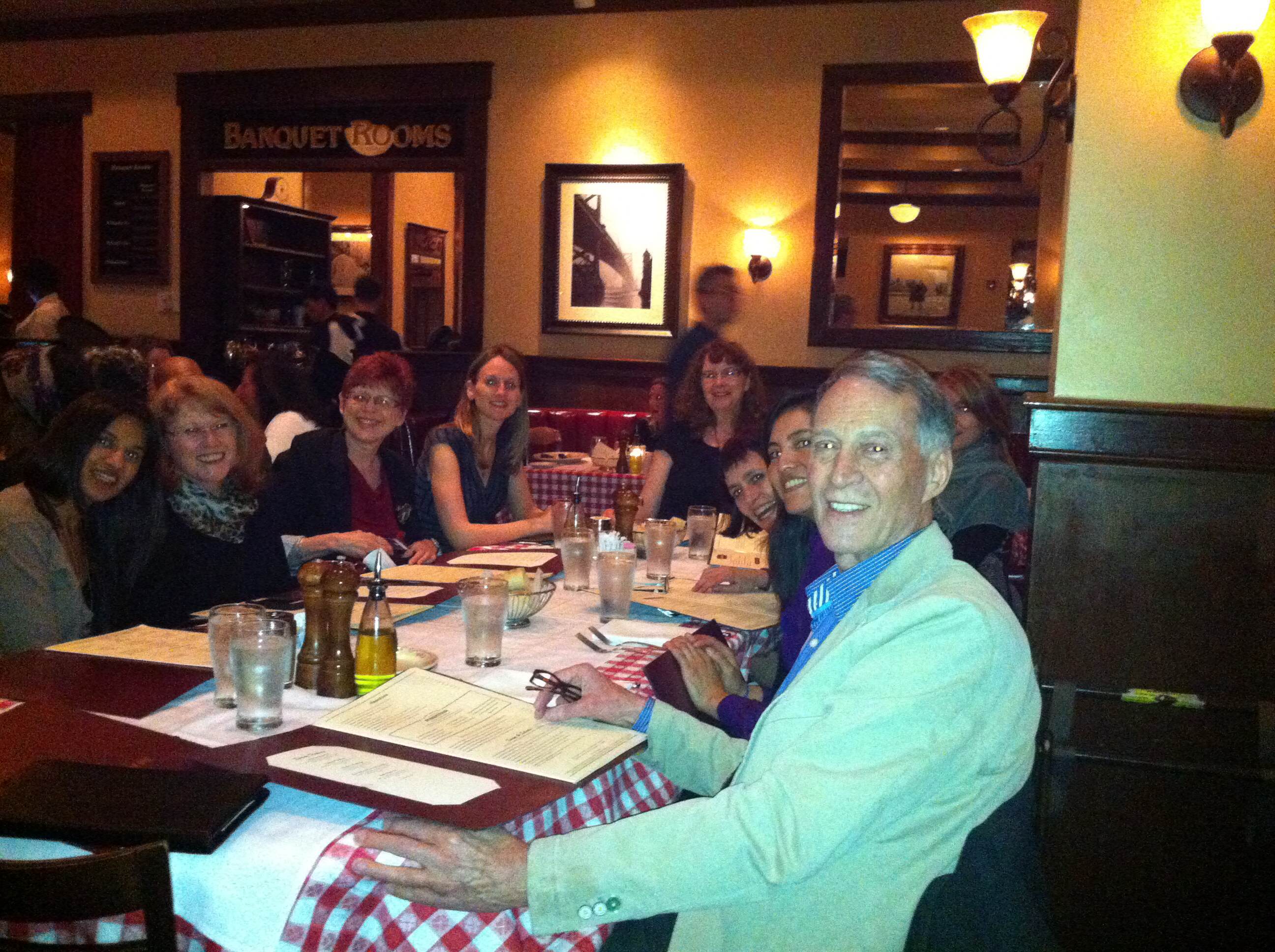
A relaxing dinner with our research group, Becoming Teacher Educators.

photo4

Finally, a photo from the museum district which is looking south on Benjamin Franklin Parkway. I was standing on the iconic steps where Rocky trained while taking this photo!

photo2-3

Replacing Textbooks with Flipboard

flipboardOne of my(Pooja) favourite, and most used, apps on my smartphone is Flipboard. If you don’t have it, download it now! It’s free, it’s fun, and Jeff Utecht (educator, blogger, and author) believes it could revolutionize the textbook. Utecht calls Flipboard’s magazine a “game changer” in the classroom because the students can easily help contribute to content:

I want students to have the ability to add content to their “textbook” as well. Content that we can discuss in the classroom, that can spark conversation…the real reason we come together…to be social. What if we could have all the students in a class adding to the “textbook” have them find things that interest them on a given topic and allow them to “flip” that into our “textbook” as well. Flipboard allows that too…where you can invite others to add to your Flipboard magazine.

 Utecht also explained how when using Flipboard along with social media a real time “class magazine” could be created:

…The class magazine (aka textbook) becomes part of that but so does other things that interest them. Also…..because you can search a twitter hashtag and add that to your Flipboard. A class hashtag now becomes part of the conversation. Where kids can tweet something, hashtag it with something like #engp1ju (English Period 1 Jeff Utecht) and have all that content in their new “textbook” as well.

 I think this a wonderful way to re-imagine the textbook. I will attempt to co-create a Flipboard magazine with my class and report back! Happy “flipping!”

Read more here:

http://www.thethinkingstick.com/flipboard-as-a-textbook-replacement/


Assessing Multimodal Projects

You may remember, in a former post on Mar. 21, 2014, I (Cathy) shared some of my pre-service students’ multimodal projects.  The dilemma facing me after these wonderful creations were submitted, was how to assess them.  As these were only part of a larger assignment, I already had a rubric in place for whole project, but after seeing the brilliance of the multimodal aspect, I felt these alone warranted more thought and introspection on my part.  Having a background in the arts, I was used to assessing creative process and final product, but this was different.  Although artistic and expressive, this wasn’t “art”.  Hence, I looked up a number of sources on assessing multimodal work and discovered a few different opinions.

Kalantzis, Cope & Harvey (2003) argued that a multimodal assessment needs to measure the creative process and the collaborative skills demonstrated.   Jacobs(2013) suggested it wasn’t about the final product, but “watching and noticing what students are doing and then using that information to guide the students toward new skills and knowledge”.  In the end I sought out the opinion of Gunther Kress, the founder of the Multimodalities Theory.  Kress (2003) explained that representation and communication were an affective/cognitive semiotic process and this must be taken into account in the assessment. He suggested that I, as the teacher [educator] should not ask “How does this project match what I wanted or expected?”, but instead should ask, “How does this project give me insight into the interests and motivations of my learner?”  I found this question quite insightful. In the end, I used Kress’ question to guide my feedback, which will hopefully guide the students toward new insights and knowledge.  The required ‘grade’ was based on a combination of the learners’ expressed interests from within the context of the whole project (which was on diversity), the creative process and the collaborative nature of the work.

Through this process I discovered that assessing in the new age of multimodality demands mindfulness, insight and the ability to make many connections.  To be effective, it also requires that the teacher educator, or teacher, know his/her students well.  This type of assessment takes time, but it is much more meaningful. I have to admit, as much as the students loved doing these multimodal projects, I loved assessing them in this “new” way.  We all got more out of the process.  Below is a link to one more student project expressed as POW TOON digital creation.  How would you assess it?

POW TOON Link

http://www.youtube.com/watch?v=9uM68P2rk24&feature=share&list=UUdKEvJ3G8Z-W-geAhhsX9IA