Category Archives: education

Time Out

I (Cathy) read this lovely blog the other day and wanted to share it with you. It seemed appropriate for this time of year, when so many people seem rushed and pressured, preparing for the holiday season.  I think it applies to teachers and teacher educators alike.  But most of all, it’s about our students.  Where some of us live, we can’t take our students outside due to the weather, but I think if you got creative, you could think of someway for them to “unwind”.

I played hooky a few weeks ago.  I filled out my paperwork for half a personal day and took the afternoon off.

It’s not something that was easy for me to do.  I’m usually overcome with guilt and angst whenever I take time off.  I can count on one hand the times I’ve actually taken a personal day, and sick days are used only when I am so ill, I can’t muster the strength to crawl to the shower—one every few years. There’s too much work to be done to miss school—the students need me too much, right?

So, I don’t take time off.

Yet that day, I did. Where I live, the weather can be fickle and complicated.  We never really know what’s going to happen on any given day. But this month, we were given a delightful weather gift.  We had six uninterrupted weeks of perfect days—blue skies, exquisitely clear air, and leaves that turned color slowly.  Every day dawned beautifully—and stayed that way.

But I knew our streak was almost over.  Forecasts predicted plunging temperatures and heavy rain. That’s why, on a whim, I decided to take the afternoon off.

I went home and settled on our back patio.  I sipped a cup of tea and read my way through a few back issues of my favorite magazines.

As the afternoon came to an end and it came time for me to go gather my children from their school, I thought about how peaceful and easy the afternoon had been. I felt full of energy. I’d put a stop to the hamster wheel and it felt terrific.

Since I felt so good after a simple and easy afternoon, I wondered how something like that would feel to our students.  I worry about them. I fear they feel the effects of our “teacher anxiety.”  Amid the push for high achievement, along with the immense pressure to have students reading and writing on grade level—now!—we forget that sometimes we all just need a break. It doesn’t have to be pedal-to-the-metal every moment of every day, right?  Certainly not.  In fact, I’d argue that kind of approach does more harm than good.

So, to all literacy teachers out there, grant yourself permission:  Sometime soon, on a day that feels just right, let yourself put down the lesson plans for an afternoon.  Ignore the to-do list and the upcoming assessments and the small-group conferences you have planned.  Instead, gather your class and tell them to pick out a light book or magazine.  Take them somewhere lovely and different, away from their routine.  Join them in sinking into a comfortable spot to read—in a corner of the school library, beneath a favorite tree in the courtyard, or spread out on the bleachers near the football field.  It doesn’t matter where—just so it’s away and interrupts the routine of intensity. Make sure it’s easy.

 Jennifer Schwanke                                                                                                                                      Contributor, Choice Literacy

https://www.choiceliteracy.com/articles-detail-view.php?id=2353


Financial Literacy Advocate?

I (Cathy ) have met many literacy specialists, but never a  financial literacy advocate- until I met Shannon Lee Simmons. Her delightful sense of humor, bubbly personality, and brilliant financial mind make an intriguing combination.  Shannon is a Certified Financial Planner (CFP), Chartered Investment Manager (CIM), media personality, personal finance expert, and financial literacy advocate. She was named one of Canada’s Top 30 Under 30. Her passion: helping everyday people survive the new economic climate through personal finance, ethical investing and small business advice.

I explored her New School of FinanceTM   which is a collection of very practical and realistic on-line courses regarding every day finances. And the advice is excellent!  She truly makes finances understandable and interesting.  The list of her courses illustrates her quirky sense of humor and reveals her target audience- the millennials:

Can You Afford to Buy a Home?                                                                                                                            Sole Prop School                                                                                                                                              Budgeting with Your Boo                                                                                                                                        Don’t Get Effed at Tax Time                                                                                                                                    Baby Proofing Your Finances                                                                                                                                Track that Shiz                                                                                                                                                    GST/HST- The Good,  The Bad + The Ugly

I am fascinated by Shannon’s savy use of technology (she is wild about social media, especially Twitter) and how well she understands her market.  I suspect this very up-and-coming entrepreneur will do very well for herself and could probably give lessons to financial literacy teachers on how to engage an audience.  Check out her web site and view some of her videos.  You will know exactly what I mean.

http://www.newschooloffinance.com

shan

Shannon Lee Simmons:  Financial literacy advocate


Chimamanda Ngozi’s Book Being Distributed to ALL 16- Year-Old Students in Sweden

I have written about the powerful words of Ms. Adiche before. Her words stop us in our tracks and make us re-consider notions of identity, language, and gender. She has a new book out entitled We Should All Be Feminists. It is based on a speech she delivered at a TEDx conference a few years ago. I have already ordered it!

The most amazing thing about her new book is how it is being distributed. The Swedish Women’s Lobby has decided to distribute Adiche’s book to every 16-year-old student in Sweden. In a CBC article, publisher Johanna Haegerström believes her book will be an entry point into a larger discussion about gender roles in society. He said:

“Our hope is that the Chimamanda Ngozi Adichie text will open up a conversation about gender and gender roles, starting from young people’s own experiences”

adichie-composite

http://www.cbc.ca/books/2015/12/we-should-all-be-feminists-by-chimamanda-ngozi-adichie-is-being-given-to-every-16-year-old-in-sweden.html

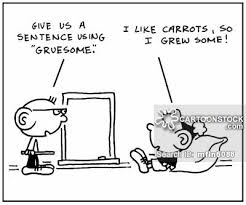
What Children Hear

grew some

This charming cartoon reminded me (Cathy) of an incident I had as a young child.  My family was staying at a cottage of friends’ located on the shores of James Bay.  One evening we all sat by a large camp fire on the beach.  As the children roasted marshmallows, the parents chatted.  I happened to hear the grown ups  mention “fairy.” Puzzled I listened more intently.  “Oh, she’s grand to see, really.  She turns around right over there, off the end of our dock.”  My parents’ friend pointed out over the dark water.  I looked at my dad.  He was listening  and nodding.  No smile.  “Really?”  asked my mother.  “I’m surprised she’d come so close to shore.”  “Yeah, so were we,” said the friend.   “We’ve seen her a few times now.   All lit up, reflecting in the water.  Quite a sight really.  Maybe you’ll see her.”

I remember holding very still and being slightly afraid.  I was sure they had told me fairies weren’t real…  yet here they were discussing “her” like they would talk about dinner or the car.

I watched for “her” but never saw those wonderful lights.  Perhaps just as well.  It gave me a couple more years of believing in the impossible.

Teacher Education through an Ethnographic Perspective

A book that helped me (Cathy) process my observations more astutely is Ethnographic Eyes : A Teachers Guide to Classroom Observation, by Carolyn Frank.  This book describes how a teacher educator trains her student teachers to see the classrooms they visit through an ethnographic perspective.  To accomplish this, the teacher educator used the tool described below:

I used an activity called Notetaking/Notemaing to help student teachers understand the differences between their own personal perspectives and an insider, classroom perspective. Notetaking/notemaking was presented to the student teachers as an ethnographic tool to help them observe in classrooms.  The student teachers were asked to keep an observation notebook and to divide their observations into two sections: Notetaking (or descriptive fieldnotes) on one side and notemaking (interpretations of what is being observed) on the other side.  We then showed them either a photograph or a video of a classroom.  In this way, it was hoped that the student teachers would begin to reflect on how their own personal biases interfered with an objective account or differed from the classroom members’ perspective.  (p. 9)

This tool was used by this teacher educator throughout the year.  She also showed her student teachers how to use it as a means of data collection towards effective assessment.  At the close of the year, one of the student teachers stated, “[e]thnography has prepared me to think in a new way: a way that makes me think critically about everything that happens in my classroom.”

Try watching part of a classroom literacy event or a video of a class just to observe, then watch using notetaking/ notemaking.  You may be surprised by what comes up.

E eyes


Treasuring Picture Books

Like many literacy teacher educators, I (Cathy) sometimes tasked my student teachers with bringing in, or finding pictures of (if possible), their favourite picture book from childhood. My student teachers loved this task, and were excited when someone else brought in the same book.  I often saw Mr. Muggs books; Robert Munch books (especially I Love You Forever); Amelia Badelia; Madeline, and; super hero comics!  But I never saw mine.

As late as grade five, I would sneak the book home, terrified of being teased or bullied for taking it out of the library.  It was a book for little children after all, but I loved it so. It was worth the risk.   It was called, When the Root Children Wake Up.  I have searched for a hard copy to own, but have never found one.  I have discovered many newer versions (Helen Dean Fish’s, Audrey Wood’s) and as lovely as these illustrations are, they simply don’t touch me the same way. 

            Recently, however, I discovered my treasured version posted in the International Digital Children’s Library. ( http://www.childrenslibrary.org/ )  The author is listed as Sibylle von Olfers (1881–1916), and the text is in German.  I suppose the book was originally in German. I had no idea the book was so old.  The title is different than I remember, but I actually held my breath when I saw the illustrations again.  Those were the pictures I held dear: so simple, so precious.  I still love them.

What’s your favorite picture book form childhood?

wake up the root childrenroot mother

parade

Reflection on My Teacher Education Program

I (Clare) am currently teaching a graduate course Current Issues in Teacher Education. The first assignment asks students to:

Write a reflection paper on your experiences in a professional program (teacher education, Teaching English as a Second Language ….). Provide a very brief description of the program. Some questions to consider are: What were the strengths/weaknesses of the program? How well did the program prepare you to assume the duties of a teacher? What were the limitations of the program? Have your views of the program changed since graduation? How could the program have been improved? Did the program prepare you to assume the duties of a teacher (or other position)? Do NOT respond to all of these questions. Select one or two and respond to them. In the fourth class of the course, you will work in small groups and share your paper with your fellow students.

Since all of the students in the course are teachers they have a good perspective on their program. Their assignments were so stellar I felt these would be of great value to share with other teacher educators. Over the next few weeks I will be sharing these papers. I learned much and I suspect you will too. I have changed the name of the university so that no school of education is identified.

In June 2011, I graduated from a 2 year Teacher Education Program at the YYY University. Freshly hired by two boards, I felt both the nervous anticipation of one traversing into uncharted waters and the confidence of one for whom the world had suddenly opened. I believed I was entirely prepared. In many ways, I was as prepared as possible after two years of training; there will always be aspects of my chosen profession that can only be learned through experience (for who could ever predict all the potential dilemmas and baffling questions raised by students, colleagues, or parents over a lifetime of teaching?). As a future teacher-educator, I can reflect in retrospect on some programming changes that may have augmented the skills and knowledge I carried with me into my first year of teaching.

Designed to Meet Current Needs

I have many accolades for my two-year teacher education program. The XXX Program was well-designed, with a clear vision to produce teachers who were reflective practitioners. To accomplish this, it had a well-balanced, thoughtful curriculum which seemed to have an equal basis in academic readings, instruction in pedagogy and learning development, courses in Ontario Curriculum subject areas, and four practice teaching blocks. Professors treated student teachers with respect and showed genuine interest for our ideas and experiences. They also drew on their own examples from time in the classroom and did not seem removed from current issues in education.

Over and above our regular courses, we could attend workshops which addressed other current educational needs, such as how to teach to English Language Learners; community-building through TRIBES; and technology in-services. The program also offered the opportunity of conducting our own Master’s Research Project, without which I would not have had the confidence to consider pursuing further graduate studies.

In addition to courses in the various subject areas of the Ontario Curriculum, the XXX Program also had a phenomenal Special Education and Adaptive Instruction course that taught me concepts and strategies I use on a daily basis in my own classroom. Having talked with many colleagues who did not have any special education training in their pre-service training, I feel this was a major boon to the XXX Program. Every teacher will encounter students who learn in different ways and will need to know how to accommodate or modify as needed.

While I have no criticisms of this course, it could easily be extended to two years, to incorporate a greater understanding of the multitude of needs teachers have to support in the classroom. A longer course may also have allowed for more detailed instruction in Individual Education Plans, which all teachers will need to write and should receive training to do so (though many of my classmates and I accomplished this by taking a Special Education Part 1 Additional Qualification offered to us at the end of the program). Then as now, I was proud to be a part of a program that saw special education as an integral part of a pre-service program design. As I return to University YYY in pursuit of my doctorate, I feel discouraged to see no courses available in this important field.

Multiple Placement Opportunities

The XXX Program offered four placements to teacher candidates, which allowed me to observe and practice my burgeoning teaching skills in different settings. Perhaps naively, I hoped I would see the innovative strategies, clear assessment criteria, and classroom community-building I was reading about play out in front of me, but that was not always the case. I was very fortunate that my first Associate Teacher (AT) was exemplary. Not only was she the only AT to teach me how to do assessments, I will never forget watching her teach a lesson that did not go as expected. She turned to me and said, “ZZZ, that’s what happens when a lesson fails. It happens to everyone and it will happen to you. Sometimes, a lesson just won’t work, no matter how much you’ve prepared. Don’t take it personally; just plan it a different way tomorrow.” Of all my practicum experiences, that day had the greatest impact on me. Had she not uttered those words, I might have been afraid to plan creative lessons and to try new approaches; and any failure may have felt like a reflection on my ability. My other practice teaching blocks did not leave the same impression on me; yet I made the most of each and asked to teach up to one-hundred percent of the time, so I could try, and fail, and reflect, and try again, open to as much or as little input as my ATs were willing to give me.

Solely by chance, I was matched with one particular teacher who instilled in me such a significant lesson. While I recognize the ethical murkiness of having a mechanism for screening possible ATs, it is critical that student teachers have the chance to observe and participate in classrooms where teachers are masters of their craft. Every teacher candidate should have the opportunity to learn from an exemplary mentor (and hopefully four). Potential ATs should be screened and offered professional development in being an effective mentor (for example, debriefing with the candidate about their lesson designs and the thought process behind each pedagogical choice, of which the student teacher may be unaware). These powerful examples should show teacher candidates not only best practices but help them to envision the potential of teaching, rather than a reiteration of the rote learning they may have experienced as students going through the system. How can any new teacher feel confident to incorporate more current pedagogical concepts into their classroom without the chance to observe in practice? I consider myself lucky that I had one such placement.

An Enhanced Education

Like most things in life, the XXX Program was what one made of it. For a tenacious person like me, it met my needs beautifully. When I encountered an assignment I felt would be too similar to another, I asked the instructor if I could do it a different way (I even wrote a play exploring educational issues for a course, rather than write another reflection). When I was determined to have a placement in a classroom for children with Autism, I found the classroom and set up the placement myself, politely self-advocating with the placement coordinator. Later, I requested and received an intermediate placement, even though I was primary-junior, because one future goal was to acquire an additional qualification in that level. Throughout my time in the program, I ensured I had opportunities that were in line with my professional goals. Many of my classmates did not know they could be proactive, and went with the flow instead. They often grumbled about assignments they did not like or placements that were not what they wanted.

I wonder whether their experience would have been improved if we had had a pro-seminar course, similar to the one in the PhD program. Such a course could walk student teachers through the program itself, but it could also help students to identify their educational goals and be assertive in taking ownership for their learning; and it could shed light on the behind-the-scenes of teaching that pre-service programs do not have time to teach, such as how to manage difficult conversations with parents, principals, and colleagues. The kids are easy; for me, dealing with the politics of other adults is definitely the hardest part of teaching.

An Emphasis on Personal & Teacher Identities

Unlike other programs, the XXX Program did not gloss over the many realities of being a teacher. My classmates and I had courses where we created our resumes and practiced interview skills; we learned about educational law and the higher standard to which teachers are held (causing us all, no doubt, to secure our Facebook settings). My instructors emphasized work-life balance, and at the time, I believed I could imagine the many long hours and the sheer emotional and physical exhaustion I would later experience. Little did I know then the extent of it; two years ago I decided to adopt my dear cat Gerrie, to help me have something besides my students’ troubles to focus on when I got home! Without those words of encouragement (and reality) from my XX teacher-educators, I may have felt I was not cut out to be a teacher, on one of those difficult days (and thank goodness for Gerrie!).

For me, the XXX Program instilled in me a mindset. One of the most invaluable concepts taught was the importance of developing a teacher identity. By the end of the program, I came to envision myself as a compassionate and reflective practitioner, who believed that all students could succeed if given the chance and supports needed. As an educator today, this identity functions as my North Star, informing all my choices and interactions, to the best of my ability.

All of our courses taught the importance of community and challenged us to collaborate and share insights and strategies. My preference before the XXX Program was to work alone; today, collaboration is the key to my success with students, as I draw on the knowledge of other teachers, parents, and a multi-disciplinary team of psychologists, speech-language pathologists, and social workers, to name a few. I spend hours every week talking with my classroom partner, an incredible child and youth worker, about what worked, what failed to work, what we observed and learned about each student, and what steps to take next for each child going forward. I cannot imagine teaching any other way.

Some Concluding Thoughts

Teacher education programs provide the compass for beginning teachers. While I am satisfied with all that I learned in the XXX Program, I also recognize it is impossible to equip beginning teachers with every tool they will ever need for their journey. Teachers continually adapt to the ebb and flow as children come and go, new policies replace old, curriculum evolves, technology changes, and so on. So too, teacher education needs to reflect the current buzzwords and the shifting seas of the classroom. While teacher education programs are obliged to teach standard subjects, they also should to be flexible enough to address individual needs; teacher candidates may expect different levels of support to map out their professional goals. At present, more attention must be given to special education in teacher education, as general education teachers take on more responsibilities for exceptional students every day and often report feeling unprepared in my discussions with them. Practicum classrooms must be carefully selected to showcase best practices, in order to expose the teacher candidate to new horizons, leaving the bleak landscape of skill and drill classrooms behind them. Perhaps most importantly, teacher educators must allow students to explore and reconceptualise what it means to be a teacher and the qualities they wish to bring to this profession. Without these elements in the XXX Program, I would not have been ready to venture off into those uncharted waters in June 2011.


Caring through Social Media

Recently, a friend of mine (Cathy) started blog site (using blogspot.com) for a colleague that is being treated for cancer.  It is called Art for Adrienne (pseudonym).   This is a use of social media I had not encountered until now.  As an invited participant, I am encouraged to contribute artifacts of anything in my everyday life that strikes me as artistic and/or meaningful:  photos, quotes, poetry (found or created) film clips, pod casts, youtube videos, snippets of conversations, photos from trips, art projects, family stories, ect.  I love to look at the posts.  They are a brilliant demonstration of insight, caring, beauty, humor, wit, meaning, and joy.  The variations are enormous.  Some posts are long, some complicated, some simply a thought or a word.

Occasionally our stricken colleague comments, but that is not expected.  We know she is weak and tired.  The purpose of the blog is to let her know she is on our minds.  Unlike flowers, the posts never wilt, and the “visits” are not taxing on her. She chooses when to go on the site, day or night.  Her few comments indicate she loves the site.  With permission, I am sharing some of the posts below:

Dear Adrienne, Greetings again from my beach in Nicaragua.  I’ve embarked on an art project I thought you might like.  Before I left, I was given candles that look like pebbles.  I brought them with me.  I have been photographing them at dawn and dusk.  I hope you like them.  Sam

candle experiement 6candle in hand 5candle in driftwood


Hi Adrienne, we have arrived in Corsica , France.  It’s beautiful here.  Thinking of you.  Jason

cave for Adelle


Dear Adrienne,

One of my friends that I met in Banff hosted a “Visioning Board Party” recently. 

The idea was to collage a collection of images that speak to what you vision for your future. Some people choose very literally, some people just choose images that attracted them without too much interpretation in the process and then they looked at the final product for meaning. I ripped out enough images to cover at least three big bristol board pages and so had much to select from when filling up just one. 

Here is what I created. What do you see in my vision?

Hugs, Nicky

big pic

Do you have a stricken or needy friend (with internet access) who may benefit from such a blog?  It costs nothing to set up, but may have very meaningful results.