Category Archives: education

Exploring Literature Circles with Student Teachers

Yesterday with our pre-service PJ and JI literacy classes we explored the use of literature circles as part of a literacy program. The student teachers had read the novel Joey Pigza Swallowed the Key by Jack Gantos and in small groups took up the literature circle roles outlined by Harvey Daniels. After the student teachers had completed the literature circle activity the class came together again as a large group to consider and discuss the following questions: what did the student teachers think about the literature circle approach, would they use literature circles in their classroom teaching, what reactions did they have to the novel selected, and would they consider using this particular novel with their students. The student teachers engaged in an insightful and serious discussion of the questions posed. Reaction to the novel was mixed. Many of the student teachers appreciated the authors attempt to narrate the story from the perspective of a child labeled with an exceptionality (ADHD). However, student teachers also voiced their discomfort with various aspects of the novel such as the depiction of the young protagonist Joey’s interactions with various adults in the text, the issues of labeling and medicating children, the portrayal of abuse, alcoholism, and dysfunctional family dynamics in the novel.

Over the past few years Clare and I have intentionally selected this novel for use in the literacy course, in part, because the novel raises a number of serious issues teachers face in a classroom context. Each year student teachers communicate diverse reactions to the reading of this novel. For instance, we have had both student teachers who themselves have been diagnosed with an exceptionality, as well as, student teachers who as the parent of a child with an identified exceptionality tell us that aspects of novel truly resonated with their experience. In contrast, we have also had student teachers communicate their dislike and discomfort with aspects of the novel. At the end of class yesterday Clare and I reflected upon the rich class discussion, and once again asked ourselves if we should continue to use this novel with student teachers in the literacy courses. Our answer was yes. We do understand how and why the topics dealt with in the novel and the author’s portrayal of child-adult interactions are contentious and troubling. Yet, we also recognize the value of asking student teachers, who as educators will be work closely with children and families, to deeply consider the difficult and complex dimensions of a teacher’s role. As Lisa Delpit astutely reminds us “we do not really see through our eyes or hear through our ears, but through our beliefs.” As educators we must continue to challenge our beliefs about what it means to teach and to learn.


Facebook as a Tool for Pedagogical Reflection

I came across an interesting post from a museum educator who uses Facebook as a tool to reflect upon memorable moments of teaching and learning that arise during school tours through the gallery spaces. The only limits David Bowles imposes on the documenting of these moments of reflection is to “try to stick to the facts, and not interpret the child’s ideas…describe the context succinctly, and stick to a few sentences at most.” Check the some of the funny, quirky and insightful moments of pedagogical interaction highlighted in his post: http://educatorinnovator.org/status-update-facebook-as-a-reflection-tool/  The post offered me the opportunity to fondly recall and relive some of my past experiences with museum education.

museumed

The Power of Children’s Voices

My (Yiola) first blog post of the year. Happy new year friends and readers. Over the course of the holidays I developed a list of interesting topics and ideas that I am excited to share here on the site. Just as I was about to select one of my ideas to share, a student teacher sent this video my way today and it took precedence.  The messages may be imperfect yet the voices of children ~ of young adolescent women ~ make it so incredibly powerful for me. The energy and the passion and the inspiration rising from literacy make it a worthwhile share.  The rhythm alluring, the tone inspiring, the messages thought-provoking, the effort immense.  If literacy inspires young people to speak in such passionate ways about such timely issues, then I say BRING ON LITERACY TEACHING.

Enjoy.

Encouraging Inquiry at an Early Age

I (Cathy) was inspired by the posting below of a young girl’s science experiment.  It actually made  make me rethink purchasing organic foods.  From an educator’s point of view,  it also demonstrated how significant inquiry, experimentation and science literacies are, and the impact they can have, especially when conducted at an early age.  While watching the video, I wondered if the process of doing this experiment will influence this young girl’s future educational leanings.  I had the pleasure of visiting my own daughter recently and was awed as I watched her conduct experiments with bacteria in her lab.  She became a biomedical researcher and is published in medical journals all over the world.  Science is her life now, and it all started with simple biology experiments in high school.

Sarah


Who knows what we inspire in children by encouraging them to build inquiries and conduct purposeful experiments.  The young girl in the following video may well be in the same position as my daughter some day.

http://www.spiritscienceandmetaphysics.com/this-little-girls-experiment-will-change-the-way-you-think-about-food/


Scaffolding Text Selection

I came across the graphic below on Twitter entitled Helping Students Find the Right Book. It reminded me of our pre-service P/J and J/I literacy courses yesterday in which we discussed the place of the novel study in the classroom and the importance of engaging students in the reading of a variety of genres.

FindBook

Visiting the Rishi Valley School… Part 1

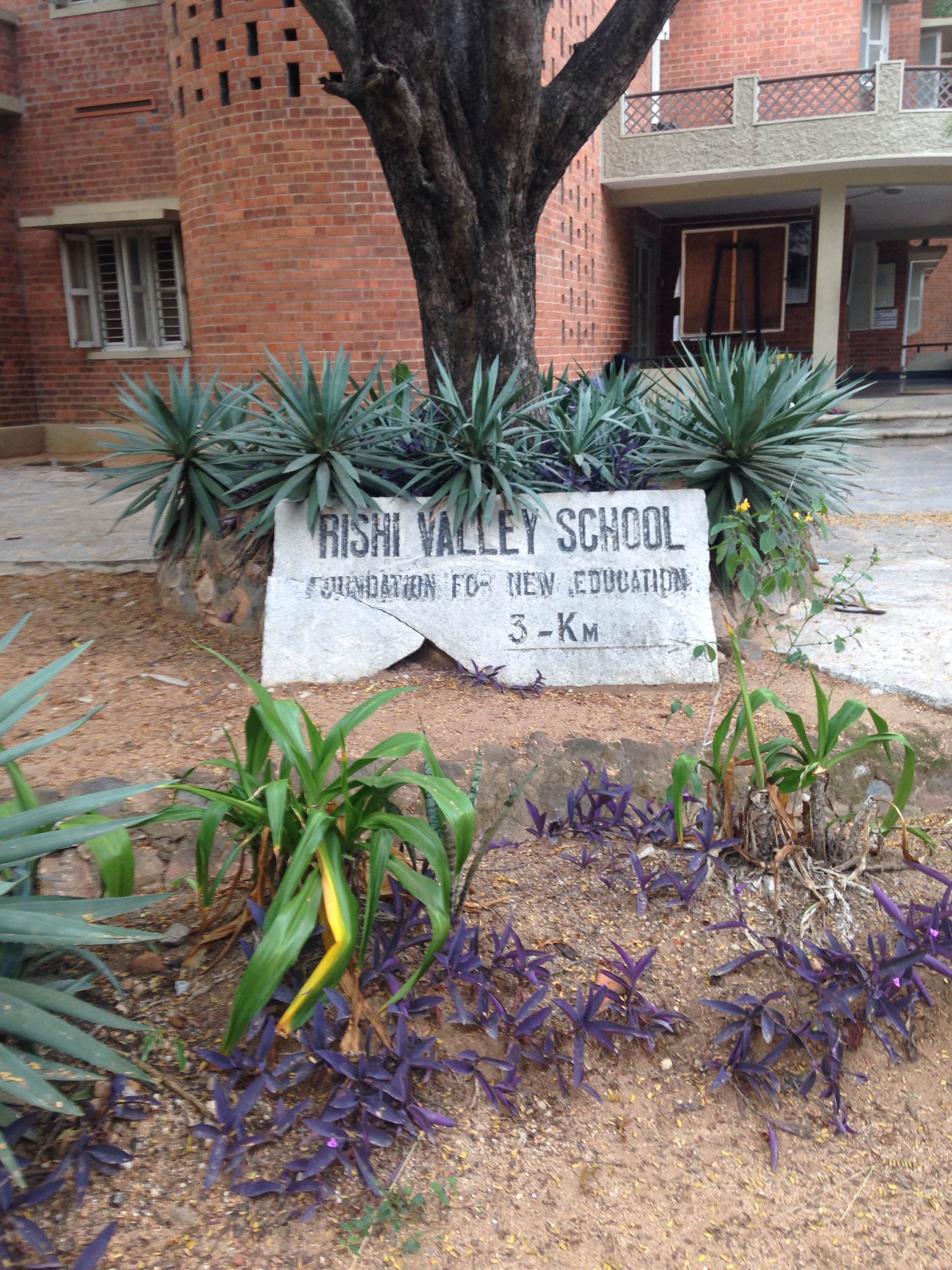
I (Pooja) have just returned from an extraordinary two days at the Rishi Valley School in India.There is simply too much for one blog post, so I will share my experiences over a few blog posts. In this blog, I will focus on the principles which guide the school along with a photos of the campus.

The alternative school is guided by principles of holistic education which aim for the growth of student’s intellectual, emotional, physical, artistic, creative, and spiritual potential. The educational philosophies of the Rishi Valley School include:

  • To educate students so that they are able to explore both the world and their inner being
  • To inculcate a love for nature and respect for all forms of life
  • To create an atmosphere of affection, order and freedom without either fear or license
  • Not to condition the students in any particular belief, either religious, political or social, so that their minds may remain free to ask fundamental questions, enquire and learn. (http://www.rishivalley.org/school/aims.htm)

The philosopher Jiddu Krishnamurti established the Rishi Valley School in 1962. There are now Krishnamuti schools across India and the world, but this was the first educational site. The school is located “in a sheltered valley in the interior of rural Andhra Pradesh…about 140 km north-east of Bangalore.” (http://www.rishivalley.org/school/aims.htm) When we first arrived we met with the school principal. He listened to us attentively, and when he spoke it was softly and always with purpose. He said something in that meeting that has stuck with me. He said that although the teachers differed in teaching approach, the important quality was that they approached their teaching from a place of care and love. By walking around the campus, speaking with teachers and students, and observing classes I witnessed this in so many ways. For example, each morning the students gather in an open-air auditorium for an assembly. My experiences with assemblies have usually included announcements, performances, or guest speakers. At the Rishi Valley school, the assembly is dedicated to singing. The students and faculty gather in a circle and sing for half an hour. At the end of the school day, after dinner, we gathered in the auditorium again to watch an absorbing documentary on particle physics called Particle Fever.

The following are a few photos of the campus and school activities. I believe they speak volumes about the principles from which the Rishi Valley School runs.

IMG_8011

The Rishi Valley School is a boarding school serving student from grade 4-12. There are approximately 325 students and 60 faculty members who live on campus.

IMG_8017

The morning all-school assembly. Students and faculty are seated on the ground.

IMG_8056

One of the many outdoor classrooms. My friend, a spoken-word artist, had the opportunity to facilitate a class here (More about that in the next blog!).

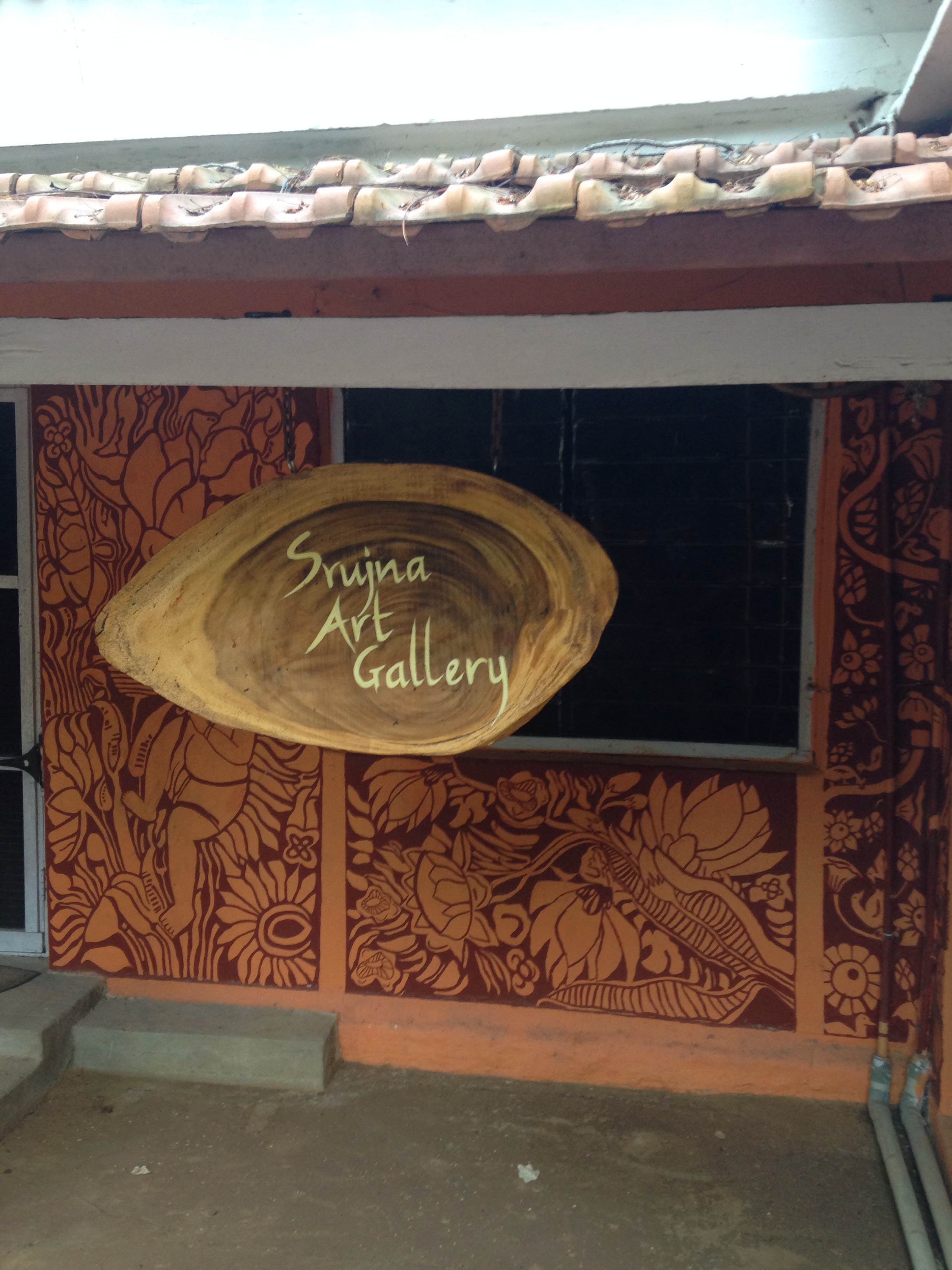
IMG_8009

The student art gallery. It was common to see students around the campus working on their art; fine art, poetry, and music permeated the student culture.

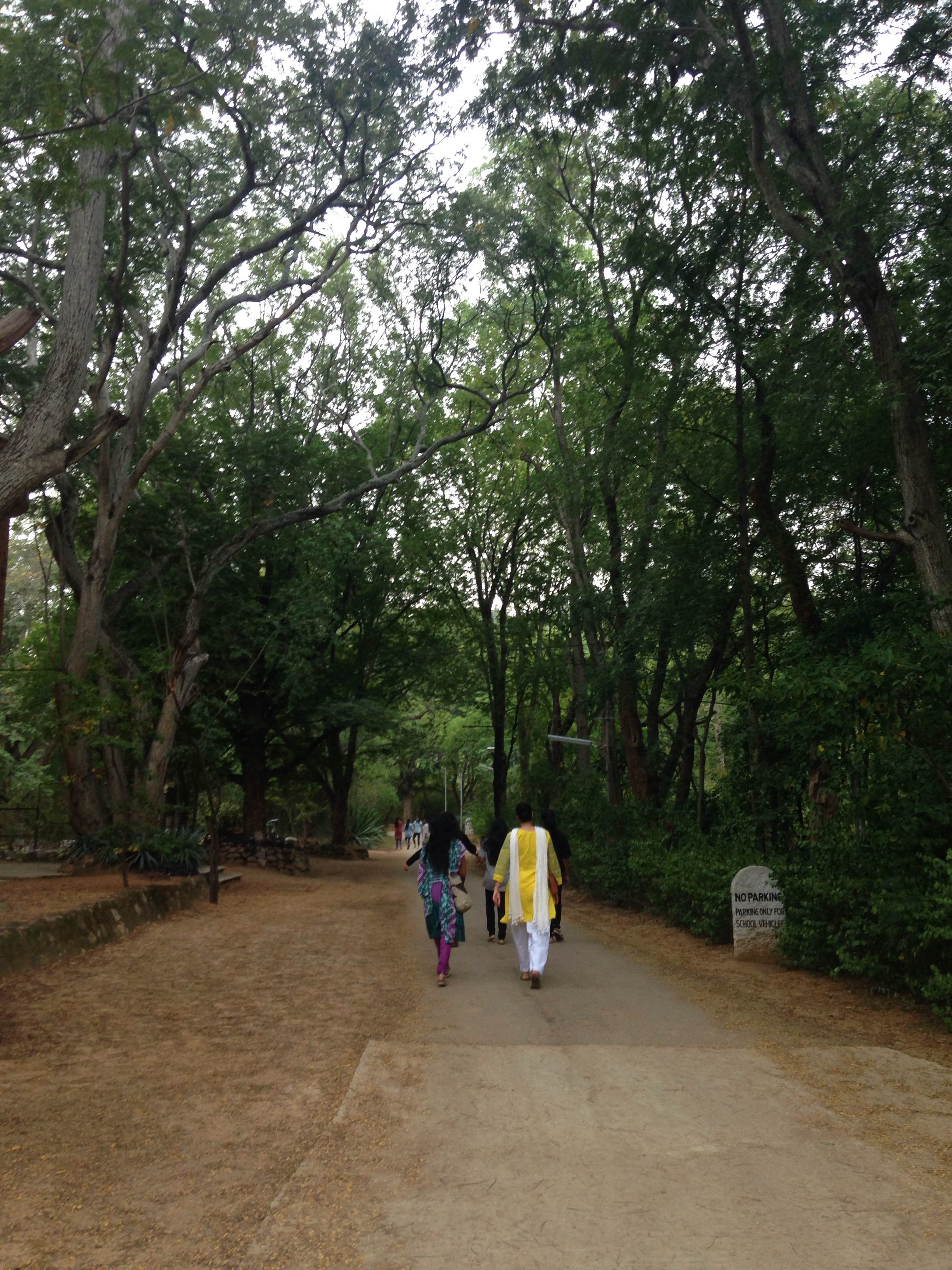
IMG_8013

Walking to class is a meditative experience. The campus is spacious, situated on approximately 360 acres of land. There have been over 200 species of birds identified, with the Indian Government officially declaring the school a bird sanctuary.

To read more about the Rishi Valley School: http://www.rishivalley.org/default.html

Clifford the Big Red Dog

Norman Bridwell the writer and illustrator of the Clifford the Big Red Dog books passed away Friday, at the age of 86. The popular children’s books have sold more than a 120 million copies worldwide. I have fond memories of borrowing Clifford books from my primary school library and reading about the loveable giant dog’s adventures. Initially publisher Scholastic only “offered the Clifford story through book clubs and school fairs.” The Clifford books eventually became available in stores in the 1980s. Bridwell suggested “Clifford’s imperfections were part of his appeal, making kids more forgiving of their own mistakes.”

Link to Toronto Star article to learn more about Norman Bridwell:

http://www.thestar.com/entertainment/2014/12/16/norman_bridwell_creator_of_clifford_the_big_red_dog_dead_at_86.html?app=noRedirect

Clifford

Teaching with a Sense of Humour

The What is Education?  blog for teachers states that having  a sense of humor is, 

 very useful in creating a classroom climate and the development of learning processes that are more healthy and enjoyable. In fact, Melissa Kelly said that a sense of humor is one of the keys to being a successful teacher. According to Melissa, teachers’ sense of humor can relieve tension in the air and can prevent the onset of disruptive student behavior in the classroom, and can be used as a way to attract the attention of students in the class. And most importantly, with its sense of humor, a teacher would show that he/she is a person who has a personality and mental health, to enjoy life, and be able to live a normal life without the stress of his/her career.

http://what-education.blogspot.ca/2013/06/the-importance-of-teachers-using-humor.html

I (Cathy) was delighted to see one of my student teachers, Carolyn,  using her sense of humor throughout her literacy lesson. Her grade one and two students found her quite amusing and would joke along with her.  Sometimes her humor was self-depricating, and sometimes it was as innocent as, “Who me?  I would never do that!”  It was never sarcastic and always made her students smile.  She even used it as a classroom management technique to keep the students focused and engaged.  When I asked her about  her technique, she said it made teaching and leaning more enjoyable.  Then she described an art lesson she had just taught using candle wax and water colours.  She drew a picture on the white paper using a white candle, so it was not visible.  While introducing the lesson she held up the paper and kept telling the students how proud she was of her picture.  When the students kept insisting there was nothing there, she applied the water colours and, of course, the picture magically appeared.  The humor came to play when she allowed each student to play the same joke on her as they created their pictures.  All of the magic pictures were displayed proudly in the hallway of the school.  Carolyn said the students still refer to it and giggle.

I think having a sense of humor is an asset.   We all definitely need to laugh more, especially in our schools.  Carolyn

Ontario Grade 8 Students are “Computer-Savvy”

An article in the Toronto Star reported that Ontario students rank among the most computer-savvy according to an international survey of approximately 60,000 Grade 8 students in 20 countries. The survey evaluated various aspects of computer use including how well students could collect, create and share information. The EQAO (Education Quality and Accountability Office) coordinated the Ontario portion of the survey and jointly issued the report with the Council of Ministers of Education Canada (CMEC). The report suggests that Ontario students scored an average of 547 points out of a possible 600.

Link to the article:

http://www.thestar.com/news/gta/2014/11/20/ontario_students_among_the_most_computersavvy_in_international_study.html?utm_medium=twitter&utm_source=twitterfeed&app=noRedirect


Guest Blog: Susan Elliott-Johns

I (Clare) am very pleased to share information about Susan Elliott-Johns’ recently published book.  I have read the entire book and found it fascinating. There is so little written from the perspective of Deans of Education this text will fill a void in the literature. Congratulations Susan. (Susan is an Associate Professor at Nipissing University Canada.)

In a recently published book, Leadership for Change in Teacher Education: Voices of DIVS-Elliott_PB_firstproof.inddCanadian Deans of Education I (Susan) have compiled a rich sampling of diverse perspectives on this topic in a unique collection of reflections contributed by deans of education across Canada. The focus of my inquiry, “What would we hear from deans of education invited to share their perspectives on leadership for change in contemporary teacher education?” invited deans of education to reflect on the research, policies and practices currently informing their leadership. In the current era of teacher education reform, I thought it would be informative and illuminating to explore insights deans of education might share to assist others in understanding their role as leaders of teacher education and change today. In other words, what does it mean to be a dean of education in the 21st century?

The results, fourteen engaging and provocative essays, offer emic perspectives and increased understandings of the complex nature of deans’ work. Their reflections explore significant concerns in relation to lived experience and the multi-faceted processes of leading change for teacher education in contemporary contexts – the transitions, change, and uncertainties inherent in these contexts. What really struck me about the reflections in these short essays is how clearly they underscore the critical role of deans in provoking, supporting and championing new ideas and approaches to pedagogy for teacher education. Their voices clarify many of the complexities involved in leading the change, but they also resonate with optimism and determination. That said, the limited scope of related research available also suggests urgent attention needs to be paid, in both research and practice, to better understandings of this increasingly complex role, and support for more coherent approaches to the preparation of deans and their sustainable leadership. More than anything else, I hope this project will inspire others to truly listen to the voices of these Canadian deans of education.

Further information, including the Table of Contents and a sample of the first three chapters, is available at:

https://www.sensepublishers.com/catalogs/bookseries/other-books/leadership-for-change-in-teacher-education/