Category Archives: critical literacy

Hip-Hop Ed Fosters Connections

An article in the New York Times highlighted the work of high school English teacher Brian Mooney, who uses the lens of “hip-hop ed” to engage students in the study of complex literary themes. A blog Mr. Mooney created to share his curriculum and student work caught the attention of a broader audience — rapper Kendrick Lamar visited the high school. Students from Mr. Mooney’s English class and the after-school poetry club performed spoken word poems and raps for Kendrick Lamar.

Link to article: http://www.nytimes.com/2015/06/09/nyregion/kendrick-lamar-rapper-who-inspired-a-teacher-visits-a-high-school-that-embraces-his-work.html


Reblogged: The Becoming Radical: Beware Grade-Level Reading and the Cult of Proficiency

I (Clare) am surprised/shocked/unsettled by the trend of  using levelled readers in classrooms. This is such a mechanistic way to approach reading. Yes we wants pupils to have success with reading but levelled readers have become the “diet” for many children. I found this article by Thomas really interesting. Here is the link: http://nepc.colorado.edu/blog/beware-grade-level-reading

Few issues in education seem more important or more universally embraced (from so-called progressive educators to right-wing politicians such as Jeb Bush) than the need to have all children reading on grade level—specifically by that magical third grade:

Five years ago, communities across the country formed a network aimed at getting more of their students reading proficiently by the end of 3rd grade. States, cities, counties, nonprofit organizations, and foundations in 168 communities, spread across 41 states and the District of Columbia, are now a part of that initiative, the Campaign for Grade-Level Reading.

However, advocating that all students must read at grade level—often defined as reading proficiency—rarely acknowledges the foundational problems with those goals: identifying text by a formula claiming “grade level” and then identifying children as readers by association with those readability formulas.

This text, some claim, is a fifth-grade text, and thus children who can “read” that text independently are at the fifth-grade reading level.

While all this seems quite scientific and manageable, I must call hokum—the sort of technocratic hokum that daily ruins children as readers, under-prepares children as literate and autonomous humans, and further erodes literacy as mostly testable literacy.

So who does this grade-level reading and proficiency benefit?

First, lets consider what anyone means by “reading.” For the sake of discussion, this is oversimplified, but I think, not distorting to the point of misleading. Reading may be essentially decoding, pronouncing words, phrases, and clauses with enough fluency to give the impression of understanding. Reading may be comprehension, strategies and then behaviors or artifacts by a reader that mostly represent (usually in different and fewer words) an accurate or mostly accurate, but unqualified, restating of the original text.

But reading may also (I would add should) be critical literacy, the investigating of text that moves beyond comprehension and places both text and “meaning” in the dynamic of reader, writer, and text (Rosenblatt) as well as how that text is bound by issues of power while also working against the boundaries of power, history, and the limitations of language.

In that framing, then, grade-level reading and proficiency are trapped mostly at decoding and comprehension, promoting the argument that all meaning is in the text only (a shared but anemic claim of New Criticism).

This narrow and inadequate view of text and reading (and readers) serves authoritarian approaches to teaching and mechanistic structures of testing, and more broadly, reducing text and reading to mere technical matters serves mostly goals of surveillance and control.

Consider first the allure of formula that masks the arbitrary nature of formula. Plug “The Red Wheelbarrow” by William Carlos Williams into a readability calculator—first in its poetic format of lines and stanzas, and then as a grammatical sentence.

As a poem, apparently, the text is about 4th grade, but as a sentence, nearly 9th grade.

The problem is that readability formulas and claims of “grade level” are entirely the function of the limitations of math (the necessity to quantify and then the byproduct of honoring only that which can be quantified)—counting word syllables, number of words in sentences.

Reducing text to numbers, reducing students to numbers—both perpetuate a static and thus false view of text and reading. “Meaning” is not static, but temporal, shifting, and more discourse or debate than pronouncement.

“The Red Wheelbarrow” is really “easy” to read, both aloud and to comprehend. But readability formulas address nothing about genre or form, nothing about the rich intent of the writer (for example, poetry often presents only a small fraction of the larger context), nothing about all that that various readers bring to the text.

And to the last point, when we confront reading on grade level or reading proficiency, we must begin to unpack how and why any reader is investigating a text.

As I have detailed, we can take a children’s picture book—which by all technical matters is at primary or elementary grade levels—and add complex lenses of analysis, rendering the same text extremely complex—with a meaning that is expanding instead of static and singular.

Text complexity, readers’ grade level, and concurrent hokum such as months or years of learning are the grand distractions of technocrats: “it is a tale/Told by an idiot, full of sound and fury,/Signifying nothing” (The Tragedy of Macbeth, 5, 5).

Grand pronouncements about grade-level reading and proficiency, then, benefit politicians, textbook companies, and the exploding testing industry. But not children, not literacy, and not democracy.

Leveled books, labeled children, and warped education policy (grade retention based on high-stakes testing) destroy reading and the children advocates claim to be serving.

Thus, alas, there is simply no reading crisis and no urgency to have students on grade level, by third or any grade.

The cult of proficiency and grade-level reading is simply the lingering “cult of efficiency” that plagues formal education in the U.S.—quantification for quantification’s sake, children and literacy be damned.

Trends in YAL

I try to stay connected with current trends in Young Adult (YA) Literature so I can have thoughtful conversations about these texts with the student teachers in our literacy courses. An article by Publishers Weekly highlighted some of complex topics currently being explored in YAL. Some of the themes YA publishers are prompting include texts “that look thoughtfully at mental illness and suicide” as well as “books that tell sophisticated stories about gender identity across the LGBTQIA spectrum”. To find out about specific YA titles exploring these topics see the following link: http://www.publishersweekly.com/pw/by-topic/new-titles/childrens-announcements/article/66587-what-to-expect-when-you-re-expecting-ya.html

Voices Into Action

My (Clare) friend David Booth introduced me to an amazing program, Voices into Action, which helps students develop their David Booth social awareness.
Voices into Action is an online resource dedicated to providing students with access to information on issues regarding human rights, prejudice, and hatred. Designed by curriculum experts, this program utilizes a wide variety of media to present compelling information on a history of human suffering, stemming from social injustice that is still a problem today. This site will give you the knowledge and tools to speak out, and to go even further by turning your voice into action!
I have looked through some of the resources and they are fantastic – discussion questions, videos, news analysis, case studies, in-person interviews ….. There are 6 units available: human rights; genocide, understanding prejudice and discrimination, immigration; and personal action. All teachers I am confident will find these resources so useful. Here is the link: http://www.voicesintoaction.ca/Home

Larry SwartzFYI – Larry Swartz my dear friend is one of the Project Managers of Voices into Action. From my experience any project that Larry works on is outstanding!

Heather Has Two Mommies

Heather Has Two Mommies, Lesléa Newman’s trailblazing picture book is celebrating a 25-year milestone. Many years ago advice from an acquaintance motivated Newman to write the book. She explained, “an acquaintance, who happened to be a lesbian mom, had stopped me on the street and as we were talking she said, ‘There are no books that show a family like ours. You should write one.’ ” Newman recalled. “I decided to take it seriously. I knew how those kids felt. When I grew up in the 1950s there were no books about a Jewish girl eating matzoh ball soup with her bubbe on Shabbat. I definitely felt like an outsider. It struck a chord with me.” Publisher Candlewick is celebrating by publishing an all-new illustrated edition of the book. See the link below to read more about how the book was initially received and some of the controversy surrounding the picture book: http://www.publishersweekly.com

Heather

Henry Giroux Named 1st Paulo Freire Chair at McMaster University

mcmaster

Henry Giroux was recently named the first Paulo Freire Chair in Critical Pedagogy at McMaster University. The McMaster Institute for Innovation and Excellence in Teaching and Learning established the chair position to honour scholars who have made a significant advancements in studies of education.

The McMaster website describes Giroux’s work:

Giroux has been a celebrated scholar, author and cultural critic for more than three decades. He currently holds the McMaster University Chair for Scholarship in the Public Interest, and is a professor in the Department of English and Cultural Studies.

His life’s work has been central to the development of critical pedagogy as a field — exploring intersections between the role of education in schools and universities, the role of educators and academics as public intellectuals, as well as topics related to public pedagogy and the educational force of the wider culture.

(http://dailynews.mcmaster.ca/article/henry-giroux-named-paulo-freire-chair-in-critical-pedagogy/#sthash.Qen0HP02.dpuf)

Giroux speaks about his recent appointment. He answers questions such as:

  • What does critical pedagogy have to say about education?
  • Why is critical pedagogy significant to the important work of teaching and learning centres?

Watch the video here:

https://www.youtube.com/watch?v=MUAGZEMl9rg

‘Shadiowing’ through Critical Reflection

I (Cathy) am currently working my way through a book on critical reflection.  ‘Working’ is the operative word, as this book, What Our Stories Teach Us, is set up as a guide to take us ( the teacher, professor, etc.) through an active critical analysis of our lives as educators using storying and  critical incidence.  The author, Linda Shadiow, loves to share stories herself.  Below is one of her favourites.  Apparently she has told it often and she uses it in her  book to illustrate how our stories can impact our lives.

A graduate student is attending a lecture being given by one of her intellectual heroes, the Brazilian educator and theorist Paulo Freire. She takes notes furiously, trying to capture as many of his words as possible. Seeing that she is keenly interested in what Freire had to say, his translator asks if she would like to meet him. Of course! She is introduced and he begins by inquiring about her work. Then he graciously agrees to respond to a set of questions she and her colleagues hoped they would get the chance to ask him. She is impressed beyond belief, but time prevents her from asking one last, difficult question. They meet accidentally once more at the event and he wonders if she asked all her questions? No, there is one more. “Given your work, we want to know ‘where is the hope’?” Without hesitating he moves toward her, takes her face in his hands, looks into her eyes, and replies, “You tell them, ‘you are the hope, because theory needs to be reinvented, not replicated … it is a guide. We make history as we move through it and that is the hope.”

(Taken from  http://www.facultyfocus.com/articles/teaching-professor-blog/reflections-on-teaching-learning-from-our-stories/ )

The graduate student is, of course, Shadiow.  She explains in her book that her experience with Freire never left her.  It energized and motivated her.  She had to “give back “.  She invites us as both reader and participant to rediscover our incidences of profound learning and let them move us.

shadoiw_

The Power of Children’s Voices

My (Yiola) first blog post of the year. Happy new year friends and readers. Over the course of the holidays I developed a list of interesting topics and ideas that I am excited to share here on the site. Just as I was about to select one of my ideas to share, a student teacher sent this video my way today and it took precedence.  The messages may be imperfect yet the voices of children ~ of young adolescent women ~ make it so incredibly powerful for me. The energy and the passion and the inspiration rising from literacy make it a worthwhile share.  The rhythm alluring, the tone inspiring, the messages thought-provoking, the effort immense.  If literacy inspires young people to speak in such passionate ways about such timely issues, then I say BRING ON LITERACY TEACHING.

Enjoy.

A recently published article on the pedagogical nuances of one teacher’s critical literacy practice

In addition to the amazing work our research teams explore on literacy teacher educators and the longitudinal study of classroom teachers, I (Yiola) am interested in the pedagogical work of teachers. In particular, I am interested in teachers’  work related to critical literacy: What do teachers do? How do they do it? What challenges do they face? How do they overcome those challenges? Why do they choose to teach critical literacy?

I have spent many hours in classrooms observing teachers’ work to see first hand their practices. I have interviewed the teachers to hear first hand their perceptions and understandings of their work. From this research we have begun to share some of the findings.

In our article entitled:  An Inquiry-Based Approach to Critical Literacy: Pedagogical Nuances of a Second Grade Classroom  we share the details of second grade teacher Sarah’s practices during her “Selfology Project”. The Selfology Project is a literacy project that required students to explore their identities, histories, families while thinking about issues of race and equity.  How the teacher constructed critical literacy learning through an inquiry-based pedagogical framework is shared.  Below is the abstract for the article:

This case study explores the pedagogy and practices of an elementary school teacher who combines inquiry pedagogy and critical literacy. The authors gathered data for this analysis by conducting two interviews with a classroom teacher and observing classroom practices 12 times over a 6 month period. Through a general inductive approach to analysis, trends emerged that showed the classroom teacher used practices that combined traditional inquiry pedagogy for critical literacy development. This research provides insight into how this elementary teacher negotiated and connected inquiry to critical literacy. Furthermore, the findings can inform scholars and teacher educators of successful teaching strategies as they prepare future generations of elementary teachers.

For access to the article please go to: http://www.ajer.ca

Several elementary classrooms were observed over the course of one school year. I look forward to sharing more from this study soon.

Literacy development and genres: The graphic novel

When I (yiola) first began teaching  (in 2008) I asked student teachers if they knew about graphic novels.  The response was that few students were familiar with the genre or how and why it may benefit learning in the classroom. With each passing year more and more student teachers indicate they are familiar with graphic novels and more and more student teachers recognize the genre inside classrooms.

Some use the term graphic novels interchangeably with comics with others differentiate the two as distinct styles. In either case there are strong arguments for why the graphic novel is a powerful genre for literacy development.

6 Reasons You Need To Start Reading Comic Books

http://neillcameron.blogspot.co.uk/2014/09/comics-and-literacy-part-1-why-reading.html

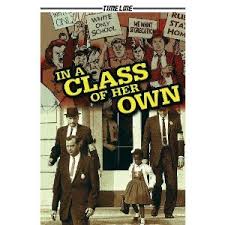
I introduce student teachers to David Booth’s book “In Graphic Detail” and I share the graphic novel “In a Class of her Own” to demonstrate how critical literacy and language acquisition can be developed in meaningful and interesting ways.

Unknown


http://www.theguardian.com/childrens-books-site/2013/mar/19/review-in-a-class-of-her-own-kathleen-gould-lundy

The sharing of the graphic novel as a useful genre in the classroom is a highlight in my course. Many student teachers become inspired to use graphic novels once they are introduced to why they are effective and how to use them in a classroom setting.

Please share any great graphic novel titles that you know to be outstanding.