Category Archives: critical literacy

Responding Critically to Azalea’s ‘Bounce’

In class this week my (Cathy’s) teacher education students were exploring indirect  instruction through learning centers.  One of the centers featured Iggy Azalea’s music video, Bounce, and the instructions to discuss the work through a critical literacy lens.   (E.g. What message do you think the artist wants us to get from this video? Based on the artist’s thoughts and actions (expressed in the song), how would you say she is portraying herself to the world?)

Most of the students had heard of the video but never actually viewed it until arriving at the literacy center.  (Perhaps you haven’t either).  Without revealing the content, I will reiterate the general tone of the reactions.   Most students were annoyed by the video content.  One student said she was disgusted (and this is not sexual content).  One group, however,  tried to take a broader view.  They said they could not judge the work until they understood Azalea’s intent.  So they took it upon themselves to look up an interview in which Azalea discusses her purpose for portraying her song the way she did.  After viewing the interview, they were angry.  Azalea explained that she portrayed herself thusly so she would be seen as “flashy”.  No message, just glamour.  After this insight, some wonderful discussion ensued about cultural ethics and hegemony.

One student spoke to me at the conclusion of class and confessed that she was surprised by her own reaction.  In her words, “I have changed.    Studying literacy education has given me a different perspective.  I see the world differently, especially things like music videos.”

Below is the link so you can view this content for yourself and decide.  The second link is the video in which Azalea discusses her purpose for making the video.

Happy critical viewing!

Language and power: A well “articulated” analysis

It is  a rewarding feeling when a student teacher from years past emails a link to an article, a video, or an image that is reflective of the messages we discussed in our teacher education class. The message it sends me is this, “I remember you. I remember your teachings. I learned and am still thinking about what it means to be a teacher and what it means to teach literacy”.  Today I (Yiola) received a short email from a student of four years ago. She sent the following link:

The link takes us to a spoken word presentation entitled “3 Ways to Speak English” shared on TED during a theme based session called “Examining Prejudice”.  Her talk as part of the series is described as:

Educator Jamila Lyiscott delivered an incredible poem called “Broken English,” in which she showed that she is a “Trilingual orator” able to speak fluently at home, with Caribbean parents, at school in “proper English,” and with her friends in a language that is as formal and rules-based as the other two. The poem raised a big laugh when she pointed out, “You may think it is ignorant to speak Broken English, but even articulate Americans sound foolish to the British.”

My favourite part is when she says:

So I may not always come before you with excellency of speech

But do not judge me by my language and assume

That I’m too ignorant to teach

‘Cause I speak three tongues

One for each:

Home, school and friends

I’m a tri-lingual orator

What stands out for me about the poem and what I will share with my students in class this week:

1) The power of language and how we associate language with power

2) Language and how it informs our identities — how many languages do you speak?

3) Linguistic profiling: the racial identification and discrimination of an individual or group of people based on their speech  and how that plays out in society and in the classroom

4) History — and how it influences our use of language

I was moved by her words as Lsyiscott describes:

These words are spoken

By someone who is simply fed up with the Eurocentric ideals of this season

And the reason I speak a composite version of your language

Is because mines was raped away along with my history

I speak broken English so the profusing gashes can remind us

That our current state is not a mystery

I’m so tired of the negative images that are driving my people mad

So unless you’ve seen it rob a bank stop calling my hair bad

I’m so sick of this nonsensical racial disparity

5) Awareness, ourselves and teaching — what do we as educators do with this knowledge?

Here is a link to a prezi that Lysicott has used at presentations:

http://prezi.com/_htjpqeom2js/how-broken-english-made-me-whole/

6) How to take our linguistic diversity and turn it into power:

This is a linguistic celebration

That’s why I put “tri-lingual” on my last job application

I can help to diversify your consumer market is all I wanted them to know

And when they call me for the interview I’ll be more than happy to show that

I can say:

“What’s good”

“Whatagwan”

And of course …“Hello”

Because I’m “articulate”

I look forward to my class on Friday and to sharing thoughts, feelings and ideas about what all of this means to children, their families and the learning environment in our elementary school classrooms.


Walking in the Shoes of Democracy

When I returned from Greece this summer I noticed that my running shoes were very dusty.  Well, that’s an understatement.  They were no longer even white. I kept thinking I should wash them, but I simply couldn’t.  The last place we visited in Greece was the ancient Agora in Athens.   I spent the entire day in awe.  This was where the most influential political and philosophical minds of western civilization  waked, talked and puzzled.  The dirt on my shoes was from the same pathways and roads on which Aristotle, Plato and Socrates paced and argued. It was speculated that Aesop visited Athens and told his most famous fable, The Frogs who Desired a King, in this same Agora to  dissuade the citizens from attempting to depose Peisistratus for another ruler.   My shoes were coated with the dust of democracy!   Who was I to wash it away?  So left them dirty.

That is, until a friend of mine commented on how dirty my shoes were.  At that point I  finally relented and talked myself into washing them.  Into the washing machine they went.  But they came out just as dirty as they went in.  So I washed them again.  Still no change.  It became a challenge.  I took bleach and a toothbrush to them.  They remained a dull grey. Forever altered.  Baffled, I left my shoes to dry in the sun and like any good philosopher, contemplated my  dilemma.   Then it dawned on me.  The dust of democracy was embedded.  Democracy could not be washed away from my shoes any easier than it could from my consciousness.  For me, democracy is an honorable a way of life.    My shoes were a living representation of this precious philosophical and political stance.

As you may have guessed, I have stopped trying to clean my shoes.  I’ve decided they are perfect just the way they are.

agora 2957

Slam poetry, literacy and classroom culture: What one young teacher shares

Several posts ago I shared an example of slam poetry. Slam poetry, for me, is alluring. It captures my attention. I have always found that with poetry, all kinds, there is passion, feeling, and emotion.  It speaks to me. Slam poetry is raw and real and leaves little to the imagination. It shares the here and now of one’s experience and tells the story of one’s truth.

Here is a short clip of a young teacher who shares with us what he tells his students:  tell your truth.

http://www.upworthy.com/25-year-old-teacher-had-only-4-minutes-for-his-1st-ever-ted-talk-he-nailed-it?c=ufb1

His 4 core principles (literacy related):

Read critically

Write consciously

Speak clearly

Tell you truth

This teacher speaks of classroom culture, modelling ways of thinking and being, and his experience as something worthy of words and sharing.

On the eve of a new school year, I want to wish all teachers, students, and teacher educators a year filled with passion for learning and inspiration. Teaching is not easy but when the fire for learning ignites in our students we know, as educators, that there is little more gratifying or rewarding.


Open Street Maps: Taking Action and Focusing on Multiple Perspectives

Nora Young, the host of CBC Radio’s Spark, was the keynote speaker of a conference I (Pooja) attended yesterday. She spoke about data science as a growing field of study, in fact, many universities have created departments of data science.  With the growth, Nora noted, comes a need for what she called critical data literacy. She illustrated the need for critical data literacy with an example of mapping technology. Google maps have quickly become the go-to application for finding directions and/or locating businesses on a map. However, being critically data literate,  guides us to  question like: who gets to decide what appears on a map? The answer is most often large multi-million dollar enterprises like Google.

To disrupt google’s monopoly of the growing online map industry, initiatives like Open Street Maps have been created. In January of 2014, The Guardian commented on the need for applications like Open Street Map. They likened it to  “a wiki-like map that anyone in the world can edit. If a store is missing from the map, it can be added in by a store owner or even a customer. In terms of display… each person or company who creates a map is free to render it how they like..” (Wroclawski, 2014) A site, which allows community members to add and edit a map of a community to which they belong, is powerful because it positions community members as experts.

I am looking forward to bringing this mapping technology into my classroom. I hope my students can create maps of their neighbourhoods.

A snapshot of a map made by community members:

openmap

Read more about Open Street Map:

http://www.theguardian.com/technology/2014/jan/14/why-the-world-needs openstreetmap

The Tiffinwallahs’ delivery system as a form of literacies

Recently, a friend started a lunch delivery service. She makes healthy, delicious, and affordable lunches every day. The lunches are delivered in an aluminum container, also known as a tiffin. She got this idea after watching a documentary about Mumbai’s Tiffinwallahs aka Dabbawallahs (those who deliver tiffins). Each day in Mumbai, “approximately 4,000 dabbawallahs deliver 160,000 home-cooked lunches from the kitchens of suburban wives and mothers direct to Mumbai’s workers.”Harvard’s Business School has studied this intricate delivery service, calling it “the world’s most ingenious meal distribution system.” What makes this service so fascinating to me is the coding system the tiffinwallahs have created. Although many do not have traditional literacy skills of reading and writing, they have re-defined literacy by creating a of successful and efficient communication through elaborate colour coding. Forbes magazine has awarded the “dabbawallahs a 6 Sigma performance rating (a term used in quality assurance if the percentage of correctness is 99.9999999 or more).” The business is also growing at a steady pace of 5-10% year.

The colour/numerical code created for the lids of tiffins:

code

Watch the Tiffinwallahs in action:

https://www.youtube.com/watch?v=fTkGDXRnR9I

Read more about the Tiffinwallahs in Mumbai here:

http://signalvnoise.com/posts/2882-the-incredible-delivery-system-of-indias-dabbawallahs

The Canadian Society for the Study of Education

conference

This week The Canadian Society for  the Study of Education (CSSE) is being held in St. Catharines, Ontario at Brock University.

The team, Clare, Clive, Lydia, Cathy, Pooja, and me (Yiola) will be sharing a number of presentations over the course of the week. Some of these presentations include the following titles:

Teachers’ Professional Identity Development Over Their First 8 Years, With Implications for Preservice and Inservice Teacher Education

Teachers’ Ongoing Learning over Their First 8 Years, with Implications for In-Service Professional Education

Exploring literacy teacher educators’ negotiations of a critical stance in pre-service teacher education

Teachers’ critical literacy practices in the early years classroom

Instructional Practices of Critical Literacy within an Inquiry-Based Learning Environment

Presenting at conferences is a great way to share research with the community.  For more information about the CSSE conference click here:  

Conference


A Mighty Girl

mightygirl

My twin niece and nephew are 4 years old. They both have loved books for as long as I can remember. They are currently learning how to string together sounds from the alphabet. As a super-involved aunt and literacy teacher, I try to expose them to a wide variety of texts. I want them to be exposed to texts which promote inclusivity, challenge stereotypes, and inspire creativity. For this reason I was delighted to find out about the Mighty Girl website.

“A Mighty Girl is the world’s largest collection of books, toys, and movies for parents, teachers, and others dedicated to raising smart, confident, and courageous girls.”

The Mighty Girl collection of books aims to disrupt the status quo of how girls are represented in fairytales. The collection of books strives to break the ‘damsel in distress’ mold, and so feature girls in alternative fairytales who are courageous, smart, and daring! I know I’ll be picking up a few of these books to read with my four-year-old niece and nephew! Some of the book titles include:

  • Not All Princesses Dress in Pink (Yolen & Stemple, 2010)
  • Dangerously Ever After (Slater, 2012)
  • Thunder Rose (Nolen, 2007)
  • The Seven Chinese Sisters (Tucker, 2003)

A full list of fairy/folktales on the Might Girl site:

http://www.amightygirl.com/books/fiction/fairy-tales-folktales

Teaching Social Justice Through Action

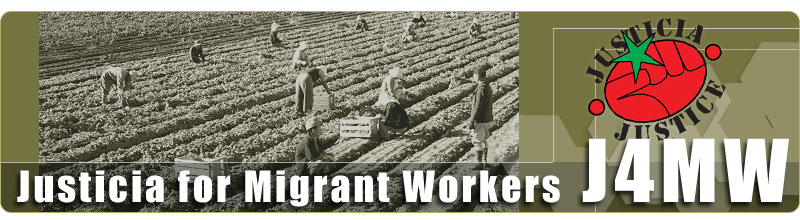
j4mw

Last week at the 22nd Annual Labour Fair my (Pooja) class attended several sessions, but one profoundly affected us all. Activist Chris Ramsaroop from Justice 4 Migrant Workers (J4MW) came in and spoke to us about issues migrant workers in Canada face such as a lack of health benefits, sub-par living conditions, and low hourly wages. For many, this was the first they had heard about migrant workers in Canada. And so, many were surprised to learn some of the unsettling history around migrant workers and human rights violations.

To deepen our awareness on the issue, the following day we watched Min Sook Lee’s documentary “El Contrato.” This heart-wrenching documentary gave faces and narratives to the cases Ramsaroop spoke about the previous day. Students were deeply moved by the documentary, asking after:“What can we do?”; “How can we show we care?”

Wanting to take action, a moved student looked through the J4MW website and found there was something we can do: The J4MW group is looking for court support on Tuesday, March 25, 2014 (today) regarding migrant workers access to healthcare. To demonstrate support and solidarity, the J4MW wants to fill up the open court at Osgoode Hall to send a message. My class, along with two other sections eager to attend, will be in attendance at the court today.

I have deviated from my curriculum to make room for this issue my students (and I) have come to care so passionately about. I’ve seen students utilize an extensive range of literacies over just one week: they have organized themselves into groups to get to Osgoode Hall and back; they have conducted research on previous cases related to migrant workers’ access to healthcare in Ontario; and they have critically thought and discussed what it means to buy “local” produce in Ontario.

To learn more about the provincial court hearing today at Osgoode Hall, check out the link below:

http://j4mw.tumblr.com/post/80321298359/defend-migrant-workers-access-to-healthcare-in-ontario?utm_content=buffer9bc1c&utm_medium=social&utm_source=twitter.com&utm_campaign=buffer

If you haven’t had the opportunity to watch “El Contrato,” I  highly recommend watching it. Below is a synopsis and link to the documentary:

This documentary from Min Sook Lee (Tiger Spirit) follows a poverty-stricken father from Central Mexico, along with several of his countrymen, as they make their annual migration to southern Ontario to pick tomatoes. For 8 months a year, the town’s population absorbs 4,000 migrant workers who toil under conditions, and for wages, that no local would accept. Yet despite a fear of repercussions, the workers voice their desire for dignity and respect.a poverty-stricken father from Central Mexico, along with several of his countrymen, as they make their annual migration to southern Ontario to pick tomatoes. For 8 months a year, the town’s population absorbs 4,000 migrant workers who toil under conditions, and for wages, that no local would accept. Yet despite a fear of repercussions, the workers voice their desire for dignity and respect.

https://www.nfb.ca/film/el_contrato

The Power of Children’s Literature and its Omissions

While I (Yiola) knew there was a lack of representation of  “people of colour” in children’s literature, I was surprised to read the statistics. The chart below shows the number of books published last year and the number written ‘by’ and ‘about’ the different groups defined as ‘people of colour’.


Year

Total Number
of Books
Published (Est.)

Number of Books
Received
at CCBC


African / 
African Americans


American Indians

Asian Pacifics/
Asian Pacific Americans


Latinos


By

About

By

About

By

About

By

About

2013

5,000

3,200

67

93

18

34

90

69

48

57

Two fantastic articles in the New York Times last week prompted me to write this blog:

http://www.nytimes.com/2014/03/16/opinion/sunday/the-apartheid-of-childrens-literature.html?ref=contributors&_r=0

http://www.nytimes.com/2014/03/16/opinion/sunday/where-are-the-people-of-color-in-childrens-books.html?ref=contributors&_r=0

The articles share the stark realities and implications of the statistics represented above from the experiences of African American men, writers themselves. Reading the articles echo and confirm what I believe to be the realities and consequences of our publishing marketplace.  And yet, what to do about it?

The other day I was speaking to a high school educator (a behavior specialist, child and youth worker) who shared stories with me about boys in her school who are misbehaving, who are rude and disrespectful.  I shared with her the ideas that their behaviours must stem from something much bigger than an attitude problem… that they may feel oppressed, misrepresented or not represented at all by the school and broader society.  I do not think she was buying my argument.

My role as a teacher educator is to inform future teachers of the realities of teaching, learning and schooling.  Part of that role includes understanding how systems work for and against particular groups and individual students. One concrete area for exploring such systems is children’s literature.

Christoper Myers, author of “The apartheid of children’s literature”, describes books as maps to identity and ways of being:

[Children] see books less as mirrors and more as maps. They are indeed searching for their place in the world, but they are also deciding where they want to go. They create, through the stories they’re given, an atlas of their world, of their relationships to others, of their possible destinations.

The consequences of excluding certain groups:

what it means is that when kids today face the realities of our world, our global economies, our integrations and overlappings, they all do so without a proper map. They are navigating the streets and avenues of their lives with an inadequate, outdated chart, and we wonder why they feel lost.

Alternatively, Walter Dean Myers, author of the second article, explains what happened to him when he connected to a text: 

Then I read a story by James Baldwin: “Sonny’s Blues.” I didn’t love the story, but I was lifted by it, for it took place in Harlem, and it was a story concerned with black people like those I knew. By humanizing the people who were like me, Baldwin’s story also humanized me. The story gave me a permission that I didn’t know I needed, the permission to write about my own landscape, my own map.

And so, how do we as teacher educators empower teachers so they empower students to realize the flawed systems we live in but and to move beyond them to ensure each child can navigate and negotiate their personalized, broad, rich landscape of possibilities?  I suggest: we ourselves develop a critical stance and what Noddings calls a culture of care; we are explicit about the realities of the systems we currently work in; and we work hard to search out texts and materials that share rich stories of all of our students and beyond.  More so, I suggest we move to change the marketplace by publishing texts that begin to close the gaps in representation in children’s literature.