Category Archives: literacy

Encouraging Inquiry at an Early Age

I (Cathy) was inspired by the posting below of a young girl’s science experiment.  It actually made  make me rethink purchasing organic foods.  From an educator’s point of view,  it also demonstrated how significant inquiry, experimentation and science literacies are, and the impact they can have, especially when conducted at an early age.  While watching the video, I wondered if the process of doing this experiment will influence this young girl’s future educational leanings.  I had the pleasure of visiting my own daughter recently and was awed as I watched her conduct experiments with bacteria in her lab.  She became a biomedical researcher and is published in medical journals all over the world.  Science is her life now, and it all started with simple biology experiments in high school.

Sarah


Who knows what we inspire in children by encouraging them to build inquiries and conduct purposeful experiments.  The young girl in the following video may well be in the same position as my daughter some day.

http://www.spiritscienceandmetaphysics.com/this-little-girls-experiment-will-change-the-way-you-think-about-food/


Goodreads

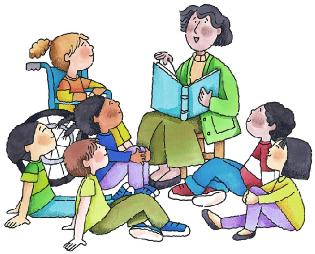
Image Children_clipart_reading_circle-315x254Building on Lydia’s post yesterday, I (Clare) want to highlight the site Goodreads. I check it regularly to read their suggestions and/or book reviews. It also allows groups to have a shared space. This would be a great place for student teachers in literacy courses to share books they have read with pupils. (They now include children’s literature in their genre list.)OliverJeffers

If you do not know the Goodreads site, check it out at: http://www.goodreads.com/

Scaffolding Text Selection

I came across the graphic below on Twitter entitled Helping Students Find the Right Book. It reminded me of our pre-service P/J and J/I literacy courses yesterday in which we discussed the place of the novel study in the classroom and the importance of engaging students in the reading of a variety of genres.

FindBook

A recently published article on the pedagogical nuances of one teacher’s critical literacy practice

In addition to the amazing work our research teams explore on literacy teacher educators and the longitudinal study of classroom teachers, I (Yiola) am interested in the pedagogical work of teachers. In particular, I am interested in teachers’  work related to critical literacy: What do teachers do? How do they do it? What challenges do they face? How do they overcome those challenges? Why do they choose to teach critical literacy?

I have spent many hours in classrooms observing teachers’ work to see first hand their practices. I have interviewed the teachers to hear first hand their perceptions and understandings of their work. From this research we have begun to share some of the findings.

In our article entitled:  An Inquiry-Based Approach to Critical Literacy: Pedagogical Nuances of a Second Grade Classroom  we share the details of second grade teacher Sarah’s practices during her “Selfology Project”. The Selfology Project is a literacy project that required students to explore their identities, histories, families while thinking about issues of race and equity.  How the teacher constructed critical literacy learning through an inquiry-based pedagogical framework is shared.  Below is the abstract for the article:

This case study explores the pedagogy and practices of an elementary school teacher who combines inquiry pedagogy and critical literacy. The authors gathered data for this analysis by conducting two interviews with a classroom teacher and observing classroom practices 12 times over a 6 month period. Through a general inductive approach to analysis, trends emerged that showed the classroom teacher used practices that combined traditional inquiry pedagogy for critical literacy development. This research provides insight into how this elementary teacher negotiated and connected inquiry to critical literacy. Furthermore, the findings can inform scholars and teacher educators of successful teaching strategies as they prepare future generations of elementary teachers.

For access to the article please go to: http://www.ajer.ca

Several elementary classrooms were observed over the course of one school year. I look forward to sharing more from this study soon.

Inspiration from Pinterest

I (Cathy) find one of the most popular social media sites used by my student teachers is Pinterest.  They rave about the interesting and engaging ideas they find on the site for lessons.  I saw evidence of this just recently while visiting a school.   My student teacher, Melissa, had found a writing exercise on the site entitled, If I Was  Trapped in a Snow Globe.  It involved the students creating a snow globe scene inside of a white plastic container and then describing the adventure in writing.   The associate teacher was so excited by the results, she lead me into the hallway to see what  her young students had accomplished.  The associate declared, “This student never writes anything, but look at this!  Two pages!  They loved this writing assignment.”

Often, good writing results by students are the results of a good inspirational ideas. Luckily educators have many more resources to access now, due to social media.  I highly recommend Pinterest for many ideas in variety of subjects.

http://primarypunch.blogspot.ca/2013/01/thank-you-pinterest.html

globesstory

Clifford the Big Red Dog

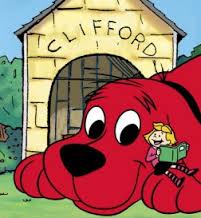
Norman Bridwell the writer and illustrator of the Clifford the Big Red Dog books passed away Friday, at the age of 86. The popular children’s books have sold more than a 120 million copies worldwide. I have fond memories of borrowing Clifford books from my primary school library and reading about the loveable giant dog’s adventures. Initially publisher Scholastic only “offered the Clifford story through book clubs and school fairs.” The Clifford books eventually became available in stores in the 1980s. Bridwell suggested “Clifford’s imperfections were part of his appeal, making kids more forgiving of their own mistakes.”

Link to Toronto Star article to learn more about Norman Bridwell:

http://www.thestar.com/entertainment/2014/12/16/norman_bridwell_creator_of_clifford_the_big_red_dog_dead_at_86.html?app=noRedirect

Clifford

Helping Students Develop Their Way of Life

If we teach literacy/English and other subjects well – in a way that interests and engages students and deals with “big ideas” – we will inevitably get into life issues and “values.” This in turn will help students build their way of life. They will not have to wait until they graduate to start figuring out how to be in the world.

Teaching about values or life issues is sometimes questioned on the ground that it involves indoctrination. However, schools already push values in strong ways, e.g., punctuality, hard work, academic learning. What is needed is to expand values teaching (usually in the context of teaching subjects) and find non-indoctrinative ways to do it. Constructivism provides a solution here, because both teachers and students say what they think and everyone learns from each other. In the end, students decide what way of life to adopt, but with the benefit of input from others.

As you may know, I (Clive) am a great admirer of the work of Nel Noddings. I recently found a statement of hers in The Challenge to Care in Schools (2nd edn., 2005) that bears very directly on these matters:

I have heard teachers say, We’re not trained for [discussing values with students]. That’s a job for psychologists (or counselors, or parents, or pastors). Pressed, many will say that they do not have a right to impose their values on students, but these same teachers impose all sorts of rules – sensible and mindless equally – without questioning the values thus imposed. Surely intelligent adults should talk to the children in their care about…qualities that most of us admire. This talk need not be indoctrination any more than mathematics teaching need be lecture and rote learning. (p. 39)

Speaking of values, what could be more immoral than subjecting young people to 12 years of narrowly academic schooling with little attention to life matters? The time has come to make education much more useful to students than it has been for the past two-and-a-half millennia. This requires helping them explore values and develop their way of life.


Teaching with a Sense of Humour

The What is Education?  blog for teachers states that having  a sense of humor is, 

 very useful in creating a classroom climate and the development of learning processes that are more healthy and enjoyable. In fact, Melissa Kelly said that a sense of humor is one of the keys to being a successful teacher. According to Melissa, teachers’ sense of humor can relieve tension in the air and can prevent the onset of disruptive student behavior in the classroom, and can be used as a way to attract the attention of students in the class. And most importantly, with its sense of humor, a teacher would show that he/she is a person who has a personality and mental health, to enjoy life, and be able to live a normal life without the stress of his/her career.

http://what-education.blogspot.ca/2013/06/the-importance-of-teachers-using-humor.html

I (Cathy) was delighted to see one of my student teachers, Carolyn,  using her sense of humor throughout her literacy lesson. Her grade one and two students found her quite amusing and would joke along with her.  Sometimes her humor was self-depricating, and sometimes it was as innocent as, “Who me?  I would never do that!”  It was never sarcastic and always made her students smile.  She even used it as a classroom management technique to keep the students focused and engaged.  When I asked her about  her technique, she said it made teaching and leaning more enjoyable.  Then she described an art lesson she had just taught using candle wax and water colours.  She drew a picture on the white paper using a white candle, so it was not visible.  While introducing the lesson she held up the paper and kept telling the students how proud she was of her picture.  When the students kept insisting there was nothing there, she applied the water colours and, of course, the picture magically appeared.  The humor came to play when she allowed each student to play the same joke on her as they created their pictures.  All of the magic pictures were displayed proudly in the hallway of the school.  Carolyn said the students still refer to it and giggle.

I think having a sense of humor is an asset.   We all definitely need to laugh more, especially in our schools.  Carolyn

Cozy reading: A literacy initiative in the early years

Literacy teaching is rich and varied. Teachers make many decisions at to how to teach literacy: what texts to use, what language to emphasize, what materials to include, what experiences to foster, and how to deliver instruction so students become confident and competent users of language.

Sylvia Clare’s school has a “cozy reading” program in place where parent volunteers come to the class for about 1 hour. During their 1 hour visit they take small groups of about 4-5 students into a cozy space located outside of the classroom. With comfy chairs snuggled in a nook of the school the parent reads a picture book or 2 to the students.

This is a simple program that does so much:

  • Exposes students to parents’ reading and demonstrating a love for reading.
  • Provides additional read aloud experiences for students. Every child receives small group read aloud time with an adult, while the classroom teachers remain in the classroom working with small groups on a number of projects.
  • Brings the parent community into the school in a way that is focused on learning.
  • Has children connect with parents of students in the class.
  • A nice way to foster relationships between parents and teachers that is also helpful to teachers’ work

I (yiola) really enjoy the cozy reading program. Being back in the early years classroom reminds me of how complex the environment is: 25 young children excited, active, and curious. The balance between learning and management is simply amazing… even walking the children out the room to the cozy reading nook makes me smile… because I say to the children “Okay let’s walk down the hall nicely so we are safe” and as soon as we exit the classroom door the children skip and run down the hallway!


Sylvia Clare in the Cozy Reading nook.


8 Uplifting Quotes For Discouraged Students

At this time of the school year, most educators are busy grading papers or marking assignments. I (Clare) came across this wonderful blog post on http://www.edudemic.com/discouraged-students/. I found these quotes comforting and inspirational. You might find want to share them with some of your students who are struggling.

8 Uplifting Quotes For Discouraged Students By nicolettemorrison on November 27, 2014@hellonicolettem

There are many reasons a student can lose focus in school.Albert Einstein

It can be bad grades that will discourage them to be inactive and to rebel. It can be the environment that can be stifling and suffocating for the students. It can be the fact that many of them don’t find it easy to see the meaning in their struggles in school.

Some students excel under pressure, and there are those who crumble beneath it. It’s easy to praise the students who continuously work hard, but let’s try not to berate those who find it difficult to focus.

When students get tired of school, they find all means to take the shortcut. This is why numerous students end up copying their homework and plagiarizing their essays. This is why websites such as Bestessays.com thrive. They offer services that will ease the difficulties of student, making it tempting for them to sign up and buy customized papers. Technology has definitely made cheating a lot easier.

It’s not just in the output that students slack off in school. It’s in their mentality that clearly shows their disinterest to learn and attend classes. When they start to not care about their grades, it must be a cause of concern for teachers.

Instead of lecturing these lost souls, it’s up to educators and mentors to find ways on how to lure them back into learning. It can be through constant motivation and pep talk. Sometimes, it can be a great story that will push them to work harder.

For now, maybe these inspirational quotes on learning and hard work can do the trick.

 “If you really look closely, most overnight successes took a long time.” – Steve Jobs

With the likes of Mark Zuckerberg being the poster boy of drop-out billionaires, it’s easy to see why many students seem to think that they no longer need school to succeed in life. But closer inspection shows that their path to success is muddier than one would expect. And besides, we can’t all be Mark Zuckerberg. We can’t all be Steve Jobs. But students can try to pave their own way to success and school can help with that.

“Every child is gifted. They just unwrap their packages at different times.” – Anonymous

Students can’t help but compare themselves with the topnotchers in class. While some obviously spend a lot of time studying, some students barely study and still manage to get good grades. Then there are students, who no matter how hard they try still scramble to get decent grades. They need to understand that students have different modes and strengths in learning, and sometimes formal education doesn’t work for many students. But every student has a talent and a skill that need time to develop.

“I have not failed. I’ve just found 10,000 ways that won’t work.” – Thomas A. Edison

It’s easy to get disheartened with a failed Math exam, but it’s just one exam out of many. A low grade for an English essay may be discouraging, but there’s always a next time. What students need to keep in mind is that getting bad grades and making mistakes can only lead to further learning. There’s always room for growth and time to correct their mistakes. One failure doesn’t mean it’s endgame already.

“You can do anything, but not everything.” – Anonymous

With so many options for young minds to explore and wander, students are often pressured to be great in everything. But that’s not something mere mortals can do. There’s nothing wrong with being a Math wizard and finding difficulty penning a coherent essay. What students can do is to focus on what they’re good at and once they’ve mastered this skill, they can go ahead and try other things. They’ll feel burned out if they take too much activities on their plate all at the same time.

“You measure the size of the accomplishment by the obstacles you had to overcome to reach your goals.” – Booker T. Washington

There’s a reason why a B+ in a subject you find difficult seems a lot sweeter than the easy A+ in your PE class. When you work hard for something, an excellent result may not be quick to attain but even a satisfactory result is enough to send students in pure bliss.

“You miss 100% of the shots you don’t take.” – Wayne Gretzky

Students are often disheartened by bad results, but giving up without even finishing their tasks means they won’t even get any result, besides a failing mark. It’s always better to give learning a shot before deeming it as something they’ll be bad at. They may fail the first time, but they’ll eventually get better at it.

“Don’t worry about failures, worry about the chances you miss when you don’t even try.” – Jack Canfield

To reiterate the earlier point, students miss out more when don’t even give it a try. Many students have this mindset that they’ll fail anyway, so why exert an effort in studying? But the fact that they don’t even open their books and rarely listen to discussions means that they didn’t even bother giving it a shot. Efforts may not always reap the best rewards, but it’s better than none.

“Tough times never last. But tough people do.” – Dr. Robert Schuller

School is just a part of life. It’s just a phase as crucial as it may be, and there’s more learning that will happen once you graduate from your alma matter. Don’t think that it’s the end of the line, because you’re just starting. School may toughen you up, but you need that to survive.

So students, keep your chin up because school isn’t the be-all and end-all of your life. The difficulties will pass and you only need to hold on.