Category Archives: literacy

Mental Health Education in Teacher Education

Earlier this week I  (Yiola) participated in a Webinar on the teaching of mental health in teacher education. The webinar was called: Reading, Writing, Resiliency: A Briefing on the State of Teacher Education Toward Positive Mental Health.

This post is connected to Shelley’s recent post on Supporting Student Well-being through Mindfulness Practices as it looks closely at what Teacher Education programs are doing to prepare teachers to teach about Mental Health and Wellness.  It was interesting to read Shelley’s blog and learn about what she does and how mindfulness as a form of mental health practices are developed in her course on Special Education. I would love to hear what other teacher educators and classroom teachers do to promote and teach about well-being.

During the webinar I learned some interesting facts:

– parents are concerned and interested to learn more about in 2 key areas related to mental health education: 1) Abuse and its effects on mental health (bullying, emotional abuse, exclusion);  2) Health (depression, substance abuse)

– after (parents and) doctors, teachers are the next care professionals in line who are expected to address children’s mental health

– There is a gap between the strong perception of teachers responsibilities for addressing issues of mental health and their preparedness to do so

In a study conducted on mental health teaching in teacher education in Canada, over 400 courses in 66 teacher education programs were examined against 4 criteria. The 4 criteria were related to the following: course title, words in the course description, topics in the course outlines, practices and relationships. The findings showed that only 2 of the 400 courses met all 4 criteria for the inclusion of mental health learning; 23 courses met 3 of the 4 criteria, 84 courses met 2 of the criteria and 104 courses met just 1 criteria.   This finding suggests that there is very little by way of teaching mental health issues in teacher education programs.

From the study 5 recommendations were made: 1) all teacher education programs should include at least 1 course that focuses on fostering postive mental health and resiliency; 2) classroom management courses reflect proactive resiliency oriented strategies; 3) in-service opportunities need to be available to practicing classroom teachers; 4) provincial curriculum should identify outcomes for health education; and, 5) mental health and resiliency outcomes should be in grades K-12 curriculum.

The webinar was helpful in outlining where we stand today in teacher education and mental health teaching.  I am very keen on thinking about how to move forward in teacher education programming.  Mental health and resiliency content can and should in included in many courses including but not limited to: all curriculum areas (i.e. literacy, social studies, math, health and physical education); special education, methods (i.e. classroom environment, classroom management, collaborative practices).  There needs to be a shift in foci, moving beyond the traditional Health and Physical Education curriculum (i.e. the Healthy Living strand) into a more comprehensive way of thinking about well-being and resiliency.

 

Reading Circles

Last week CBC news profiled the organization Literature for Life, which offers weekly Reading Circle programs to young mothers in various shelters and community centres across the Greater Toronto Area (GTA). The Literature for Life website explains that the program is committed to helping young moms in high-needs neighborhoods across the city “develop a practice of reading in order to access opportunities and achieve economic stability”. The moms participating in the Reading Circles meet weekly, along with a program facilitator, to engage in discussions and writing activities about books that are relevant to their lives. The program also hopes that participating moms will share their enthusiasm for reading with their children. To date, approximately “2,200 moms have participated in the Reading Circles and more than 20,000 books have been distributed” (http://www.literatureforlife.org).

Reading Circles2

Dilemma for Educators: Focus on Pisa Scores or Improve Quality of Education

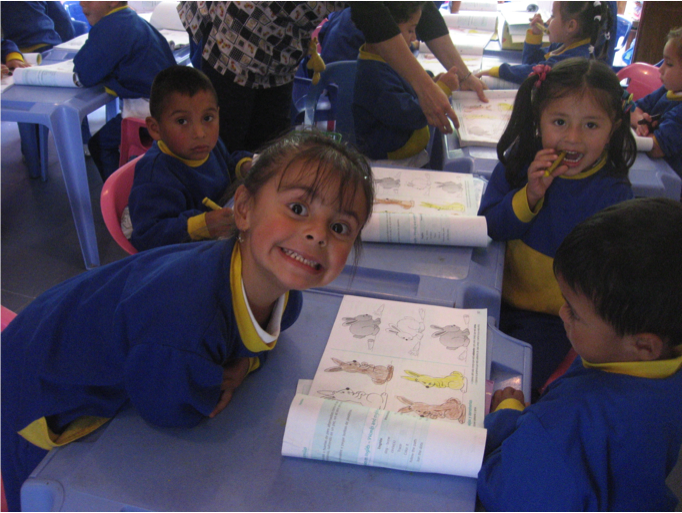
Colombian FlagClive and I (Clare) are going to Bogota and Cartagena to present at two conferences: one for teacher educators and one for teacChildren in Colombiahers. (More about our experience to follow.) In our correspondence with our Colombian hosts, who have been incredibly gracious, we get the impression they are very focused on improving Pisa scores. From our reading about Colombia we recognize there is grinding poverty yet they have made huge strides in improving literacy rates. We appreciate the dilemma faced by the Colombians –improve test scores on international measures yet education is under resourced. Being inspired by Pasi Sahlberg (and in keeping with the findings from our research as described in our new book Growing as a Teacher), the focus should not be unilaterally on improving Pisa scores but should be broader — provide quality education. Good teaching will improve literacy achievement and which in turn improve scores on Pisa. As Sahlberg’s data shows, the countries focused on controlling the curriculum and on teaching to the test have declining achievement on Pisa. (See April 19th blog post on this topic.) Drills and mindless worksheets will not engaged those children who do not see themselves as readers. So our message will be – let’s support teachers so they know how to provide relevant, engaging, and appropriate curriculum. The scores on Pisa will take care of themselves. We would love to hear from others who have worked in Colombia.
Our New Book! Growing as a Teacher: Goals and Pathways of Ongoing Teacher Learning

Growing as a Teacher book cover

Clare and I (Clive) are glad to announce the release of our new book Growing as a Teacher, published by Sense. https://www.sensepublishers.com/catalogs/bookseries/professional-learning-1/growing-as-a-teacher/

It’s based on the first 8 years of our longitudinal study of 42 teachers, teaching mainly in Ontario but also New York and New Jersey.
Our central finding was that teachers learn a great deal informally, especially through classroom experience. This is in line with Donald Schon’s (1983) notion of “reflection in practice”: teachers learn through “experimental research, then and there, in the classroom” (p. 66). Similarly, Chris Day (1999) speaks of “the largely private, unaided learning from experience through which most teachers learn to survive, become competent, and develop” (p. 2).
Over their first 8 years, our teachers learned about: program planning, assessment, individualization, teaching for relevance, classroom organization, community building, work-life balance, and many other topics. In varying degrees, they developed a comprehensive, integrated vision of effective teaching, going well beyond their initial understanding.
In the book we discuss key implications of these findings:

  • Teachers should see themselves as major “experts” on teaching, with abundant opportunities to inquire into teaching over the years. They should be willing to make decisions in the classroom and take a firm stance in adapting system initiatives.
  • ITE instructors should promote this strong conception of teacher learning and expertise, and see themselves largely as “laying a foundation…preparing novices to learn in and from their practice” (Feiman-Nemser, 2001, p. 1016).
  • PD facilitators should dialogue with teachers and build on their emerging vision and approach, rather than imposing system mandates in top-down fashion.
  • Principals should support teachers in their learning, providing frequent opportunities for them to watch each other teach and share their developing insights.

Teachers can benefit greatly from external input, but not if it’s imposed “top-down” without reference to their views and experiences.
We have greatly enjoyed listening to the teachers in our study and will continue to do so into the future. We hope their voices and experiences will be helpful to teachers, teacher candidates, ITE instructors, and all those responsible for school policies and ongoing teacher learning.


Electricity and the Joy of Learning

One of the greatest joys of my (Cathy’s) job is observing student teachers in their teaching practicums. In my next few blogs I will be happily sharing some of the highlights from these visits.

Yesterday I was observing a student teacher instruct a grade six science class exploring electrical currents. The student teacher wisely arranged his students into collegial groups and then gave each group a paper bag full of various parts (batteries, wires, light bulbs, switches etc.). The students were expected to find a way to put the put the parts together that would create an electrical current, hence lighting up the light bulb. It was fascinating watching the students trouble shoot their way through the process. They were so engaged. I was proud of the student teacher for setting up the investigation so well. Suddenly there was a squeal from the corner group. One of the boys was holding up a lit light bulb. His smile was brighter than the bulb. “What did you do?” I asked him. He was silent for a few seconds, staring in amazement at the lit bulb. Then he said, “I have no idea.” Everyone laughed. The process of deduction then began as the group tried to figure out why it worked. And next week I get to observe completely different classes, making entirely new discoveries. Lucky me.

circuit


A Few Words From Oliver Jeffers

Clare and I (Lydia) have enjoyed sharing the creative and clever picture books of Oliver Jeffers with the student teachers in our literacy methods courses. Jeffers, an artist, illustrator and writer, notes, “my books are all about telling stories, and a lot of my art is about asking questions…They’re an excellent platform,” he says of picture books, “With novels, things are spelled out for you. And films, things are spelled out for you a lot more. Whereas picture books, it’s up to you how much you sit on a page, sit on an image, move at your own pace. And then you’ve got two distinct and varying sets of tools at your disposal, that weave in and out of each other to create this middle ground. That’s the secret ingredient, I think, that’s what makes them such a fantastic vehicle for storytelling.” (National Post Feb 2013). OliverJeffers

Remembering My Favorite Comedian

My (Cathy’s) favorite comedian passed away last week.   I was saddened to learn this.  It takes such skill to make people laugh: writing the content; sensing the timing; massaging the audience.  His name was John Pinette.  I was amazed by his talent. During his stand-up acts, he often broke into song depicting an amazing singing voice.  I eventually learned that he  played the matronly Edna in the hit musical Hairspray on Broadway.  Wish I’d seen that.   His jokes were usually self- deprecating about his size.  Ah, to laugh at oneself.  One of my favorite clips was of him being told he should be gluten-free.  As I live a gluten-free life I have always found this particularly amusing.  The link to this clip is below.  Remember him when you laugh.

John Pinette 1964-2014pinette1


A Compelling Novel

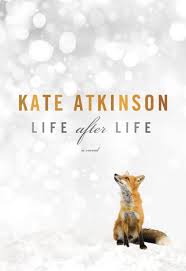
I (Lydia) have been reading and enjoying the novel Life After Life by Kate Atkinson. The novel invites readers to consider the question: What if you could live again and again until you got it right? This premise is explored through the experiences of the Todd family set against the backdrop of two world wars. Atkinson plays with narrative structure and time by repeatedly re-ordering the past and the present, as protagonist Ursula Todd and others supporting characters experience deaths, near deaths, and frequent chances to begin life anew. Each time the author reimagines one of these lives, the reader is provided with a glimpse into how the alternate choices made by a character can profoundly shift circumstances and outcomes. The novel could be read as book about the practice of writing, the practice of reading, and the complex relationship forged between author and reader. The novel repeatedly reminds the audience of the multiple choices an author makes when weaving together a narrative, and the conscious choices a reader makes to commit, or not, to the path outlined by the author. Overall, the novel provides a compelling and worthwhile read.

Lifeafterlife

Photo Highlights from AERA 2014

The 2014 American Educational Research Association (AERA) conference took place this year in Philadelphia. I was able to attend some fascinating paper sessions, poster sessions, and symposiums during my time there. I also managed to make it to the memorable museum district area of Philadelphia. Here are some photo highlights below:

My dear friend and research colleague, Cathy Miyata, presenting her paper Negotiating Multiliteracies Pedagogy in International Preservice Teacher Education:

photo6

A fascinating panel titled Defending, Reforming and Transforming Teacher Education: The Future of Teacher Education in the United States. This panel’s members included Linda Darling-Hammond, Timothy Knowles,  Kwame Griffith, and Kenneth Zeichner.

photo3

An important symposium on ways teacher education programs around the world  are preparing preservice teachers for marginalized students. The symposium entitled Building Infrastructure and Capacity Research Innovations Worldwide That Prepare Teachers for 21st Century Schools That Service Marginalized and Poor Students in Transnational Contexts. Below is a photo of Dr. Clare Kosnik sharing findings from our international study on Literacy Teacher Educators:

photo5

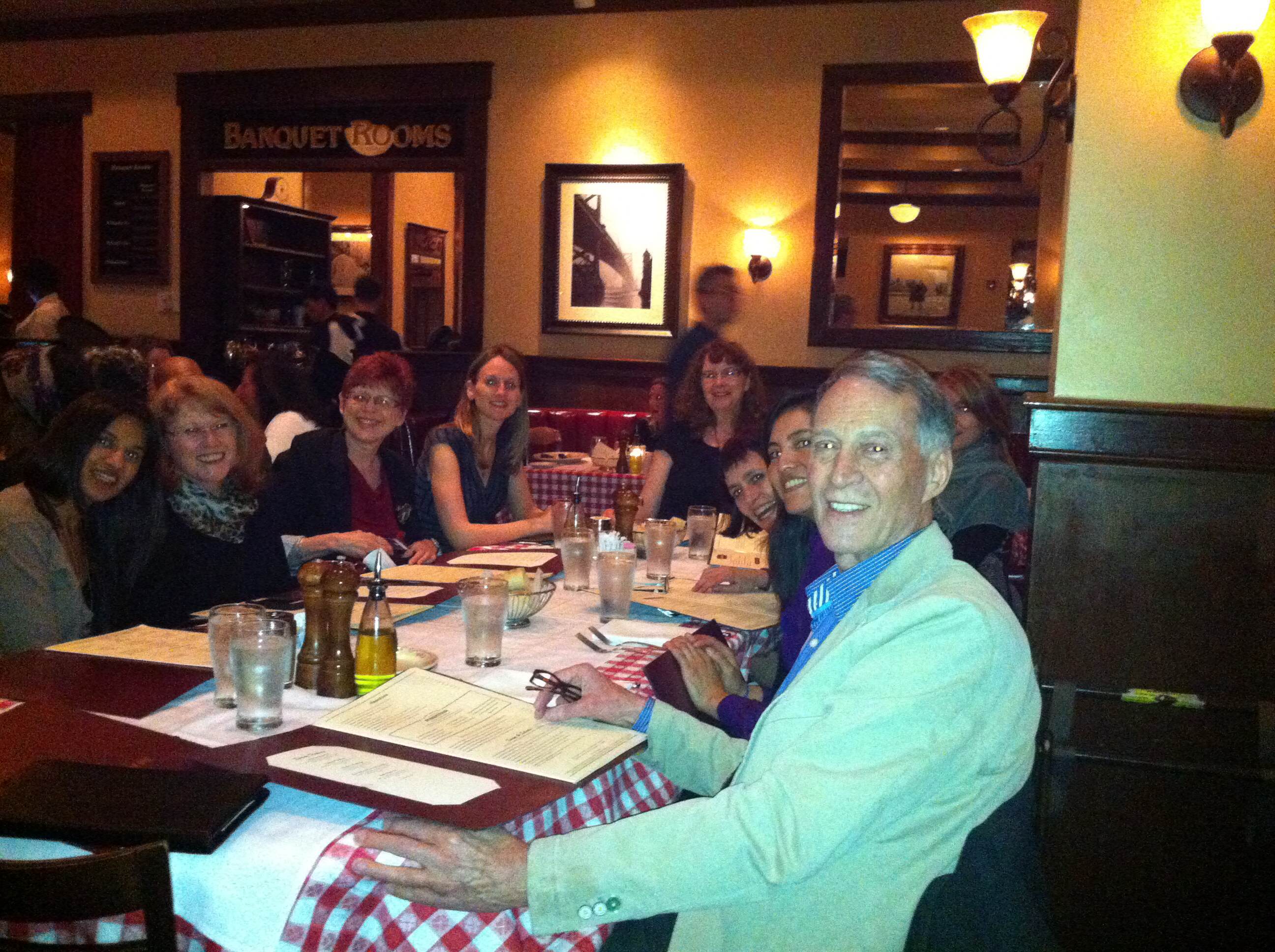
A relaxing dinner with our research group, Becoming Teacher Educators.

photo4

Finally, a photo from the museum district which is looking south on Benjamin Franklin Parkway. I was standing on the iconic steps where Rocky trained while taking this photo!

photo2-3