Category Archives: schooling

First Class: Tracking wellness

I (Clare) am following this amazing new blog Eureka Research: Exploring Wellness through digital techniques: http://eurekaresearch.wordpress.com/2014/10/22/first-class-tracking-wellness/
This recent post is about the guidance counsellor who is working with secondary school students to track their wellness and well-being using a number of on-line tools. Wow! This is an amazing use of technology and from the photos it seems the students are very much engaged. I look forward to reading updates on the work and study of the on-line tools.

cathkaiser's avatareureka research

I am in the middle of running my five classes on using a website to track moods, goals, tips, etc.  The website is called Facingus.org and what I like about it is that it is hands on and interactive. Students explored for parts of the site:  Journal, Wellness Tracker, Wellness Plan and Wellness Book (Tips).  This took almost the full hour to explore.  Students wrote for 5 minutes in the online journal – some where very engaged and some struggled quite a bit. I did catch a couple of students reading a book on their laps!  I did also have a couple of students asking if they could have more time to write 🙂

For the Wellness Tracker, I had them focus on three aspects – Well-being (track daily), Symptoms (track daily and weekly) and Lifestyle (track daily).  What I liked about this section, is that there were a lot…

View original post 182 more words

10 things your child’s teacher wants to say to you

I (Clare) came across this “open letter” to parents by by Lyndsi Frandsen which I found very interesting. As many schools gear up for Curriculum Night where teachers meet the parents of their students for the first time, I thought this article very relevant. As teachers we so often are misunderstood.Below is the full letter and here is a link to the website>

http://www.ksl.com/?nid=1009&sid=31768239#h1KcVQ2c2uGwgOcx.01

SALT LAKE CITY — Teachers can be a misunderstood breed. A lot of times we find ourselves taking the blame for anything and everything. Your child failed a test? Blame the teacher. Your child got pushed down on the playground? Blame the teacher. You’re having a bad hair day? Blame the teacher.

But have you ever thought about what your child’s teacher would say if the teacher could speak openly and honestly, without any backlash? I interviewed dozens of my fellow teachers and colleagues. Using their comments, I compiled what I hope will be a helpful list of suggestions to improve the parent-teacher dynamic.

Now, before you call an emergency neighborhood meeting and start writing “1,000 things parents wish they could say to their child’s idiotic teacher,” take a step back. Give these teachers the benefit of the doubt, and know the educators who weighed in on this are wonderfully talented, kind, educated, adoring teachers who love what they do.

(On a side note: As I was reaching out to teachers, I felt like I should title this “The help: teacher edition.” It took a lot of coaxing and reassurance in order to get them to talk.)

“Thank you for sharing your child with me each day. … Thank you for trusting me with your most prized possessions. Thank you for helping me create the “magic” that is learning, educating and inspiring.”

1. I can’t do it alone

I am here to tell you that whatever is accomplished during the long school day can be completely undone in just a few hours at home. I am only human. I can’t snap my fingers and get your child to the target reading level. Will I try my hardest? Yes. Will I ever stop trying? No. But if you aren’t actively engaging with your child and reinforcing learning at home, you are robbing your child of opportunities otherwise. I am giving your child the best hours of my day. Please be willing to give your child minutes of your day to spend on homework, reading, etc.

2. I never stop thinking about your child

Even when I am finally home and able to focus on my own little ones, I am still thinking about yours. I am constantly thinking about how to help them overcome educational barriers. I am continuously brainstorming how I can cater to their various learning styles. But it doesn’t end there. I lose sleep thinking about the much-too-heavy-burdens of life their tiny shoulders carry around. I worry about their future and the scary world they will grow up in. I love them fiercely and they are always on my mind.

3. Yes, I am saying your child is lying

I am an adult. I am not a mean, petty, immature teenager who makes up rumors to make your child look bad. If I tell you your child called a classmate a name — then your child did. If I tell you your child refused to complete work — then your child did. Please believe the 30-year-old adult and not your 8-year-old child.

4. We are all cheering for the same team

I know this may come as a surprise to you, but I am not the enemy. Like you, I love your child. Like you, most days I invest more time and money in the children, than I do in myself. Like you, I want what’s best for them. So, when you feel tempted to tell me all the reasons why I treat your child unfairly, or am out to get your child, please remember that. When I hold your child accountable, I’m not treating your child unfairly. When I challenge your child academically, I am not out to get your child. The end.

5. We really don’t think every child needs medication

One teacher (and mother) I talked to learned this lesson firsthand. After her own child was diagnosed with a processing disorder, she realized he just might need medication to help him focus. It was a hard fact to swallow: that the medication she had been so against was the missing piece of the puzzle. Her words: “You would not consider keeping a child from their asthma medication because it would change who they are, so why would you consider keeping a child from medicine that would help them to be their best self?

Medication is not a death sentence. It does not mean that they are dumb or out of control. It does not mean they are ‘one of those kids.’ ” Teachers observe every type of child on a daily basis. Being receptive to their observations and opinions just may pay off for your child. Parents need to advocate for their children. Sometimes, they don’t know how or where to begin. And that’s where we come in.

6. The way you speak about education directly influences your child’s opinion

If you place great value on learning, your children will. If you speak kindly about their teacher, they will. If you tell them they have test anxiety, they will. If you treat school as a chore, they will. If you have high expectations for them, they will.

7. Your child doesn’t have any friends because he is unkind

I understand this isn’t a fact 100 percent of the time. But generally speaking, if your child is kind, compassionate and friendly, then other children will want to be your child’s friend. Funny how that works, isn’t it? It is your responsibility to teach your child how to be a good friend. If your children are hearing you gossip, belittle and exclude others, chances are they will be the same kind of friend you are.

8. It’s OK to let your child struggle

This is how we learn and grow. I understand your overwhelming desire to intervene at the drop of a hat. I understand it is hard to watch your child go through hard things and sometimes fail. I don’t like to watch your child struggle either. But if we do everything for them, they will never be able to do anything for themselves.

9. Your appreciation goes a long way

We don’t want you to feel bad for us. We chose this profession, and if we could go back and do it again … we would be doctors. Just kidding. We would do it all over again. Teachers just want to feel valued and appreciated. Our payoff (clearly) doesn’t come in the form of a check. It comes with watching your child grow and develop a love of learning. Parents who express their gratitude underestimate how far that really goes. So, write a thank-you note every now and again, tell us what a good job we are doing, and spoil the living daylights out of us during teacher appreciation week. (Kidding … sort of.)

10. Thank you

A well-known teacher that has a wonderful reputation with students, parents and colleagues said it perfectly:

“Thank you for sharing your child with me each day. Thank you for taking an interest in what he/she is doing. Thank you for caring about your child enough to let them fail from time to time, but being there to pick them up, brush them off, and help them grow from the experience. Thank you for investing time in your child. It is the most valuable gift you can give them. Thank you for taking time away from your phone or your computer to really be there for them. Thank you for teaching your child responsibility. Thank you for helping them realize that the choices they make are their choices and the consequences, good or bad, are not because of someone else. Thank you for letting me be a part of the ‘village’ that gets to help raise your child. Thank you for the opportunity I get to make a difference in their life. Thank you for trusting me with your most prized possessions. Thank you for helping me create the “magic” that is learning, educating and inspiring.”

Lyndsi Frandsen is the creator of the Facebook page For All Momkind and author of the For All Momkind blog. She has many titles, including wife, kindergarten teacher, sister and her favorite title, Mom.

Can Reading Comprehension be Taught?

I (Clare) recently read in Teachers College Record a fascinating commentary about reading comprehension by Daniel T. Willingham & Gail LovetteCan Reading Comprehension Be Taught? http://www.tcrecord.org/Content.asp?ContentId=17701Amelia1stDay

For those of you who teach literacy in elementary school or teach literacy methods courses in teacher education programs you might find their analysis of why teaching comprehension very interesting. In my local school districts teaching specific comprehension strategies seems to be the latest bandwagon. On one level I think direct instruction on how to comprehend/make sense of text can help struggling readers.

On the other hand, one of my issues is with the way these strategies are taught. These comprehension strategies are listed on a poster and students are expected to use those specific 8 strategies. They are drilled over and over and over on them. If a student does not “get them” the first ten times of drilling will they ever get them?

So I found Willingham and Lovette’s explanation informative on why this approach can work interesting:

The funny thing about reading comprehension strategy instruction is that it really shouldn’t work, but it does. This commentary seeks to provide insight into how it should work and guidance on effective strategies for implementation.

They provide reasons why teaching comprehension strategies work:phone1

Here’s our interpretation. The vague Ikea instructions aren’t bad advice. You’re better off taking an occasional look at the big picture as opposed to keeping your head down and your little hex wrench turning. Likewise, RCS encourage you to pause as you’re reading, evaluate the big picture, and think about where the text is going. And if the answer is unclear, RCS give students something concrete to try and a way to organize their cognitive resources when they recognize that they do not understand.

 RCS instruction may be at its best in telling students what reading is supposed to be. Reading is not just about decoding; you are meant to understand something. The purpose is communication. This message may be particularly powerful for struggling readers, whose criterion for “understanding” is often too low (Markman, 1979). One of us works extensively with struggling adolescent readers who frequently approach the task of reading as getting to the last word on the page.

I think one of the ways to go forward is to provide students with many comprehension strategies. I know that when I read I use many more than 8 strategies. If you want to read the entire commentary (which is not too long) here is the article. I will definitely use this article with my teacher education students.Can Reading Comprehension Be Taught


Prioritising classroom community and organisation in physical education teacher education

Congratulations to Tim Fletcher and Kellie Baker on their recent publication: Prioritising Tim Fletcherclassroom community and organisation in physical education teacher education

I (Clare) know that it will be of interest to the many teachers and teacher educators who read this blog. Here is the abstract.

This research investigates how teacher candidates in a primary physical education curriculum and methods course learned about and were influenced by efforts to emphasise classroom community and organisation. Qualitative data in the
form of interviews, focus groups, and course artefacts were gathered from nine
participants throughout one academic term. Analysis of data suggested that most
teacher candidates came to recognise pedagogies that fostered a sense of community;
however, only a few were able to connect this to their developing visions
for teaching. Despite this, all participants came to view the development of a
sense of community as one of the most important aspects of their evolving teaching
practice.

Here is the link to the paper: Fletcher & Baker_2014

‘H’ints and ‘H’appiness: Literacy learning in FDK

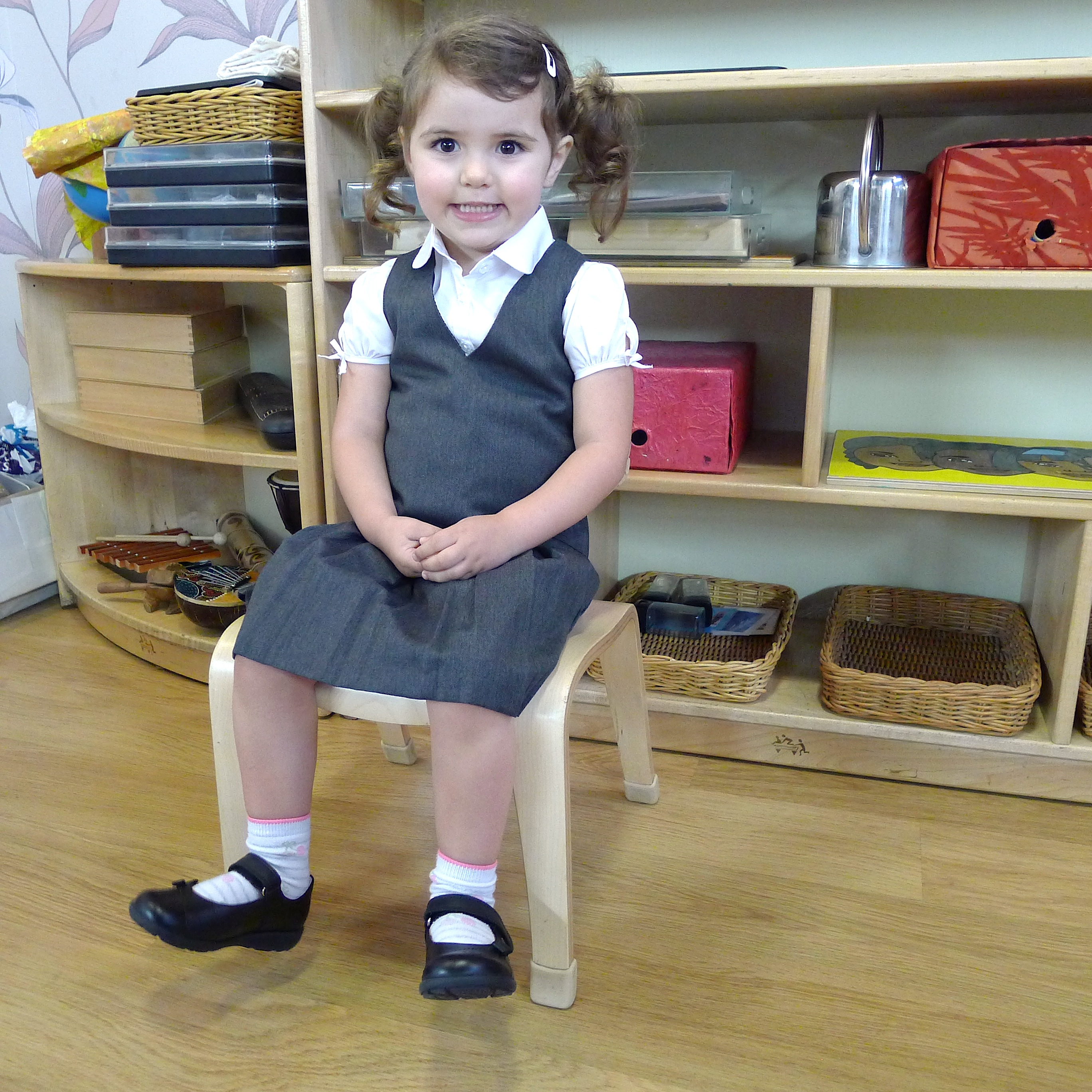
With the first month of school soon behind us I (Yiola) want to share some examples of my 4 year old daughter’s (Sylvia Clare) literacy learning in Full Day Kindergarten (FDK).

Example 1:  Phonemic awareness.  Sylvia Clare must be learning about the letter H.  On more than one occasion she has demonstrated her understanding of phonemes and phoneme isolation.  I said, “Sylvia Clare you must be hungry”. Sylvia Clare paused and responded, “Mommy, is hungry like Henry? huh huh huh.” I paused in surprise of her observation and connection and simply said, “Yes”.   Later in the evening I said, “Hendrix and Orion are going to visit soon” and Sylvia Clare responded, “Hendrix is like hungry and Henry, right mommy?”

Example 2:  Letter recognition.  One night earlier this week while tucking Sylvia Clare in bed I noticed she was curled in the most unusual position. I observed but said nothing. Just as I was about to pull the bed sheets up Sylvia Clare said, “Mommy, what letter do I look like?”   I respond, “hmmmm, interesting. I’m thinking you look like an I?”  Sylvia Clare laughs, “Noooooo. What letter do I look like mommy?”

She is also taking objects and forming letters. For example, while playing outside, she took two twigs and  placed them together to form the letter “V” and asked, “Does this look like a letter mommy? What letter is this?”

Example 3: Vocabulary development and comprehension.  More and more Sylvia Clare comes home with stories. Vivid stories. Curious stories.  Each day her stories grow in detail and description. The other day she explained she went on a trip to the forest in search of an oak tree. She shared,  “On the way to the forest, I held a boy’s hand [she paused and blushed]. His name is *Sam (changed) and he is in SK (senior kindergarten) so he is bigger.  I fell down on my way to the forest but I did not get hurt and the teacher gave me a bandaid. The forest close to the park mommy, you know the one we always go to.  We went into the forest just a little, not deep in the forest, only at the entrance. There we found a humungous oak tree. It had 4 trunks and they went out like this (uses her arms and points in four different directions). So it really looked like four trees stuck together. We looked at the bark”.  I asked if it was an angel oak tree. She was not sure but she continued to share news about her experience.

Example 4: Confidence.  Sylvia Clare drew a map of the world at home, wrapped it up and took it to school. I thought nothing of this as I dropped her off in the morning. Then I realized I left her lunch bag at home! I scrambled home and rushed back to the school to bring her  lunch.  By the time I returned to the school the children were engaged in outdoor play/education/inquiry.  I saw Sylvia Clare standing with one of her teachers, her map open and making reference to it. The teacher saw me and smiled, “Sylvia Clare is reading her map and we are now trying to find the treasure”.  How wonderful to see play and literacy in harmony. A reader is a person who reads. Sylvia Clare was demonstrating she is a reader. Then, at the end of the day when I went to pick her up she had another paper in hand. I asked, “What did you work on today?” and Sylvia Clare explained that she lost her map so she made another one – she developed a graphic organizer, a way to read, understand and appreciate the world. My thoughts:  thank you teachers, for providing the time and space for Sylvia Clare to engage in what interests her and thank you for appreciating those interests.

On her own, without probe, Sylvia Clare is offering hints of literacy teaching and learning.  With sly enthusiasm she is sharing her learning with me, in subtle, whimsical ways. She is sharing her achievements and understandings and I can tell she is proud that she is learning new things.  What excites me is that her learning is evident; in her sharing, practice and happiness. It is not coming home by way of worksheets or alphabet books.  I look forward to seeing and sharing what the upcoming months hold.


How do teachers learn? Guest blog by Elizabeth Rosales

What are the ways teachers learn? What kinds of professional development activities do Elizabeth Rosalesteachers participate in during their careers? What are the main supports for teacher learning in Ontario? What are the professional learning activities teachers find more helpful? What are teachers’ critiques to the current professional development activities?

These questions were in my mind when I (Elizabeth) started my Master´s thesis research at the Ontario Institute for Studies in Education at the University of Toronto. Working with Clare Kosnik and Clive Beck in the longitudinal study of teachers (https://literacyteaching.net/projects/) has been a great opportunity to learn about teachers and teaching. My Master’s thesis research was a sub-study of this longitudinal study.

The experiences of Tanya and Anita – the two teachers who participated in my study – offered me a great opportunity to gain insight into their learning experiences. Drew on interviews that were held over their first eight years in the teaching profession, my aim was to:

  • identify the kinds of professional development opportunities that were available to the teachers, and
  • describe the teachers’ perceptions of the possibilities and limits of these opportunities.

The most relevant conclusions of my study are:

–        Mentoring can be very helpful provided the mentor is well-selected, the timing is precise, and the relationship is encouraging

The findings suggest that there are three key elements for a beneficial induction process: (i) the pairing process should consider a match in the teaching assignments of the mentor and mentee, (ii) the induction should start in the first year of teaching and early in the academic year, and (iii) the relationship should respond to the emotional needs of the new teacher.

–        Collaboration can significantly enhance teacher professional learning. However, the benefits can be constrained by educational policy pressures and different visions of teaching within the collaborating group.

The teachers participated in several formal and informal opportunities to collaborate with other teachers. They valued “bouncing ideas off each other” and “talking through” their pedagogical practices in these experiences.

Nevertheless, teachers critiqued the formal opportunities sponsored by the government since they focused on specific content that was not related to their needs. The research points to the necessity of teacher input and decision-making for the design and implementation of relevant professional development programs.

Also, teachers found it challenging when different vision of teaching emerge within the collaborating group. The findings suggest the importance of conducting a discussion of visions of teaching in order to establish common ground on which to build collaboration in a community of teachers.

–        University graduate degree work can be a valuable means of teacher professional learning through fostering connections between pedagogical theory and teaching practice.

The parallel work of teaching and part-time graduate studies presented one of the teachers with several opportunities to link theory and practice. There were reciprocal gains from participation in both spaces. For instance, the readings about new theories of literacy shaped her classroom practice, and also her teaching informed her research.

Further research is needed to understand the potential benefits of graduate studies as an alternative route for teacher professional development.

If you are interested in learning more about Tanya and Anita learning experiences, you can access the following link to download my full work (for FREE!)

https://tspace.library.utoronto.ca/handle/1807/65532

Your opinions and feedback are welcome!

How was your day? And more inspiring ways to ask Children about school

We know that if we ask children, “How was your day?” Often we will hear the response “Fine”… or if we ask “What did you do at school today?” Often we will hear the ever so painful response “nothing”.

I (Yiola) came across this list of questions to ask children as a way to stimulate conversation about their schooling experience. I will be sharing this list with my student teachers this year as I find it to be a helpful tool to share with parents.

1) What was the best thing that happened at school today? (What was the worst thing that happened at school today?)

2. Tell me something that made you laugh today.

3. If you could choose, who would you like to sit by in class? (Who would you NOT want to sit by in class? Why?)

4. Where is the coolest place at the school?

5. Tell me a weird word that you heard today. (Or something weird that someone said.)

6. If I called your teacher tonight, what would she tell me about you?

7. How did you help somebody today?

8. How did somebody help you today?

9. Tell me one thing that you learned today.

10. When were you the happiest today?

11. When were you bored today?

12. If an alien spaceship came to your class and beamed someone up, who would you want them to take?

13. Who would you like to play with at recess that you’ve never played with before?

14. Tell me something good that happened today.

15. What word did your teacher say most today?

16. What do you think you should do/learn more of at school?

17. What do you think you should do/learn less of at school?

18. Who in your class do you think you could be nicer to?

19. Where do you play the most at recess?

20. Who is the funniest person in your class? Why is he/she so funny?

21. What was your favorite part of lunch?

22. If you got to be the teacher tomorrow, what would you do?

23. Is there anyone in your class who needs a time-out?

24. If you could switch seats with anyone in the class, who would you trade with? Why?

25. Tell me about three different times you used your pencil today at school.

*****

The list came from: http://www.huffingtonpost.com/liz-evans/25-ways-to-ask-your-kids-so-how-was-school-today-without-asking-them-so-how-was-school-today_b_5738338.html

Researchers in the area of parenting and parent involvement have offered the same advice to parents for speaking to their children about school.

http://www.theglobeandmail.com/life/parenting/back-to-school/how-to-help-your-kids-succeed-in-school-talk-talk-talk/article4524102/

Don’t Walk, Run to Buy Berliner and Glass’s New Book: 50 Myths and Lies that Threaten America’s Public Schools

This August, David Berliner and Gene Glass published the book 50 Myths and Lies that Threaten America’s Public Schools: The Real Crisis in Education (Teachers College Press, NY). I (Clive) just read a review of it by Paul Hood in Education Review, a publication of the National Education Policy Center.

It is one of those books you wish you had written but is so important you’re glad (and relieved) someone else wrote it, now. It will be a huge shot in the arm for attempts to defend public education against the trend toward standardization, top-down control, and even dismantling. While the book is about U.S. schooling, it struck me in reading the review that the same arguments apply to public schooling in other countries. We have often exaggerated the difference between the achievements/challenges of schooling in the U.S. and elsewhere.

According to the review, James Popham’s back-cover blurb about the book is as follows:

“What do you get when two world-class scholars and a team of talented analysts take a hard look at 50 widely held yet unsound beliefs about U.S. public schools? Well, in this instance you get a flat-out masterpiece that, by persuasively blending argument and evidence, blasts those beliefs into oblivion. Required reading? You bet!”

As Popham notes, the authors enlisted the help of a whole team of academics to write on the various myths, thus adding greatly to the depth and accuracy of the analysis. Taking such a step speaks to the judgment, humility, and public concern of these outstanding individuals. I for one wish to thank them for what they have done – and am running to buy the book!

Teaching Good Manners: An Aspect of Way of Life Education

I (Clive) appreciated Leah McLaren’s column in the Globe & Mail on Friday. She reported that Tatler editor-in-chief Kate Reardon was recently “pilloried in the British press” for “a graduation speech at a private girls’ school…in which she highlighted the importance of manners over good grades.” Among other things, Reardon said that “if you have good manners people will like you. And if they like you they will help you.” McLaren commented that “as both a feminist and a mother” she agrees with Reardon, but noted that “[w]hen it comes to instilling basic values and good behaviour, parents have never been more on their own.” http://www.theglobeandmail.com/life/parenting/the-importance-of-being-courteous/article19661557/

This should not be. Schools should support parents in this basic work (and they do to some extent). As I stressed in a recent posting, way of life (or values) education should be a major component of schooling, integrated into subject teaching and the life of the classroom and school.

The difficulty, however, is that we haven’t articulated a deep and comprehensive theory of way of life education. Advocacy in this area comes across as moralistic or, in the Reardon case, as old fashioned and conformist.

What could be more important than the quality of our way of life, in itself and in relation to others? It’s current neglect by advocates of “coverage” and testing is weird. “Good grades” as the goal of 12 years of schooling is totally inadequate. People should be pilloried for pushing such a position, yet it is so common.

Any goal can seem superficial when advocated in isolation. As educators, we need to develop for students, parents, and the general public a broad rationale for way of life (or values) education in terms of individual and societal happiness and what is ultimately important in life. We should help everyone – ourselves included – to stop fixating on narrow goals to the neglect of general human well-being.


Good-bye Michael Gove!

Michael Gove Although I (Clare) live in Canada I am well aware of the challenges teachers and teacher educators in England are facing. We have a number of literacy/English teacher educators in our study of teacher educators who have recounted the  challenges they are facing (e.g., funding reduction, stringent/ridiculous accountability measures). At our Symposium on teacher education in London participants recounted how demoralized teacher educators felt.

The Secretary of State for Education, Michael Gove, who was instrumental in bringing in a number of draconian measures in education has been demoted to Chief Whip. http://www.theguardian.com/commentisfree/cartoon/2014/jul/17/steve-bell-cartoon-michael-gove-first-day-chief-whip He wanted to reshape education based on his own experiences in elite private schools – or as I see it, drag education back to the 19th century. He seemed to be waging war on schools of education by creating so many alternative routes into teaching that he was stripping teacher educators of their place in preparing teachers. His inability or unwillingness to listen to reason and research led to him implementing a number of measures that are so wrong headed it is mind-boggling. He was never a teacher nor did he do research on teaching and teacher education so how did he think that he knew how to prepare teachers?  When you compare his approach to the one used in Finland (see blog post on Thursday, July 17) the contrast is glaring. Respect and trust were not his modus operandi.

On his first day of his new job as party whip he got stuck in the toilet! Hmmmmm…….. Read into that what you like!

Let’s hope that the path he set for education will be altered by his successor so that education and teacher education can get back on track and become relevant and appropriate for the 21st century. There is a growing body of research on teacher education which should guide policy. It is time for policy-makers in England to refer to it.