Category Archives: Social Justice

Striving for Equal Digital Opportunity

kids at computersAn article by Kristin Rushowy in the Toronto Star on April 1 reported that almost 60% of Toronto schools allow students to BYOD (bring your own device). http://www.thestar.com/yourtoronto/education/2014/04/01/byod_bring_your_own_device_now_in_most_ontario_schools_survey_finds.html

This indicates a trend. Not long ago the debate was whether it was “safe” for students to bring their smartphones or tablets: what if they did inappropriate things with them? Also, would students be distracted by their devices? At AERA two years ago I (Clive) attended a roundtable on just these issues.
What teachers have found (and many in our longitudinal study report this) is that, if rules are laid down and habits established, the potential problems can largely be overcome. Moreover, this process provides opportunities to teach students about digital responsibility, etiquette, etc.
The Star article focused rather on the question of equity: does BYOD increase the disparity between rich and poor students, or potentially reduce it? People for Education research director Kelly Gallagher-Mackay argues for the latter position, “as long as (boards) realize it’s not a level playing field, and consciously address that.”
While most school districts can’t afford to buy devices for everyone, they can make up the difference for students who don’t have them; and tech firms are often willing to help out. Rushowy reported: “Last year, the Peel board arranged for $55 tablets for families, and last month began a pilot project giving low-income families discounted refurbished computers.”
There will always be a stigma attached to needing help of this kind. But it seems better to tackle it head-on in the classroom rather than ignoring an inequality everyone knows about anyway. It’s also better to have devices in the classroom, provided we can find ways to make it work. The investigation continues.

Teaching Social Justice Through Action

j4mw

Last week at the 22nd Annual Labour Fair my (Pooja) class attended several sessions, but one profoundly affected us all. Activist Chris Ramsaroop from Justice 4 Migrant Workers (J4MW) came in and spoke to us about issues migrant workers in Canada face such as a lack of health benefits, sub-par living conditions, and low hourly wages. For many, this was the first they had heard about migrant workers in Canada. And so, many were surprised to learn some of the unsettling history around migrant workers and human rights violations.

To deepen our awareness on the issue, the following day we watched Min Sook Lee’s documentary “El Contrato.” This heart-wrenching documentary gave faces and narratives to the cases Ramsaroop spoke about the previous day. Students were deeply moved by the documentary, asking after:“What can we do?”; “How can we show we care?”

Wanting to take action, a moved student looked through the J4MW website and found there was something we can do: The J4MW group is looking for court support on Tuesday, March 25, 2014 (today) regarding migrant workers access to healthcare. To demonstrate support and solidarity, the J4MW wants to fill up the open court at Osgoode Hall to send a message. My class, along with two other sections eager to attend, will be in attendance at the court today.

I have deviated from my curriculum to make room for this issue my students (and I) have come to care so passionately about. I’ve seen students utilize an extensive range of literacies over just one week: they have organized themselves into groups to get to Osgoode Hall and back; they have conducted research on previous cases related to migrant workers’ access to healthcare in Ontario; and they have critically thought and discussed what it means to buy “local” produce in Ontario.

To learn more about the provincial court hearing today at Osgoode Hall, check out the link below:

http://j4mw.tumblr.com/post/80321298359/defend-migrant-workers-access-to-healthcare-in-ontario?utm_content=buffer9bc1c&utm_medium=social&utm_source=twitter.com&utm_campaign=buffer

If you haven’t had the opportunity to watch “El Contrato,” I  highly recommend watching it. Below is a synopsis and link to the documentary:

This documentary from Min Sook Lee (Tiger Spirit) follows a poverty-stricken father from Central Mexico, along with several of his countrymen, as they make their annual migration to southern Ontario to pick tomatoes. For 8 months a year, the town’s population absorbs 4,000 migrant workers who toil under conditions, and for wages, that no local would accept. Yet despite a fear of repercussions, the workers voice their desire for dignity and respect.a poverty-stricken father from Central Mexico, along with several of his countrymen, as they make their annual migration to southern Ontario to pick tomatoes. For 8 months a year, the town’s population absorbs 4,000 migrant workers who toil under conditions, and for wages, that no local would accept. Yet despite a fear of repercussions, the workers voice their desire for dignity and respect.

https://www.nfb.ca/film/el_contrato

The Power of Children’s Literature and its Omissions

While I (Yiola) knew there was a lack of representation of  “people of colour” in children’s literature, I was surprised to read the statistics. The chart below shows the number of books published last year and the number written ‘by’ and ‘about’ the different groups defined as ‘people of colour’.


Year

Total Number
of Books
Published (Est.)

Number of Books
Received
at CCBC


African / 
African Americans


American Indians

Asian Pacifics/
Asian Pacific Americans


Latinos


By

About

By

About

By

About

By

About

2013

5,000

3,200

67

93

18

34

90

69

48

57

Two fantastic articles in the New York Times last week prompted me to write this blog:

http://www.nytimes.com/2014/03/16/opinion/sunday/the-apartheid-of-childrens-literature.html?ref=contributors&_r=0

http://www.nytimes.com/2014/03/16/opinion/sunday/where-are-the-people-of-color-in-childrens-books.html?ref=contributors&_r=0

The articles share the stark realities and implications of the statistics represented above from the experiences of African American men, writers themselves. Reading the articles echo and confirm what I believe to be the realities and consequences of our publishing marketplace.  And yet, what to do about it?

The other day I was speaking to a high school educator (a behavior specialist, child and youth worker) who shared stories with me about boys in her school who are misbehaving, who are rude and disrespectful.  I shared with her the ideas that their behaviours must stem from something much bigger than an attitude problem… that they may feel oppressed, misrepresented or not represented at all by the school and broader society.  I do not think she was buying my argument.

My role as a teacher educator is to inform future teachers of the realities of teaching, learning and schooling.  Part of that role includes understanding how systems work for and against particular groups and individual students. One concrete area for exploring such systems is children’s literature.

Christoper Myers, author of “The apartheid of children’s literature”, describes books as maps to identity and ways of being:

[Children] see books less as mirrors and more as maps. They are indeed searching for their place in the world, but they are also deciding where they want to go. They create, through the stories they’re given, an atlas of their world, of their relationships to others, of their possible destinations.

The consequences of excluding certain groups:

what it means is that when kids today face the realities of our world, our global economies, our integrations and overlappings, they all do so without a proper map. They are navigating the streets and avenues of their lives with an inadequate, outdated chart, and we wonder why they feel lost.

Alternatively, Walter Dean Myers, author of the second article, explains what happened to him when he connected to a text: 

Then I read a story by James Baldwin: “Sonny’s Blues.” I didn’t love the story, but I was lifted by it, for it took place in Harlem, and it was a story concerned with black people like those I knew. By humanizing the people who were like me, Baldwin’s story also humanized me. The story gave me a permission that I didn’t know I needed, the permission to write about my own landscape, my own map.

And so, how do we as teacher educators empower teachers so they empower students to realize the flawed systems we live in but and to move beyond them to ensure each child can navigate and negotiate their personalized, broad, rich landscape of possibilities?  I suggest: we ourselves develop a critical stance and what Noddings calls a culture of care; we are explicit about the realities of the systems we currently work in; and we work hard to search out texts and materials that share rich stories of all of our students and beyond.  More so, I suggest we move to change the marketplace by publishing texts that begin to close the gaps in representation in children’s literature.

The Wikipedia Gender Gap

Wikipedia is  believed, by many, to be a democratic model of content creation because of WIKIit’s design which allows anyone to create/edit content. While listening to CBC Radio’s Spark, I (Pooja) learned that Wikipedia suffers from a severe gender gap. In fact, a study in 2011 conducted by the Wikimedia Foundation, found that only 13% of Wikipedia contributors were women, making men the overwhelming contributors to Wikipedia.

Sue Gardner, the Executive Director of the Wikimedia Foundation, uses comments posted by women on articles related to the wiki gender gap to explain reasons women do not contribute more to Wikipedia:

1)     Some women don’t edit Wikipedia because the editing interface isn’t sufficiently user-friendly.

2)     Some women don’t edit Wikipedia because they are too busy.

3)     Some women don’t edit Wikipedia because they aren’t sufficiently self-confident, and editing Wikipedia requires a lot of self-confidence.

4)     Some women don’t edit Wikipedia because they are conflict-averse and don’t like Wikipedia’s sometimes fighty culture.

5)     Some women don’t edit Wikipedia because the information they bring to Wikipedia is too likely to be reverted or deleted.

6)     Some women don’t edit Wikipedia because they find its overall atmosphere        misogynist.

7)     Some women find Wikipedia culture to be sexual in ways they find off-putting.

8)     Some women whose primary language has grammatical gender find being addressed by Wikipedia as male off-putting.

9) Some women don’t edit Wikipedia because social relationships and a welcoming tone are important to them, and Wikipedia offers fewer opportunities for that than other sites.

Like many, when I want to learn the basics about anything, Wikipedia is often the first place I go. However, before listening to the Spark radio show on Sunday, it never crossed my mind to edit or contribute to a Wikipedia page. Some of the reasons Gardner presented resonate with me, while others not at all. So what is it that’s keeping me (and you) from Wiki’ing?

Listen to CBC Radio Spark on the Wikipedia Gender Gap:

http://www.cbc.ca/spark/blog/2014/03/16/wiki-gender-gap/

Read Sue Gardner’s blog here:

http://suegardner.org/2011/02/19/nine-reasons-why-women-dont-edit-wikipedia-in-their-own-words/

St. Patrick’s Day

Today is St. Patrick’s Day – an Irish holiday. St. Patrick’s day is a significant day here in Toronto and includes a big parade, people wear Green, restaurant and pubs turning themselves into Green enterprises, classrooms talking about and celebrating all that is Green and Irish.  What began as a religious holiday is now a festive c Image Shamrock_with_Pipeelebration in many parts of the world.
St. Patrick’s Day is about St. Patrick, the Apostle of Ireland. St. Patrick is credited for bringing Christianity to Ireland. The shamrock is what St. Patrick used to illustrate the Holy trinity.  March 17th is believed to be the day St. Patrick died.
Thinking about schools and classrooms, should we teach St. Patrick’s Day from a perspective other than a festive celebration? Why is it a prominent celebration here in Canada?  How is it that Irish and other ethnicities alike rejoice in St. Patrick’s Day? When I taught in the public schools we encouraged students to dress in Green, we had a parade through the halls of the school, we read books about St. Patrick’s day and Ireland, and had several activities (arts, crafts, writing) to honour the celebration. Yet not once do I recall and inquiry or examination of what the Day represents both historically and for today.  What are the roles and responsibilities of teachers when it comes to celebrations and religious based traditions? In Toronto, Christmas has been the hotly debated and accommodated celebration for decades. What about the celebrations that are not framed in religion and yet are still entrenched in identity and power? Do we blindly and happily engage in the happiness and celebration without thought to the messages of exclusion and power we send when we honour one group and not another? Or do we engage in the often burdensome experience of exposing the inequities of such celebrations? Or, do we do nothing at all?
In an interesting article by Sallie Marston (1989), “Public rituals and community power: St. Patrick’s day parades in Lowell, Massachusetts, 1841–1874”, Marston states, “parades and other forms of mass public ritual are better characterized as demonstrations of community power and solidarity and serve as complex commentaries on the political economy of urban-industrial social relations”.  Perhaps a safe and productive space for exploring the ‘power’ of celebrations is better served in teacher education classrooms. Teacher educators who take a critical stance in their practice raise consciously engaging issues and connect social theories to classroom practice and student learning. Yiola

The Danger of a Single Story

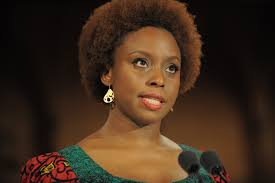
When engaging with students about Media Literacy, I (Pooja) often like to begin with novelist Chimamanda Ngozi Adiche’s powerful TED talk entitled The Danger of a Single Story. Through the use of her own narrative, Adiche speaks about the prevalence of a “single story” or the dominant culture portrayed throughout most school curriculums. Adiche shares the following memory of being taught a single story:

At about the age of seven … I wrote exactly the kinds of stories I was reading: All my characters were white and blue-eyed, they played in the snow, they ate apples, and they talked a lot about the weather: how lovely it was that the sun had come out. This despite the fact that I lived in Nigeria; we didn’t have snow, we ate mangoes, and we never talked about the weather, because there was no need to.

Adiche speaks about the impacts the single story has on an individual, on a community, and on society at large. While a young school girl in Nigeria, Adiche recalls only reading authors from the West. Having never encountered the works of an African author or seeing people like her appear in books, she believed she could not (or should not) be a writer.  She asserts that when we receive only one perspective on anything it creates stereotypes, “and the problem with stereotypes is not that they are untrue, but that they are incomplete. They make one story become the only story.”adiche

This TED talk sparks lively discussion in the classroom. Students often think back to their early schooling and many recall “single stories” they experienced. As a class, we capture all of these experiences on a large poster. As new text is introduced in the course we often refer back to this “single story” poster and discuss who’s stories are being represented in what we read/hear/see.

Re-Conceptualizing Multiculturalism in Terms of Diversity and Individual Identity

In a blog in January, I (Clive) argued against teaching multiculturalism in a way that leads to Ishrad Manjistereotyping, thus undermining students’ individual identity and well-being. In interviews this weekend after giving the 2014 Bluma Lecture, author and NYU professor Irshad Manji spoke eloquently of the dangers of a misguided approach to “multiculturalism,” expressing preference for terms such as “diversity,” “global citizenship,” and “individual identity.” In the Toronto Star she said:

Multiculturalism is about preserving a group mindset, which amounts to labelling. Diversity, on the other hand, is about…different points of view…. If you listen seriously to a new generation of Torontonians, multiculturalism’s time is done. Enough of hyphenated identities. The next stage in our city’s evolution is this: global citizenship. http://www.thestar.com/news/gta/2014/03/07/qa_irshad_manji_on_multiculturalism.html

Manji would like to see more emphasis on individual identity. In the Globe and Mail she commented:

[Mr. Trudeau] basically said national unity must be founded in one’s own confidence in one’s individual identity and from that we can begin to engage with others…. We don’t have that kind of multiculturalism today, in my view. What we have is more a fear of engaging based very much on feeling intimidated that I’m going to say something wrong or that somebody is going to be offended.

She is especially concerned about the impact of prevailing approaches to multiculturalism on vulnerable community members, notably women and children. In the Star she stated that “the vast majority of the world’s known cultures are patriarchal,” and in the Globe she said:

By giving rights to cultures, not just to individuals, what we wind up doing…is giving more power to those who are already powerful within certain communities. We give them more power to dictate what customs are to be respected and which customs are untouchable. The next time you’re told you must respect such and such a custom, ask yourself, “What does my respect for this custom do for the most vulnerable in that community?” And the most vulnerable tend to be women and children.

Whether or not the term “multiculturalism” has outlived its usefulness is something we should ponder; and if we’re too afraid to say it has, we prove Manji’s point. But whatever words we use, we can support Manji’s approach in teaching and teacher education by stressing the diversity and power differences within cultural communities, the commonalities across communities, and the importance of individual identity and well-being.

A Daily Reminder

I (Pooja) work at a higher ed. institute with a population that is very diverse. I have many mature students, with a history of interrupted education, who are looking to make a fresh start with school after work many years in unfulfilling jobs. Even though school has failed them in the past, they come in hoping to form a new relationship with school. This cartoon and this quote are taped up above the photocopier in our office. It is a daily reminder of my work and the students I serve.

comic

Everybody is a Genius. But If You Judge a Fish by Its Ability to Climb a Tree, It Will Live Its Whole Life Believing that It is Stupid. –Einstein

Guest Blog: Monica McGlynn-Stewart

Monica McGlynn-Stewart who is part Monica McGlynn-Stewartof our research team on the longitudinal study of teachers is our first guest blogger. For more information on Monica click on the tab About our Research then click on Meet the Team.

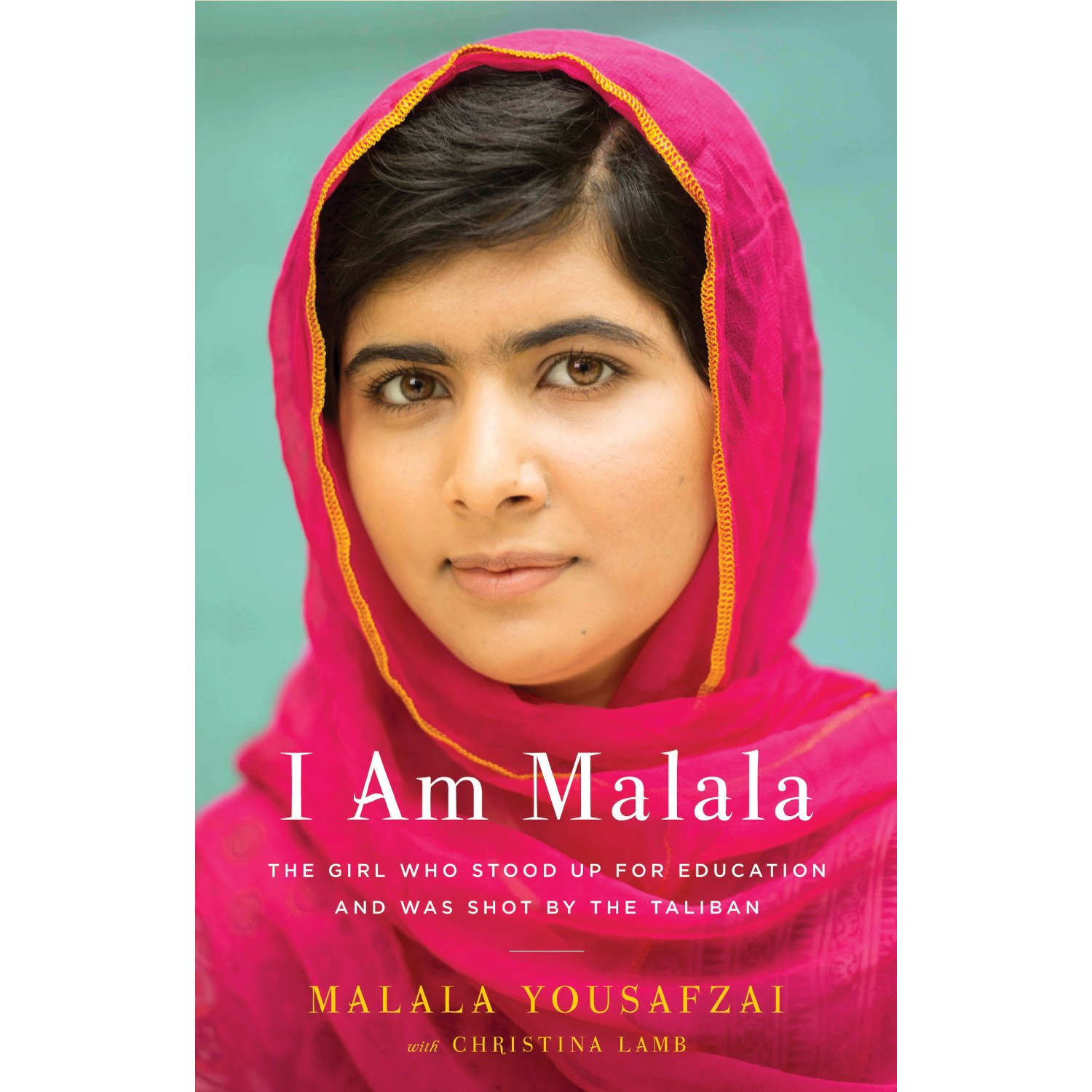
I (Monica) gave my 16-year-old daughter I am Malala by Malala Yousafzai for Christmas and now I am getting a chance to read it.  It is the memoir of a 16-year-old girl who was shot by the Taliban for speaking out about girls’ right to education. I find it fascinating for many reasons, not least of which is what I am learning about life in the Swat Valley in Pakistan. As an educator, I am always interested in learning about different systems of education and different pedagogical practices. Malala is the daughter of a school I am Malalaprincipal and had access to formal education except for a brief period when schools were closed by the Taliban, but many girls in the Swat Valley do not have access to education. In her descriptions of her studies, she relates how she memorized and recited religious texts, poetry, history, and even chemistry formulas. Her mother, who did not learn to read and write, can also recite many texts that she learned through hearing them. When I went to elementary school in the 70’s, we sometimes had to memorize a poem and recite it, but it was a rare occurrence. As an elementary teacher, I never asked my students to memorize texts, but they would learn many poems by authors such as Dennis Lee or Shel Silverstein because we read them out loud so often. For young students, “memory reading” a text that they had memorized was an important step in learning to read. So I am wondering, what role does memorization and recitation play in literacy learning? And can we consider someone illiterate who has memorized and can purposely refer to a large body of literature?

Beatles, Popular Culture, Relevance, Perspective …

the Beatles

I (Clare) was reading in the newspaper that Sunday marks the 50th anniversary of the Beatles’ performance on “Ed Sullivan.” http://www.thestar.com/entertainment/2014/02/08/beatlemania_a_moment_in_time_never_to_be_repeated.html

 I probably should not admit it but I clearly remember the event. My entire family was gathered around the TV. “Nielsen says 45 percent of all TV sets in use at the time were tuned into the broadcast, with fans and the uninitiated alike gathered shoulder to shoulder in their living rooms.” The article on the Beatles commented that they “landed on a trigger point when they hit America. It was a pop culture sonic boom spurred by talent, timing and luck that’s still rattling the windows.”
So I had a few thoughts when I read the article about the Beatles:
·      For me there are a few key events in my youth that gripped the national (and often) world stage. Events where I remember so clearly where I was sitting when I heard the news, how I felt … . For example, I remember so vividly when the school principal announced on the PA (something rarely used) that JFK had been assassinated and I can recall as if it was yesterday sitting with my family watching the live footage of the first walk on the moon … I wonder what will be key events for our youth today?
·      In our highly diverse world, events in one culture/country can be viewed very differently in another (on a small scale, my grandmother was appalled by the Beatles and their long hair). As a classroom teacher I used to bring current events into the classroom because I felt it was important for the curriculum to go beyond the classroom walls. As a teacher educator who teaches literacy courses I spend a lot of time on non-fiction, in particular perspective in newspaper and news reporting. How can we prepare student teachers to bring current events (and global events) into the classroom for discussion and interrogation when there are such different views? (The current Olympics would be a good springboard for discussion). I know as an experienced teacher the skill and diplomacy needed to handle discussions that can be controversial. Current events need to be in the curriculum if we want to be relevant but it is not a simple task.
And for those of a certain age, listen to your favourite Beatles song today and sing along as if you are a teenager.  Clare