Category Archives: Teacher education

Assessing Multimodal Projects

You may remember, in a former post on Mar. 21, 2014, I (Cathy) shared some of my pre-service students’ multimodal projects.  The dilemma facing me after these wonderful creations were submitted, was how to assess them.  As these were only part of a larger assignment, I already had a rubric in place for whole project, but after seeing the brilliance of the multimodal aspect, I felt these alone warranted more thought and introspection on my part.  Having a background in the arts, I was used to assessing creative process and final product, but this was different.  Although artistic and expressive, this wasn’t “art”.  Hence, I looked up a number of sources on assessing multimodal work and discovered a few different opinions.

Kalantzis, Cope & Harvey (2003) argued that a multimodal assessment needs to measure the creative process and the collaborative skills demonstrated.   Jacobs(2013) suggested it wasn’t about the final product, but “watching and noticing what students are doing and then using that information to guide the students toward new skills and knowledge”.  In the end I sought out the opinion of Gunther Kress, the founder of the Multimodalities Theory.  Kress (2003) explained that representation and communication were an affective/cognitive semiotic process and this must be taken into account in the assessment. He suggested that I, as the teacher [educator] should not ask “How does this project match what I wanted or expected?”, but instead should ask, “How does this project give me insight into the interests and motivations of my learner?”  I found this question quite insightful. In the end, I used Kress’ question to guide my feedback, which will hopefully guide the students toward new insights and knowledge.  The required ‘grade’ was based on a combination of the learners’ expressed interests from within the context of the whole project (which was on diversity), the creative process and the collaborative nature of the work.

Through this process I discovered that assessing in the new age of multimodality demands mindfulness, insight and the ability to make many connections.  To be effective, it also requires that the teacher educator, or teacher, know his/her students well.  This type of assessment takes time, but it is much more meaningful. I have to admit, as much as the students loved doing these multimodal projects, I loved assessing them in this “new” way.  We all got more out of the process.  Below is a link to one more student project expressed as POW TOON digital creation.  How would you assess it?

POW TOON Link

http://www.youtube.com/watch?v=9uM68P2rk24&feature=share&list=UUdKEvJ3G8Z-W-geAhhsX9IA
Multimodal Literacy

My (Cathy) pre-service students were assigned a multimodal aspect to a major assignment this year.  If you are not familiar with the Theory of Multimodality, it is Gunther Kress’ alternative to Linguistic Theory (which only privileges reading and writing as the main modes of communication in a school curriculum).  The Multimodal Theory contests that in our new age of multiple literacies, students need to be communicating, responding and expressing through many different modes of communication (e.g. speaking, music, moving, gesturing, image, and digital technology).

When I first introduced the multimodal assignment to my students, there was some trepidation and even some anger.  It was suggested I did not have the right to be marking them on their artistry or on creativity.  Hence, I had to teach the concepts behind Multimodality Theory so they could better understand what we need to be offering students of the 21st century.  They needed to see that it would allow them the freedom to express in modes of their own choosing; that it was not graded as art but as a production of design; and, that the work could be symbolic or interpretive depending on the meaning they were portraying.  The multimodal projects would also be shared in class so all could learn from them.  This project was not just them regurgitating information for me, it was them designing and producing personally meaningful projects that express what they learned and what they deemed significant.

This week we finished viewing the projects.  They were amazing, and the student response to these projects was encouraging.  My students (concurrent students just finishing a five year educational degree) had never been given this kind of an assignment before.  They loved the element of choice; working together; taking a risk; pushing their boundaries; feeling creative; and, doing something they were interested in.  The modes they selected  to express themselves though were sometimes more traditional (dancing, rapping, singing,  writing and reciting  poetry, creating 3D sculptures, puppetry, multi-sensory art installation pieces); sometimes digital (iMovies, pod-casts, prezis, Pow Toons, popplets, infographics);  and, were often a combination of both.

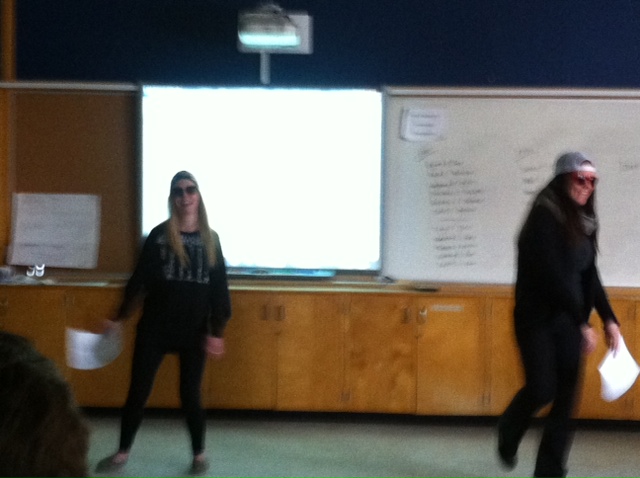
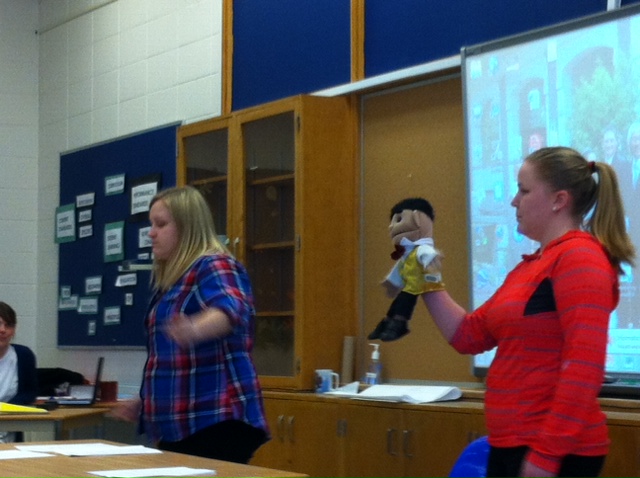
Collectively, we were all blown away by the results.  We were moved.  We were inspired.  My students all said they would definitely use multimodality now as teachers.  Below are a few images of my students presenting their projects:

role play poemfish bowlRAPguitarpuppet photo (13)

Now, I have to assess these designs… but that, dear reader, is for another blog.

Dialogic Talk

It’s a powerful statement about a book when while reading it, you implement a suggested strategy the next day in class.  That’s exactly what happened while I was reading Classroom Talk: Understanding dialogue, pedagogy and practice, by Edwards-Groves, Anstey and Bull (2014).  The premise- talk is the foundation to all learning- is not new, but the connections made to multiple theories (e.g. Theory of  Practice Architectures, Theory of Multimodality, Social Semiotic Theory) makes this book very current.

book

I particularly enjoyed the section on conversation vs dialogic talk.  I do believe in “vacating the floor” as is suggested in the book and letting the students discuss issues in small groups.  In one particular class I teach, I always allowed my students to select their own discussion groups, as these are university students and felt they needed to make their own choices.  However, many of the groups were not focused, they veered way off topic (or never addressed the topic at all) and some students were still not voicing their opinion (even after much community building).  The section on dialogic talk prompted me to reframe my concept of small group discussion.  It suggested conversation is an informal discourse where direction and end point of the talk are unclear.  This was pretty much where my students were with their discussions.  Dialogic talk, however, sought to engage all listeners and had more purpose.  Plus, dialogic talk was not as relaxed as conversation, it was driven.  I needed driven.  I wanted more engagement.

As a result, I immediately set up ‘Dialogue Groups’ with an assigned moderator, who ensured everyone’s opinion was invited and heard.  I decided who would go into each group (which I thought they might resent and discovered they preferred!).  For each discussion I provided prompt questions to get the talk started.  I also assigned a time keeper who kept the dialogue to the time limit and a recorder who kept general notes about what was discussed.  I honestly didn’t think this would be necessary at the university level, but the difference was incredible.  There was thoughtfulness in the answers.  The discussants were suddenly animated and energetic.  They were really listening to each other.   This was a small change, but it made a world of difference in how they were hearing and responding to each other.

Of course there are many other interesting and practical suggestions in the book.  The connections between theory and practice are very strong.  I highly recommend it.  This book was published by the Primary English Teaching Association of Australia (PETAA).  Check out their web site!

http://www.petaa.edu.au/

Including All Students in the Conversation

I (Clive) am a great believer in whole-class and small-group discussion. However, three and four years ago I was terrorized by a series of individual students who dominated discussion in class, speaking at least 50% of the time – they would have talked 90% if I’d let them. I’m sure they did the same in their small group, if I wasn’t in the group.
This forced me to develop a set of techniques for giving everyone a turn. They’re simple but effective. Most students appreciate them, and they’ve enabled me to relax and not always be cutting people off (though I still have to be firm). I wish someone had introduced me to them long ago.

     The techniques assume the class is no larger than 35 (I have any bigger class divided up) and is seated in a large circle (I arrange the seating before the students come in). They also assume that students get a lot of “air time” in class, otherwise it’s impossible for everyone to have a turn.

Here are the techniques:

  • Going around the room, with each student (or every 2nd or 3rd student) saying what they think about the topic in hand (don’t worry if you don’t get all the way round).
  •      Discussion in 2s and 3s around the room, followed by reporting from each group.
  • Numbering off to form small groups, followed by discussion and reporting back.
  • Individual prepared presentations (ungraded, maximum 4 minutes) – 2 to 4 per class – with 3 people to the left or right of the presenter responding.
  •       Whole-class discussion after a “mini-lesson” from me, with a speakers list formed as people put up their hands.

I find students are very glad to be called on in these ways: no one has ever declined. And the approach greatly strengthens community as we hear from and get to know everyone, including many who’ve been largely “voiceless” throughout their school and university career. It fosters oral literacy and results in truly inclusive education.

If anyone has other strategies, please let me know!

Student Teachers in School Practice: An Analysis of Learning Opportunities by Alaster Scott Douglas

Alaster Scott Douglas

I (Clare) thought Alaster Scott Douglas’ recently published text, Student Teachers in School Practice: An Analysis of Learning Opportunities, might be of interest to those of you involved in teacher education. Douglas is the Assistant Director of Education and Reader in Education and Professional Practice at the University of Roehampton. He has written a book thatexamines student teacher learning during school teaching practices. The book includes a number of case studies that illustrate how learning opportunities for students are very different. Click on the link for more information about the text. Alaster Douglas Flier_STUDENT TEACHERS IN SCHOOL PRACTICE US
Congratulations Alaster on the publication of this important text. For all of us involved in teacher education we know how complex student/practice teaching can be and it is an area that warrants much more research. This text promises to add to our understanding of a critical yet often misunderstood aspect of teacher credential programs.  Clare

Walking for the Brain

To further our theme from earlier posts on well-being and schooling, I (Cathy) looked up the right time to exercise to help your brain.  These tips were suggested:

  • In general, anything that is good for your heart is great for your brain.
  • Aerobic exercise is great for body and brain: not only does it improve brain      function, but it also acts as a “first aid kit” on damaged brain      cells.
  • Exercising in the morning before going to work not only spikes brain activity and prepares you for mental stresses for the rest of the day, but also      produces increased retention of new information, and better reaction to      complex situations.
  • When looking to change up your work out, look for an activity that incorporates coordination along with cardiovascular exercise, such as a dance class.

http://www.positscience.com/brain-resources/everyday-brain-fitness/physical-exercise

These all made sense, but none of them identified when or why I like to exercise for my brain.  When my mind is somewhat numb after a few hours of academic writing, I need to push the refresh button.  I achieve this walking by the lake.  I am sure it is good for my lungs, my joints and my heart, but I really head to the water to recharge my neuro cells and feast my eyes.  The scenery renews me as much or more than the exercise.  Maybe just seeing what I saw yesterday will refresh your neurons…

photo 1 photo 2 photo 3 photo 4

Picture Books

arrival_02Clare and I (Lydia) routinely integrate picture books into our pre-service literacy methods courses. We often begin each class with a read aloud from a picture book. The feedback we have received from student teachers suggests they appreciate this practice because it introduces them to a variety of texts they can use in the classroom, and it models storytelling and read aloud techniques. We have often used the creative and compelling picture books of author Shaun Tan in our literacy courses. I wanted to share a quote from Shaun Tan in which he comments on the “visual language of illustrations”.

“the word illustration is a little misleading, because the best illustrations do not actually illustrate anything, in the sense of describing or illuminating. My own narrative images, and those of my favourite artists, are actually far more concerned with deepening the uncertainty of language, enjoying its ambiguous references, exploiting its slipperiness, and at times, confessing its inadequacy.  My own aspirations as an illustrator – using that term advisedly – is to simply present the reader with ideas that are essentially silent, unexplained, and open to very broad interpretation”.— Shaun Tan

(Quote taken from an essay originally written for ABC Radio National’s Lingua Franca.)

Semiotic Linguistic Quiz

Saussure   Ferdinand de Saussure (1857-1913)

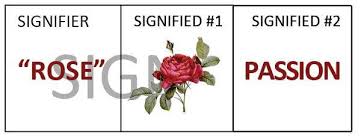
As of late, I (Cathy) have been exploring semiotic linguistics to further  my understanding of multimodality (Jewitt & Kress, 2003). Ferdinand de Saussure is considered to be one of two fathers of 20th century semiotic linguistics.  He described semiotics a as a system of signs that are created within a cultural context.  Sausuure defined a sign as being composed of:

        • a ‘signifier’ – the form which the sign takes; and
        • the ‘signified’ – the concept it represents.

On the internet I stumbled upon these diagrams which are intended to illustrate the meaning of signifier and signified.  Do you think they are both correct?

tree

rose

A multitude of communication resources

cartoon_newliteracies

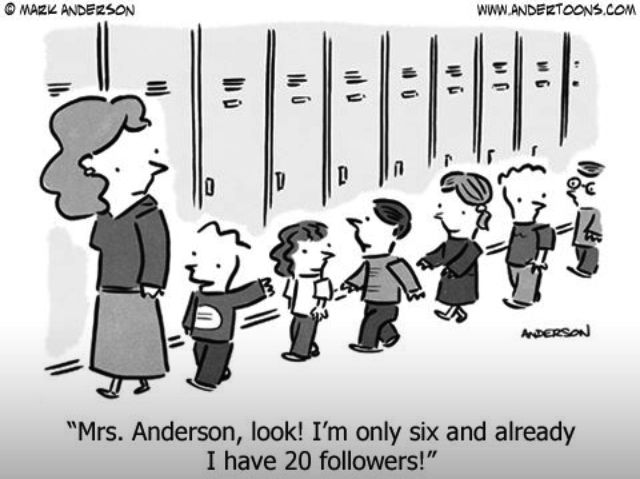
When I saw this comic it made me chuckle.  I enjoyed the comic’s gentle reminder that children/youth routinely engage with and expertly navigate a variety of communication tools. Clare and I (Lydia) conducted a two-year collaborative self-study of our efforts to incorporate various technological resources (e.g. a wiki) into our pre-service literacy methods courses. This research helped us identify both the challenges and successes we encountered along the way.  Our research efforts also made us more mindful of why we chose to incorporate certain technological resources into our pedagogical practice — questioning for what purpose and to what end.   Through the analysis of our efforts we realized that we had initially seen technology as an end in itself, not as a tool to support learning. In the second year of the study, we focused much more on student learning and became more systematic in our efforts. Over the two years of the study, our identities as teacher educators shifted as our pedagogies became richer, our use of technology more fully integrated into our literacy courses, and we received validation from others and from each other.