Category Archives: Teacher education

Treasuring Picture Books

Like many literacy teacher educators, I (Cathy) sometimes tasked my student teachers with bringing in, or finding pictures of (if possible), their favourite picture book from childhood. My student teachers loved this task, and were excited when someone else brought in the same book.  I often saw Mr. Muggs books; Robert Munch books (especially I Love You Forever); Amelia Badelia; Madeline, and; super hero comics!  But I never saw mine.

As late as grade five, I would sneak the book home, terrified of being teased or bullied for taking it out of the library.  It was a book for little children after all, but I loved it so. It was worth the risk.   It was called, When the Root Children Wake Up.  I have searched for a hard copy to own, but have never found one.  I have discovered many newer versions (Helen Dean Fish’s, Audrey Wood’s) and as lovely as these illustrations are, they simply don’t touch me the same way. 

            Recently, however, I discovered my treasured version posted in the International Digital Children’s Library. ( http://www.childrenslibrary.org/ )  The author is listed as Sibylle von Olfers (1881–1916), and the text is in German.  I suppose the book was originally in German. I had no idea the book was so old.  The title is different than I remember, but I actually held my breath when I saw the illustrations again.  Those were the pictures I held dear: so simple, so precious.  I still love them.

What’s your favorite picture book form childhood?

wake up the root childrenroot mother

parade

Reflection on My Teacher Education Program

I (Clare) am currently teaching a graduate course Current Issues in Teacher Education. The first assignment asks students to:

Write a reflection paper on your experiences in a professional program (teacher education, Teaching English as a Second Language ….). Provide a very brief description of the program. Some questions to consider are: What were the strengths/weaknesses of the program? How well did the program prepare you to assume the duties of a teacher? What were the limitations of the program? Have your views of the program changed since graduation? How could the program have been improved? Did the program prepare you to assume the duties of a teacher (or other position)? Do NOT respond to all of these questions. Select one or two and respond to them. In the fourth class of the course, you will work in small groups and share your paper with your fellow students.

Since all of the students in the course are teachers they have a good perspective on their program. Their assignments were so stellar I felt these would be of great value to share with other teacher educators. Over the next few weeks I will be sharing these papers. I learned much and I suspect you will too. I have changed the name of the university so that no school of education is identified.

In June 2011, I graduated from a 2 year Teacher Education Program at the YYY University. Freshly hired by two boards, I felt both the nervous anticipation of one traversing into uncharted waters and the confidence of one for whom the world had suddenly opened. I believed I was entirely prepared. In many ways, I was as prepared as possible after two years of training; there will always be aspects of my chosen profession that can only be learned through experience (for who could ever predict all the potential dilemmas and baffling questions raised by students, colleagues, or parents over a lifetime of teaching?). As a future teacher-educator, I can reflect in retrospect on some programming changes that may have augmented the skills and knowledge I carried with me into my first year of teaching.

Designed to Meet Current Needs

I have many accolades for my two-year teacher education program. The XXX Program was well-designed, with a clear vision to produce teachers who were reflective practitioners. To accomplish this, it had a well-balanced, thoughtful curriculum which seemed to have an equal basis in academic readings, instruction in pedagogy and learning development, courses in Ontario Curriculum subject areas, and four practice teaching blocks. Professors treated student teachers with respect and showed genuine interest for our ideas and experiences. They also drew on their own examples from time in the classroom and did not seem removed from current issues in education.

Over and above our regular courses, we could attend workshops which addressed other current educational needs, such as how to teach to English Language Learners; community-building through TRIBES; and technology in-services. The program also offered the opportunity of conducting our own Master’s Research Project, without which I would not have had the confidence to consider pursuing further graduate studies.

In addition to courses in the various subject areas of the Ontario Curriculum, the XXX Program also had a phenomenal Special Education and Adaptive Instruction course that taught me concepts and strategies I use on a daily basis in my own classroom. Having talked with many colleagues who did not have any special education training in their pre-service training, I feel this was a major boon to the XXX Program. Every teacher will encounter students who learn in different ways and will need to know how to accommodate or modify as needed.

While I have no criticisms of this course, it could easily be extended to two years, to incorporate a greater understanding of the multitude of needs teachers have to support in the classroom. A longer course may also have allowed for more detailed instruction in Individual Education Plans, which all teachers will need to write and should receive training to do so (though many of my classmates and I accomplished this by taking a Special Education Part 1 Additional Qualification offered to us at the end of the program). Then as now, I was proud to be a part of a program that saw special education as an integral part of a pre-service program design. As I return to University YYY in pursuit of my doctorate, I feel discouraged to see no courses available in this important field.

Multiple Placement Opportunities

The XXX Program offered four placements to teacher candidates, which allowed me to observe and practice my burgeoning teaching skills in different settings. Perhaps naively, I hoped I would see the innovative strategies, clear assessment criteria, and classroom community-building I was reading about play out in front of me, but that was not always the case. I was very fortunate that my first Associate Teacher (AT) was exemplary. Not only was she the only AT to teach me how to do assessments, I will never forget watching her teach a lesson that did not go as expected. She turned to me and said, “ZZZ, that’s what happens when a lesson fails. It happens to everyone and it will happen to you. Sometimes, a lesson just won’t work, no matter how much you’ve prepared. Don’t take it personally; just plan it a different way tomorrow.” Of all my practicum experiences, that day had the greatest impact on me. Had she not uttered those words, I might have been afraid to plan creative lessons and to try new approaches; and any failure may have felt like a reflection on my ability. My other practice teaching blocks did not leave the same impression on me; yet I made the most of each and asked to teach up to one-hundred percent of the time, so I could try, and fail, and reflect, and try again, open to as much or as little input as my ATs were willing to give me.

Solely by chance, I was matched with one particular teacher who instilled in me such a significant lesson. While I recognize the ethical murkiness of having a mechanism for screening possible ATs, it is critical that student teachers have the chance to observe and participate in classrooms where teachers are masters of their craft. Every teacher candidate should have the opportunity to learn from an exemplary mentor (and hopefully four). Potential ATs should be screened and offered professional development in being an effective mentor (for example, debriefing with the candidate about their lesson designs and the thought process behind each pedagogical choice, of which the student teacher may be unaware). These powerful examples should show teacher candidates not only best practices but help them to envision the potential of teaching, rather than a reiteration of the rote learning they may have experienced as students going through the system. How can any new teacher feel confident to incorporate more current pedagogical concepts into their classroom without the chance to observe in practice? I consider myself lucky that I had one such placement.

An Enhanced Education

Like most things in life, the XXX Program was what one made of it. For a tenacious person like me, it met my needs beautifully. When I encountered an assignment I felt would be too similar to another, I asked the instructor if I could do it a different way (I even wrote a play exploring educational issues for a course, rather than write another reflection). When I was determined to have a placement in a classroom for children with Autism, I found the classroom and set up the placement myself, politely self-advocating with the placement coordinator. Later, I requested and received an intermediate placement, even though I was primary-junior, because one future goal was to acquire an additional qualification in that level. Throughout my time in the program, I ensured I had opportunities that were in line with my professional goals. Many of my classmates did not know they could be proactive, and went with the flow instead. They often grumbled about assignments they did not like or placements that were not what they wanted.

I wonder whether their experience would have been improved if we had had a pro-seminar course, similar to the one in the PhD program. Such a course could walk student teachers through the program itself, but it could also help students to identify their educational goals and be assertive in taking ownership for their learning; and it could shed light on the behind-the-scenes of teaching that pre-service programs do not have time to teach, such as how to manage difficult conversations with parents, principals, and colleagues. The kids are easy; for me, dealing with the politics of other adults is definitely the hardest part of teaching.

An Emphasis on Personal & Teacher Identities

Unlike other programs, the XXX Program did not gloss over the many realities of being a teacher. My classmates and I had courses where we created our resumes and practiced interview skills; we learned about educational law and the higher standard to which teachers are held (causing us all, no doubt, to secure our Facebook settings). My instructors emphasized work-life balance, and at the time, I believed I could imagine the many long hours and the sheer emotional and physical exhaustion I would later experience. Little did I know then the extent of it; two years ago I decided to adopt my dear cat Gerrie, to help me have something besides my students’ troubles to focus on when I got home! Without those words of encouragement (and reality) from my XX teacher-educators, I may have felt I was not cut out to be a teacher, on one of those difficult days (and thank goodness for Gerrie!).

For me, the XXX Program instilled in me a mindset. One of the most invaluable concepts taught was the importance of developing a teacher identity. By the end of the program, I came to envision myself as a compassionate and reflective practitioner, who believed that all students could succeed if given the chance and supports needed. As an educator today, this identity functions as my North Star, informing all my choices and interactions, to the best of my ability.

All of our courses taught the importance of community and challenged us to collaborate and share insights and strategies. My preference before the XXX Program was to work alone; today, collaboration is the key to my success with students, as I draw on the knowledge of other teachers, parents, and a multi-disciplinary team of psychologists, speech-language pathologists, and social workers, to name a few. I spend hours every week talking with my classroom partner, an incredible child and youth worker, about what worked, what failed to work, what we observed and learned about each student, and what steps to take next for each child going forward. I cannot imagine teaching any other way.

Some Concluding Thoughts

Teacher education programs provide the compass for beginning teachers. While I am satisfied with all that I learned in the XXX Program, I also recognize it is impossible to equip beginning teachers with every tool they will ever need for their journey. Teachers continually adapt to the ebb and flow as children come and go, new policies replace old, curriculum evolves, technology changes, and so on. So too, teacher education needs to reflect the current buzzwords and the shifting seas of the classroom. While teacher education programs are obliged to teach standard subjects, they also should to be flexible enough to address individual needs; teacher candidates may expect different levels of support to map out their professional goals. At present, more attention must be given to special education in teacher education, as general education teachers take on more responsibilities for exceptional students every day and often report feeling unprepared in my discussions with them. Practicum classrooms must be carefully selected to showcase best practices, in order to expose the teacher candidate to new horizons, leaving the bleak landscape of skill and drill classrooms behind them. Perhaps most importantly, teacher educators must allow students to explore and reconceptualise what it means to be a teacher and the qualities they wish to bring to this profession. Without these elements in the XXX Program, I would not have been ready to venture off into those uncharted waters in June 2011.

Reflections on Teacher Education

I (Clare) am currently teaching a graduate course Current Issues in Teacher Education. The first assignment asks students to:

Write a reflection paper on your experiences in a professional program (teacher education, Teaching English as a Second Language ….). Provide a very brief description of the program. Some questions to consider are: What were the strengths/weaknesses of the program? How well did the program prepare you to assume the duties of a teacher? What were the limitations of the program? Have your views of the program changed since graduation? How could the program have been improved? Did the program prepare you to assume the duties of a teacher (or other position)? Do NOT respond to all of these questions. Select one or two and respond to them. In the fourth class of the course, you will work in small groups and share your paper with your fellow students.

Since all of the students in the course are teachers they have a good perspective on their program. Their assignments were so stellar I felt these would be of great value to share with other teacher educators. Over the next few weeks I will be sharing these papers. I learned much and I suspect you will too. I have changed the name of the university so that no school of education is identified.

Introduction:

Education is a fundamental pillar of our global society, one that is highly valued and is widely perceived to be a gateway to knowledge and opportunity. However, despite our shared interest and investment in education, there are also marked global differences in prescribed content, and program structures. These are some of the factors that serve to characterise specific programs or educational systems, and they are key components in the education of teachers themselves. The discussion and debate surrounding education is ongoing around the world, with trends in thinking and practice constantly evolving and shifting amongst policymakers and practitioners. Scientific analysis of teacher education however, is still in its infancy, and the exploration of international variation between programs is an issue that warrants our attention and research.

There is a misconstrued belief, which has pervaded public perception for centuries and continues unabated in many domains today, that anyone can automatically teach, a claim that is seemly justified because of the time we have spent in a formal school environment (Lortie, 1975). However, research refutes this myth and states that “the special knowledge, skills, and orientations that underlie and enable the work of teaching are not typically mere by-products of intelligence” (Ball and Forzani, 2009, p. 500). This prompts us to reflect on teacher education and the importance of delivering programs that are designed to harness our existing knowledge and skills and enable us to become effective teachers. Global approaches to teacher education are as complex as they are diverse, each creating unique learning experiences for student teachers. The variations in approaches give rise to questions surrounding the potential impact these may have on the efficacy of teacher education programs, the focal point for this reflection.

Method:

Below, I compare and contrast the account of one teacher’s experiences in an education program in the United States with my own personal experience of Irish teacher education. This comparative exercise highlights some key similarities and differences between these two experiences, and while I do not attempt to generalise from the findings, they nonetheless provide valuable insight into the impact of the different approaches adopted in each country, and the potential implications for teacher effectiveness.

I began by interviewing a friend of mine, XXX, who completed a four year program at the University of YYY in the United States, after which she taught for a further four years as a classroom teacher at a charter school in Connecticut. Over the course of two hours I sat down with XXX, inviting her to share her thoughts surrounding her program. Through careful questioning, I encouraged her to reflect upon its structure and delivery, including the duration and relative success of the practicum and level of preparation for life as a practicing teacher. We also addressed the hidden challenges of teaching and the level of support that is available for recent graduates. Eager to share what she believed to be the core strengths and the inherent weaknesses that called out for improvement, XXX succeeded in providing me with an in-depth look at one instance of teacher education in America.

Below, I present my key findings from the interview, taking care to highlight some of the core strengths as well as the material flaws that XXX highlighted as being noteworthy aspects for consideration. Alongside this summary interpretation of XXX’s program, I provide a contrasting analysis using my own experiences of teacher education in Ireland. Finally, I begin to reflect upon how our exploration of specific examples of teacher education programs enables us to further our understanding of their overall effectiveness.

Findings: From YYY University to County Clare: Cross-Atlantic comparisons

When I asked XXX to highlight a positive aspect of her program she did not hesitate in saying that “without a doubt, I learned the most about teaching from my four practicums, more so than any other aspect of my program”. Spanning from an initial period of one or two days a week to a final three month long role as a classroom teacher, she describes the practicum’s structure as ‘graduated’ and ‘supportive’. Explaining further, she noted that a teacher begins by teaching small groups of children with different abilities, and must be deemed ‘competent’ before the teaching supervisor “let you anywhere near the bigger classes, because if you couldn’t handle five children, how could you ever manage seven times that’. In comparison, over 3,000 miles away, I began what would be the first of three years in my own teacher education program. Similar in many ways to XXX’s description of her program, practicums, or ‘teaching practices’, were also a core element of our degree, and were weighted more heavily than other course subjects. Like XXX, I also felt that these were well structured, with increasing levels of responsibility as we became more experienced. With strict guidelines to adhere to and assessment that was both rigorous and continuous, we were observed and evaluated several times during each placement by an external supervisor. Overall, we both agreed that these experiences, however challenging, were ultimately invaluable learning opportunities.

This level of intensity was also carried over into other aspects of XXX’s program, including the mandatory 3.0 GPA that students were required to hold in order to progress at the end of each year. Balancing such a demanding workload was something that XXXh describes as being ‘challenging at best, exhausting at worst’, acknowledging however, that the emphasis on achievement challenged students and succeeded in identifying those who were not truly committed to the program. Conversely, while I believe that there was an overall strong work ethic amongst the majority of students in my own university, this intense focus on academic success was less visible. Rather, certain areas were clearly valued over others, namely our practicum placements. With such a competitive job market, students were anxious to excel in this area in order to stand the best chance when applying for jobs upon graduation.

While there were definite strengths to XXX’s program, there were also undeniable weaknesses, namely the ‘surface-level’ attention paid to special needs education within the program and the ‘non-existent’ emphasis on differentiation. XXX felt that her courses were insufficient to equip aspiring teachers with the necessary tools to survive in diverse classrooms that would not be as ‘homogenously average’ as the lecture halls in teacher education. In this regard, I believe that my course offered more in terms of content and pedagogical courses. Unlike XXX, I was required to complete special needs education and educational and developmental psychology courses specifically tailored for assessment and differentiation. While I believe that the time commitment is still inadequate, it appears to be more than what is mandated in other programs, begging the question as to why this is not always a priority?

Another aspect of teacher education that XXX identifies as warranting immediate review is the quality of mentoring offered by the supervisors assigned to assess students on their practicum. She found that supervisors ranged from being ‘encouraging’ and ‘fair’, to ‘too traditional and rigid’ and ‘out of touch with reality’. Listening to XXX recall these experiences, I reflected on my own supervisors, each of whom I believe was fair, yet remarkably different in their approach to teaching and in their own views on what ‘good teaching’ constituted. Overall, my supervisor visits were positive and encouraging, though there were certainly times when I felt more unsupported due to a difference in teaching style.

This partnership between novice and expert teachers is something that also exists outside the realms of the formal teacher education. Indeed, many countries facilitate a mentor program designed to alleviate some of the stress and uncertainty that new teachers face as they are paired with another, more experienced teacher in their school whose role is to provide guidance and answer concerns. However, XXX describes her own experience of the mentor system as “a farce, she was always too busy to help me”. This was an attitude that she felt was mirrored in “a school-wide culture that was quite discouraging and hierarchal”. This mentor system offered to beginning teachers is a key distinction between our countries’ approach to education. Despite its flaws, this well-intentioned service of support has not been introduced in Ireland. Consequently, I would argue that, despite the possibility of mentors shirking their responsibilities, the very existence of such a system is encouraging and well-intentioned.

Finally, when I asked XXX to rate her program on a scale of one to ten based on how well she believed it prepared her for the reality of being a teacher, she responded: “It depends. If you had asked me immediately after I graduated I would have given it an 8, but after being in the classroom and seeing how little I knew, I would say a 6, maybe even a 5”. This lack of faith in her own knowledge opened her eyes to the unpreparedness she felt, despite four years of teacher education. I would answer this question with a score of seven, justifying the deduction of points for the lack of support after graduation and the rushed pace of the program that left students an intense workload. Overall, it seems we agreed that each of our programs had merit, yet were flawed in certain areas that left gaps in our knowledge and preparedness, prompting me to reflect on whether or not one can ever truly be ‘ready’ or prepared for teaching in a classroom.

Discussion:

Interviewing XXX and reflecting upon my own experience of teacher education reaffirmed my belief that a truly effective teacher education program succeeds in providing a balance between both theory and practice, enabling us to not only learn how to ‘think like a teacher’, but also to ‘act like a teacher’” (Darling-Hammond, 2006, p. 35). It is this opportunity to practice acting like a teacher that is so imperative to teacher education. While I believe that the notion of ‘practice makes perfect’ is unrealistic and unattainable in relation to education, the fact remains that the provision of adequate and effective opportunities to practice teaching is a fundamental component of all teacher education programs.

Conversely, there are other more contentious aspects, one of these being the level of intense focus that is placed on academic success, something that may lead to a conflict in priorities. Cochran-Smith (2001, p. 4) captures this chasm between “personal integrity and human sensitivity” and “intellectually rigorous, discipline-based training” as the driving concern in determining “what should teachers know and be able to do?” Certainly, I would argue that an over-emphasis on academia carries its own risk. Indeed, Kozol (2000, p. xi) cautions against teachers obsessing “about scripted journeys where there is no room for whimsical discoveries and unexpected learnings”, and achievement is seen as the “exclusive or commanding goal”.

Another pressing issue relates to the provision, or lack thereof, effective special needs education within teacher education programs. This deficit is especially worrying given that many students who traditionally would have been segregated from other students, are now placed in general education classrooms, resulting in a wider span of both ability and experience levels (Banks et. al., 2005; Hargreaves and Fullan, 2000).

Finally, I believe that even controlling for differences in quality of our programs, there is very little that can truly prepare you for the reality and challenges of being a new teacher. Adjusting to the role of a beginning teacher can be a daunting prospect and often leaves new teachers floundering (Schulman, 2005). I question whether one can ever feel truly ‘prepared’ for teaching, even after formal teacher education. However it is imperative that we endeavour to strive towards this goal, however challenging the prospect may seem.

Conclusion:

The task of teaching teachers is no less complex than the education of our younger students who are only embarking on their educational journey. Like any form of education there are differences in beliefs and practices, some of these more significant than others. This reflection has enabled me to explore some of these differences by contrasting my own personal experiences of teacher education with another, first-hand account of an American program.

This comparative exercise succeeded in confirming some of my pre-existing beliefs while simultaneously challenging others. I began by weighing the relative strengths and weaknesses of XXX’s program, taking care to compare these experiences with my own recollection of teacher education in Ireland. I investigated positive aspects such as how the graduated approach to practicums and the encouragement of academic achievement while also noting the worrying lack of special needs education courses. I then discussed life as a beginning teacher, and the uncertainty and challenges that this entails. Finally, I began to assess the broader implications of these similarities and differences in values held by each program and how they might affect our understanding of effective teacher education.

I believe that international variation in education is both inevitable and beneficial. However, the act of reflecting upon our own teacher education presents us with an invaluable opportunity to greater appreciate the strengths of our existing practices, while also evaluating the areas in need of improvement. Learning from one another is essential in going forward, and as we continue to search for ways to improve teacher education, it is of the utmost importance that we collaborate and strive for success, not only for ourselves, but also for our future pupils.

References

Ball, D., & Forzani, F. (2009). The work of teaching and the challenge for teacher education. Journal of Teacher Education, 60(5), 497-511.

Banks, J. et. al. (2005). Teaching diverse learners. In L. Darling-Hammond & J. Bransford. Preparing teachers for a changing world: What teachers should learn and be able to do (pp. 232-274). San Francisco: Jossey-Bass.

Cochran-Smith, M. (2001). Constructing outcomes in teacher education: Policy, practice and pitfalls. Education Policy Analysis Archives, 9(11).

Darling-Hammond, L., & Bransford, J. (Eds.) (1999). Preparing teachers for a changing world: What teachers should learn and be able to do. San Francisco: Jossey-Bass.

Darling-Hammond, L. (2006). Powerful teacher education: Lessons from exemplary programs. San Francisco: Jossey-Bass.

Hargreaves, A., & Fullan, M. (2000). Mentoring in the new Millennium. Theory into Practice, 39(1), 50-56.

Korthagen, F., Loughran, J., & Russell, T. (2006). Developing fundamental principles for teacher education programs and practices. Teaching & Teacher Education: An International Journal of Research and Studies, 22(8), 1020-1041.

Kozol, J. (2000). In Meier, D. Will standards save public education? Boston: Beacon Press.

Lortie, D. C. (1975). Schoolteacher: A sociological study. Chicago: University of Chicago.

Schulman, L. “The Signature Pedagogies of the Professions of Law, Medicine, Engineering, and the Clergy: Potential Lessons for the Education of Teachers”. Math Science Partnerships (MSP) Workshop: “Teacher Education for Effective Teaching and Learning”. California. February 6-8. 2005.

Reflections on My Teacher Education Program

I (Clare) am currently teaching a graduate course Current Issues in Teacher Education. The first assignment asks students to:

Write a reflection paper on your experiences in a professional program (teacher education, Teaching English as a Second Language ….). Provide a very brief description of the program. Some questions to consider are: What were the strengths/weaknesses of the program? How well did the program prepare you to assume the duties of a teacher? What were the limitations of the program? Have your views of the program changed since graduation? How could the program have been improved? Did the program prepare you to assume the duties of a teacher (or other position)? Do NOT respond to all of these questions. Select one or two and respond to them. In the fourth class of the course, you will work in small groups and share your paper with your fellow students.

Since all of the students in the course are teachers they have a good perspective on their program. Their assignments were so stellar I felt these would be of great value to share with other teacher educators. Over the next few weeks I will be sharing these papers. I learned much and I suspect you will too. I have changed the name of the university so that no school of education is identified.

I obtained my Bachelor of Education at XXX in 2012, a program I applied to because of its reputation in teacher education. My cohort was a new cohort, to the best of my knowledge, whereby sixty students met daily at a site in North YYY, rather than driving downtown to campus every day. The professors mostly came to this site, although we did go downtown once per week for other courses.

How well did the program prepare me to assume the duties of a teacher?

The XXX program consisted of several subject-specific courses and three practicums of one-month length. I will first discuss the effectiveness of the courses as preparation for teaching, then analyze each practice teaching experience.

Courses:

Although I only graduated from XXX four years ago, I do not hold a great memory of much course material, rather I hold a memory of how engaging the individual professors were. Similar to the article WHY TEACHER EDUCATION IS IMPORTANT, my assessment of the extent to which the courses prepared me for teaching is highly dependent on the individual course and the professor teaching it. Professors that relayed advice and shared knowledge in a manner that was relatable and relevant for my certification were most effective in helping me acquire the skills I needed. As I reflect, I realize that my memories and perceptions lie more with the professors than the course material itself. Professors such as AAA, BBB and CCC left me feeling content with the program, as I had a lot of priceless learnings from our time together.

The professors who were most effective in preparing me were the ones that presented scenarios that could be used in everyday classrooms. For example, BBB impressed me each week with different ways to engage students in mathematics, as did AAA for history. I have since used many of both their ideas quite successfully in my own classroom. In fact, I still refer back to my notes from my time with them, in search of useful ideas and ways in which I can improve my lessons. I hold them both in high regard because their ability to give me practical, subject-specific tools to use in the classroom helped not only to prepare me to teach, but continues to impact my teaching today.

Another individual professor that helped prepare me to teach was CCC. I highly enjoyed the Teacher Education Seminar course, because she was engaging, realistic, and down-to-earth. She told stories of her experiences as a principal, and how she dealt with challenging situations. I am confident I can speak on the behalf of our entire cohort, who immediately felt like we could relate to her and learn from her. She taught us very important practical lessons for the classroom; her anecdotal discussions served as eye-openers to some strategies on dealing with behavioural students. My colleagues’ appreciation for her was universal; she had a lot to share, and we knew that our time with her was valuable.

On the other hand, I recall professors that taught courses that I dreaded attending. One in particular I remember vividly. The main reason I feel that she was ineffective was that I could not use her strategies or relate to them. She seemed to have such a vast experience in the kindergarten/primary grades, so much so that all her ideas and resources were geared towards teachers who were attaining their primary/junior (K-6) certification. Because my group was junior/intermediate grade 4-10), we would listen and walk away knowing we could never use her strategies, as they were not appropriate for older grades. So, that particular course did nothing to prepare me for my upcoming career. As a result, when I began teaching grade 7 subject JJJ, I had no idea where to start. How do I engage my readers? How do I teach them how to write? All this knowledge I then learned from the famous Internet and from my peers. I walked away from that language course with minimal knowledge and confidence on how to teach language to intermediate students.

Practicums

I consider myself very lucky as I had wonderful supervisory teachers for two of my practicums. I will discuss the three experiences separately.

Practicum 1

In my very first practicum, I was paired with a grade 7 teacher in a Catholic school. I instantly noticed that although she was stern with the students, and demanded respect and good behaviour from them, she was also very well-liked. I realized that although these intermediate students need strict boundaries and structure, they also need to feel that they can relate to their teacher; it is such a fine balance. This particular practicum taught me about the teacher-student relationship, as well it prepared me to deal with the wide range of student abilities in one the classroom, as it was my first time working with students with learning disabilities and IEPs. My experience at this school taught me about the socioeconomics in the classroom, and that each and every student has a story, many heartbreaking. These learning experiences were priceless and definitely shaped my empathy for students and my knowledge that each student’s individual needs must be identified and met, which absolutely helped prepare me for the duties of a teacher.

Practicum 2

My second practicum was with an equally talented teacher with a lot to offer. She was highly respected in the school, and in fact, by the last week of my practicum, had been promoted to vice principal. She took teaching very seriously and strived to optimize her students’ learning. Although she did not have the bond with the students that my first supervisor did, she gave me endless, practical classroom advice that I apply to this day. For instance, I am a quick-thinker; I do not need time to process things, however that does not mean that students think the same way. It was her that brought to my attention that when I ask a question from the class, I need to wait to give all students the time to process the question. By opening up the doors for everyone to think, and I then optimize participation and opportunities for all students. This was a huge learning experience for me, because it made me realize that I was not being equitable by rushing and calling on the first student. She taught me other invaluable lessons such that boys tend to be more dominant than girls, and teachers tend to choose boys more often to respond to questions, so one must be conscious to balance the opportunities. Amongst other reasons, I believe that I am a more effective teacher because of my experience with her.

Overall, my experiences are consistent with The Limits of Socialization findings that my teaching was definitely influenced by my practice teaching supervisors, and I do hold them in special regard.

Practicum 3

My third practicum was one of my choice. I chose to return to the school of my first practicum as I was given the advice that to optimize job opportunities, it is best to get better acquainted by one principal, who could then influence the hiring process. My third practicum was in May, which was just prior to the dreaded EQAO testing (standardized math/literacy test). So for that month, I rotated between a grade 5/6 classroom and a grade 2/3 classroom. While the homeroom teachers taught the 5s and 2s respectively, I spent time with the 6s and 3s, helping them prepare for EQAOs. Yes, the preparation for EQAO defeats the purpose of the testing, but I had a job to fulfill.

My experience in the 2/3 classroom was quite eye-opening. Unlike my other practicums, where I witnessed the strengths of my supervisors and internalized their approaches, in this situation, I saw the weaknesses of the classroom teacher, but equally learned from this experience what I do NOT wish to emulate. This teacher spoke of students as ‘dumb’ and ‘clueless’; she labelled some as ‘lost causes’, and instead of offering them support and trying to learn how best to teach them according to their needs, she degraded them. I walked away each day thinking that she did not deserve her job, and that there were so many patient teachers looking for a job, that it is unfair that she should keep hers.

Similar to the other practicums, this experience also helped prepare me to be a teacher. I recall learning an invaluable lesson on test anxiety. While the grade 3 students were writing a test, I noticed one boy kept looking around the room; he seemed concerned with the speed that others were going and looked overwhelmed. So I went over to him, and I covered up every question on his paper except the one he was working on. I told him to read it carefully, and take his time. Each time he completed one question, I uncovered another, until we were done. Unlike all his other assessments, he performed phenomenally on this one. I did not give him any advantage; I did not read the questions or give him clues when he was right or wrong. I simply asked if he was ready to move on each time. When I told the classroom teacher about his success, she said he was “low” and that I would have to write on his paper that he achieved that mark with teacher support. My only support was recognizing his anxiety and helping him work through it. This was so upsetting to me that she could not see that he had a simple need that could be easily met. Suffice it to say that this experience in her classroom was invaluable to me, as I will never forget how she treated those wonderful young children and I vowed never to do the same.

How the program could be improved

There are only minor suggestions I would have to make the program more effective.

With respect to the course component of teacher education, I recommend that the university continue to have the student teachers evaluate their professors, so that the professors can reflect on this feedback and do their best to improve their practice. I do recognize though, that one cannot please everyone, but still feel it is a beneficial exercise.

As for the practicums, I suggest that the practicums should be longer in duration and/or more frequent, and that supervisory teachers be given some sort of duty release, so they could spend more time mentoring the student teachers. One of the challenges of my practicums involved the limited time the supervising teachers had to spend with me when the students were not present. This is also mentioned in The Limits of Socialization article: supervisory teachers are not given any reduction in workload or compensation for their role. I am a person who is full of questions, and there was so much I wanted to know, yet so little time! We were so busy during the day with teaching and lesson planning that there was no time for discussion. So, although my practice teaching experiences were invaluable, had the supervisory teachers been given some relief from duties, I would have benefitted from more one-on-one ‘pick your brain’ time together. I also think that the supervisory teachers should be carefully chosen to be exceptional teachers, to ensure an optimal experience.

Conclusion

Overall, the extent to which my program prepared me to assume the duties of a teacher rested greatly on the specific expertise and teaching styles of the individual professors and supervisory teachers, independent of the course material.

I must include that I was not the typical teacher education student, as this is not my first career. My experience and corporate training in preparation for teaching/training roles outside of education helped make the transition to teaching seamless, and definitely played a role in preparing me. However, I recognize that most young students do not have those experiences to call upon, and must rely solely on teacher education to prepare them.   So my evaluation of my teacher education program would probably vary drastically from that of a twenty year old.

I feel it is important to mention that the same aspects that I liked about my program would often be the subject of the complaints of others in my program, which leads me to conclude that teachers’ appreciation of any program stems from their own perceived needs as learners, and whether or not the program meets those individual needs. However, I must add that until reading about the Curry School of Education, I did not think a universally effective system could exist. Now, I find myself thinking that that article was either the best sales pitch I have ever read for a teaching university, or the Curry School truly has managed to achieve all that a program should embody!


Reflections on My Teacher Education Program

I (Clare) am currently teaching a graduate course Current Issues in Teacher Education. The first assignment asks students to:

Write a reflection paper on your experiences in a professional program (teacher education, Teaching English as a Second Language ….). Provide a very brief description of the program. Some questions to consider are: What were the strengths/weaknesses of the program? How well did the program prepare you to assume the duties of a teacher? What were the limitations of the program? Have your views of the program changed since graduation? How could the program have been improved? Did the program prepare you to assume the duties of a teacher (or other position)? Do NOT respond to all of these questions. Select one or two and respond to them. In the fourth class of the course, you will work in small groups and share your paper with your fellow students.

Since all of the students in the course are teachers they have a good perspective on their teacher education programs. Their assignments were so stellar I felt these would be of great value to share with other teacher educators. Over the next few weeks I will be sharing these papers. I learned much and I suspect you will too. I have changed the name of the university so that no school of education is identified.

Teacher Education Reflection Paper

 Reflecting on how I feel about teacher education… and the act of reflecting itself…

I think it’s funny (and perhaps fitting) that this assignment asks us to reflect on our teacher education experience when, as I reflect on it, the sheer number of reflections my classmates and I were required to do exasperated us to no end. But, as I reflect on my experience I also understand that I may have been learning more than I thought at the time… hopefully this is reflected in my reflection below…

Description of the Program:

I graduated with a B.Ed. from the Business and Technical Studies Senior cohort of the University XXXX in the spring of 2010. The program was approximately nine months in length and was structured with core classes relating to pedagogy and instructional methods occurring in a cohort of approximately 35 students, while individual subject classes in History and Business Studies were taken outside of the cohort. In addition to the classroom instruction, I participated in two month-long practicum at YYY Collegiate and ZZZ Collegiate in the fall and spring terms as well as a month-long internship in May which I completed at the educational NGO Northern Youth Abroad in Ottawa. Because Business Studies was one of my two subject areas (along with History) I was automatically placed in the Business and Vocational Studies cohort. This cohort was unique from other cohorts at XXX in that all of the students had come from previous careers and the average age of the class was probably in the late 30s to early 40s. There was a mix of academic levels in the cohort –approximately three quarters of the class had university degrees some students had completed MBAs or other graduate degrees, while others had college or high school degrees. For some this was the first time they had been in an academic setting for over 20 years.

Strengths of the Program:

Based on my experience I found a key strength of XXX teacher education program to be its cohort structure. Although the XXX behemoth seemed (and continues to seem!) overwhelming, cold and distinctly lacking in community, the small size and unique make-up of the cohort allowed us to build a community of trust and openness with incredible speed. Considering the divergent ages, backgrounds and philosophies in our group this was important; our cohort had a lot to learn and in some ways even more to “un learn,” and we had a lot of personal and professional concerns that we could help and support each other with and relate to. Another of the program’s strengths was the quality of my teacher educator in the History subject area – she was a fabulous teacher who was very demanding and rigorous. She modelled numerous active learning strategies over the course of the year and worked hard to ensure that while we were learning we were also building practical tools to for later use. For example, our summative project involved using “backward design” and developing a unit with completed lesson plans for a secondary school History course; at the end of the project these were pooled and shared with the rest of the class to ensure that we would have a drawer full of unit and lesson options for a variety of classes. She was also an “assessment guru” – I think I would never have truly grasped the concepts of formative and summative assessment without her.

Weaknesses and Limitations of the Program:

What I find interesting are the ways in which my perception of the teacher education program at XXX have changed and evolved over the past five years. This is especially true when I reflect on the weaknesses of the program. And, without sounding too pessimistic or critical, there were many. At the time I think my biggest critique would have been that although our cohort consisted of adults who were entering teaching as a second (or sometimes third) career we were never treated as adult students, but rather as students who also happened to be adults. Although in class we learned about Freire’s “banking” theory of education and we were warned of the pitfalls of traditional transmission models of teaching, my classmates and I really felt like our previous experiences were not valued and we were being “worked on” rather than “worked with.” It seemed contradictory and problematic to me at the time that while we were constantly being taught that students learned in a multitude of different ways we were also implicitly and explicitly reminded that there was only one proper way to teach. This “proper way” is what Mary Kennedy calls the “teacher educator collective vision,” or TE. Like Kennedy notes I really did feel like our teacher educator was trying to proselytise us rather than impart knowledge and help us construct our own idea of what constitutes teaching and learning. In hindsight, I think I was troubled with the failure of the teacher education program to address needs outside of TE, particularly the notions of sustainability and competing ideas. There seemed to be few honest discussions around what would be possible for us to accomplish in a sustainable way in our first years of teaching, as well as the fact that with multiple competing demands and ideals there could be other “truths” other than the one proposed by TE and we would not be able to prioritize every good idea or initiative simultaneously.

However, in hindsight I also realize just how difficult it must have been to teach our cohort. A large number of students, if not the majority – probably myself included – had very traditional views of teaching and were initially deeply skeptical of many of the concepts and philosophies introduced. I can remember our arguments and protests with the teacher:

“What do you mean that there are no marks taken away for late work?

“How are students going to learn if don’t at least give them some content to work with?”

“These ideas sound nice in a classroom but these students have to be prepared for the expectations of the real world.”

As I reflect back I realize just how much we had to unlearn… and how much we did NOT unlearn over the course of the year. I think this is largely in part due to the disjointed nature of the program. By disjointed I do not mean academically disjointed; in fact, I feel like the classes fit together and complemented each other and were well organized. Rather by disjointed I mean the large gap between theory and practice, which was exemplified and deepened by the isolation of the classroom instruction and the teaching placement elements of the program. At the time, I felt isolated and “thrown in the deep end” a bit during my first placement and to be honest I did what most people do in an emergency or moment of crisis – I forgot everything. I lost my head. I just aimed for survival, not “personal growth” or “social justice” or developing my skills or applying what I learned in class… I just wanted to get out of there in one piece! After our first placement my classmates and I came back and had the world’s biggest debriefing session ever. We vented and laughed and shared funny, sad, happy, uplifting, terrifying, embarrassing stories and came together as a group. We reflected as well, we reflected a lot, but when I think back on this experience now it seems to me that all of this discussion and group therapy and reflecting was shallow and not inquiry-driven. It was definitely good for our mental health and social emotional well-being, but I don’t think we learned through our experiences. Our reflections were linked to our feelings rather than the concepts and theories we had learned months before. If, as we learned this week, that experience on its own is not learning and that inquiry needs to be added to experience for true understanding and learning to happen, then clearly a glaring weakness of the OISE program is that the “chunks” of classroom learning and placement are too big and distant from each other. There was not time to reflect on the theories we learned in the classroom or for us to assess their appropriateness. To put it another way, the episteme and phronisis did not interact to create new knowledge and understanding.

This weakness was compounded by another key problem – both of the associate teachers that I taught with during my placements did not share the same philosophy as OISE (or the TE as Kennedy calls it). While both of my associate teachers were very pleasant and open to me experimenting with different techniques in the classroom, they both had very traditional conceptualizations of teaching and were critical of OISE and much of its approach to teaching and pedagogy. In practice this meant that I was trying to navigate a world of competing philosophies and understandings to map and guide my teaching practice, which at the time I found confusing and disorientating. In all honestly, while I tried to test out some of the more concrete activities and skills I learned at OISE for the most part I deferred to the teaching philosophies and approaches of my associate teachers. I felt that I was not teaching effectively, I felt that I was “failing” and I felt conflicted, but there was not an opportunity to really discuss this with other classmates or my teacher educators. Although both of my placement schools included other students from OISE they were not in my department or from my cohort, and although my content teachers visited me briefly in each term they were both very busy and did not manage to give me much feedback (they were focused primarily on students that were experiencing more trouble in their placements).Thus, the chasm between my placement school and the OISE infrastructure seemed large indeed, which meant that my teacher experience did not benefit as much as it could have from many of theories and approaches discussed in class, and vice versa.

Interestingly, I first thought a weakness of the program was that we didn’t spend enough time in the classroom – I conceptualized experience as learning. I thought that if I had of had better associate teachers and more time I would have learned more. Now, after considering some of the things I have read and discussed in the class I am realizing that this is not necessarily true. Experience is not (necessarily) learning – but learning should be centred in experience.

Epilogue

In closing, upon reflection it seems that my view of reflecting and how I view the act of reflection has evolved. I think that if you understand why you are reflecting (i.e. the rationale for undertaking in the act of reflection), and if it is timely and linked to both your actions and for better understanding the implicit or explicit assumptions behind those actions, it can be effective. When you can understand how the act of reflecting can lead to real change and improvement for your teaching and the learning of students, then it can be effective and truly “owned.” However, when you are forced to do 7 reflections a month for reasons that are not clear to you, and when your own teacher educator does not seem to reflect on their practice the importance of the activity might not seem evident. Looking back, in some ways I’m more positive and more negative about my teacher education experience.

On the one hand I have a much better understanding of why we were doing the things we did – reflections, learning about learning theory rather than focusing on skills and a “bag of tricks, ” etc. But on the other hand I am more negative because I see even more clearly the missed opportunities for linking theory and practice and joining tacit, experiential knowledge with the theories and ideas we learned in the classroom; I have a deeper understanding of why I felt unsatisfied and disappointed by my teacher education experience. I guess my takeaway is that I need to continue to reflect on how I learn and how this continues to affect my learning and teaching.

How Self- Selected is Self -Selected Reading?

I (Cathy)  was touched by the following tale shared by guest bloggers Burkins and Yaris (Think Tank for 21st Century Literacy) on Brenda Power’s Choice Literacy blog site.  The post is titled, The Tyranny of Levels. It reminded me of the time I was visiting a classroom to observe my student teacher and saw two bins labelled Boy’s Books and Girl’s Books.  When I inquired about the bins, my student teacher assured me the children never dared choose from “the wrong bin.”  I was mortified.  Thankfully my student teacher also was mortified.  After that experience, the tale below did not seem very far fetched…

Daisy: A Cautionary Tale

Once upon a time, there was a third-grade girl, Daisy, who loved to read. She read all the time. While she liked to read about horses and outer space, she especially loved to read stories. She had read every single Magic Tree House, Junie B. Jones, and Amber Brown book ever written.  Recently, she had been into reading books about animals, and had devoured Shiloh and Charlotte’s Web.

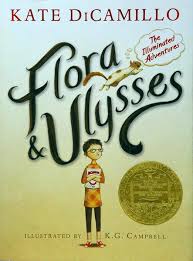
One day, as she browsed through books at the school library, she found a book with a beautiful cover of a girl wearing glasses and holding a comic book. When she saw it, she thought, “That girl looks like me!” She ran her fingers over the letters scrawled grandly across the cover and read the title aloud: Flora and Ulysses.

download

It was then that she noticed a small animal tucked up in the corner, which compelled her to read the back cover. As her eyes skimmed over the words describing a story about a squirrel who gets run over by a vacuum cleaner and strangely develops superpowers, she opened the book and began to read.

Before she knew it, the librarian was shouting a last call to check out books.  Daisy hurried to have her book scanned and joined the rest of the children lined up at the door to return to class. Ms. Wright, her teacher, walked up and down the line surveying the children’s choices. Every now and then she’d murmur things like, “Oh! Great author!” and “You’ll love this one.”  By the time Ms. Wright arrived at Daisy, she was nearly bursting with excitement.  Daisy couldn’t wait to tell her how she loved what she had read so far, and she longed to hear Ms. Wright say what a great choice she had made, choosing a book with a medal on the cover.

However, when Ms. Wright glanced at the book in Daisy’s hand, she looked between the book and Daisy and said, “Oh sweetheart, you’re going to need to return this book.”

Return this book?  Did she hear correctly? Confused, Daisy looked at her teacher who kneeled beside her, looked   her eyes, and said, “You’re a level R.  This book is much harder than that.  Run and put this back. You can choose something from the R bin when we get to the classroom.”

Crestfallen, Daisy handed the book back to the librarian. In her head, she kept hearing the echo of Flora’s voice speaking the same words she said when she witnessed Mrs. Tickham vacuum up the squirrel: Holy bagumba.

What was she going to read now?

Back in the classroom, Daisy dragged herself to the R bin and without even looking, grabbed the book that was on top.  She returned to her seat and muttered the title: Captain Underpants and the Attack of the Talking Toilets. Grudgingly, she began to read.

 Fellow teacher educators, I guess we still have much work to do… Be diligent. Our furture generations need you.

https://www.choiceliteracy.com/contributors-bio.php?id=11


Growing through Research

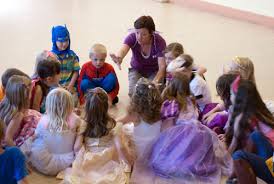
drama children

Embedded within my passion for literacy is my love for developmental drama.  I do love theatre as well (I as a professional actress for a couple of years), but developmental drama is fundamentally different than theatre.  Theatre is about performance.  Developmental drama is about developing human potential, and that is my heart song.

I was recently asked to present a Literacy Workshop for the Royal Conservstory’s new Smart Start Programme .  This Early Childhood Education (ECE) programme uses a multiple arts approach to develop four specific cognitive skills: attention, memory, perception, cognitive flexibility.  It was my role to model and lead a group of ECE leaders through creative drama experiences so they could experience first-hand how developmental drama can and does develop cognitive skills. We explored many drama strategies in the workshop: storytelling; role play; group drama; teacher-in-role; voice over narration; hot seat; tableaux, and; story drama.  My favourite of the eight listed is story drama which uses the events and characters in a story to stimulate the drama experiences, plus, I got to use my storytelling skills.   We became the characters; good and bad.  We learned about a culture from the other side of the world.  We asked questions.  We problem solved.  We also had fun.  The participants left with many practical ideas and felt they were inspired to explore this world with the children they are responsible for.  But, in all honesty, I think I was the one who left with the most insight.

I used to present this kind of workshop regularly, but have not done one in a few years. Due to my dissertation work in multiliteracies (Cope & Kalantzis, 2000), I discovered I was seeing the experiences through new eyes.  I was identifying modes instead of arts disciplines and using critical discernment instead of point of view.  The experience was a literacy event that we constructed within a social paradigm and the participants contributed their own knowledge and expertise in an environment that supported situated practice.  It wasn’t just a new set of vocabulary; it was a much more informed and theoretical perspective of the work.  Vygotsky, Luke, Peabody, Vasquez, Kress, Cope and Kalantzis occupied every corner of the room.  I was well supported.  I recognized a noticeable difference between my role as  intuitive drama leader and informed theoretical guide.  It was progress and it felt good.

drama


Cope, B. & Kalantzis, M. (Eds.) (2000). Multiliteracies: Literacy Learning and the Design of             Social Futures. New York: Routlage

Unlearning in Teacher Education

 Unlearned-640x199

As a literacy teacher educator, do you feel you spend a lot of time encouraging your student teachers to forget what they have previously learned?  Lortie (1975) refers to the perceptions of teaching our student teachers developed (as elementary and secondary school students) as an  “apprenticeship-of-observation”. Lortie suggests “education students have spent years assessing teachers and many enter training with strong perceptions based on firm identifications” and maintains that these strong perceptions affect student teachers’ “pedagogical decision-making”.  This makes unlearning as important as learning.  How do you get your student teachers to unlearn?

Lortie, D. C. (1975). Schoolteacher. Chicago, IL: Chicago University Press.


Practicing Situated Practice through Storytelling

As mentioned before, I (Cathy) am a committed supporter of  implementing a pedagogoy of mulitliteracies (New London Group, 1996) in the classroom.  There are many components to multiliteracies, but for this post I will highlight my use of  only one  component- situated practice.    The situated practice component suggests that pedagogy must consider “the affective and sociocultural needs and identities of all learners” (NLG, 1996, p. 85).  By the inclusion of  students’ “lifeworlds” or home-life and culture, a classroom environment is created where students feel secure and will take risks (NLG, 1996, p. 65).

In a recent storytelling workshop I delivered to ECE students (in a higher education setting), I was intrigued at how the significant situated practice became.   Prior to the class,  I asked the professor what cultures were represented, so I could reflect at least some of these cultures through my story selection.  The list was long, so I had to be selective.  I decided to tell a story from Jamaica, the US and one from India.  These represented not only a range of the participants’ cultures, but also a broad range of storytelling styles, which I thought might be useful for the students to see.   During the workshop I explained to the students that eventually being inclusive of all of the cultures and backgrounds represented in their classrooms  through the stories we tell (and books we read) was essential.  It was our responsibility to get to know our students and know what was important to them.  They agreed that this was important.  But I had a lot to learn about how important,  even when working with adults.

I knew how much the  participants  enjoyed and learned from the experience, as they were highly engaged during the workshop, but i was also treated to written feedback  as the  professor asked the students to post their critiques online.  The following comments caught my interest:

“The workshop really resonated with me… I learned about stance, gestures and facial expressions”

“I was amazed to see how storytelling could grab our attention”

“I am excited to step out of my comfort zone a little bit and try out these strategies with children”

My favourite was:

“I really enjoyed the ending of the workshop using the Urdu [story] “Ek thi Raja, ek thi Rani, doono margy khatm kahanni'” as Urdu is my mother tongue and I was able to understand this very famous [story].”

I did indeed end the workshop with a very short story in Urdu.  In case you do not understand Urdu, in this story there is a  king and a queen, they  die, so the story is over.   That’s it.  It is a traditional ending to a storytelling set.  I usually ask a participant to translate the story for the rest of the group.  Even though my Urdu is not the best, I can always tell who understood the story, because they are the only ones laughing.  Children  are usually delighted that I took the time and effort to be able to tell , regardless of how short,  a story from their culture.  But this small gesture never became more evident  to me than at the conclusion of this workshop.   I was approached by a woman wearing  a khimar (a long, cape-like veil that hangs down to just above the waist, but leaves the face clear).  The woman introduced herself and told me that she was most impressed that I told a story in Urdu.  She said she felt it made her Urdu speaking colleagues very happy.  She then asked me to do something I was not expecting.  “Would you”, she asked timidly, “consider sometimes ending your storytelling in Arabic?”  I smiled and immediately answered “of course, if you will teach me!”   She was delighted and proceed to teach me  the following traditional ending:

Touta touta.  Kelset el haa do tah.

This is now part of my repertoire.  I was never more convinced of how significant it is to honor the cultures of our students.   Young or older, it is their identity and they need us, their teachers, to validate this.  I will endeavor to enlarge my commitment to situated practice by sometimes speaking in Arabic for my students and hope my  students, whether ECE students, student teachers, or teacher educators will consider doing the same.

A New Dr. Seuss Book

I am looking forward to reading the recently released Dr. Seuss book entitled What Pet Should I Get? His widow Audrey discovered the manuscript and illustrations a few years ago, however, it is believed that Seuss originally created the work between 1958 and 1962. A New York Times review describes the book as “short and Seuss-ish” and “filled with creatures both real and zany.”  Another book to share with the student teachers in the primary division.

Link to the review:

http://www.nytimes.com/2015/07/20/books/review-what-pet-should-i-get-a-new-book-from-dr-seuss.html?_r=0