Category Archives: teaching

Fort McMurray Disaster — Fort McMoney a documentary game

I (Clare) like many Canadians are watching the news as the fire in Fort McMurray fire RCMPAlbertaspreads to 850 square kilometres with; thousands being airlifted. It is reported that the “The wildfire in Fort McMurray could be the costliest disaster in Canadian history as estimates for insured damages run as high as $9-billion. Thousands of homes and businesses in Alberta’s fifth largest population centre have been destroyed.” http://www.theglobeandmail.com/news/alberta/fort-mcmurray-exodus-swells-as-fires-rage-a-lot-of-people-are-working-to-get-you-out/article29883034/

This catastrophe is on a monumental scale but it has touched me in a different way. For two years I worked with a teacher research group, Eureka, and one of the teachers, Mike Farley, did his research on the use of Fort McMoney http://fortmcmoney.com/#/fortmcmoneyin his geography class. Over a period of time the students played the game and he studied their reaction to using the game and their learning.

His data showed that the game had a HUGE impact of their learning. Fort McMoney is s an interactive documentary game that lets you decide the future of the Alberta oil sands, and shape the city at its centre.

Through the research group I watched/played the game which gave me an insight into the community and the complexity of the issues of the oil sands. I emailed Mike when I heard the news about the fire. He said that he and his students were so upset by the events because they understood Fort McMurray and the impact on this fire community. This is an example of gaming that brings the real world into the classroom. His students probably have a much better understanding of this devastating fire as a result of the playing this highly interactive and informative game.


There is a long description from the Globe and Mail of the game below and it is well worth checking out the game. http://www.theglobeandmail.com/report-on-business/industry-news/energy-and-resources/what-is-fort-mcmoney/article15583598/

A frozen highway spools out ahead of you, in the distance giant factory facilities with spewing smokestacks are carved out of virgin forest. It looks cold, cold like one of those Soviet factory towns in the Arctic Circle.

That’s the scene that greets you when you boot up Fort McMoney, which is a virtual world that went live online Monday. There are many places to see and even more characters you can interrogate and interview. Scores will be kept and leaderboards maintained to reflect actions taken by visitors: the more curious you are the more points you collect. This world is also episodic, new places and people will arrive every week over the next four, and visitors can vote for changes they’d like to see based on what they experience inside Fort McMoney.

If you have a passing familiarity with modern video games, you will recognize this structure. But while it is a game, it’s not fiction, it’s an interactive documentary about that most consequential Canadian oil town: Fort McMurray. It was produced by The National Film Board with French, German and Canadian partners, including The Globe and Mail. (Columnists Eric Reguly and Margaret Wente will be writing about their evolving views as they play along. Read Ms. Wente’s first take here and read Mr. Reguly’s here.) The makers of Fort McMoney call it a game and call users “players,” but there will be no “winners,” or rather there is no way to “lose” the game.

(Also, for such an innovative project, the language to describe it is lacking; we need a new term like Game-Umentary, but one that isn’t terrible.)

Functionally, it owes some of its game design DNA to 2012’s episodic zombie adventure The Walking Dead from Telltale Games. The winner of multiple video game awards, Telltale’s creation follows a similar forking structure: Like in Fort McMoney, each player’s experience with the game will vary because each decision you make, each question or action you commit to, changes the sequence of the next thing you see or are able to do. In The Walking Dead that often meant people you met in the game got eaten by zombies, in Fort McMoney it just means you visit a different part of one of Canada’s fastest-growing boom towns.

Over the next month players can dig through about eight hours of interviews and conversations with the real residents of Fort McMurray, a city which lies at the heart of Canada’s oil sands. The game asks players to choose whether the city should help crank oil production up to 11, or if it should essentially shut down the industry. That’s where the SimCity element of this game comes in: How the city grows, and how that affects Canada’s energy future, will be displayed in a series of projections, updated each week by the latest referendum.

This laboratory of democracy is hosted in the “dashboard” part of the game, and this is where it strays from being a pure choose-your-own adventure story (if still a documentary, there are no actors here), and turns into a civics experiment. Players will be invited to debate, share their in-game discoveries and vote on policies for the town and its ever-present oil.

The issues the Fort McMoney asks players to vote on in the weekly polls are ones the real town faces: If you could, how would you vote to change things about the trajectory of Fort McMurray and Canada’s exploitation of the second largest energy reserve in the world? The results of player voting will create a hypothetical Fort McMurray, one in which the future has been directed by the votes of this digital public square, like in a classical Greek democracy. Only here, the amount of debating, sharing and exploring you do can net you a higher score, and thus a heavier vote during the polls. It’s why a documentary is keeping score at all, as a reward for spending time “playing” the game.

The elephant in the room is that this game/documentary is about oil in those sands, and the environmental and human cost of boiling it out of them. Fort McMoney starts by introducing you to people living on the margins of this rapid growth, the young woman who was hoping to clean work camps but instead works as a waitress, the alcoholic who collects cans (claiming to clear $52,000 in one year recycling the discarded booze containers of Fort McMurray’s residents). In short order you meet the mayor of the town, and eventually oil sands executives and other leaders.

Creator David Dufresne talks about our civilization’s “addiction to oil” when he talks about the conversation he wants this game to spark. This is the part the NFB, Dufresne and his whole team, are really excited about. As Dufresne explained during a recent live Q&A about the project: There are no shortage of great books, documentaries or journalism about the “tar sands.” He says he was drawn to Fort McMurray thanks in part to stories about the town in The Globe and Mail. But for all of that, do Canadians feel any urgency to take action? He hopes to change that by giving people something gorgeous to look at, deep to explore, fun to argue about and which creates consequences for the user’s decisions. He hopes his video game will convince people to be the change they want to see.


The First Year of Teaching Can Feel Like a Fraternity Hazing

One of my (Clare) students sent me this article from the Atlantic: http://www.theatlantic.com/education/archive/2016/04/first-year-teaching/477990/?utm_source=SFTwitter

As I read it my heart sank for these new teachers. I recall my first year of teaching (I lost 15 lbs. between September and December) from sheer work. Does it have to be that way? And given all that we have learned about beginning teachers I am not sure how much the situation has changed. Yes the first year of any new job is going to be a challenge but does it need to feel like “fraternity hazing)? I think no.

Brendan Hoffman / AP

This is the first story in a three-part series about teacher preparation and whether programs are doing enough to prepare new teachers to take over their own classrooms.

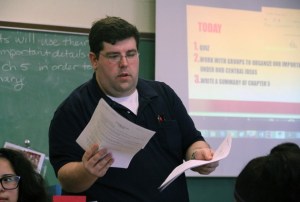
MIDDLE RIVER, MD—On a chilly November morning, Michael Duklewski stood outside his seventh-grade classroom as students filed in, some shoving each other playfully, others still half asleep. One by one they took a piece of paper from a bin by the front door and made their way to their seats.Image Michael Duklewski

“Good morning!” Duklewski, 33, said in a loud and confident voice over the classroom chatter. He closed the door and paused. A wad of paper flew through the air.

“I’m warning you man, the next time I see someone throw something, it’s lunch detention,” Duklewski said sternly, looking at the student who had thrown the paper.

As students in this second-period English class began to work on their warmup drill—to define the terms “setting” and “mood” in literature—the chatter continued. Duklewski walked over to the chalkboard in the front of the room where he was tracking the points for good behavior that each class had earned. Next to “second period,” he erased the number 14 and changed it to 13.

“Ladies and gentlemen, I already took off a point,” he warned. He waited as the conversations slowly died down, before launching into his lesson for the day on the play A Raisin in the Sun.

Duklewski, one of a growing number of career-changers that enter the teaching profession each year, switched from political lobbying to education after volunteering at an after-school program in Baltimore. This school year is his first, and it has been even tougher than he imagined. In the second week of September, reality hit. “I was like, ‘Oh God, I don’t know what I’m doing here,’” Duklewski recalled.

Duklewski is one of three teachers The Hechinger Report, which partnered with The Atlantic to produce this story, has followed over the course of their first year to look at how training programs prepare new teachers for the classroom—or don’t. As the American education system faces a drumbeat of criticism for its stubborn achievement gaps and lackluster performance compared to other countries, education schools are under attack.

Traditional education schools are trying to reinvent themselves, and alternative fast-track routes are popping up to offer shortcuts to the classroom. Both models seek to help prospective teachers deal with rising standards, increasing student diversity, new technology and, inevitably, the gauntlet of spitballs, note passing, and, these days, illicit texting.

Michael Duklewski leads a lesson in his second-period English language-arts class. (Jackie Mader)

While aspiring educators now have more choices than ever before when it comes to launching their careers, new teachers continue to leave the profession at an alarming rate, suggesting a breakdown in training and support. At the same time, there is little evidence to show which education programs are graduating the most successful teachers or what kind of support is most helpful for rookies.

Duklewski chose the traditional route to becoming a teacher. In 2015, he graduated from Towson University, a state institution outside of Baltimore that has been training teachers for more than 150 years and graduates nearly 700 new teachers each year. He selected the school because of its strong reputation, and it helped that his mother earned her own teaching degree there in 1972. His course of study took two years, including more than 20 classes and 16 weeks of full-time student teaching—typical for traditional programs, which provide more in-depth pre-teaching training than most alternative programs.

Duklewski was hired to teach seventh-grade English language arts at the same school where he completed his student teaching experience. He was familiar with Middle River Middle School’s administration and policies and already knew many of the nearly 900 students in the sprawling, single-story brick building, located in a suburb of Baltimore.

“We’ve gotten into a habit of accepting that we treat the first year of teaching like a fraternity hazing”

Though Duklewski said surviving the initial year hasn’t been easy, many first-year teachers are so traumatized they don’t come back at all. Data on new-teacher attrition varies, but studies have found that anywhere from 17 percent to 46 percent of new teachers quit within their first five years. If teachers were trained better, more might stick around, experts say.

“We’ve gotten into a habit of accepting that we treat the first year of teaching like a fraternity hazing,” said Kate Walsh, president of the National Council on Teacher Quality (NCTQ). “People say, ‘I just don’t think you can learn this ahead of time.’ Well, you need to set up those conditions ahead of time,” she argued.

Is it possible for teacher programs to prepare educators with everything they need to know on Day 1? Maybe not everything, according to the three teachers we followed.

For Duklewski, although he’s struggled at times with unruly students, he’s not sure what else his teacher education program could have done. There’s no better way to learn how to teach, he argued, than just jumping in and doing it.

* * *

A student works on a reading assignment in Duklewski’s English language-arts class. (Jackie Mader)

Back in second period, Duklewski, wearing black dress pants and a blue polo shirt, continued to give directions for the next part of the lesson: using evidence from the A Raisin in the Sun script to draw a diagram of the set.

As he ran the discussion he moved constantly around the room, stopping the lesson abruptly—and frequently—as students talked to their neighbors. He kept an even tone as he threatened to call parents and reminded students that one of the class rules is “don’t talk while others are talking.”

Four minutes in, second period was down to 10 good behavior points. “Don’t draw on your arm,” Duklewski told one student. He ignored a student hitting himself in the face with a red folder. Duklewski stared down a chattering group of students until they started working again.

It was now 10 minutes into the period. Duklewski stepped up to the overhead projector in the front of the room and counted down from three. The class fell silent. “Our purpose is to find details about the staging of the Youngers’s home,” Duklewski said, referring to the family in the play. “What rooms are there? What things are there?” Some students raised their hands, but a few boys continued to talk to each other, or, in a couple of cases, to themselves.

“Ladies and gentleman, I’m literally asking you to do nothing when other people are talking,” Duklewski said in a calm and assertive voice. “We’re going to practice being silent for fifteen seconds. If we can do that, I’ll put a point on the board. If not, I’ll take two off.”

Duklewski set a timer for 15 seconds. Four seconds later, a student started talking.

Less than three months into his first year of teaching, Duklewski exuded the confidence of a more experienced teacher. But his second-period class was difficult compared to the other four classes he’d been teaching, a difference he attributed to several strong personalities and too many students—33, far bigger than his other classes.

For the worst behavior problems, his chosen strategy is keeping students after class for a one-on-one talk instead of addressing them in front of other students. “Some teachers come straight at a student when they have an issue with them in class,” Duklewski said. “I found that doesn’t work with them, especially not in a classroom full of their peers. They get yelled at enough.”

The ability to manage classroom behavior is one of the top concerns for every new teacher and can often lead to the undoing of a rookie. A 2014 report by the nonprofit Alliance for Excellent Education found that trouble managing student discipline is one of the many reasons teachers leave the classroom. Poor classroom management can also get in the way of learning, said Arthur Levine, the president of the Woodrow Wilson Foundation and former president of Teachers College, Columbia University. “If a teacher can’t manage a classroom, nothing they’re going to do will be successful.” (The Hechinger Report is an independent unit of Teachers College.)

Although classroom management is one of the most important topics for new teachers, it is one of the least taught in preparation programs, said NCTQ’s Walsh. “Programs swear up and down that they teach this stuff … [but] there’s little evidence that they’re being taught it,” she said.

In fact, a 2013 report by NCTQ found that many teacher-preparation programs fail to teach certain aspects of classroom management. Of 122 programs examined by NCTQ, the majority focused on the setting up of routines and rules in classrooms, an important skill. But 74 percent did not teach teachers how to use praise in their classrooms to reinforce positive behavior or other day-to-day tricks to keep classes focused and get unruly kids under control.

“If a teacher can’t manage a classroom, nothing they’re going to do will be successful.”For Duklewski, talkative students can be irritating, but they’re not enough to make him quit teaching.

By December, his second-period class was getting better; during the fall, he had started giving students the chance to earn the right to come to his classroom during lunch and watch cartoons on Fridays. (He nixed the cartoons before winter break.) He moved one particularly energetic student to the back of the classroom where he could sit on a window ledge, stand up or move around without distracting other students.

His class-points system, however, had fallen apart. Right before winter break, Duklewski switched to an individual-point system to reward students for independent behavior. Students could earn points by being on-task, finishing the class warmup first, or answering questions correctly. They could then earn small prizes, like pencil sharpeners, or larger prizes, like “renting out” his classroom for lunch with friends.

He also switched from pointing out negative behavior to pointing out positive behavior. Sometimes he found that just announcing what students were doing—“Jimmy is working on his warmup”—made a huge difference. And only a few weeks into the new system, Duklewski said that the changes were both improving student behavior and his own sanity. “I’m just happier, because I’m saying good things all the time instead of harping on bad things,” Duklewski said.

Happiness is relative for a new teacher. Since Duklewski took over his own classroom last September, it’s been nearly impossible to balance his workload with his personal life, a problem many new teachers experience.

Every morning Duklewski wakes up by 5:30 and he tries to be in bed by 9 p.m., although he often stays up late preparing lessons. He saves time by not eating breakfast in the morning and has 35 minutes to eat lunch—15 minutes of which is taken up by hall duty or checking on students in the cafeteria. After 13 to 15 hours at school each day, he drives home, eats dinner, watches a little television, and packs his lunch for the next day. His weekends are mostly filled with grading.

Moving from a role as a student teacher to a full-time classroom teacher was a bigger jump than he had expected. He realized after his first week that there were many things he didn’t know, like the exact procedure for a fire drill. Or how to balance teaching with noninstructional duties like communicating with parents, filling out attendance, and responding to each day’s barrage of emails.

“When it’s all resting on you, it’s just that much more exhausting,” Duklewski said. “Some of it you just figure out as you hit the ground running.”

On a rainy January day, Duklewski stood in front of his fourth-period class having already downed several cups of coffee to keep up his energy. At 10 p.m. the night before, he had thrown out his lesson plan on monologues, and then stayed up until 1 a.m. reworking it to include video examples.

Students were transfixed. After watching monologues from The Lion King, Harry Potter, and The Incredibles, the class discussed the purpose of a monologue. Duklewski then instructed them to write their own, using point of view and voice. On a worksheet, students answered questions about who they would be, why they were talking, and who they were talking to. Kids erupted into excited chatter as they began to plan and write their monologues.

“I’m myself, talking about sacking Tom Brady, to myself,” one student explained. He read his first line aloud. “Ohh I’m gonna sack Tom Brady!”

When the class ended, students filed out still chatting about their monologues. Oner bonus of an engaging lesson, Duklewski added, is that students stay on task and he doesn’t deal with as much misbehavior.

* * *

Duklewski was assigned a consulting teacher who observes him every two weeks. After those observations, he has a chance to discuss the lesson and receive feedback, such as on his classroom management approach or his use of tests.

The mentoring and a high level of support from his school have helped him keep a positive attitude, he said. “I feel the freedom to take risks, mess up and experiment because I don’t feel pressure. If I screw up, I screw up. They’ll help me fix it.” On his mid-year evaluation, Duklewski was rated “effective” on a scale that included the ratings “developing,” “effective” and “highly effective.”

Next year, he wants to do a better job using student data to plan lessons that touch on the skills students are lacking—something he rarely had the chance to do this year because of all the other demands of his classroom and the hours spent preparing lessons. He also wants to get better at long-term planning. And he’s learned from his challenging second-period class that it pays to set up better rules and classroom procedures from the beginning of the year.

As spring break approached, a series of snow days and holidays threw Duklewski’s students off track. He increased the number of phone calls home to parents and doubled down on his positive praise. “I think we’ve come to some sort of understanding about how we’re all going to get along in class,” Duklewski said. He was also getting the hang of balancing his schedule, and had cut his work hours down—to less than 12 hours a day. It helped that he was seeing academic growth. On standardized writing assessments, the class average had gone up by about 50 percent in most of his classes. On reading tests, scores were also rising steadily.

“Next year, I expect it to be much, much easier,” Duklewski said. “I’ve already done everything once. I’ll have stuff to fall back on.”

Although he’s starting to plan his summer vacation, including work as a counselor at a summer camp, he still has one final goal for his students as the year winds down. “By the end of the year, they will not talk over other people while they are talking,” Duklewski said with a laugh. “If I teach them nothing else, they will learn that skill.”


Getting to Know Our Students

I (Clive) have long believed in having a warm, friendly class community and a good IMG_3114teacher-student relationship. However, my understanding of what this means continues to grow. This term in my graduate course with 22 students I seemed to develop a closer bond with my students than ever before.

As time went by, each would greet me in a friendly, open way with a smile on their face. They told me more personal information about themselves (often in emails about why they couldn’t be at class that evening!) Before and after class, at the break or in emails, they shared with me (and I discussed with them) individual matters, e.g., interest in going on to doctoral work; wanting to teach high school rather than elementary; wanting to take an individual reading course; moving from the public to the private school sector; the struggles of teaching while raising 3 children; not really wanting to be a teacher.

I found this closer relationship had several advantages:

  • There was a higher energy level in our engagement
  • Our interactions – and the class experience generally – were more enjoyable
  • Attendance was higher
  • I could better understand “where they were coming from”

This was quite apart from the help they received by discussing their individual concerns.


Sometimes people worry about an overly close relationship between teachers and students. However, a sensible teacher can figure out what is appropriate and what is not; and in general I feel we are still far too removed from our students. We need to be constantly developing appropriate links with our students, rather than being afraid of links in general.

In terms of appropriateness, one important point is to avoid having favorites. We should go out of our way to have meaningful conversations with – and hence get to know – every single student in our class. They will really appreciate it and our own teaching experience will be enhanced.


HOT off the press: Teaching Literature to Adolescents

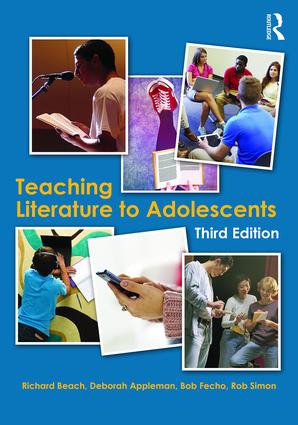
My good friend Rob Simon is one of the co-authors of the third edition of Teaching 9781138891241Literature to Adolescents. Co-authored with Richard Beach, Deborah Appleman, and Bob Fecho this is an amazing new text. As a professor of literacy methods courses I (Clare) am always on the lookout for texts that go beyond the typical plodding through various topics. This text appealed to me because it emphasizes a critical approach to reading and interpreting text. The aim is to engage students with authentic issues. Well done Rob and your fellow authors. This text will be a staple on my bookshelf. Here is the link to the Routledge site: https://www.routledge.com/products/9781138891241

Below is a summary of the book.

This popular textbook introduces prospective and practicing English teachers to current methods of teaching literature in middle and high school classrooms. It underscores the value of providing students with a range of different critical approaches and tools for interpreting texts and the need to organize literature instruction around topics and issues of interest to them. Throughout the textbook, readers are encouraged to raise and explore inquiry-based questions in response to authentic dilemmas and issues they face in the critical literature classroom. New in this edition, the text shows how these approaches to fostering responses to literature also work as rich tools to address the Common Core English Language Arts Standards.

Each chapter is organized around specific questions that English educators often hear in working with pre-service teachers. Suggested pedagogical methods are modelled by inviting readers to interact with the book through critical-inquiry methods for responding to texts. Readers are engaged in considering authentic dilemmas and issues facing literature teachers through inquiry-based responses to authentic case narratives. A Companion Website [http://teachingliterature.pbworks.com] provides resources and enrichment activities, inviting teachers to consider important issues in the context of their current or future classrooms.


Slowing Down to Learn: Mindful Pauses That Can Help Student Engagement

There has been so much attention to mindfulness in the last while. My (Clare) colleague, Chriss Bogert, VP at the Lab School, send me this great post about mindfulness in the class. Here is the link: http://ww2.kqed.org/mindshift/2015/02/17/slowing-down-to-learn-mindful-pauses-that-can-help-student-engagement/

By MindShift  February 17, 2015

The excerpt below is from the book “Mindfulness for Teachers: Simple Skills for Peace and Productivity in the Classroom,” by Patricia A. Jennings. This section is from the chapter entitled “Orchestrating Classroom Dynamics.”

Mindful Wait Time

Image source: Mindshift.org

One way to promote engagement and learning is to consciously create pauses throughout the day. We can create a sense of spaciousness in our classroom by slowing down the pace of our speech and punctuating our lessons with silence. Introduced well, this practice can improve classroom discourse.

The speed at which we can process information varies from person to person (Droit-Volet, Meck, & Penney, 2007). Some people process auditory information very quickly, while others tend to have more visual or sensorimotor strengths. In any case, when we have more time to process information, the quality of our thinking and learning improves. Younger children require more time to process than do older children, and adults often forget this as they zoom through content as if they were speaking to other adults. No matter what their ages, when we give our students just a little more time to process information, they learn better.

When I introduce this idea to teachers, I often hear concerns that they will be wasting valuable time doing nothing. It’s important to recognize that during the pauses, you and your students are not “doing nothing.” Your students may be considering several alternatives; they may be mulling a picture over in their mind; they may be making associations, comparisons, and contrasts. They may be trying to drudge up the right word from their vocabulary. When we give them this time, their processing becomes richer, deeper, and more abstract. When you rush through a lesson, you may deliver content more quickly and efficiently, but your students may not absorb the content very well, if at all.

The added bonus of these pause punctuations is that they give us as teachers a few moments to practice mindfulness. When this becomes an intentional part of our lessons, we can take the time to notice our body in space, the whole classroom, each student, and the small details that surrounds us, in the present moment. We give ourselves a short break—a micro-vacation from the constant activity of a busy classroom.

We can use the time to tune in to ourselves and our students. We can ask ourselves, “How am I feeling right now? How are the students feeling? What’s happening right now? What do my students need? How can I explain this better?” By taking mindful pauses, we are modeling mindful behavior for our students and letting us all have some time to process the information we are exploring together.

Typically we pause after we ask a question and before we call on someone to answer. Most of the time, this pause is only about one second long. Students who process information quickly are at an advantage under these conditions. They tend to be the ones who always raise their hands immediately. While the speedy students are answering the question, the slower students are still trying to process the question, so they may not hear and comprehend the answer or be able to assimilate it into their existing knowledge. If the quick pace of the session continues, some students may feel left behind.

However, educational researchers have discovered that if the pause between the teacher’s question and the student’s answer lasts between three and five seconds, significant changes occur in student behavior (Rowe, 1987). Students are more likely to respond appropriately to the questions, answer the questions correctly, and offer longer and more complex answers. There are fewer “I don’t know” or non-answer responses. Over time, many more students show higher levels of engagement (Honea, 1982; Swift & Gooding, 1983) and achievement test scores and school retention levels increase (Tobin & Capie, 1982).

Wait time has a positive effect on teachers as well. With conscious use of wait time, teachers’ questioning strategies become more varied and flexible, and they ask follow-up questions that require more complex information processing and higher-order thinking (Casteel & Stahl, 1973; Rowe, 1972; Stahl, 1990; Tobin, 1987).

Robert Stahl (1990) identified eight categories of wait time. When we formally introduce wait time, these periods of silence are trans- formed from periods of awkwardness into valuable moments of silence. The first category is the type of wait time we’ve already discussed: the time between a teacher’s question and the student’s answer. The other seven are as follows:

Within-student’s-response pause time. This is a three-second or longer pause that occurs when a student pauses or hesitates during the process of delivering a response to a teacher’s question. Teachers tend to interrupt students when they are thinking through their answers and take time to pause. However, when given the time, students often follow these periods of silence by successfully completing their responses.

Post-student’s-response wait time. This is a pause after a student has finished a response and other students are considering adding comments or reactions. This gives the other students time to think about what was said and to decide if they have anything to add.

Student pause time. This is a pause after a student has initiated a question, statement, or comment but doesn’t complete the thought. It may seem strange to formalize this type of pause, but this situation arises more often than we might realize because the tendency is to ignore the question rather than allow for a pause. This happens to me a lot. I have a thought, idea, or question. I’m getting ready to tell someone, and my mind goes blank. I can’t remember what I was going to say. When this happens to one of our students, we can give ourselves and the student a little time to recover, rather than just letting it drop.

Teacher pause time. This is a pause that the teacher intentionally initiates to consider what is happening, appraise the situation, and consider the best course of action. A particularly beneficial time for a teacher to pause is when a student has asked a question and the answer requires a complex answer. Taking time to consider how to frame the answer can improve student learning.

Within-teacher-presentation pause time. This is a pause that the teacher intentionally initiates during lecture presentations or other extended periods of content output. The teacher intentionally stops the flow of information to give students three to five seconds of silence to absorb the information and to consolidate their thinking. This type of pause requires no response from the students; it’s simply processing time. Using silence this way, teachers can chunk their content into bite-sized pieces to help students absorb and process the information better.

Student task completion work time. This is pause time intended to allow students to complete an academic task that demands undivided attention. The length of the pause should be related to the time it takes to complete a task. The challenge involved in this type of pause is how to handle the variation in completion time among students. If students learn the value of pausing and some of them finish early, they can use the time to extend their thinking about the subject in some way.

Impact pause time. This is the use of pause time to create impact or drama. When we pause, we can create a mood of anticipation. A dramatic pause can generate feelings of suspense and expectation.

Wait time can be challenging. Many of us get so excited about sharing our own thoughts and ideas that we tend to interrupt students, leaving no space in the discussion for students to process information and respond thoughtfully. In the skill-building practices at the end of this chapter, you will learn more about how to apply wait time in your classroom.

Patricia A. Jennings is an associate professor at the Curry School of Education at the University of Virginia.

Is Texting Killing Language?

Image_JohnMcWhorterOn Sunday Clive posted a blog Short or Long Form Writing? I (Clare) also wonder/worry about our new forms of communication and what is happening to “English.” John McWhorter did a fabulous Ted Talk  asking is Texting Killing Language. http://www.ted.com/talks/john_mcwhorter_txtng_is_killing_language_jk

It is truly worth listening to because he gives us a different perspective. He notes:

We always hear that texting is a scourge. The idea is that texting spells the decline and fall of any kind of serious literacy, or at least writing ability, among young people in the United States and now the whole world today. The fact of the matter is that it just isn’t true, and it’s easy to think that it is true, but in order to see it in another way, in order to see that actually texting is a miraculous thing, not just energetic, but a miraculous thing, a kind of emergent complexity that we’re seeing happening right now, we have to pull the camera back for a bit and look at what language really is, in which case, one thing that we see is that texting is not writing at all. What do I mean by that?

Casual speech is something quite different. Linguists have actually shown that when we’re speaking casually in an unmonitored way, we tend to speak in word packets of maybe seven to 10 words. You’ll notice this if you ever have occasion to record yourself or a group of people talking. That’s what speech is like. Speech is much looser. It’s much more telegraphic. It’s much less reflective — very different from writing. So we naturally tend to think, because we see language written so often, that that’s what language is, but actually what language is, is speech. They are two things.

What texting is, despite the fact that it involves the brute mechanics of something that we call writing, is fingered speech. That’s what texting is. Now we can write the way we talk. And it’s a very interesting thing, but nevertheless easy to think that still it represents some sort of decline. We see this general bagginess of the structure, the lack of concern with rules and the way that we’re used to learning on the blackboard, and so we think that something has gone wrong. It’s a very natural sense.

You think you know what teachers do. Right? Wrong.

I (Clare) was sent this article from a friend and it truly captures the complexity of teaching and the misconceptions about teaching. All parent, politicians, and journalists should have to read it. A shout out to all teachers! Here is the link to the article from the Washington Post: https://www.washingtonpost.com/news/answer-sheet/wp/2014/02/22/you-think-you-know-what-teachers-do-right-wrong/

By Valerie Strauss February 22, 2014

School_Globe

You went to school so you think you know what teachers do, right? You are wrong. Here’s a piece explaining all of this from Sarah Blaine, a mom, former teacher and full-time practicing attorney in New Jersey who writes at her parentingthecore blog, where this first appeared.

By Sarah Blaine

We all know what teachers do, right? After all, we were all students. Each one of us, each product of public education, we each sat through class after class for thirteen years. We encountered dozens of teachers. We had our kindergarten teachers and our first grade teachers and our fifth grade teachers and our gym teachers and our art teachers and our music teachers. We had our science teachers and our social studies teachers and our English teachers and our math teachers. If we were lucky, we might even have had our Latin teachers or our Spanish teachers or our physics teachers or our psychology teachers. Heck, I even had a seventh grade “Communications Skills” teacher. We had our guidance counselors and our principals and some of us had our special education teachers and our study hall monitors.

So we know teachers. We get teachers. We know what happens in classrooms, and we know what teachers do. We know which teachers are effective, we know which teachers left lasting impressions, we know which teachers changed our lives, and we know which teachers sucked.

We know. We know which teachers changed lives for the better. We know which teachers changed lives for the worse.

Teaching as a profession has no mystery. It has no mystique. It has no respect.

We were students, and therefore we know teachers. We denigrate teachers. We criticize teachers. We can do better than teachers. After all: We do. They teach.

We are wrong.

We need to honor teachers. We need to respect teachers. We need to listen to teachers. We need to stop reducing teachers to arbitrary measurements of student growth on so-called objective exams.

Most of all, we need to stop thinking that we know anything about teaching merely by virtue of having once been students.

We don’t know.

I spent a little over a year earning a master of arts in teaching degree. Then I spent two years teaching English Language Arts in a rural public high school. And I learned that my 13 years as a public school student, my 4 years as a college student at a highly selective college, and even a great deal of my year as a master’s degree student in the education school of a flagship public university hadn’t taught me how to manage a classroom, how to reach students, how to inspire a love of learning, how to teach. Eighteen years as a student (and a year of preschool before that), and I didn’t know anything about teaching. Only years of practicing my skills and honing my skills would have rendered me a true professional. An expert. Someone who knows about the business of inspiring children. Of reaching students. Of making a difference. Of teaching.

I didn’t stay. I copped out. I left. I went home to suburban New Jersey, and a year later I enrolled in law school.

I passed the bar. I began to practice law at a prestigious large law firm. Three years as a law student had no more prepared me for the practice of law than 18 years of experience as a student had previously prepared me to teach. But even in my first year as a practicing attorney, I earned five times what a first-year teacher made in the district where I’d taught.

I worked hard in my first year of practicing law. But I didn’t work five times harder than I’d worked in my first year of teaching. In fact, I didn’t work any harder. Maybe I worked a little less.

But I continued to practice. I continued to learn. Nine years after my law school graduation, I think I have some idea of how to litigate a case. But I am not a perfect lawyer. There is still more I could learn, more I could do, better legal instincts I could develop over time. I could hone my strategic sense. I could do better, be better. Learn more law. Learn more procedure. But law is a practice, law is a profession. Lawyers are expected to evolve over the course of their careers. Lawyers are given more responsibility as they earn it.

New teachers take on full responsibility the day they set foot in their first classrooms.

The people I encounter out in the world now respect me as a lawyer, as a professional, in part because the vast majority of them have absolutely no idea what I really do.

All of you former students who are not teachers and not lawyers, you have no more idea of what it is to teach than you do of what it is to practice law.

All of you former students: you did not design curricula, plan lessons, attend faculty meetings, assess papers, design rubrics, create exams, prepare report cards, and monitor attendance. You did not tutor students, review rough drafts, and create study questions. You did not assign homework. You did not write daily lesson objectives on the white board. You did not write poems of the week on the white board. You did not write homework on the white board. You did not learn to write legibly on the white board while simultaneously making sure that none of your students threw a chair out a window.

You did not design lessons that succeeded. You did not design lessons that failed.

You did not learn to keep your students quiet during lock down drills.

You did not learn that your 15-year-old students were pregnant from their answers to vocabulary quizzes. You did not learn how to teach functionally illiterate high school students to appreciate Shakespeare. You did not design lessons to teach students close reading skills by starting with the lyrics to pop songs. You did not miserably fail your honors level students at least in part because you had no books to give them. You did not struggle to teach your students how to develop a thesis for their essays, and bask in the joy of having taught a successful lesson, of having gotten through to them, even for five minutes. You did not struggle with trying to make SAT-level vocabulary relevant to students who did not have a single college in their county. You did not laugh — because you so desperately wanted to cry — when you read some of the absurdities on their final exams. You did not struggle to reach students who proudly announced that they only came to school so that their mom’s food stamps didn’t get reduced.

You did not spend all of New Years’ Day crying five years after you’d left the classroom because you reviewed The New York Times’ graphic of soldiers killed in Iraq and Afghanistan and learned that one of your very favorite students had been killed in Iraq two years before. And you didn’t know. Because you copped out and left. So you cried, helplessly, and the next day you returned to the practice of law.

You did not. And you don’t know. You observed. Maybe you learned. But you didn’t teach.

The problem with teaching as a profession is that every single adult citizen of this country thinks that they know what teachers do. And they don’t. So they prescribe solutions, and they develop public policy, and they editorialize, and they politicize. And they don’t listen to those who do know. Those who could teach. The teachers.


The Teacher Curse No One Wants to Talk About

I (Clare) read this really interesting article on Edutopia

I believe it has relevance for both teachers and teacher educators. Having to unpack and remember how we learned a topic/skill is hard. How do you break down the steps to learning so that our students can acquire the knowledge and skills.  This article has some highly useful examples and suggestions.  As a teacher educator I often make assumptions about my student teachers. They all have university degrees so they should be able to master the content easily. Wrong assumption! It takes time and good teaching. Here is the link to the full article. The Teacher Curse No One Wants to Talk About 


Knowledge is a curse.
 Knowing things isn’t bad itself, but it causes unhealthy assumptions — such as forgetting how hard it was to learn those things in the first place. It’s called the Curse of Knowledge.

In this post, we’ll identify how the Curse of Knowledge affects educators. Then we’ll outline seven ways to alleviate the curse. The ultimate goal is to improve instruction.

The Curse of Knowledge

The Curse of Knowledge has been variously described in articles by Chip and Dan Heath, Carmen Nobel, and Steven Pinker, and also in books such as The Sense of Style and Made to Stick. It has been applied to a variety of domains: child development, economics, and technology are just a few.

All of the resources describe the same phenomena — that a strong base of content knowledge makes us blind to the lengthy process of acquiring it. This curse has implications for all teachers:

  • We do not remember what it is like to not know what we are trying to teach.
  • We cannot relive the difficult and lengthy process that learning our content originally took.

As a result, we end up assuming that our lesson’s content is easy, clear, and straightforward. We assume that connections are apparent and will be made effortlessly. Assumptions are the root cause of poor instruction. And acknowledgment is the first step to recovery.

Lifting the Curse

Here are seven ways to make learning easier for your students.

1. Emotion

Barbara Fredrickson, a champion in the field of positive psychology, has studied the effects of mild positive emotions on desired cognitive traits like attentiveness and ability to creatively solve problems. In what she coined the broaden-and-build theory, Fredrickson found that pleasant and mild emotional arousal before experiencing content leads to greater retention. A quick joke or humorous movie can serve as the positive emotional stimulant. So learning is easier and the Curse of Knowledge is potentially circumnavigated when injecting a bit of emotion into your lesson.

2. Multi-Sensory Lessons

Though Howard Gardner’s influential work states that we each have a preferred learning modality, new research highlights the fact that effective lessons need not be unisensory (only kinesthetic, only auditory, etc.) but multi-sensory. Multi-sensory experiences activate and ignite more of the brain, leading to greater retention. So use a multisensory approach in your lessons to make learning easier.

3. Spacing

Blocked practice is ancient and is no longer considered best practice. An example of blocked practice is cramming. Though it feels like learning, blocked practice results in learning that is shallow, and the connections quickly fade. The preferred alternative is the opposite of blocked practice: spaced practice.

Exposing yourself to content and requiring your brain to recall previously learned concepts at spaced intervals (hours, days, weeks, or months) makes the content sticky and results in deeper retention with solid neural connections. As spaced practice is the way that you learned the content you teach, it makes sense to employ the same technique with your students. So thinking of your content as a cycle that is frequently revisited makes learning easier for your students while helping alleviate the curse.

For more information on spacing content, check out Make It Stick or 3 Things Experts Say Make A Perfect Study Session.

4. Narratives

Everyone loves a great story because our ancestral past was full of them. Stories were the dominant medium to transmit information. They rely on our innate narcissistic self to be effective learning tools — we enjoy stories because we immediately inject ourselves into the story, considering our own actions and behavior when placed in the situations being described. This is how we mentally make connections, and if students are listening to a story interlaced with content, they’re more likely to connect with the ideas. So connecting with content through a story is at the heart of learning and can help alleviate the stress associated with the Curse of Knowledge.

5. Analogies and Examples

An analogy is a comparison of different things that are governed by the same underlying principles. If understanding a process is what we’re after, looking at the result of the process proves informative. An analogy compares two unlike things by investigating a similar process that produces both. Said differently, an analogy highlights a connection, and forming connections is at the core of learning.

Whereas an analogy compares similar processes that result in different products, an example highlights different processes that result in similar products. Copious use of examples forces the brain to scan its knowledge inventory, making desirable connections as it scans. So learning is easier when analogies and examples are used to facilitate mental connections.

6. Novelty

New challenges ignite the risk-reward dopamine system in our brains. Novel activities are interesting because dopamine makes us feel accomplished after succeeding. Something that is novel is interesting, and something interesting is learned more easily because it is attended to. So emphasis on the new and exciting aspects of your content could trip the risk-reward system and facilitate learning.

7. Teach Facts

Conceptual knowledge in the form of facts is the scaffolding for the synthesis of new ideas. In other words, you cannot make new ideas with out having old ideas. Disseminating facts as the only means to educate your students is wrong and not encouraged. However, awareness that background knowledge is important to the creation of new ideas is vital for improving instruction. Prior knowledge acts as anchors for new incoming stimuli. When reflecting on the ability of analogies and examples to facilitate connections, it is important to remember that the connections need to be made to already existing knowledge. So providing your students with background knowledge is a prerequisite in forming connections and can make their learning easier.

Making It Easier

The Curse of Knowledge places all of our students at a disadvantage. As educators, it’s not enough to simply recognize that we are unable to remember the struggle of learning. We need to act. By incorporating facts, highlighting novelty, liberally utilizing examples and analogies, cycling our content, telling content-related stories, making our lesson multi-sensory, and harnessing the power of emotion, we can make learning easier for our students.


By incorporating facts, novelty, examples, analogies, and emotion; and cycling content, telling content-related stories, and making lessons multisensory, we can make learning easier for our students.

Source: The Teacher Curse No One Wants to Talk About

ClassDojo

ClassDojo (the animated classroom management tool) has partnered with Stanford University’s Project for Education Research That Scales (PERTS) to help educators weave a growth mindset into their courses. Growth mindset has become a buzz term recently and refers to our ability to understand that our knowledge and ability is not static; rather, our “brains are malleable and their abilities can be developed” (Schwartz, 2016). Research shows that once we understand our brain’s ability to develop, we approach learning as a challenge we can face.

ClassDojo has created a series of five free videos for educators to use. Each video is 2-3 minutes in length and builds upon one another in a sequence. The videos are titled:

Video 1: A secret about the brain
Video 2: The magic of mistakes
Video 3: The power of “yet”
Video 4: The mysterious world of neurons
Video 5: Little by little


Read more here: http://ww2.kqed.org/mindshift/2016/01/19/what-classdojo-monsters-can-teach-kids-about-growth-mindset/


Neil Gaiman: Why our future depends on libraries, reading and daydreaming

I (Clare) read this amazing article from Neil Gaiman. Here is the link to the article: www.theguardian.com/books/2013/oct/15/neil-gaiman-future-libraries-reading-daydreaming It is a must read for all those interested in literacy — including policy-makers!

Image_Neil-Gaiman-013It’s important for people to tell you what side they are on and why, and whether they might be biased. A declaration of members’ interests, of a sort. So, I am going to be talking to you about reading. I’m going to tell you that libraries are important. I’m going to suggest that reading fiction, that reading for pleasure, is one of the most important things one can do. I’m going to make an impassioned plea for people to understand what libraries and librarians are, and to preserve both of these things.

And I am biased, obviously and enormously: I’m an author, often an author of fiction. I write for children and for adults. For about 30 years I have been earning my living though my words, mostly by making things up and writing them down. It is obviously in my interest for people to read, for them to read fiction, for libraries and librarians to exist and help foster a love of reading and places in which reading can occur.

So I’m biased as a writer. But I am much, much more biased as a reader. And I am even more biased as a British citizen.

And I’m here giving this talk tonight, under the auspices of the Reading Agency: a charity whose mission is to give everyone an equal chance in life by helping people become confident and enthusiastic readers. Which supports literacy programs, and libraries and individuals and nakedly and wantonly encourages the act of reading. Because, they tell us, everything changes when we read.

And it’s that change, and that act of reading that I’m here to talk about tonight. I want to talk about what reading does. What it’s good for.

I was once in New York, and I listened to a talk about the building of private prisons – a huge growth industry in America. The prison industry needs to plan its future growth – how many cells are they going to need? How many prisoners are there going to be, 15 years from now? And they found they could predict it very easily, using a pretty simple algorithm, based on asking what percentage of 10 and 11-year-olds couldn’t read. And certainly couldn’t read for pleasure.

It’s not one to one: you can’t say that a literate society has no criminality. But there are very real correlations.

And I think some of those correlations, the simplest, come from something very simple. Literate people read fiction.

Fiction has two uses. Firstly, it’s a gateway drug to reading. The drive to know what happens next, to want to turn the page, the need to keep going, even if it’s hard, because someone’s in trouble and you have to know how it’s all going to end … that’s a very real drive. And it forces you to learn new words, to think new thoughts, to keep going. To discover that reading per se is pleasurable. Once you learn that, you’re on the road to reading everything. And reading is key. There were noises made briefly, a few years ago, about the idea that we were living in a post-literate world, in which the ability to make sense out of written words was somehow redundant, but those days are gone: words are more important than they ever were: we navigate the world with words, and as the world slips onto the web, we need to follow, to communicate and to comprehend what we are reading. People who cannot understand each other cannot exchange ideas, cannot communicate, and translation programs only go so far.

Image_A-boy-reading-in-his-scho-004The simplest way to make sure that we raise literate children is to teach them to read, and to show them that reading is a pleasurable activity. And that means, at its simplest, finding books that they enjoy, giving them access to those books, and letting them read them.

I don’t think there is such a thing as a bad book for children. Every now and again it becomes fashionable among some adults to point at a subset of children’s books, a genre, perhaps, or an author, and to declare them bad books, books that children should be stopped from reading. I’ve seen it happen over and over; Enid Blyton was declared a bad author, so was RL Stine, so were dozens of others. Comics have been decried as fostering illiteracy.

No such thing as a bad writer…
It’s tosh. It’s snobbery and it’s foolishness. There are no bad authors for children, that children like and want to read and seek out, because every child is different. They can find the stories they need to, and they bring themselves to stories. A hackneyed, worn-out idea isn’t hackneyed and worn out to them. This is the first time the child has encountered it. Do not discourage children from reading because you feel they are reading the wrong thing. Fiction you do not like is a route to other books you may prefer. And not everyone has the same taste as you.

Well-meaning adults can easily destroy a child’s love of reading: stop them reading what they enjoy, or give them worthy-but-dull books that you like, the 21st-century equivalents of Victorian “improving” literature. You’ll wind up with a generation convinced that reading is uncool and worse, unpleasant.

We need our children to get onto the reading ladder: anything that they enjoy reading will move them up, rung by rung, into literacy. (Also, do not do what this author did when his 11-year-old daughter was into RL Stine, which is to go and get a copy of Stephen King’s Carrie, saying if you liked those you’ll love this! Holly read nothing but safe stories of settlers on prairies for the rest of her teenage years, and still glares at me when Stephen King’s name is mentioned.)

And the second thing fiction does is to build empathy. When you watch TV or see a film, you are looking at things happening to other people. Prose fiction is something you build up from 26 letters and a handful of punctuation marks, and you, and you alone, using your imagination, create a world and people it and look out through other eyes. You get to feel things, visit places and worlds you would never otherwise know. You learn that everyone else out there is a me, as well. You’re being someone else, and when you return to your own world, you’re going to be slightly changed.

Empathy is a tool for building people into groups, for allowing us to function as more than self-obsessed individuals.

You’re also finding out something as you read vitally important for making your way in the world. And it’s this:

The world doesn’t have to be like this. Things can be different.

I was in China in 2007, at the first party-approved science fiction and fantasy convention in Chinese history. And at one point I took a top official aside and asked him Why? SF had been disapproved of for a long time. What had changed?

It’s simple, he told me. The Chinese were brilliant at making things if other people brought them the plans. But they did not innovate and they did not invent. They did not imagine. So they sent a delegation to the US, to Apple, to Microsoft, to Google, and they asked the people there who were inventing the future about themselves. And they found that all of them had read science fiction when they were boys or girls.

Fiction can show you a different world. It can take you somewhere you’ve never been. Once you’ve visited other worlds, like those who ate fairy fruit, you can never be entirely content with the world that you grew up in. Discontent is a good thing: discontented people can modify and improve their worlds, leave them better, leave them different.

And while we’re on the subject, I’d like to say a few words about escapism. I hear the term bandied about as if it’s a bad thing. As if “escapist” fiction is a cheap opiate used by the muddled and the foolish and the deluded, and the only fiction that is worthy, for adults or for children, is mimetic fiction, mirroring the worst of the world the reader finds herself in.

If you were trapped in an impossible situation, in an unpleasant place, with people who meant you ill, and someone offered you a temporary escape, why wouldn’t you take it? And escapist fiction is just that: fiction that opens a door, shows the sunlight outside, gives you a place to go where you are in control, are with people you want to be with(and books are real places, make no mistake about that); and more importantly, during your escape, books can also give you knowledge about the world and your predicament, give you weapons, give you armour: real things you can take back into your prison. Skills and knowledge and tools you can use to escape for real.

As JRR Tolkien reminded us, the only people who inveigh against escape are jailers.

Tolkien’s illustration of Bilbo’s home, Bag End. Photograph: HarperCollins

Another way to destroy a child’s love of reading, of course, is to make sure there are no books of any kind around. And to give them nowhere to read those books. I was lucky. I had an excellent local library growing up. I had the kind of parents who could be persuaded to drop me off in the library on their way to work in summer holidays, and the kind of librarians who did not mind a small, unaccompanied boy heading back into the children’s library every morning and working his way through the card catalogue, looking for books with ghosts or magic or rockets in them, looking for vampires or detectives or witches or wonders. And when I had finished reading the children’s’ library I began on the adult books.


They were good librarians. They liked books and they liked the books being read. They taught me how to order books from other libraries on inter-library loans. They had no snobbery about anything I read. They just seemed to like that there was this wide-eyed little boy who loved to read, and would talk to me about the books I was reading, they would find me other books in a series, they would help. They treated me as another reader – nothing less or more – which meant they treated me with respect. I was not used to being treated with respect as an eight-year-old.

But libraries are about freedom. Freedom to read, freedom of ideas, freedom of communication. They are about education (which is not a process that finishes the day we leave school or university), about entertainment, about making safe spaces, and about access to information.

I worry that here in the 21st century people misunderstand what libraries are and the purpose of them. If you perceive a library as a shelf of books, it may seem antiquated or outdated in a world in which most, but not all, books in print exist digitally. But that is to miss the point fundamentally.

I think it has to do with nature of information. Information has value, and the right information has enormous value. For all of human history, we have lived in a time of information scarcity, and having the needed information was always important, and always worth something: when to plant crops, where to find things, maps and histories and stories – they were always good for a meal and company. Information was a valuable thing, and those who had it or could obtain it could charge for that service.

In the last few years, we’ve moved from an information-scarce economy to one driven by an information glut. According to Eric Schmidt of Google, every two days now the human race creates as much information as we did from the dawn of civilisation until 2003. That’s about five exobytes of data a day, for those of you keeping score. The challenge becomes, not finding that scarce plant growing in the desert, but finding a specific plant growing in a jungle. We are going to need help navigating that information to find the thing we actually need.

Libraries are places that people go to for information. Books are only the tip of the information iceberg: they are there, and libraries can provide you freely and legally with books. More children are borrowing books from libraries than ever before – books of all kinds: paper and digital and audio. But libraries are also, for example, places that people, who may not have computers, who may not have internet connections, can go online without paying anything: hugely important when the way you find out about jobs, apply for jobs or apply for benefits is increasingly migrating exclusively online. Librarians can help these people navigate that world.

I do not believe that all books will or should migrate onto screens: as Douglas Adams once pointed out to me, more than 20 years before the Kindle turned up, a physical book is like a shark. Sharks are old: there were sharks in the ocean before the dinosaurs. And the reason there are still sharks around is that sharks are better at being sharks than anything else is. Physical books are tough, hard to destroy, bath-resistant, solar-operated, feel good in your hand: they are good at being books, and there will always be a place for them. They belong in libraries, just as libraries have already become places you can go to get access to ebooks, and audiobooks and DVDs and web content.

A library is a place that is a repository of information and gives every citizen equal access to it. That includes health information. And mental health information. It’s a community space. It’s a place of safety, a haven from the world. It’s a place with librarians in it. What the libraries of the future will be like is something we should be imagining now.

Literacy is more important than ever it was, in this world of text and email, a world of written information. We need to read and write, we need global citizens who can read comfortably, comprehend what they are reading, understand nuance, and make themselves understood.

Libraries really are the gates to the future. So it is unfortunate that, round the world, we observe local authorities seizing the opportunity to close libraries as an easy way to save money, without realising that they are stealing from the future to pay for today. They are closing the gates that should be open.

According to a recent study by the Organisation for Economic Cooperation and Development, England is the “only country where the oldest age group has higher proficiency in both literacy and numeracy than the youngest group, after other factors, such as gender, socio-economic backgrounds and type of occupations are taken into account”.

Or to put it another way, our children and our grandchildren are less literate and less numerate than we are. They are less able to navigate the world, to understand it to solve problems. They can be more easily lied to and misled, will be less able to change the world in which they find themselves, be less employable. All of these things. And as a country, England will fall behind other developed nations because it will lack a skilled workforce.

Books are the way that we communicate with the dead. The way that we learn lessons from those who are no longer with us, that humanity has built on itself, progressed, made knowledge incremental rather than something that has to be relearned, over and over. There are tales that are older than most countries, tales that have long outlasted the cultures and the buildings in which they were first told.

I think we have responsibilities to the future. Responsibilities and obligations to children, to the adults those children will become, to the world they will find themselves inhabiting. All of us – as readers, as writers, as citizens – have obligations. I thought I’d try and spell out some of these obligations here.

I believe we have an obligation to read for pleasure, in private and in public places. If we read for pleasure, if others see us reading, then we learn, we exercise our imaginations. We show others that reading is a good thing.

We have an obligation to support libraries. To use libraries, to encourage others to use libraries, to protest the closure of libraries. If you do not value libraries then you do not value information or culture or wisdom. You are silencing the voices of the past and you are damaging the future.

We have an obligation to read aloud to our children. To read them things they enjoy. To read to them stories we are already tired of. To do the voices, to make it interesting, and not to stop reading to them just because they learn to read to themselves. Use reading-aloud time as bonding time, as time when no phones are being checked, when the distractions of the world are put aside.

We have an obligation to use the language. To push ourselves: to find out what words mean and how to deploy them, to communicate clearly, to say what we mean. We must not to attempt to freeze language, or to pretend it is a dead thing that must be revered, but we should use it as a living thing, that flows, that borrows words, that allows meanings and pronunciations to change with time.

We writers – and especially writers for children, but all writers – have an obligation to our readers: it’s the obligation to write true things, especially important when we are creating tales of people who do not exist in places that never were – to understand that truth is not in what happens but what it tells us about who we are. Fiction is the lie that tells the truth, after all. We have an obligation not to bore our readers, but to make them need to turn the pages. One of the best cures for a reluctant reader, after all, is a tale they cannot stop themselves from reading. And while we must tell our readers true things and give them weapons and give them armour and pass on whatever wisdom we have gleaned from our short stay on this green world, we have an obligation not to preach, not to lecture, not to force predigested morals and messages down our readers’ throats like adult birds feeding their babies pre-masticated maggots; and we have an obligation never, ever, under any circumstances, to write anything for children that we would not want to read ourselves.

We have an obligation to understand and to acknowledge that as writers for children we are doing important work, because if we mess it up and write dull books that turn children away from reading and from books, we ‘ve lessened our own future and diminished theirs.

We all – adults and children, writers and readers – have an obligation to daydream. We have an obligation to imagine. It is easy to pretend that nobody can change anything, that we are in a world in which society is huge and the individual is less than nothing: an atom in a wall, a grain of rice in a rice field. But the truth is, individuals change their world over and over, individuals make the future, and they do it by imagining that things can be different.

Look around you: I mean it. Pause, for a moment and look around the room that you are in. I’m going to point out something so obvious that it tends to be forgotten. It’s this: that everything you can see, including the walls, was, at some point, imagined. Someone decided it was easier to sit on a chair than on the ground and imagined the chair. Someone had to imagine a way that I could talk to you in London right now without us all getting rained on.This room and the things in it, and all the other things in this building, this city, exist because, over and over and over, people imagined things.

We have an obligation to make things beautiful. Not to leave the world uglier than we found it, not to empty the oceans, not to leave our problems for the next generation. We have an obligation to clean up after ourselves, and not leave our children with a world we’ve shortsightedly messed up, shortchanged, and crippled.

We have an obligation to tell our politicians what we want, to vote against politicians of whatever party who do not understand the value of reading in creating worthwhile citizens, who do not want to act to preserve and protect knowledge and encourage literacy. This is not a matter of party politics. This is a matter of common humanity.

Albert Einstein was asked once how we could make our children intelligent. His reply was both simple and wise. “If you want your children to be intelligent,” he said, “read them fairy tales. If you want them to be more intelligent, read them more fairy tales.” He understood the value of reading, and of imagining. I hope we can give our children a world in which they will read, and be read to, and imagine, and understand.

  • This is an edited version of Neil Gaiman’s lecture for the Reading Agency, delivered on Monday October 14 at the Barbican in London. The Reading Agency’s annual lecture series was initiated in 2012 as a platform for leading writers and thinkers to share original, challenging ideas about reading and libraries.