Please do not place presents under the tree | Photo by Jonathan O’Donnell
Welcome to the end of the year! This is a time when we take a short break from the hectic world of research whisperering.
With time to breath and sit down for a minute, it’s an excellent time for reflection.
We’ve been publishing and tweeting Research Whisperer since 2011. We still love it! For the last three years, we’ve published little reflective pieces at the end of each year.
I have written about the powerful words of Ms. Adiche before. Her words stop us in our tracks and make us re-consider notions of identity, language, and gender. She has a new book out entitled We Should All Be Feminists. It is based on a speech she delivered at a TEDx conference a few years ago. I have already ordered it!
The most amazing thing about her new book is how it is being distributed. The Swedish Women’s Lobby has decided to distribute Adiche’s book to every 16-year-old student in Sweden. In a CBC article, publisher Johanna Haegerström believes her book will be an entry point into a larger discussion about gender roles in society. He said:
“Our hope is that the Chimamanda Ngozi Adichie text will open up a conversation about gender and gender roles, starting from young people’s own experiences”
I (Clare) am currently teaching a graduate course Current Issues in Teacher Education. The first assignment asks students to:
Write a reflection paper on your experiences in a professional program (teacher education, Teaching English as a Second Language ….). Provide a very brief description of the program. Some questions to consider are: What were the strengths/weaknesses of the program? How well did the program prepare you to assume the duties of a teacher? What were the limitations of the program? Have your views of the program changed since graduation? How could the program have been improved? Did the program prepare you to assume the duties of a teacher (or other position)? Do NOT respond to all of these questions. Select one or two and respond to them. In the fourth class of the course, you will work in small groups and share your paper with your fellow students.
Since all of the students in the course are teachers they have a good perspective on their program. Their assignments were so stellar I felt these would be of great value to share with other teacher educators. Over the next few weeks I will be sharing these papers. I learned much and I suspect you will too. I have changed the name of the university so that no school of education is identified.
When deciding where to apply for my teacher education program I only knew two things; I wanted to fix what I thought was wrong with schools and I wanted a concurrent program. I had awful and awesome experiences in both elementary and secondary school and could not fully explain why, but I wanted to. I also knew that my timid nature would benefit from the extra practicum hours and practice present in a concurrent program. This narrowed my view to XXX University, YYY University, and ZZZ University. Amazingly, I had my pick so I turned to my teacher friends to help me make my decision. It honestly came down to a conversation I had with a friend in which she said, “If you want to learn the theories that drive education go to YYY and if you want to learn how to be a teacher, go to ZZZ.” On this conversation alone I decided on YYY because my interest was in educational reform and my mind was far from thinking about the necessity of knowing how to be a teacher.
The program was a one year teacher’s ed program taken part time concurrently with my undergrad program for 3 years. My first year of undergrad and one other year of my choice was to be entirely devoted to undergraduate studies. There were two mandatory courses for all teacher candidates in the first year of the program, Inquiries into Schooling and Inquiries into Learning. There was also a panel specific course. Being in the secondary panel I was required to take The Adolescent and The Teacher, a psychology course about child development from birth to adolescence. Each year of the teaching program there was a year long practicum. The first year is a community education placement that focuses on an education initiative in a community. As an example, in my first year, I collected children from three different elementary schools in the queen west area of Toronto, took them to a bookstore and ran an afterschool literacy program that included reading buddy time between the younger and older students. This year is ended by a one week observation block in a school. The following two years are in school placements that are one day a week for the university’s academic calendar and followed by one month practical block after exams are finished. With the practicums there is a non-credit, once a month class that is aimed at unpacking the experiences in the practicums and gives strategies to help student teachers be successful. They were either held on campus, at the practicum schools, or at a school nearby (I had one of each of these arrangements).
The strengths of the program rest on the amount of time you spend in schools. I found I was very comfortable with school routines and the students by the time I was asked to take over the class in May. It would have been helpful to start the year off with an observation block so student teachers get to know the students and routines very quickly rather than the month or longer that it takes only going once a week. Once you get to know those routines and the students though, the practicum becomes part of your regular week and that is very helpful. It is still one of the better practicum programs in my opinion. There was one professor I had as well who was truly inspiring and a real mentor to me. She truly embodied a constructivist approach as well as knowing her students as a pedagogical tool. She saw how even in my first year of teacher’s college I was highly critical of our education system and showed me how to connect my personal experiences to theories of reform that already existed in education. Her strengths in this area, however, exposed that this was a weakness in the program overall.
Though I had one amazing professor who profoundly affected me as a learner and educator, I cannot say the same for any of my other professors. This leads me into one of the three biggest weaknesses of YYY’s Education program. Through my time in the concurrent system I was the student of 12 different teacher educators. Many of these professors fell into two types. There were many professors who were so well versed in the research and theories of education that they could not make the material accessible to us. Either from a lack of practical or phronetic experience in the classroom, or from the material being too advanced too early, the professors did not have an impact on us. The difficult theoretical readings paired with what seemed to be easy and meaningless reflective papers meant that the courses did not seem appropriate or purposeful. The other problematic teaching style was that of the teacher model. This is where the professor assumes the role of elementary or secondary teacher and treats the student teachers as children and rarely as professionals. The purpose is explicit – to model classroom strategies- but the tone is condescending. These courses also had challenging theoretical readings but they were rarely discussed in class and so the learning from them was left to the individual learning and their ability to access that learning on their own.
Struggling with these professors and the material further highlights another weakness in the program: a lack of a unifying goal. I went into teachers college already knowing that there was a distinct difficulty in education of a defined goal of public education. Before entering university I understood that there was problem with our education system that promoted or at least maintained class distinctions. I could see that the end goal of school varied depending on which economic class the child belonged to (not in theory of course, but in practice). As a new student teacher it only took one or two get-to-know you activities in my classes to understand that we all had different ideas on what the end goal of school should be. Is it to maintain social order, prepare students for jobs, create independent and creative thinkers? It was plain to see that we all had different ideas about what we were really learning to do. What wasn’t plain to see was what the university thought the end goal of public education should be. There was no conversations around it, there were no chances for us to explore our own ideas and have them challenged. There were just professors, with their own ideas, teaching conflicting ideas to young student teachers that didn’t have enough concrete experience with which to ground the multiple theories in. The result was disjointed classes that all used the same philosophers and experts in education to argue different pedagogical approaches to subjects and students. The two different types of professors further show that they didn’t even agree on the end goal of our university experience; one type embodying the academic theory based pedagogical approach, and the other, a concrete and practitioner based approach. Though I think a combination of some sort could be the most beneficial for student teachers, it needs to be far more intentional and clear so that student teachers have a better sense of what they are supposed to be learning. The distinction between the two types of professors was so obvious and opposing that on several occasions I heard other classes and unnamed professors spoken ill of. Only upon later reflection have I realized how this problem I witnessed in my elementary and secondary education was also present in my teacher’s education program.
The final weakness of the YYY program that I will explore, and have already hinted at, is the idea that we had very little control over our own learning. The very thing that drove me to become an educator, what I am the most passionate to learn about, has rarely been addressed. The mandatory courses we were forced to take were problematic in that they were too general, the material was complex, and we didn’t have enough experience to understand the theories. The elective courses were much more specific but often did not take into account the realities of public education (Ie. a technology in education class that will be out of date by the time the school I’m teaching in sees half the technology we were using). Furthermore, there wasn’t an elective course that had anything to do with what I wanted to learn about. There was only one opportunity, my first year of the teacher’s program and my second year in my undergrad where I got to explore a topic that was a key factor in my decision to become a teacher. In that year, our observation and community placement year, we were assigned a community mapping project in which we also had to research and devise a thesis on how education in that community was affected by a particular factor outside the actual school. I mapped my rural hometown and wrote about how the class divide in the community leads to a class divide in the school that is not addressed and causes many of the problems I witnessed when growing up there. I was passionate about the topic, the professor helped my find academic papers that addressed the issues I was writing on, and we talked about our projects in class as we developed them. I learned more in that project than I did in the entirety of my other classes put together because I was in control, I knew the purpose, I was connected to the content with experience and interest, and I was supported in that. In most of my other courses I felt like my voice and opinions were dismissed or there was no space for my thinking. The reflections we did were not enough for me as I am sure they were not enough for many of my peers. I had already done so much reflecting which is what led me to choose teaching as my profession, I wanted more meaningful learning experiences that addressed my individuality as a student teacher.
Though my experience was largely negative, the one professor I had, and the one project that was meaningful had a huge impact on my career as a teacher. It validated my personal perspective on education and when I presented my project (early because I was so interested I finished it months in advance) my professor told me that I should do my masters one day and further explore that topic. I had never considered myself a candidate for anything beyond university (being the first in my family to attend a university) but I ended up pursuing that path based on her acknowledgement of my academic skill and the hope that I could further study the topics that I was interested in.
Ultimately, I feel teacher’s education programs have the reputation that they deserve but that it embodies something that is a much larger problem. In my personal opinion, education is so desperately in need of radical reform to deal with the systematic and institutional problems that studying and reforming on aspects of it, and that includes teacher education programs will only go so far. Until we really take a look at the system as a whole and create a cohesive goal only minor gains will be made.
I am excited for a new book edited by scholars Vivian Vasquez, Mariana Souto-Manning, and Susi Long. The book focuses on social justice practices in the context of pre-school and elementary schools.
The book gives voice to educators, family members, and school administrators, offering several insights on social justice in early year classrooms, including:
* Highlights the actions of administrators as they take a stand to transcend standardized approaches to teaching and learning, creating more equitable educational environments.
* Portrays strategies and resources used to engage teachers in critical examination of self and the institutions in which they work.
* Describes principles and practices that guide administrators as they support the development of culturally relevant practices and policies.
In his article for TES.com, John Dunford argues for whole education for ALL children not just those at top-attending schools. Dunford, Chair of Whole Education in the U.K., asserts those from econmically disadvantaged areas in the U.K. still receive “mid-20th-century knowledge-based curriculum.” He believes this antiquated curriculum “fails to recognise many of the needs of young people growing up in the 21st century.” He urges educators and policy makers to consider two key questions regarding curriculum:
“What curriculum do young people need in the 21st century?”
“What curriculum does most for the disadvantaged?”
In order to answer these questions, Dunford maintains it requires educators have unique set of knowledge, skills, and personal qualities in order to prepare young people for a rapidly changing world. Regarding the ways in which we view curriculum, he argues:
“It is not either/or; this is a both/and curriculum.”
To read the entire article click here: https://www.tes.com/news/school-news/breaking-views/%E2%80%98every-child-needs-a-fully-rounded-education-%E2%80%93-it-shouldn%E2%80%99t-just-be
I (Yiola) am forever thinking about how to make the material in my courses accessible to my student teachers. How does one connect theory and research to practice in a way that is accessible for student teachers? It is not uncommon to have student teachers feel skeptical about what their Professors share in class because they are not seeing the connections in their placements. In spite of what the research states, practice is often not clear. Last week I documented what I believe to be a remarkable process for doing just that. In this post I will share the value of the relationship between teacher education course instructor and classroom teachers who supervise student teachers in the classroom.
On this particular day, my class was exploring “classroom management”. We know that classroom management is one of the most, if not the most, challenging aspects of classroom practice for beginning teachers. To add to the complexity, I embedded thinking of classroom management through the lens of culturally relevant pedagogy. For this class, I did not intend to provide a bag full of tricks for managing a classroom. No, this class was intended to spark critical thinking about equity and how the learning environment influences classroom management.
The first thing I did was clarify and highlight key considerations from the article that was read for class and invite discussion about it. For example:
“The ultimate goal of classroom management is not to achieve compliance or control but to provide all students with equitable opportunities for learning” (Weinstein, Tomlinson-Clarke, Curran, 2004, 27). Framing what “classroom management is for” needed to be the start of the conversation.
We then reviewed Weinstein’s, Tominlinson-Clarke and Curran’s components of culturally relevant classroom management (see link to article below):
1 Recognition of one’s own ethnocentrism and biases
2. Knowledge of students’ cultural background
3. Awareness of the broader social, economic and political context
4. Ability and willingness to use culturally appropriate management strategies
5. Commitment to building caring classroom communities
These components are powerful and make such good sense to me, an experienced classroom teacher, researcher and teacher educator who approaches teaching with a critical lens. However, to a student teacher, the components may not be so clear. It seemed the theoretical ideas were understood, but how they were enacted in a classroom was harder to pinpoint.
I then shared Rita Pierson’s Ted Talk (https://www.ted.com/talks/rita_pierson_every_kid_needs_a_champion?language=en) and afterwards I invited everyone to share their understandings of what Pierson expressed to the theory. The student teachers shared thoughtful insights, asked big questions; I sensed they were thinking hard about the messages. Ultimately, student teachers were able to connect Pierson’s talk to components 3 and 5 of the culturally relevant classroom management framework.
Following our discussion, I shared examples of how culturally relevant classroom management may play out in classrooms. I shared specific strategies and we spent time thinking about the language we use in our classrooms; we discussed tone and approach (Brice-Heath) and we talked about praise ~ what research says about the praise and what to do instead. It seemed to me that the class went well in that students were talking about classroom management and its relationship to culturally relevant pedagogy and thinking of how to employ some of the thinking in their classrooms. And yet, it still seemed to me that the understandings were surface at best.
The next part of the class involved classroom teachers. Supervising teachers Ben and Zoe came to visit my class to discuss their thoughts and suggestions for effective classroom management. This is where we turned a corner in our learning. Ben and Zoe sat down and talked to the students. They talked about what they felt was important, gave examples, and advice. Their talk was specific and embedded in daily practice. My role as course instructor was to listen. It was also my role to work with the teachers by making connections between what they shared and what I shared earlier in class, to make the connections explicit for the students. Let me give an example:
Ben talked about the role of the teacher in relation to classroom management. He shared the idea that relationships were central to good classroom management. We know that the literature on classroom management states the same. He talked about how important it was to be your authentic self; your true self because students know when you are being fake. Ben also talked about going to class being the best version of yourself. Thinking of the role and responsibility of the teacher in relation to building relationships as good classroom management was shared.
Ben’s point made me think about the first component of the culturally relevant classroom management, “Recognition of one’s own ethnocentrism and biases” and when their was a pause in the sharing I joined the talk and made the connection for students. I explained that what Ben was sharing was closely connected to our culturally relevant frame in that being your best self includes being in touch with your biases. I shared that in order to be your authentic self, that you must really know yourself and so stepping back, reflecting and questioning your views, perspectives and biases is central to being authentic. Further to this, I connected Ben’s point of bringing your best self to class everyday with Pierson’s point that you may not like all of your students, but the students can never know. This emphasizes the point of building relationships with all students and reinforces the power that we have as educators.
Zoe then shared how this was closely connected to building community and that community is not something that happens by itself. A student teacher then asked, “How exactly do we do this? We have talked about community but how do we do that?” So here I saw that the student teacher understand the concept but was now looking for ways to bring it to life, to somehow make sense of it in practice. I appreciated how at this moment the intersection of researcher/course instructor, student-teacher, and experienced teacher came together in the most effective way. Zoe began by providing suggestions clear and practical suggestions. These included:
1 Talking to the children, asking questions, and getting students to talk about themselves.
2. Reaching out to parents in the summer or soon into the new school year, asking questions and seeking information about the family and their child.
3. Scheduling the day for smooth transitions. For example, have the first 15 minutes in the morning be about settling in, having individualized tasks so those who come in late are not anxious, and parents who may want a quick word have your attention while students inside the classroom have a purpose/task that is accessible to them. Scheduling the day so their is ease in how children move about and learn is central to a safe, inclusive environment.
I then took the opportunity to reinforce the critical perspective:
4. Where Zoe noted talking to students to learn about who they (component #2), I added the same message but through a different lens: Listen and listen carefully to students: their words, their values, and language. Take note of the broader community setting and what is going on outside your classroom. Put yourself in the role of learner and deeply investigate your surroundings in order to better understand who are your students.
I also made connections to previous classes and guest speakers:
5. Do you remember in our Assessment course where the school principal noted that “Sunshine calls” (a welcome call at the beginning of the year) were important for developing relationships, trust and knowing your learners? This is another reason why they are important. Sunshine calls not only set up communication patterns for reporting, they also help build classroom management.
The student teachers seemed to respond to this kind of teacher education design. Questions were asked, heads were nodding, there seemed to be a strong sense of listening and engagement in the class.
The partnership between teacher education course instructor and supervising classroom teachers can be powerful. In this scenario I can see:
voices shared
a demonstrated shared understanding of teaching and learning between what we read and what we do
explicit connections made between theory and practice
embedding the layer of critical theory to practice
collaboratively shaping best practice
big picture thinking while sharing the nuanced work of teachers
giving value to supervising classroom teachers
validating information at the university
The meeting place of theory and practice in teacher education is often hard to find. This particular relationship between myself and the teachers at the Dr. Eric Jackman Laboratory School seems to benefit all involved: the student teachers gain rich and meaningful connected information in one central location, the course instructor listens and learns from the classroom teachers, and the classroom teachers gain insights to perspectives that connect to their work.
Recently, a friend of mine (Cathy) started blog site (using blogspot.com) for a colleague that is being treated for cancer. It is called Art for Adrienne (pseudonym). This is a use of social media I had not encountered until now. As an invited participant, I am encouraged to contribute artifacts of anything in my everyday life that strikes me as artistic and/or meaningful: photos, quotes, poetry (found or created) film clips, pod casts, youtube videos, snippets of conversations, photos from trips, art projects, family stories, ect. I love to look at the posts. They are a brilliant demonstration of insight, caring, beauty, humor, wit, meaning, and joy. The variations are enormous. Some posts are long, some complicated, some simply a thought or a word.
Occasionally our stricken colleague comments, but that is not expected. We know she is weak and tired. The purpose of the blog is to let her know she is on our minds. Unlike flowers, the posts never wilt, and the “visits” are not taxing on her. She chooses when to go on the site, day or night. Her few comments indicate she loves the site. With permission, I am sharing some of the posts below:
Dear Adrienne, Greetings again from my beach in Nicaragua. I’ve embarked on an art project I thought you might like. Before I left, I was given candles that look like pebbles. I brought them with me. I have been photographing them at dawn and dusk. I hope you like them. Sam
Hi Adrienne, we have arrived in Corsica , France. It’s beautiful here. Thinking of you. Jason
Dear Adrienne,
One of my friends that I met in Banff hosted a “Visioning Board Party” recently.
The idea was to collage a collection of images that speak to what you vision for your future. Some people choose very literally, some people just choose images that attracted them without too much interpretation in the process and then they looked at the final product for meaning. I ripped out enough images to cover at least three big bristol board pages and so had much to select from when filling up just one.
Here is what I created. What do you see in my vision?
Hugs, Nicky
Do you have a stricken or needy friend (with internet access) who may benefit from such a blog? It costs nothing to set up, but may have very meaningful results.
Many of us have young adults, often referred to as generation Y or Millennials, in our classrooms. Millennials are growing up in a world much different than those generations before them. The challenges they face are unique and so it important to better understand “what’s weighing on them.” Huffington Post conducted a survey with 1,004 young adults between the ages of 18-30 across Canada. Below is what they found:
I (Yiola) am terribly excited about this week. This week my dear friend Julia, who is now a seasoned administrator in a local school board, will be visiting my pre-service classroom to share her insights on assessment, evaluation and reporting in the elementary schools. I invited Julia to my class because I want students to hear from an administrator the expectations and specifications for assessing and reporting on student learning. I look forward to presenting with Julia – going back and forth between what we talk about in class about best practice and what the day to day expectations are in schools for teachers. The process of assessment, of course, goes hand in hand, with instruction and pedagogy. And so, Julia and I got to talking…
It seems that so much of “real life” practice is still about the paper/pencil test or the worksheet. It also seems that while the ideas of inquiry pedagogy are “out there” and there are impressions of its practice, that when it comes to assessing students’ learning, there is the inclination to revert back to traditional methods.
I call this post “The Irony with Inquiry” because I spend much of my time framing my courses through an inquiry lens and using concrete examples of inquiry pedagogy from my own research (because it IS our there) and yet so much of what student-teachers see and experience in their placements is not connected to inquiry. How then can we expect teachers to move their learning and practice forward? We know from Hattie’s meta-analysis of thousands of studies of student achievement that the number one factor is the teacher. It seems to me then that teacher knowledge and teacher development is just so important. And yet, this irony that manifests itself in theory vs. practice is out there.
Julia explains the reality when she described the following: we see new teachers stepping in and they are filled with wonderful ideas and good pedagogy and they want to do so many things all at once. The new teachers hit the ground, not running but, sprinting… there is limited time to think and so they ask their teaching partners or colleagues how to proceed. They are sometimes handed tests and worksheets to help them get through the first months of teaching. These worksheets become familiar and it is hard to develop new practices.
Clare and Clive and our team of researchers have documented similar examples of the pressures and time crunches of early years teachers.
I tell student teachers to not try to do everything well at once but to focus on one domain at a time. Sometimes I wonder if even this is too hard to accomplish.
I am looking forward to this class, to the candid discussions that may arise, and to coming to some understanding of how we can better reconcile the ironies new teachers face.
Last year, I (Yiola) wrote several blogs about my Sylvia Clare’s first year of kindergarten. In Canada children begin school at four years of age, sometimes three, and they enter Junior Kindergarten (JK). The following year they are in Senior Kindergarten. So, my Sylvia Clare is in SK this year and my son, Gallaway, has begun JK. The school year started well. The children are happy. A few of my favourite things about early years schooling:
Regular communication from the teacher — brought home in “zippies”
A lot of outdoor exploration
Weekly library visits — I am fascinated by my children’s choice of books!… Sylvia Clare tends to select “Fancy Nancy” books and Gallaway selects books about Dinos doing sports
Uniforms — mornings are so easy
White collared uniform shirts covered in paint at the end of the day
Cereal boxes / tissue boxes with paper towel rolls (towers) poking out — every invention you can imagine
Listening to my son sing songs learned at school
Being given clear instructions with strong convictions – “Mommy, my teacher said so…”
My favourite: Picking the children up at the end of the day to be greeted by big hugs and smiles
I know children learn enormous amounts in the early years — vocabulary, numeracy, inquiry, motor skill development — so much happens in a kindergarten classroom. For me, as a parent, what I am most concerned about is my child’s well being. That is, their happiness.
The other day, Sylvia Care brought a note home that was written by a classmate. It was an apology note. Sylvia Clare was teased at school and the child wrote her an apology. My initial reaction was that it was somewhat funny. I did not really think it was significant. The following day when I picked the children up from school I spoke to one of Sylvia Clare’s teachers and brought up the note. First I said, “Hysterical” and then I paused when I noticed the teacher not laughing. I asked the teacher if Sylvia Clare was genuinely upset. In a serious tone the teacher explained that she was. It was in that moment that I recognized how much respect the teacher had for her student. Acknowledging Sylvia Clare’s feelings and addressing her hurt made me appreciate her teacher even more. Valuing young learners and appreciating their feelings is just so very important. The problem was quickly resolved; Sylvia Clare felt her feelings were validated, and her dignity restored. And only then, when a child feels secure, can learning occur.
And so we begin our second year of the Early Years with confidence, resilience and excitement. I look forward to sharing, every now and then, the nuances of one FDK experience.
Gallaway and Sylvia Clare during their first week of school.

 Please do not place presents under the tree | Photo by Jonathan O’Donnell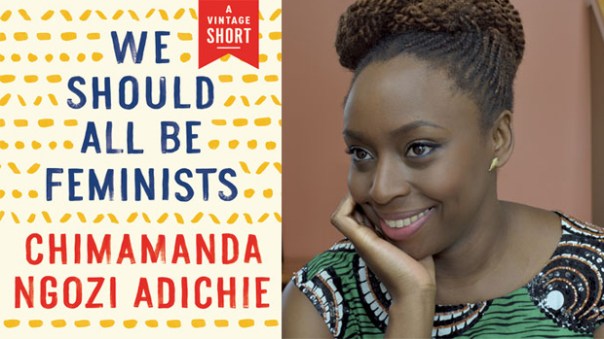





 Literacy Teaching and Teacher Education