The Next Generation of Academics: An Uncertain Future

The Teaching Assistants in Toronto’s two largest universities are on strike. The issue is not simply one of money. I (Clare) read with interest an article about the strike in the Globe and Mail today. http://www.theglobeandmail.com/news/toronto/for-10000-of-canadas-young-academics-on-the-picket-lines-theres-a-lot-more-at-stake-than-42-an-hour/article23346532/

One of their major concerns is future employment. The article by Simona Chiose provides some startling statistics re: supply and demand. In 2012 there were 6,393 PhD graduates yet between 2008-2011 there were only 3,030 new full-time faculty positions. Graduates are being hired to limited term or part-time positions, not full-time tenure stream positions. And those of us in universities know that more and more courses are being taught by part-time faculty and that trying to survive on a salary of course stipends (which tend to be abysmally low) is nearly impossible. The Teaching Assistants with whom I have worked over the years have been hard-working, smart, keen, and committed yet their future is dim. The life of a grad student is hard. Let’s try to make their future more secure.

Children’s Role in Human History: Implications for Schooling

On February 26, I (Clive) read Ivan Semeniuk’s interview in the Toronto Globe & Mail with anthropologist Niobe Thompson, producer of the CBC TV series The Great Human Odyssey. According to Thompson, human life has been quite tenuous over the millennia and only the ingenious have survived. “Our closest call came about 150,000 years ago when…there were fewer than 1,000 breeding adults left” due to “punishing volatility” in Africa’s climate (sounds like Canada today!).

Thompson goes on to talk about key pockets of humans that have survived through incredible ingenuity, involving their “inventing technology to solve the challenges of their world.” This has required creating a whole culture in which everyone participates, including the children. “Whenever I am living with traditional cultures I have the experience of being overwhelmed with the skills my hosts have for living in their environment.” Thompson goes on to talk about the key role of children’s learning in this:

A person cannot become a hunter or a free-diving gatherer or a reindeer nomad as an adult. This is an immense package of skills that one must begin mastering as a child.

This set me thinking. To what extent are children in schools today learning “inert ideas” and “remote matters” (John Dewey) rather than things fundamental to surviving and thriving in the real world? Dewey would agree that one cannot master (and reconstruct) the requisite “immense package of skills” as an adult. The process must occur in earnest from the first day of school (and prior to that in the home). Unfortunately, however, as Nel Noddings says in Education and Democracy in the 21st Century (2013), schooling today is going in the opposite direction.

I do not foresee dramatic changes in the basic structure of curriculum…. Indeed, if we continue in the direction we are now headed, the curriculum will become even more isolated from real life…. It is this tendency that we should resist. (p. 11)

Children do learn a lot of useful things in school: we and our societies are much better off than we would be without schooling. But at present we seem to be headed in the wrong direction. So resist we must. Even in the right direction, we have a very long way to go. Perhaps human survival is not a stake, but human well-being around the planet certainly is.

“Unschooling” education

A recent article in the Toronto Star focused on a family that is committed to “unschooling” their two boys. The two children featured in the article, aged ten and thirteen, do not attend a formal school and receive little direct instruction at home. The unschooling approach has been described as an “extreme approach to homeschooling,” it is focused on self-directed learning where children are deeply immersed in their surrounding community. The boys’ father, Ben Hewitt, discussed the approach to education he and his wife Penny have implemented with their sons. Hewitt noted that as a society “we base a lot of our assumptions about education on what children are supposed to be getting from a standardized curriculum, rather than what they are actually getting… But for me, calculus and physics are not required to be a functioning member of society.” What do you think about the “unschooling” approach?

To read more about the Hewitt family and unschooling see the Star article: http://www.thestar.com/life/parent/2015/03/01/why-one-family-practices-unschooling.html

Faking It

On her CBC radio show The Current, Anna Maria Tremonte discusses  the growing phenomena of faking our way to cultural literacy. A 2013 study based in the U.K. reported that “more than 60 per cent of people living in the U.K. pretend to have read classic books they’ve never actually read.” Faking cultural literacy has become easier  than ever because of the rise of social media. Picking up information on a book or movie has become very easy with apps like twitter or facebook.  Alexandra Samuel, vice-president of social media at a marketing firm, attributes faking cultural literacy to our need as humans need to fit in. He says, “We have, as a species, the need to create social bonds with people who we want to be like. People try and identify with a group they see as positive and then reinforce the qualities of their own that connect them with that group.” Belshaw, educational researcher, believes that faking it has become part of being culturally literate or “a way of understanding the world,” but he warns, “we need to make sure that we are not naive about the structured interests behind the technology we use.”

fingerscrossed

To listen to the entire show, click below:

http://www.cbc.ca/player/News/Canada/Audio/ID/2461862894/

The Edu-babble of Report Cards: Lost in Translation

Like many teachers, I (Clare) found writing report cards a very onerous task. I wanted to be Letter Ffair, encouraging, and accurate. The latest challenge for teachers (beyond time) is the pressure to be use “asset language.” HUH! There was a great article in the Toronto Star today about the “edu-babble” of report cards. http://www.thestar.com/news/gta/2015/02/26/consistently-writing-report-cards-with-random-logic.html

Catherine Porter describes the lost in translation situation:
If your kid was terribly scattered in class, would you want to know?
Or would you rather think he was “using planning skills with limited effectiveness.”
That’s how Ontario’s Ministry of Education suggests teachers write their report cards for kids getting D’s. They aren’t struggling, floundering, falling behind. They are “demonstrating limited understanding of content.”
I call this edu-speak. The ministry calls it a “positive tone.”

Porter has previously written about the impenetrable language of report cards. Her previous column on the indecipherable language of report cards led to an outpouring of highly emotional emails from teachers who are “required” to use the language of the Ontario Ministry of Education. She describes one scenario:

One Toronto public primary school teacher described his first “straightforward” report card comments returning to his desk from the principal’s office. “I was told to be more empathetic to how parents feel about their own children, to re-phrase my wordings to be increasingly diplomatic,” he wrote in an email.
So instead of telling parents their kid was disorganized and his desk was messy, the teacher now writes: “Johnny consistently places his materials inside his desk in a random order. He is highly encouraged to adopt a more streamlined organizational style, so that during in-class work periods he is able to locate his documents with greater ease.”

Gold StarPorter includes some examples from the comment bank teachers are required to use. I am an educator and I had NO idea what these mean. No wonder parents are confused and teachers are frustrated! A gold star to any reader who can figure out what these comments mean.

Five examples from Ontario report cards

  • “We will give further opportunities for Ruth to engage with a variety of children and to be honest about her activities.”
  • “With efforts from home and school, Shane will be encouraged to pay attention to his attendance and punctuality.”
  • “Conrad follows instructions with frequent assistance and supervision.”
  • “Farah is able to communicate ideas and informally orally in French using a variety of grade appropriate language strategies suited to the purpose and audience.”
  • “Jacqueline is encouraged to continue to demonstrate understanding and patience towards her classmates and to nurture a cooperative working environment with her team by demonstrating openness towards every student that may be part of her team.”

Powtooning about Powtoon

I (Cathy) made a Powtoon about making a Powtoon.  Just follow the link below:

http://www.powtoon.com/show/dK9qzPurSC7/intro-to-powtoon/#/

If you are not familiar with Powtoon, it is an animated on-line presentation software tool that creates explainers, videos and presentations.  If you can create a power point, you can create a  Powtoon.  Only a Powtoon is much more interesting and fun!  It is an effective  tool for flipped classrooms and they make great multimodal assignments for students.  You can find many how-to videos on youtube.  My favourite was  on script writing (for powtoons):

https://www.youtube.com/watch?v=lyB1Y9xkSec

The Powtoon web site also hosts a set of tutorials to help you get started:

http://www.powtoon.com/tutorials/#prettyPhoto

The Powtoon I created was through a free account.  In that account I have access to  five minutes of Powtooning, 10 tunes and 11 animation styles.  Cant wait to make another.

Hope you give it a try!


Books, books, books

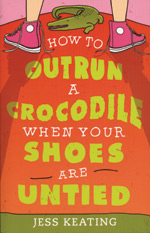
If you are like me (Clare) you are always on the lookout for a good book. If you are a Comic Book Warclassroom teacher or literacy teacher educator you are probably always Image Red Maple_How-To-Outrun-A-Crocodilesearching for good children’s literature and young adolescent literature. A student in my grad course on literacy told me about the Ontario Library Association : founded in 1900, the Ontario Library Association is the oldest continually operating library association in Canada. With more than 5,000 members, the OLA is the largest library association in the country.

She shared the a link of the Red Maple Fiction Nominees:

https://www.accessola.org/web/OLAWEB/Forest_of_Reading/Awards_Nominees/Red_Maple_Fiction_Nominees.aspx

This site has short blurbs about the nominated books. Image Red Maple_Dead-Mans-SwitchImage Red Maple Award_The-Boundless

I like Goodreads which now that they has a section on children/adolescent literature. If you are a classroom teacher or teacher educator you can set up a secure community for the students in your class. They can post reviews and comments and share titles of books they liked or did not like. Thw community is “closed” (only open to those registered in it). This is a great way to create a reading community. Here is the link for Goodreads young adolescent literature: http://www.goodreads.com/genres/young-adult

Literacy Pilot Program at First Nations’ Schools

Former Prime Minister Paul Martin recommends a four-year literacy pilot program implemented at two First Nations’ elementary schools should be put into place across Canada. Martin suggested the reading and writing program, implemented at Walpole Island and Kettle and Stony Point First nations in Ontario, improved students literacy performance. The program, designed by Julia O’Sullivan dean of the Ontario Institute for Studies in Education at the University of Toronto, required schools to carry out a mandatory reading and writing period for every student during the first 90 minutes of each day. Kettle and Stony Point First Nation chief Thomas Bressette drew attention to the underfunding of First Nations schools. Bressette noted “there needs to be a period of catch-up time because our people have been looked down on and set back because of underfunding, not because we’re ignorant and we’re dumb and uneducated and incapable of learning, but because of the circumstances.”

Link to the news article: http://www.ctvnews.ca/politics/literacy-pilot-project-leads-to-improvements-at-first-nations-schools-1.2251422

The Sitting Disease

As a doctoral student I find myself sitting for hours in front of the computer without stretching or sometimes even moving. I suppose I have always known that sitting for hours on end couldn’t be good for our health, but the scientific community is now claiming our sitting habits are leading to “the sitting disease.” Below is an info-graphic with some alarming facts and statistics on our sedentary lives.

We’ve become so sedentary that 30 minutes a day at the gym may not counteract the detrimental effects of 8, 9 or 10 hours of sitting.” ~ Genevieve Healy, PhD

JustStandInfoGraphicV3

As I sit here writing this blog post, I realize I haven’t had a stretch or a walk in a while. So, I’m going to take a short break, bundle up (it’s freezing here in Toronto!) and take a walk around the block. Learn more about how sitting is harming our health at: http://www.juststand.org