Tag Archives: children’s literature

Goodreads

Image Children_clipart_reading_circle-315x254Building on Lydia’s post yesterday, I (Clare) want to highlight the site Goodreads. I check it regularly to read their suggestions and/or book reviews. It also allows groups to have a shared space. This would be a great place for student teachers in literacy courses to share books they have read with pupils. (They now include children’s literature in their genre list.)OliverJeffers

If you do not know the Goodreads site, check it out at: http://www.goodreads.com/

Clifford the Big Red Dog

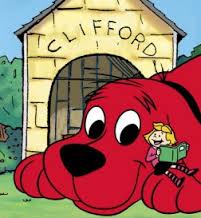
Norman Bridwell the writer and illustrator of the Clifford the Big Red Dog books passed away Friday, at the age of 86. The popular children’s books have sold more than a 120 million copies worldwide. I have fond memories of borrowing Clifford books from my primary school library and reading about the loveable giant dog’s adventures. Initially publisher Scholastic only “offered the Clifford story through book clubs and school fairs.” The Clifford books eventually became available in stores in the 1980s. Bridwell suggested “Clifford’s imperfections were part of his appeal, making kids more forgiving of their own mistakes.”

Link to Toronto Star article to learn more about Norman Bridwell:

http://www.thestar.com/entertainment/2014/12/16/norman_bridwell_creator_of_clifford_the_big_red_dog_dead_at_86.html?app=noRedirect

Clifford

Re-visiting My Early Childhood Literacy Practices

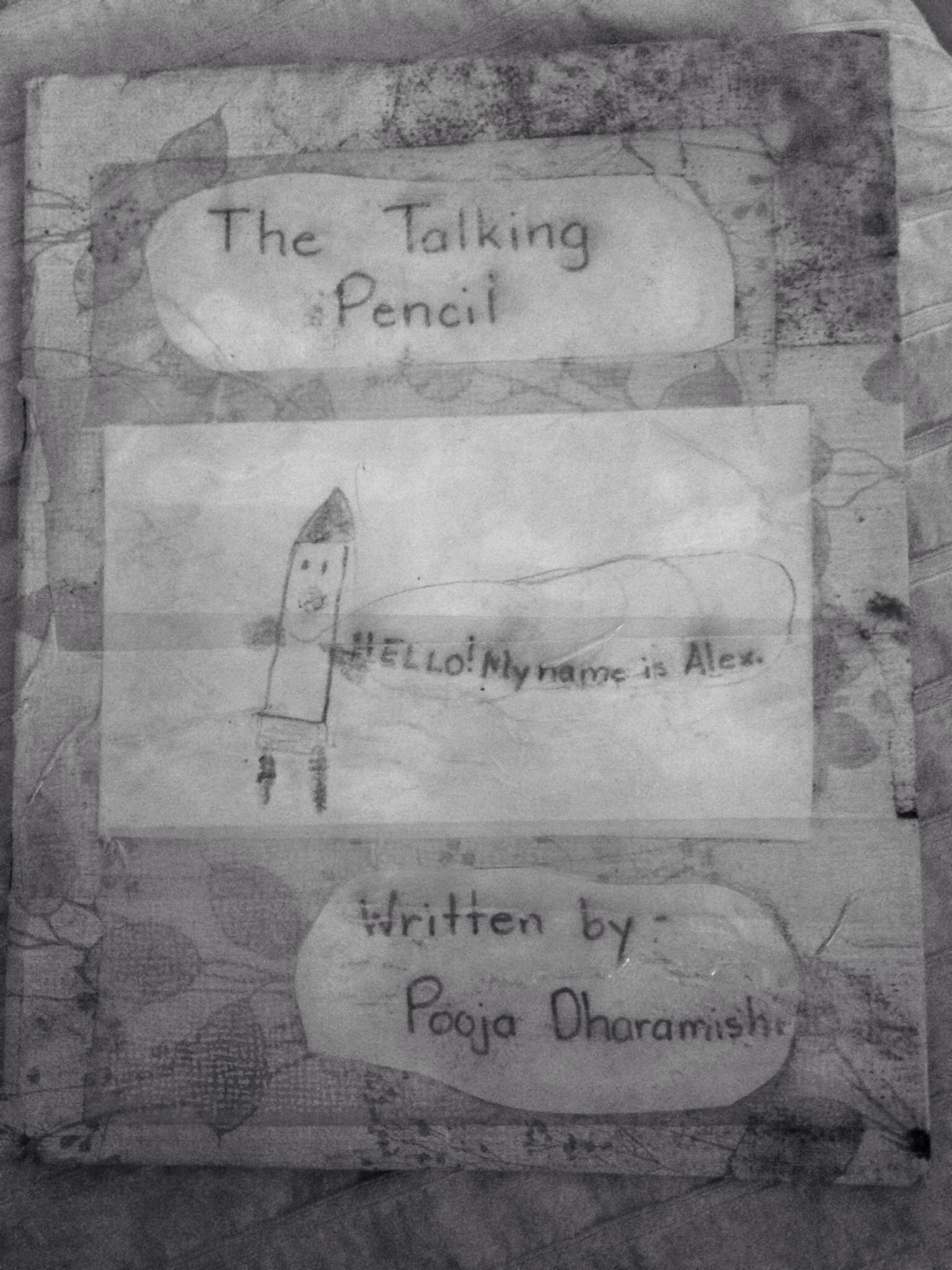
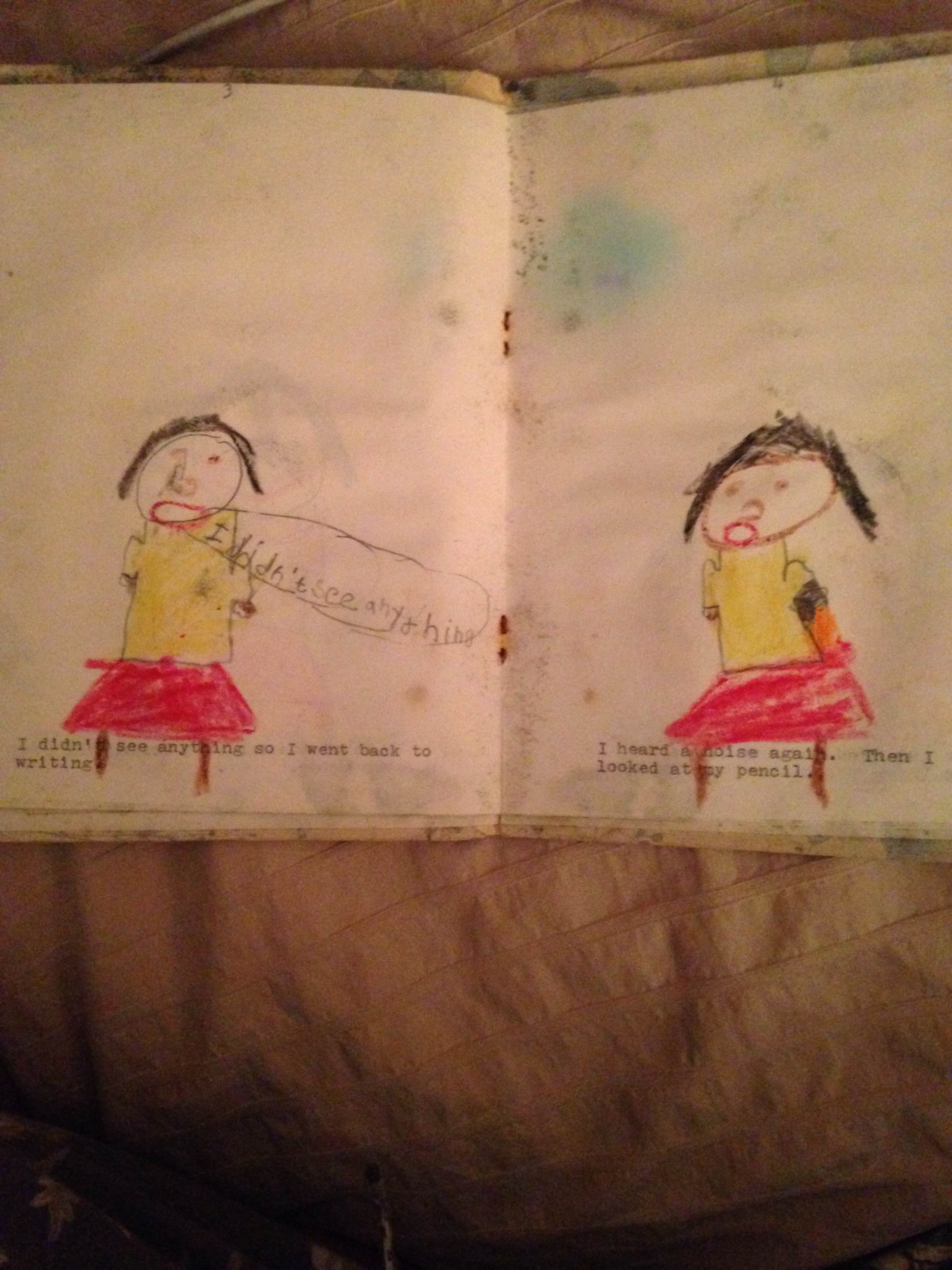
My (Pooja) parents’ basement recently flooded. So, they had to quickly clear out whatever was in there. They came across a huge container labeled “Pooja’s school stuff” and dropped it off to me the following day. I was overcome with emotion as I rifled through its contents. My parents had held on to every single one of my report cards from from JK-Grade 12;  they even had my university acceptance letter. They had neatly filed all of the documents in plastic folders to avoid damage (like a flooding basement!). In the container, I also found many artifacts from elementary school: reading logs, projects, letters to fictional characters and pen pals, and books I wrote and illustrated. I don’t remember even writing/completing most of what was in the container but it was like taking a glimpse back into some of my early childhood literacy practices. As an adult, I got to see myself as a kid.

Here are some photos from a book I published in Grade 2, The Talking Pencil. I love how our books became part of the school library, so other children were able to sign them out to take home and read. What a great idea!

IMG_7799 IMG_7800 IMG_7801 IMG_7802 IMG_7803

Celebrating the 25th Anniversary of True Story of the Three Little Pigs

As the 25th anniversary of the picture book The True Story of the Three Little Pigs approaches author Jon Scieszka and illustrator Lane Smith recount the origins of their collaboration and the challenges of securing a publisher for the sophisticated parody. As Smith recalls, “some editors liked it but were a little confused and not sure if there was a market for it. Back at that time, children’s books were either serious, earnest books, or really funny books. But the sense of parody and irony that is rampant now didn’t really exist then…Viking put the book out very tentatively. They weren’t convinced of anything and did a small run that immediately sold out. It was all word-of-mouth from teachers, librarians and booksellers. They didn’t run ads or do a publicity push. Finally by the fourth or fifth printing the runs were more like 50,000.”

Follow the link below to read the full interview with Jon Scieszka and Lane Smith:

http://www.publishersweekly.com/pw/by-topic/childrens/childrens-book-news/article/64695-the-true-25th-anniversary-story-of-the-three-little-pigs.html?utm_source=Publishers+Weekly&utm_campaign=94f331fbd0-UA-15906914-1&utm_medium=email&utm_term=0_0bb2959cbb-94f331fbd0-305134397

ThreePigs

A is for Activist: Guest Blog by Gisela Wajskop

The school year began in Canada at the same time we experienced many human tragedies across the world. In this peace-less world, I’ve (Gisela) A is for Activistdiscovered, by chance, an interesting book for young children: A is for Activist by Innosanto Nagara, http://www.aisforactivist.com. From Activist to Zapatista, this “children’s book for the 99 percent” offers different rhymes and perspectives to small children.

The book is described as:

Activist is an ABC board book written and illustrated for the next generation of progressives: families who want their kids to grow up in a space that is unapologetic about activism, environmental justice, civil rights, LGBTQ rights, and everything else that activists believe in and fight for. The alliteration, rhyming, and vibrant illustrations make the book exciting for children, while the issues it brings up resonate with their parents’ values of community, equality, and justice. This engaging little book carries huge messages as it inspires hope for the future, and calls children to action while teaching them a love for books. http://www.amazon.ca/Activist-Innosanto-Nagara-ebook/dp/B00DIGNCNU/ref=srA is for _1_1?ie=UTF8&qid=1410614592&sr=8-1&keywords=Innosanto+Nagara

As Corey Hill wrote in 2012 (http://www.yesmagazine.org/people power/in-review-it-is-for-activist-by-innosanto-nagara) “It’s pretty clear from page one that this is no Cat in the Hat. Billed as a book for the children of the 99%, A is for Activist is the radical vision of Innosanto (Inno) Nagara, a graphic designer and social justice activist from Oakland, California.

Although the book is said to suitable for children from birth to three years to age I wonder about the impact of reading it to such young children, and I wonder if it would be better suited for older children who have ideological knowledge and experience. The illustrations are gorgeous and the rhymes reveal ideas about the rights of all in the hope of a world more with fewer ills. It is a lovely text to start the school year in which conflicts and wars in the four corners of the world threaten children around the world! It can serve as introductory material to literacy and can serve as an inspiration to parents and educators about the social function of writing and literature for children.

Louise Erdrich wins Dayton Literary Peace Prize

Author Louise Erdrich has been named as the winner of the Dayton Literary Peace Prize. The Dayton prizes recognize “literature’s power to foster peace, social justice and global understanding.” Erdrich’s written works, which includes novels, short stories, poetry, and children’s books, candidly explore contemporary Aboriginal life. She has been praised for “weaving a body of work that goes beyond portraying contemporary Native American life as descendants of a politically dominated people to explore the great universal questions – questions of identity, pattern versus randomness, and the meaning of life itself.”

http://www.cbc.ca/news/aboriginal/louise-erdrich-wins-dayton-literary-peace-prize-s-achievement-award-1.2739805

Erdrich

The Power of Children’s Literature and its Omissions

While I (Yiola) knew there was a lack of representation of  “people of colour” in children’s literature, I was surprised to read the statistics. The chart below shows the number of books published last year and the number written ‘by’ and ‘about’ the different groups defined as ‘people of colour’.


Year

Total Number
of Books
Published (Est.)

Number of Books
Received
at CCBC


African / 
African Americans


American Indians

Asian Pacifics/
Asian Pacific Americans


Latinos


By

About

By

About

By

About

By

About

2013

5,000

3,200

67

93

18

34

90

69

48

57

Two fantastic articles in the New York Times last week prompted me to write this blog:

http://www.nytimes.com/2014/03/16/opinion/sunday/the-apartheid-of-childrens-literature.html?ref=contributors&_r=0

http://www.nytimes.com/2014/03/16/opinion/sunday/where-are-the-people-of-color-in-childrens-books.html?ref=contributors&_r=0

The articles share the stark realities and implications of the statistics represented above from the experiences of African American men, writers themselves. Reading the articles echo and confirm what I believe to be the realities and consequences of our publishing marketplace.  And yet, what to do about it?

The other day I was speaking to a high school educator (a behavior specialist, child and youth worker) who shared stories with me about boys in her school who are misbehaving, who are rude and disrespectful.  I shared with her the ideas that their behaviours must stem from something much bigger than an attitude problem… that they may feel oppressed, misrepresented or not represented at all by the school and broader society.  I do not think she was buying my argument.

My role as a teacher educator is to inform future teachers of the realities of teaching, learning and schooling.  Part of that role includes understanding how systems work for and against particular groups and individual students. One concrete area for exploring such systems is children’s literature.

Christoper Myers, author of “The apartheid of children’s literature”, describes books as maps to identity and ways of being:

[Children] see books less as mirrors and more as maps. They are indeed searching for their place in the world, but they are also deciding where they want to go. They create, through the stories they’re given, an atlas of their world, of their relationships to others, of their possible destinations.

The consequences of excluding certain groups:

what it means is that when kids today face the realities of our world, our global economies, our integrations and overlappings, they all do so without a proper map. They are navigating the streets and avenues of their lives with an inadequate, outdated chart, and we wonder why they feel lost.

Alternatively, Walter Dean Myers, author of the second article, explains what happened to him when he connected to a text: 

Then I read a story by James Baldwin: “Sonny’s Blues.” I didn’t love the story, but I was lifted by it, for it took place in Harlem, and it was a story concerned with black people like those I knew. By humanizing the people who were like me, Baldwin’s story also humanized me. The story gave me a permission that I didn’t know I needed, the permission to write about my own landscape, my own map.

And so, how do we as teacher educators empower teachers so they empower students to realize the flawed systems we live in but and to move beyond them to ensure each child can navigate and negotiate their personalized, broad, rich landscape of possibilities?  I suggest: we ourselves develop a critical stance and what Noddings calls a culture of care; we are explicit about the realities of the systems we currently work in; and we work hard to search out texts and materials that share rich stories of all of our students and beyond.  More so, I suggest we move to change the marketplace by publishing texts that begin to close the gaps in representation in children’s literature.