In the New York Times Sunday Review on Feb 28, Andrew Hacker published an article (p. 2)  called “The Wrong Way to Teach Math,” based on his forthcoming book The Math Myth and Other STEM Delusions. It begins with this remarkable statement:
“Most Americans have taken high school mathematics, including geometry and algebra, yet a national survey found that 82 percent of adults could not compute the cost of a carpet when told its dimensions and square-yard price.”
Hacker, who teaches political science and mathematics at Queens College in New York, argues that while “calculus and higher math have a place…it’s not in most people’s everyday lives.” Students need to learn “numeracy” or “quantitative literacy”: “figuring out the real world – deciphering corporate profits or what a health plan will cost.”
I (Clive) find Hacker’s ideas and examples very helpful and plan to buy his book. But it occurs to me that similar things could be said about other subjects such as literacy (reading, writing, literature), history, science, etc. While “academic” aspects of these subjects have to be taught to prepare students for later education and (possibly) work settings, teachers need to do both (as I have posted before). It isn’t appropriate just to focus on Shakespeare and classical novels, for example, and not prepare students to find enjoyment and make wise choices in their everyday fiction and non-fiction reading.
Addressing both – the academic and the everyday – is not easy, given the extensive subject content teachers are expected to cover; but in teaching and teacher education this should be our goal, and over the years we should move as far as humanly possible in this direction.
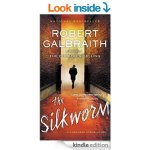 Over the holidays I (Clive) have had a chance to do some novel reading, and have read murder mysteries by J. K. Rowling (The Silkworm) and Elizabeth George (For the Sake of Elena). I enjoyed these novels, especially the first, but these authors – bless their hearts – like to put in a lot of social commentary, ideas about life, personal interest, etc. This can be very interesting and educational or quite aggravating, depending on one’s interests – so I did a lot of skimming (especially in Elena).


 As a former elementary teacher, I (Monica) know that there are many things that influence how teachers teach in their classrooms. In our longitudinal study of teachers, Teacher change: patterns, factors, and implications for professional education, we have been learning from teachers about the kinds of formal and informal professional development that they find most relevant and helpful. One of the factors that intrigued me early on in the study was the influence that the teachers’ own early schooling had on their teaching. I interviewed 6 of our participants over the first three years of their teaching and discovered that they all use one or two teachers from their own childhood as role models for their teaching. My research has just been published in Language and Literacy: A Canadian e-Journal. Here’s the link:
 Clive and I (Clare) presented at the Unicolombo Universitaria Colombo Internacional in Cartagena (Part of a Ministry of Education initiative). The overall theme of our presentations was the need to offer quality education for all.
 lick below to see our ppt presentations.


 Literacy Teaching and Teacher Education