Tag Archives: literacy

Re-visiting My Early Childhood Literacy Practices

My (Pooja) parents’ basement recently flooded. So, they had to quickly clear out whatever was in there. They came across a huge container labeled “Pooja’s school stuff” and dropped it off to me the following day. I was overcome with emotion as I rifled through its contents. My parents had held on to every single one of my report cards from from JK-Grade 12;  they even had my university acceptance letter. They had neatly filed all of the documents in plastic folders to avoid damage (like a flooding basement!). In the container, I also found many artifacts from elementary school: reading logs, projects, letters to fictional characters and pen pals, and books I wrote and illustrated. I don’t remember even writing/completing most of what was in the container but it was like taking a glimpse back into some of my early childhood literacy practices. As an adult, I got to see myself as a kid.

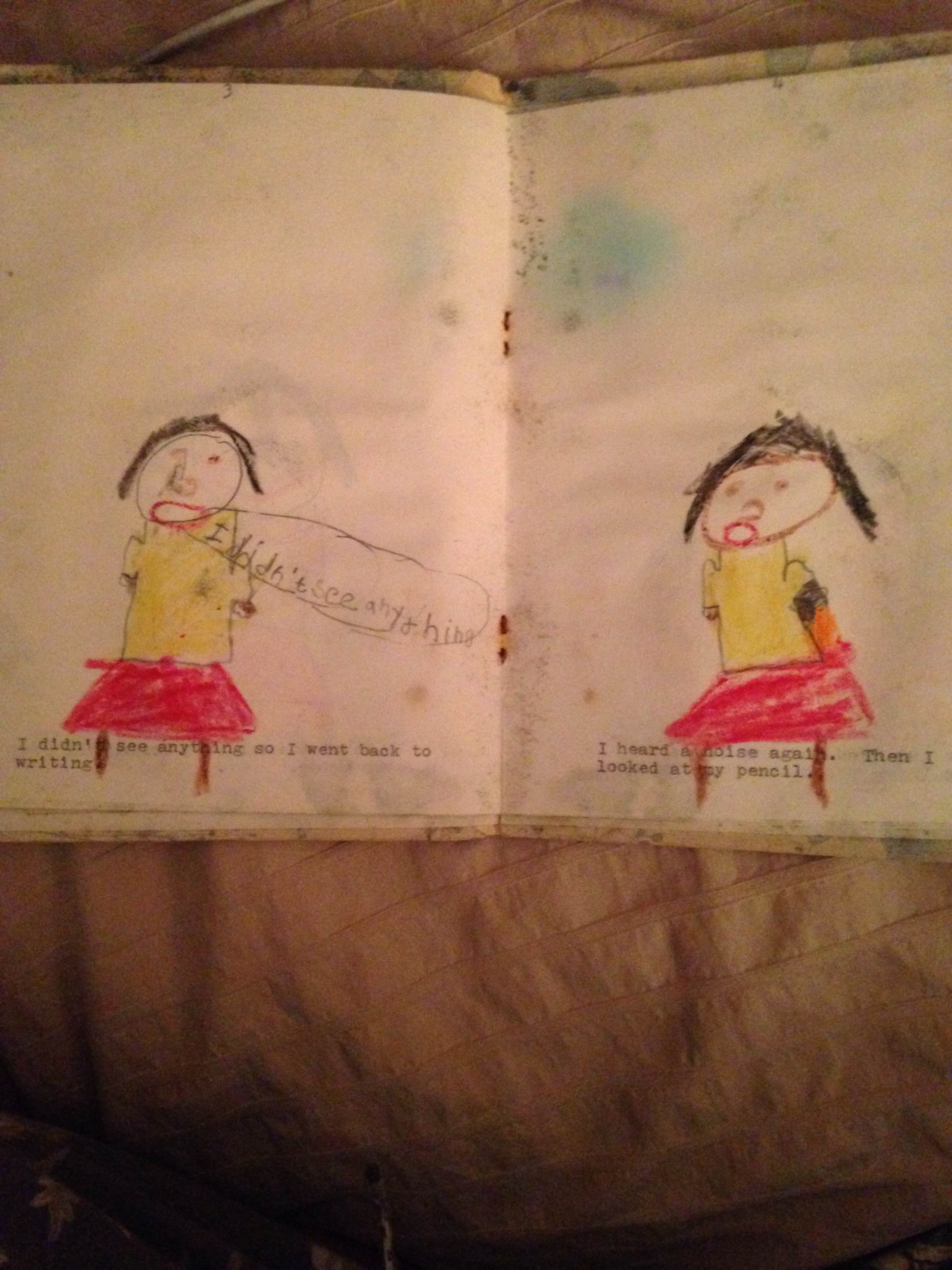
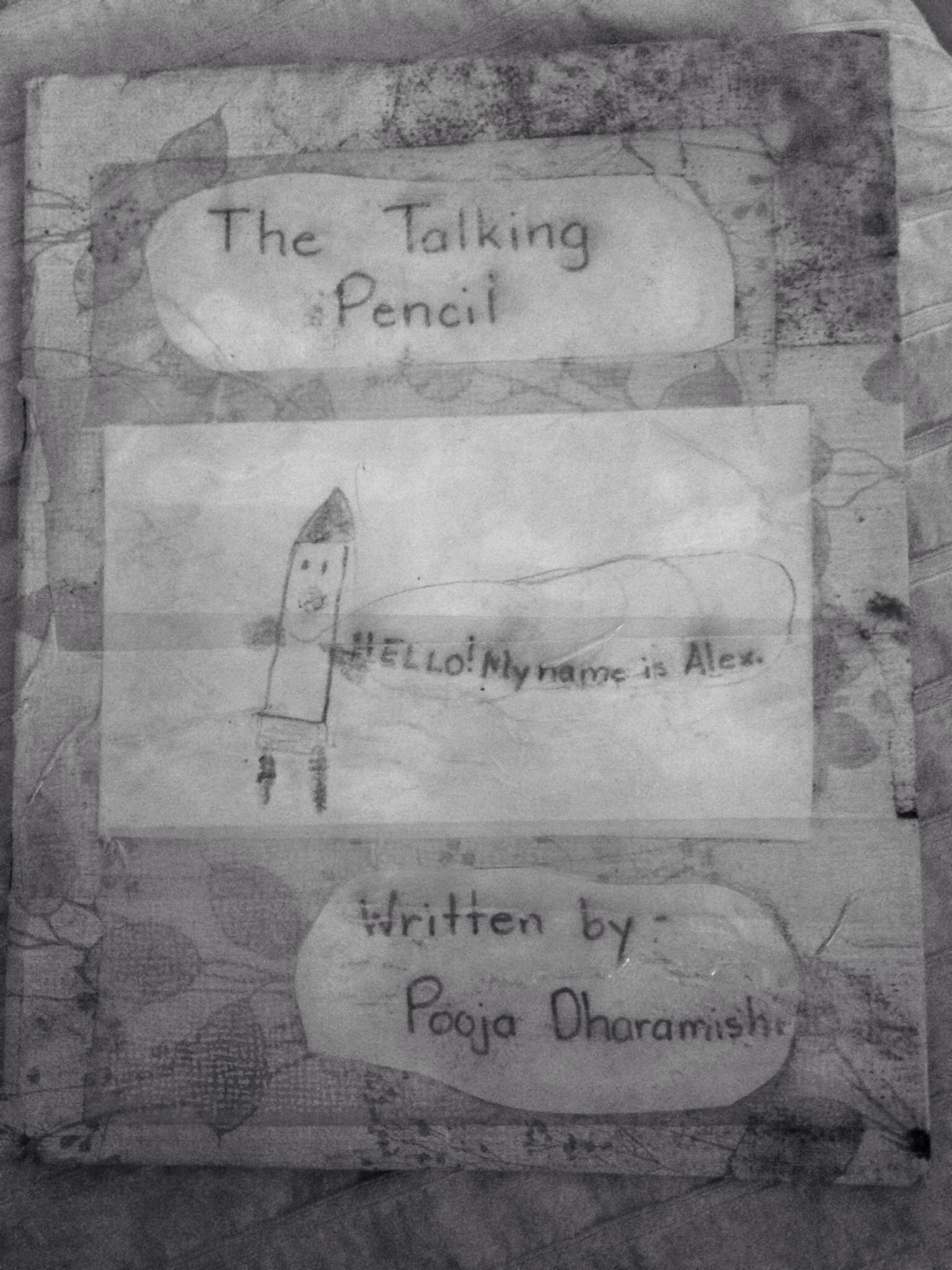
Here are some photos from a book I published in Grade 2, The Talking Pencil. I love how our books became part of the school library, so other children were able to sign them out to take home and read. What a great idea!
IMG_7799 IMG_7800 IMG_7801 IMG_7802 IMG_7803

Literacy development and genres: The graphic novel

When I (yiola) first began teaching  (in 2008) I asked student teachers if they knew about graphic novels.  The response was that few students were familiar with the genre or how and why it may benefit learning in the classroom. With each passing year more and more student teachers indicate they are familiar with graphic novels and more and more student teachers recognize the genre inside classrooms.

Some use the term graphic novels interchangeably with comics with others differentiate the two as distinct styles. In either case there are strong arguments for why the graphic novel is a powerful genre for literacy development.

6 Reasons You Need To Start Reading Comic Books

http://neillcameron.blogspot.co.uk/2014/09/comics-and-literacy-part-1-why-reading.html

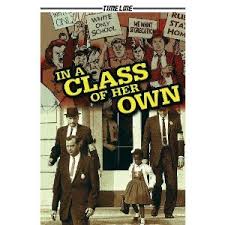
I introduce student teachers to David Booth’s book “In Graphic Detail” and I share the graphic novel “In a Class of her Own” to demonstrate how critical literacy and language acquisition can be developed in meaningful and interesting ways.

Unknown


http://www.theguardian.com/childrens-books-site/2013/mar/19/review-in-a-class-of-her-own-kathleen-gould-lundy

The sharing of the graphic novel as a useful genre in the classroom is a highlight in my course. Many student teachers become inspired to use graphic novels once they are introduced to why they are effective and how to use them in a classroom setting.

Please share any great graphic novel titles that you know to be outstanding.


Reading for Relevance AND Fluency

In the past, I (Clive) have posted about the need to teach for relevance. When recently re-visiting two of Richard Allington’s wonderful books on reading instruction – What Really Matters for Struggling Readers (2006) and What Really Matters in Fluency (2009) – I was impressed with his discussion of the link between relevance and fluency in reading. In his view, there are at least 4 instructional causes of reading difficulties:

  • Texts are too difficult
  • Texts are not interesting enough
  • Insufficient time is given for actual reading (as distinct from studying reading strategies)
  • Reading is interrupted for instructional reasons

Because of these factors, students don’t do enough reading to become fluent. Teaching reading strategies is important, but a balance is needed. Allington says:

[To increase their] store of at-a-glance words, readers need to consistently and repeatedly read a word correctly. [This requires] a lot of accurate reading…struggling readers [should] read at least as much as the achieving readers at their grade level. (2009, p. 38).

He cites what he sees as “one of the greatest failures of the [U.S.] federally funded Title I remedial reading and special education programs: Neither program reliably increased the volume of reading that children engaged in” (2006, p. 43). In fact, the amount of reading was often reduced.

But struggling students won’t read very much – either at school or at home – if texts are uninteresting to them. This is where relevance comes in. According to Allington, if we want students to read a lot they must see the point of reading. But if we force them to read books they aren’t interested in and bombard them with reading strategies, along with “comprehension” tasks that just require them to recall and retell, they may never realize that reading has a point. He comments:

I fear that we will continue to develop students who don’t even know that thoughtful literacy is the reason for reading. (2006, p. 116)

So relevance is valuable in two ways: it helps students learn about “life” and the real world, and it helps them learn how to read.


Can Reading Comprehension be Taught?

I (Clare) recently read in Teachers College Record a fascinating commentary about reading comprehension by Daniel T. Willingham & Gail LovetteCan Reading Comprehension Be Taught? http://www.tcrecord.org/Content.asp?ContentId=17701Amelia1stDay

For those of you who teach literacy in elementary school or teach literacy methods courses in teacher education programs you might find their analysis of why teaching comprehension very interesting. In my local school districts teaching specific comprehension strategies seems to be the latest bandwagon. On one level I think direct instruction on how to comprehend/make sense of text can help struggling readers.

On the other hand, one of my issues is with the way these strategies are taught. These comprehension strategies are listed on a poster and students are expected to use those specific 8 strategies. They are drilled over and over and over on them. If a student does not “get them” the first ten times of drilling will they ever get them?

So I found Willingham and Lovette’s explanation informative on why this approach can work interesting:

The funny thing about reading comprehension strategy instruction is that it really shouldn’t work, but it does. This commentary seeks to provide insight into how it should work and guidance on effective strategies for implementation.

They provide reasons why teaching comprehension strategies work:phone1

Here’s our interpretation. The vague Ikea instructions aren’t bad advice. You’re better off taking an occasional look at the big picture as opposed to keeping your head down and your little hex wrench turning. Likewise, RCS encourage you to pause as you’re reading, evaluate the big picture, and think about where the text is going. And if the answer is unclear, RCS give students something concrete to try and a way to organize their cognitive resources when they recognize that they do not understand.

 RCS instruction may be at its best in telling students what reading is supposed to be. Reading is not just about decoding; you are meant to understand something. The purpose is communication. This message may be particularly powerful for struggling readers, whose criterion for “understanding” is often too low (Markman, 1979). One of us works extensively with struggling adolescent readers who frequently approach the task of reading as getting to the last word on the page.

I think one of the ways to go forward is to provide students with many comprehension strategies. I know that when I read I use many more than 8 strategies. If you want to read the entire commentary (which is not too long) here is the article. I will definitely use this article with my teacher education students.Can Reading Comprehension Be Taught


Working to Make a Difference

A GTA first grade teacher, Asa Schoondenbeek, is one of 35 recipients of the Prime Minister’s Awards for Teaching Excellence. Mr. Schoondenbeek began a lunchtime reading club for first and second grade boys at his school. During his lunch hour he dresses up as a superhero and reads to boys who choose to be in the club. One of the young boys in the club told CBC News that the reading program is fun because “you get to read and you get to pick any book we want to read.” Parents and the school’s community council nominated Schoondenbeek for the award because they appreciated his efforts and commitment to students.

Link to the CBC news story: http://www.cbc.ca/news/world/asa-schoonderbeek-wins-prime-minister-s-award-for-teaching-excellence-1.2798451

Walking in the Shoes of Democracy

When I returned from Greece this summer I noticed that my running shoes were very dusty.  Well, that’s an understatement.  They were no longer even white. I kept thinking I should wash them, but I simply couldn’t.  The last place we visited in Greece was the ancient Agora in Athens.   I spent the entire day in awe.  This was where the most influential political and philosophical minds of western civilization  waked, talked and puzzled.  The dirt on my shoes was from the same pathways and roads on which Aristotle, Plato and Socrates paced and argued. It was speculated that Aesop visited Athens and told his most famous fable, The Frogs who Desired a King, in this same Agora to  dissuade the citizens from attempting to depose Peisistratus for another ruler.   My shoes were coated with the dust of democracy!   Who was I to wash it away?  So left them dirty.

That is, until a friend of mine commented on how dirty my shoes were.  At that point I  finally relented and talked myself into washing them.  Into the washing machine they went.  But they came out just as dirty as they went in.  So I washed them again.  Still no change.  It became a challenge.  I took bleach and a toothbrush to them.  They remained a dull grey. Forever altered.  Baffled, I left my shoes to dry in the sun and like any good philosopher, contemplated my  dilemma.   Then it dawned on me.  The dust of democracy was embedded.  Democracy could not be washed away from my shoes any easier than it could from my consciousness.  For me, democracy is an honorable a way of life.    My shoes were a living representation of this precious philosophical and political stance.

As you may have guessed, I have stopped trying to clean my shoes.  I’ve decided they are perfect just the way they are.

agora 2957

A Community Literacy Initiative

On a recent walk I noticed the front lawn of a home in my neighborhood proudly exhibits a quaint little wooden structure perched a top a post, which at first glance looked like an oversized bird house, however, upon closer examination I noticed that the petite house is full of books and displays a sign that invites passersby to take a book and return a book. The small wooden house is part of the Little Free Library initiative, a not-for-profit organization that promotes literacy, a love of reading, and a sense of community. The project began in 2009 when Todd Bol of Hudson, Wisconsin, built a model of a one-room schoolhouse in honor of his mother, a former teacher who loved reading.  He filled the model schoolhouse with books and put it on a post in his front yard. According the website www.littlefreelibrary.org “a loyal cadre of volunteers made it possible to expand the organizational reach…. By January of 2014, the total number of registered Little Free Libraries in the world was conservatively estimated to be nearly 15,000, with thousands more being built.” Do you have a Little Free Library in your neighborhood or a community literacy initiative that you would like to share?

LittleFreeLibrary

A Strong Tradition of Inuit Oral History

This month Parks Canada announced the discovery of one of the lost ships from Sir John Franklin’s Arctic expedition. The two ships from the Franklin expedition, HMS Erebus and HMS Terror, and their crews disappeared during a search for the Northwest Passage in 1846. Recent sonar images from the waters of Victoria Strait, just off King William Island in Nunavut, revealed the wreckage of a ship on the ocean floor.

The discovery of the Franklin ship demonstrates the strength and reliability of Inuit oral history. For more than 30 years local historian Louie Kamookak has been interviewing elders to collect the stories about the Franklin expedition. According to Inuit oral history the two ships appeared on the northwest side of King William Island. One of the ships was crushed in ice and the other ship floated further south. The Parks Canada team may not have discovered the Franklin ship without Inuit knowledge and the strong tradition of Inuit oral history. Kamookak noted, “for us Inuit it means that oral history is very strong in knowledge, not only for searching for Franklin’s ships but also for environment and other issues.”

www.cbc.ca/m/news/canada/north/franklin-find-proves-inuit-oral-history-is-strong-louie-kamookak-1.2761362

FranklinShip

Summer of Jodi Picoult

I (Cathy) often listen to novels (on my ipod mini) as a series by one author. By doing this I can get very familiar with an author’s style, recurring themes and track her/his growth as a writer. This summer was Jodi Picoult.

Jodi Picoult Jodi Picoult

So far I have listened to 8 novels: The Pact, Perfect Match, Vanishing Act, The Storyteller, House Rules, Lone Wolf, Nineteen Minutes, and Sing You Home. I discovered she often writes about trials. She also tends to write from several points of view in each novel. I particularly liked this trait with the trial books, because I could ‘hear’ the perspectives of both the defense and the prosecution. Sometimes she uses one character in two books, which I also enjoyed.

Her strength, however, is her ability to tackle issues. She excels at them. Big, messy ones. (She wrote My Sisters Keeper, which became a popular movie starring Cameron Diaz and Alec Baldwin). The novel I just finished, Nineteen Minutes, was about a bullied high school student that decided to fight back by shooting several students in his school. It was graphic and disturbing, but portrayed with sensitivity and realism. The issues she portrayed in the trail bothered me so much, I found myself describing scenes to my husband and asking his opinion on them. I was emotionally snagged. I view this as a sign of an excellent writer. My favourite book of the 8, was The Storyteller, but it also was, at times, hard to listen to. A holocaust story, it was brutally realistic and very emotional.

I recommend her work as a wonderful resource for a book club, especially if you like a good discussion about polarized views and moral dilemmas. She has a new one coming out in October, Leaving Time, which I plan to order and buy a hard copy for my daughter. She is a big Jodi Picoult fan and started me on this series. After this, I haven’t decided which author to tackle next. Any recommendations?

storytellerninetten minutes