Tag Archives: Pooja Dharamshi

Spending Too Much Time On Your Phone?


photoLike most, I (Pooja) find myself engaged with my smart phone too much. I often make attempts to limit my usage. I tell myself things like “I won’t check Facebook until it’s time for bed”, but these promises I make myself are hardly ever kept. Perhaps a doggy cone is not such a bad idea!

A Mighty Girl

mightygirl

My twin niece and nephew are 4 years old. They both have loved books for as long as I can remember. They are currently learning how to string together sounds from the alphabet. As a super-involved aunt and literacy teacher, I try to expose them to a wide variety of texts. I want them to be exposed to texts which promote inclusivity, challenge stereotypes, and inspire creativity. For this reason I was delighted to find out about the Mighty Girl website.

“A Mighty Girl is the world’s largest collection of books, toys, and movies for parents, teachers, and others dedicated to raising smart, confident, and courageous girls.”

The Mighty Girl collection of books aims to disrupt the status quo of how girls are represented in fairytales. The collection of books strives to break the ‘damsel in distress’ mold, and so feature girls in alternative fairytales who are courageous, smart, and daring! I know I’ll be picking up a few of these books to read with my four-year-old niece and nephew! Some of the book titles include:

  • Not All Princesses Dress in Pink (Yolen & Stemple, 2010)
  • Dangerously Ever After (Slater, 2012)
  • Thunder Rose (Nolen, 2007)
  • The Seven Chinese Sisters (Tucker, 2003)

A full list of fairy/folktales on the Might Girl site:

http://www.amightygirl.com/books/fiction/fairy-tales-folktales

Conversational Competence

“Is there any 21st-century skill more important than being able to sustain confident, coherent conversation?”conversation

 As I watched my class struggle, I came to realize that conversational competence might be the single-most overlooked skill we fail to teach students. Kids spend hours each day engaging with ideas and one another through screens—but rarely do they have an opportunity to truly hone their interpersonal communication skills. Admittedly, teenage awkwardness and nerves play a role in difficult conversations. But students’ reliance on screens for communication is detracting—and distracting—from their engagement in real-time talk. (Paul Barnwell, 2014)

The author of this article, teacher Paul Barnwell, worries that without solid conversational skills our students won’t be able to manage important life conversations (e.g., job interviews, discssions with employers about salary negotiations, conversations with their partners, etc.) in their future which rely on them thinking on their feet (without access to Google!).

 MIT professor, Sherry Turkle, spends her time researching people’s relationship with technology. She wrote in the New York Times about the impact of tech-overload: “Face-to-face conversation unfolds slowly. It teaches patience. When we communicate on our digital devices, we learn different habits … we start to expect faster answers. To get these, we ask one another simpler questions. We dumb down our communications, even on the most important matters.”

I couldn’t agree more with Barnwell and Turkle. Teaching our students how communicate to solve problems, deal with emotions, and build meaningful relationships through conversations  is an essential skill which may need to be explicitly taught.

Read the entire article from The Atlantic below:

http://www.theatlantic.com/education/archive/2014/04/my-students-dont-know-how-to-have-a-conversation/360993/

A Lack of Diversity in Higher Education Leadership

An interesting article was published last week about the lack of    diversity to be found in university leadership. When looking at full-time faculty at universities across the U.S., 79% were white. The lack of diversity was found most among higher ranking faculty (tenure-track; leadership roles; presidents).  For example, while 44 percent of full-time faculty at degree-granting institutions are women, they hold only 29 percent of tenure-tracked positions at doctoral institutions — even though women outperform men 56 to 40 percent in national research grant awards.”

An excerpt from the article:

Thus, university leadership increasingly reflects neither the student body being led nor the world in which graduates will need to operate, a situation that engenders disadvantages and lost opportunities. Students benefit from having mentors and role models from their own racial, ethnic, or gender group — as do faculty who aspire to leadership positions. Institutional leaders can strongly influence institutional culture; having leaders from a wide range of backgrounds and experiences enriches the intellectual and cultural climate in which students learn. And exposure to and experience working with people from different cultural backgrounds better prepares students for the real-world working environment of their futures.

The excerpt above describes much of what is happening in the K-12 teaching force in North America. Although efforts are being made to diversify the teaching force, white female teachers remain the majority of K-12 teachers.

Read the entire blog here:

http://www.huffingtonpost.com/dr-ricardo-azziz/back-to-the-future-college-presidents_b_5200573.html?utm_hp_ref=education&ir=Education

Congratulations Pooja and Neky

Many of you have read Pooja’s incredibly interesting blog posts on this site. I am happy to share the good news that Pooja got married on Sunday. The ceremony was just lovely and the bride was beautiful. Best wishes to you and Neky for many happy and healthy years together.
Clive, Cathy, Lydia, Yiola, and Clare


Pooja WeddingPooja and NekyPooja and NekyPooja and Neky

Photo Highlights from AERA 2014

The 2014 American Educational Research Association (AERA) conference took place this year in Philadelphia. I was able to attend some fascinating paper sessions, poster sessions, and symposiums during my time there. I also managed to make it to the memorable museum district area of Philadelphia. Here are some photo highlights below:

My dear friend and research colleague, Cathy Miyata, presenting her paper Negotiating Multiliteracies Pedagogy in International Preservice Teacher Education:

photo6

A fascinating panel titled Defending, Reforming and Transforming Teacher Education: The Future of Teacher Education in the United States. This panel’s members included Linda Darling-Hammond, Timothy Knowles,  Kwame Griffith, and Kenneth Zeichner.

photo3

An important symposium on ways teacher education programs around the world  are preparing preservice teachers for marginalized students. The symposium entitled Building Infrastructure and Capacity Research Innovations Worldwide That Prepare Teachers for 21st Century Schools That Service Marginalized and Poor Students in Transnational Contexts. Below is a photo of Dr. Clare Kosnik sharing findings from our international study on Literacy Teacher Educators:

photo5

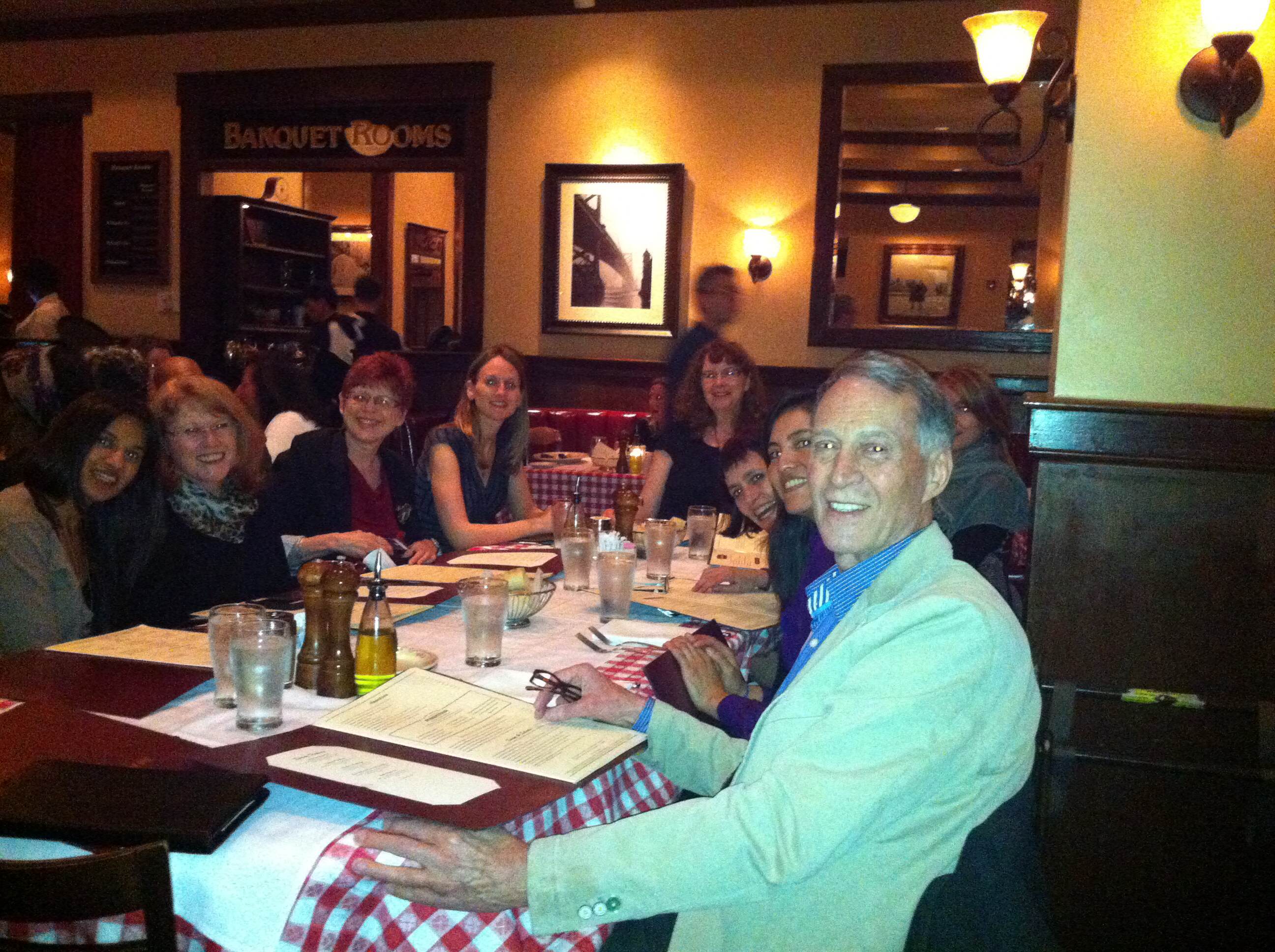
A relaxing dinner with our research group, Becoming Teacher Educators.

photo4

Finally, a photo from the museum district which is looking south on Benjamin Franklin Parkway. I was standing on the iconic steps where Rocky trained while taking this photo!

photo2-3

Replacing Textbooks with Flipboard

flipboardOne of my(Pooja) favourite, and most used, apps on my smartphone is Flipboard. If you don’t have it, download it now! It’s free, it’s fun, and Jeff Utecht (educator, blogger, and author) believes it could revolutionize the textbook. Utecht calls Flipboard’s magazine a “game changer” in the classroom because the students can easily help contribute to content:

I want students to have the ability to add content to their “textbook” as well. Content that we can discuss in the classroom, that can spark conversation…the real reason we come together…to be social. What if we could have all the students in a class adding to the “textbook” have them find things that interest them on a given topic and allow them to “flip” that into our “textbook” as well. Flipboard allows that too…where you can invite others to add to your Flipboard magazine.

 Utecht also explained how when using Flipboard along with social media a real time “class magazine” could be created:

…The class magazine (aka textbook) becomes part of that but so does other things that interest them. Also…..because you can search a twitter hashtag and add that to your Flipboard. A class hashtag now becomes part of the conversation. Where kids can tweet something, hashtag it with something like #engp1ju (English Period 1 Jeff Utecht) and have all that content in their new “textbook” as well.

 I think this a wonderful way to re-imagine the textbook. I will attempt to co-create a Flipboard magazine with my class and report back! Happy “flipping!”

Read more here:

http://www.thethinkingstick.com/flipboard-as-a-textbook-replacement/


Teaching Social Justice Through Action

j4mw

Last week at the 22nd Annual Labour Fair my (Pooja) class attended several sessions, but one profoundly affected us all. Activist Chris Ramsaroop from Justice 4 Migrant Workers (J4MW) came in and spoke to us about issues migrant workers in Canada face such as a lack of health benefits, sub-par living conditions, and low hourly wages. For many, this was the first they had heard about migrant workers in Canada. And so, many were surprised to learn some of the unsettling history around migrant workers and human rights violations.

To deepen our awareness on the issue, the following day we watched Min Sook Lee’s documentary “El Contrato.” This heart-wrenching documentary gave faces and narratives to the cases Ramsaroop spoke about the previous day. Students were deeply moved by the documentary, asking after:“What can we do?”; “How can we show we care?”

Wanting to take action, a moved student looked through the J4MW website and found there was something we can do: The J4MW group is looking for court support on Tuesday, March 25, 2014 (today) regarding migrant workers access to healthcare. To demonstrate support and solidarity, the J4MW wants to fill up the open court at Osgoode Hall to send a message. My class, along with two other sections eager to attend, will be in attendance at the court today.

I have deviated from my curriculum to make room for this issue my students (and I) have come to care so passionately about. I’ve seen students utilize an extensive range of literacies over just one week: they have organized themselves into groups to get to Osgoode Hall and back; they have conducted research on previous cases related to migrant workers’ access to healthcare in Ontario; and they have critically thought and discussed what it means to buy “local” produce in Ontario.

To learn more about the provincial court hearing today at Osgoode Hall, check out the link below:

http://j4mw.tumblr.com/post/80321298359/defend-migrant-workers-access-to-healthcare-in-ontario?utm_content=buffer9bc1c&utm_medium=social&utm_source=twitter.com&utm_campaign=buffer

If you haven’t had the opportunity to watch “El Contrato,” I  highly recommend watching it. Below is a synopsis and link to the documentary:

This documentary from Min Sook Lee (Tiger Spirit) follows a poverty-stricken father from Central Mexico, along with several of his countrymen, as they make their annual migration to southern Ontario to pick tomatoes. For 8 months a year, the town’s population absorbs 4,000 migrant workers who toil under conditions, and for wages, that no local would accept. Yet despite a fear of repercussions, the workers voice their desire for dignity and respect.a poverty-stricken father from Central Mexico, along with several of his countrymen, as they make their annual migration to southern Ontario to pick tomatoes. For 8 months a year, the town’s population absorbs 4,000 migrant workers who toil under conditions, and for wages, that no local would accept. Yet despite a fear of repercussions, the workers voice their desire for dignity and respect.

https://www.nfb.ca/film/el_contrato

The Wikipedia Gender Gap

Wikipedia is  believed, by many, to be a democratic model of content creation because of WIKIit’s design which allows anyone to create/edit content. While listening to CBC Radio’s Spark, I (Pooja) learned that Wikipedia suffers from a severe gender gap. In fact, a study in 2011 conducted by the Wikimedia Foundation, found that only 13% of Wikipedia contributors were women, making men the overwhelming contributors to Wikipedia.
Sue Gardner, the Executive Director of the Wikimedia Foundation, uses comments posted by women on articles related to the wiki gender gap to explain reasons women do not contribute more to Wikipedia:

1)     Some women don’t edit Wikipedia because the editing interface isn’t sufficiently user-friendly.

2)     Some women don’t edit Wikipedia because they are too busy.

3)     Some women don’t edit Wikipedia because they aren’t sufficiently self-confident, and editing Wikipedia requires a lot of self-confidence.

4)     Some women don’t edit Wikipedia because they are conflict-averse and don’t like Wikipedia’s sometimes fighty culture.

5)     Some women don’t edit Wikipedia because the information they bring to Wikipedia is too likely to be reverted or deleted.

6)     Some women don’t edit Wikipedia because they find its overall atmosphere        misogynist.

7)     Some women find Wikipedia culture to be sexual in ways they find off-putting.

8)     Some women whose primary language has grammatical gender find being addressed by Wikipedia as male off-putting.

9) Some women don’t edit Wikipedia because social relationships and a welcoming tone are important to them, and Wikipedia offers fewer opportunities for that than other sites.

Like many, when I want to learn the basics about anything, Wikipedia is often the first place I go. However, before listening to the Spark radio show on Sunday, it never crossed my mind to edit or contribute to a Wikipedia page. Some of the reasons Gardner presented resonate with me, while others not at all. So what is it that’s keeping me (and you) from Wiki’ing?

Listen to CBC Radio Spark on the Wikipedia Gender Gap:

http://www.cbc.ca/spark/blog/2014/03/16/wiki-gender-gap/

Read Sue Gardner’s blog here:

http://suegardner.org/2011/02/19/nine-reasons-why-women-dont-edit-wikipedia-in-their-own-words/

The Danger of a Single Story

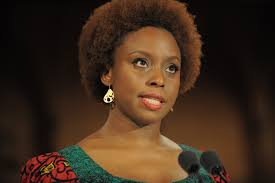
When engaging with students about Media Literacy, I (Pooja) often like to begin with novelist Chimamanda Ngozi Adiche’s powerful TED talk entitled The Danger of a Single Story. Through the use of her own narrative, Adiche speaks about the prevalence of a “single story” or the dominant culture portrayed throughout most school curriculums. Adiche shares the following memory of being taught a single story:

At about the age of seven … I wrote exactly the kinds of stories I was reading: All my characters were white and blue-eyed, they played in the snow, they ate apples, and they talked a lot about the weather: how lovely it was that the sun had come out. This despite the fact that I lived in Nigeria; we didn’t have snow, we ate mangoes, and we never talked about the weather, because there was no need to.

Adiche speaks about the impacts the single story has on an individual, on a community, and on society at large. While a young school girl in Nigeria, Adiche recalls only reading authors from the West. Having never encountered the works of an African author or seeing people like her appear in books, she believed she could not (or should not) be a writer.  She asserts that when we receive only one perspective on anything it creates stereotypes, “and the problem with stereotypes is not that they are untrue, but that they are incomplete. They make one story become the only story.”adiche

This TED talk sparks lively discussion in the classroom. Students often think back to their early schooling and many recall “single stories” they experienced. As a class, we capture all of these experiences on a large poster. As new text is introduced in the course we often refer back to this “single story” poster and discuss who’s stories are being represented in what we read/hear/see.