Clare and I (Lydia) have enjoyed sharing the creative and clever picture books of Oliver Jeffers with the student teachers in our literacy methods courses. Jeffers, an artist, illustrator and writer, notes, “my books are all about telling stories, and a lot of my art is about asking questions…They’re an excellent platform,” he says of picture books, “With novels, things are spelled out for you. And films, things are spelled out for you a lot more. Whereas picture books, it’s up to you how much you sit on a page, sit on an image, move at your own pace. And then you’ve got two distinct and varying sets of tools at your disposal, that weave in and out of each other to create this middle ground. That’s the secret ingredient, I think, that’s what makes them such a fantastic vehicle for storytelling.” (National Post Feb 2013). 
Tag Archives: Reading
A Compelling Novel
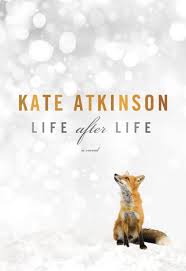
I (Lydia) have been reading and enjoying the novel Life After Life by Kate Atkinson. The novel invites readers to consider the question: What if you could live again and again until you got it right? This premise is explored through the experiences of the Todd family set against the backdrop of two world wars. Atkinson plays with narrative structure and time by repeatedly re-ordering the past and the present, as protagonist Ursula Todd and others supporting characters experience deaths, near deaths, and frequent chances to begin life anew. Each time the author reimagines one of these lives, the reader is provided with a glimpse into how the alternate choices made by a character can profoundly shift circumstances and outcomes. The novel could be read as book about the practice of writing, the practice of reading, and the complex relationship forged between author and reader. The novel repeatedly reminds the audience of the multiple choices an author makes when weaving together a narrative, and the conscious choices a reader makes to commit, or not, to the path outlined by the author. Overall, the novel provides a compelling and worthwhile read.
“Everything Changes When You Read”
The Guardian published an edited version of a lecture Neil Gaiman delivered as part of the Reading Agency’s annual lecture series. In the lecture Gaiman makes an impassioned argument for the importance of libraries and the benefits of reading fiction. He compellingly notes, “prose fiction is something you build up from 26 letters and a handful of punctuation marks, and you, and you alone, using your imagination, create a world and people it and look out through other eyes. You get to feel things, visit places and worlds you would never otherwise know. You learn that everyone else out there is a me, as well. You’re being someone else, and when you return to your own world, you’re going to be slightly changed”.


Book Clubs as a Model
This is the 20th anniversary of my book club. Yes we have been together for 20 years. We had an anniversary party and had cupcakes! (Much more on my book club in future posts.) I think there have been two essential ingredients for the success of the book club: our sense of community and our engagement with books. I am coding transcripts of our literacy/English teacher educators and a number note that their student teachers do not like to read. I have found in my research on student teachers that many stated that they had loved reading in elementary (primary) school but by the time they got to secondary school, there was so much prescribed reading (usually textbooks) that they had no time to read for pleasure and in turn, lost their love of reading. This pattern continued throughout their university years. In my literacy courses in the preservice program I talk a lot about engagement with text and the importance of pleasure og reading. Perhaps, we need to take some lessons from book clubs to ensure that our students do not lose their love of reading — community of readers and joy. I think that it is very hard to be a literacy/English teacher if you do not like to read and do not find reading as engaging.
 Literacy Teaching and Teacher Education