I (Cathy) instruct part-time at Brock University. Many of my mid-term evaluations from my pre-service students read, “Please, tell more stories”. It made me laugh, but it made a point. We all love stories, no matter what our age: family stories; folktales from another culture; scary stories… it doesn’t matter. So today, in our first classes for 2014 I focused on storytelling, but turned the tables somewhat and encouraged my student teachers to be the tellers. They were asked to share personal stories about their teaching practicum, which they had completed just before the winter break. I started us off by sharing a story about a disastrous placement I experienced many years ago when I was a student teacher. The flood gates were opened. My, oh my, such stories! Hilarious stories about indignant kindergardeners; touching stories about tough grade eight boys weeping because they thought they had hurt the student teacher’s feelings; frightening stories about overly demanding associate teachers; and joyous stories about building up deflated ELL students. The passion in the room was palpable; it glowed in their eyes, exuded in their hand gestures and spilled about the room with the rise in the decibel levels. Clearly, they loved working with the kids, the learning (good and bad) and the chance to make a difference. They loved teaching, and even in this climate of little prospects of obtaining a teaching position for a few years, they were exactly where they belonged. And so was I. Cathy
Monthly Archives: January 2014
Winter Clothing is a Basic
 Many of us in North America are enduring the coldest weather in decades. This morning it is -39 Celsius (= -40 F). Bone chilling does not even begin to describe the experience of being out in this weather. Whenever we have frigid weather like this I recall my time as a classroom teacher. I taught in very high needs schools and when winter roared in, many of the children suffered terribly because they did not have adequate winter clothing. Last night on Chris Matthews’ show, Hardball, on MSNBC http://www.msnbc.com/hardball/watch/the-need-to-sustain-the-social-safety-net-108521539760
there was talk about the American Congress wanting to end welfare benefits. All those politicians who vote to end or reduce welfare benefits they should visit an urban school in the depths of winter and tell some children that they do not deserve a winter coat and mittens.
When I was a teacher, every year I would go to children’s clothing stores and beg for winter gear (coats, mittens, boots) for my students who were so inadequately dressed. Never once did I leave a store empty-handed. Many of the teachers on staff engaged in similar missions and many who were moms or dads would bring in winter clothes that their own children had out-grown. So those politicians who want to micro-manage teachers and impose an array of standards should accompany those teachers to children’s stores to beg for donations. I am sure this reality-check would have a real influence because they would learn what teaching is all about. Their view that teachers need to be told what to do and should be penalized for not focusing solely on the “basics” might change. Aren’t winter clothes a basic? I think so. Stay warm! Clare
Social Justice through Activism in Mumbai
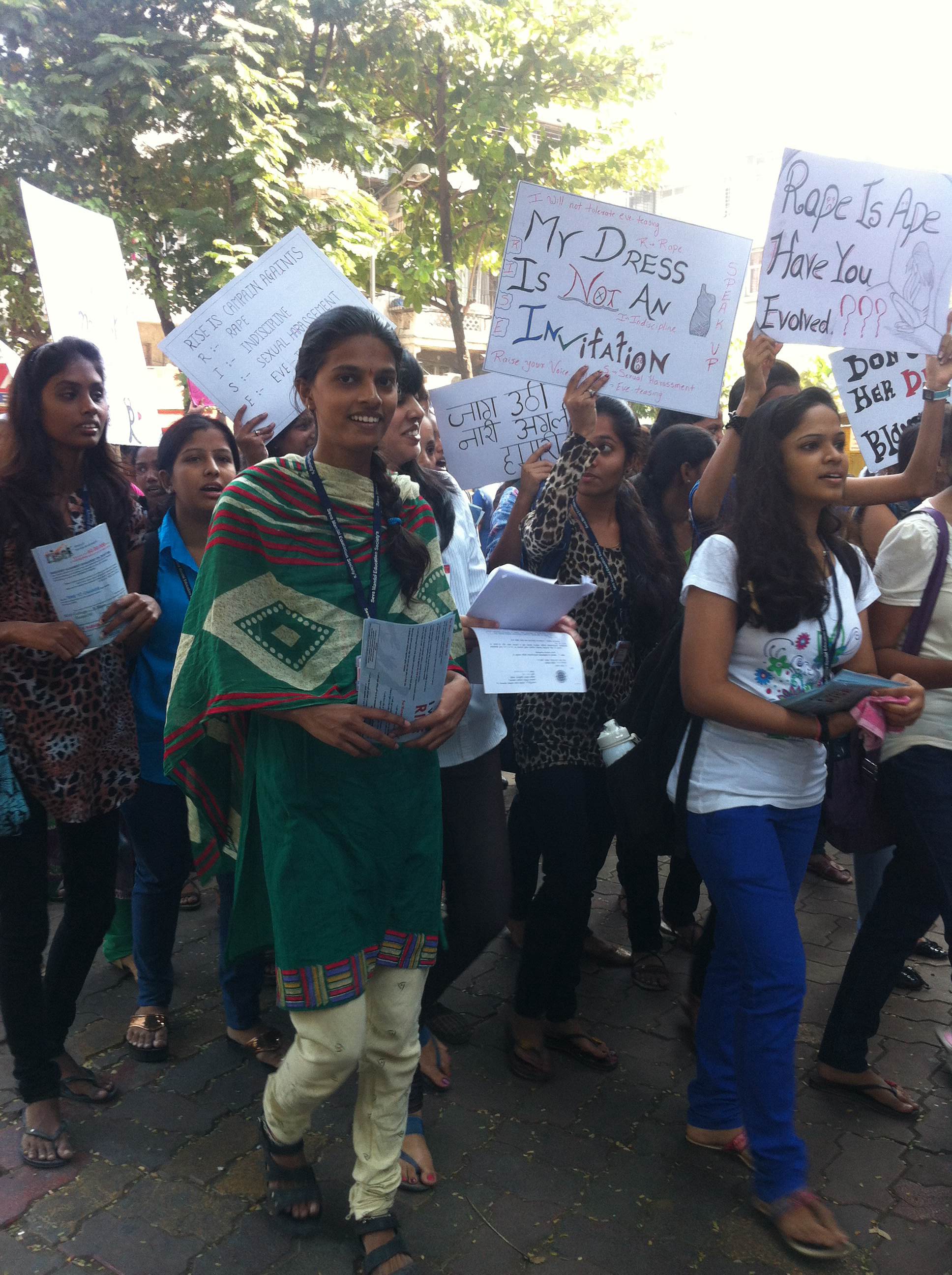 While I (Pooja) was only in Mumbai, India for two short weeks, I was able to observe (and participate in!) acts of social justice through activism. I was pleased to notice so many young women in organizational and leadership roles.
A week before I had arrived the Indian Supreme Court had reinstated a law criminalizing acts of homosexuality (Section 377 in the Indian Penal Code). I, along with many others, was shocked. This was a huge step backwards for India and its people, in my opinion. Within a matter of days rallies were organized all over India to protest. One of the major rallies was held in the park around the corner from where I was staying. Although the news of Section 377 was truly saddening, I was uplifted to see the youth organize themselves so poignantly. This rally received a lot of coverage and gave hope back to many who had been personally affected by this decision. Below is a link with some images capturing the spirit of the protest in Matunga, Mumbai:
A few days later, while taking a morning walk, I passed by a large group of young girls  protesting against the treatment of women in India. Over the past year, media sources in India had shed light on a few horrific rape cases from around India. I asked one of the young women protesting what had inspired them to take this injustice upon themselves. She told me they had organized themselves because they wanted to have their voices heard and their message conveyed: “We are not going to stand for the mistreatment of any woman, anywhere.” For the past week they got together, outside of school hours, to make signs and spread the word. In total there were about 100 young women protesting. They had made there message clear. They stood in solidarity with women all across India. Pooja
New Business Model for Education: Respecting Teachers
There is a great article in the New York Times magazine today, A Ready-To-Assemble Business Plan Adam Davidson
http://www.nytimes.com/2014/01/05/magazine/thinking-outside-the-big-box.html?ref=magazine&_r=0
It reports on studies done on “how to make low-paid work more rewarding for employees and employers alike.” Zeynep Ton argues that “Even the most coldhearted, money-hungry capitalists ought to realize that increasing their work force, and paying them and treating them better, will often yield happier customers, more engaged works, and – surprisingly – larger corporate profits.” Although the article is about workers in big box stores, we think that there is relevance for the way we treat teachers. If we treated teachers with more respect (as they do in countries like Finland), have more fully-staffed schools, and pay teachers a decent (competitive) salary rather than trying to “teacher proof” the curriculum and impose draconian measures on them (pay raises linked to student achievement on standardized test) we may actually improve education! Perhaps, it is time to flip the approach from controlling teachers to respecting and supporting them. Let’s try this experiment in 2014! Clive and Clare
Happy Birthday Clive

 Literacy Teaching and Teacher Education