Monthly Archives: March 2014

The Wikipedia Gender Gap

Wikipedia is  believed, by many, to be a democratic model of content creation because of WIKIit’s design which allows anyone to create/edit content. While listening to CBC Radio’s Spark, I (Pooja) learned that Wikipedia suffers from a severe gender gap. In fact, a study in 2011 conducted by the Wikimedia Foundation, found that only 13% of Wikipedia contributors were women, making men the overwhelming contributors to Wikipedia.

Sue Gardner, the Executive Director of the Wikimedia Foundation, uses comments posted by women on articles related to the wiki gender gap to explain reasons women do not contribute more to Wikipedia:

1)     Some women don’t edit Wikipedia because the editing interface isn’t sufficiently user-friendly.

2)     Some women don’t edit Wikipedia because they are too busy.

3)     Some women don’t edit Wikipedia because they aren’t sufficiently self-confident, and editing Wikipedia requires a lot of self-confidence.

4)     Some women don’t edit Wikipedia because they are conflict-averse and don’t like Wikipedia’s sometimes fighty culture.

5)     Some women don’t edit Wikipedia because the information they bring to Wikipedia is too likely to be reverted or deleted.

6)     Some women don’t edit Wikipedia because they find its overall atmosphere        misogynist.

7)     Some women find Wikipedia culture to be sexual in ways they find off-putting.

8)     Some women whose primary language has grammatical gender find being addressed by Wikipedia as male off-putting.

9) Some women don’t edit Wikipedia because social relationships and a welcoming tone are important to them, and Wikipedia offers fewer opportunities for that than other sites.

Like many, when I want to learn the basics about anything, Wikipedia is often the first place I go. However, before listening to the Spark radio show on Sunday, it never crossed my mind to edit or contribute to a Wikipedia page. Some of the reasons Gardner presented resonate with me, while others not at all. So what is it that’s keeping me (and you) from Wiki’ing?

Listen to CBC Radio Spark on the Wikipedia Gender Gap:

http://www.cbc.ca/spark/blog/2014/03/16/wiki-gender-gap/

Read Sue Gardner’s blog here:

http://suegardner.org/2011/02/19/nine-reasons-why-women-dont-edit-wikipedia-in-their-own-words/

St. Patrick’s Day

Today is St. Patrick’s Day – an Irish holiday. St. Patrick’s day is a significant day here in Toronto and includes a big parade, people wear Green, restaurant and pubs turning themselves into Green enterprises, classrooms talking about and celebrating all that is Green and Irish.  What began as a religious holiday is now a festive c Image Shamrock_with_Pipeelebration in many parts of the world.
St. Patrick’s Day is about St. Patrick, the Apostle of Ireland. St. Patrick is credited for bringing Christianity to Ireland. The shamrock is what St. Patrick used to illustrate the Holy trinity.  March 17th is believed to be the day St. Patrick died.
Thinking about schools and classrooms, should we teach St. Patrick’s Day from a perspective other than a festive celebration? Why is it a prominent celebration here in Canada?  How is it that Irish and other ethnicities alike rejoice in St. Patrick’s Day? When I taught in the public schools we encouraged students to dress in Green, we had a parade through the halls of the school, we read books about St. Patrick’s day and Ireland, and had several activities (arts, crafts, writing) to honour the celebration. Yet not once do I recall and inquiry or examination of what the Day represents both historically and for today.  What are the roles and responsibilities of teachers when it comes to celebrations and religious based traditions? In Toronto, Christmas has been the hotly debated and accommodated celebration for decades. What about the celebrations that are not framed in religion and yet are still entrenched in identity and power? Do we blindly and happily engage in the happiness and celebration without thought to the messages of exclusion and power we send when we honour one group and not another? Or do we engage in the often burdensome experience of exposing the inequities of such celebrations? Or, do we do nothing at all?
In an interesting article by Sallie Marston (1989), “Public rituals and community power: St. Patrick’s day parades in Lowell, Massachusetts, 1841–1874”, Marston states, “parades and other forms of mass public ritual are better characterized as demonstrations of community power and solidarity and serve as complex commentaries on the political economy of urban-industrial social relations”.  Perhaps a safe and productive space for exploring the ‘power’ of celebrations is better served in teacher education classrooms. Teacher educators who take a critical stance in their practice raise consciously engaging issues and connect social theories to classroom practice and student learning. Yiola

Academics in Picture Books: Mad Scientist Stereotype

Yiola’s post yesterday commented on the positive impact of a children’s book. Today I Mad scientist(Clare) want to talk about negative images in children’s books. I came across Melissa Terras’ fabulous research on how academics are illustrated in pictures books. Oh goodness! Academics are typically presented in a very unflattering light (old, male, a bit mad). These stereotypes do damage to our reputation with the general public and are definitely not a positive image we want to present to children. Below are some of the findings from her extensive research which I found to be frightening and discouraging. Check out Melissa’s blog for the entire article: http://melissaterras.blogspot.co.uk/2014/02/male-mad-and-muddleheaded-academics-in.html

What are academics in children’s books like?

The 108 academics found consist of 76 Professors, 21 Academic Doctors, 2 Students, 2 Lecturers, 1 Assistant Professor, 1 Child, 1 Astronomer, 1 Geographer, 1 Medical Doctor who undertakes research, 1 researcher, and 1 lab assistant. In general, the Academic Doctors tend to be crazy mad evil egotists (“It’s Dr Frankensteiner – the maddest mad scientist on mercury!”), whilst the Professors tend to be kindly, but baffled, obsessive egg-heads who dont quite function normally.
The academics are mostly (old, white) males. Out of the 108 found, only 9 are female: 90% of the identified academics are male, 8% are female, and 2% have no identifiable gender (there are therefore much fewer women in this cohort than in reality, where it is estimated that one third of senior research posts are occupied by women).  They are also nearly all caucasian: only two of those identified are people of colour: one Professor, and one child who is so smart he is called The Prof: both are male: this is scarily close to the recent statistic that only 0.4% of the UK professoriat are black. 43% of those found in this corpus are are elderly men, 33% are middle aged (comprising of 27% male and 6% female, there are no elderly female professors, as they are all middle age or younger). The women are so lacking that the denoument of one whodunnit/ solve the mystery/ choose your own adventure book for slightly older children is that the professor they have been talking about was actually a woman, and you didn’t see that coming, did you? Ha!
Most of the identified academics work in science, engineering and technology subjects. 31% work in some area of generic “science”, 10% work in biology, a few in maths, paleontology, geography, and zoology, and lone academics in rocket science, veterinary science, astronomy, computing, medical research and oceanography.
The names given to the academics are telling, with the majority being less than complimentary: Professor Dinglebat, Professor P. Brain, Professor Blabbermouth, Professor Bumblebrain, Professor Muddlehead, Professor Hogwash, Professor Bumble, Professor Dumkopf, Professor Nutter, and two different Professor Potts. There is the odd professor with a name that alludes to intelligence: Professor I.Q, Professor Inkling, Professor Wiseman, but those are in the minority.
Academics are routinely shown as individuals obsessed with one topic who are either baffled Mad scientistand harmless and ineffectual, or malicious, vindictive and psychotic, and although these can be affectionate sketches (“bless! look at the clueless/psychopathic genius!”) academics routinely come across as out of touch wierdos – and what is that teaching kids about universities?  In this age of proving academic “impact”, it might be not so bad for us to be able to show we were relevant to society? That there is more to academia than science? Or for the kids books I show my kids to have more positive and integrated representations of professors and academics? Perhaps this is not the role of kids books though, and I should just be telling my kids my own tales of academic derring-do. 

I think these images of professors can undermine our identity as academics. I certainly do not see myself as the mad professor!


“Pete the Cat” takes our home by storm!

Have you heard of Pete the Cat?  This children’s book series is a favourite in our (Yiola) Pete the Cathome. My 4 year-old daughter and my 2 year-old son love reading/singing along to the stories.

What I like about Pete the Cat ( by Eric Litwin) is its simplicity – the language is simple and the rhythm of the language is catchy. My son is able to connect to the repetition and sings along with joy.

I also like the messages in the stories – they call to issues of mental health and wellness. Pete the cat is calm and does not worry about some of life’s potential anxiety ridden experiences. For example, in “Pete the Cat Rocking in My School Shoes”, Pete is confronted with unfamiliar spatial settings, noisy lunchrooms and bustling playgrounds; common childhood circumstances that can cause anxiety. Yet Pete handles each situation with grace and confidence because, “it’s all good”.

In “Pete the Cat and His Four Groovy Buttons” Pete’s buttons keep popping off of his shirt, but Pete does not get upset because “it goes to show that stuff will come and stuff will go. But do we cry? Goodness no! We keep on singing”.

When reading “Pete the Cat: I love my white shoes”, Pete steps in a variety of ‘stuff’ that cause his white shoes, which he LOVES, to change colour but Pete does not get upset.

The moral of the story is: “no matter what you step in keep walking along singing your song because its all good.”

Check out a Pete the Cat story here:

http://www.youtube.com/watch?v=uuHzYssjjGc


Dialogic Talk

It’s a powerful statement about a book when while reading it, you implement a suggested strategy the next day in class.  That’s exactly what happened while I was reading Classroom Talk: Understanding dialogue, pedagogy and practice, by Edwards-Groves, Anstey and Bull (2014).  The premise- talk is the foundation to all learning- is not new, but the connections made to multiple theories (e.g. Theory of  Practice Architectures, Theory of Multimodality, Social Semiotic Theory) makes this book very current.

book

I particularly enjoyed the section on conversation vs dialogic talk.  I do believe in “vacating the floor” as is suggested in the book and letting the students discuss issues in small groups.  In one particular class I teach, I always allowed my students to select their own discussion groups, as these are university students and felt they needed to make their own choices.  However, many of the groups were not focused, they veered way off topic (or never addressed the topic at all) and some students were still not voicing their opinion (even after much community building).  The section on dialogic talk prompted me to reframe my concept of small group discussion.  It suggested conversation is an informal discourse where direction and end point of the talk are unclear.  This was pretty much where my students were with their discussions.  Dialogic talk, however, sought to engage all listeners and had more purpose.  Plus, dialogic talk was not as relaxed as conversation, it was driven.  I needed driven.  I wanted more engagement.

As a result, I immediately set up ‘Dialogue Groups’ with an assigned moderator, who ensured everyone’s opinion was invited and heard.  I decided who would go into each group (which I thought they might resent and discovered they preferred!).  For each discussion I provided prompt questions to get the talk started.  I also assigned a time keeper who kept the dialogue to the time limit and a recorder who kept general notes about what was discussed.  I honestly didn’t think this would be necessary at the university level, but the difference was incredible.  There was thoughtfulness in the answers.  The discussants were suddenly animated and energetic.  They were really listening to each other.   This was a small change, but it made a world of difference in how they were hearing and responding to each other.

Of course there are many other interesting and practical suggestions in the book.  The connections between theory and practice are very strong.  I highly recommend it.  This book was published by the Primary English Teaching Association of Australia (PETAA).  Check out their web site!

http://www.petaa.edu.au/

Public Education vs Charter Schools: The Battle in NYC

I (Clare) was watching Chris Hayes’ show (MSNBC – All in with Chris Hayes) the other New York City Buildingsnight. He had a really interesting segment on charter schools in NYC. His two guests (Brian Jones, NYC teacher, and James Merriman, NYC Charter School Center) had a “lively” discussion on the battle in NYC between the city and the charter school supporters. The teacher, Brian Jones, who argued passionately and articulately for public schools was outstanding. He laid out the reasons why we need to fully support public schools and the dangers of charter schools. Chris Hayes started the segment with a slick ad that is being used to support charter schools; this was cringe-worthy but it showed how all of us who support public education, need to stand up and make our voices heard. There are powerful (business) interests supporting charter schools which in itself raises a red flag for me.

Here is a link to the segment from Chris Hayes’ show: http://www.msnbc.com/all-in/watch/battle-wages-on-over-nyc-charter-schools-190737987700

Brian JonesIf you want to know more about Brian Jones check out:

·      The video The Inconvenient Truth Behind Waiting for Superman which he co-narrated http://vimeo.com/41994760

·      You Tube clip on the dangers of testing. https://www.youtube.com/watch?v=A73_keoCWo8

·      Or this Tumblr feed: http://brianpjones.tumblr.com/BrianJones

What’s in a word?

Sheryl Sandberg, the Chief Operating Officer of Facebook, has teamed up with the Girls Scouts USA to start a campaign that calls for a ban on the use of the word bossy in everyday language. Sandberg suggests that referring to girls as “bossy” can limit their full leadership potential.  The website of Sandberg’s non-profit organization LeanIn.Org states,

“When a little boy asserts himself, he’s called a “leader.” Yet when a little girl does the same, she risks being branded bossy. Words like bossy send a message: don’t raise your hand or speak up. By middle school, girls are less interested in leading than boys—a trend that continues into adulthood. Together we can encourage girls to lead. Pledge to Ban Bossy”. 

Sandberg’s “Ban Bossy” initiative has recruited an ensemble of spokeswomen, including Condoleezza Rice, Diane von Furstenberg, Jennifer Garner, Jane Lynch, and perhaps most notably megastar Beyoncé.

The Ban Bossy project highlights how a word can come to signify particular social and cultural dynamics.  While I do understand the goals driving this initiative it makes me uneasy when a group advocates for the banning of words no matter how well intentioned their motivations might be. Words carry with them a history, at times a history of injustice and painful disparities, but an awareness of history is critical if we hope to effect systemic change.  Perhaps, an alternative to “banning” is reclaiming words in an attempt to shift the negative connotations associated with a particular word. 

http://www.slate.com/blogs/xx_factor/2014/03/10/ban_bossy_sheryl_sandberg_and_the_girl_scouts_team_up_with_beyonc_but_miss.html

The Danger of a Single Story

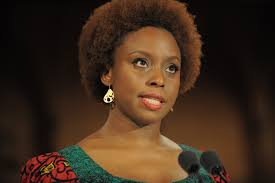
When engaging with students about Media Literacy, I (Pooja) often like to begin with novelist Chimamanda Ngozi Adiche’s powerful TED talk entitled The Danger of a Single Story. Through the use of her own narrative, Adiche speaks about the prevalence of a “single story” or the dominant culture portrayed throughout most school curriculums. Adiche shares the following memory of being taught a single story:

At about the age of seven … I wrote exactly the kinds of stories I was reading: All my characters were white and blue-eyed, they played in the snow, they ate apples, and they talked a lot about the weather: how lovely it was that the sun had come out. This despite the fact that I lived in Nigeria; we didn’t have snow, we ate mangoes, and we never talked about the weather, because there was no need to.

Adiche speaks about the impacts the single story has on an individual, on a community, and on society at large. While a young school girl in Nigeria, Adiche recalls only reading authors from the West. Having never encountered the works of an African author or seeing people like her appear in books, she believed she could not (or should not) be a writer.  She asserts that when we receive only one perspective on anything it creates stereotypes, “and the problem with stereotypes is not that they are untrue, but that they are incomplete. They make one story become the only story.”adiche

This TED talk sparks lively discussion in the classroom. Students often think back to their early schooling and many recall “single stories” they experienced. As a class, we capture all of these experiences on a large poster. As new text is introduced in the course we often refer back to this “single story” poster and discuss who’s stories are being represented in what we read/hear/see.

Re-Conceptualizing Multiculturalism in Terms of Diversity and Individual Identity

In a blog in January, I (Clive) argued against teaching multiculturalism in a way that leads to Ishrad Manjistereotyping, thus undermining students’ individual identity and well-being. In interviews this weekend after giving the 2014 Bluma Lecture, author and NYU professor Irshad Manji spoke eloquently of the dangers of a misguided approach to “multiculturalism,” expressing preference for terms such as “diversity,” “global citizenship,” and “individual identity.” In the Toronto Star she said:

Multiculturalism is about preserving a group mindset, which amounts to labelling. Diversity, on the other hand, is about…different points of view…. If you listen seriously to a new generation of Torontonians, multiculturalism’s time is done. Enough of hyphenated identities. The next stage in our city’s evolution is this: global citizenship. http://www.thestar.com/news/gta/2014/03/07/qa_irshad_manji_on_multiculturalism.html

Manji would like to see more emphasis on individual identity. In the Globe and Mail she commented:

[Mr. Trudeau] basically said national unity must be founded in one’s own confidence in one’s individual identity and from that we can begin to engage with others…. We don’t have that kind of multiculturalism today, in my view. What we have is more a fear of engaging based very much on feeling intimidated that I’m going to say something wrong or that somebody is going to be offended.

She is especially concerned about the impact of prevailing approaches to multiculturalism on vulnerable community members, notably women and children. In the Star she stated that “the vast majority of the world’s known cultures are patriarchal,” and in the Globe she said:

By giving rights to cultures, not just to individuals, what we wind up doing…is giving more power to those who are already powerful within certain communities. We give them more power to dictate what customs are to be respected and which customs are untouchable. The next time you’re told you must respect such and such a custom, ask yourself, “What does my respect for this custom do for the most vulnerable in that community?” And the most vulnerable tend to be women and children.

Whether or not the term “multiculturalism” has outlived its usefulness is something we should ponder; and if we’re too afraid to say it has, we prove Manji’s point. But whatever words we use, we can support Manji’s approach in teaching and teacher education by stressing the diversity and power differences within cultural communities, the commonalities across communities, and the importance of individual identity and well-being.

A Foot in Many Camps: Literacy Teacher Educators Acquiring Knowledge Across Many Realms and Juggling Multiple Identities

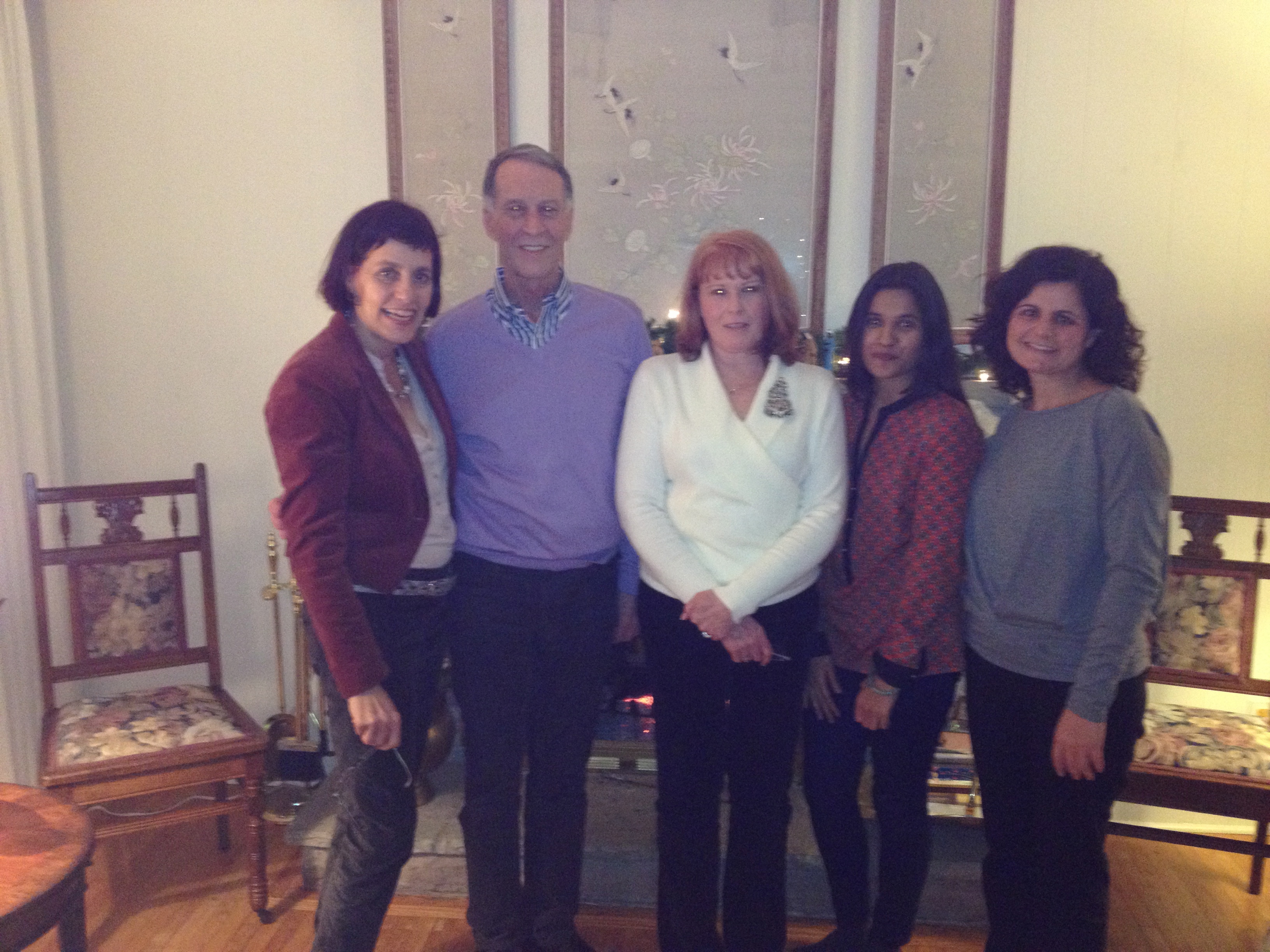
research teamFor those of you have been following this blog, you know we are conducting a study of literacy/English teacher educators in four countries (Canada, U.S., Australia, and UK). Our first paper from the study has recently been published in Journal of Education for Teaching 39(5), 534-540. The paper A Foot in Many Camps: Literacy Teacher Educators Acquiring Knowledge Across Many Realms and Juggling Multiple Identities is available through this link:  Foot In Many Camps

In the paper we describe how the teacher educators had a range of classroom teaching experience which they drew on in many ways. Most went far beyond simply telling stories about their previous work. All were heavily influenced by their own childhood experiences, which continue to affect their current work. Many felt that they needed to hold dual identities, teacher and academic, because they were still heavily involved in schools through their research and in-service activities. Several felt that there was a hierarchy in their department with those most removed from schooling at the highest tier. Most saw themselves in the field of literacy not teacher education and gravitate towards literacy-focused conferences and journals rather than those in teacher education. I (Clare) hope you find the paper interesting. We certainly have found this entire study fascinating.