Monthly Archives: April 2014

Photo Highlights from AERA 2014

The 2014 American Educational Research Association (AERA) conference took place this year in Philadelphia. I was able to attend some fascinating paper sessions, poster sessions, and symposiums during my time there. I also managed to make it to the memorable museum district area of Philadelphia. Here are some photo highlights below:

My dear friend and research colleague, Cathy Miyata, presenting her paper Negotiating Multiliteracies Pedagogy in International Preservice Teacher Education:

photo6

A fascinating panel titled Defending, Reforming and Transforming Teacher Education: The Future of Teacher Education in the United States. This panel’s members included Linda Darling-Hammond, Timothy Knowles,  Kwame Griffith, and Kenneth Zeichner.

photo3

An important symposium on ways teacher education programs around the world  are preparing preservice teachers for marginalized students. The symposium entitled Building Infrastructure and Capacity Research Innovations Worldwide That Prepare Teachers for 21st Century Schools That Service Marginalized and Poor Students in Transnational Contexts. Below is a photo of Dr. Clare Kosnik sharing findings from our international study on Literacy Teacher Educators:

photo5

A relaxing dinner with our research group, Becoming Teacher Educators.
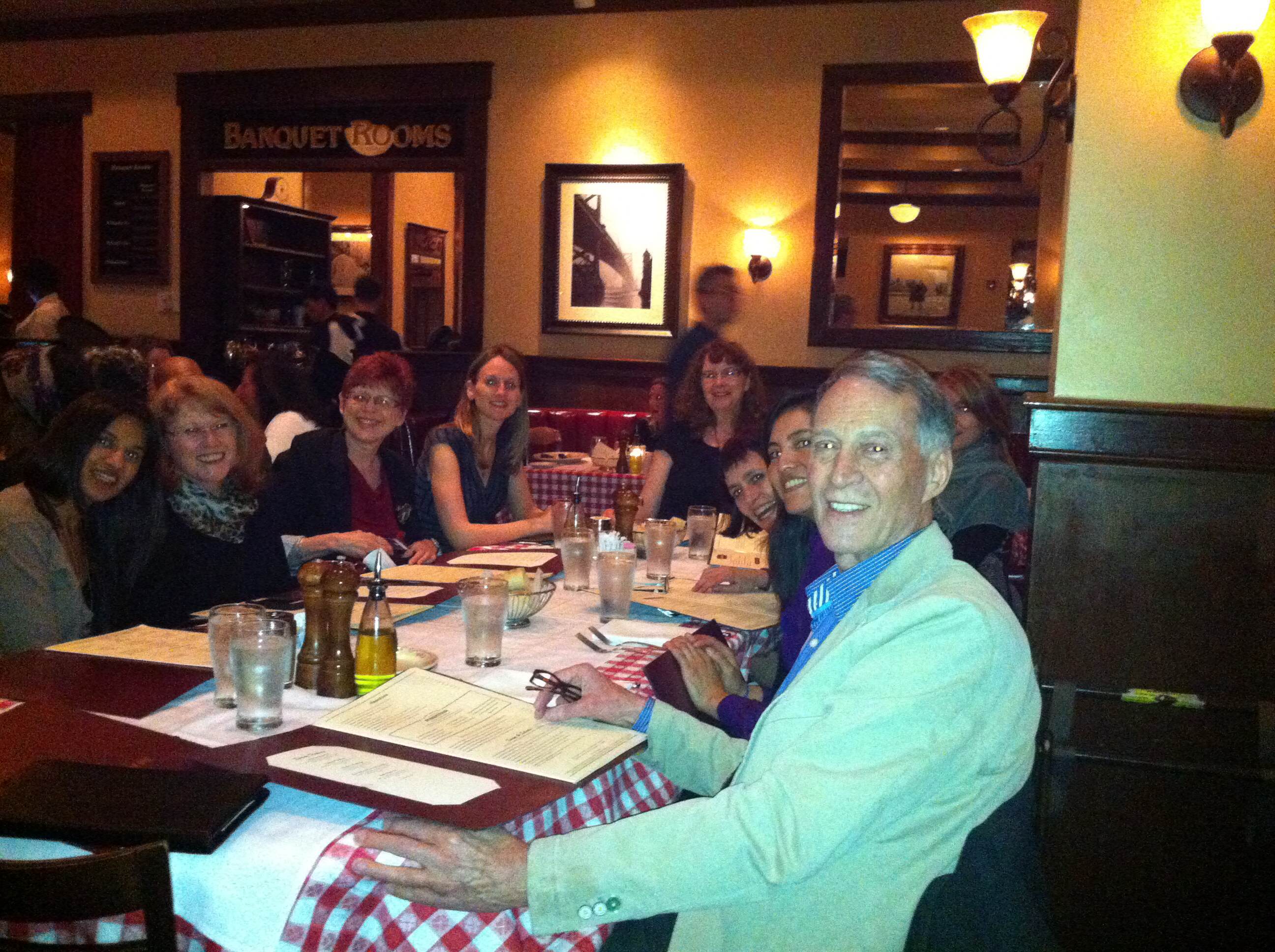
photo4

Finally, a photo from the museum district which is looking south on Benjamin Franklin Parkway. I was standing on the iconic steps where Rocky trained while taking this photo!

photo2-3

21st Century Learning and the Need to Shift Our Thinking

Several of our posts refer to 21st century learning, technology, multi-literacies and thinking about today’s student and world. I (Yiola) found this article from the Huffington post called: The Global Search for Education: Education and Jobs quite interesting. The article talks about the need for drastic changes to our Educational systems in order to meet the growing demands of the market place in the 21st century. Bottom line, technology is taking over many of the jobs people currently do and so we need to reconsider the skills we are providing to students. The article goes on to say that our traditional and current systems continue to develop linear thinkers and producers but what we really need to develop are individuals with:

the ability to initiate, discern, persevere, collaborate, and to solve problems creatively are the qualities most in demand today and will be increasingly important in the future. The problem is that our education system was designed, primarily, to teach the three R’s and to transmit content knowledge. We need to create schools that coach students for skill and will, in addition to teaching content. If we don’t make this transition quickly, a growing number of our youth will be unemployable at the same time that employers complain that they cannot find new hires that have the skills they need.

I tend to agree with the article however I raise two points for discussion:
1)   Teacher education programs do teach to the creative, inquiry-based modes of pedagogy. I certainly cannot speak for all programs but I am familiar with several and teacher educators do work hard to teach pedagogies that meet the needs of today’s learners. So, why then are classroom teachers not teaching in these ways? Or, are they?
2)   I have seen time and time again policies and actual changes take place at the Government level but once changes happen in schools it is often society at large that is in an uproar. For example, here in Ontario we have implemented Full Day Kindergarten (early years) and the program is designed to develop higher level thinking right from the start. This transition, while happening, has not been without significant reluctance from the general public. What then do we do?

For more considerations here is the full article:  http://www.huffingtonpost.com/c-m-rubin/the-global-search-for-edu_b_5084761.html?utm_hp_ref=email_share


Murmurations Prank?

I know April Fools just passed, but I (Cathy)  just had to share this with you.  My husband emailed me the  link below and I thought it was an internet prank.  In this age of photoshopping and creating a personalized zombie face, I simply didn’t believe it.  So, I Googled ‘murmurations’ and was delighted to discover there are dozens of videos depicting this spring phenomenon.  Live and learn.
Fascinating that this new digital age has made me so skeptical, but I guess that is being critical isn’t it?  Have a look and see how a natural phenomenon can be so amazing, it is hard to believe.

AERA

To All of Our Blog Followers,
Our team will be at the American Educational Research Association (AERA) for the next few days. So we will not be doing daily posts. If you are attending AERA please stop by one of our sessions and say hello. We will be back to our regularly posting next week.
Clare Kosnik, Clive Beck, Pooja Dharamshi, Cathy Miyata, Lydia Menna, and Yiola Cleovoulou

Striving for Equal Digital Opportunity

kids at computersAn article by Kristin Rushowy in the Toronto Star on April 1 reported that almost 60% of Toronto schools allow students to BYOD (bring your own device). http://www.thestar.com/yourtoronto/education/2014/04/01/byod_bring_your_own_device_now_in_most_ontario_schools_survey_finds.html

This indicates a trend. Not long ago the debate was whether it was “safe” for students to bring their smartphones or tablets: what if they did inappropriate things with them? Also, would students be distracted by their devices? At AERA two years ago I (Clive) attended a roundtable on just these issues.
What teachers have found (and many in our longitudinal study report this) is that, if rules are laid down and habits established, the potential problems can largely be overcome. Moreover, this process provides opportunities to teach students about digital responsibility, etiquette, etc.
The Star article focused rather on the question of equity: does BYOD increase the disparity between rich and poor students, or potentially reduce it? People for Education research director Kelly Gallagher-Mackay argues for the latter position, “as long as (boards) realize it’s not a level playing field, and consciously address that.”
While most school districts can’t afford to buy devices for everyone, they can make up the difference for students who don’t have them; and tech firms are often willing to help out. Rushowy reported: “Last year, the Peel board arranged for $55 tablets for families, and last month began a pilot project giving low-income families discounted refurbished computers.”
There will always be a stigma attached to needing help of this kind. But it seems better to tackle it head-on in the classroom rather than ignoring an inequality everyone knows about anyway. It’s also better to have devices in the classroom, provided we can find ways to make it work. The investigation continues.

Replacing Textbooks with Flipboard

flipboardOne of my(Pooja) favourite, and most used, apps on my smartphone is Flipboard. If you don’t have it, download it now! It’s free, it’s fun, and Jeff Utecht (educator, blogger, and author) believes it could revolutionize the textbook. Utecht calls Flipboard’s magazine a “game changer” in the classroom because the students can easily help contribute to content:

I want students to have the ability to add content to their “textbook” as well. Content that we can discuss in the classroom, that can spark conversation…the real reason we come together…to be social. What if we could have all the students in a class adding to the “textbook” have them find things that interest them on a given topic and allow them to “flip” that into our “textbook” as well. Flipboard allows that too…where you can invite others to add to your Flipboard magazine.

 Utecht also explained how when using Flipboard along with social media a real time “class magazine” could be created:

…The class magazine (aka textbook) becomes part of that but so does other things that interest them. Also…..because you can search a twitter hashtag and add that to your Flipboard. A class hashtag now becomes part of the conversation. Where kids can tweet something, hashtag it with something like #engp1ju (English Period 1 Jeff Utecht) and have all that content in their new “textbook” as well.

 I think this a wonderful way to re-imagine the textbook. I will attempt to co-create a Flipboard magazine with my class and report back! Happy “flipping!”

Read more here:

http://www.thethinkingstick.com/flipboard-as-a-textbook-replacement/