Yearly Archives: 2014

Creativity and the Curriculum

I (yiola) will admit that as a classroom teacher  – while I thought I was a good teacher of student  learning – I lacked creativity both in content and pedagogy. Recently, I came across this link:

30 Dad Jokes That Are So Bad, They’re Great

and now, as a more experienced (teacher) educator and reflective practitioner  what came to mind was, “wow… so many interesting ways to use this link and these beautiful images with the mandated Ontario curriculum”. For example, any grade and topic in the Social Studies curriculum could be applied: Grade 2: Communities Around the World; Grade 3: Living and Working in Ontario (a perfect opportunity to explore the various regions and compare and contrast their beauty); Grade 4: Physical Regions in Canada (exploring photography to “unearth” physical landscapes); Grade 6: Canada’s interactions with the Global Community (moving beyond the political and economic).  Social studies can be seamlessly linked to literacy and the more I explore multiliteracies the more inspired  I am to employ the visual and the aesthetic to develop meaning and understanding… and communication.  Imagine the Visual Arts lessons and opportunities front these images — ‘Hello group of 7″ — and colour, and perspective, and line and emotion.  And to grasp onto the beauty of what may be unfamiliar to students living in urban centres or familiar to those living in more remote regions to discuss lifestyles and Healthy Living from the Health and Physical Education curriculum.

Which ever way children chose to inquire,  creative opportunities and aesthetic resources may offer new and exciting opportunities for seeing the world and themselves.  This concept for teaching is more inspiring than how I recall teaching and learning (i.e. comparison worksheets of city life vs. rural life).

PS — I thought of my good friend Clive Beck as I enjoyed these beautiful images! I hope you enjoy them too.


Trivago Guy: Hot or Not?

It is interesting observing what captures the public’s interest. I (Clare) was inundated with Trivago Guycommercials for Trivago during the World Cup and the Winter Olympics. The commercial features a middle-aged man advertising the amazing features of Trivago (a travel website). I commented to Clive that I thought he was cool and much to my surprise he replied he thought he looked a little seedy. In the Globe and Mail today Sarah Hampson has a whole article on Tim Williams the Trivago Guy.Social media is buzzing about him with some saying he looks like he sleeps in his car (not good for a travel website) while others wonder about his small waist and beltless jeans. She notes that: “good or bad, Trivago Guy has people talking which is a measure of successful advertising campaigns.” Social media has catapulted Trivago Guy into fame.

Los Del RioIn the Toronto Star today there was an article about another unlikely media “darling” the Spanish duo Los Del Rio who sang the embarrassingly corny song, Hey Macarena. “They hit the jackpot in colossal fashion with one of the most infamous songs of all time” that became a staple for “every single wedding, sporting event, bar mitzvah, and other large social gathering on the planet.” Why did this happen? (and without social media).

What is the appeal of Trivago Guy or two “decidedly unfashionable middle-aged gents” crooning?  I am not sure but it sure is fun watching for the next hot “thing.” I think teachers could have a great time discussing with students who and what captures the public  interest. It would be interesting to hear teenagers’ views on Trivago Guy!


Prank it Forward

I (Cathy) had never heard of “Prank It Forward” until today.  It is heartwarming.  If you want to feel good about people this is long weekend, watch the following video.   https://www.youtube.com/watch?v=p2zUf06iy1A

This ‘prank’ reminded me of a project one of my students started last year in her classroom during her practice teaching.  She called it Spread the Joy.  Everyday she initiated an event that would make a student happy and challenged the class to spread the joy.  It was one of the most powerful things I have ever seen happen  in a classroom.   She turned the class around.

Big or small, giving a car or a compliment, we can make a difference.


Congratulations to Tim Fletcher

Congratulations to our friend and colleague Tim Fletcher on the publication of Self-Study in Physical Education Teacher Education which he co-edited Tim Fletcherwith Alan Ovens. Tim has a long-time commitment to the practice and study of health and physical education. Teaching at Brock University where he is an Assistant Professor and conducting research on the preparation of teachers to teach phys ed, he understands the complexity of the issues facing teachers and teacher educators. Helping children and youth acquire the skills and attitudes to lead a healthy and active lifestyle is not easy but is critically important. This text will help us think differently about preparing teachers to teach health and physical education.
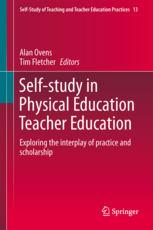
Here is a description of the book:Book cover

In this in-depth examination of self-study as a research methodology, an international selection of physical education scholars share their ideas and experiences and consider the value of self-study as a vector for highlighting the emerging conflicts, dilemmas, and debates currently developing in teaching and teacher education pedagogies. A vital new addition to Springer’s series Self-Study of Teacher Education Practices, the volume is divided into three sections assessing the significance of the approach itself, offering detailed subject-relevant case studies, and exploring the nuances and controversies attending the evolution of the methodology.
The contributors show how self-study enables reflexivity in pedagogical practice, a notable lacuna in current critical research, and at the same time they make the technique accessible to scholars of physical education wanting a practicable introduction to the subject. The analysis also explores the implications of applying self-study to pedagogy itself, to the curriculum, and to human movement and educational practice more generally. By embracing more organic, emergent notions of research practice and learning, the book achieves a broader and more inclusive survey of pedagogical work in physical education teacher education that fully acknowledges the complexities of the field. http://www.springer.com/education+%26+language/learning+%26+instruction/book/978-3-319-05662-3

Reading Choices

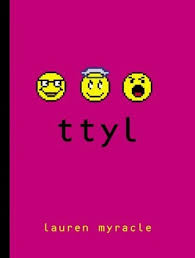
In general terms, my (Lydia) dissertation research examines the ways in which student teachers construct conceptions of literacy and enact literacy pedagogy when they view themselves as in conversation with a broader field of literacy (e.g. Multiple Literacies, New Literacy Studies). One aspect of this research considers how student teachers’ personal literacy practices inform their approach to literacy pedagogy. In some cases student teachers’ personal reading practices have been influenced by the interests and reading choices of the pupils they teach. These student teachers have often engaged with texts recommended by their pupils (e.g. graphic novels, young adult literature), and these shared texts become a space within which teacher and pupil connect. One of the student teachers participating in this research discussed the text ttyl written by Lauren Myracle, who has been referred to as a modern day Judy Blume. This young adult novel, which is part of a series, is written entirely in instant messages. Interesting, this best selling novel has been on the annual list of the “Most Challenged Books” released by the American Library Association. In other words, people have requested that this book be ban from libraries and schools “due to sexually explicit material and offensive language.” I plan to share this text with the student teachers in our literacy courses this year. I think it could contribute to an interesting conversation about text structure, style, controversies, and pupils’ diverse reading interests.

ttyl

“Too Fast For the Truth”

This made me (Pooja) laugh.  A New York Times Article from 1858 wonders if transatlantic telegraphs were necessary, or “too fast for the truth?”

“Superficial, sudden, unsifted,” is how news via telegraph were described in this article. Sound familiar!? I guess the more things change,  the more they stay the same.

telegraph2


Read Adrienne Lafrance’s article on the evolution of communication mediums here:

http://www.theatlantic.com/technology/archive/2014/07/in-1858-people-said-the-telegraph-was-too-fast-for-the-truth/375171/

Learning at the Children’s Museum, Madison WI

This summer my family traveled to Madison, Wisconsin USA.  I (yiola) found Madison to be a beautiful city filled with parks and bike paths, small shops and galleries. Among the many sites, we toured the capital building and the large farmer’s market on a sunny Saturday morning.  We also visited a most amazing place: The Children’s Museum. A three level building  on Hamilton St, just across from the capital building, the Children’s Museum is  a “hands on” facility where children can muck about and explore.

Included here is photojournalism to share our experience at the museum:

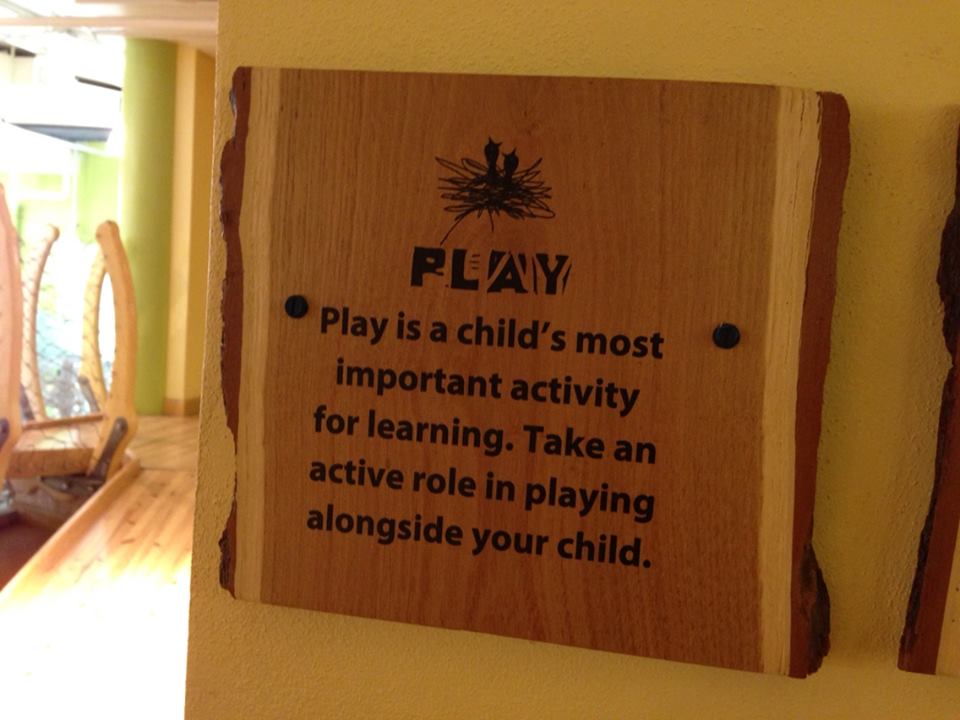
"Play"  as and for learning is the philosophy that guides the program at the Children's museum.
“Play”  as and for learning is the philosophy that guides the program at the Children’s museum.
My children Gallaway (age 3) and Sylvia Clare (age 4) gearing up to explore the museum.

Materials for exploring, creating, building and open, un-supervised spaces are provided for children of all ages.

10371638_10154215065530121_4022735163397165536_n

My son Gallaway urban planning.
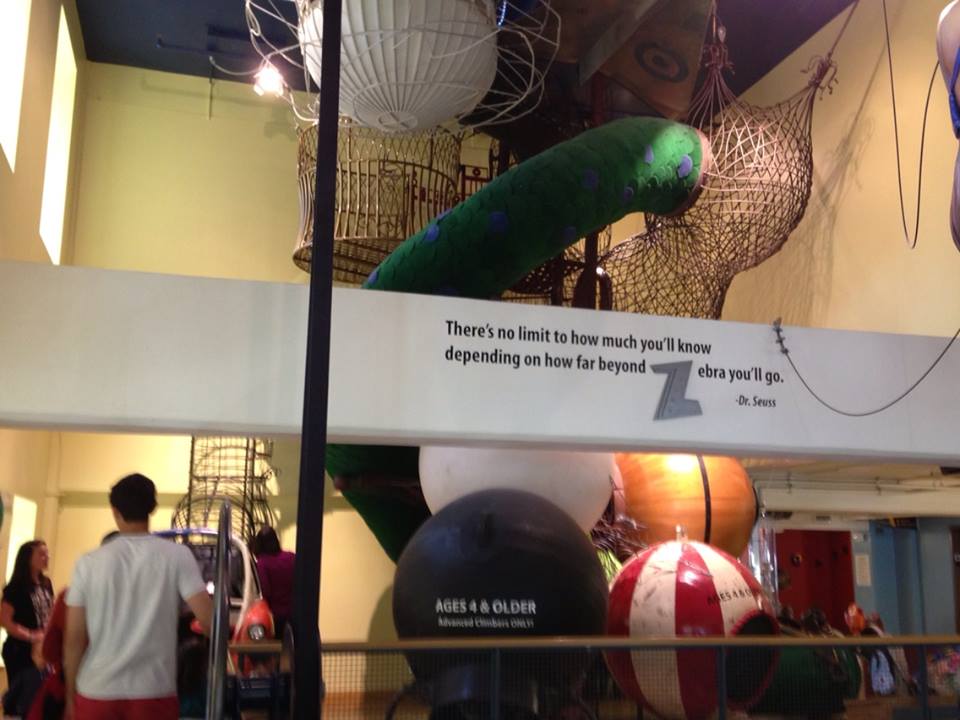
An enormous, creative indoor playground that includes climbers and slides.
touch the bark, see the leaves, read about the tree
Open the door, touch the bark, see the leaves, read about the tree.
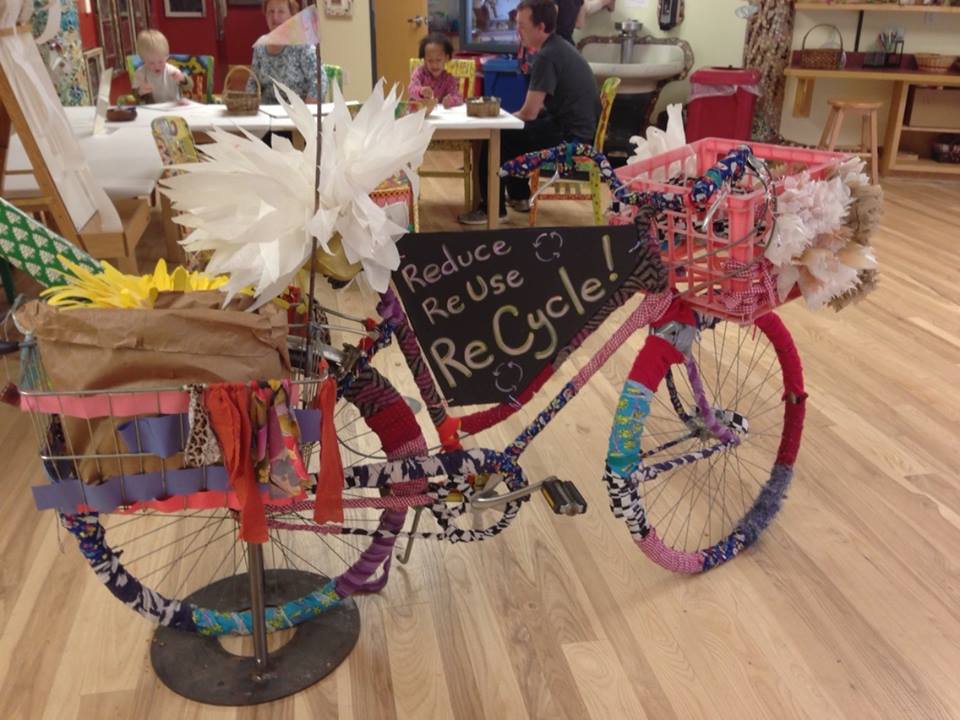
A large room focused on the Arts with several hands on activities (painting, weaving, exploring light, collaging)
A large room focused on the Arts with several hands on activities (painting, weaving, exploring light, collaging).

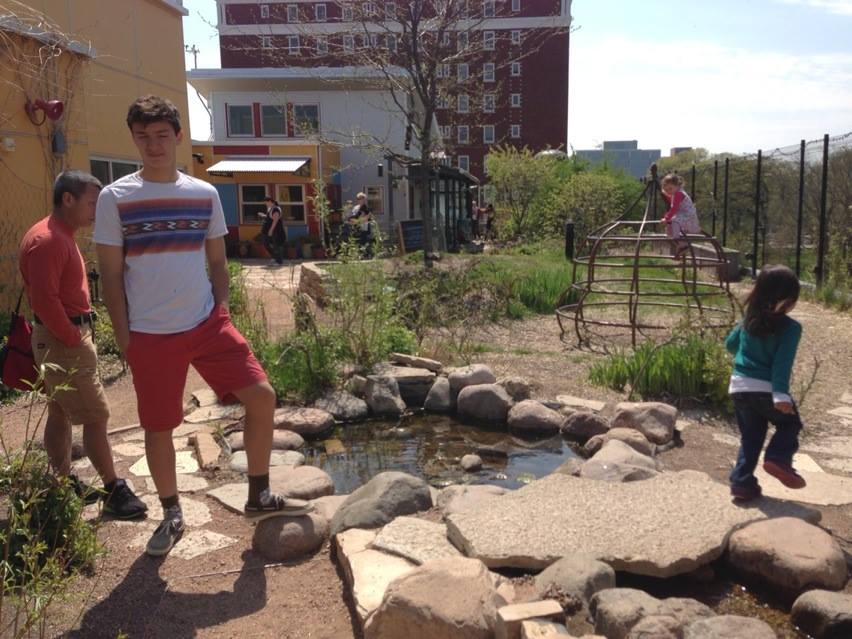
A roof top patio with animals, eco friendly systems and gardens.

10247450_10154215070500121_471084874711261325_n

We learned about training pigeons to fly away and return and how they were used as messengers
Training pigeons to fly away and return and how they were used as messengers.
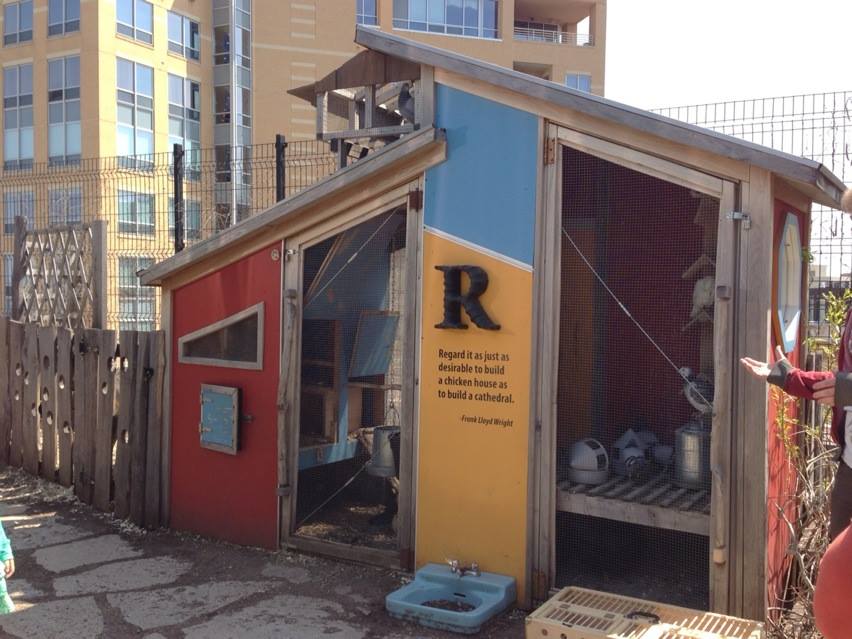
Architectural history
Political history
Political history
drumming in one of two historical huts
Sylvia Clare drumming in one of two historical huts
history of technology

From toddlers to adults there was so much to see and do at the Children’s Museum. I was inspired by the way the learning philosophy was placed in action. The Children’s Museum is a wonderful model for learning, literacy teaching and so much more.

Home

PS. For those who know Madison, WI you may agree that a stop at Ella’s Deli after the Museum was the icing on the cake that day!

http://www.ellasdeli.com


Teachers’ Contribution to Educational Inquiry

This past week I (Clive) had intense discussions with students in my Foundations of Curriculum graduate course; the topic was educational research and classroom-based teacher learning. Several were reluctant to accept that teachers are “researchers” and “knowledge generators” in an important sense.

I argued that teachers are in an excellent position to conduct inquiry because they are immersed in the classroom for ten full months, year after year: rarely do academics have such a rich context for educational research. They argued that teachers’ research methodology is not rigorous enough to produce genuine knowledge.

Thinking it over, I’ve decided to offer a compromise. I agree that education academics often have much to contribute because they are aware of other disciplines and other real-world contexts. Although they rarely have the same depth of educational experience as teachers, they often have greater breadth of knowledge in certain areas.

However, I will offer this compromise with three provisos:

(i)    Teachers’ inquiry is just as rigorous as that of academics, since they observe so carefully the processes and outcomes of their teaching: they have a vested interest in doing so.

(ii)  Teachers and academics have equal but somewhat different contributions to make to educational research.

(iii) Accordingly, the relationship between the two must be one of dialogue as equals, rather than “laying down the law” by one party or the other.

Of course, it is true that teachers could enhance their inquiry in certain ways; but the same is true of academics.

Teachers are not always conscious of what they have discovered through experience; it is often “implicit” knowledge. Hence, a major role of education academics is to study teachers and help make their insights explicit and available to others. But it is the teachers who discovered these insights and who must be given the credit.

I’ll try out this compromise on my students next week and see what they think!


How do you Know What To Blog About?

I (Clare) recently did a presentation to a group of teachers on a self-study I conducted with Connecting PeopleLydia Menna and Shawn Bullock on our efforts to integrate digital technology into my literacy methods courses. (Here is the powerpoint from that presentation. BERA + ECER-DT 2013in Dropbox) I talked about my initiatives which led to me showing how my efforts in my literacy teaching led to a greater use of digital technology in other parts of my life (e.g., using NVivo for data analysis). The success of my initiatives with my teaching gave me the confidence to take the plunge to do a website. My technical skills had improved and my identity shifted so that I now see myself as “digitally competent.” During the presentation I showed our website and one of the participants raised an interesting question: How do you get ideas for your blog? He recounted how he wanted to do a blog but did not know what to write about. I told him to just start! I believe that writing a blog is a different genre – it requires different writing skills than other forms of writing. Since we started this blog, I feel that my blog-writing skills have improved. I now focus on one topic in a blog; I am more comfortable sharing my insights; I will raise questions; I make links to other resources; and I no longer feel the blog needs to be perfect  (so what if there is a typo. We will survive.)  Blogging seems to have captured my interest and is a good match for me ( I have lots to say about education) and it is fun.  I keep a Word document with blog ideas which is always plentiful and when I come across something “interesting” one of my first thoughts is – Would that make an interesting blog? This thought is followed by – Would others be interested in this topic/issue? Doing our blog as a “team” has truly been the way to go. I have learned so much from the posts by my team (Cathy, Lydia, Pooja, Clive and our guest bloggers) about them personally and professionally. And their blogs give me ideas about what to write about.

I really see our blog as connecting with the broader education community which is social media at its best. Blogging is good for me because it gets me thinking critically and hopefully, our posts are of use to our readers.

Just for Fun- A Literacy Word Search

In the word search below, can you find…

1. The name of the theorist generally accredited with the origins of Social Constructivist Theory

2. The term used to identify a branch of linguistics which contends that meaning-making manifests through human interpretations of sign systems

3. The names of the two researchers accredited with constructing the four resource model

4. The term assigned to multiple modes of communication

5. The Literacy Theory that purports literacy and language are not neutral but political.

6. The name of a pedagogical approach designed by 10 scholars known as the New London Group in 1996

Scroll down for answers- but no peeking!


Z C X B N O L M R T Y Y I O P K
A C V N Q W R U T U J L A S D F
B V M N W E F L A S D F G H H J
Q Y W E M U L T I M O D A L O P
A G D G J K O I M N B V C X Z A
W O E T Y P U L U K J H G F D S
Z T X C V B N I M L H F D S A E
C S T G H K L T O U Y T E R W Q
V K N N L H O E I T R E W A Q P
R Y T Y U I P R I Z X C V B N M
Z L U K E M V A O P U Y T R E W
C X B N M L Q C R I T I C A L Q
Q W E R T Y U I I O P L K J H G
H G F D S A S E R T Y U I O M N
D F G H J K L S E M I O T I C S
Q S D C F R E E B O D Y C A T Y


Answers:  1.  VYGOTSKY 2.  SEMIOTICS  3.  LUKE, FREEBODY  4.  MULTIMODAL  5.  CRITICAL  6.  MULTILITERACIES