Yearly Archives: 2014

Reflecting on my time at the International Symposium for Digital Technology and Literacy/English Teacher Education

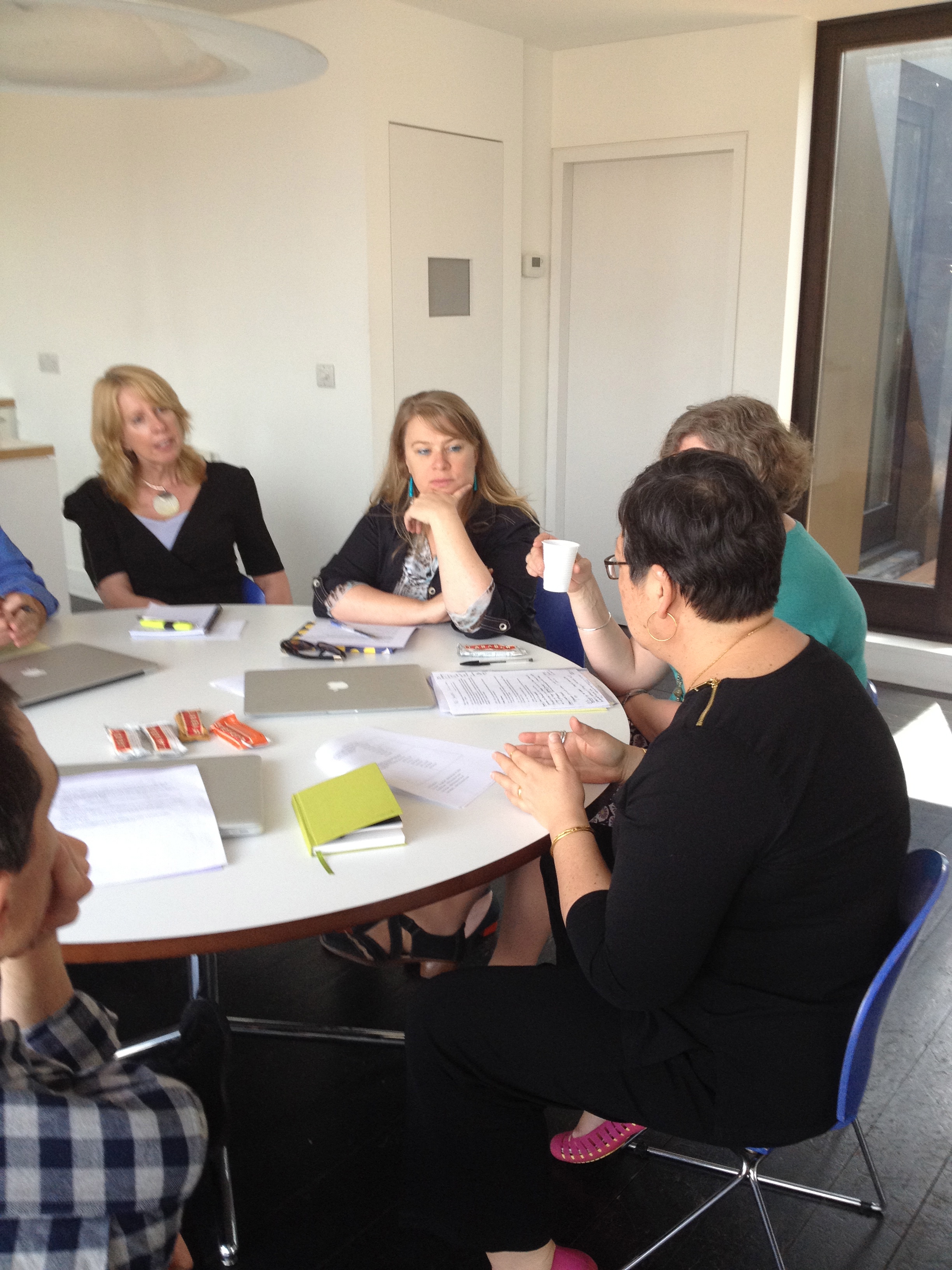
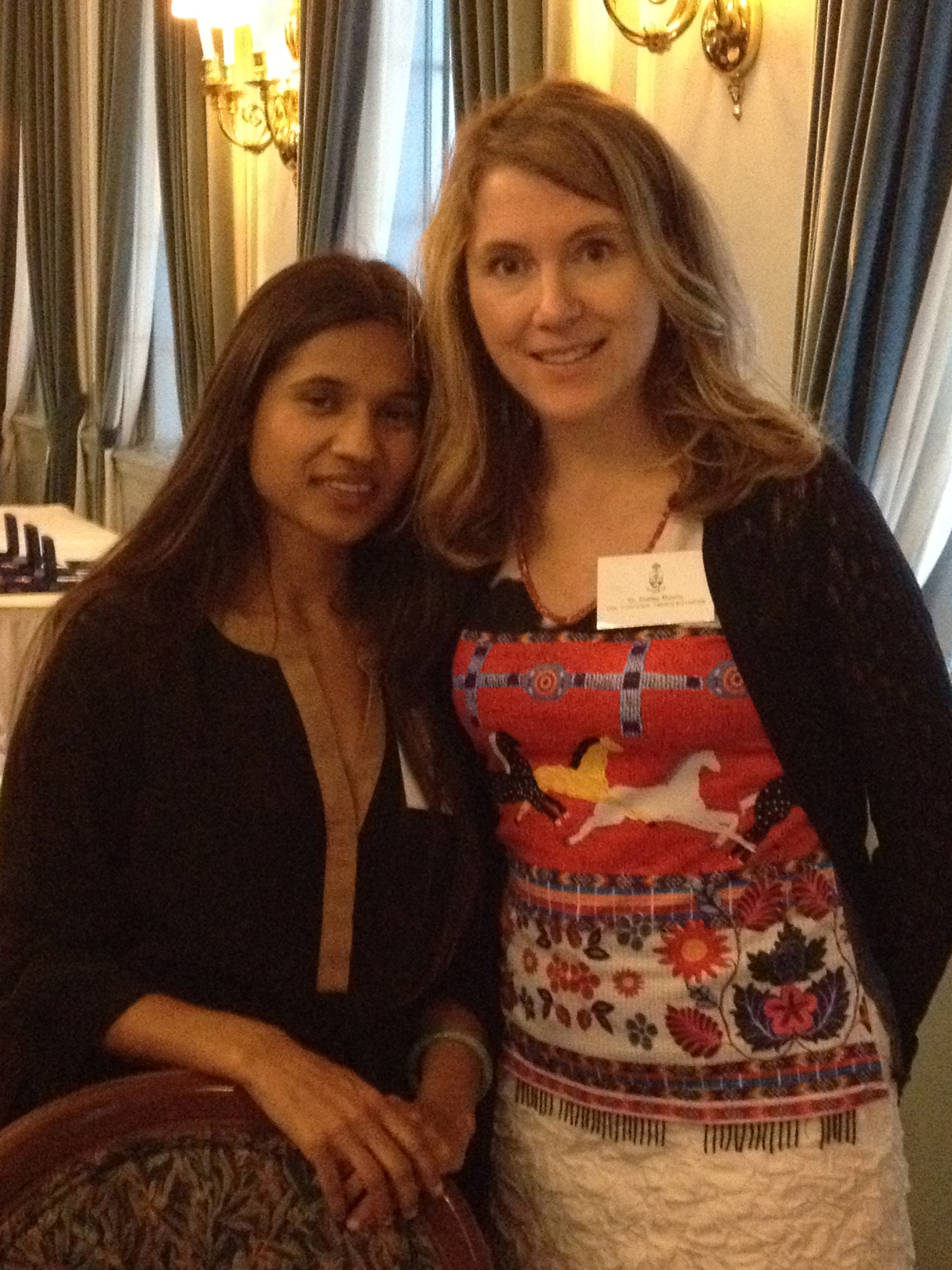
I (Lydia) feel fortunate to have had the opportunity to participate in the symposium last week as many of the issues raised resonated with my current research examining student teachers’ experiences with contemporary literacy teaching and learning. The issues highlighted during the individual presentations and accompanying discussions offered rich insights into the status of teacher educational internationally.
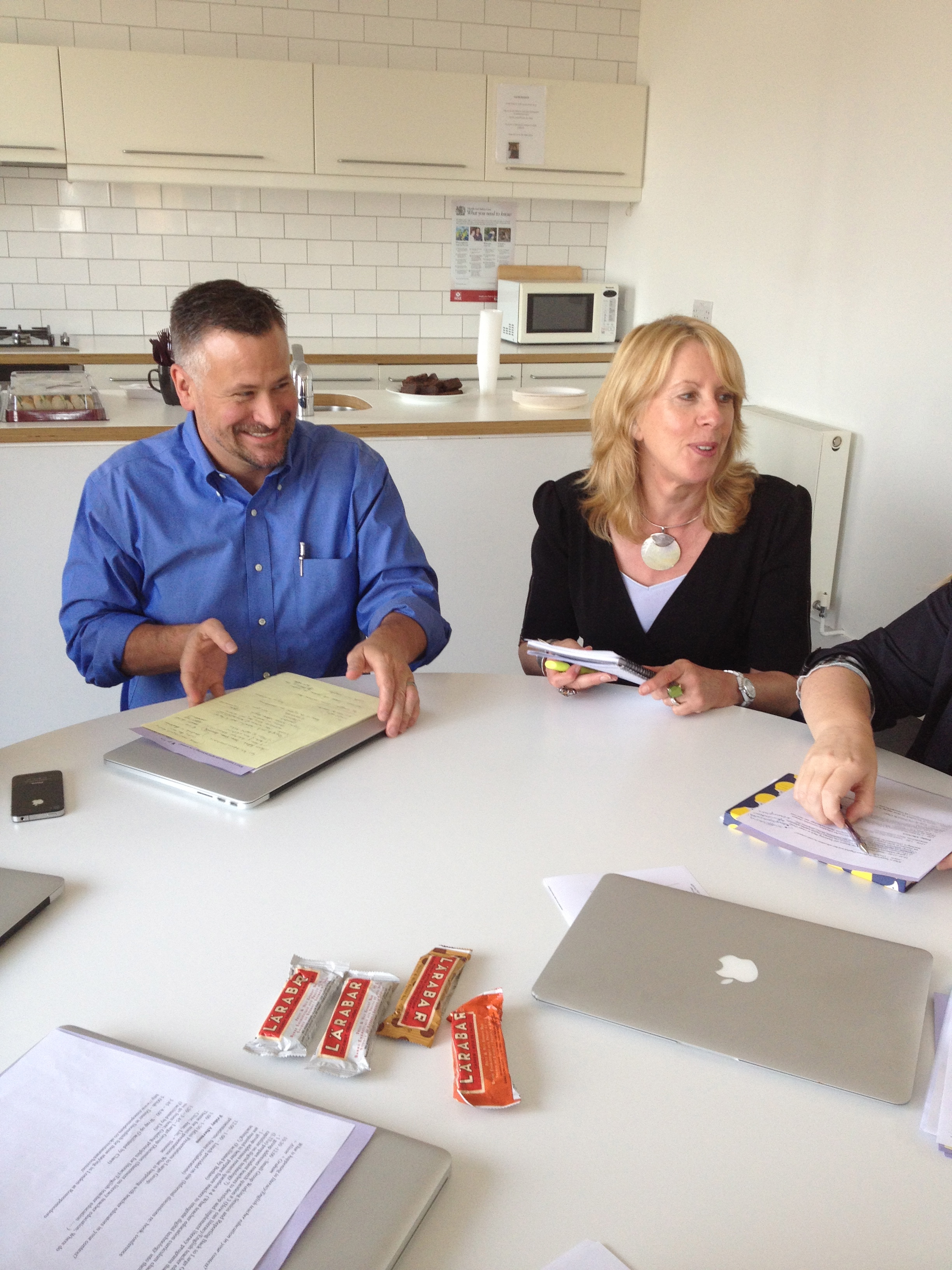
IMG_2590

I’d like to share a few of the questions raised during the symposium that remained with me and will continue to inform my research in literacy teacher education: What should a curriculum of contemporary teacher education include? In what ways can a curriculum of teacher education provide the space and quality time necessary for student teachers to truly engage as learners? How does power continue to operate in the curriculum? How do digital tools and social media spaces construct reading and writing? What do these digital spaces permit and what do they restrict? How is knowledge constructed, represented, and distributed within digital spaces? What are the pedagogical consequences as students engage with different modes within digital spaces? These are just a few of the questions I continue to consider upon my return from the symposium. Having the opportunity to consider the complexities and issues relevant to teacher education with international scholars was truly inspiring. I look forward to continuing our rich conversations.

IMG_2560

International Symposium on Literacy/English Teacher Education: A Focus on Digital Technology

With the symposium a few days behind us, I (Pooja) have had some time to reflect on what was discussed in London, England. Clare wrote a reflection post on day one of the symposium (https://literacyteaching.net/2014/06/06/symposium-day-1-reflections/), so I want to reflect a bit on day two. Day two started off with mini-presentations which asked presenters to focus on a central question: What is happening with digital technology in your context?

IMG_2564

Shawn Bullock, assistant professor at Simon Fraser University, raised some interesting issues related to digital technology and education:

  • Technological Determinism: A theory which asserts we need to stay current with technology to stay relevant in society; technology determines cultural values and society’s structures
  • Digital Publics: The theory that the nature of public space has changed significantly over the past years. The nature of public space has gone from persistent to replicable to searchable in the past few decades:

o   Persistent- recording (video, audio) events changed the nature of public space;

o   Replicable- recordings became replicable;

o   Searchable- today we can search for any recording

(danah boyd)

Understanding how the nature of public space has drastically changed over the years, Shawn posed an important question to the group: What is the role of education in theorizing privacy in the digital age?

IMG_2582

As the symposium was coming to a close, we were guided to reflect on the past two days. Many people realized that the rapid increase of standardization and data driven initiatives was happening across all contexts. However, many individuals commented that the conversations over the past two days were “energizing.” Being in conversation about big issues across international contexts made many teacher educators realize they were not alone. In fact, many commented they wanted to keep up the momentum by further collaborating and “making some noise” in teacher education.


IMG_2617


Once again, we’d like to thank TUG Agency for so graciously hosting us. TUG provided a vibrant and exciting atmosphere for our symposium to take place. Check out their website at: http://www.tugagency.com

Thank you!!!

Learning and Handwriting and the 21st Century

I (Yiola) have shared a number of posts that consider the changes and loss of  all that 21st century literacies bring.  I have shared media clips and links to spoken word poetry on the demise of social media.

It’s funny because I myself am an avid user of new literacies; most digital, critical, social… you name it, I  engage with it.  Yet, I strongly feel a sense of loss in communication, social consideration, and a certain kind of creativity and thinking.  Then, I came across this article:

An interesting article that reports handwriting — traditional handwriting – has benefits far surpassing penmanship. I am interested in the art of handwriting… its skill building potential… its power to foster literacy, communication and creative thinking. I am inspired.  For developing my children’s language and literacy I will use iPad Apps for building phonemic awareness but I will also continue to encourage and be excited about handwriting well into their young adult years and I will encourage my student teachers to do the same. What do you think?

Symposium: Day One Reflections

Lin GoodwinThe first day of our Symposium was a smashing success! The large group discussion of “where we are” revealed the extreme pressure on teachers and teacher educators. We heard about the fast and furious rate of reform in some countries – non-stop initiatives coming from the government. These are so prolific that there are often contradictory messages (e.g., be inquiry-based but focus on skills development). The mini presentations addressed a range of issues: what happens when standards are implemented; student teacher expectations for courses versus the teacher Lydia and Cliveeducators’ goals; problems of teacher retention; the vast number of pathways into teaching creates confusion; and teacher educators having different emphases in their courses even when there is a common syllabus. A problem that arose is lack of control over the implementation of standardization. It can take a very different form from the envisaged use of the standards. The place of digital technology in literacy/English education still eludes and needs much more discussion of what to do and how to do it so that technology is used to support learning.
Cathy MiyataThe discussion was rich and far-ranging. A number of participants commented that we rarely have an opportunity to discuss “big issues” in education and teacher education.
Today promises to be another day full of lively discussion.


International Symposium: Digital Technology and Literacy/English Teacher Education

Making ConnectionsAs many of our blog followers know we are hosting the Symposium : Rethinking Literacy Teacher Education for the Digital Era: Teacher Educators, Literacy Educators, and Digital Technology Experts Working Together. One of the main activities of the project is bringing together 17 experts from three fields and 4 countries (Canada, US, UK, and Australia) to address the following questions.
• How can literacy/English teacher educators (LTEs) prepare student teachers to develop and implement literacy programs that capitalize on digital technology (DT)?
• What teacher education curriculum changes are required to better prepare future teachers to integrate technology in their own teaching?
• What professional learning support do LTEs need to develop courses that will integrate and make greater use of DT?
The Symposium will be held over two days: June 5 and 6 in London England. We will send updates daily.

As academics we tend to work in our “silo” which although allows us to specialize it has limitations. The symposium will provide an opportunity to work in an inter-disciplinary manner which may help us move forward the field of literacy teacher education. The participants are:

Canada
Clare Kosnik (P.I.)
Clive Beck – Co-applicant – OISE/University of Toronto
Pooja Dharamshi – OISE/University of Toronto
Cathy Miyata – OISE/University of Toronto
Lydia Menna – OISE/University of Toronto
Shawn Bullock – Simon Fraser University

England
Jean Murray – Co-applicant – University of East London
Bethan Marshall – Co-applicant – King’s College
John Yandell – Institute of Education, University of London
Sue Dymoke – University of Leicester
Sam Twiselton – Sheffield Hallam University
Alison Baker – University of East London

U.S.
Lin Goodwin – Co-applicant – Teachers College
Peter Williamson – University of San Francisco

Australia
Simone White – Co-applicant – Monash University
Graham Parr – Monash University
Neil Selwyn – Monash University
Scott Bulfin – Monash University

The Symposium is being held at Tug Agency:
Tug is a search marketing led agency, specialising in pay per click
advertising, biddable display, search engine optimisation, affiliates and 
social media marketing. We’re called Tug because we believe that pull
marketing is the most cost effective way to drive traffic to our clients’ websites,
and the best way to drive ROI positive online conversions.http://www.tugagency.com

Open Street Maps: Taking Action and Focusing on Multiple Perspectives

Nora Young, the host of CBC Radio’s Spark, was the keynote speaker of a conference I (Pooja) attended yesterday. She spoke about data science as a growing field of study, in fact, many universities have created departments of data science.  With the growth, Nora noted, comes a need for what she called critical data literacy. She illustrated the need for critical data literacy with an example of mapping technology. Google maps have quickly become the go-to application for finding directions and/or locating businesses on a map. However, being critically data literate,  guides us to  question like: who gets to decide what appears on a map? The answer is most often large multi-million dollar enterprises like Google.

To disrupt google’s monopoly of the growing online map industry, initiatives like Open Street Maps have been created. In January of 2014, The Guardian commented on the need for applications like Open Street Map. They likened it to  “a wiki-like map that anyone in the world can edit. If a store is missing from the map, it can be added in by a store owner or even a customer. In terms of display… each person or company who creates a map is free to render it how they like..” (Wroclawski, 2014) A site, which allows community members to add and edit a map of a community to which they belong, is powerful because it positions community members as experts.

I am looking forward to bringing this mapping technology into my classroom. I hope my students can create maps of their neighbourhoods.

A snapshot of a map made by community members:

openmap

Read more about Open Street Map:

http://www.theguardian.com/technology/2014/jan/14/why-the-world-needs openstreetmap

Full Day Kindergarten in Full Swing

Tis the season for parents  with children turning 4 years old to become acquainted with formal schooling and the Full Day Kindergarten (FDK) expectations. Ontario, Canada has implemented full day Kindergarten for all students across the province.  I (Yiola) am experiencing first-hand the excitement and apprehension of sending my child, a darling, vulnerable, sensitive, sweet girl (Sylvia Clare), to school for 6.5 hours a day, 5 days a week.

Jumping online, I have read reviews — some for and some against — FDK and many focusing on children’s language and literacy development.  See below for some examples:

Full-day kindergarten children score highest in vocabulary, self-regulation

http://www.theglobeandmail.com/news/national/education/full-day-kindergarten-offers-no-academic-advantage-study-says/article17715532/

As a parent, my worry is not so much if my Sylvia Clare’s academic achievement will be more or less. As a parent, my worries are related to her well-being. Will she be happy? Will she love herself even more? Will she make friends and learn how to work/play with others well? Will she come home each day and share stories of interesting things she did and learned.   I most certainly want to her read and write, but in good time. I feel there is no rush and I want a pressure-free learning environment for her.

In a recent article  http://www.mykawartha.com/news-story/4397024-why-full-day-kindergarten-has-better-prepared-our-kids-for-grade-1/,  educational consultant Joan Ruf comments:

“One of the wonderfully positive things about full-day kindergarten is the appreciation of the whole child,” she said, explaining the program is successfully marrying the concepts of academic and emotional growth. “So it’s not just about reading and math. It’s about how are they doing. What are they doing for themselves.”     This statement gives me some comfort.

Schools in Ontario are now inviting parents to attend FDK information sessions in order to prepare ‘us’ for the year ahead.  I will be writing about my experiences going through this process and journaling Sylvia Clare’s experiences as she begins FDK in September.

As a professor of education, through the researching and teaching and writing and sharing,   what lies at the centre of my work  are the children and their development as happy, healthy, thoughtful, literate human beings.

The issues surrounding FDK: its purpose, process, and outcomes are vast. With a political election looming the topic of FDK is front and centre and how it will be managed and maintained is up in the air.

Learning a New Language

My (Cathy’s) husband decided he wanted to learn to speak German. So I bought him the online version of RosettaStone. My husband taught for 38 years, but now he is once again a student. We often meet for ‘recess’ over the island in our kitchen and talk about our day so far. I find it delightfully funny to listen to him reflect on his lesson. He says things like, “it’s hard!” and “my brain is so tired after a couple of hours”. But my personal favourite is after he has had an online session with a live instructor. Sometimes he says things like, “I didn’t like the instructor today, she wasn’t very friendly.”   Wow. No matter what the age of the student, learning is challenging and the teacher makes all the difference. He is so much happier when he happens upon a suitably attentive and patient teacher. He feels encouraged and motivated. He is smiling when we have our recess. This says so much about the power we wield as teachers, doesn’t it? I wonder how many students are smiling during recess. I hope lots. BTW, my husband loves the program and highly recommends it!

Learning German

Clare Kosnik awarded 2014 JJ Berry Smith Doctoral Supervision Award


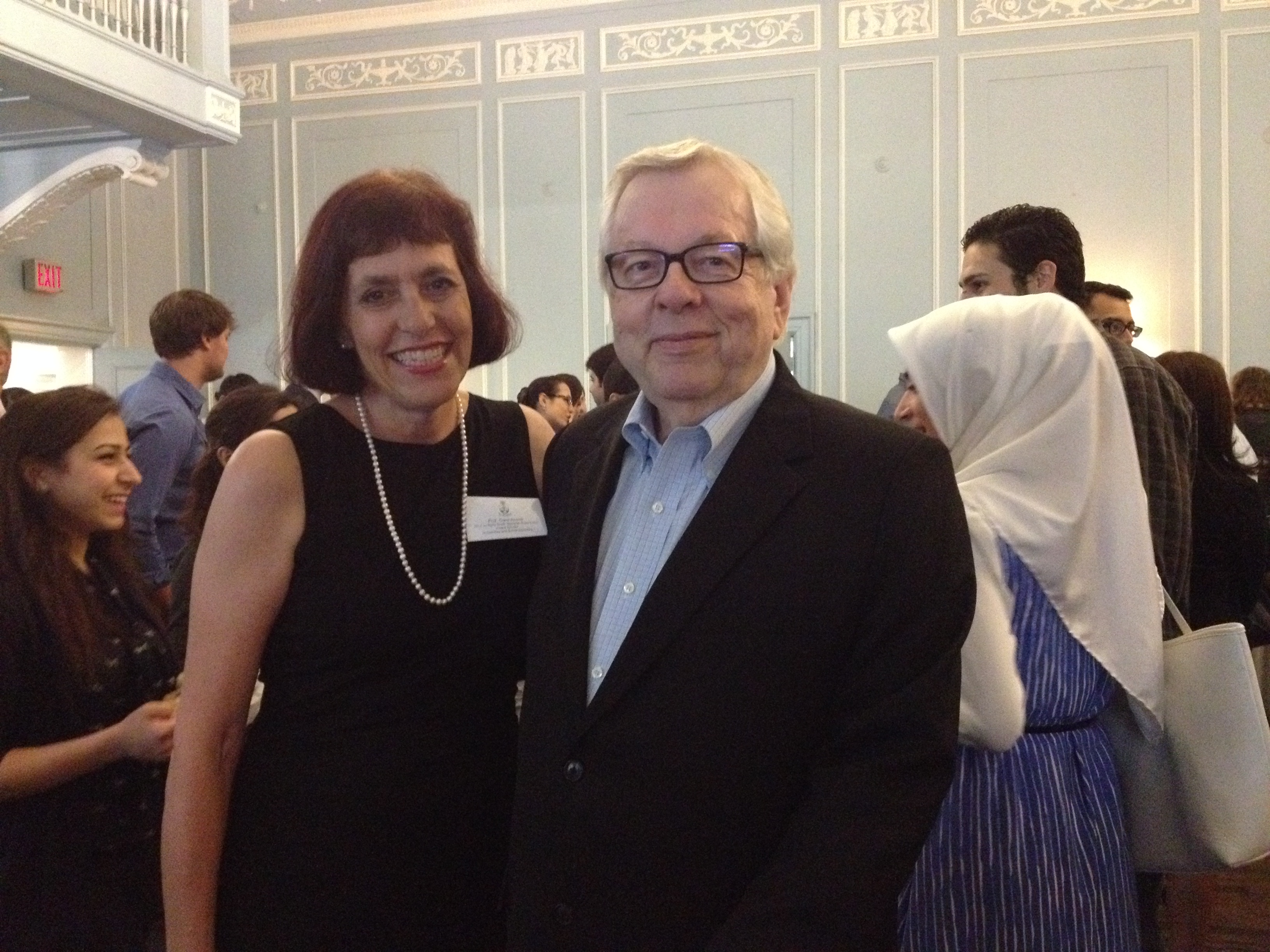
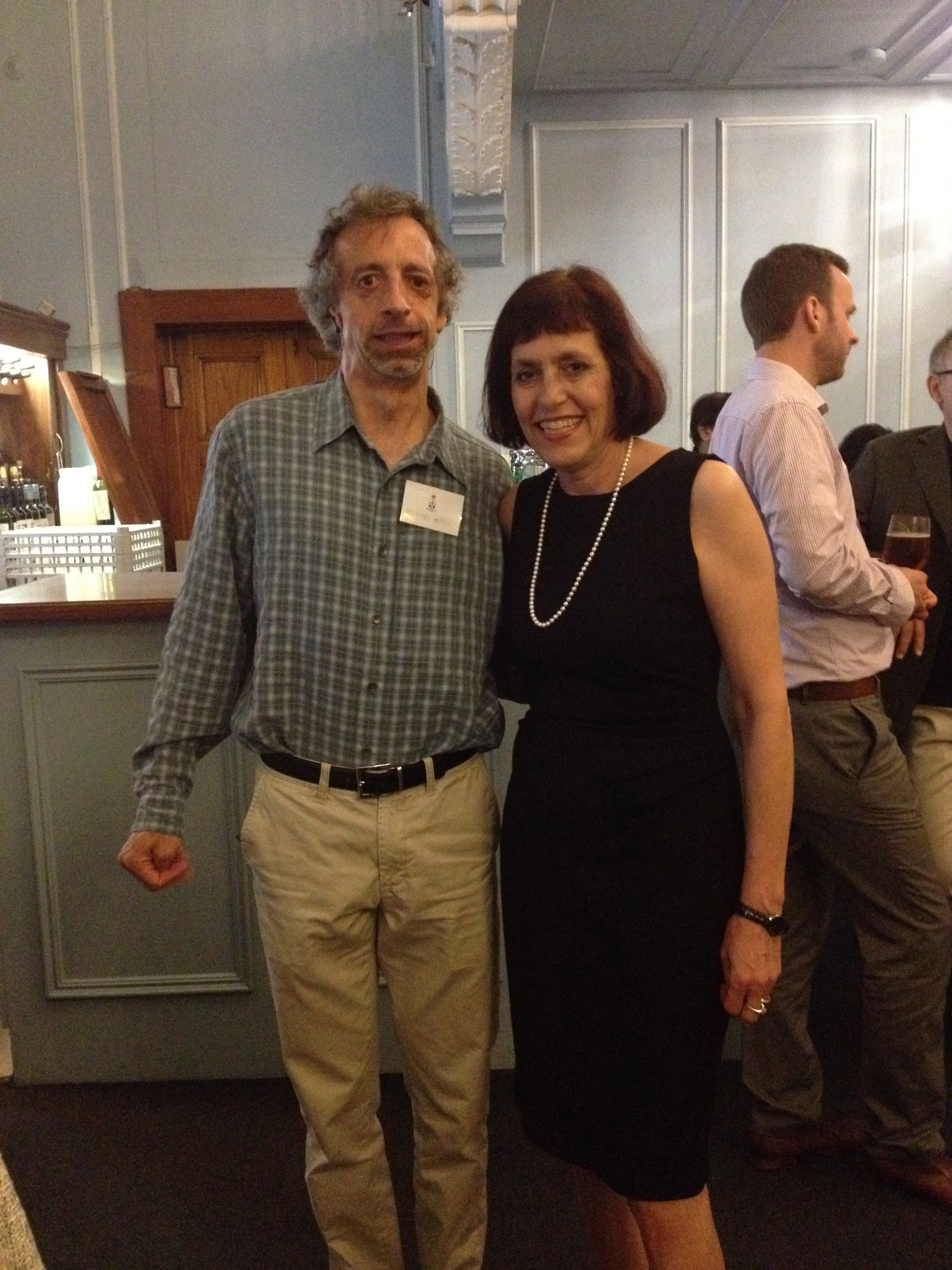
clare u of tYesterday, we (Clare’s grad students) had the honour of seeing Clare awarded the 2014 JJ Berry Smith Doctoral Supervision Award. Professor Brian Corman, Dean of Graduate Studies (Uof T), acted as MC for the proceedings. Dean Corman reported there were many distinguished applications and the selection committee was under great pressure. However, the decision to award Clare was unanimous. 19 letters from present and former grad students were included in the application. Dean Corman shared some of the comments written in the letters: “epitome of a pedagogy of caring”, “challenged me to think deeply”, “met with me weekly, which after talking to other grad students, I realized other supervisors did not do”.  Clearly, her students  felt privileged to have worked and be working with her.

While accepting the award, Clare suggested doctoral supervision was a terrific topic for a research study. She shared that as she read the letters she was astounded by the differences in what the doctoral students said mattered to them. We hope someone takes Clare up on this suggestion.  They should begin the study with Clare.  Using her work ethic as a model, many other grad students might have the opportunity to work with a supervisor as dedicated, caring and wise as Clare.
Congratulations, Clare! Well deserved.

photo 1clareclare 2clare and us