I (Clare) am reading the recently published book, The Professional Teacher Educator: Roles, Beha viour, and Professional Development of Teacher Educators by Mieke Lunenberg, Jurrien Dengerink, and Fred Korthagen. https://www.sensepublishers.com/catalogs/authors/auth-mieke-lunenberg/ The book is review of 137 key publications on teacher educators. I found their identification of the six roles of teacher educators interesting and informative: teacher of teachers, researcher, coach, curriculum developer, gatekeeper, and broker. They discuss forms of professional development for each role. There is also an extended case study of a group of Dutch educators. For those interested in the study of teacher educators you might find their exhaustive research useful.
Yearly Archives: 2014
Congratulations Pooja and Neky
Many of you have read Pooja’s incredibly interesting blog posts on this site. I am happy to share the good news that Pooja got married on Sunday. The ceremony was just lovely and the bride was beautiful. Best wishes to you and Neky for many happy and healthy years together.
Clive, Cathy, Lydia, Yiola, and Clare


Guest Blog: Gisela Wajskop
Yesterday I (Gisela Wajskop) shared with Monica McGlynn-Stewart an important moment  in her professional and personal life as well as in the lives of her students at George Brown College (Toronto, Ontario). I attended the Second Annual Bachelor of Early Childhood Leadership Research Symposium organized jointly with Fanshawe College (London, Ontario) and Sheridan College (Oakville, Ontario). The event celebrated the innovative early childhood education (ECE) program. This four-year program prepares students to be educators and to become leaders in curriculum and pedagogy development for Ontario’s early childhood settings. These include: childcare centers, nursery schools, family drop-in programs (including Ontario Early Years Centres, family resource centers and parenting programs), family support programs, and early intervention services.
I was quite excited by the students’ serious and enthusiastic research presentations that were based on their practice/placements in schools and community centres. The program believes the field of ECE requires critical thinkers and practitioners who have vision, a professional demeanour, and in-depth knowledge. The ECE program wants to prepare future leaders and educators; they hope to empower students by using a variety of pedagogical strategies (e.g., research on practice). Overall they aim to raise expectations for their students; the new standards for the profession raise the accountability bar.
Attending the Symposium reminded me of my Brazilian students and the practices we developed together the last 12 years. As a teacher educator I was committed to empowering my students to have a critical voice in the field just as those three Colleges aim to do.
Participating in this very special event reminded me that we are entering Passover: I am grateful to Monica who opened her door to me … and I wish her students all the best. Under her supervision and leadership may they develop and become better people and excellent professionals.
Chag Sameach for all!
Remembering My Favorite Comedian
My (Cathy’s) favorite comedian passed away last week. I was saddened to learn this. It takes such skill to make people laugh: writing the content; sensing the timing; massaging the audience. His name was John Pinette. I was amazed by his talent. During his stand-up acts, he often broke into song depicting an amazing singing voice. I eventually learned that he played the matronly Edna in the hit musical Hairspray on Broadway. Wish I’d seen that. His jokes were usually self- deprecating about his size. Ah, to laugh at oneself. One of my favorite clips was of him being told he should be gluten-free. As I live a gluten-free life I have always found this particularly amusing. The link to this clip is below. Remember him when you laugh.
John Pinette 1964-2014
Teacher Educators, Literacy Educators, and Digital Technology Experts Working Together
 I (Clare) am pleased to share some good news. We submitted a proposal to the Social Sciences and Humanities Research Council of Canada (SSHRC) to fund the project Rethinking Literacy Teacher Education for the Digital Era: Teacher Educators, Literacy Educators, and Digital Technology Experts Working Together. One of the main activities of the project will be bringing together 16 experts from three fields and 4 countries (Canada, US, UK, and Australia) to address the following questions.
- How is our understanding of literacy evolving in light of the new ways we communicate?
- How can literacy/English teacher educators (LTEs) prepare student teachers to develop and implement literacy programs that capitalize on digital technology (DT)?
- What teacher education curriculum changes are required to better prepare future teachers to integrate technology in their own teaching?
- What professional learning support do LTEs need to develop courses that will integrate and make greater use of DT?
As a team we are going to work together to:
- develop a statement on literacy teacher education that offers direction on how to integrate digital technology into teacher education literacy courses;
- extend our website http://www.literacyteaching.net to include video interviews of all the participants discussing their views and current research and their course outlines and supplementary course materials;
- produce an edited book Crossing Boundaries: Literacy/English Teacher Educators Incorporating Digital Technology in Their Courses
Click here to read the summary of the proposal. Final Summary of Proposal
As academics we tend to work in our “silo” which although allows us to specialize it has  limitations. The symposium will provide an opportunity to work in an inter-disciplinary manner which may help us move forward the field of literacy teacher education. My co-applicants for the proposal are Lin Goodwin (Teachers College), Simone White (Monash University), Bethan Marshall (King’s College UK), Jean Murray (University of East London), and Clive Beck (University of Toronto). I will continue to provide updates on our work.
A Compelling Novel
I (Lydia) have been reading and enjoying the novel Life After Life by Kate Atkinson. The novel invites readers to consider the question: What if you could live again and again until you got it right? This premise is explored through the experiences of the Todd family set against the backdrop of two world wars. Atkinson plays with narrative structure and time by repeatedly re-ordering the past and the present, as protagonist Ursula Todd and others supporting characters experience deaths, near deaths, and frequent chances to begin life anew. Each time the author reimagines one of these lives, the reader is provided with a glimpse into how the alternate choices made by a character can profoundly shift circumstances and outcomes. The novel could be read as book about the practice of writing, the practice of reading, and the complex relationship forged between author and reader. The novel repeatedly reminds the audience of the multiple choices an author makes when weaving together a narrative, and the conscious choices a reader makes to commit, or not, to the path outlined by the author. Overall, the novel provides a compelling and worthwhile read.
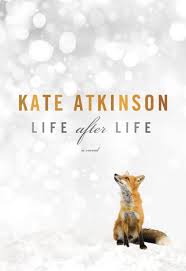
Photo Highlights from AERA 2014
The 2014 American Educational Research Association (AERA) conference took place this year in Philadelphia. I was able to attend some fascinating paper sessions, poster sessions, and symposiums during my time there. I also managed to make it to the memorable museum district area of Philadelphia. Here are some photo highlights below:
My dear friend and research colleague, Cathy Miyata, presenting her paper Negotiating Multiliteracies Pedagogy in International Preservice Teacher Education:

A fascinating panel titled Defending, Reforming and Transforming Teacher Education: The Future of Teacher Education in the United States. This panel’s members included Linda Darling-Hammond, Timothy Knowles, Kwame Griffith, and Kenneth Zeichner.

An important symposium on ways teacher education programs around the world are preparing preservice teachers for marginalized students. The symposium entitled Building Infrastructure and Capacity Research Innovations Worldwide That Prepare Teachers for 21st Century Schools That Service Marginalized and Poor Students in Transnational Contexts. Below is a photo of Dr. Clare Kosnik sharing findings from our international study on Literacy Teacher Educators:

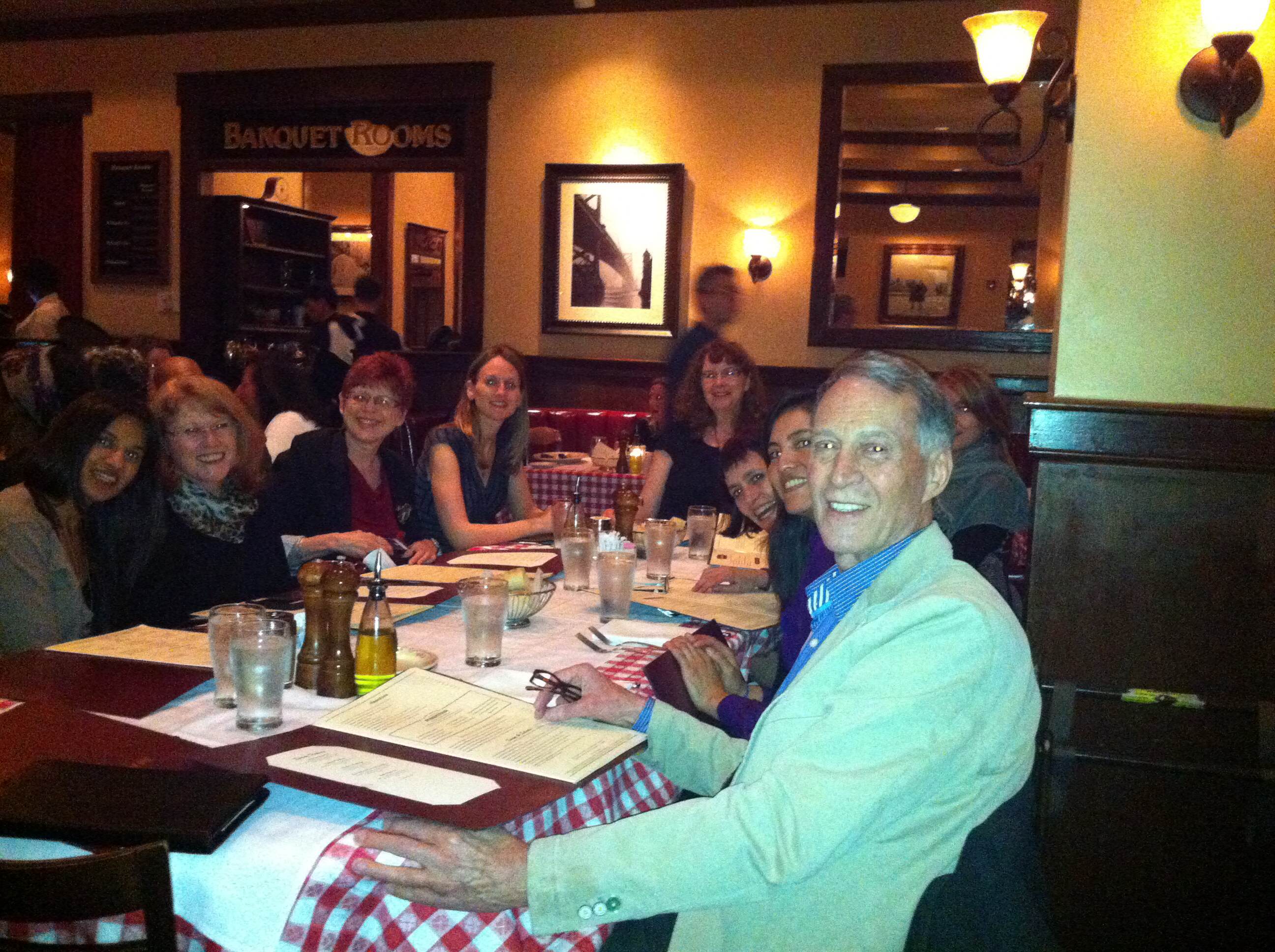
A relaxing dinner with our research group, Becoming Teacher Educators.
Finally, a photo from the museum district which is looking south on Benjamin Franklin Parkway. I was standing on the iconic steps where Rocky trained while taking this photo!

21st Century Learning and the Need to Shift Our Thinking
Several of our posts refer to 21st century learning, technology, multi-literacies and thinking about today’s student and world. I (Yiola) found this article from the Huffington post called: The Global Search for Education: Education and Jobs quite interesting. The article talks about the need for drastic changes to our Educational systems in order to meet the growing demands of the market place in the 21st century. Bottom line, technology is taking over many of the jobs people currently do and so we need to reconsider the skills we are providing to students. The article goes on to say that our traditional and current systems continue to develop linear thinkers and producers but what we really need to develop are individuals with:
the ability to initiate, discern, persevere, collaborate, and to solve problems creatively are the qualities most in demand today and will be increasingly important in the future. The problem is that our education system was designed, primarily, to teach the three R’s and to transmit content knowledge. We need to create schools that coach students for skill and will, in addition to teaching content. If we don’t make this transition quickly, a growing number of our youth will be unemployable at the same time that employers complain that they cannot find new hires that have the skills they need.
I tend to agree with the article however I raise two points for discussion:
1) Teacher education programs do teach to the creative, inquiry-based modes of pedagogy. I certainly cannot speak for all programs but I am familiar with several and teacher educators do work hard to teach pedagogies that meet the needs of today’s learners. So, why then are classroom teachers not teaching in these ways? Or, are they?
2) I have seen time and time again policies and actual changes take place at the Government level but once changes happen in schools it is often society at large that is in an uproar. For example, here in Ontario we have implemented Full Day Kindergarten (early years) and the program is designed to develop higher level thinking right from the start. This transition, while happening, has not been without significant reluctance from the general public. What then do we do?
For more considerations here is the full article: http://www.huffingtonpost.com/c-m-rubin/the-global-search-for-edu_b_5084761.html?utm_hp_ref=email_share
Murmurations Prank?
I know April Fools just passed, but I (Cathy) just had to share this with you. My husband emailed me the link below and I thought it was an internet prank. In this age of photoshopping and creating a personalized zombie face, I simply didn’t believe it. So, I Googled ‘murmurations’ and was delighted to discover there are dozens of videos depicting this spring phenomenon. Live and learn.
Fascinating that this new digital age has made me so skeptical, but I guess that is being critical isn’t it? Have a look and see how a natural phenomenon can be so amazing, it is hard to believe.
AERA
To All of Our Blog Followers,
Our team will be at the American Educational Research Association (AERA) for the next few days. So we will not be doing daily posts. If you are attending AERA please stop by one of our sessions and say hello. We will be back to our regularly posting next week.
Clare Kosnik, Clive Beck, Pooja Dharamshi, Cathy Miyata, Lydia Menna, and Yiola Cleovoulou
 Literacy Teaching and Teacher Education