Monthly Archives: January 2015

Cultivating Empathy in Schools

There has been a lot written about the importance of empathy within schools. As an educator, being able to relate and connect with our students is so important because it allows the classroom to become a community; a place where people feel safe and valued. In a classroom or a school which is centred around empathy, students are unafraid to express themselves and try out new things.

empathy2In a 10-part journal series a school Principal, Michelle Hughes, from New York writes about her experiences in cultivating empathy within her students, teachers, and staff. Hughes speaks about the importance of not only cultivating empathy with the students, but with teachers. Here is an excerpt from the first journal entry:

Schools are a microcosm of the universal human experience.  I could choose (and much as I hate to admit it, there are times I wish I had it in me) to disregard the personal lives of staff and make the work of school my only priority.  But that approach would be contrary to the central ethos of the school, and it would no doubt relegate the cultivation of empathy and holistic teaching practice to the fringes of the classroom experience. To teach the whole child, the whole teacher needs to be considered.

 To read the journal entries click on the link below:

http://startempathy.org/real-life-im-principal

empathy1

Inspiration: A compulsory component of being a teacher

I (Yiola) think about education… the endless complexities and barriers to just getting to good teaching and the kind of learning that leaves children feeling alive, fulfilled and competent.  What makes good teaching such a challenge? Government cuts, a culture of standardization, and a lack of appreciation for developing what I will call the tools of inspiration (the Arts, creative thinking, inquiry) are just a few of the challenges at the forefront of my thinking lately.

I believe most teachers begin their careers filled with excitement and determination to “make a difference”. However, without support and nourishment for inspirational teaching, teachers burn out. If teachers burn out, there is little hope for inspirational student learning.

An interesting link below talks about the need for teacher support. Let me ask you, what do you think teachers need in order for them to be, not only competent, but inspirational, creative, and “house on fire” kinds of educators?

http://www.creativitypost.com/education/apathetic_uncooperative_coals_wont_burn

Resolutions, Reforms, and Incremental Change in Education

Clive BeckNew Year’s resolutions are notoriously poorly kept. At our local gym, the regulars joke about the “resolutioners,” who sign up for a year but barely make it to the end of January. Sadly, a lot of proposed educational “reforms” are like that.

Clare, Lin Goodwin, and I (Clive) are working on a chapter on teacher education reform for the next Handbook of Research on Teacher Education. In reviewing the literature, we came across a wonderful article by Mary Kennedy called “Against Boldness” (Journal of Teacher Education, 61 (1-2), 16-20). In it, she makes a plea to avoid taking a “bold” approach to teacher education reform. The article has important implications not only for teacher education but for teaching in general and even everyday life (as in trying to keep fit). Kennedy remarks:

[B]old ideas are part of our problem, for by definition they are unrealistic, out of range, over the top. Ultimately, bold ideas fail because they don’t take real circumstances into account or because they expect too much from people. Eventually, each of us runs out of gas, gets tired and disheartened. (p. 17)

In my view Kennedy isn’t a pessimist or anti-idealist: she thinks substantial improvement is possible and should be pursued. But she believes we must pursue it by (a) acknowledging and building on present achievements and (b) proceeding incrementally (like the tortoise that finally won the race). She says:

What we need in education are ideas that develop slowly and that build on what we already have, not ideas that develop excitedly or that deviate markedly from current practice…. [B]old ideas…hinder our progress toward real improvements by distracting educators and making it more difficult to concentrate…. Every helpful idea requires teachers to make adjustments. Every time we help teachers, they have to stop thinking about how to wrap their students’ minds around a concept and instead turn their attention toward accommodating the new innovation…. [T]here is no doubt that we need to find ways to improve teaching and teacher education. But [instead of pursuing bold ideas, we should be] studying our practices closely and deliberately, deepening our understanding of the circumstances in which we work, and finding small and sustainable ways to improve. (p. 19)

As the JTE editors rightly point out, Kennedy’s position is itself bold! Indeed, it is radical in today’s climate. But it is productively bold, offering an alternative to the myriad high-sounding, contradictory, and often damaging measures, frequently promoted for political reasons rather than out of genuine concern for improvement. Let’s be systematic and effective in our renewal work, not “bold.” How’s that for a New Year’s resolution!

Predatory Journals Part 2

On January 4th I (Clare) did a post about predatory journals. My good friend Tim Fletcher (professor at Brock University) sent me a useful link. Brock has put together a list of guidelines for evaluating journals and gives a link to Beall’s list of predatory journals.   Here is the link: http://www.brocku.ca/library/services-lib/faculty/guidelines-for-evaluating-a-journal-publisher

Facebook as a Tool for Pedagogical Reflection

I came across an interesting post from a museum educator who uses Facebook as a tool to reflect upon memorable moments of teaching and learning that arise during school tours through the gallery spaces. The only limits David Bowles imposes on the documenting of these moments of reflection is to “try to stick to the facts, and not interpret the child’s ideas…describe the context succinctly, and stick to a few sentences at most.” Check the some of the funny, quirky and insightful moments of pedagogical interaction highlighted in his post: http://educatorinnovator.org/status-update-facebook-as-a-reflection-tool/  The post offered me the opportunity to fondly recall and relive some of my past experiences with museum education.

museumed

Visiting the Rishi Valley School…Part 2

IMG_8033

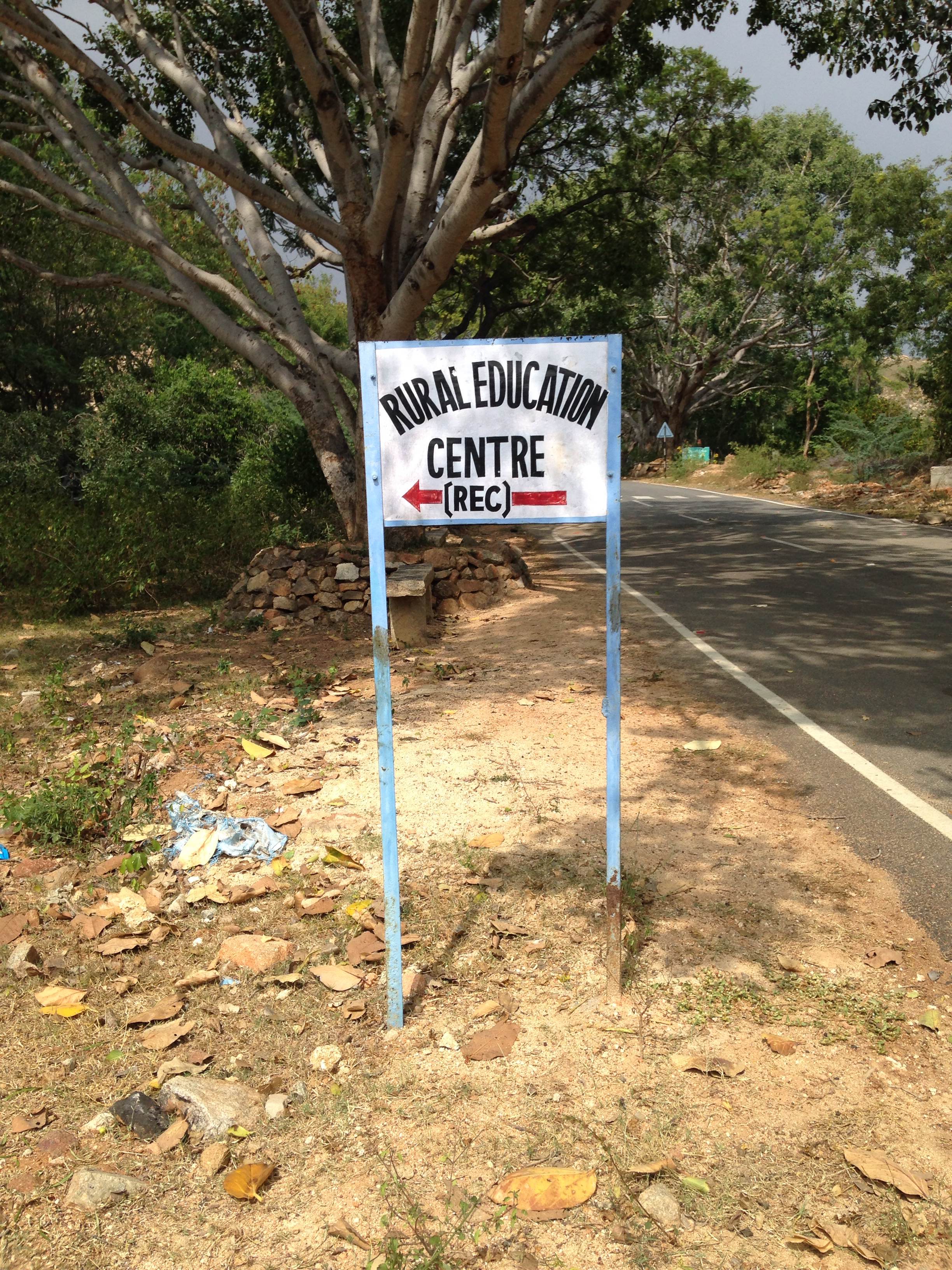
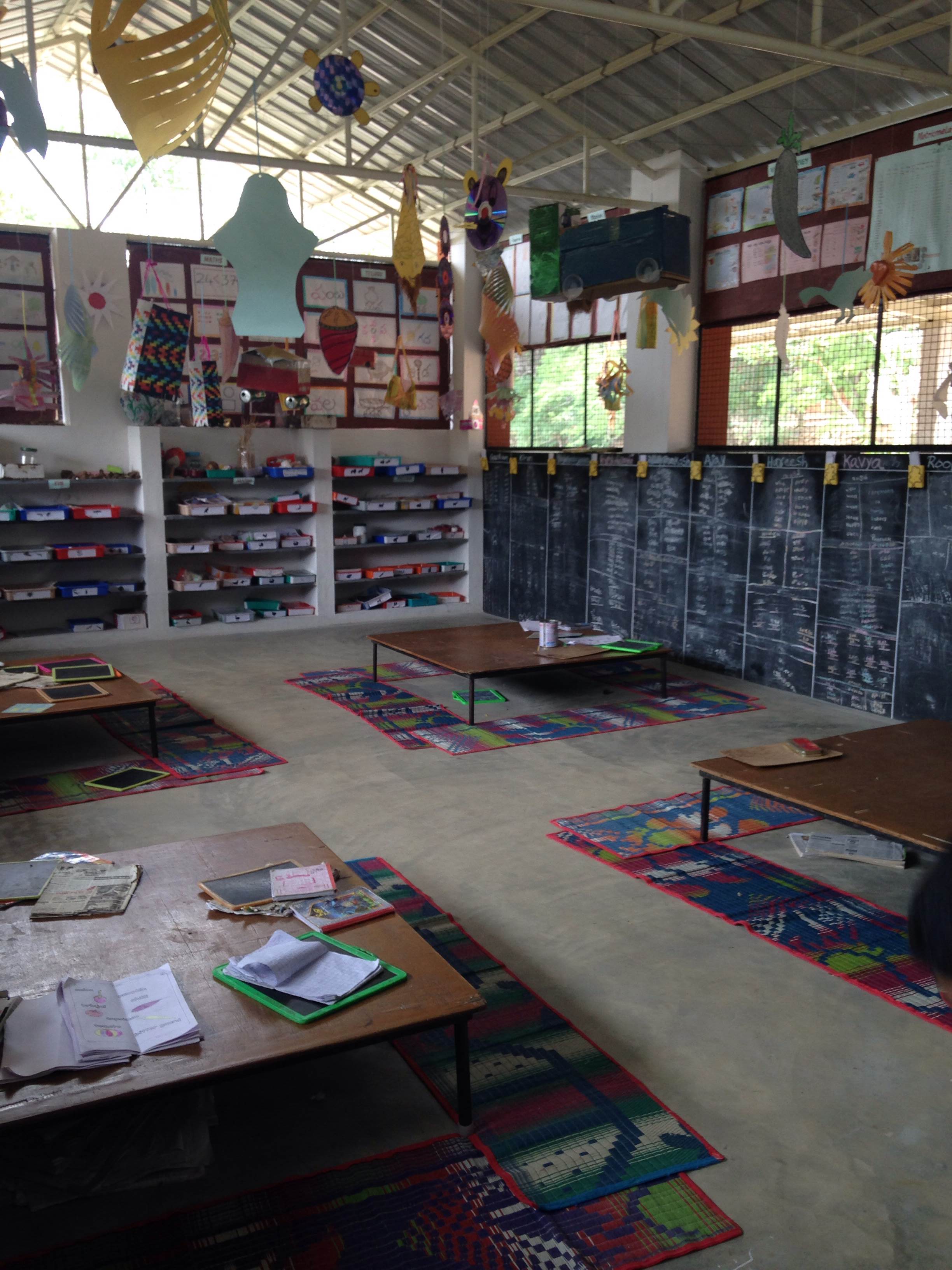
While at the Rishi Valley School I had the opportunity of visiting the Rishi Valley Institute for Education Resources (RIVER), a teacher training and development wing of Rishi Valley Rural Education Centre. The school serves children from the surrounding rural communities, several of which are impoverished. At first glance the RIVER school appears to be like many rural schools in India; one large classroom, one teacher, twenty-five students spanning across 5 grades. However, after spending an afternoon in the classroom it became clear that this classroom was not like the others. First, there are no desks or chairs; rather, there are four large tables with students purposefully seated at them. Second, Kala, the classroom teacher, does not do any stand-up teaching. Instead, she moves from table to table working with small groups of kids or one-on-one with a child with laminated graded cards. Kala is using the multi-grade, multi-level methodology which the Rishi Valley School has spent years developing, and she has spent years perfecting. At the RIVER school a “community-based curriculum is taught…where the academic curriculum is graded for individual levels of learning, grounded in up-to-date information, and framed in the local idiom, and…where the curriculum is integrated with activities.” (http://www.rishivalley.org/rural_education/RIVER.htm)

IMG_8031

The classroom

I was most interested in the pride the students took in their graded cards they had completed, as well as their designated space on the wall to record their progress (pictures below). They were all very aware of what level they were at for each of their subject. The graded cards are part of an educational kit the RIVER school has created.

This is how the educational kit works:

The education kit, a series of carefully graded cards, replaces textbooks in the area of language, mathematics and environmental science. Each card in the graded series is marked with a logo (rabbit, elephant, dog) and mapped on to a subject-specific “Learning Ladder”, a progress guide which traces out the learning trajectory for students.

Spaces on the Ladder are sub-divided into a set of milestones. These milestones consist of  cards that explain a concept;  the applications of the concept;  evaluation of students’ understanding and, finally, provide means of testing, remediation or  enrichment. A student identifies her own place on the ladder, and creates, within the broad confines of the milestones,  her own path from grade one to grade five. 

Blank spaces on the ladder allow teachers to introduce independent content into the learning process. Indeed the Ladder can be designed in flexible ways to allow for multiple trajectories between which teachers and students are able to choose so long as the sequencing required by the academic disciplines is maintained.(Source: http://www.rishivalley.org/rural_education/RIVER.htm)

 Although I only spent an afternoon in the classroom, it left a lasting impression on me. The MGML approach seemed to really have been working, and effectively addressing the prevalent issue of mutli-grade classroom across rural India. The MGML approach is being used in rural school across Andhra Pradesh, and has been adopted by many school in the state of Tamil Naidu. The creators are advocating for the approach in several other states in India. Take a look at some photos below!

IMG_8024

Kala (the teacher) working with the students. 

Screen Shot 2015-01-12 at 8.30.28 PM

Students working on Math problems at their own individual levels. 


IMG_8025
The Milestones Chart

IMG_8020

Student progress for the week. 

The Power of Children’s Voices

My (Yiola) first blog post of the year. Happy new year friends and readers. Over the course of the holidays I developed a list of interesting topics and ideas that I am excited to share here on the site. Just as I was about to select one of my ideas to share, a student teacher sent this video my way today and it took precedence.  The messages may be imperfect yet the voices of children ~ of young adolescent women ~ make it so incredibly powerful for me. The energy and the passion and the inspiration rising from literacy make it a worthwhile share.  The rhythm alluring, the tone inspiring, the messages thought-provoking, the effort immense.  If literacy inspires young people to speak in such passionate ways about such timely issues, then I say BRING ON LITERACY TEACHING.

Enjoy.

10 Steps for Avoiding Teacher Burnout

As many of us start a new semester I (Clare) found this article on ways to avoid teacher burnout very interesting and relevant. Although written for teachers, I found a lot of the advice relevant for me as a teacher educator. I particularly liked point # 2  – remember to keep up your fitness level! The article by Ben Johnson is from the excellent website edutopia . Here is the link for the article: http://www.edutopia.org/blog/ten-tips-to-avoid-teacher-burnout-ben-johnson

“Why did I want to be a teacher?” We all face burnout, sometimes on a daily basis, and in my case, especially after fourth period. Most of the time, we can pick ourselves up, brush ourselves off, and go back to the drawing board to try another strategy to find success with student learning. I have to admit that it is getting more and more difficult to make that transition back to a willingness to try again. I can’t help to think students are more difficult than they used to be a few years ago, and pressures from accountability are becoming more oppressive. And of course, the pay for teachers is inadequate. With all of this we may ask, is it worth it?

Rather than provide a list of things to avoid, I would like to take a more proactive stance by sharing things that will help diminish burnout feelings and help you answer, yep, it is worth it.

Step #1) Have Fun Daily with Your Students

Share jokes, brief stories, puzzles, brain teasers, etc. This keeps it interesting for you and for your students. It only takes a minute and they are easy to align to the topic of the day.

Step #2) Take Care of Your Health

The physical status of your body affects your emotional responses, so never feel guilty about taking care of yourself. Skipping lunch or breakfast are bad ideas. Make sure you get enough sleep each day. Take a rejuvenating micro-nap when you get home. Get some better shoes to put a spring in your step. I used to think that I was an active teacher and did not need exercise, but I realized that I need cardio-vascular and upper body exercise, too. Thirty minutes on a treadmill, two days a week will do wonders. Simple pushups strengthen your abdomen, back, and arms. You will be surprised at how much it helps you not be worn out at the end of the day.

Step #3) Learn Something New and Share It with Your Students

Read an interesting book — education or non-education related. I have been reading, The Smartest Kids in the World and How They Got that Way from Amanda Ripley. It is interesting and education related, so I don’t feel guilty about taking time away from lesson planning and grading. Read a classic that you have always wanted to read but never got around to reading. Watch a TED Talk or go to Iuniversity and find something interesting about brain research (that’s what I like to explore anyway).

Step #4) Help Another Teacher

Share your motivating experiences locally or online. Edutopia is always here for that. If you take the time to respond to a blog, you may be surprised at the response. Start your own uplifting blog to help beginning teachers or nearly burned out ones. Be active in your professional organization by volunteering to teach, facilitate, or prepare workshops. Mentor another teacher, either formally or informally. We can all use as much help as we can get.

Step #5) Make Someone’s Day

Call a parent and tell them how good their student is. Find a student that is struggling and sincerely complement him or her on something they are doing well. Show gratitude for an administrator, or fellow teacher by sending them an appreciative note, giving them a hug, or presenting to them a small gift.

Step #6) Lighten Up

Smile (it’s after Christmas and it’s ok). Try looking in the mirror, putting on a smile and then try not smiling for real. It is nearly impossible. So try smiling when you do not feel like smiling. When you greet your students at the door, smile at them and a miracle happens: They will smile back.

Step #7) Be a Scientist

Experiment with new strategies and become an expert in them. Ask your students to help. Do a control group and an experimental group. Document your results and share them at a faculty meeting or a conference. Celebrate success.

Step #8) Look for the Positive

Be a voice for positive thinking, even in the staff lounge. It won’t change the situations, but you will feel better and others might be uplifted too. While teaching is hard, it is not all bad. Half empty glasses are not nearly as exciting as half full ones.

Step #9) Redecorate

Switch out the bulletin boards, move the desks, and adjust the lighting. Add your favorite smells or be adventurous with new ones. I found interesting ones: rhubarb, teak wood, and Hawaiian breeze (usually spray, or solid.) Check with your schools policy about bringing plug-in oil or scented wax warmers.

Step #10) Trust Students More

Let the students know that you will be trusting them more and give them opportunities to earn your trust. Try some project-based learning. Develop strong rubrics, share them with students, and then let them learn as you facilitate and coach.

Turning Things Around

It seems it is easier to fall into the trap of pessimism and negativity because of all the (okay, I will say it) “garbage” teachers have to endure, but that does not have to be our choice. We can choose our attitude, and choosing to do proactive things like those I listed above will go a long way in helping us keep our sanity and avoiding burnout. What helps you keep plugging away? Please share in the comments section below.


Finding Beauty and Humour in Winter

Like much of North American we are experiencing brutally cold weather. I (Clare) walk and Winter Wonderlandtake the bus to work so I have struggled with the windchills that have hovered near -25C all week. Looking on the bright side here is a gorgeous photo of a winter scene and a cute cartoon. For those of you living in warm climates – send us some sunshine!

Winter Cartoon

Encouraging Inquiry at an Early Age

I (Cathy) was inspired by the posting below of a young girl’s science experiment.  It actually made  make me rethink purchasing organic foods.  From an educator’s point of view,  it also demonstrated how significant inquiry, experimentation and science literacies are, and the impact they can have, especially when conducted at an early age.  While watching the video, I wondered if the process of doing this experiment will influence this young girl’s future educational leanings.  I had the pleasure of visiting my own daughter recently and was awed as I watched her conduct experiments with bacteria in her lab.  She became a biomedical researcher and is published in medical journals all over the world.  Science is her life now, and it all started with simple biology experiments in high school.

Sarah


Who knows what we inspire in children by encouraging them to build inquiries and conduct purposeful experiments.  The young girl in the following video may well be in the same position as my daughter some day.

http://www.spiritscienceandmetaphysics.com/this-little-girls-experiment-will-change-the-way-you-think-about-food/