Monthly Archives: March 2016

Happy International Women’s Day!!!

Today is International Women’s Day (IWD)/ IWD  is a global event that celebrates women’s achievements, from the political to the social to the cultural, while reminding us all of the work to be done to arrive at gender equality. The theme for this year’s celebration is a  “Pledge for Parity.” The International Women’s Day official website encourages us to celebrate today by Pledging for Parity:

Everyone – men and women – can pledge to take a concrete step to help achieve gender parity more quickly – whether to help women and girls achieve their ambitions, call for gender-balanced leadership, respect and value difference, develop more inclusive and flexible cultures or root out workplace bias. Each of us can be a leader within our own spheres of influence and commit to take pragmatic action to accelerate gender parity.

Google has also dedicated today’s Google Doodle to IWD. Check out the the video below:


Why reading is good for the brain


I (Clare) found this terrific article on reading which build on World Book Day. Below is the Image Red Maple_How-To-Outrun-A-Crocodilelink and the article. So after reading the blog, relax with a tea and read a good book!

http://www.msn.com/en-gb/health/mindandbody/why-reading-is-good-for-the-brain/ar-AAdUrDU

If you love reading, you won’t need us to tell you how beneficial curling up Unknownwith a book can be, but studies have shown that picking up a novel has health effects that extend beyond the immediate de-stressing and pleasure it brings.

To celebrate World Book Day (March 3), we want to talk about the less obvious health benefits books can bring. Reading is time well-spent!

Reading fires up your brain

41e13pkIBfL._SX329_BO1,204,203,200_Researchers at Liverpool University revealed that reading Wordsworth, Shakespeare and other classics “lights up” the brain under scanners. However, when participants were given easier, modern translations of the books, the brain boosting effects were less, suggesting that reading trickier texts is better for you. Areas of the brain fired up included not only the left part of the brain concerned with language, but also the right hemisphere that relates to autobiographical memory and emotion.

Effects are enduring. A study at Emory University in the US found that reading a book causes heightened connectivity in the brain and neurological changes that persist even after you’ve stopped reading.

Reading can slow the progress of Alzheimer’s

Reading can lower the levels of a brain protein involved in Alzheimer’s, researchers have Image Red Maple Award_The-Boundlessclaimed. US scientists looked at beta amyloid protein levels in 65 healthy older people and compared the results with Alzheimer’s patients. They found lower levels of amyloid in the brains of people who had read, written, played games, or taken part in other cognitively stimulating activities throughout their lives.

Lead researcher Susan Landau, of the University of California, Berkeley, said: “We report a direct association, suggesting that lifestyle factors found in individuals with high cognitive engagement may prevent or slow deposition of beta amyloid, perhaps influencing the onset and progression of Alzheimer’s disease.”

In fact, reading slows mental decline in general

People who read books are more likely to have healthy brains in old age, according to research published in the journal, Neurology. The study looked at 294 elderly participants and found that those who had taken part in mentally stimulating activities – such as reading – had lower rates of mental decline as they got older. Conversely, those who rarely read or performed other stimulating mental activity mentally declined 48 percent faster than average.

“Our study suggests that exercising your brain by taking part in activities such as these across a person’s lifetime, from childhood through old age, is important for brain health in old age,” said study author Robert. S. Wilson of the Rush University Medical Center, Chicago.

Reading can improve your memory

Scientists at Liverpool University found that reading poetry stimulates activity in the brain area associated with autobiographical memory. There’s a lot to remember when you read – plot, sub-plots, characters, emotions, your own evaluation of what’s going on – and all of this effectively gives your brain a “work-out”.

Reading improves your concentration

For many of us, life is frenetic and we spend our days juggling a million jobs. If you regularly find yourself chatting online at the same time as speaking on the phone, trying to get work done and dealing with family demands then you’re not alone. However, this type of frantic multitasking has been shown to lower productivity, meaning you get less done in the long-run. The discipline of focusing for prolonged periods on reading a book is good for your powers of concentration and can have a far-reaching effect on your life.

Reading lowers stress

If you’re stressed, reading is one of the most effective, enjoyable ways of making yourself feel better. Part of this is common sense; getting lost in a book will take you away from your worries for a while, giving you new perspective when you return. However, research has found that reading lowers stress faster than other activities such as walking or listening to music. Research from the University of Sussex found that subjects only needed to read for six minutes to slow down their heart rate and ease tension in the muscles.

Reading may help with depression

Several studies have suggested that reading can help with mood disorders such as depression. A study published in the journal PLOS ONE showed that reading self-help books, alongside therapeutic support sessions, lowered depression more effectively than traditional treatments alone. Even in severe cases, reading the right kind of book can improve your mental health. According to a study at the University of Manchester, people with severe depression can also benefit from “low-intensity interventions,” such as self-help books.

Reading can help you sleep

Most sleep expert suggest that insomniacs should create a calming bedtime routine, away from phone and computer screens which can stimulate brain activity with their lights (not to mention annoying posts from distant relatives). Reading a non-stressful book under a gentle light can be part of this routine, but choose your book wisely; anything too exciting may have the reverse effect.

Reading give you better analytical skills

Reading is a complex process, involving several parts of the brain as you piece together and visually recreate what’s happening. This brain activity will stand you in good stead for becoming more widely analytical. Research at the University of Berkeley revealed that readers are able to spot patterns more quickly, a key tenet of good analytical thinking.

Reading makes you more empathic

Reading fiction makes you a nicer person. There, we’ve said it, and research will back us up. A team at the University of Toronto found that the more fiction a participant had read, the higher they scored on measures of social awareness and tests of empathy, such as being able to take another person’s perspective or being able to accurately read emotions from looking at someone’s eyes. On the other hand, people who regularly read non-fiction were found to display the opposite characteristics, making them less empathic.

Reading literally makes you cleverer

Canada’s Keith E. Stanovich, Emeritus Professor at the University of Toronto, is a world leader in the psychology of reading. Stanovich has carried out a vast amount of research into the topic and the conclusion of one meta-analysis reads: “If ‘smarter’ means having a larger vocabulary and more world knowledge in addition to the abstract reasoning skills encompassed within the concept of intelligence, as it does in most laymen’s definitions of intelligence, then reading may well make people smarter. Certainly our data demonstrate time and again that print exposure is associated with vocabulary, general knowledge, and verbal skills even after controlling for abstract reasoning abilities.”
Playing for Change

When I (Cathy) first came across Playing for Change, I imagined it was a group of buskers playing music for loose change.  But it wasn’t that kind of change they were playing for…

Playing For Change arose from a common belief that music has the power to connect people regardless of their differences. In 2005, a small group of film makers set out with a dream to create a film rooted in the music of the streets. Not only has that dream been realized, it has grown into a global sensation that has touched the lives of millions of people around the world

The most popular piece viewed on the net is a beautiful rendition of the classic hit ‘Sittin’ On The Dock Of The Bay. And it is lovely.  But my favourite is the Playing for Change video version of Stand By Me. This video includes: Roger Ridley, Santa Monica , California;  Grampa Elliot, New Orleans, Louisianna;  Claence Dekker, Amasterdam, Netherlands; Umlazi , South Africa; Twin Eagle Drum Group, Zuni New Mexico; and the Inamuva singing troup in Umliazi, South Africa singing “halanami”, which is “stand by me” in Zulu.

https://www.google.ca/webhp?sourceid=chrome-instant&rlz=1C1CHWA_enCA613CA614&ion=1&espv=2&ie=UTF-8#q=playig%20for%20change%20stand%20by%20me

This movement was picked up by a 10th Grade Music class at the American International School of Lusaka, Zambia. Below is a section from the school’s blog:

We came across the Playing For Change video, “Stand by Me”, as our 10th grade music class had been working to come up with project ideas. We were focused on working with some of our great local musicians here in Lusaka.

The students were so inspired by the video that wanted to come up with a way to make our own.  We chose to use the classic soul song “Express yourself” by Charles Wright.  Charles Wright was graciously allowed us to use his song.

We then got in contact with some of Lusaka’s best musicians from traditional groups to soul, gospel and jazz.  The musicians came to our school, gave clinics and each recorded a track for the song. The students sang, danced, played, interacted with and learned from these great musicians.

In the end we had a dozen audio and video tracks that we then mixed and edited to create the video.  We held a fundraiser concert with all of the musicians and performed “Express Yourself”.  It was a wonderful experience for all involved.  Thanks again to “Playing For Change” for all of your support and for being our inspiration!

This movement is a wonderful example of what creative minds, talents and technology can do to inspire hope and transformation around world.

https://vimeo.com/141721261


World Book Day

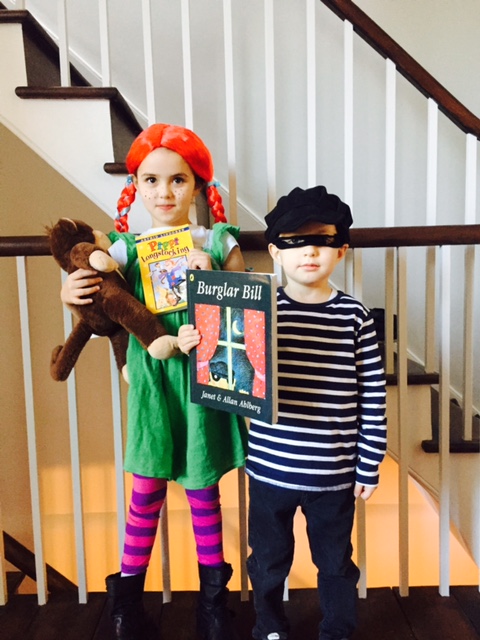
I (Clare) just found out that Thursday March 3 is World Book Day. What a wonderful event Image_WorldBookDayto celebrate. Check out this site from England: http://www.worldbookday.com which has lots of suggestions for activities for the day.

Thought you would like this picture of children dressed up as Pippi Longstocking and Burgler Bill!

Slowing Down to Learn: Mindful Pauses That Can Help Student Engagement

There has been so much attention to mindfulness in the last while. My (Clare) colleague, Chriss Bogert, VP at the Lab School, send me this great post about mindfulness in the class. Here is the link: http://ww2.kqed.org/mindshift/2015/02/17/slowing-down-to-learn-mindful-pauses-that-can-help-student-engagement/

By MindShift  February 17, 2015

The excerpt below is from the book “Mindfulness for Teachers: Simple Skills for Peace and Productivity in the Classroom,” by Patricia A. Jennings. This section is from the chapter entitled “Orchestrating Classroom Dynamics.”

Mindful Wait Time

Image source: Mindshift.org

One way to promote engagement and learning is to consciously create pauses throughout the day. We can create a sense of spaciousness in our classroom by slowing down the pace of our speech and punctuating our lessons with silence. Introduced well, this practice can improve classroom discourse.

The speed at which we can process information varies from person to person (Droit-Volet, Meck, & Penney, 2007). Some people process auditory information very quickly, while others tend to have more visual or sensorimotor strengths. In any case, when we have more time to process information, the quality of our thinking and learning improves. Younger children require more time to process than do older children, and adults often forget this as they zoom through content as if they were speaking to other adults. No matter what their ages, when we give our students just a little more time to process information, they learn better.

When I introduce this idea to teachers, I often hear concerns that they will be wasting valuable time doing nothing. It’s important to recognize that during the pauses, you and your students are not “doing nothing.” Your students may be considering several alternatives; they may be mulling a picture over in their mind; they may be making associations, comparisons, and contrasts. They may be trying to drudge up the right word from their vocabulary. When we give them this time, their processing becomes richer, deeper, and more abstract. When you rush through a lesson, you may deliver content more quickly and efficiently, but your students may not absorb the content very well, if at all.

The added bonus of these pause punctuations is that they give us as teachers a few moments to practice mindfulness. When this becomes an intentional part of our lessons, we can take the time to notice our body in space, the whole classroom, each student, and the small details that surrounds us, in the present moment. We give ourselves a short break—a micro-vacation from the constant activity of a busy classroom.

We can use the time to tune in to ourselves and our students. We can ask ourselves, “How am I feeling right now? How are the students feeling? What’s happening right now? What do my students need? How can I explain this better?” By taking mindful pauses, we are modeling mindful behavior for our students and letting us all have some time to process the information we are exploring together.

Typically we pause after we ask a question and before we call on someone to answer. Most of the time, this pause is only about one second long. Students who process information quickly are at an advantage under these conditions. They tend to be the ones who always raise their hands immediately. While the speedy students are answering the question, the slower students are still trying to process the question, so they may not hear and comprehend the answer or be able to assimilate it into their existing knowledge. If the quick pace of the session continues, some students may feel left behind.

However, educational researchers have discovered that if the pause between the teacher’s question and the student’s answer lasts between three and five seconds, significant changes occur in student behavior (Rowe, 1987). Students are more likely to respond appropriately to the questions, answer the questions correctly, and offer longer and more complex answers. There are fewer “I don’t know” or non-answer responses. Over time, many more students show higher levels of engagement (Honea, 1982; Swift & Gooding, 1983) and achievement test scores and school retention levels increase (Tobin & Capie, 1982).

Wait time has a positive effect on teachers as well. With conscious use of wait time, teachers’ questioning strategies become more varied and flexible, and they ask follow-up questions that require more complex information processing and higher-order thinking (Casteel & Stahl, 1973; Rowe, 1972; Stahl, 1990; Tobin, 1987).

Robert Stahl (1990) identified eight categories of wait time. When we formally introduce wait time, these periods of silence are trans- formed from periods of awkwardness into valuable moments of silence. The first category is the type of wait time we’ve already discussed: the time between a teacher’s question and the student’s answer. The other seven are as follows:

Within-student’s-response pause time. This is a three-second or longer pause that occurs when a student pauses or hesitates during the process of delivering a response to a teacher’s question. Teachers tend to interrupt students when they are thinking through their answers and take time to pause. However, when given the time, students often follow these periods of silence by successfully completing their responses.

Post-student’s-response wait time. This is a pause after a student has finished a response and other students are considering adding comments or reactions. This gives the other students time to think about what was said and to decide if they have anything to add.

Student pause time. This is a pause after a student has initiated a question, statement, or comment but doesn’t complete the thought. It may seem strange to formalize this type of pause, but this situation arises more often than we might realize because the tendency is to ignore the question rather than allow for a pause. This happens to me a lot. I have a thought, idea, or question. I’m getting ready to tell someone, and my mind goes blank. I can’t remember what I was going to say. When this happens to one of our students, we can give ourselves and the student a little time to recover, rather than just letting it drop.

Teacher pause time. This is a pause that the teacher intentionally initiates to consider what is happening, appraise the situation, and consider the best course of action. A particularly beneficial time for a teacher to pause is when a student has asked a question and the answer requires a complex answer. Taking time to consider how to frame the answer can improve student learning.

Within-teacher-presentation pause time. This is a pause that the teacher intentionally initiates during lecture presentations or other extended periods of content output. The teacher intentionally stops the flow of information to give students three to five seconds of silence to absorb the information and to consolidate their thinking. This type of pause requires no response from the students; it’s simply processing time. Using silence this way, teachers can chunk their content into bite-sized pieces to help students absorb and process the information better.

Student task completion work time. This is pause time intended to allow students to complete an academic task that demands undivided attention. The length of the pause should be related to the time it takes to complete a task. The challenge involved in this type of pause is how to handle the variation in completion time among students. If students learn the value of pausing and some of them finish early, they can use the time to extend their thinking about the subject in some way.

Impact pause time. This is the use of pause time to create impact or drama. When we pause, we can create a mood of anticipation. A dramatic pause can generate feelings of suspense and expectation.

Wait time can be challenging. Many of us get so excited about sharing our own thoughts and ideas that we tend to interrupt students, leaving no space in the discussion for students to process information and respond thoughtfully. In the skill-building practices at the end of this chapter, you will learn more about how to apply wait time in your classroom.

Patricia A. Jennings is an associate professor at the Curry School of Education at the University of Virginia.

Re-blog: Educators Who Inspire Spotlight Series

greenschoool

Today, I (Pooja) wanted to share a new online series created by my friend. Curious by international educational reform, her series aims to shed light on the insights and work of “educators who inspire” form around the globe. Her first spotlight introduces us to an educator, Aaron Eden, from the Green School in Bali. Eden is the Director of Entrepreneurial  Enterprise Learning at the Green School. Watch the interview and hear Eden’s thoughts on educational reform.


http://www.edumodels.ca/blog/educators-who-inspire-spotlight-series-aaron-eden-the-green-school-bali