All posts by ckosnik

A Blog About Blogging

I (Clare) cannot get over how much I enjoy blogging! I found this great article on Teachers College Record about using blogging in the classroom. Since we have a blog I thought I would share the link with you. http://www.tcrecord.org/Content.asp?ContentID=18070

An excerpt of the article is below.

Advances in Technology Pave the Path to Actual Learning: Using Blogging as a Learning Tool

by Toni Ann Brzeski — August 17, 2015

Do you know what the most common electronic device that college student’s possess? According to Joshua Bolkan, a multimedia editor for Campus Technology and The Journal, “85% of college students own laptops while smartphones come in second at 65%”. If technology is becoming a common practice among our students, what are we doing as professors to incorporate it into our classrooms? How can students use technology to reflect on their work? How can instructors use technology as a supplement in reading and writing courses? How can technology be used to deepen our student’s critical thinking skills? These are questions we should be asking ourselves in a world where technology is paving the way to learning.

INTRODUCTION

After attending school, working at part time jobs and internships, participating in extracurricular activities and spending time with family, it might seem that college students are too busy to fit all of their activities into the hours of the day. Given the hustle and bustle of their everyday lives, most students simply do not have the time to reflect on any part of their day, let alone what they learned in their college courses (Sharkov, 2012). It is our responsibility as educators to keep up with our students, to understand them, and to make reflection on course work a priority. If our students are not reflecting on their learning as a part of their everyday lives, then we are not really doing our jobs as educators.

In order to get to the bottom of this issue, and make reflection a priority, we must ask ourselves what we are we doing inside of our classrooms to promote reflection outside of the classroom. What are we doing in our classes to develop better reading, writing, and critical thinking skills?

MAKING A CONNECTION WITH TECHNOLOGY

Each semester, students step foot into my classroom with needs and interests different from those students with whom I worked before. Every semester, it is my job to take needs and interests and learn how to integrate them into my courses. While every semester is different and challenging, I have found that today’s advances in technology have been the key to bridging the gap between my students’ needs and the course curriculum.

Four years ago, during my first semester at Bronx Community College, I asked my reading students to purchase the book Tuesdays with Morrie by Mitch Albom. At that time my students purchased the book from an actual bookstore or an online source and came to class with a paperback copy. In the fall of 2012 I asked my students to purchase the same book. What they did next surprised me: my students took out their Kindles and iPads and immediately purchased the book. It was simple: given the speed with which these electronic devices allowed my students to purchase the book, we were prepared to start reading it the following week.

There was not one student waiting on a delivery or taking time out of their busy lives to purchase it at the bookstore. What I learned from this experience is that we are in a world where our daily activities are rooted in our electronic devices. Kindles, iPads, and smartphones are devices that our students are not only actively using, but using comfortably. This is just about the time when I discovered blogging.

If my students were using technology to complete very ordinary tasks, such as buying a book for their college course, I then asked myself what other ordinary tasks my students are using technology for. At first I was hesitant—call me old fashioned—but I didn’t believe students would become better readers and writers by posting their reflections online. I continued to question myself. What good is this? Aren’t journals a place for reflecting and expression?

BLOGGING AND THE BENEFITS TO THE COLLEGIATE COMMUNITY

WHAT IS BLOGGING ANYWAY, AND HOW IS IT BENEFICIAL FOR THE COLLEGE STUDENT?

As stated by George Couros, the Principal of Innovative Teaching and Learning at Parkland School Division in Alberta, Canada, “We want students to think critically about what they write. They are more likely to do this when they write for a larger audience as opposed to simply [writing] for the teacher. [Blogging] gives students the ability to archive their work for many years to come.” Therefore, having the “ability to [blog] [and] write for a worldwide audience has made an impact on many of our students” (Couros, 2013). Like Couros, I have found that blogging has had a significant impact. In fact, blogging is the very form of technology that has helped bridge the gap between my students’ interests and required course work.

Blogging gives those students an outlet for expressing their own ideas and reflecting on what they learned in class from the comfort of their own homes. As less interactive students continue to exercise their writing skills through blogging, re-reading, and building on their blog posts, their writing gradually improves over the semester. The fact that students can go back to previous blog posts and add thoughts or reflect on their own blogs—thereby, revising their work on their own without being told to do so by their teacher—is extremely beneficial and rewarding (Sharkov, 2012).

Blogging can be done on a train, bus, or even in a student’s own bedroom. Blogging doesn’t require the school library, or even pen and paper. A student can simply use a smartphone to connect to the world through blogging. When you present this type of accessibility to the busy student, he or she has the opportunity to engage with classmates beyond the short period of time that the student spends sitting in the classroom before heading out to a job or internship.

I have witnessed the benefits of blogging first hand. Last semester, I posted a question as a homework assignment on my blog site regarding a reading on Edgar Allan Poe. Within an hour of my students leaving class, they started to write blog posts on the site. My students were responding to my question, expressing their views, and in turn completing their homework assignment, while commuting home from school.

As I read my students’ blog posts, I was amazed at the level of insight that they were expressing in their entries. I had created a place where my students’ voices could be heard, and a place where they were able to interact and discuss a topic outside of the classroom using information that they learned while inside of the classroom. In essence, my students were taking time to reflect on what they learned in class, even with their busy schedules. In the past I would have taken a more conventional approach to this homework assignment by passing out comprehension questions on white paper and telling students to answer and bring them back to class the following week.

Blogging is beneficial to the teacher as well. For example, in my EDU 10 class, our class blog page contains all our work and posts can be found in one place with easy access. I find my students accessing our blog page from their cellphones, which tells me that they are able to complete assignments from anywhere—very convenient for them.

As a professor, I can easily assess my students’ reading, writing, and critical thinking progress by observing the improvement in their blog entries. This also keeps the line of communication open between my students and myself, which is helpful since our class only meets twice a week for a little over an hour. This blogging platform keeps the reflection ongoing throughout the week. Further, blogging allows me to learn my students’ point of view on certain topics and demonstrates their level of comprehension on what we are learning in class, in turn, helping me to create a lesson plan for the next class.

Intertwining Digital Technology Into Literacy Methods Courses

Pooja and I (Clare) did an analysis of 6 literacy teacher educators who truly intertwined digital technology into their literacy methods courses. (Book chapter will be published soon and we will post that info.) In the meantime I thought this chart might be useful for literacy teacher educators who are preparing for the upcoming school year.

Overall Goal: Teaching 2.0
Specific Goals Example
Make literacy classes participatory ·      Post comments on each other’s work (e.g., Wall Wisher, Text tagging, Voice Thread)

·      Post comments in asynchronous time

·      Provide student teachers with feedback on-line and encourage them to respond to the feedback

·      During class student teachers post questions or contribute comments to a shared space

·      Before class student teachers post comments about the readings

·      Create Wordles when analyzing a text

Create an infrastructure for accessing resources and for sharing resources ·      Develop a repository of resources on a university platform (e.g., Blackboard) or on their own website

·      Share books, videos, websites on a class Wiki

·      Use DT tools (e.g., Smartboard) to access info on the spot while teaching

·      Access materials/videos for use in teaching (e.g., Globe Theatre productions of Shakespearean plays)

Provide authentic learning experiences ·      Student teachers make an iMovie on a specific topic (e.g., on bullying)

·      Analyze videos student teachers created during their practice teaching

·      Skype with authors they are reading

·      Participate in teacher communities by contributing to blogs and Twitter feeds

·      Participate in teacher-focused events (e.g., contribute a piece to a BBC competition on current affairs/news)

·      Student teachers create podcasts on an aspect of literacy to share with broader community

·      Watch videos of authors they are reading (both scholarly articles and children’s literature)

·      Student teachers post photographs of themselves on the university platform as a way to introduce themselves to their classmates

Gain an understanding of the increasingly globalized nature of literacy

·      View videos from other countries (e.g., teachers in Japan) to see similarities and differences with their own context

·      Participate in world-wide teacher communities

·      Participate in crowd-sourcing

·      Share statistics on literacy beyond home country

·      Use visual representations (e.g., photographs) to move student teachers beyond their immediate world to unpack a range of issues (e.g., gender representation in children’s literature)

Reframe issues related to literacy and literacy teaching ·      Watch videos of teaching (exemplary or poor practice) and analyze them

·      Use videos from their practice teaching classes as “data” for their inquiry projects

·      Student teachers select a picture from a photo array and relate the action in the photograph to a theory they have been working on

Bridge practice teaching and the academic program ·      Reflect on practice teaching by sharing and analyzing photographs/videos they took

·      Use email and social media to remain connected during practice teaching and as a place for student teachers to ask questions or share concerns

·      Create a video case study of pupils which relates to a theory of literacy

We also created a graphic to capture the elements of their pedagogy:

Literacy Graphci

Their courses were fundamentally different because they had truly reconceptualized their teaching, not simply tinkering by adding glitzy DT; rather, they constructed highly participatory experiences that occurred before, during, and after the official 3-hour class. Learning occurred in multiple ways: readings, f2f discussions, online communities, viewing, analyzing, and providing feedback on texts which immersed student teachers into the issues of literacy. It went far beyond introducing “methods” to teach literacy; it was framed by learning to teach literacy as a global citizen. This ambitious goal was matched with unparalleled support by the professors. Their multimodal/technology-rich teaching practices modeled the possibilities available to teachers and students; however, they were constantly trying to balance preparing student teachers to address the traditional forms of literacy, which they will probably observe in schools, with more expansive understandings. They had not discarded typical elements of literacy methods courses such as teaching the writing process or components of a balanced literacy program.

Why I Can No Longer Teach in Public Education

Stephanie Keiles wrote this powerful letter on why she can no longer teach in public education. It is a true indictment of public education in the U. S. We cannot and should not be losing teachers like Stephanie. I (Clare) would recommend that you have a hankie or two available as you read it! Share it with public officials.

http://www.huffingtonpost.com/stephanie-keiles/why-i-can-no-longer-teach-in-public-education_b_7974784.html

ImagesTeacher'sDesk

Posted: 08/12/2015 8:35 am EDT Updated: 08/12/2015 8:59 am EDT

I am sitting here in my lovely little backyard on a beautiful Michigan summer day, drinking a Fat Tire Amber Ale, and crying. I am in tears because today I made one of the hardest decisions of my life: I resigned from my job as a public school teacher. A job I didn’t want to leave — but I had to.

A little background. I didn’t figure out that I wanted to be a math teacher until I was 28. As a kid I was always told I was “too smart” to be a teacher, so I went to business school instead. I lasted one year in the financial world before I knew it was not for me. I read a quote from Millicent Fenwick, the (moderate) Republican Congresswoman from my home state of New Jersey, where she said that the secret to happiness was doing something you enjoyed so much that what was in your pay envelope was incidental.

I quit my job as an analyst at a large accounting firm determined to find my passion. I floundered for a while, and then eventually got married and decided I would be a stay-at-home mom, but only until my kids were in school. Then I would need to find that passion.

I was pregnant with my oldest child, sitting on a sofa in Stockholm, Sweden, when I had my epiphany: I would be a math teacher — a middle school math teacher! I thought about it and it fit my criteria perfectly. No, I wasn’t thinking about the pension, or the “part-time” schedule, or any of the other gold-plated benefits that ignorant people think we go into the profession for. Two criteria: I would enjoy it, and I would be good at it.

Nine years and four kids later, I enrolled in Eastern Michigan University’s Post-Baccalaureate teacher certification program, and first stepped into my own classroom at the age of 40. I was teaching high school, because that’s where I had my first offer, and I was given five classes of kids who were below grade-level in math. And I still loved it.

I knew I had found my calling.

After three years, I switched districts to be closer to home and to teach middle school, where I belonged. I felt like I had died and gone to heaven! I was hired to teach in my district’s Talented and Gifted program, so I had two classes of 8th graders who were taking Honors Geometry, and three classes of general 8th grade math.

This coming year, I was scheduled to have five sections of Honors Geometry — all my students would be two, and sometimes three, years advanced in math. I was also scheduled to have my beloved first hour planning period, and I was excited to work with a new group of kids on Student Council. It was looking to be a great year — and I’m still walking away.

My friends, in real life and on Facebook, know what a huge supporter of public schools I am. I am a product of public schools, and my children are the products of public schools. Public education is the backbone of democracy, and we all know there is a corporatization and privatization movement trying to undermine it.

I became an activist after Gov. Rick Snyder and his Republican goons took over Michigan and declared war on teachers. I am part of a group called Save Michigan’s Public Schools. Two years ago, we put on a rally for public education at the Capitol steps that drew over 1,000 people from all over the state with just three weeks’ notice and during summer break.

I have testified in front of the Michigan House Education Committee against lifting the cap on charter schools, and also against Common Core. I attended both NPE conferences to meet with other activists and bring back ideas to my compadres in Michigan. I have been fighting for public education for five years now, and will continue to do so.

But I just can’t work in public education anymore.

Coming from the Republicans at the state level and the Democrats at the national level, I have been forced to comply with mandates that are not in the best interest of kids. I am tired of having to perform what I consider to be educational malpractice, in the name of “accountability.”

The amount of time lost to standardized tests that are of no use to me as a classroom teacher is mind-boggling. And when you add in mandatory quarterly district-wide tests, which are used to collect data that nothing is ever done with, it’s beyond ridiculous.

Sometimes I feel like I live in a Kafka novel.

Number one on my district’s list of how to close the achievement gap and increase learning? Making sure that all teachers have their learning goals posted every day in the form of an “I Can” statement. I don’t know how we ever got to be successful adults when we had no “I Can” statements on the wall. (sarcasm)

In addition, due to a chronic, purposeful underfunding of public schools here in Michigan, my take-home pay has been frozen or decreased for the past five years, and I don’t see the situation getting any better in the near future. No, I did not go into teaching for the money, but I also did not go into teaching to barely scrape by, either.

As a 10th-year teacher in my district, I would be making 16 percent less than a 10th-year was when I was hired in 2006. Plus, I now have to pay for medical benefits, and 3 percent of my pay is taken out to fund current retiree health care, which has been found unconstitutional for all state employees except teachers. And I’m being asked to contribute more to my pension.

Financial decisions were made based on anticipated future income that never materialized, for me and for thousands and thousands of other public school teachers. The thought of any teacher having to take a second job to support him/herself at any point in his/her career is disgusting to me, yet that’s what I was contemplating doing. At 53, with a master’s degree and twelve years of experience.

If I were poorly compensated but didn’t have to comply with asinine mandates and a lack of respect, that would be one thing.

And if I were continuing my way up the pay scale but had to deal with asinine mandates, that would be one thing. But having to comply with asinine mandates and watching my income, in the form of real dollars, decline every year? When I have the choice to teach where I will be better compensated and all educational decisions will be made by experienced educators? And I will be treated with respect? Bring it on.

So as of today I have officially resigned from my district, effective August 31, which is when I will start my new job as a middle school math teacher at an independent school. I am looking forward to being treated like a professional, instead of a child, and I’m pretty sure I will never hear the words, “We can’t afford to give you a raise”, or worse (as in the past two years), “You’re going to have to take a pay cut.” I am looking forward to not having to spend hundreds and hundreds of dollars on classroom supplies. And the free lunch, catered by a local upscale market, will be pretty sweet, too.

I will miss my colleagues more than you could ever know, especially my math girls and my Green Hall buddies. It really breaks my heart to leave such a wonderful group of people. In fact, it’s pretty devastating. But I have to do what’s best for me in the long run, and the thought of making more money and teaching classes of 15 instead of 34, and especially not having to deal with all the BS, was too much to refuse.

I will always be there to fight for public education. I just can’t teach in it.

So You Want to be a Writer!

Most of the readers of this blog are writers. I (Clare) no matter how much I write, I still smith0809-01finding writing hard. It takes LOTS of work. Although we tend to write for academic audiences an article by Russell Smith in the Globe and Mail resonated with me. Titled – So You Want to Be a Writer has some useful advice.

Here is the link to the entire article: http://www.theglobeandmail.com/arts/books-and-media/six-tips-to-help-you-successfully-write-and-publish-your-first-book/article25879126/

I listed his six pieces of advice and # 6 is probably the most important! For all doctoral students “bum in chair” is very important.

  1. Stop thinking about the business side of it
  2. Don’t worry about someone stealing your idea
  3. Don’t get too much feedback

Your aunt and your high-school English teacher are going to have very different ideas about what makes a great novel. Listen to both of them and you will be no further ahead.

  1. Don’t self-publish

Again, genre writers – in sci-fi, mystery and romance – have had much greater luck with self-publishing because they are already participants in large online communities and so already have audiences. The vanity presses that promise you they will market and promote your literary book are sharks; nobody reads their press releases. Don’t give them your money. Don’t think you can build an audience just by acquiring Facebook friends.

  1. When submitting your manuscript to agents or publishers, remember that nothing counts except what is actually written in your bundle of pages – not endorsements from bloggers, not courses you have taken, not possible cover designs. The professionals will skim through all those and start reading the first page of the manuscript. By page five they will know if you are an actual writer or not.
  2. Bum in chair This is still the most accurate and useful description of how to write a book. You must occupy that chair until it is written. Even in the world of phone-novels and tweet-novels and ghost-written memoirs, somebody has to worry for many, many hours about the difference between that and which and the appropriate use of metaphor. Somebody has to sit in the chair.

A Memo To States: This Is How You Create A Teacher Shortage

Image Teacher Shortage

When I (Clare) was at AERA in the spring many of my American colleagues were despairing about the dramatic drop in applications to teacher education programs. The article below by Rebecca Klein helps demystify why teaching has becoming a less attractive career choice.

A handy recipe for a teacher shortage like the one in Kansas.

Rebecca KleinEducation Editor, The Huffington Post

http://www.huffingtonpost.com/entry/kansas-teacher-shortage-recipe_55c28ce6e4b0f1cbf1e3a2d7?cps=gravity_5059_5212323749430778575&kvcommref=mostpopular

It’s back-to-school time in Kansas, and kids are starting to trickle back into school hallways. But when these students arrive at their classrooms, they may not find a teacher standing at the front.

Kansas is suffering from a well-documented teacher shortage. Last year, more than 2,320 educators in the state retired, compared to 1,260 in the 2011-2012 school year, according to data from the Kansas State Department of Educaton. At the same time, 654 teachers decided to leave the state last year, compared to just 399 in 2011-2012. Over 270 open teaching and non-teaching school staff positions were listed on the Kansas Education Employment Board’s website as of Thursday afternoon.

Kansas has previously seen teacher shortages in areas like special education, as well as math and science. But this year, even typically popular jobs, such as teaching social studies classes or elementary school students, are proving hard to fill, KEEB coordinator Julie Wilson told The Huffington Post.

Those familiar with the situation say it is not surprising. A number of factors have recently converged to create a teacher shortage in the Sunflower State. Some of these factors are the result of actions taken by the state government and legislature. Over the past few years, Kansas has cut back on the job protections that give teachers due process rights, created a new school funding system that a district court panel ruled unconstitutional and cut taxes so severely that some districts lacked the revenue to stay open last school year.

“I find it increasingly difficult to convince young people that education is a profession worth considering, and I have some veterans who think about leaving,” Tim Hallacy, superintendent of Silver Lake Schools, told HuffPost last month. “In the next three years I think we’ll have maybe the worst teacher shortage in the country — I think most of that is self-inflicted.”

For other states looking to wind up in the same situation, here’s a surefire recipe for a teacher shortage:

The How To Create A Teacher Shortage Recipe 

Ingredients:

1 cup of rhetoric against teachers

2 pounds of bills and programs that attempt to de-professionalize teaching (specifically, a proposed bill that would make it easier to jail teachers for teaching materials deemed offensive and a new program that lifts teacher licensure requirements in certain districts)

3 tablespoons of a lack of due process rights for teachers

½ cup of finely diced repeated budget cuts amid a state revenue crisis

1 stalk of a new school funding system that is currently being challenged in state court

2 grinds of growing child poverty throughout the state

3 tablespoons of low teacher pay

1/3 cup of large numbers of teacher retirements

What Happened to Greg Louganis?

I (Clare) watched the most fascinating documentary Back On Board: Greg Louganis about the diving champion Greg Louganis. His story is tragic – he won 4 Olympic gold medals (1984 and 1988 Olympics) but once it was revealed that he was HIV+ sponsorships vanished. In 2011, four-time Olympic champion Greg Louganis is far from the public eye and struggling to pay his mortgage. Now, the openly gay, HIV+ world-class athlete returns to diving to mentor the USA Olympic hopefuGreg Louganis ls. Here is a little clip from the documentary:

http://www.hbocanada.com/details/?id=98898

The documentary is extremely well done – not sentimental, Louganis tells his story, and the viewer can draw his/her own conclusions. We have come a long way in accepting gay athletes but there is still so much work to be done. This documentary would be so useful to show to students both in terms of structure and in content. It is being rebroadcast on HBO a number of times this month and I think it is on Netflix. It is well worth watching (be sure to have a hanky or two available because Louganis is almost destitute, he loses his house, is selling his Olympic gold medals …. And he seems like the nicest fellow. Yes he was naïve but then he was very young).

Are you happy?

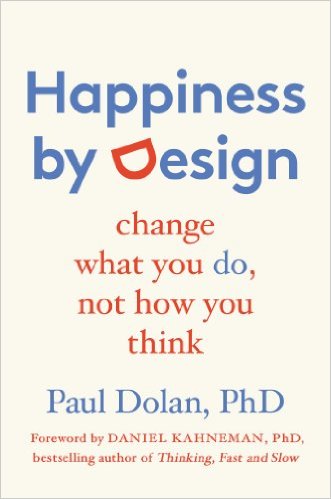
41e13pkIBfL._SX329_BO1,204,203,200_I (Clare) was reading Paul Dolan’s latest book: Happiness by Design: Change what you do not how you think. http://www.amazon.ca/Happiness-Design-Change-What-Think/dp/159463243X/ref=sr_1_1?ie=UTF8&qid=1438260329&sr=8-1&keywords=Paul+dolan

There are many interesting parts – understanding happiness, defining happiness … on page 77 there is an interesting chart which reports a survey conducted in the UK re: who are happy. Below are the results:

Florists and gardeners – 87%

Hairdressers and beauticians – 79%

Plumbers and water workers – 76%

Marketers and PR people – 75%

Scientists and researchers – 69%

Leisure and tourism workers – 67%

Construction workers – 66%

Doctors and dentists – 65%

Lawyers – 64%

Nurses – 62%

Architects – 62%

Child care and youth workers – 60%

Teachers – 59%

Accountants – 58%

Car workers and mechanics – 57%

Electricians – 55%

Caterers – 55%

HR and personnel staff – 54%

IT and telecom workers – 48%

Bankers – 44%

Some of these results surprised me! So are you happy? Do you think the results have changed over time? Do you teachers in previous decades were happier? And bankers at 44%. Hhhhmmm…..

Funding for Private Schools

Image Flag AustraliaClive and I (Clare) are still in Australia where we are having a great time. On Friday, July 17th I was reading an article in The Sydney Morning Herald by Eryk Bagshaw about funding for schools. Australia has a significant number of private (independent) schools – approximately 35% of pupils attend private schools. From my Canadian perspective this number is staggering! Having so many children in private schools impacts on the viability of public schools. Unlike Canada private schools in Australia receive government funding – substantial funding. Eryk Bagshaw reports that by 2020 the average public school student could receiver $100 less a year in state and government funding than a similar independent school student. Just wondering why private schools are receiving any funding let alone more funding than public schools.