All posts by ckosnik

Feedback: To Help the Author or Show Off What the Reviewer Knows?

checkmark imagesAll of us in academia are subject to the peer-review process. I (Clare) was revising a book chapter this past weekend and although rewriting is not pleasant, this time it was not a hard slog. The two reviewers provided sensible advice – give an example to clarify this point; please round out the point in this paragraph; connect the two tables … Their feedback was to improve the piece. This has been a good experience because the chapter is definitely clearer and more compelling. But this experience is not typical of the “peer review” feedback process. Far too many times I have had feedback that left me shaking my head. We submitted a paper to a journal and the feedback was a 3 page rant on the limits of a grounded theory method (which was appropriate for a study of literacy teacher educators’ experiences). What was the point of the feedback from someone who was clearly a quantitative researcher? Another time the feedback on a grant proposal which was studying teachers’ use of a digital technology – how their pedagogy and identity changed (or did not change) — was so off-base. The reviewer wanted us to include data on the children’s (student’s) use of technology in their personal lives. That is a different study. So why do reviewers provide comments that are not relevant or connected to the actual piece in hand? Did they not actually read it? Are they trying to show off what they know? (The latter is a bit ironic since the review is anonymous!)

I do not have answers to these questions. I would like to thank the reviewers who take the time (and park their ego at the door) to provide useful advice.

12 pieces of advice for giving talks that have impact

Many of us who read this blog have to give talks. I (Clare) found this list of helpful hints for giving talks fabulous. I so agree with a few of the points: “jargon is death”. How often have you sat through a talk that is a string of jargon and wondered what is he talking about? I was so happy to see “story as queen” on the list. I love hearing stories and when they connect to the findings/research the talk comes alive. I know that the next time I have to give a talk, I will review this list to make sure I do “one kickass thing” and give myself permission to stumble. Enjoy.

Public Art: Treasures in Our City

Public Art 1

In this blog we have had many postings about literacy, the changing nature of literacy, ways to teach literacy, issues around the teaching of literacy …. This past week I (Clare) experienced another form of literacy – one that has been on my doorstep but I did not even notice it was there. With my amazing book club we did a tour of public art in Toronto. I was truly shocked at the number of pieces scattered through the city. Many I had walked by many times but was wholly ignorant that they were art. On the tour the guide pointed out pieces of art in public spaces, explained the significance of each, described the materials used, and provided some background to the author. It was an amazing trip. I know that I will never be so inattentive to my surroundings again. So readers look around your city to find some public art. Here are some photos of what we saw in Toronto. Our guide told us that there are many more in the city – I just need to look for them. In addition to stopping to smell the roses, I am going to also stop to enjoy the art.

PublicArt#2.jpeg

Reblogged: The Becoming Radical: Beware Grade-Level Reading and the Cult of Proficiency

I (Clare) am surprised/shocked/unsettled by the trend of  using levelled readers in classrooms. This is such a mechanistic way to approach reading. Yes we wants pupils to have success with reading but levelled readers have become the “diet” for many children. I found this article by Thomas really interesting. Here is the link: http://nepc.colorado.edu/blog/beware-grade-level-reading

Few issues in education seem more important or more universally embraced (from so-called progressive educators to right-wing politicians such as Jeb Bush) than the need to have all children reading on grade level—specifically by that magical third grade:

Five years ago, communities across the country formed a network aimed at getting more of their students reading proficiently by the end of 3rd grade. States, cities, counties, nonprofit organizations, and foundations in 168 communities, spread across 41 states and the District of Columbia, are now a part of that initiative, the Campaign for Grade-Level Reading.

However, advocating that all students must read at grade level—often defined as reading proficiency—rarely acknowledges the foundational problems with those goals: identifying text by a formula claiming “grade level” and then identifying children as readers by association with those readability formulas.

This text, some claim, is a fifth-grade text, and thus children who can “read” that text independently are at the fifth-grade reading level.

While all this seems quite scientific and manageable, I must call hokum—the sort of technocratic hokum that daily ruins children as readers, under-prepares children as literate and autonomous humans, and further erodes literacy as mostly testable literacy.

So who does this grade-level reading and proficiency benefit?

First, lets consider what anyone means by “reading.” For the sake of discussion, this is oversimplified, but I think, not distorting to the point of misleading. Reading may be essentially decoding, pronouncing words, phrases, and clauses with enough fluency to give the impression of understanding. Reading may be comprehension, strategies and then behaviors or artifacts by a reader that mostly represent (usually in different and fewer words) an accurate or mostly accurate, but unqualified, restating of the original text.

But reading may also (I would add should) be critical literacy, the investigating of text that moves beyond comprehension and places both text and “meaning” in the dynamic of reader, writer, and text (Rosenblatt) as well as how that text is bound by issues of power while also working against the boundaries of power, history, and the limitations of language.

In that framing, then, grade-level reading and proficiency are trapped mostly at decoding and comprehension, promoting the argument that all meaning is in the text only (a shared but anemic claim of New Criticism).

This narrow and inadequate view of text and reading (and readers) serves authoritarian approaches to teaching and mechanistic structures of testing, and more broadly, reducing text and reading to mere technical matters serves mostly goals of surveillance and control.

Consider first the allure of formula that masks the arbitrary nature of formula. Plug “The Red Wheelbarrow” by William Carlos Williams into a readability calculator—first in its poetic format of lines and stanzas, and then as a grammatical sentence.

As a poem, apparently, the text is about 4th grade, but as a sentence, nearly 9th grade.

The problem is that readability formulas and claims of “grade level” are entirely the function of the limitations of math (the necessity to quantify and then the byproduct of honoring only that which can be quantified)—counting word syllables, number of words in sentences.

Reducing text to numbers, reducing students to numbers—both perpetuate a static and thus false view of text and reading. “Meaning” is not static, but temporal, shifting, and more discourse or debate than pronouncement.

“The Red Wheelbarrow” is really “easy” to read, both aloud and to comprehend. But readability formulas address nothing about genre or form, nothing about the rich intent of the writer (for example, poetry often presents only a small fraction of the larger context), nothing about all that that various readers bring to the text.

And to the last point, when we confront reading on grade level or reading proficiency, we must begin to unpack how and why any reader is investigating a text.

As I have detailed, we can take a children’s picture book—which by all technical matters is at primary or elementary grade levels—and add complex lenses of analysis, rendering the same text extremely complex—with a meaning that is expanding instead of static and singular.

Text complexity, readers’ grade level, and concurrent hokum such as months or years of learning are the grand distractions of technocrats: “it is a tale/Told by an idiot, full of sound and fury,/Signifying nothing” (The Tragedy of Macbeth, 5, 5).

Grand pronouncements about grade-level reading and proficiency, then, benefit politicians, textbook companies, and the exploding testing industry. But not children, not literacy, and not democracy.

Leveled books, labeled children, and warped education policy (grade retention based on high-stakes testing) destroy reading and the children advocates claim to be serving.

Thus, alas, there is simply no reading crisis and no urgency to have students on grade level, by third or any grade.

The cult of proficiency and grade-level reading is simply the lingering “cult of efficiency” that plagues formal education in the U.S.—quantification for quantification’s sake, children and literacy be damned.
Then and now

I (Clare) found this post so interesting and relevant. In my university dissemination of research is strongly encouraged so I have tried to make better use of social media — this blog! With 26,000+ hits and counting our website has certainly helped us disseminate our research in ways we could not do with traditional print (e.g., peer reviewed journals).

Tseen Khoo's avatarThe Research Whisperer

Photo by Jeff Sheldon | unsplash.com Photo by Jeff Sheldon | unsplash.com

In the last five years or so, I’ve completely changed my attitude to communicating research.

Guess how much I used to do before?

None.

I published in journals and scholarly books. I presented at academic conferences and ran a research network. I dutifully applied for research funding. I thought of myself as a good, productive academic.

And that was it. I wasn’t really on Twitter and I blogged about our network activities – but only really for our members. I didn’t do community forums or write for other non-academic publication outlets.

Don’t believe me? Read on!

View original post 744 more words

More on Incremental Change in Education

In January, I (Clive) wrote about Mary Kennedy and her stress on incremental change in education – as opposed to “bold” innovation. Since then, I’ve come across an excellent book that takes a similar stance: Enlightenment 2.0 (HarperCollins, 2014) by Joseph Heath, a philosophy professor at the University of Toronto. Though decidedly progressive himself, Heath writes in support of Edmund Burke’s advocacy of cumulative improvement, the rationale for which he paraphrases as follows:

“If everyone insists on reinventing everything, we’ll never get anywhere, simply because no one is smart enough to understand all the variables and grasp all of the reasons that things are done exactly the way they are.” (p. 88)

Hence the title of his book: this is a second take on an “enlightenment” approach to social reform, one that builds on past practice in just the manner Kennedy recommends. But Heath raises a crucial question:

“[O]nce we acknowledge this, is the only alternative to fall back into an uncritical acceptance of tradition? Or is it possible to use this insight as the basis for a more successful form of progressive politics?” (p. 83)

I’ll continue to read the book and let you know about Heath’s alternative (that’s a promise!). Meanwhile, one solution that occurs to me in the education field is to give teachers more voice, so they can share their practices and fine-tune them. More opportunities for teacher dialogue are needed: in school settings, during PD events, in university classes, etc. In this way, teachers can help each other tinker with how they do things, rather than having some “expert” come in and tell them they’ve got it all wrong. There’s a place for outside input, but it should be used critically – and incrementally.

Teaching, teacher education, incremental change, Joseph Heath, Enlightenment 2.0.

Don’t Compare Your Life to Someone’s High-Light Reel by Henrik Edberg

My brother sent me (Clare) the following blog my Henrik Edberg on the positivity site. http://www.positivityblog.com/index.php/2015/05/13/dont-compare-to-high-light-reel/

I just loved it because is so sensible. Enjoy!

“When you are content to be simply yourself and don’t compare or compete, everybody will respect you.”
Lao Tzu

Today I’d like to focus on a negative habit that creates insecurity within, erodes self-esteem and can make you feel quite unhappy with your own life .

It’s something that has sprung up as we have moved a part of our lives on to the internet and social media.

And that habit is to compare yourself and your life to other people’s high-light reels.

What do I mean by that?

That it’s so easy to start comparing your life to the lives of friends, old classmates or celebrities of all sizes as you each day see how perfect their homes, kids, love lives are and how filled their lives are with wonderful moments.

But is that their whole lives that is shared on Facebook and Instagram?

Usually not.

It’s just the high-light reel of that person’s life.

The positive moments. And it’s natural thing really, to want to share such moments or days with your friends or followers.

Now, for some people this may develop into something destructive. Into a way of creating a more perfect image of one’s life to get that hit of instant gratification as people add positivity via comments, likes and upvotes.

But everyone has problems at times. They fail. Get sick. Have flaws, bad days or negative habits. No matter who you are or what you look like or do.

I have those issues too. Just like anyone else. I still stumble and fall on some days. Doubt myself or am pessimistic from time to time. That’s human.

So don’t strive for being perfect or measuring yourself against someone else’s high-light reel.

Here are three healthier steps you can take instead:

  • Step 1: Compare in smarter way.There will always be people who have more or nicer things than you. Or are better than you at something. No matter what you do.
So if you want to compare then do it in a way that won’t make you feel envious and inferior. Do it by comparing yourself to yourself. See how far you have come. Look back at the obstacles you have overcome, what you have learned and how you have grown.
  • Step 2: Spend your energy and time on what matters the most.Step by step spend the hours in your day and week on building habits that will make you a better person and a happier one too.
For example, aim at being optimistic 70% of the time if you have been it maybe 50% in the past month. Or go out running for just 5 minutes for starters tonight instead of checking those social media accounts one more time.
  • Step 3: Let go of what drags you down.If necessary unsubscribe or remove social media accounts from your flow if you feel they are dragging you down and lowering your self-esteem. Even if those things might also be entertaining right now.

Life isn’t just a high-light reel no matter who shares it.

So look beyond that, remember that everyone is human and stop comparing yourself to that limited view of someone.

In the long run you’ll be happy that you did.

Ashleigh Woodward: A Natural Blogger

In my (Clare) literacy course (at the graduate level) this past year I gave my students options for their final assignment. It had to be a “product” and could take any form. Many chose to use digital technology (e.g., Powtoons) while others did artistic presentations (e.g., original painting, scrapbook). Ashleigh Woodward chose to start a blog. It is truly terrific – here is the link to it. http://educatorscollection.blogspot.ca/?view=classic

I think that Ashleigh is a natural blogger. I love her range of topics: 20 books to read in 2015, bullying, books about residential schools, Three Ring (a program designed for teachers to use when collecting evidence about student learning) …

Here is one of her blogs:

Teaching vs. Googling: Purposeful Technology in the Classroom

My grandma was a teacher for many, many years. She taught all over public schools in Ontario and Quebec, every grade K-8, and spent many of the final years of her career in special education classrooms. My three great aunts were also wonderful teachers, as was my great-grandma – all on the same side of the family. Times were different, teaching was different – but some things were surely the same. When I think about their careers, though, I’m left with a burning, frantic question.

How did they teach without the internet?!

Can’t spell a word I want to use? Apple’s dictionary program. Want to share files with a colleague? DropBox or AirDrop. Need somebody to cover my yard duty? Group email. Want my students to meet and interview an MPP? Skype. Stuck for a graphic organizer or a primary PE game? Pinterest. Need general information or want to find a good math game? Google. Want to get some interactive map work going? SmartBoard. Want to get my students watching some videos about the nervous system? QR Codes and iPads. Need to gather instant feedback as we prepare for a test? Smart Clickers. Shared writing as we practice quotation marks? Laptop and Word. Inputting marks and generating grades? GradeKeeper. Writing and publishing report cards? Trevlac. Posting class field trip forms and reminders? Whipplehill website.

… I could go on, and on… and I probably already have overshared. I didn’t even touch on YouTube, PowerPoint or social media!! There’s no denying how the word wide web has allowed us to connect with other educators, around the world, to share ideas, resources and strategies. Look at Teachers Pay Teachers! That’s an entire other blog post in and of itself. All these resources are out there and available to anyone who knows that search terms to use, and who is willing to spend some time and possibly a little bit of money.

This brings me to my point. Grandma would have considered all the students in her class, and created assignments, lessons and tasks for them to complete, from scratch. They were tailor-made, in many cases, likely using a textbook as their base. While we pride ourselves on moving away from textbooks in an effort to differentiate our students’ learning, I worry that printing booklets from TPT or showing instructional videos is merely repurposing the textbook.

My view, for what it is worth, is that technology is a tool to help us, as teachers, deliver content, and to help our students demonstrate their understanding. It is not a catch-all of worksheets to be printed  and distributed without purposeful instruction, meaningful learning or engaging inquiry. Technology can support us in our teaching, in our ability to meet the needs of the students in our classroom, but it should not be the only place we turn to for Monday’s lesson. I think that in Ontario we still have a lot of creativity and “craft” associated with our profession, as we do not follow the scripted, step-by-step lessons mandated by many school boards in the States, and this is to our students’ immense benefit.

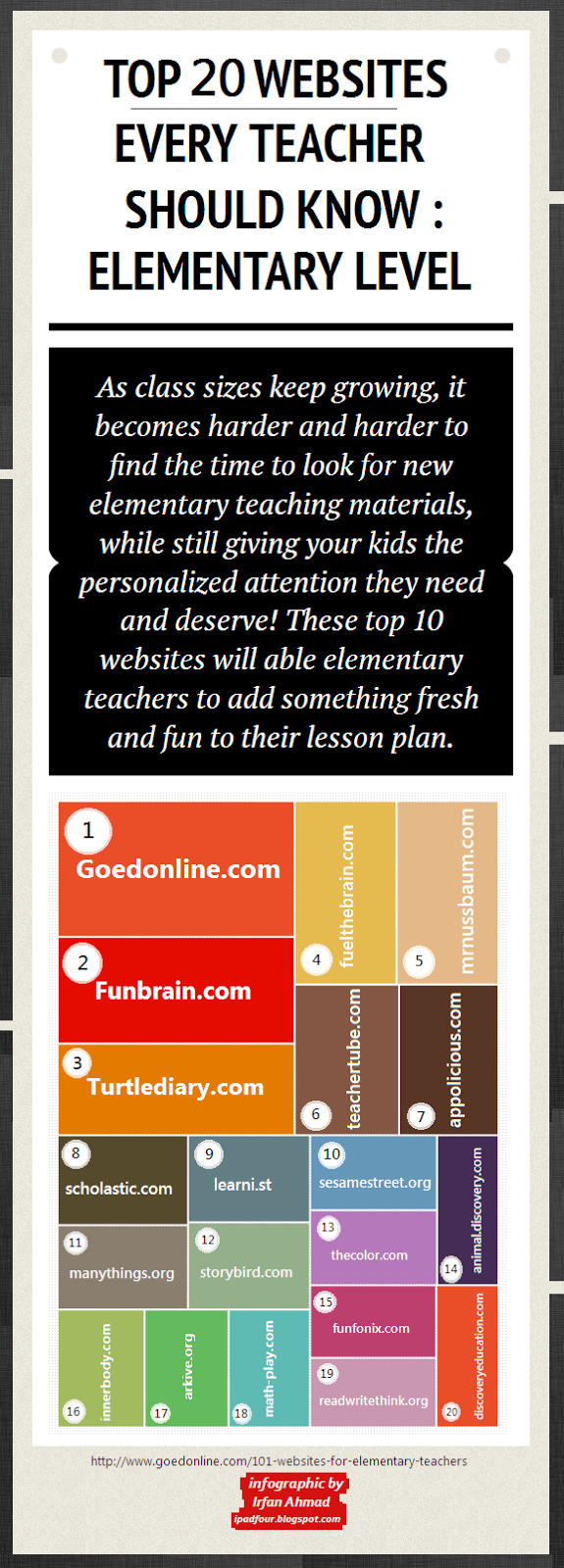
Image 20-Best-Websites-Elementary-Teacher-Should-Know-Infographichttp://elearninginfographics.com/wp-content/uploads/20-Best-Websites-Elementary-Teacher-Should-Know-Infographic.png

Voices Into Action

My (Clare) friend David Booth introduced me to an amazing program, Voices into Action, which helps students develop their David Booth social awareness.
Voices into Action is an online resource dedicated to providing students with access to information on issues regarding human rights, prejudice, and hatred. Designed by curriculum experts, this program utilizes a wide variety of media to present compelling information on a history of human suffering, stemming from social injustice that is still a problem today. This site will give you the knowledge and tools to speak out, and to go even further by turning your voice into action!
I have looked through some of the resources and they are fantastic – discussion questions, videos, news analysis, case studies, in-person interviews ….. There are 6 units available: human rights; genocide, understanding prejudice and discrimination, immigration; and personal action. All teachers I am confident will find these resources so useful. Here is the link: http://www.voicesintoaction.ca/Home

Larry SwartzFYI – Larry Swartz my dear friend is one of the Project Managers of Voices into Action. From my experience any project that Larry works on is outstanding!