All posts by ckosnik

Graham Parr: Experts Speaking about Teacher Education

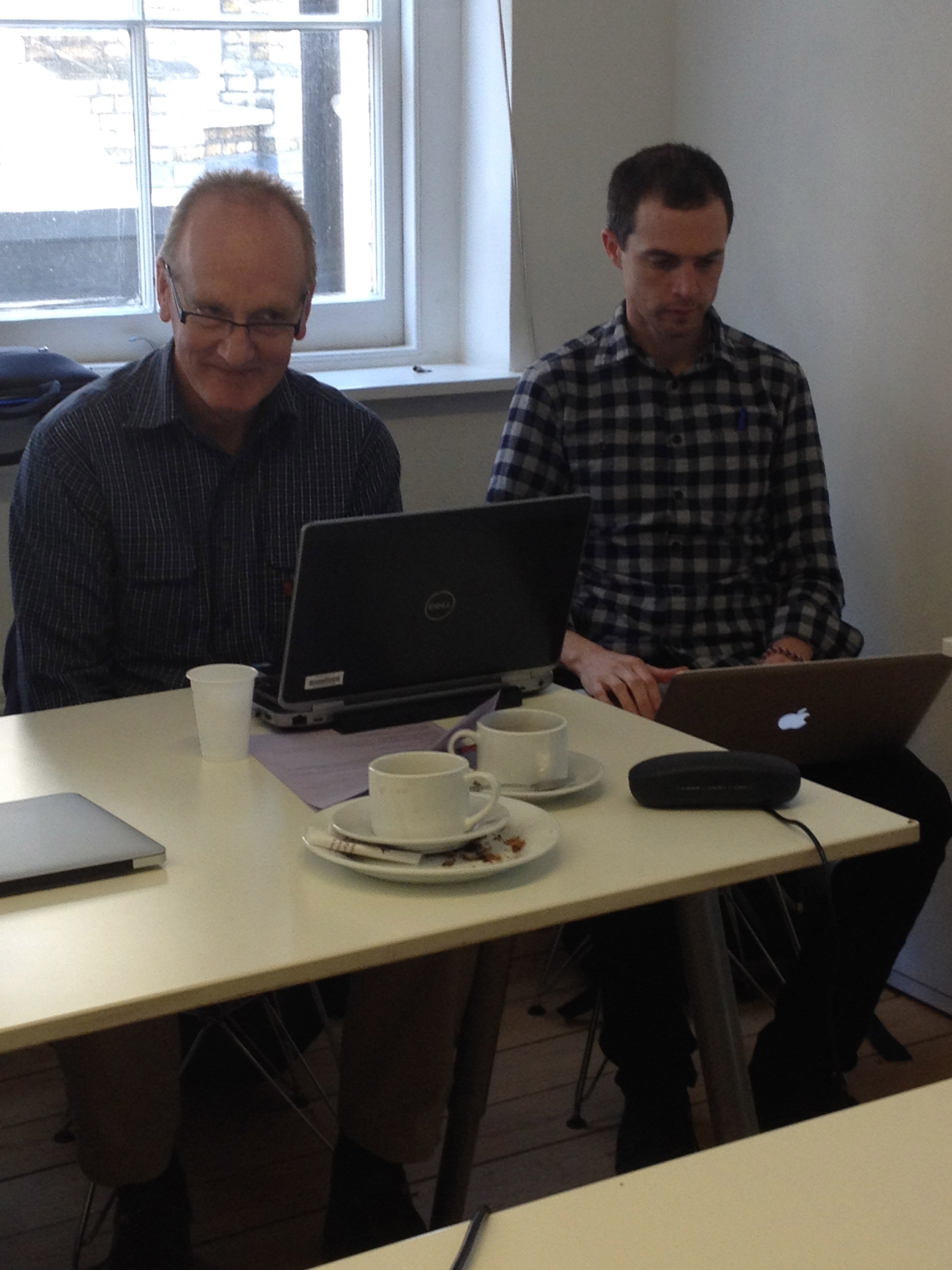
Last year I (Clare) received a grant for the project: Rethinking Literacy Teacher Education for the Digital Era: Teacher Educators,Graham Parr Literacy Educators, and Digital Technology Experts Working Together. One of the main activities of the project was to bring together 16 experts from three fields and 4 countries (Canada, US, UK, and Australia) to address the following questions.
• How is our understanding of literacy evolving in light of the new ways we communicate?
• How can literacy/English teacher educators (LTEs) prepare student teachers to develop and implement literacy programs that capitalize on digital technology (DT)?
• What teacher education curriculum changes are required to better prepare future teachers to integrate technology in their own teaching?
• What professional learning support do LTEs need to develop courses that will integrate and make greater use of DT?

We held a Symposium in London England in June. Click on the link https://literacyteaching.net/connection-grant/ for more info on the Symposium and for some photos.

At the Symposium we interviewed the participants which we video taped. These videos are now available. They are incredibly interesting, informative, and short. Teacher educators can use these in their courses/presentations. Click on https://literacyteaching.net/connection-grant/powerpoint-presentations-and-videos/ (or the box to the right of this post).

I want to bring your attention to the third video which is of Graham Parr from Monash University, Melbourne Australia. Graham’s video is the third one just scroll down the page. He addresses:

First video: A key insight she has had about education

Second video: Recommendation to improve teacher education

Educational Research: Small Scale or Large?

On Monday, Clare and I (Clive) had the privilege of attending an outstanding symposium at Brock University on self-Image Brock Symposiumstudy research on teacher education. It was organized by Tim Fletcher and Deirdre NiChroinin and funded by their respective institutions, Brock University and the University of Limerick. Highlighted speakers were Clare, Julian Kitchen, and Tom Russell. Apart from the local audience, the symposium was streamed live and will be archived for online access at : http://brockvideocentre.brocku.ca/videos/ (Under Self Study Symposium — 01:46:06).

One issue that came up was the validity of self-study inquiry versus research with a larger sample size. It was noted that there is pressure (from tenure and promotion committees as well as policy developers) to conduct research larger in scope than the typical self-study project. Some suggest that to increase the “significance” of self-study research it may be necessary to combine a number of smaller projects.

From the audience, I made a comment that was lost electronically and Tim and Deirdre have asked me to repeat it here. My comment was as follows:

Small scale research by individuals or small groups often provides a depth of understanding not available through large scale research. We must not assume that bigger is better. While large sample research is suitable for certain purposes, often something is lost when we move to a larger sample and have to ask simpler, one-shot questions, where the meaning of the questions and answers is often unclear. The typical self-study project enables us to probe in considerable depth the nature, purpose, and effectiveness of various teaching practices.

Dewey, Schon and, more recently, Zeichner, Cochran-Smith, and Lytle have emphasized how much practitioners learn on the job; and Bryk et al. in their recent book Learning to Improve (Harvard Education Press, 2015) maintain that quantitative researchers must join forces with on-site practitioner-inquirers to build a complex, publically available framework of educational concepts, principles, and practices (somewhat akin to Wikipedia). Both types of research are needed. We must not privilege one over the other.

Jo Lampert: National Exceptional Teachers for Disadvantaged Schools Program

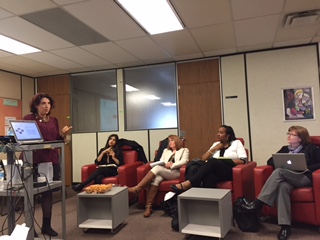
IMG_0339I (Clare) invited Jo Lampert from Queensland University of Technology to talk to our research group about IMG_0340the National Exceptional Teachers for Disadvantaged Schools Program which she and Bruce Burnett direct. This is an amazing program which aims to prepare student teachers to work in high needs schools.

The Faculty of Education developed the National Exceptional Teachers for Disadvantaged Schools (NETDS) program in 2009 to address the significant social issue of educational disadvantage through a teacher education program that explicitly focused on the preparation of high-quality teacher graduates. NETDS ensures that the best suited pre-service teachers are equipped to teach and encouraged to select employment in low socio-economic status school settings.

Each year we identify our highest-quality pre-service teachers who participate in a specialised curriculum that better prepares them to teach within low socio-economic status schools. We’ve partnered with the Queensland Department of Education, Training and Employment and key low socio-economic status schools to help channel these exceptional pre-service teachers into sites where they can have the greatest impact.

Jo LampertWe learned:

  • Approximately 90% of NETDS graduates have secured employment with schools below the Australian mean Index of Community Socio-Educational Advantage level of 1,000.
  • Many graduates secure full-time employment in low socio-economic status schools before they graduate.
  • School partners have grown from 3 in 2009 to approximately 50 in 2014.
  • We’ve developed distinctive workshops focusing on ‘real world’ issues related to disadvantage.

For more information go to their website: https://www.qut.edu.au/education/about/projects/national-exceptional-teachers-for-disadvantaged-schools

New Faculty Preconference: An Amazing Community

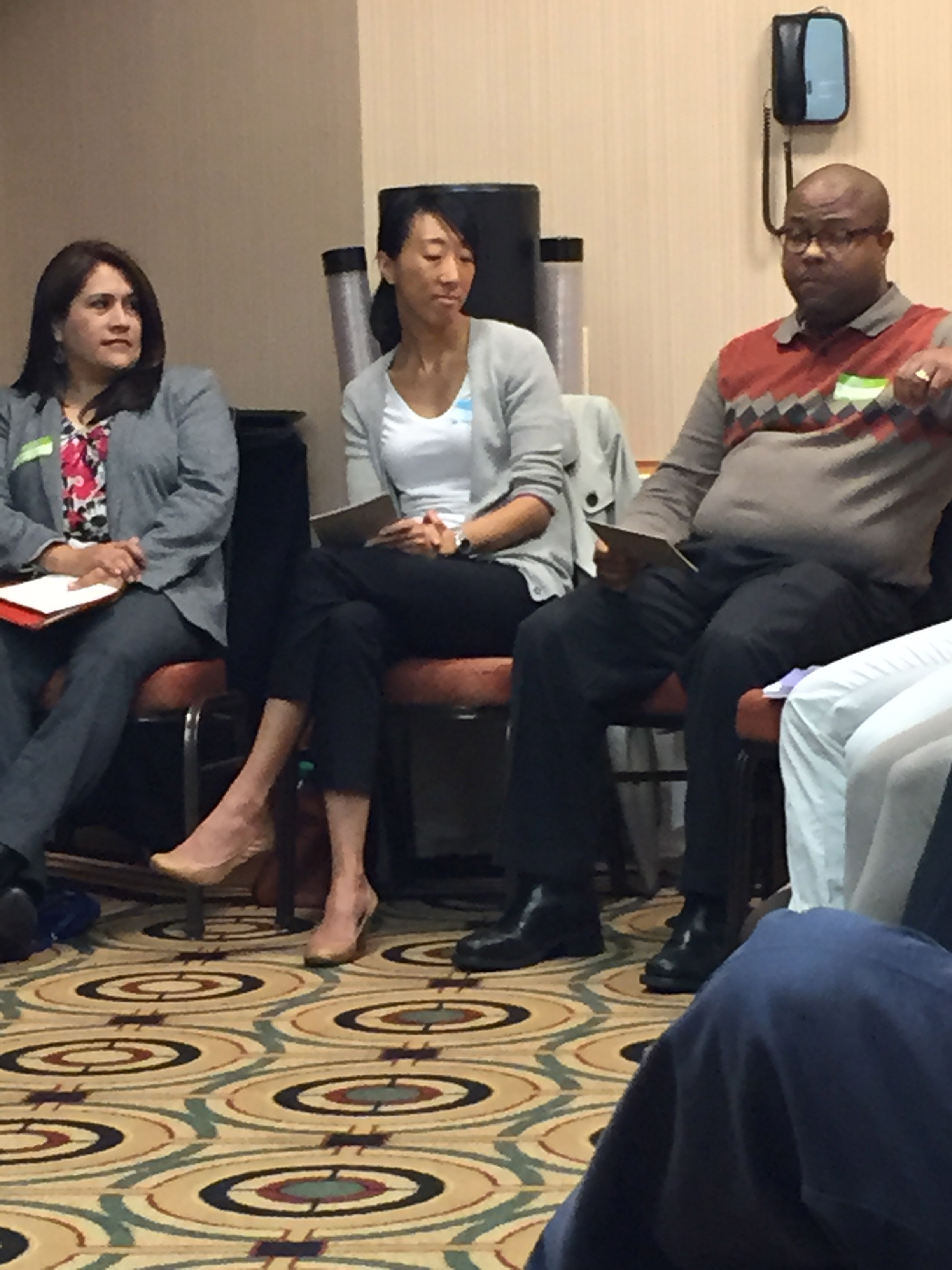
IMG_0304I (Clare) have just returned from AERA. One of the highlights of the conference for me was my work with new faculty. Division K (Teaching and Teacher Education) offers a preconference for new faculty and I was one of the organizers for it. Along with my fellow facilitators, Renee Clift, Rich Milner, Tom Dana, and Valerie Kinloch, we worked with 30 IMG_0289new faculty. On the first day of the preconference we began with the Facilitators sharing their stories – successes and challenges – which helped create an open environment. The participants then shared their stories. It was clear that all were committed to being the best faculty they could be, all had some successes the past year, and the transition to their new role has had some bumps. On the second day we broke into small groups where we addressed: mentoring (finding a mentor and/or academic community); tenure and promotion process; research and publishing; and balancing work and family life. We concluded with each person sharing a “take away” that is something they plan to work on over the next few months.

divknewfacI have been involved in the Division K Preconference for a number of years and this year was particularly special. The IMG_0297Facilitators had so much to share but they created space for the participants. We came together as a community and connections were made among all of us. This kind of support for new faculty is so important because as the literature reveals (e.g., Murray and Male’s work) that the transition from classroom teacher/graduate student to an academic position is not straightforward. There are issues of identity, workplace norms, pedagogy for higher education, academic community, pressure to publish, and …. I know that as a new faculty I would have appreciated having a mentor, a place to ask questions, and to know that what I was experiencing is “typical”.

It was great meeting these wonderfully talented new faculty who are the future of teacher education. I wish them all the best with their various endeavours. I feel that I have made 30 new friends!divknewfac2

Moving From Outsiders to Insiders: Working With a Teacher Research Group

I (Clare) have been involved in a teacher researcher group for the last 2 years. Along with Pooja and Shelley (regular IMG_2508contributors to this blog and pictured to the left) we have facilitated  a group in a secondary school. The work the teachers have done is outstanding! The three of us facilitators did a self-study of our work with this group. Since we did not know the teachers beforehand which was a bit unnerving we felt it was good to study our work. We now feel very much part of the group and feel we have become a learning community. We are presenting on our work with the teacher researcher group at AERA. Here is a draft of the paper Moving From Outsiders to Insiders: Working With a Teacher Research Group. It is still in “draft” form but if you are interested in teachers as researchers you might find this paper useful because we talk about logistics, identity, forming a community, and our learning. AERA 2015 EurekaPaperFinal

For those of you who read this blog and are at AERA I hope our paths cross.

Science Guy Becomes a Literacy Guy: Guest Post by Jason Gregor

In my (Clare) literacy grad course this past semester I had a group of amazing students — smart, experienced, caring, Jason Gregorthoughtful, and inquisitive. They were truly a joy! One of the students named us the Literacy Community. For the final product for the course the students were encouraged to do “something” meaningful for them and they could use any modality they wanted. One of the students Jason Gregor did an amazing paper which traces his journey from being a science enthusiast who did not value literacy to a strong advocate for literacy. His paper was so insightful I asked him if I could post in on our blog because those of us in teacher ed will relate to folks like Jason who slowly come to realize the place of literacy in teaching. Thanks Jason for letting me share your paper with the broader education community. Below is an excerpt from the paper and here is the link for the entire paper. Enjoy! JasonEssay

Why literacy is so important

 I never truly understood the hype around literacy. It seemed to be the biggest thing in the education system. As someone who did not like English very much and was much more focused on science, I felt that it kind of got all the limelight. Now however, I realize that I was wrong. I was dead wrong. While recently working on my final project of graduate school (I’m done much to my chagrin!) I took the opportunity to reflect on my experiences with literacy and how they have shaped the way that I viewed it (in a much skewed way). Thanks to Dr. Clare Kosnik and the two classes I took with her though, I have found that I was very wrong. Literacy is the most important area for education. Without literacy, you’ve got nothing! For this reason, I have become much more engaged with literacy education and feel very strongly towards it. Sure science is important, but without literacy, well, you wouldn’t be reading this right now! So, moral of the story, even the most disengaged, no matter what level they are at, be it student or teacher, can be motivated to re-engage with literacy. It’s never too late. Take it from me, I’ve been there.

Longitudinal Study of Teacher Continues: Multiliteracies Teaching in a Digital Age: Balancing the Old and the New

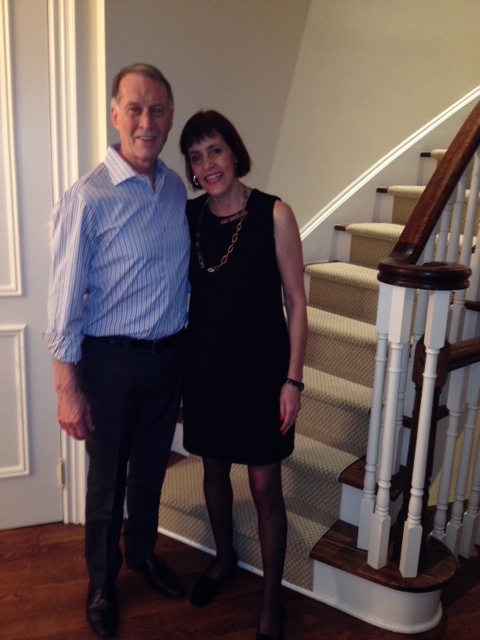
Clive and ClareClive and I (Clare) along with our amazing research team (many of whom have posted blogs) having been following 40 teachers, some for 10 years and others for 8 years. This has been incredibly rewarding research because we have seen how teachers change over time. In Growing as a teacher: Goals and pathways

Growing as a Teacher book cover
Growing as a Teacher

of ongoing teacher learning we reported on their first 8 years of teaching. We are VERY happy to report that we have received funding from the Social Sciences and Humanities Research Council of Canada (SSHRC) to continue our research for another five years. The title of our proposal was: Multiliteracies Teaching in a Digital Age: Balancing the Old and the New. Click here to see the Description of Research that we submitted to SSHRC. Final Detailed Description 2014We could not have conducted this research without the work of our research team and the cooperation of the teachers. We look forward to seeing how our teachers change and develop as mid-career to later-career teachers.

Seymour: An Introduction

I (Clare) saw the most amazing movie: Seymour: An Introduction11189925_ori

It got rave reviews so Clive and I went to see it. The movie was directed by Ethan Hawke (yes that Ethan Hawke) and talks about Seymour Bernstein — “a beloved pianist, teacher and true inspiration who shares eye-opening insights from an amazing life. Ethan Hawke helms this poignant guide to life.” Bernstein was a world class pianist who gave it all up because of stage fright and stress.”

He teaches piano and is a Master Teacher in NYC. This is a must see for teachers because the way he guides and supports his students is “masterful.” He is caring yet gives specific feedback. He is a master teacher.

During the first 10 –15 minutes of the movie I thought was is going on here? It does not follow a traditional narrative structure but rather jumps around through different parts of his life. (The editing is amazing and the music is gorgeous.) You see him teaching master classes, working with students individually, talking to friends, recalling being a soldier in the Korean war … By the 20th minute I was hooked. I so want to meet Bernstein because he is so wise, caring, compassionate, and interesting. I can truly understand why Ethan Hawke was so inspired by him that he wanted to tell the world about Seymour. Here is the link to the trailer for the movie:

http://www.imdb.com/title/tt2219650/?ref_=nv_sr_1

The movie is short – 84 minutes – and if you are like Clive and me, you will not be able to stop thinking and talking about this truly remarkable man.

Writing is hard!

I (Clare) do a lot of writing. When my doctoral students comment about writing I always respond, “Writing is hard.” It takes time, is frustrating yet the finished product often makes me proud. Writing is  a thinking process. In the New York Times there was a great little article by Cheryl Strayed who brilliantly sums up the process. She notes:

I write to find out what I have to say. I edit to figure out how to say it right.

I love her insight so much I think I will put it on a post-it note by my computer. So when I am struggling with my writing I will be reminded why the process is often so challenging. Poochey And sometimes I rely on my little poochie for inspiration.