All posts by ckosnik

Guest Blog: Monica McGlynn-Stewart

Monica McGlynn-Stewart who is part Monica McGlynn-Stewartof our research team on the longitudinal study of teachers is our first guest blogger. For more information on Monica click on the tab About our Research then click on Meet the Team.

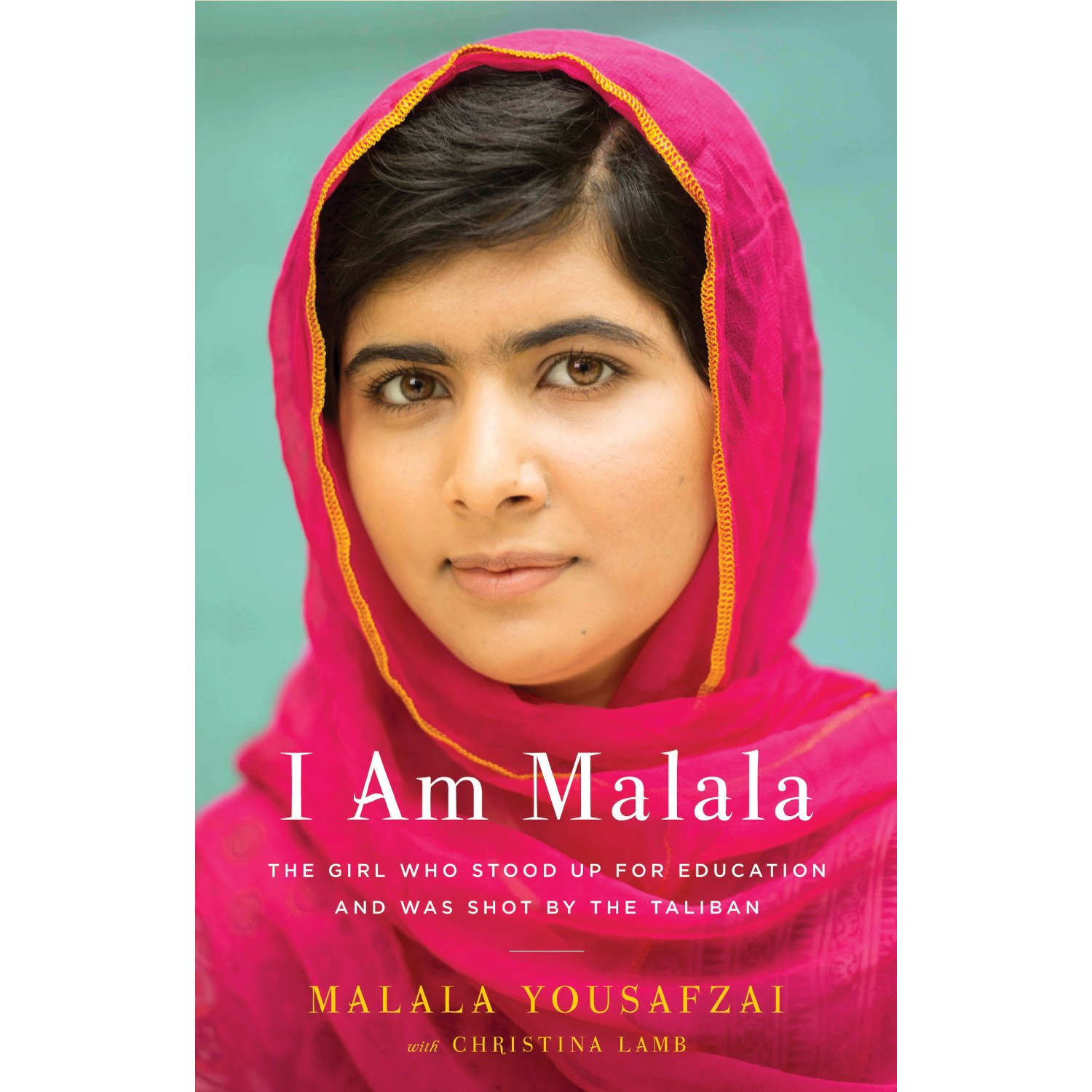
I (Monica) gave my 16-year-old daughter I am Malala by Malala Yousafzai for Christmas and now I am getting a chance to read it.  It is the memoir of a 16-year-old girl who was shot by the Taliban for speaking out about girls’ right to education. I find it fascinating for many reasons, not least of which is what I am learning about life in the Swat Valley in Pakistan. As an educator, I am always interested in learning about different systems of education and different pedagogical practices. Malala is the daughter of a school I am Malalaprincipal and had access to formal education except for a brief period when schools were closed by the Taliban, but many girls in the Swat Valley do not have access to education. In her descriptions of her studies, she relates how she memorized and recited religious texts, poetry, history, and even chemistry formulas. Her mother, who did not learn to read and write, can also recite many texts that she learned through hearing them. When I went to elementary school in the 70’s, we sometimes had to memorize a poem and recite it, but it was a rare occurrence. As an elementary teacher, I never asked my students to memorize texts, but they would learn many poems by authors such as Dennis Lee or Shel Silverstein because we read them out loud so often. For young students, “memory reading” a text that they had memorized was an important step in learning to read. So I am wondering, what role does memorization and recitation play in literacy learning? And can we consider someone illiterate who has memorized and can purposely refer to a large body of literature?

Student Teachers in School Practice: An Analysis of Learning Opportunities by Alaster Scott Douglas

Alaster Scott Douglas

I (Clare) thought Alaster Scott Douglas’ recently published text, Student Teachers in School Practice: An Analysis of Learning Opportunities, might be of interest to those of you involved in teacher education. Douglas is the Assistant Director of Education and Reader in Education and Professional Practice at the University of Roehampton. He has written a book thatexamines student teacher learning during school teaching practices. The book includes a number of case studies that illustrate how learning opportunities for students are very different. Click on the link for more information about the text. Alaster Douglas Flier_STUDENT TEACHERS IN SCHOOL PRACTICE US
Congratulations Alaster on the publication of this important text. For all of us involved in teacher education we know how complex student/practice teaching can be and it is an area that warrants much more research. This text promises to add to our understanding of a critical yet often misunderstood aspect of teacher credential programs.  Clare

Well-being and Skills Go Hand-in-Hand

We have had many blog posts about teaching for relevance. I (Clare) was reading a chapter in Martin Seligman’s book Flourish: A Visionary new Understanding of Happiness and Well-Being. http://www.amazon.ca/Flourish-Visionary-Understanding-Happiness-Well-being-ebook/dp/B0043RSK9O/ref=sr_1_1?ie=UTF8&qid=1392996735&sr=8-1&keywords=martin+seligman
Here is an excerpt from Chapter Five.

  • Question one: in one or two words, what do you most want for your children?
  • If you are like the thousands of parents I’ve polled, you responded “happiness,” “confidence,” “contentment,” “fulfillment,” “balance,” “good stuff,” “kindness,” health,” satisfaction,” “love,” “being civilized,” “meaning,” and the like. In short, well-being is your topmost priority.
    • Question two: in one or two words, what do schools teach?
      • If you are like other parents, you responded, “achievement,” “thinking skills,” “success,” “conformity,” “literacy,” “math,” “work,” ‘test taking,” “discipline,” and the like. In short, what schools teach is how to succeed in the workplace.
      • Notice that there is almost overlap between the two lists. The schooling of children has, for more than a century, paved the boulevard toward adult work. I am all for success, literacy, perseverance, and discipline, but I want you to image that schools could, without compromising either, teach both the skills of well-being and the skills of achievement. I want you to image positive education.

I found his perspective refreshing and inspiring. In my teaching, I need to be mindful to address both well-being and skills and to talk to my student teachers about the need to do both.

Canadians Will Be Cheering Their Canadian Hockey Team

On Sunday, many Canadians will be cheering the men’s hockey team who are playing Sweden for the gold medal at the Olympics. For those who are not following the Olympics, the Canadian women’s hockey team won the gold medal on Thursday. It was a very exciting game with Canada coming from behind. In 2010 when Canada played the US for the gold medal 27 million Canadians (population 33)  million watched the game. Thought you might enjoy the cartoon below. Clare

Men's hockey team being told to play like girls.

Presentations

On Saturday a number of us from our research teams presented at the Ontario Teachers’ Federation/Ontario Association of Deans of Education conference. We did two papers:

·      Teaching Student teachers How to Teach for Relevance, Integrating Curriculum around Big Ideas and Key Values

Clive Beck, Clare Kosnik, Shelley Murphy, and Elizabeth Rosales

·      On-going Learning for Literacy/English Teacher Educators: Examining Four Spheres of Knowledge

Clare Kosnik, Pooja Dharamshi, Cathy Miyata, Lydia Menna, and Yiola Cleovoulou


Click on the link Publications and Presentations to see our powerpoint presentations. (Clare’s ppt can be found under Clare’s presentations; Clive’s ppt can be found under Clive’s presentations.)

Family Day

In Ontario we have a public holiday called “Family Day”, a day in the depths of February where most adults have the day off from work and children stay home from school for the purpose of spending time together. It is a day meant for us to relax and enjoy the wonderful people in our lives.
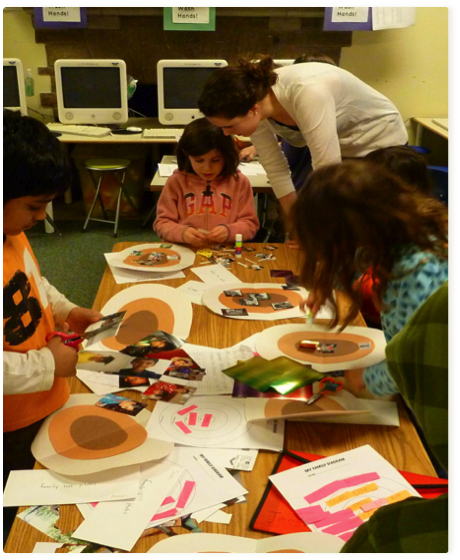
In honour of Family Day, I (Yiola) would like to share an interesting and inclusive way of thinking about family from the perspective of a child.  This idea comes from the descriptive findings from my research project on critical literacy practices of elementary school teachers.  In the Grade two classroom students designed their autobiographies and published books called “Selfologies”.  The published books include a variety of literacy process and forms of writing including: interviewing family members, writing narratives, developing timelines, creating family trees to mention just a few.
Instead of a traditional family tree that is a chart representing the family structure, often with the child at the bottom of the tree and the space for the father on one side and the mother on the other, the teacher used something different.  The teacher recognized the traditional family tree chart normalized the nuclear family and left no space for all the wonderful family structures that exist. The teacher introduced a “family circle”.  This graphic organizer places the child at the centre of the page and bigger circles that include family members surround the child (see image below).  This way of organizing the concept of family changes the perspective and value we place on “what is a family” and “who is in a family”.  The family circle empowers the child to decide on their own who is in their closest inner circle. That may be siblings, two mothers, a grandparent, a family friend. By using a new and improved structure we are teaching students how to read the world differently. Family today is a broader and more inclusive term.

The first image is of the children designing their family circles.

Image Family YC

Family Circle


Can you understand what I am saying?

In the New York Times on the weekend, Nicholas Kristof wrote a stinging criticism of academics. http://www.nytimes.com/2014/02/16/opinion/sunday/kristof-professors-we-need-you.html?ref=nicholasdkristof
He notes that when someone utters the phrase “That’s academic” it is a very loaded comment. That retort implies scholars are irrelevant. He quotes Anne-Marie Slaughter who observed that “disciplines have become more and more specialized and more and more quantitative, making them less and less accessible to the general public.” He feels that the PhD programs “have fostered a culture that glorifies arcane unintelligibility while disdaining impact and audience.” Although I (Clare) found his comments a bit harsh there is something sobering about his analysis. Often I find myself reading a journal article on teacher education (my specialty) that I simply cannot understand. The jargon overwhelms the central points and the writing so turgid it is inaccessible. As academics our many masters (tenure review committees, funding agencies, journal reviewers) expect our work to sound “academic” so we are almost forced to employ an unnatural writing style. There is no easy solution. We may not be able to do anything in the short term but in the long-term I hope that our research can be used to inform general discourse about teacher education and public policy. Writing for different audiences is difficult but hey, we academics are quite smart. Let’s take up the challenge to make our work more accessible to many readers.

The Past – A Movie That Leaves You Wondering — What would I do?

Movie Poster The Past

We (Clare and Clive) went to see the movie, The Past which has been called a “domestic drama with all the tension of a thriller.” It is the latest movie by Asghar Farhadi the Iranian director.The movie is fantastic because it is well directed, you can relate to the characters, it captures the complexity of life, shows how decisions we make are often based on incomplete information, and the story is captivating. The quality of the acting is good you cannot believe the actors are actually acting. Below is a summary of the story:
·     
Coming back France to complete the divorce procedure, Ahmad an Iranian man, arrives in Paris after four years to meet his ex-wife and her daughters from her previous marriage. He notices his ex is in a relationship with an Arab named Samir who also has a son and a wife in a coma. The relationship of the older daughter and her mother is deteriorating because the daughter thinks her mother is the cause of Samir’s wife comatose state. The affairs get more complicated when the older daughter discloses something heinous she has done. From IMDB http://www.imdb.com/media/rm456776960/tt2404461?ref_=tt_ov_i#
·     
For a full review of the movie go to the Globe and Mail link:http://www.theglobeandmail.com/arts/film/film-reviews/the-past-domestic-drama-with-all-the-tension-of-a-thriller/article16435003/

·      Here is the linkfor a conversation with Asghar Farhadi who said, “All the films I’ve made … I have faith in.”

http://www.theglobeandmail.com/arts/film/a-conversation-with-asghar-farhadi-all-the-films-ive-made-i-have-faith-in/article16467505/
By the way, Farhadi directed The Separation which won an academy award for best foreign film a few years ago.
If you are looking for a non-Hollywood movie which captures day-to-day life and leaves you wondering what you would do when faced with certain dilemmas, I would highly recommend The Past.

Teachers’ Broad Conception of Their Role after Several Years

I (Clive) have been working with Clare and Elizabeth on a paper on teacher identity, based on our longitudinal study of teachers. One thing we’ve noticed over the years is how broadly our teachers view their role.
Elizabeth has just developed a table showing what the teachers give priority to in their teaching. In spring 2012 (year 8 for cohort 1 and year 5 for cohort 2) we asked 39 of the teachers:
·     
What do you think are the most important aspects of your role?
·     
What are your main goals for your students?
The top 8 priorities in each case were as follows:

Most Important Aspects of My Role

Provide engaging lessons

18

Build a community, and a caring and safe environment

16

Develop a relationship with students

15

Be a role model

6

Involve parents


4

Teacher reflection and ongoing learning


4

Advocate for student needs

3

Foster strong literacy abilities in students

2

Most Important Goals for My Students

Social development


18

Love of learning


11

Development of self


11

Sense of community


10

Problem solving and critical thinking


6

Progress in learning


6

Literacy


6

Curiosity


4

Having such a broad role may appear burdensome for teachers. However, based on the teachers’ comments and our reading of authors such as Mary Kennedy and Nel Noddings, we argue that approaching teaching broadly is in fact more feasible and satisfying. Students are more engaged, understand more deeply, and develop across many aspects of their lives. And teachers are also enriched and find the daily interaction with students more enjoyable.