All posts by ckosnik

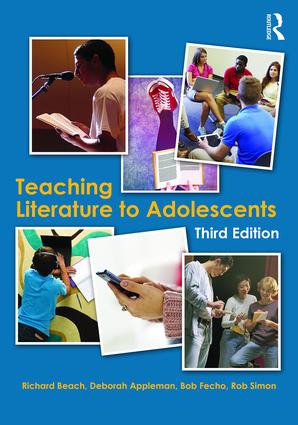
HOT off the press: Teaching Literature to Adolescents

My good friend Rob Simon is one of the co-authors of the third edition of Teaching 9781138891241Literature to Adolescents. Co-authored with Richard Beach, Deborah Appleman, and Bob Fecho this is an amazing new text. As a professor of literacy methods courses I (Clare) am always on the lookout for texts that go beyond the typical plodding through various topics. This text appealed to me because it emphasizes a critical approach to reading and interpreting text. The aim is to engage students with authentic issues. Well done Rob and your fellow authors. This text will be a staple on my bookshelf. Here is the link to the Routledge site: https://www.routledge.com/products/9781138891241

Below is a summary of the book.

This popular textbook introduces prospective and practicing English teachers to current methods of teaching literature in middle and high school classrooms. It underscores the value of providing students with a range of different critical approaches and tools for interpreting texts and the need to organize literature instruction around topics and issues of interest to them. Throughout the textbook, readers are encouraged to raise and explore inquiry-based questions in response to authentic dilemmas and issues they face in the critical literature classroom. New in this edition, the text shows how these approaches to fostering responses to literature also work as rich tools to address the Common Core English Language Arts Standards.

Each chapter is organized around specific questions that English educators often hear in working with pre-service teachers. Suggested pedagogical methods are modelled by inviting readers to interact with the book through critical-inquiry methods for responding to texts. Readers are engaged in considering authentic dilemmas and issues facing literature teachers through inquiry-based responses to authentic case narratives. A Companion Website [http://teachingliterature.pbworks.com] provides resources and enrichment activities, inviting teachers to consider important issues in the context of their current or future classrooms.


Nell Duke: 10 Things Every Literacy Educator Should Know About Research

In my (Clare) graduate literacy course last night we talked about Nell Duke’s excellent Library book shelvesarticle: 10 Things Every Literacy Educator Should Know About Research. This is a highly informative article because Duke systematically addresses key questions about research – often questions that are not posed because the instant the word “research” is attached to a statement it seems to have more weight. She begins the article: Research-based,” “research-proven,” “scientifically based”—in the reading world these days, it seems that the term research is being used everywhere. it is also being misused and misunderstood.

My graduate students found the article very accessible and enlightening. Many said they will look at “research claims” more closely. It is well worth the read. Here is a link to article which was published in Reading Teacher. 10_things_to_know_about_research_duke_trtr1002

Duke addresses the following questions.

  1. what research can do.
  2. what research is.
  3. what research is not.
  4. the difference between research-based and research-tested.
  5. Many kinds of research have valuable contributions to make to our understanding of literacy learning, development, and education.
  6. different kinds of research are good for different questions.
  7. high-quality research has a logic of inquiry.
  8. conclusions drawn from research are only as sound as the research itself.
  9. where and how research is published or presented requires particular attention.
  10. educational research proceeds through the slow accumulationof knowledge.


Finns aren’t what they used to be


I (Clare) came across this interesting article on Finland by Sean Couglan from the BBC. . But unlike most other articles it is a “counter point” to the Finnish miracle. Thought you might find it interesting. http://www.bbc.com/news/business-32302374·

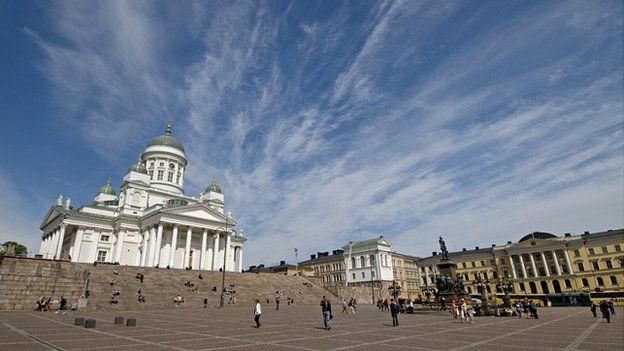
No international education conference is complete without a reference to Finland._82320693_helsinkibbc
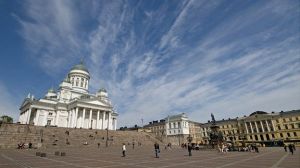
Ever since it appeared at the top of international league tables more than a decade ago, it has been endlessly hailed as how to run an education system.

Finland, which faces a general election this week, has been the poster child for education reform and overseas delegations have made pilgrimages to learn from its example.

In particular it has been used to argue that you can have high results without an overbearing system of testing and inspection.

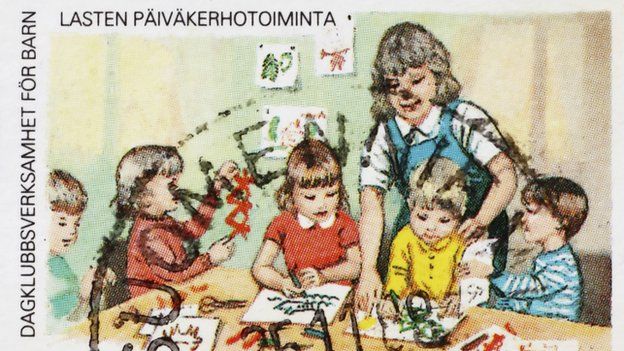
It was the country where pupils did not have to start school until they were seven, enjoyed the longest holidays and then basked in the glow of global approval when they topped the tables in the international Pisa tests. _82320689_finnishstamp

But is the gloss coming off the image of Finland as an education superpower?

More like an Asian tiger

A study from Gabriel Heller Sahlgren, director of research at the Centre for Market Reform of Education, argues that Finland’s education standards are in decline.

He says it is a misunderstanding of Finland’s success to attribute it to a liberal culture without league tables or a formal curriculum and giving much autonomy to teachers.

Finland faces a general election this week

In a report published by the right-wing think tank the Centre for Policy Studies, Mr Sahlgren argues that Finland’s star performance in the 2000 Pisa tests was built on the legacy of an older, very traditional education system, which had been part of the country’s process of nation building.

But this wasn’t the image of Finland wanted by education experts, he says. Instead, when Finland was the top performer in Europe, it was used as a “counter-argument” to the success of east Asian school systems in Singapore, Shanghai and Hong Kong.

While they were seen as successful because of hard work and grindingly long hours, Finland was seen as the way to achieve success with a much more creative and less centralised approach.

Mr Sahlgren, based at the London School of Economics, says there was “never any real evidence” for such an impression.

“It was simplistic, looking at how Finland’s system looked today, without looking at its history.”

Finland’s school system became part of its building of a national identity

Rather than being the opposite of east Asian countries, he says in many ways Finland was like those emerging economies.

Compared with its Nordic neighbours, Finland was a “late developer”, much poorer and with lower levels of education in the early part of the 20th Century.

Finland’s approach of investing heavily in education and seeing rapid improvements was in many ways more like the pattern of Tiger economies in east Asia than the more sluggish progress in western Europe.

‘Fairy stories’

Mr Sahlgren’s research argues there is a reluctance to accept that Finland’s education system, under which many of its successful teachers had trained, had been very structured and centralised.

IFinland has been the European country that matched East Asian countries in education tests

He quotes a research group from the UK visiting schools in Finland in 1996, a few years before the Pisa tests brought the world’s attention to the country’s schools.

“We have moved from school to school and seen almost identical lessons, you could have swapped the teachers over and the children would never have noticed the difference,” said the researchers from the University of East Anglia, observing Finnish classrooms.

Another study challenges what it calls the “misconceptions and misrepresentations” about Finland’s success in the Pisa tests.

Tim Oates, director of assessment research for the Cambridge Assessment exam group, has published a study called “Finnish fairy stories”, in which he debunks what he claims are myths about the Finnish system.

‘Education tourism’

He says the waves of “education tourism” that followed the success in Pisa tests failed to look at how the system had improved.

Image captionHow much of Finland’s success was the legacy of an earlier, more traditional school system?

“They got off the plane and asked the Finns about the system in 2000 – not what it was like during the 1970s and 1980s, when standards were rising.”

He also warns of a tendency for people to use Finland’s school system as a way of confirming what they want to find.

The claim that Finland does not have an Ofsted-style inspection and national testing is an incomplete picture, says Mr Oates. He says there has been a strong system of accountability and inspection and gathering of data.

The difference from a system such as England, says Mr Oates, is how the information is used – for example in Finland exam results are not published in school league tables as they are in England.

Pisa tests 2012 top 10
Reading Maths
1. Shanghai 1. Shanghai
2. Hong Kong 2. Singapore
3. Singapore 3. Hong Kong
4. Japan 4. Taiwan
5. South Korea 5. South Korea
6. Finland 6. Macao
7. Ireland 7. Japan
8. Taiwan 8. Liechtenstein
9. Canada 9. Switzerland
10. Poland 10. Netherlands

It is also misleading to think there are not high-stakes exams or academic selection, he says, with entrance to some secondary schools being determined by test scores.

And Mr Oates argues it is “hopeless myopia” to see Finland’s system as a model of high levels of autonomy.

Finland is facing another set of controversial changes, away from traditional subject teaching. And Mr Sahlgren warns of a school system in decline. It is no longer in the top 10 for maths in Pisa tests, having been in second place in 2003 and 2006.

Andreas Schleicher, the OECD’s director of education and the creator of the Pisa tests, rejects this analysis.

“In the 1960s, Finland was an average performer at best and that was when it had a very traditional education system,” says Mr Schleicher.

“Finland changed its system only in the late 1970s and 1980s and that’s when we saw the results rise. The most recent decline is quite modest,” he said.

Mr Oates says the problem has been that people have used Finland as a way of discussing their own national education debates, without really thinking about what made Finland different.

“People have been seriously misled by stories told by people who have looked at Finland through their own, restricted lens,” he says.
 

Learning Policy Institute

I (Clare) continue to be concerned about our often “over assessment “of students. Last year at AERA I was at a presentation where the presenter talked about one elementary school teacher with whom he was working who had to conduct 30 standardized tests in one year! Yes 30 (that is not a typo). What does this number of assessments do to children? The teacher? The curriculum? The climate in the classroom. I just received the announcement below which I hope will bring some “common sense” to assessment.


How Can Schools Measure True College and Career Readiness? Learning Policy Institute Receives Award to Support More Authentic Assessments for California Students

The Learning Policy Institute (LPI) was named today as one of 12 organizations nationwide th-2to receive a grant award from the Assessment for Learning Project (ALP) to fundamentally rethink the roles that assessment should play to advance student learning and to improve our K-12 education system. LPI is supporting the California Performance Assessment Collaborative (CPAC), a newly launched pilot project that enables schools, districts, and networks in California to share, research, and document current efforts to graduate students using competency-based approaches. Instead of assessments based only on testing, these will assess applied learning focused on deep understanding of content and demonstration of 21st century skills in order to inform other schools as well as state policymakers.

CPAC’s work has deep implications for teaching and learning in participating schools and for the work of both practitioners and policymakers who are rethinking assessments with the passage of the new Every Student Succeeds Act (ESSA). ESSA requires states to implement assessments that measure “higher-order thinking skills and understanding” and explicitly invites the use of “portfolios, projects, or extended-performance tasks” as part of state and local assessment systems.

Born from the vision of a group of committed educators, policymakers, and researchers in response to the current policy environment, CPAC serves as an “innovation site” within the state where educators from various contexts are now working together within a professional learning community dedicated to the advancement of authentic, meaningful assessments for California children.

CPAC is composed of the Learning Policy Institute working with schools from the CORE network, including the Fresno, Long Beach, Los Angeles, Oakland, and San Francisco Unified School Districts; Envision Schools; High Tech High; Internationals Network for Public Schools; Linked Learning Alliance; and New Tech Network; plus East Palo Alto Academy (Sequoia Union High School District); Hillsdale High School (San Mateo Unified School District); John Muir High School (Pasadena Unified School District); and Oceana High School (Jefferson Union High School District). In addition to ALP, support for this collaborative program comes from the William and Flora Hewlett Foundation.

Notes Linda Darling-Hammond, CEO and President of the Learning Policy Institute, “This work will inform both those seeking to develop more meaningful assessments in their schools and those seeking to develop policies that can support the deeper learning opportunities today’s students need to succeed in today’s and tomorrow’s world. Ultimately, the goal is to enable students to pursue – and colleges and employers to be able to receive – more productive measures of students’ genuine accomplishments and readiness for postsecondary college, career, and civic life. “

“For too long, assessment has been something that is ‘done to’ kids instead of with them,” said Gene Wilhoit, Executive Director of the Center for Innovation in Education, one of the organizations partnering with the Assessment for Learning Project (ALP). “These 12 grantees have promising plans to use assessment to build student agency, support a broader definition of student success, and envision new systems of assessment and accountability.”

Out of 148 proposals, ALP selected its 12 grantees based on the “boldness of their ideas, the quality of their learning plan and general orientation toward learning, potential for scale and routes to ‘systemness,’ and their potential contribution to the learning agenda.” Next Generation Learning Challenges is the the co-partner of this initiative, with funding provided by the Bill & Melinda Gates Foundation and the William and Flora Hewlett Foundation.

The Learning Policy Institute and CPAC proudly join the Center for Collaborative Education, Colorado Education, Del Lago Academy, Fairfax County Public Schools, Hawai’i Department of Education, Henry County Schools, Large Countywide and Suburban District Consortium, New Hampshire Learning Initiative, Summit Public Schools, Two Rivers Public Charter School, and WestEd as recipients of the initial round of ALP grants. For more information on the project and the 12 grant recipients, visit http://www.assessmentforlearningproject.org.

###

About the Learning Policy Institute
The Learning Policy Institute conducts and communicates independent high-quality research to improve education. Working with policymakers, researchers, educators, community groups, and others, we seek to advance evidence-based policies that support empowering and equitable learning for each and every child. For more information, visit http://www.learningpolicyinstitute.org.
Connect with Us

Learning Policy Institute
1530 Page Mill Road, Suite 200
Palo Alto, CA 94304

1301 Connecticut Ave., Suite 500
Washington, DC 20015
info@learningpolicyinstitute.org

Thesis Defense = Celebration of Learning

I (Clare) am a very active doctoral supervisor and have two students near completion of stress-lego-faces-popular-science_2400x1800their Ph.D. At the University of Toronto like many other universities the final stage in the doctoral program is the thesis defense. It is a complicated process requiring 2 external examiners, a student presentation, discussion, and voting. The entire exam is so so so stressful for the students. No matter how much I reassure them that they will be fine because their work is high quality they are still nervous, stressed, tense, anxious …. From my perspective it should not be so stressful nor so high stakes. These students have worked for years under careful supervision and presented at their doctoral committee meetings.

Some universities have a much more informal (and civilized) approach to the final exam. I try to see it as a celebration of the student’s work rather than a grueling experience. I think it is time for many universities to rethink the final stage of the process to make it less stressful for the student (and supervisor) and more joyous.

The Wrong Way to Teach Math (and Other Subjects)

In the New York Times Sunday Review on Feb 28, Andrew Hacker published an article (p. 2) checkmark imagescalled “The Wrong Way to Teach Math,” based on his forthcoming book The Math Myth and Other STEM Delusions. It begins with this remarkable statement:

“Most Americans have taken high school mathematics, including geometry and algebra, yet a national survey found that 82 percent of adults could not compute the cost of a carpet when told its dimensions and square-yard price.”

Hacker, who teaches political science and mathematics at Queens College in New York, argues that while “calculus and higher math have a place…it’s not in most people’s everyday lives.” Students need to learn “numeracy” or “quantitative literacy”: “figuring out the real world – deciphering corporate profits or what a health plan will cost.”

I (Clive) find Hacker’s ideas and examples very helpful and plan to buy his book. But it occurs to me that similar things could be said about other subjects such as literacy (reading, writing, literature), history, science, etc. While “academic” aspects of these subjects have to be taught to prepare students for later education and (possibly) work settings, teachers need to do both (as I have posted before). It isn’t appropriate just to focus on Shakespeare and classical novels, for example, and not prepare students to find enjoyment and make wise choices in their everyday fiction and non-fiction reading.

Addressing both – the academic and the everyday – is not easy, given the extensive subject content teachers are expected to cover; but in teaching and teacher education this should be our goal, and over the years we should move as far as humanly possible in this direction.


Parsing the Practice of Teaching


I (Clare) and Clive both read the most amazing article on teacher education by Mary puzzle_pieces300x199Kennedy. For those who have followed this blog you will know that we are big fans of her work. You will also know that we believe in thinking about teacher education holistically. Trying to break it down in discreet bits misses the core issue- What are the goals of education? I would highly recommend this article to all teacher educators. Below is the Abstract and here is the link to the article. Well worth the read.Mary Kennedy_2016

Abstract:

Teacher education programs typically teach novices about one part of teaching at a time. We might offer courses on different topics—cultural foundations, learning theory, or classroom management—or we may parse teaching practice itself into a set

of discrete techniques, such as core teaching practices, that can be taught individually. Missing from our courses is attention to the ultimate purpose of these discrete parts—how specific concepts can help teachers achieve their goals, or how specific procedures can help them achieve their goals. Because we are now shifting from a focus on bodies of knowledge to a focus on depictions of practice, this article examines our efforts to parse teaching practice into lists of discrete procedures. It argues that we need to pay less attention to the visible behaviors of teaching and more attention to the purposes that are served by those behaviors. As a way to begin a conversation about parsing teachers’ purposes, I offer a proposal for conceptualizing teaching as a practice that entails five persistent problems, each of which presents a difficult challenge to teachers, and all of which compete for teachers’ attention. Viewed in this way, the role of teacher education is not to offer solutions to these problems, but instead to help novices learn to analyze these problems and to evaluate alternative courses of action for how well they address these problems.

Defining happiness: A child’s take on life.

IMG_0968From the mouths of babes. Motivational speaker Jay Shetty has some wise words for you on how to make the world a better place. A teacher asked her students to write down what they want to be when they grow up. There were the usual responses – astronaut, singer …. And one boy wrote down happy. When the teacher talked to the child suggesting he misunderstood the assignment, he responded. “Miss, I think you misunderstand life.” WOW!!!!

According to Shetty, it starts by pressing pause on your own life and improving the way you IMG_2826communicate with others.  The video is short but it reminds us about what is important in life. Well worth the time. In the video below watch him explain why it’s time for you to take a moment to become more conscious and aware. https://www.facebook.com/HuffingtonPost/videos/10153725769876130/

Jackman Institute of Child Study

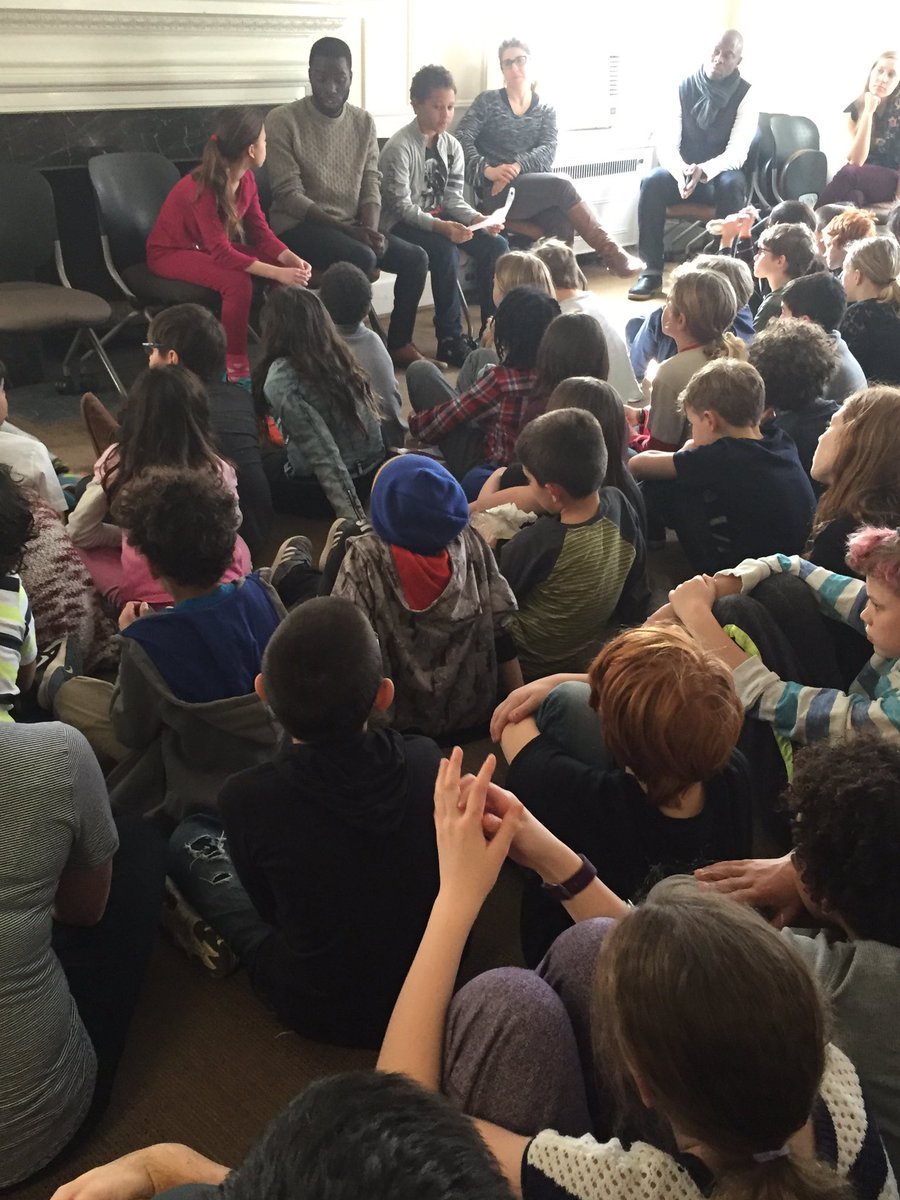
184SIn previous posts I (Clare) told you about my new position as Director of JICS. It is an desmond_coleamazing place because it is a Lab school, teacher education program, and research centre. We have put together a lovely brochure that includes info about the Tripartite Mission of JICS with little blurbs about some of our initiatives and summary of some of the research being done (e.g., Dr. Kang Lee’s research – Little liars and social perception; the importance of a Lab school). Attached is the brochure which I think you will find very interesting. JICS Brochure – March2016