All posts by ckosnik

Making Group Work More Personal and Inclusive

I (Clive) have posted before about the importance – in educational settings – of giving all Shawn Bullockmembers of a group a chance to speak. It now seems that similar observations are being made outside the educational realm. In Sunday’s New York Times Magazine (Feb 28, 2016), findings along these lines were noted in two studies from the world of work.

In a 2008-2010 Carnegie Mellon/M.I.T. study, a team of psychologists headed by Anita Wooley found that work teams with “pretty average members” were unusually effective when inclusive “group norms” were established. Wooley reported: “As long as everyone got a chance to talk, the team did well. But if only one person or a small group spoke all the time, the collective intelligence declined” (p. 24).

oopIn a later Google study called Project Aristotle, begun in 2012, researchers built on the Carnegie Mellon/M.I.T. study. They linked “conversational turn-taking” to a sense of “psychological safety” within a group. They found that work teams were more effective when there was a social emphasis and everyone had a chance to contribute. They reject a sharp personal/work dichotomy, stating that “no one wants to put on a ‘work face’ when they get to the office” (p. 72).

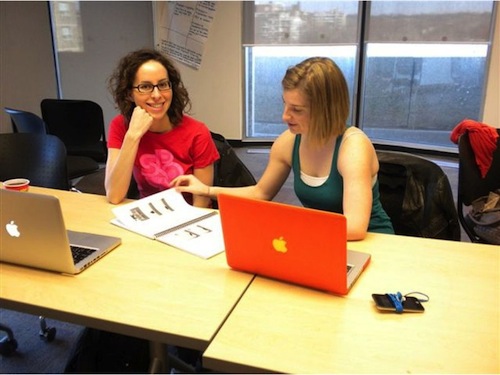
It seems hard to explain why group effectiveness and social inclusion would be connected Teachers working togetherin this way. More theory is needed in the area. But meanwhile I think we should consider these findings as we attempt to enhance our group discussion practices.


5 Tips for Teaching the Tough Kids

I (Clare) found this post on Edutopia very interesting. I think that many of techniques would/could/should work with all students. As Josh Work notes every teacher remembers his/her first “touch kid” experience. Mine was with a young boy Tommy who seemed incorrigible. I wished that I had followed the advice provided below. Here is the link to the article.  Teaching the Tough Kids

Guest blogger Josh Work shares five techniques for dealing with middle school students who present ongoing discipline issues. His underlying theme is recognizing these kids as adolescents seeking ways to cope with stress or complicated lives. Source: 5 Tips for

Every teacher remembers his or her first “tough kid” experience. Maybe the student ignored your directions or laughed at your attempts to utilize the classroom discipline steps. We all have at least one story to share, and for some teachers, teaching a tough kid is a daily challenge. It seems that no matter what teaching techniques you try to pull out of your educator hat, nothing changes their behavior.

I’ve had the privilege of teaching some tough kids. I say “privilege” for a reason. Teaching these students pushed me to be a better educator and a more compassionate person. I’ve detailed below five methods that have reduced misbehavior in my classroom and, better still, helped transform these students into leaders among their peers.

1. Set the Tone

I firmly believe that a student’s misbehavior in the past does not necessarily equate to future indiscretions. At the beginning of the school year, I would walk down to the sixth grade teachers with my new class lists and ask questions. I would inquire about who works well together, who probably should not sit next to each other, and who caused them the most grief. Not surprisingly, teachers would share the names of the same students that were their “tough kids.” If I had the privilege of having any of these students in my class, I looked forward to it instead of dreading it.

Usually during the first week of school, I would try to have individual conferences with these tough kids. I’d take this as an opportunity to clear the air and wipe the slate clean. Often, these students can feel disrespected because their teachers already have preconceived ideas about how they are the troublemakers. Explain that you respect them and have high expectations for them this year. Lay the foundation for the student’s understanding that you believe in him or her, because you might be the only one who genuinely does.

2. Be a Mentor

Unfortunately, it has been my experience that some of the toughest kids to teach come from very difficult home situations. Inconsistent housing, absentee parent(s), lack of resources, and violence are only a few examples of what some of these students have to face every day. Kids that are neglected at home can act out in school to receive attention, good or bad. They want someone to notice them and take an interest in their lives.

Don’t forget how important you are in helping your students develop not just academically, but also socially. Make an effort to show you care about them, not just their grades. Be proactive instead of reactive. The key to being a good mentor is to be positive, available, and trustworthy. One year with a great mentor can have a lasting, positive impact on a tough kid’s life.

3. Make Connections

Part of being a great mentor is your ability to make connections with these tough kids. Since these students sometimes don’t have anyone encouraging them or taking an interest in their lives, have a real conversation about their future or dreams. If they have nothing to share, start talking about their interests — sports, music, movies, food, clothing, friends, siblings, etc. Find a way to connect so that they can relate to you. Start off small and show a genuine interest in what they have to say. Once you’ve made a positive connection and the student can trust you, you’d be surprised how fast they might open up to talking about their hopes, fears, home life, etc. This is when you need to exercise professional discretion and be prepared for what the student might bring up. Explain that you do not want to violate his or her trust but that, as an educator, you are required by law to report certain things.

4. Take it Personally (In a Good Way)

Teachers need to have thick skin. Students may say things in an attempt to bruise your ego or question your teaching abilities. Remember, we are working with young children and developing adults. I’m sure you said some hurtful things that you didn’t mean when you were growing up. Students can say things out of frustration or boredom, or that are triggered by problems spilling over from outside of your classroom. Try to deal with their misbehavior in the classroom — they might not take you seriously if you just send them to the office every time they act out. These are the moments when they need a positive mentor the most.

Once trust has been established, remind these students that you believe in them even if they make a mistake. I’ve vouched for kids during grade team meetings only to have them get into a fight at lunch the same day. They make mistakes, just like we all do. It’s how we respond to their slip-ups that will determine if they’ll continue to trust us. Explain that you’re disappointed in their actions and that you know they can do better. Don’t write them off. Tough kids are used to being dismissed as hopeless. Instead, show them that you care and are willing to work with them. Helping a tough kid overcome personal issues isn’t something that happens overnight, but it is a worthwhile investment in his or her future.

5. Expect Anything and Everything!

All of our students come from a variety of cultures, nationalities, and home environments, and these five techniques that have worked for me might barely scratch the surface of how you interact with the tough kids in your classroom. If you have another method that has helped you reach out and connect to a tough kid, please share it below in the comments section.

Source: 5 Tips for Teaching the Tough Kids

Can you spot a good teacher from their characteristics?


12644854_10156632304500121_7940976327917128279_nI (Clare) found this really interesting article in the Guardian newspaper about traits of effective teachers. Here is the link for the article: http://www.theguardian.com/teacher-network/2016/mar/02/can-you-spot-a-good-teacher-from-their-characteristics
I believe that the admission process is one of the most important steps in teacher education but the question that has vexed me for years is: What do you look for in an applicant? In previous posts we have talked about the admission process used in Finland which is very intense, focused, and pointed. They know what they are looking for! More to come in future blogs. And I highlighted in red a few key passages that resonated with me.

Professor Rob Klassen explores the latest research into what traits effective teachers have and how this could inform recruitment
What would you do in the following situation?
As students in your classroom begin a writing task, one of them, Kata, starts throwing paper around and distracting the others. You know from previous incidents that Kata often becomes frustrated when she does not understand how to complete activities; she often displays this by being disruptive.
Would you …
a) Ask her to leave the class?
b) Show her how to get started on the task?
c) Encourage her by telling her that she is capable of completing the task?
d) Ask a passing teacher to talk to her?

Your answer gives important clues about how you think and operate as a teacher (see below for answers). In future, similar questions could help researchers understand how prospective teachers might interact with students, and enable trainers to recruit people who are best suited to work in schools.

The debate over what makes a good teacher isn’t new – as far back as 500BC Confucius was portrayed as a model teacher. But despite this, there’s been little systematic research into how we can measure the personal characteristics that make a teacher effective – and how we can reliably select people for teacher training.
Part of the problem is that teaching is often portrayed as something that’s too magical and cryptic to decode. While there is something special about the idea of passing on knowledge, teaching is no more mystical than other professions. Research has shown that some teachers are routinely more successful than others – and science can predict who is likely to be the most effective.

A recent study by Dr Allison Atteberry from the University of Colorado followed more than 3,000 teachers over the first five years of their careers, measuring their effectiveness by looking at student outcomes. Atteberry found that even after statistically controlling for external factors such as school, family and student characteristics, teachers who were most effective tended to maintain this over time. Similarly, those in the bottom group for effectiveness stayed there, even when they moved schools.
Anecdotal experience backs this up: it’s not uncommon for someone to remember having a great – or not-so-great – teacher at school.

This indicates that multiple factors, which interact in complex ways, make some teachers consistently effective. Academic ability is one of them, hence the UK government’s introduction of tougher entry requirements for teacher training in 2013. But it’s not the only thing that matters; non-¬cognitive attributes – personal characteristics such as empathy and communication – are also essential.

A recent large-scale review of the factors associated with student achievement showed dramathat teacher-student relationships outweighed the contribution of teachers’ subject knowledge, teacher training, or home and school effects. In fact, John Hattie’s research in Australia shows that teacher characteristics, such as interpersonal skills, are more closely associated with student achievement than curriculum or teaching approach.

Our research in the UK and internationally – funded by the European Research Council – takes this further, examining how we can identify key teacher characteristics and assess them for entry into teacher training. There can be a lot of leeway in how personal characteristics are expressed, but we want all teachers to have qualities such as empathy, resilience and adaptability in the face of challenges. Our results show that these attributes are broadly the same across secondary and primary schools, although there are some variations between cultures. In Finland, for example, cooperative skills are particularly desirable because there’s a strong tradition of collaboration in schools, where teachers plan and work together.

Instead of using personality tests, we use scenario-based questions, known as situational judgment tests, to measure characteristics. These tests have more validity in predicting job performance than personality tests, which people can fake more easily. Studies in organisational psychology suggest that face-to-face interviews are also an unreliable way to gauge characteristics as interviewers are prone to hidden bias: even when we try to be open and fair, we’re inclined to select people who are a bit like us.

As teaching faces a manpower catastrophe, Holly Welham meets those failing to join the profession because of a ‘ludicrous’ math test

IMG_2508It is possible to improve some traits – such as communication or organisation – through professional development. But this may not be possible for all non¬-cognitive attributes – it’s harder to build skills such as empathy, for example. This is why it’s essential that we pay more attention to personal qualities when
recruiting prospective teachers.

That’s not to say that the goal of selecting prospective teachers is to pick candidates with only one type of personality or teaching style, but we do want to make sure the people educating our children, grandchildren, friends and family have some basic personal quality building blocks. This is already happening in fields as diverse as medicine and the military, for example.

We have already piloted situational judgment tests with universities in Cambridge, Newcastle and York, and are working with universities and education ministries in Australia, Finland, Hungary and Lithuania. After further validation of the tests, we are excited about introducing this new selection procedure nationally in some settings and an online version using video scenarios.

Back to the scenario at the beginning of this article. Although there’s no perfect response, if you chose “b” you might show adaptability in the classroom. Choose “c” and you probably have a growth mindset and believe that with effort children are capable of improving their attainment. Choosing “a” might show a lack of resilience when facing challenging situations, and “d” might show a lack of self-efficacy to engage all pupils in learning. Which quality do you have? Maybe you would be a great teacher.

Building Bridges: Rethinking Literacy Teacher Education in a Digital Era

I (Clare) love sharing good news. Our book Building Bridges: Rethinking Literacy Teacher BookCoverCroppedEducation in a Digital Era has just been published. Being modest (tee hee) I think it is blockbuster!!!! Attached is a flier for the book and when you look at the Table of Contents you will see what I mean — incredible contributors. Here a flier for the book Building Bridges_Flyer
If you are comfortable share this info on your FB page/Twitter/Website. The tiny url is http://tinyurl.com/hwtvoua
I am so proud of this book and learned so much editing it!

Why reading is good for the brain


I (Clare) found this terrific article on reading which build on World Book Day. Below is the Image Red Maple_How-To-Outrun-A-Crocodilelink and the article. So after reading the blog, relax with a tea and read a good book!

http://www.msn.com/en-gb/health/mindandbody/why-reading-is-good-for-the-brain/ar-AAdUrDU

If you love reading, you won’t need us to tell you how beneficial curling up Unknownwith a book can be, but studies have shown that picking up a novel has health effects that extend beyond the immediate de-stressing and pleasure it brings.

To celebrate World Book Day (March 3), we want to talk about the less obvious health benefits books can bring. Reading is time well-spent!

Reading fires up your brain

41e13pkIBfL._SX329_BO1,204,203,200_Researchers at Liverpool University revealed that reading Wordsworth, Shakespeare and other classics “lights up” the brain under scanners. However, when participants were given easier, modern translations of the books, the brain boosting effects were less, suggesting that reading trickier texts is better for you. Areas of the brain fired up included not only the left part of the brain concerned with language, but also the right hemisphere that relates to autobiographical memory and emotion.

Effects are enduring. A study at Emory University in the US found that reading a book causes heightened connectivity in the brain and neurological changes that persist even after you’ve stopped reading.

Reading can slow the progress of Alzheimer’s

Reading can lower the levels of a brain protein involved in Alzheimer’s, researchers have Image Red Maple Award_The-Boundlessclaimed. US scientists looked at beta amyloid protein levels in 65 healthy older people and compared the results with Alzheimer’s patients. They found lower levels of amyloid in the brains of people who had read, written, played games, or taken part in other cognitively stimulating activities throughout their lives.

Lead researcher Susan Landau, of the University of California, Berkeley, said: “We report a direct association, suggesting that lifestyle factors found in individuals with high cognitive engagement may prevent or slow deposition of beta amyloid, perhaps influencing the onset and progression of Alzheimer’s disease.”

In fact, reading slows mental decline in general

People who read books are more likely to have healthy brains in old age, according to research published in the journal, Neurology. The study looked at 294 elderly participants and found that those who had taken part in mentally stimulating activities – such as reading – had lower rates of mental decline as they got older. Conversely, those who rarely read or performed other stimulating mental activity mentally declined 48 percent faster than average.

“Our study suggests that exercising your brain by taking part in activities such as these across a person’s lifetime, from childhood through old age, is important for brain health in old age,” said study author Robert. S. Wilson of the Rush University Medical Center, Chicago.

Reading can improve your memory

Scientists at Liverpool University found that reading poetry stimulates activity in the brain area associated with autobiographical memory. There’s a lot to remember when you read – plot, sub-plots, characters, emotions, your own evaluation of what’s going on – and all of this effectively gives your brain a “work-out”.

Reading improves your concentration

For many of us, life is frenetic and we spend our days juggling a million jobs. If you regularly find yourself chatting online at the same time as speaking on the phone, trying to get work done and dealing with family demands then you’re not alone. However, this type of frantic multitasking has been shown to lower productivity, meaning you get less done in the long-run. The discipline of focusing for prolonged periods on reading a book is good for your powers of concentration and can have a far-reaching effect on your life.

Reading lowers stress

If you’re stressed, reading is one of the most effective, enjoyable ways of making yourself feel better. Part of this is common sense; getting lost in a book will take you away from your worries for a while, giving you new perspective when you return. However, research has found that reading lowers stress faster than other activities such as walking or listening to music. Research from the University of Sussex found that subjects only needed to read for six minutes to slow down their heart rate and ease tension in the muscles.

Reading may help with depression

Several studies have suggested that reading can help with mood disorders such as depression. A study published in the journal PLOS ONE showed that reading self-help books, alongside therapeutic support sessions, lowered depression more effectively than traditional treatments alone. Even in severe cases, reading the right kind of book can improve your mental health. According to a study at the University of Manchester, people with severe depression can also benefit from “low-intensity interventions,” such as self-help books.

Reading can help you sleep

Most sleep expert suggest that insomniacs should create a calming bedtime routine, away from phone and computer screens which can stimulate brain activity with their lights (not to mention annoying posts from distant relatives). Reading a non-stressful book under a gentle light can be part of this routine, but choose your book wisely; anything too exciting may have the reverse effect.

Reading give you better analytical skills

Reading is a complex process, involving several parts of the brain as you piece together and visually recreate what’s happening. This brain activity will stand you in good stead for becoming more widely analytical. Research at the University of Berkeley revealed that readers are able to spot patterns more quickly, a key tenet of good analytical thinking.

Reading makes you more empathic

Reading fiction makes you a nicer person. There, we’ve said it, and research will back us up. A team at the University of Toronto found that the more fiction a participant had read, the higher they scored on measures of social awareness and tests of empathy, such as being able to take another person’s perspective or being able to accurately read emotions from looking at someone’s eyes. On the other hand, people who regularly read non-fiction were found to display the opposite characteristics, making them less empathic.

Reading literally makes you cleverer

Canada’s Keith E. Stanovich, Emeritus Professor at the University of Toronto, is a world leader in the psychology of reading. Stanovich has carried out a vast amount of research into the topic and the conclusion of one meta-analysis reads: “If ‘smarter’ means having a larger vocabulary and more world knowledge in addition to the abstract reasoning skills encompassed within the concept of intelligence, as it does in most laymen’s definitions of intelligence, then reading may well make people smarter. Certainly our data demonstrate time and again that print exposure is associated with vocabulary, general knowledge, and verbal skills even after controlling for abstract reasoning abilities.”

World Book Day

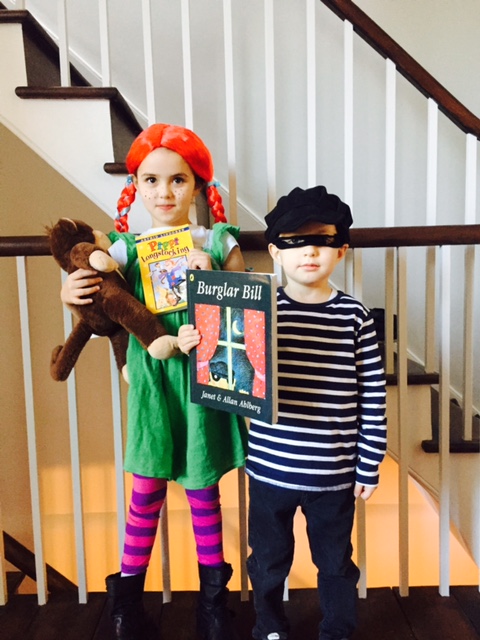
I (Clare) just found out that Thursday March 3 is World Book Day. What a wonderful event Image_WorldBookDayto celebrate. Check out this site from England: http://www.worldbookday.com which has lots of suggestions for activities for the day.

Thought you would like this picture of children dressed up as Pippi Longstocking and Burgler Bill!

Slowing Down to Learn: Mindful Pauses That Can Help Student Engagement

There has been so much attention to mindfulness in the last while. My (Clare) colleague, Chriss Bogert, VP at the Lab School, send me this great post about mindfulness in the class. Here is the link: http://ww2.kqed.org/mindshift/2015/02/17/slowing-down-to-learn-mindful-pauses-that-can-help-student-engagement/

By MindShift  February 17, 2015

The excerpt below is from the book “Mindfulness for Teachers: Simple Skills for Peace and Productivity in the Classroom,” by Patricia A. Jennings. This section is from the chapter entitled “Orchestrating Classroom Dynamics.”

Mindful Wait Time

Image source: Mindshift.org

One way to promote engagement and learning is to consciously create pauses throughout the day. We can create a sense of spaciousness in our classroom by slowing down the pace of our speech and punctuating our lessons with silence. Introduced well, this practice can improve classroom discourse.

The speed at which we can process information varies from person to person (Droit-Volet, Meck, & Penney, 2007). Some people process auditory information very quickly, while others tend to have more visual or sensorimotor strengths. In any case, when we have more time to process information, the quality of our thinking and learning improves. Younger children require more time to process than do older children, and adults often forget this as they zoom through content as if they were speaking to other adults. No matter what their ages, when we give our students just a little more time to process information, they learn better.

When I introduce this idea to teachers, I often hear concerns that they will be wasting valuable time doing nothing. It’s important to recognize that during the pauses, you and your students are not “doing nothing.” Your students may be considering several alternatives; they may be mulling a picture over in their mind; they may be making associations, comparisons, and contrasts. They may be trying to drudge up the right word from their vocabulary. When we give them this time, their processing becomes richer, deeper, and more abstract. When you rush through a lesson, you may deliver content more quickly and efficiently, but your students may not absorb the content very well, if at all.

The added bonus of these pause punctuations is that they give us as teachers a few moments to practice mindfulness. When this becomes an intentional part of our lessons, we can take the time to notice our body in space, the whole classroom, each student, and the small details that surrounds us, in the present moment. We give ourselves a short break—a micro-vacation from the constant activity of a busy classroom.

We can use the time to tune in to ourselves and our students. We can ask ourselves, “How am I feeling right now? How are the students feeling? What’s happening right now? What do my students need? How can I explain this better?” By taking mindful pauses, we are modeling mindful behavior for our students and letting us all have some time to process the information we are exploring together.

Typically we pause after we ask a question and before we call on someone to answer. Most of the time, this pause is only about one second long. Students who process information quickly are at an advantage under these conditions. They tend to be the ones who always raise their hands immediately. While the speedy students are answering the question, the slower students are still trying to process the question, so they may not hear and comprehend the answer or be able to assimilate it into their existing knowledge. If the quick pace of the session continues, some students may feel left behind.

However, educational researchers have discovered that if the pause between the teacher’s question and the student’s answer lasts between three and five seconds, significant changes occur in student behavior (Rowe, 1987). Students are more likely to respond appropriately to the questions, answer the questions correctly, and offer longer and more complex answers. There are fewer “I don’t know” or non-answer responses. Over time, many more students show higher levels of engagement (Honea, 1982; Swift & Gooding, 1983) and achievement test scores and school retention levels increase (Tobin & Capie, 1982).

Wait time has a positive effect on teachers as well. With conscious use of wait time, teachers’ questioning strategies become more varied and flexible, and they ask follow-up questions that require more complex information processing and higher-order thinking (Casteel & Stahl, 1973; Rowe, 1972; Stahl, 1990; Tobin, 1987).

Robert Stahl (1990) identified eight categories of wait time. When we formally introduce wait time, these periods of silence are trans- formed from periods of awkwardness into valuable moments of silence. The first category is the type of wait time we’ve already discussed: the time between a teacher’s question and the student’s answer. The other seven are as follows:

Within-student’s-response pause time. This is a three-second or longer pause that occurs when a student pauses or hesitates during the process of delivering a response to a teacher’s question. Teachers tend to interrupt students when they are thinking through their answers and take time to pause. However, when given the time, students often follow these periods of silence by successfully completing their responses.

Post-student’s-response wait time. This is a pause after a student has finished a response and other students are considering adding comments or reactions. This gives the other students time to think about what was said and to decide if they have anything to add.

Student pause time. This is a pause after a student has initiated a question, statement, or comment but doesn’t complete the thought. It may seem strange to formalize this type of pause, but this situation arises more often than we might realize because the tendency is to ignore the question rather than allow for a pause. This happens to me a lot. I have a thought, idea, or question. I’m getting ready to tell someone, and my mind goes blank. I can’t remember what I was going to say. When this happens to one of our students, we can give ourselves and the student a little time to recover, rather than just letting it drop.

Teacher pause time. This is a pause that the teacher intentionally initiates to consider what is happening, appraise the situation, and consider the best course of action. A particularly beneficial time for a teacher to pause is when a student has asked a question and the answer requires a complex answer. Taking time to consider how to frame the answer can improve student learning.

Within-teacher-presentation pause time. This is a pause that the teacher intentionally initiates during lecture presentations or other extended periods of content output. The teacher intentionally stops the flow of information to give students three to five seconds of silence to absorb the information and to consolidate their thinking. This type of pause requires no response from the students; it’s simply processing time. Using silence this way, teachers can chunk their content into bite-sized pieces to help students absorb and process the information better.

Student task completion work time. This is pause time intended to allow students to complete an academic task that demands undivided attention. The length of the pause should be related to the time it takes to complete a task. The challenge involved in this type of pause is how to handle the variation in completion time among students. If students learn the value of pausing and some of them finish early, they can use the time to extend their thinking about the subject in some way.

Impact pause time. This is the use of pause time to create impact or drama. When we pause, we can create a mood of anticipation. A dramatic pause can generate feelings of suspense and expectation.

Wait time can be challenging. Many of us get so excited about sharing our own thoughts and ideas that we tend to interrupt students, leaving no space in the discussion for students to process information and respond thoughtfully. In the skill-building practices at the end of this chapter, you will learn more about how to apply wait time in your classroom.

Patricia A. Jennings is an associate professor at the Curry School of Education at the University of Virginia.

Anxiety And Depression In The Classroom: What Educators Can Do To Assist Students

I (Clare) have been involved in a number of discussions re: children and anxiety. I thought I would share with you this upcoming event. For those in the Toronto area you might consider attending.Image_CECflier

IMG_1236

Rethinking Positive Thinking, in Life and Education

I (Clive) know that self-help books are not everyone’s cup of tea, but given the interest in well-being these days (see Clare’s February 6 posting) they appear to have an important place. Recently I came across a rather impressive one called Rethinking Positive Thinking (Current/Penguin, 2014) by psychologist Gabriele Oettingen.

Oettingen agrees that learning to think positively is essential, but feels that writers on the selfiesubject have gone too far. Just focusing on the positive can result in frustration, failure, and un-happiness. As the saying goes, perfection is the enemy of the good. She recommends instead what she calls “mental contrasting,” which involves thinking about both the positive and the negative aspects of a situation, and of life in general.

As well as being helpful at a personal level, Oettingen’s approach seems to me to have application to teaching and teacher education. It supports being realistic about the challenges of teaching – and so not caught off guard by them, as many beginning teachers are – while also reminding ourselves of its many satisfactions and rewards. It calls into question over-the-top government and school district “targets” that promise to “transform” schooling, if only teachers would adopt the latest set of edicts. Mental contrasting can keep us aware of what we need to work on in teaching while taking comfort in the current successes of the profession.