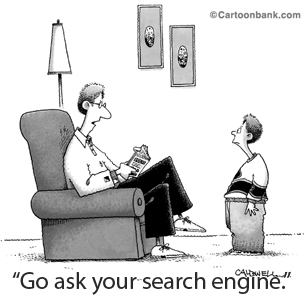
What happened to “go ask you mother?”

My (Cathy’s) research focus is on multiliteracies. Understanding the history and conceptual development of multiliteracies demanded I grasp a basic understanding of semiotics, or semiology. Semiotics is a branch of linguistics that studies signs, symbols, and signification. However, it is the study of how meaning is created, not what it is.
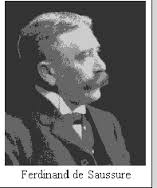
Ferdinand de Saussure is generally credited as the father of semiotics. His book Course in General Linguistics, was published posthumously by his former students Bally and Sechehaye. It was through this work that Saussure’s Semiology Theory was made public. His theory was based on the study of signs; a sign being anything that represented something else. Saussure proposed that communication is a system of signs that convey meaning, but limited his work to the use of words, spoken and written. Sassure’s most recognized semiotic terms are signifier, signified, sign and symbolic. (Glossary at bottom of page)
To test our knowledge of these terms, I share the following three graphics. Does their signifier representation signify anything symbolic to you?
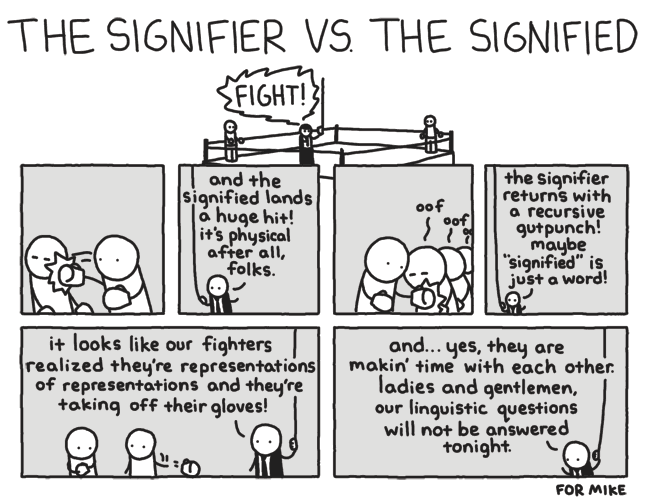
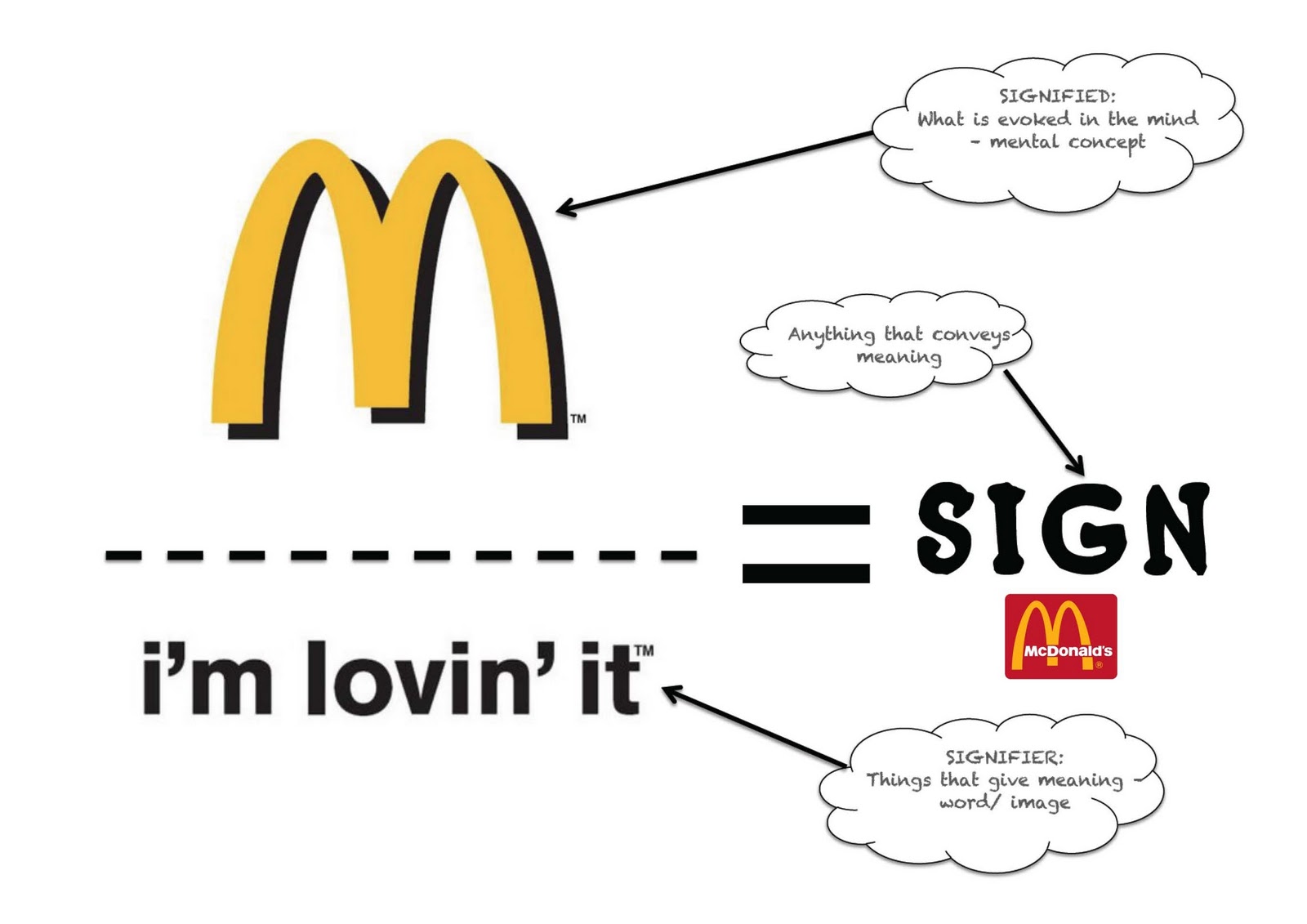
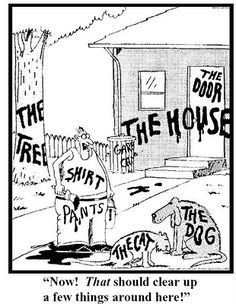
Signifier: any material thing that signifies, e.g., words on a page, a facial expression, an image.
Signified: the concept that a signifier refers to.
Together, the signifier and signified make up the:
Sign: the smallest unit of meaning. Anything that can be used to communicate.
Symbolic (arbitrary) signs: signs where the relation between signifier and signified is purely conventional and culturally specific, e.g., most words.
http://www.uvm.edu/~tstreete/semiotics_and_ads/terminology.html
“A humorous and heartwarming documentary feature, Cyber-Seniors chronicles the extraordinary journey of a group of senior citizens as they discover the world of the internet through the guidance of teenage mentors.” Business Insider
Directed by Saffron Cassady, the idea for the Cyber-Seniors documentary began with a high school project that was launched by two sisters. The sisters had the support of their mom, Brenda Rusnak, who had worked her entire career with seniors. After a successful first year, Brenda helped continue the Cyber-Seniors program, expanding it to a second retirement home and helping to engage more youth mentors. Over the next ten months, Saffron and her film crew captured over 120 hours of footage and many memorable moments. Of this film, the Washington Post reports:
Kerstin Wolgers made it through almost 82 years on this Earth without ever once checking an e-mail, watching a YouTube clip or sending a tweet. But last week, as part of a crash course that introduced her to the Internet for the first time, the former Swedish actress did all three — plus Googled, Instagrammed, Wikipedia-ed, shopped, video-gamed … even online-dated, eventually. “Lots going on here,” she says of Tinder. “It’s really exciting, if you asked me.”
Understanding how significant this program is to the lives of seniors was captured for me (Cathy) in a single moment when I watched one senior weep while he viewed his grandson play the piano via Skype. The differences technology makes in their lives, is remarkable.
Under the Getting Started heading of the web page for this documentary (link below) you can learn how to begin such a project in your community. It also will let you know when the documentary is coming to a theatre near you. Personally, I (Cathy) can’t wait to see it.
http://cyberseniorsdocumentary.com/
A delightful trailer for this film can be viewed at:
www.cyberseniorsdocumentary.com.
I (Cathy) was deeply moved by a key note address presented at Maharishi University in Iowa that was captured on Youtube (link below). The convocation address was delivered by funny man Jim Carey who, quite unexpectedly, revealed a rarely witnessed serious and profound side of his personality. During the speech, Carey unveiled a compelling 20 foot-high painting that he claimed took him thousands of hours to complete. He said he was “weeks and weeks alone on the scaffolding” painting the picture. The painting depicted the metaphoric players in our lives (and in our minds) that drag us down or keep us from reaching our dreams (e.g. misery, the party host, the clinger). Carey told the graduates that “painting is one of the ways I free myself from concern. A way to stop the world through total mental, physical, and spiritual involvement.”
Beyond the painting, Carey’s words were also stirring. Carey stated:
“As far as I can tell it’s about letting the universe know what you want and working towards it while letting go of how it comes to pass. Your job is not to figure out how it’s gonna happen for you, but to open the door in your head and when the door opens in real life, just walk through it. And don’t worry if you miss your cue, because there are always doors opening. They keep opening. And when I say life doesn’t happen to you, it happens for you, I don’t really know if that’s true. I’m just making a conscious choice to perceive challenges as something beneficial, so that I can deal with them in the most productive way.”
Cary concluded the speech by challenging the students to choose between fear or love to guide them in their life choices when they left the auditorium.
Thank you, Jim Carey.
As my (Cathy’s) daughter is a research scientist and director of a private laboratory, the recent sexist comments by Nobel Prize-winning British scientist, Sir Tim Hunt, was quite a topic of discussion in our home. Hunt, a biochemist who was a joint recipient of the 2001 Nobel Prize made the offensive remarks while speaking at the World Conference of Science Journalists in South Korea. Hunt stated that mixed gender laboratories are “trouble” and “”you fall in love with them, they fall in love with you and when you criticize them, they cry”. According to the BBC, Hunt later apologized for his comments during a phone interview, but then went on to say:
“I did mean the part about having trouble with girls … I have fallen in love with people in the lab and people in the lab have fallen in love with me and it’s very disruptive to the science.”
Hunt’s “retraction” only led to a much stronger public response and initiated his resignation from his honorary post at University College London. The social media frenzy that followed, particularly through twitter was intriguing. Female scientists from around the world spearheaded an ironic Twitter campaign to mock Sir Tim Hunt’s sexist comments about the need for single-sex laboratories. For example, Allison Sekuler, AVP & Dean Grad Studies and Prof of Psychology, Neuroscience & Behaviour @ McMaster University tweeted:
Can’t do any science today because – like all women – I’m too busy making #TimHunt fall in love with me and crying http://www.theguardian.com/science/2015/jun/10/tim-hunt-apologises-comments-trouble-female-scientists …
Archaeologists, biochemists and mathematicians starting posting “distracting ” photographs of themselves at work:

And male scientists demonstrated solidarity by posting new signs in their labs:

It was satisfying for me to see women in science not only display a strong voice, but be able to maintain a sense of humor. This sense of humor will bode us well as we move forward in our crusade to combat sexism and other forms of oppression in the work place and in education.
Yesterday, Robert Munsch turned 70. If you are not familiar with Robert’s work, he is one of the most famous children’s authors in North America. Most of his books are delightfully lively and humorous. Much like a comedian, he likes to take a simple, truthful situation in a child’s life and show the funny side to it. A delightful example of this is his book I Have to Go Pee, which depicts a child getting bundled into a snow suit and then announcing “I have to go pee!”. His books usually unfold in a pattern that children love to anticipate and participation in.
Beyond his writing style, I love his telling style, as he is a storyteller in the true sense of the word. He tells stories (like a performance) and he is very good at it. I (Cathy) have had the privilege of working with Bob (Robert is his “author” name) several times as I am also a storyteller. He is a delight to work with. Bob’s background has always intrigued me. He studied to become a Jesuit priest, but after working in orpahanages and daycare centers, he decided he would rather work with children. After graduating with his Masters in Education, he moved to Canada (he is American) and worked in the preschool at the university of Guelph. That was where he started telling stories. People encouraged him to submit the stories he told and he eventually got one published. The rest, as they say, is history.
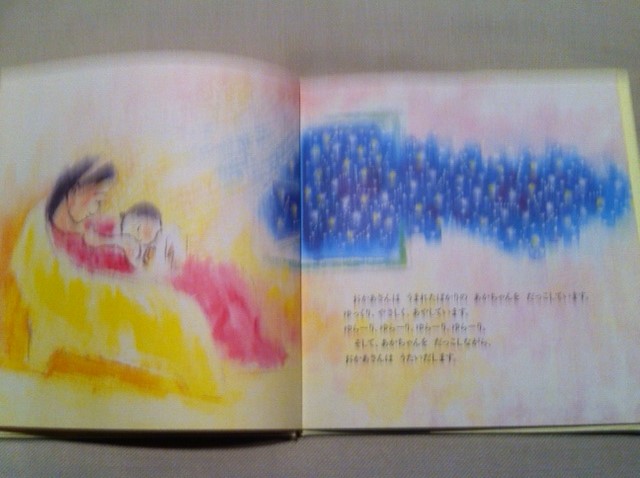
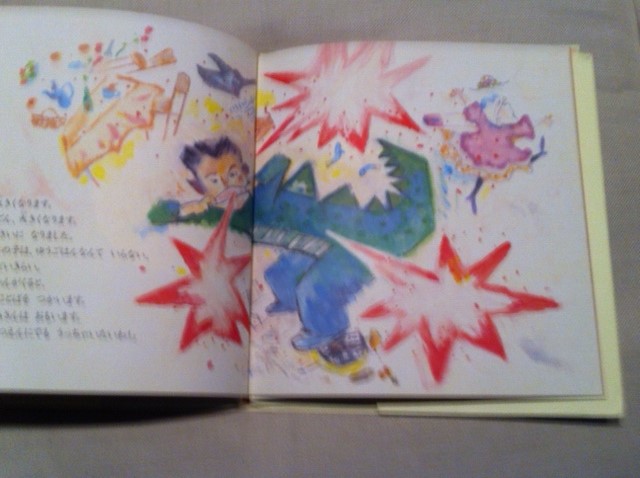
One of Munsch’s best-known books Love You Forever, was listed fourth on the 2001 Publishers Weekly All-Time Best selling Children’s Books selling 6,970,000 copies (not including the 1,049,000 hardcover copies). In celebration of Bob’s birthday, the cbc hosted a web page for Bob (link below) on which you can vote for your favorite Munsch book. I suspect Love You Forever will win, as I personally meet parent and educators worldwide that love that book. I will also vote for Love You Forever but it is not the American version I love. It is the Japanese version. I once hosted an event in my home honoring a group of storytellers that came over from Japan. Many Canadian storytellers and authors came to the event and, of course, Bob came too. Graciously, these people gave away copies of their books as welcome gifts to Canada. As there were about 15 Canadian tellers and authors, Bob just kind of blended in with the crowd, and I knew my foreign guests had no idea who he was or how well known he is. That is-until they got home and Love You Forever was released in Japan, and became an enormous hit. One of my guests sent me a copy of the Japanese version and a picture of her and two of her friends taken with Bob. She was so excited and grateful to have met such an amazing/famous storyteller in person. Bob, being Bob, would not have thought anything of it. He’s just that kind of person. Below are pictures of the book my guest sent me. I find the illustrations in this version tender and beautiful. As Bob wrote this story in memory of one of his own children that passed away, I think the illustrations are most appropriate. That’s my Munsch favorite. What’s yours? http://www.cbc.ca/books/munsch70/index.html 
In this fast paced world of technology and change, do you ever feel you couldn’t get by without the Help Desk? I (Cathy) came across this delightful vignette while searching for Help Desk tips. It reveals how Help Desk support was utilized in the middle ages. This original skit was first performed on the show “Øystein og jeg”, a Norwegian Broadcasting (NRK) production. Øystein Backe plays the helper and the desperate monk is portrayed by Rune Gokstad. The piece was written by Knut Nærum. The version below is the original skit with English subtitles. I also discovered a different version, performed in English, but trust me, the original version is much funnier. Enjoy!
I (Cathy) attended a very interesting book launch recently at the Different Drummer Book Store in Burlington, Ontario. Author, Gisela Tobien Sherman, (top left in photo) released her new book The Farmerettes. The book was inspired by storyteller, poet, Sonja Dunn (bottom right of photo) who was a Farmerette. At the book launch, the story of the inspiration for the book was shared. Gisela, Sonja and a few other members of the Canadian Society for Childrens’ Authors, Illustrators, and Performers (CANSCAIP) were having lunch together. Sonja, now 84, (yeah, doesn’t look it!) shared one of her experiences as a Canadian Farmerette during the Second World War. Apparently during the war, with all the young men away fighting, there was not enough labor to work the farms, so teenage girls were rounded up and sent off to live on farms throughout the province. Sonja, was one of these young women, boarded in a barn with five others. They were taught and expected to carry out all the heavy farm work on a daily basis. Sonja talked about how the experience changed them. Sonja’s story struck a chord with Gisela and she began to research this fascinating part of our history.

At the book launch were three other Farmerettes (all in their 80’s), who looked quite pleased to have their stories told. Plus, a fascinating collection of photographs, depicting their lives during this era of Canadian history were displayed. I was intrigued by the stories shared at the launch and deeply touched by the pride of the Farmerettes. I bought several copies of the book to give away, and of course, one copy for myself. Today, I will lay on my chaise lounge and treat myself to reading The Farmerettes, Second Story Press, by Gisela Tobien Sherman. Can’t wait.

At my (Cathy’s) institution, like most HE schools, plagiarism is an issue. According to Wikipedia, “Plagiarism is not a crime per se but in academia and industry, it is a serious ethical offense.” I deliberately quote Wikipedia because that (sadly) seems to be a popular source for many students these days. As the cartoon to the left implies, is copying from the internet plagiarism? The many new sources for plagiarism checking indicates “yes”. My institution supports a plagiarism locator called Turnitin. It is a relatively simple tool to use. Once the text is submitted to the Digital Learning System, the tool highlights all words in sequence that can be located on the www and Google Scholar. Hence, copying the words from Wikipedia becomes as evident as copying a paragraph from a journal article. The professor has to look at the text and determine if the highlighted parts have been properly cited. If not, the text is plagiarized. Although professors have access to this and can use it to check for plagiarism, it is used instead as a formative feedback took to encourage students to monitor their own work and how they are sourcing. Regarding Turnitin, Jennifer Haber, Professor of Communications at St. Petersburg College shares this email from one of her students:
Keeping an eye on the similarities percentage area keeps me aware of possible situations where I may be using too much (or even too little) outside resource information. Due to its ease of use and instructive benefit, I would say the service has played a significant part in my becoming a more improved writer. I would favorably recommend its use to any institution of learning.
This kind of feedback has sold Professor Haber on the use of this tool. Besides Turnitin, many more of these tools are popping up on the internet. Two popular sites are: Best Plaigerism Checker and Proofreader and Plagiarisma.Net (links provider below). With these kinds of free tools available and the bad press plagiarism has been receiving, its wonder that students still plagiarize. Perhaps these tools will help reduce it happening in our schools. Let’s hope so.
Plagiarisma.Net
Dr. Ruben Puentedura developed the SAMR model as a way for teachers to evaluate how they are incorporating technology into their classroom practice. Puentedura constructed his model in the form of a ladder and equates it with a student climbing the cognitive scale associated with Bloom’s Taxonomy. (i.e. as a task moves from lower to upper levels of Bloom’s taxonomy, so does a task move from lower to upper levels of SAMR).
Below is a comparison of Bloom’s and SAMR:
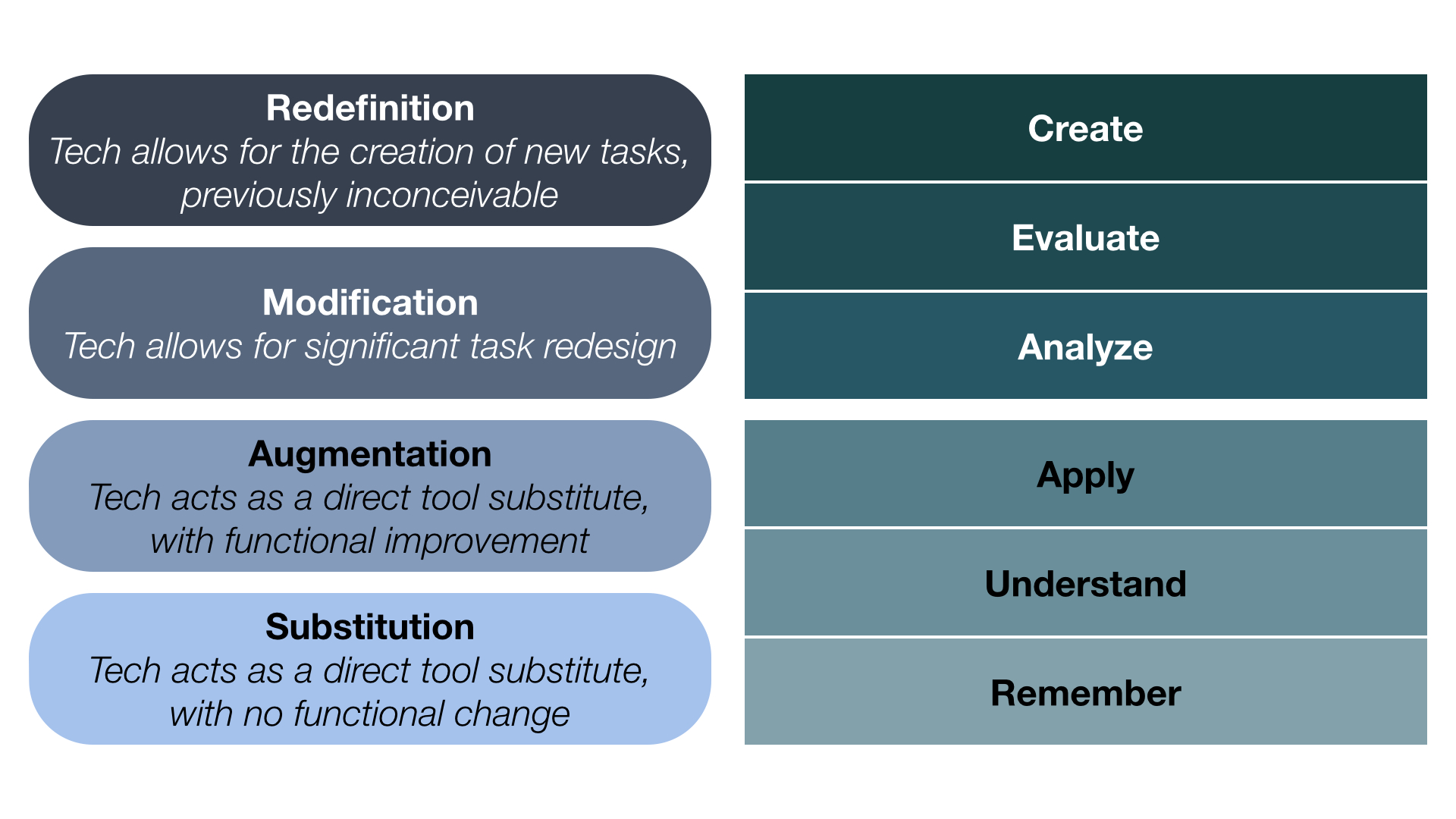
Puentedura’s model encourages educators to ask themselves if the student task is an act of substitution, augmentation, modification, or redefinition? The suggested threshold for moving from enhancing learning to transforming learning is between augmentation and modification. As an example of this, consider a student writing a paper. If the student writes the paper on a computer instead of on a piece of paper, this is an act of substitution. If the student uses spell check and a formatting tool to assist with the writing process, this is augmentation as there is a slight change in the functional improvement. Should the student publish the paper, perhaps on a wiki, blog site or through google docs, so other students can read it and give feedback, this is a modification of the process, for it now includes collaboration. Lastly, in redefinition entirely new tasks are created which were inconceivable without computers and computer software tools. In this level student transform their written stories into media productions using storyboards, filmed scenes and music. Students can also publish these and receive feedback on the work. In this level technology has redefined the task.
Working towards redefinition, is of course the goal for teachers who would like his/her students to be working in the highest thinking levels possible while using technology.
A short video introducing the SAMR model can be found at: https://www.commonsensemedia.org/videos/introduction-to-the-samr-model
 Literacy Teaching and Teacher Education