All posts by ycleovoulou

Literacy Teaching in the Community

Reading as an experience takes many forms. We read alone – in the comfort of our homes. We read in groups – shared reading in the classroom and book clubs. We read to connect to the broader community – through social media and the news.   This week I (Yiola) received an invitation to a  Literary Tea from the Yonge Gogos: an opportunity to engage in literacy in the community.

My aunt Valerie is a Yonge Gogo.   “Yonge” for Toronto’s famous Yonge St.  and surrounding area and “Gogo” the  African word for ‘grandmother’.  The Yonge Gogos  (how I love the play on words) are grandmothers in Canada who work with grandmothers in Africa.

http://www.grandmotherscampaign.org/?page_id=10

The Grandmothers to Grandmothers Campaign raises funds in Canada for the Stephen Lewis Foundation’s work with community level organizations in Africa that provide grandmothers and the children in their care with the necessities of life, including counselling, nutrition, shelter, school supplies and income generation activities.

This year’s literary tea features Sally Armstrong, journalist, filmmaker, and award-winning author.  There will be a reading from her book Uprising and time to socialize.

I think an event such as this is simply amazing:  hosted by strong women in our local community who are committed to and working with strong women abroad; bringing the community together through literacy to raise money for a wonderful organization – the Stephen Lewis Foundation.

Home

I find this literary event of interest because of the visiting author, the featured book, and the focus: the empowerment of women around the world.  Here is a description of the book:

Uprising: A New Age Is Dawning for Every Mother’s Daughter

From Africa to Asia to the Americas, women are the key to progress on ending poverty, violence, and conflict. Award-winning humanitarian and journalist Sally Armstrong shows us why empowering women and girls is the way forward, and she introduces us to the leading females who are making change happen, from Nobel Prize winners to little girls suing from justice. Uprising tells dramatic and empowering stories of change-makers and examines the stunning courage, tenacity and wit they are using to alter the status quo. In this landmark book that ties together feminism and our global economy, Sally Armstrong brings us the voices of the women all over the world whose bravery and strength is changing the world as we know it.

Retrieved from: http://www.speakers.ca/speakers/sally-armstrong/

Attached is the flyer for the Literary Tea. The event takes place October 19th at 2pm in Toronto.  I will be there. You too are invited to join as well. If you are able to attend please contact Ena @ 416-485-0753.  Perhaps I will see you there to share literacy teaching in the community.

sally 1 pdf

How was your day? And more inspiring ways to ask Children about school

We know that if we ask children, “How was your day?” Often we will hear the response “Fine”… or if we ask “What did you do at school today?” Often we will hear the ever so painful response “nothing”.

I (Yiola) came across this list of questions to ask children as a way to stimulate conversation about their schooling experience. I will be sharing this list with my student teachers this year as I find it to be a helpful tool to share with parents.

1) What was the best thing that happened at school today? (What was the worst thing that happened at school today?)

2. Tell me something that made you laugh today.

3. If you could choose, who would you like to sit by in class? (Who would you NOT want to sit by in class? Why?)

4. Where is the coolest place at the school?

5. Tell me a weird word that you heard today. (Or something weird that someone said.)

6. If I called your teacher tonight, what would she tell me about you?

7. How did you help somebody today?

8. How did somebody help you today?

9. Tell me one thing that you learned today.

10. When were you the happiest today?

11. When were you bored today?

12. If an alien spaceship came to your class and beamed someone up, who would you want them to take?

13. Who would you like to play with at recess that you’ve never played with before?

14. Tell me something good that happened today.

15. What word did your teacher say most today?

16. What do you think you should do/learn more of at school?

17. What do you think you should do/learn less of at school?

18. Who in your class do you think you could be nicer to?

19. Where do you play the most at recess?

20. Who is the funniest person in your class? Why is he/she so funny?

21. What was your favorite part of lunch?

22. If you got to be the teacher tomorrow, what would you do?

23. Is there anyone in your class who needs a time-out?

24. If you could switch seats with anyone in the class, who would you trade with? Why?

25. Tell me about three different times you used your pencil today at school.

*****

The list came from: http://www.huffingtonpost.com/liz-evans/25-ways-to-ask-your-kids-so-how-was-school-today-without-asking-them-so-how-was-school-today_b_5738338.html

Researchers in the area of parenting and parent involvement have offered the same advice to parents for speaking to their children about school.

http://www.theglobeandmail.com/life/parenting/back-to-school/how-to-help-your-kids-succeed-in-school-talk-talk-talk/article4524102/

A hard cold truth about teaching and teachers at Canadian universities

An article I (Yiola) came across on Canadian news, the CBC.

http://www.cbc.ca/news/canada/most-university-undergrads-now-taught-by-poorly-paid-part-timers-1.2756024

The increasing numbers of contract employees in academia is not new. We have known for quite some time that many faculty members, usually teaching faculty, have part-time contract positions.

The organizational process to hire well-qualified academic faculty as part-time and contract employees is complex and has many implications:

– funding: it seems universities receive little funding for the renewal or development of permanent or tenure stream faculty and other resources

– work/life conditions for contract faculty:  the article describes the challenges contract faculty experience both at work and in their personal lives (low wages, job instability, heavy workloads)

– culture/work environment: the tensions between tenure and non-tenure, permanent and contract, faculty

– quality of teaching: with the aforementioned stresses placed on teaching and teachers at the university, is there an effect on the quality of teaching?

Clare and Clive have explored and written on the topic. For example:

Kosnik, C., & Beck, C. (2008). In the shadows: Non-tenure-line instructors in preservice teacher education. European Journal of Teacher Education, 31(2), 185-202.

Beck, C., & Kosnik, C. (2003). Contract staff in preservice teacher education. Teaching Education, 14(2), 187-200.

The article speak to all faculties and departments across the university. This holds true for teacher education as well. Upon reading the article and listening to the interview http://www.cbc.ca/news/class-struggle-1.2756899   I cannot help but feel sad for the state of teaching and learning at the University level.  University teachers deserve better… students deserve better.


First impressions of Junior kindergarten (JK) and big hopes for a successful start

In a previous post I (yiola) shared information about  my experience as a parent with a child entering Full Day Kindergarten (FDK).

https://literacyteaching.net/2014/06/16/chronicles-of-a-parent-teacher-educator-on-full-day-kindergarten/

A letter did arrive from the school in early August that shared information about my Sylvia Clare’s school, classroom and teachers. Drop off and entry routines routines, school hours, suggestions for snacks and lunches, back packs and what to have in them, and kinds of shoes and clothing were all listed in the letter.  The letter was detailed and comprehensive; enough information to get us started and feeling confident. We were also informed that Sylvia Clare’s first day of school is Friday September 5th (a staggered start for the JKs).  Oh the first day of school…. there are so many perspectives, feelings, emotions connected to the first day of school.

sylschool

My family visited the school earlier this week to meet the teachers and check out the classroom.  We walked into the school and were greeted by the vice-principal. “Well hello and welcome! What is your name sweetheart?” asks the vice-principal.  Sylvia Clare rushes to hide her face behind my legs and says “NUFFING!'” (nothing)… I turn a soft shade a red and try to encourage my daughter to say her name… she digs deeper into my back for cover.

We made our way to the classroom. It is the smallest classroom of the five I wrote about earlier. The room will host 30 students.  This concerns me. The teachers greeted us and we had some time to explore the classroom together. Everything, according to my teacher education self, looked fantastic: neutral, calm colours, brand new wooden materials and furniture, accessible shelves, colourful and plentiful picture books, walls free of borders and posters ready for students to share their learning.

The classroom teacher showed Sylvia Clare where she would enter and how she was expected to arrive into the classroom. We went into the “cubby room” where there were 20 cubbies for 30 expected students. Here Sylvia Clare will need to drop off her jacket and backpack, unload her lunch bag into the cubby above the hook and put on her indoor shoes. We then went to the carpet area where the teacher explained some of the basic school routines: school entry, attendance, outdoor play or physical education, followed by ‘free play’.

In terms of literacy development the early childhood educator (ECE) explained it would be taught subtly. For example, children’s names would be shared on the board and students, together, identify their names and the first letter of their names. It would be done through games and in ways that were free of pressure. This delighted me. I was assured that there would not be the pressure of the ‘sit down, work sheet’ style of learning literacy and numeracy.  The teachers explained that student inquiry will drive the program. While students freely explore the materials in the classroom and build and share their ideas and interests teachers will design the content.  Language and vocabulary will be built based on student interest. It was also explained to me that one-on-one and small group time would be developed so literacy lessons could take place with one of the teachers while the other teacher would work with the larger group on my inquiry/play based programs. 

Sylvia Clare drew for her teachers a picture as we spoke about assessment (there is a new provincial report card coming out this year!), portfolios, field trips, volunteer opportunities, and the importance of validating and appreciating Sylvia Clare’s ‘uber’ long last name.  

I’m not entirely sure how Sylvia Clare felt about her very first visit. She hasn’t said too much about it either way. I want Sylvia Clare to feel happy. I want her to jump out of bed every morning and say “Hurry mom! Let’s go to school”. I want her to make friends and to play freely and securely each day. If these things happen in the first months of JK,  my hopes for my Sylvia Clare will have been met.

Her first day is this Friday and again, I will share from time to time what I am seeing and learning about literacy teaching in the early years from a parent (and teacher educator) perspective.

Slam poetry, literacy and classroom culture: What one young teacher shares

Several posts ago I shared an example of slam poetry. Slam poetry, for me, is alluring. It captures my attention. I have always found that with poetry, all kinds, there is passion, feeling, and emotion.  It speaks to me. Slam poetry is raw and real and leaves little to the imagination. It shares the here and now of one’s experience and tells the story of one’s truth.

Here is a short clip of a young teacher who shares with us what he tells his students:  tell your truth.

http://www.upworthy.com/25-year-old-teacher-had-only-4-minutes-for-his-1st-ever-ted-talk-he-nailed-it?c=ufb1

His 4 core principles (literacy related):

Read critically

Write consciously

Speak clearly

Tell you truth

This teacher speaks of classroom culture, modelling ways of thinking and being, and his experience as something worthy of words and sharing.

On the eve of a new school year, I want to wish all teachers, students, and teacher educators a year filled with passion for learning and inspiration. Teaching is not easy but when the fire for learning ignites in our students we know, as educators, that there is little more gratifying or rewarding.


Muay Thai is education: How martial arts impact learning

This past weekend my (yiola’s) family was involved in a Muay Thai Expo.  Muay Thai (or Thai boxing) is a martial art that originates from Thailand  http://en.wikipedia.org/wiki/Muay_Thai  and is now taught all over the world.

My partner is a Master of Muay Thai and has schools here in Ontario: http://www.ajahnsuchart.com and http://www.siamno1.com.  This past weekend we held a Muay Thai expo in Toronto. People from across Ontario, Quebec and Mexico attended. Here are some images from the weekend:

a local instructor gives a talk on Being a student: An approach to learning muay thai
A local instructor, Kru Nick Bautista, gives a talk on: Being a student: An approach to learning Muay Thai


Master Suchart taking a group through the physical practice of traditional Muay Thai
Master Suchart taking a group of students through the physical practice of traditional Muay Thai


World Champion Simon Marcus showing specific technique for defence

As I observed the teaching and learning that took place this weekend I was reminded how valuable this type of education is to a society.  From all walks of life, students come to learn a tradition, a martial art, and a way of life.  The outcomes are far reaching and extend to many areas of life including: heightened self-confidence, increased physical fitness and technical skills, and improved health. Through these developments individuals are able to participate in their communities in more creative and productive ways.

I watched on in amazement as each instructor brought to the Expo their expertise and passion for learning.  The instructors’ ability to demonstrate martial art while also teaching elements of the martial art was inspiring to me as an educator. The tone,  language, sequence of instruction, and balance between physical practice and presentation were effective and kept students/participants engaged for 5 hours of learning each day. Students learned a great deal about Muay Thai and I suspect that they walked away from the experience  more confident, stronger, and educated in the art of Muay Thai. Moreso, I know that many students of martial art are able to take their learning and apply it to their lives in general.  Teaching and learning martial arts (and most sport for that matter) extends beyond the art/sport itself into the realm of human experience: morality, ethics, and everyday life.

In teaching sport as a particular kind of human practice, however,  it is the physical educationist’s responsibility to see that the ethical principles upon which it is based are properly understood and that the manner in which a sport is conducted is in accord with its rules and in keeping with the best traditions of its practice. The physical educationist can guarantee nothing, but as an influential guardian of an ethically based practice he can do a good deal to uphold its highest ideals, its most cherished traditions. As in all forms of learning much depends on the attitudes and judgments that are brought to bear upon what is done and whether what is taught and encouraged, is regarded as worthwhile in the context of life. Like morality, sport is a species of evaluation, a kind of appraisal of human conduct. 

Taken from:  Arnold, P.J. (1984).  Sport, Moral Education and the Development of Character. Journal of Philosophy of Education 18(2). 275-281.

Children, teens, adults have much to gain from learning a martial art. Well beyond how to punch, elbow, knee and kick Muay Thai teaching and learning has the capacity to influence and foster character development in many ways.

Self-portraits and sparkling feet: Communication & representation in the early years

It seems my (yiola’s) blog posts run parallel to the foci in my life. This makes good sense as it seems the blog genre, whether an MAB or personal, pulls from the writer their interests, latest happenings and experiences. This past month I have had the privilege of  spending a great deal of time with my two young children; hence the sharing of teaching and learning and literacy in the early years in many of my posts.

My four year old has been busy communicating, sharing and representing. Through her drawings she expresses her feelings and is able to share stories and ideas.

In March she drew and spoke about our family:

family

Her most recent self portrait:

selfportait

Note the addition of the ears and arms that are now present in every drawing she creates.

For me, these developments are huge; for ECE researchers and educators these drawings are nothing new:

http://www.learningdesign.com/Portfolio/DrawDev/kiddrawing.html

And yet, I still marvel at my child’s ability to communicate and represent in such meaningful ways.  My daughter expressed the other day  “momma, my feet are sparkling”… I did not bother to explain that wasn’t the case, that instead, her “feet fell asleep” because really, is one expression more accurate than the other?

An interesting and short description of stages of art development:  http://www.artjunction.org/young_in_art.pdf

What caught my attention from the article was the statement below:

Of course, what children seem to do naturally and what they are capable of doing are entirely different matters. It is likely that teachers will find that students within their classrooms are at varied points in their graphic development since some have had abundant prior experiences with art, whereas others, may have had limited creative opportunities. Thus, teachers should avoid the temptation to place children at a particular stage simply because of their age or grade level.

… and how true this is of exposure to all subject/school related matter.

As I read about child development and literacy I appreciate  the stages of development. As a teacher (and now parent) I have seen the stages unfold; however, as I read and observe the effects of providing opportunities for creative development and the use of multi literacies with young children I am more excited about the possibilities for language and literacy development  in areas such as: creative thinking, communication, problem solving and representation.

In keeping with ‘you teach who you are’, I cannot help but think about these areas of interest for my work.  As I prepare my courses for the coming year I am searching for readings and experiences for student teachers that will encourage discussion about creative thinking/problem solving and the implementation of various kinds of opportunities for pupil’s acquiring literacy both in and out of classrooms.


Creativity and the Curriculum

I (yiola) will admit that as a classroom teacher  – while I thought I was a good teacher of student  learning – I lacked creativity both in content and pedagogy. Recently, I came across this link:

30 Dad Jokes That Are So Bad, They’re Great

and now, as a more experienced (teacher) educator and reflective practitioner  what came to mind was, “wow… so many interesting ways to use this link and these beautiful images with the mandated Ontario curriculum”. For example, any grade and topic in the Social Studies curriculum could be applied: Grade 2: Communities Around the World; Grade 3: Living and Working in Ontario (a perfect opportunity to explore the various regions and compare and contrast their beauty); Grade 4: Physical Regions in Canada (exploring photography to “unearth” physical landscapes); Grade 6: Canada’s interactions with the Global Community (moving beyond the political and economic).  Social studies can be seamlessly linked to literacy and the more I explore multiliteracies the more inspired  I am to employ the visual and the aesthetic to develop meaning and understanding… and communication.  Imagine the Visual Arts lessons and opportunities front these images — ‘Hello group of 7″ — and colour, and perspective, and line and emotion.  And to grasp onto the beauty of what may be unfamiliar to students living in urban centres or familiar to those living in more remote regions to discuss lifestyles and Healthy Living from the Health and Physical Education curriculum.

Which ever way children chose to inquire,  creative opportunities and aesthetic resources may offer new and exciting opportunities for seeing the world and themselves.  This concept for teaching is more inspiring than how I recall teaching and learning (i.e. comparison worksheets of city life vs. rural life).

PS — I thought of my good friend Clive Beck as I enjoyed these beautiful images! I hope you enjoy them too.


Learning at the Children’s Museum, Madison WI

This summer my family traveled to Madison, Wisconsin USA.  I (yiola) found Madison to be a beautiful city filled with parks and bike paths, small shops and galleries. Among the many sites, we toured the capital building and the large farmer’s market on a sunny Saturday morning.  We also visited a most amazing place: The Children’s Museum. A three level building  on Hamilton St, just across from the capital building, the Children’s Museum is  a “hands on” facility where children can muck about and explore.

Included here is photojournalism to share our experience at the museum:

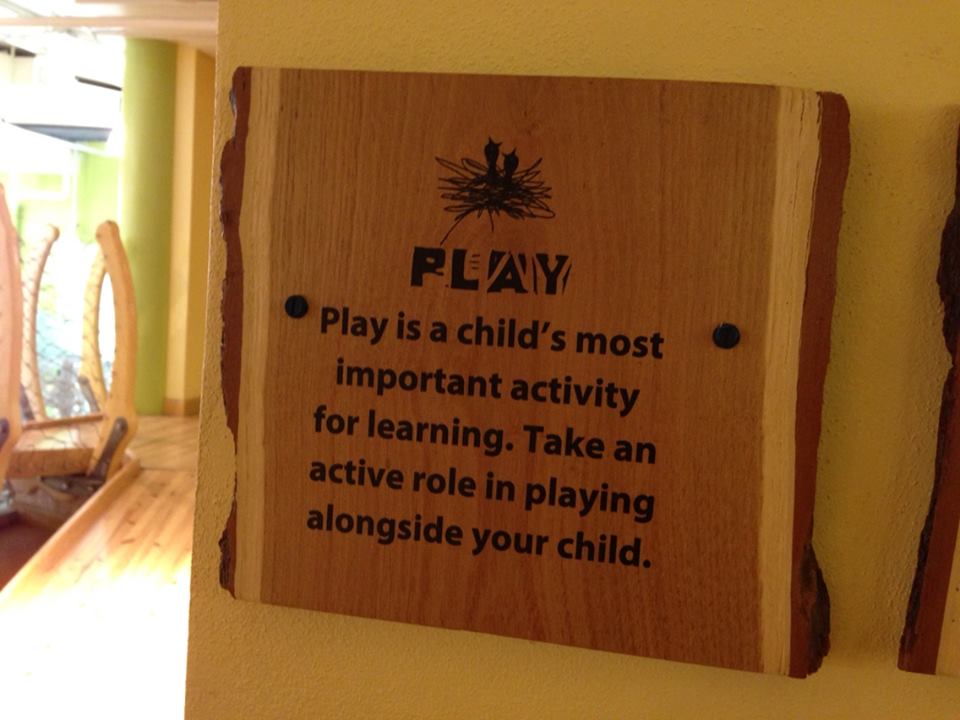
"Play"  as and for learning is the philosophy that guides the program at the Children's museum.
“Play”  as and for learning is the philosophy that guides the program at the Children’s museum.
My children Gallaway (age 3) and Sylvia Clare (age 4) gearing up to explore the museum.

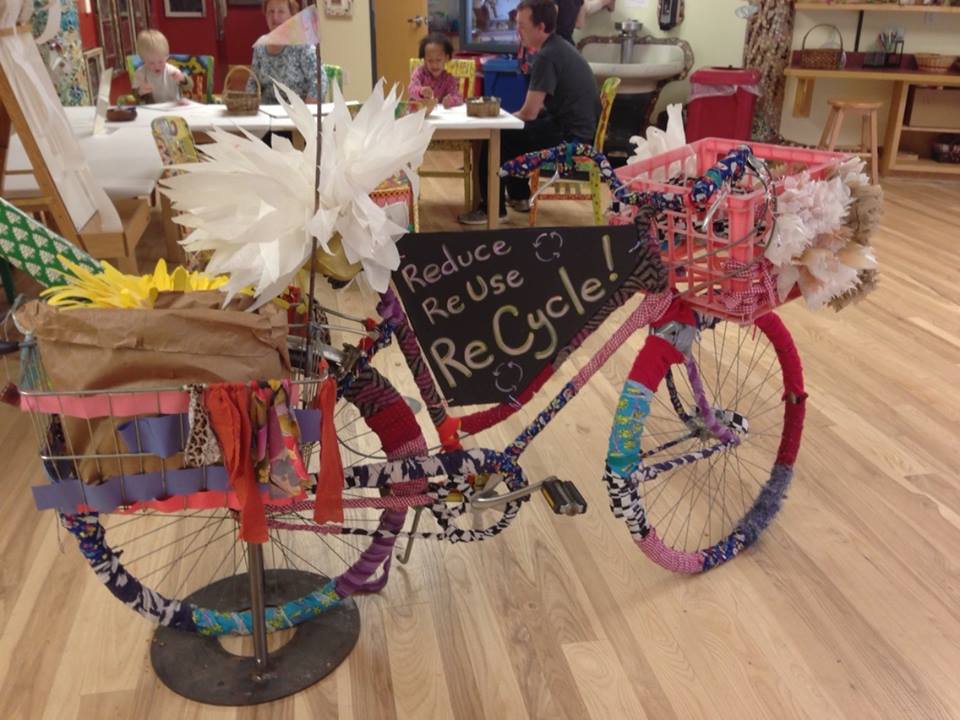
Materials for exploring, creating, building and open, un-supervised spaces are provided for children of all ages.

10371638_10154215065530121_4022735163397165536_n

My son Gallaway urban planning.
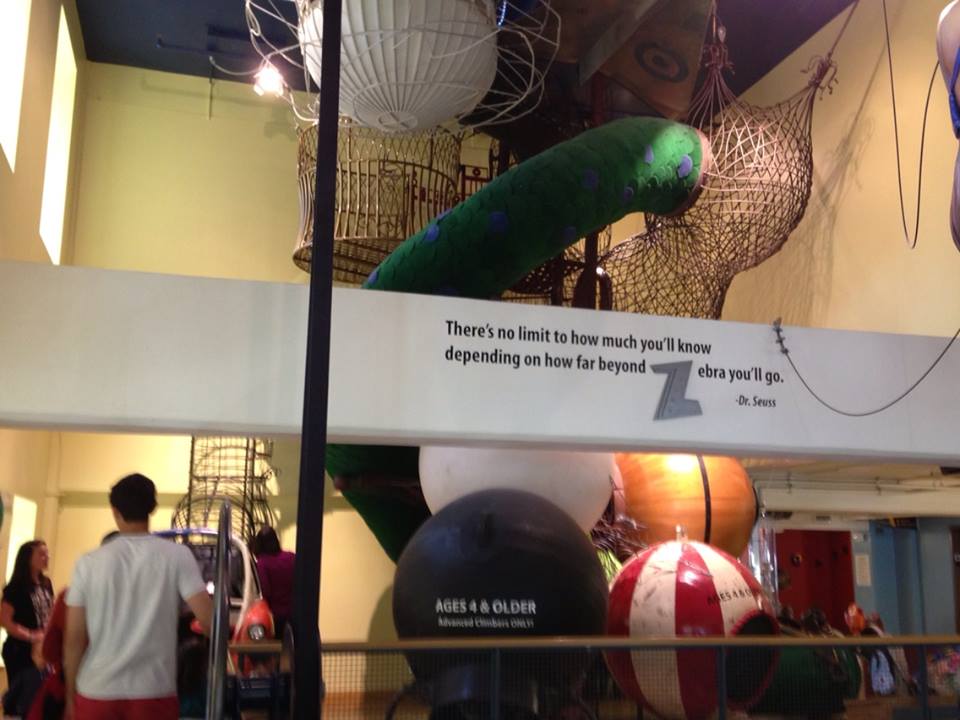
An enormous, creative indoor playground that includes climbers and slides.
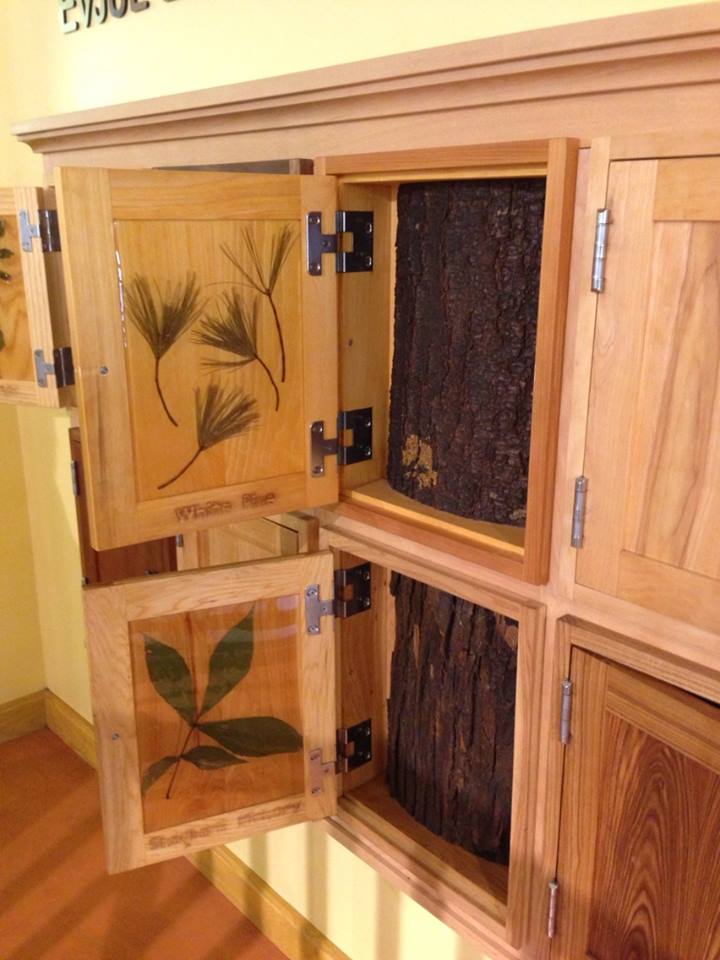
touch the bark, see the leaves, read about the tree
Open the door, touch the bark, see the leaves, read about the tree.
A large room focused on the Arts with several hands on activities (painting, weaving, exploring light, collaging)
A large room focused on the Arts with several hands on activities (painting, weaving, exploring light, collaging).

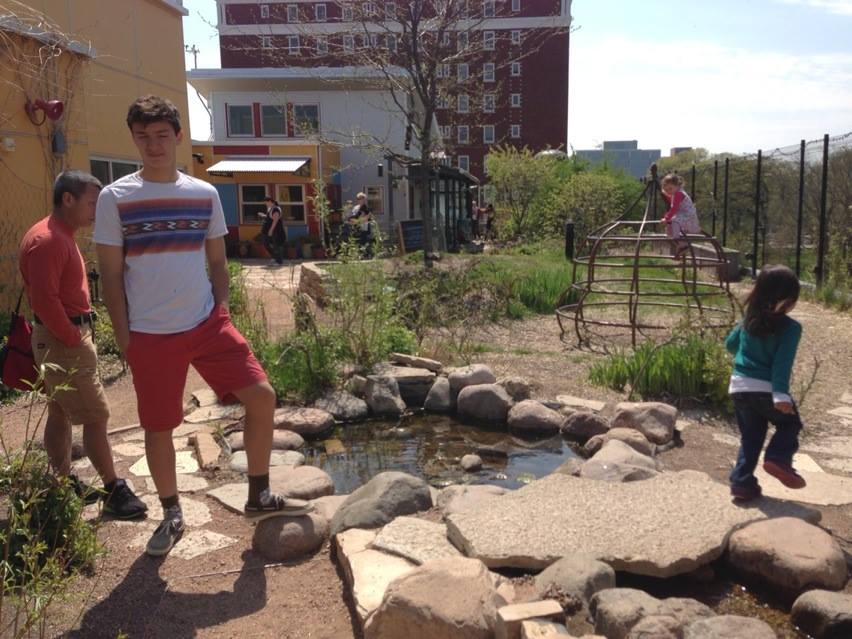
A roof top patio with animals, eco friendly systems and gardens.

10247450_10154215070500121_471084874711261325_n

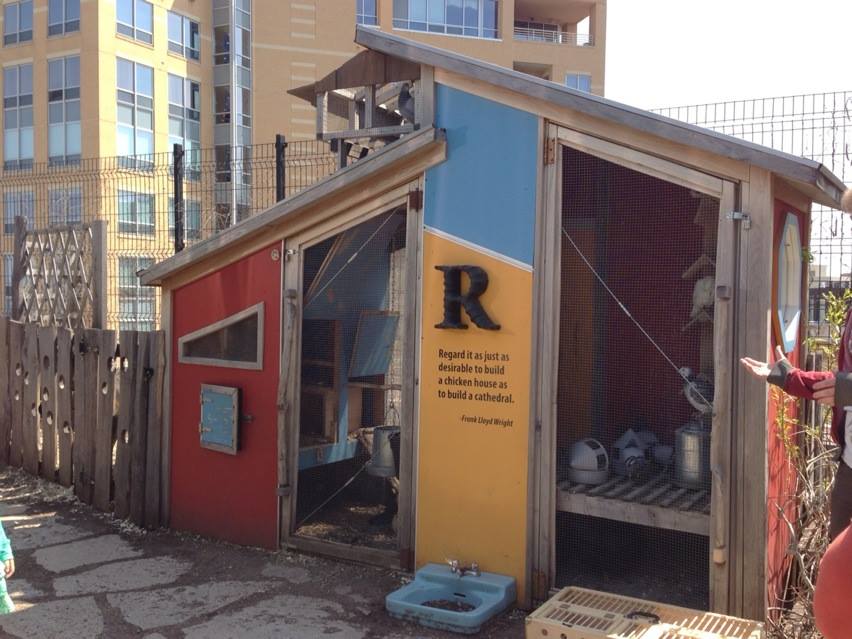
We learned about training pigeons to fly away and return and how they were used as messengers
Training pigeons to fly away and return and how they were used as messengers.
Architectural history
Political history
Political history
drumming in one of two historical huts
Sylvia Clare drumming in one of two historical huts
history of technology

From toddlers to adults there was so much to see and do at the Children’s Museum. I was inspired by the way the learning philosophy was placed in action. The Children’s Museum is a wonderful model for learning, literacy teaching and so much more.

Home

PS. For those who know Madison, WI you may agree that a stop at Ella’s Deli after the Museum was the icing on the cake that day!

http://www.ellasdeli.com


Interviews and the Research Process

I (Yiola) have used the method of interviews for data gathering for over a decade. I love it;the entire process is fascinating. From designing research questions, to finding suitable participants, to setting up interview dates, to meeting with participants, to reading the transcript and to sharing the transcript with the participants.

images


There is something special about qualitative interviews.  Perhaps what is special is the human connection, perhaps the interaction, perhaps the commitment demonstrated by the participants . I think perhaps all of the aforementioned make the interview process special. In my many years of interviewing participants,  what inspires me the most is the passion the participants demonstrate as they explain with detail and careful description their thoughts and experiences about education.  I can (and do) listen for hours. The participants I have worked with show appreciation for their involvement in the research and often express how much learning they receive from the experience. The latter is particularly true of participants in longitudinal studies.

The role of the researcher: what an honour and privilege to spend time with willing participants; to be privy to their time and thoughts. A special relationship develops between research and participant that is built on trust, respect and commitment.  This relationship takes time to foster and requires thoughtfulness.  The interview data is often the foundation of the research.  This data is built upon a deep understand of research literature, thoughtful research questions, carefully crafted interview questions, and committed research participants.  Relationship building is key when using interviews in the research process.