All posts by ycleovoulou

The Gift of Education

I (yiola) came across this article while surfing the net a few days ago and read it over twice in order for its news to set in.  What amazing news!

http://www.thestar.com/news/canada/2014/07/01/mystery_donor_gifts_16_million_to_leamington_grade_8_grads.html

Right here in our own backyard, in a small region of Ontario, an anonymous donor is giving many students and their families the gift of higher education and an opportunity to change their lives and make their dreams come true… “when I grow up I want to be a…”

Financial accessibility is a significant issue for so many things today, higher education is certainly a privilege.  This story is unique and very touching. Congratulations to all the students who have a wonderful opportunity for ongoing education and thank you to the anonymous donor.

Literacy from Day 1

The New York Times reinforces the importance of reading to babies from the day they are born:

I value the point in the article – read to your babies –  but dismay set in as I read the end.  The suggestions it makes about low income families and radicalized families was unsettling, perhaps an even small analysis as to WHY the statistic are what they are would be helpful.

Low-income children are often exposed little to reading before entering formal child care settings. “We have had families who do not read to their children and where there are no books in the home,”

The undertone of the above statement does not sit well with me. While implicit, the message I read is that parents with low-income do not care to read to their children or do not know the value of doing so…  is it just me that reads the tone in this way?  It would be helpful to read about why that is: parents with low-income struggle to find the time to read to their children because they are working shift work, or 2-3 jobs to make ends meet, or have such intense stresses in their lives, or have difficulty affording books and are unable to get to libraries with ease… Is it a choice to read or not read to children? Or is the suggestion an imposition of wealthy class values? The realities of low-income versus wealthy families go beyond simple statements of what they do or not do.


Graduation Time and New Journeys Begin

It is that time of year again when thousands of University graduates wear their gowns and receive their degrees of academic achievement.

I (Yiola) work in the most amazing graduate/teacher education program. The Child Study and Education program (MA CSE) that is part of the University of Toronto (OISE/UT). The program’s vision, structure, and content, are premised on the child being at the centre of learning. How children learn and what research says about children’s learning are central to the program. The program looks at child development and learning and grounds these notions in the varied contexts (social, cognitive, spatial) that children experience.  With this focus in mind, I teach a curriculum course and a teacher development/instructional methods course. Equity and inclusion, collaborative practice and professionalism frame my courses.

http://www.oise.utoronto.ca/ics/

This two year Masters level graduate program prepares  teacher candidates for teaching in elementary classrooms (early years to sixth grade).  The program now admits sixty students per year.  Included here is a photo of some of our graduates at our graduation reception last week. This photo is taken in front of our beautiful and unique building, the McCarthy house, located at 45 Walmer Rd. in Toronto. It is an old Toronto mansion that not only houses the MA CSE program but also contains the Toronto Laboratory School and the Laidlaw Centre (faculty from the University of Toronto).

As I watched and celebrated with our graduates this year I heard of the many journeys that were upcoming: many are now on the Toronto District School Board hiring list and will be occasional teachers in Fall, some are going on to PhD programs, a few are traveling to places around the world to explore and contribute to schooling systems abroad (India, Brazil), some graduates are entering the independent school system.  I wish every graduate much success and happiness as they embark on new challenges and adventures.

Mostly, I wish the graduates of the MA CSE program a continued sense of commitment and passion for instilling a love of learning, a sense of confidence and an “joie de vivre” in the lives of all the children they teach.

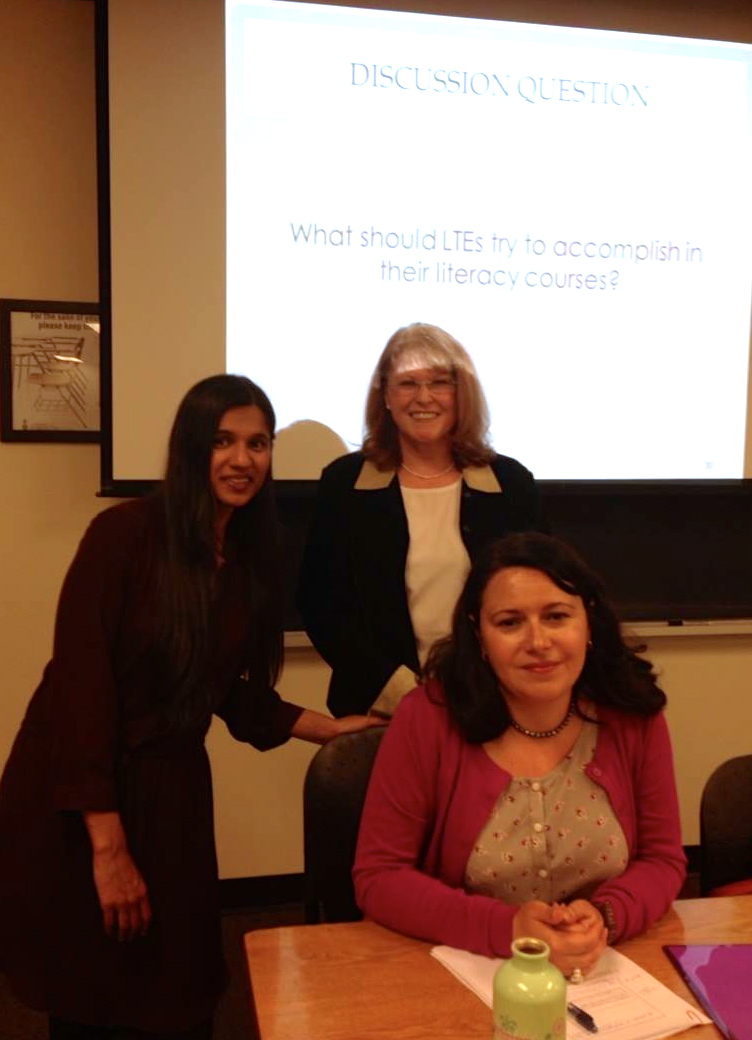
Some of the amazing graduates from the MA CSE program. I (Yiola) and 2nd from the left. Next to me is my wonderful colleague Prof. Dale Willows.
Some of the amazing graduates from the MA CSE program. I (Yiola) am 2nd from the left. Next to me is my wonderful colleague Prof. Dale Willows.

Chronicles of a Parent & Teacher Educator on Full Day Kindergarten

Last Thursday was “Kindergarten Parent Information Night” at the school my Sylvia Clare is going to attend in September. I (Yiola) hugged my children goodnight at 6:45pm and I made my way over to the local elementary school. As I walked to the school I felt excited and interested to attend the information session and to hear about the priorities of the school.  I know there are going to be at least 5 kindergarten classes; so, 5 x30 children equals 150 sets of parents… that makes for a room full of curious listeners.  I walked into the school just past 7:00pm and was greeted in the front lobby by the principal. In the gymnasium sat about 80 parents and in the course of one hour we heard from the principal and all 5 kindergarten teams (teacher and early childhood educator).

Parts of the presentation that stood out  :

1) Emphasis on Intentional Play – The principal provided wonderful examples and rationale of what play-based learning is about and why it is a powerful approach for early learning.

2) Emphasis on Inquiry – The principal spoke a lot on inquiry as part of the play-based program and that through intentional play children are engaged in inquiry

3) Outdoor time – Children explore, inquire and play outside everyday, for a good part of the day.

As an experienced pedagogy researcher and a teacher educator I was happy to hear all that was shared and felt that “in theory” this school has the elements that are not only in keeping with Ontario Ministry guidelines but are also evidenced-based best practice.  I was hoping to hear more about the balance and connection between literacy and numeracy development and intentional play and inquiry. The principal spoke about how students develop language and literacy skills through intentional play but I also wanted to hear about time spent on phonics and phonemic awareness and whether or not these fundamental skills were taught with focus.

The teams of teachers shared rules and routines for kindergarten and the early years schedule. The schedules will go something like this:

Open Entry 8:40 – 8:55

Outdoor Play 9:00 – 9:30

Intentional Play/Inquiry 9:30 – 11:30

Lunch and Outdoor Play 11:30 – 1:00

Intentional Play / Inquiry 1:00 – 3:00

Outdoor Play 3:00 – 3:25

During the intentional play 6 curriculum areas are covered: Language, Mathematics, Science/Technology, Health and Physical Education, the Arts, Personal and Social Development. Again, how lovely it was for me to see a schedule that was designed for authentic integration of curriculum.

I then had the opportunity to tour the classrooms. Gone were bright primary colours and in their place were neutral tones and a good amount of natural and wood materials. Very little plastic. No “toys”. I sensed a good deal of Waldorf influence in the aesthetics of the room. I was able to see that the child is at the centre of the classroom — student work displayed throughout in tasteful and meaningful ways. Almost everything in the classroom, including the alphabet was student made, not store bought. Images of the children, their photos were also present in the room. The classrooms, 4 out of 5, were bright, spacious and inviting.

Next step: a letter is to arrive in the mail with details of an interview. Sylvia Clare and I are going to meet with her new teacher and be introduced to her classroom. This is to happen in August.

Overall I was impressed with what I heard and saw. I enjoyed speaking with the principal and some of the teachers.  I am going to look into scholarly articles that discuss literacy development and intentional play so I am better prepared for what to expect in the daily life of the classroom. I am also going to write articles based on my own research — coming soon!  Parents/grandparents/teachers/principals/teacher educators with early years/kindergarten experience — share your insights of FDK and interesting articles that connect FDK with literacy development.

 

Learning and Handwriting and the 21st Century

I (Yiola) have shared a number of posts that consider the changes and loss of  all that 21st century literacies bring.  I have shared media clips and links to spoken word poetry on the demise of social media.

It’s funny because I myself am an avid user of new literacies; most digital, critical, social… you name it, I  engage with it.  Yet, I strongly feel a sense of loss in communication, social consideration, and a certain kind of creativity and thinking.  Then, I came across this article:

An interesting article that reports handwriting — traditional handwriting – has benefits far surpassing penmanship. I am interested in the art of handwriting… its skill building potential… its power to foster literacy, communication and creative thinking. I am inspired.  For developing my children’s language and literacy I will use iPad Apps for building phonemic awareness but I will also continue to encourage and be excited about handwriting well into their young adult years and I will encourage my student teachers to do the same. What do you think?

Full Day Kindergarten in Full Swing

Tis the season for parents  with children turning 4 years old to become acquainted with formal schooling and the Full Day Kindergarten (FDK) expectations. Ontario, Canada has implemented full day Kindergarten for all students across the province.  I (Yiola) am experiencing first-hand the excitement and apprehension of sending my child, a darling, vulnerable, sensitive, sweet girl (Sylvia Clare), to school for 6.5 hours a day, 5 days a week.

Jumping online, I have read reviews — some for and some against — FDK and many focusing on children’s language and literacy development.  See below for some examples:

Full-day kindergarten children score highest in vocabulary, self-regulation

http://www.theglobeandmail.com/news/national/education/full-day-kindergarten-offers-no-academic-advantage-study-says/article17715532/

As a parent, my worry is not so much if my Sylvia Clare’s academic achievement will be more or less. As a parent, my worries are related to her well-being. Will she be happy? Will she love herself even more? Will she make friends and learn how to work/play with others well? Will she come home each day and share stories of interesting things she did and learned.   I most certainly want to her read and write, but in good time. I feel there is no rush and I want a pressure-free learning environment for her.

In a recent article  http://www.mykawartha.com/news-story/4397024-why-full-day-kindergarten-has-better-prepared-our-kids-for-grade-1/,  educational consultant Joan Ruf comments:

“One of the wonderfully positive things about full-day kindergarten is the appreciation of the whole child,” she said, explaining the program is successfully marrying the concepts of academic and emotional growth. “So it’s not just about reading and math. It’s about how are they doing. What are they doing for themselves.”     This statement gives me some comfort.

Schools in Ontario are now inviting parents to attend FDK information sessions in order to prepare ‘us’ for the year ahead.  I will be writing about my experiences going through this process and journaling Sylvia Clare’s experiences as she begins FDK in September.

As a professor of education, through the researching and teaching and writing and sharing,   what lies at the centre of my work  are the children and their development as happy, healthy, thoughtful, literate human beings.

The issues surrounding FDK: its purpose, process, and outcomes are vast. With a political election looming the topic of FDK is front and centre and how it will be managed and maintained is up in the air.

The Canadian Society for the Study of Education

conference

This week The Canadian Society for  the Study of Education (CSSE) is being held in St. Catharines, Ontario at Brock University.

The team, Clare, Clive, Lydia, Cathy, Pooja, and me (Yiola) will be sharing a number of presentations over the course of the week. Some of these presentations include the following titles:

Teachers’ Professional Identity Development Over Their First 8 Years, With Implications for Preservice and Inservice Teacher Education

Teachers’ Ongoing Learning over Their First 8 Years, with Implications for In-Service Professional Education

Exploring literacy teacher educators’ negotiations of a critical stance in pre-service teacher education

Teachers’ critical literacy practices in the early years classroom

Instructional Practices of Critical Literacy within an Inquiry-Based Learning Environment

Presenting at conferences is a great way to share research with the community.  For more information about the CSSE conference click here:  

Conference


Social Media 101

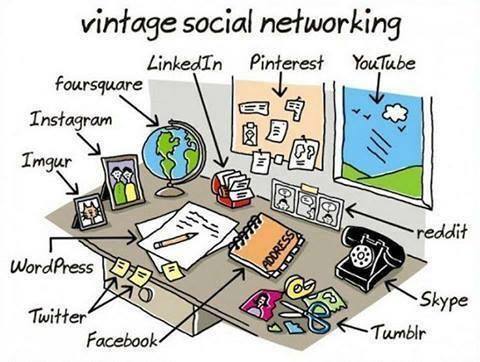
I (Yiola) came across this while on social media and found it playful… and true!

10259931_10152488203689175_8001628699976626381_n copy


A great explanation of social media and their functions.   I often think about the degree of necessity of each of these forms of communication — what they offer and their implications for communication and social interactions.  I am contemplating the pros and cons and beginning to explore literature that shares findings of the implications of our newer forms of communication.

Spoken Word: Life, Literacy and Communications

I (Yiola)  remember watching the news  in the mid ’80s and listening to the news anchors describe the possibilities and implications of the internet.  I had no idea of the magnitude of change this new form of literacy would bring. Could anyone really imagine the changes we would experience in our daily interactions?  Online communication, information sharing, cellular technology and social media have completely changed the way we operate in the world today.

I came across this interesting link — a spoken word (poem) — about the impact new literacies  has on our lives.

The message I find most powerful is the irony that social media connects us  and yet in some ways we have never been more isolated or at a loss for opportunity… community companionship a sense of inclusion yet when you step away from this device of delusion… you awaken to see a world of confusion… 

From an educator and parents point of view the poem’s message that struck a cord: We’re surrounded by children who since they were born, watched us living like robots and think its the norm.  What is our cultural norm? Compared to pre-online technology are we behaving like robots?

I tend to agree with much of what the poet shares and enjoyed this spoken word. I hope you enjoy it too.


Mental Health Education in Teacher Education

Earlier this week I  (Yiola) participated in a Webinar on the teaching of mental health in teacher education. The webinar was called: Reading, Writing, Resiliency: A Briefing on the State of Teacher Education Toward Positive Mental Health.

This post is connected to Shelley’s recent post on Supporting Student Well-being through Mindfulness Practices as it looks closely at what Teacher Education programs are doing to prepare teachers to teach about Mental Health and Wellness.  It was interesting to read Shelley’s blog and learn about what she does and how mindfulness as a form of mental health practices are developed in her course on Special Education. I would love to hear what other teacher educators and classroom teachers do to promote and teach about well-being.

During the webinar I learned some interesting facts:

– parents are concerned and interested to learn more about in 2 key areas related to mental health education: 1) Abuse and its effects on mental health (bullying, emotional abuse, exclusion);  2) Health (depression, substance abuse)

– after (parents and) doctors, teachers are the next care professionals in line who are expected to address children’s mental health

– There is a gap between the strong perception of teachers responsibilities for addressing issues of mental health and their preparedness to do so

In a study conducted on mental health teaching in teacher education in Canada, over 400 courses in 66 teacher education programs were examined against 4 criteria. The 4 criteria were related to the following: course title, words in the course description, topics in the course outlines, practices and relationships. The findings showed that only 2 of the 400 courses met all 4 criteria for the inclusion of mental health learning; 23 courses met 3 of the 4 criteria, 84 courses met 2 of the criteria and 104 courses met just 1 criteria.   This finding suggests that there is very little by way of teaching mental health issues in teacher education programs.

From the study 5 recommendations were made: 1) all teacher education programs should include at least 1 course that focuses on fostering postive mental health and resiliency; 2) classroom management courses reflect proactive resiliency oriented strategies; 3) in-service opportunities need to be available to practicing classroom teachers; 4) provincial curriculum should identify outcomes for health education; and, 5) mental health and resiliency outcomes should be in grades K-12 curriculum.

The webinar was helpful in outlining where we stand today in teacher education and mental health teaching.  I am very keen on thinking about how to move forward in teacher education programming.  Mental health and resiliency content can and should in included in many courses including but not limited to: all curriculum areas (i.e. literacy, social studies, math, health and physical education); special education, methods (i.e. classroom environment, classroom management, collaborative practices).  There needs to be a shift in foci, moving beyond the traditional Health and Physical Education curriculum (i.e. the Healthy Living strand) into a more comprehensive way of thinking about well-being and resiliency.