Category Archives: academics

The Short and Tragic Life of Robert Peace: A Brilliant Young Man Who Left Newark for the Ivy League

I (Clare) read a view in the New York Time of The Short and Tragic Life of Robert Peace: A Jeff HobbsBrilliant Young Man Who Left Newark for the Ivy League. I was fascinated by the review because it described how Robert “escaped” his impoverished neighbourhood through a scholarship to Yale. (He was brilliant). He graduated from Yale but did not “make it.” This book is essential reading for ALL teachers and teacher educators because it shows how complex and challenging it is to overcome your childhood and cultural norms. Yes there were people who helped Robert but …
The book is written by Jeff Hobbs )pictured on the right) http://authors.simonandschuster.ca/Jeff-Hobbs/36063537 who was Robert’s college room mate. It is beautifully written but incredibly painful. Over and over I kept hoping that Robert would make better choices, use his gifts …. And Jeff Hobbs helped me appreciate how difficult life can be. Here is a video link of Jeff talking about the book.

 http://books.simonandschuster.com/The-Short-and-Tragic-Life-of-Robert-Peace/Jeff-Hobbs/9781476731902

Here is a synopsis of the book taken from:  http://www.amazon.ca/Short-Tragic-Life-Robert-Peace-ebook/dp/B00GEEB7LC/ref=sr_1_1?s=digital-text&ie=UTF8&qid=1414522728&sr=1-1

 A heartfelt, and riveting biography of the short life of a talented young African-American man who escapes the slums of Newark for Yale University only to succumb to the dangers of the streets—and of one’s own nature—when he returns home.

When author Jeff Hobbs arrived at Yale University, he became fast friends with the man who would be his college roommate for four years, Robert Peace. Robert’s life was rough from the beginning in the crime-ridden streets of Newark in the 1980s, with his father in jail and his mother earning less than $15,000 a year. But Robert was a brilliant student, and it was supposed to get easier when he was accepted to Yale, where he studied molecular biochemistry and biophysics. But it didn’t get easier. Robert carried with him the difficult dual nature of his existence, “fronting” in Yale, and at home.

Through an honest rendering of Robert’s relationships—with his struggling mother, with his incarcerated father, with his teachers and friends and fellow drug dealers—The Short and Tragic Life of Robert Peace encompasses the most enduring conflicts in America: race, class, drugs, community, imprisonment, education, family, friendship, and love. It’s about the collision of two fiercely insular worlds—the ivy-covered campus of Yale University and Newark, New Jersey, and the difficulty of going from one to the other and then back again. It’s about poverty, the challenges of single motherhood, and the struggle to find male role models in a community where a man is more likely to go to prison than to college. It’s about reaching one’s greatest potential and taking responsibility for your family no matter the cost. It’s about trying to live a decent life in America. But most all the story is about the tragic life of one singular brilliant young man. His end, a violent one, is heartbreaking and powerful and unforgettable.

Can Reading Comprehension be Taught?

I (Clare) recently read in Teachers College Record a fascinating commentary about reading comprehension by Daniel T. Willingham & Gail LovetteCan Reading Comprehension Be Taught? http://www.tcrecord.org/Content.asp?ContentId=17701Amelia1stDay

For those of you who teach literacy in elementary school or teach literacy methods courses in teacher education programs you might find their analysis of why teaching comprehension very interesting. In my local school districts teaching specific comprehension strategies seems to be the latest bandwagon. On one level I think direct instruction on how to comprehend/make sense of text can help struggling readers.

On the other hand, one of my issues is with the way these strategies are taught. These comprehension strategies are listed on a poster and students are expected to use those specific 8 strategies. They are drilled over and over and over on them. If a student does not “get them” the first ten times of drilling will they ever get them?

So I found Willingham and Lovette’s explanation informative on why this approach can work interesting:

The funny thing about reading comprehension strategy instruction is that it really shouldn’t work, but it does. This commentary seeks to provide insight into how it should work and guidance on effective strategies for implementation.

They provide reasons why teaching comprehension strategies work:phone1

Here’s our interpretation. The vague Ikea instructions aren’t bad advice. You’re better off taking an occasional look at the big picture as opposed to keeping your head down and your little hex wrench turning. Likewise, RCS encourage you to pause as you’re reading, evaluate the big picture, and think about where the text is going. And if the answer is unclear, RCS give students something concrete to try and a way to organize their cognitive resources when they recognize that they do not understand.

 RCS instruction may be at its best in telling students what reading is supposed to be. Reading is not just about decoding; you are meant to understand something. The purpose is communication. This message may be particularly powerful for struggling readers, whose criterion for “understanding” is often too low (Markman, 1979). One of us works extensively with struggling adolescent readers who frequently approach the task of reading as getting to the last word on the page.

I think one of the ways to go forward is to provide students with many comprehension strategies. I know that when I read I use many more than 8 strategies. If you want to read the entire commentary (which is not too long) here is the article. I will definitely use this article with my teacher education students.Can Reading Comprehension Be Taught


Prioritising classroom community and organisation in physical education teacher education

Congratulations to Tim Fletcher and Kellie Baker on their recent publication: Prioritising Tim Fletcherclassroom community and organisation in physical education teacher education

I (Clare) know that it will be of interest to the many teachers and teacher educators who read this blog. Here is the abstract.

This research investigates how teacher candidates in a primary physical education curriculum and methods course learned about and were influenced by efforts to emphasise classroom community and organisation. Qualitative data in the
form of interviews, focus groups, and course artefacts were gathered from nine
participants throughout one academic term. Analysis of data suggested that most
teacher candidates came to recognise pedagogies that fostered a sense of community;
however, only a few were able to connect this to their developing visions
for teaching. Despite this, all participants came to view the development of a
sense of community as one of the most important aspects of their evolving teaching
practice.

Here is the link to the paper: Fletcher & Baker_2014

Happiness and Teaching – Insights from Dewey

In earlier postings, I (Clive) talked about the need to see teaching and teacher education in very broad terms; to see ourselves as ultimately helping students develop a satisfying, enjoyable or “happy” way of life. This week I came across some wonderful quotes from John Dewey along these lines.

The first is from Democracy and Education (Macmillan, 1916); it emphasizes that we can’t separate our philosophy or theory of education from our philosophy of life.

“[P]hilosophy is at once an explicit formulation of the various interests of life and a propounding of points of view and methods through which a better balance of interests may be effected. Since education is the process through which the needed transformation may be accomplished…philosophy is the theory of education as deliberately conducted in practice” (p. 387).

Two further quotes are from Theory of the Moral Life (Holt, Rinehart & Winston, 1960, orig. 1908, revised 1932). They emphasize again the need for a comprehensive philosophy of life and education, and show the connection between this philosophy and human enjoyment, satisfaction, happiness.

“In isolation, one enjoyment cannot be said to be higher or lower than another…a satisfaction which is seen, by reflection based on large experience, to unify in a harmonious way [one’s] whole system of desires is higher in quality than a good which is such only in relation to a particular want in isolation [satisfactions of the former type together constitute “happiness”] (p. 44). … The office of reflection [is] the formation of a judgment of value in which particular satisfactions are placed as integral parts of conduct as a consistent harmonious whole” (p. 60).

Dewey notes, however, that our philosophy of life and education is never complete: it is always a work in progress.

“The business of reflection in determining the true good cannot be done once for all…. It needs to be done over and over and over again, in terms of the conditions and concrete situations as they arise” (p. 62).

I’m going to share these quotes with my students next week and see what they think – and learn from them. My philosophy of life and education is never complete!


Division K Awards: Consider Nominating a Colleague

I (Clare) feel it is so important to recognize the fine work done by my colleagues. AERA Division K has a host of awards. Below is a list of awards. Please circulate this list of awards to your network and consider nominating a colleague for one of these awards.

DIVISION K –

Teaching and Teacher Education Awards

2014-2015 Call for Nominations

As teacher education undergoes increased scrutiny and is pressed to demonstrate its contributions to teacher and student learning, Division K’s awards take on added importance as a means by which to elevate exemplary scholarship in our field.

The AERA Division K awards aim to recognize the teacher education scholarship of division members who are addressing persistent issues of urgent concern to the field. While the six individual awards committees will focus, as intended, on their respective areas of emphasis, each will also take into account the Division’s overarching call for attention to issues of profession-wide concern. To this end, each committee will give special consideration to award submissions that hold promise for improving teacher education policy and practice in the following areas: strengthening, deepening and further developing the knowledge and research base for teaching and teacher education; providing rigorous and educative clinical experiences; preparing teachers to serve students with diverse cultural and experiential backgrounds; supporting teachers to understand and apply theoretical and empirical perspectives on teaching and learning; articulating well-designed, evidence-based pedagogical practices in teacher education; and/or developing and implementing new approaches for assessing and evaluating teachers’ practices in preservice and inservice settings. In particular, committees will weigh the potential of nominees’ work to advance the profession of teaching and the practice of teacher education.

Please consider submitting nominations so that we, as a Division, can showcase members’ excellent works, thereby building a stronger knowledge base and making our colleagues’ valuable contributions more widely known among educators and policymakers.

All nominees and nominators must be current members of AERA’s Division K. Self-nominations ARE NOT accepted. Letters of nomination should be sent via email to each award committee chair, referenced below. Particular requirements associated with each award and materials needed for the nominations are described in detail below. Please note that all nomination letters must be submitted by November 1, 2014.

 Outstanding Dissertation Award

Chair: Maritza Macdonald, American Museum of Natural History

This award recognizes a dissertation of exemplary conceptual, methodological, and literary quality on an important topic in teaching and teacher education.  For this year’s award, dissertations completed between August 1, 2013 and August 1, 2014 may be nominated. A dissertation may be submitted for consideration only once and can be nominated for an award within only one division of AERA. The committee uses a blind review process; only the committee chair will know the identity of the nominator and nominee.

Dissertations employing any theoretical and methodological orientation may be nominated as long as they make an important contribution to teaching and teacher education.  In addition to reflecting the highest of standards of methodological rigor, nominated dissertations should focus on issues that are currently crucial to the field, including teacher and teaching quality and innovative means for documenting and assessing the processes and outcomes of teaching, teacher education, induction, and/or professional development. Special consideration will be given to dissertations that generate insights which hold promise for advancing educational equity; the committee will also consider the strength of a dissertation as it relates to the overarching Division K call for focused attention on persistent issues of urgent concern to the field. (See the overarching call above.)

Nomination for the dissertation award comes in the form of a one-page letter and overview from a member of the dissertation committee. Upon receipt of nominations, the Dissertation Award committee chair will solicit additional materials directly from nominees. Additional nomination materials include: (1) a title sheet showing the dissertation title, awarding institution, members of the dissertation committee, date of completion of the degree, and nominee’s current contact information; (2) the table of contents of the dissertation; and (3) a summary of the dissertation written in an accepted publication format (such as APA) not exceeding 7500 words in 12-point font, exclusive of title page, references, and appendices and without author identification. Nominations must be received no later than November 1, 2014. All nominations should be sent electronically with the subject line “Division K Outstanding Dissertation Award Submission” to the chair, Dr. Maritza Macdonald, Senior Director of Education and Policy, American Museum of Natural History, mmacdonald@amnh.org

 Early Career Award

Chair: Kathy Schultz, Mills College

This award, made to a researcher in the first stages of the research career (degrees awarded during or after 2007 and up to two years post-tenure), recognizes a significant program of research on important problems of theory and/or practice that focus on teachers, teaching, or teacher education. Recipients of this award must be engaged in inquiry that extends a significant line of research, addresses an issue that has been neglected in the field, fills a gap in current knowledge, or raises significant questions about extant knowledge. In addition, awardees should be engaged in studying problems or questions that are timely and that contribute to current policy debates or dilemmas of practice. The scholar’s body of work must be characterized by methodological rigor, momentum and coherence, and must show potential to contribute significantly to scholarship in the field. In addition to criteria outlined here, the Early Career Award committee will also consider the strength of nominees’ submitted works as they relate to the overarching Division K call for focused attention on persistent issues of urgent concern to the field. (See the overarching call above.)

To nominate a Division K member for the Early Career Award, please submit a one-page letter describing the nominee’s qualifications and fit for the award. Upon receipt of nominations, the Early Career Award committee chair will solicit additional materials directly from nominees. These additional materials include: (1) the nominee’s most recent curriculum vitae, (2) two representative scholarly publications, and (3) one additional letter of support from an individual familiar with the nominee’s contributions to scholarship in teaching or teacher education. Letters of support should address how the research demonstrates qualities detailed in the paragraph above as well as in the overarching call for Division K award nominations. Nominations must be received no later than November 1, 2014. All nominations should be sent electronically with the subject line “Division K Early Career Award Submission” to the chair, Dr. Kathy Schultz, Professor and Dean, Mills College, kschultz@mills.edu

Mid-Career Award

Chair: Guofang Wan, Virginia Commonwealth University

This award honors an outstanding researcher in the second stage of his or her research career, i.e., between 10 and 15 years beyond receiving the doctoral degree. It is designed to recognize a significant program of research on important issues in teaching or teacher education.

Examples of work that will be considered for selection include research and scholarship that illustrate how students learn a concept in a particular content area; generate insights into the role of culture, socioeconomic status, language background, religion, and/or sexual orientation in the learning and/or teaching process; capture the role of various factors or experiences in the careers of teachers such as mentoring, collaborating with others, conducting action research or participating in an inquiry group; advance equity in schooling or teacher education practices; show innovation and rigor in methodology; and/or illustrate how families/communities can become partners with teachers in educating their children. Work submitted will be evaluated according to how the researcher’s trajectory demonstrates beneficial aims and outcomes; how the body of work advances knowledge about teaching or teacher education; how the researcher’s corpus demonstrates contribution to the well-being of students, teacher candidates, teachers, teacher educators, or families/communities; and the scholarly robustness of the work.

The noted contribution may be the result of a single research project or the accumulation of projects that have shaped thinking and/or practices in teaching and teacher education. In addition to criteria outlined here, the committee will also consider the strength of nominees’ submitted works as they relate to the overarching Division K call for focused attention on persistent issues of urgent concern to the field. (See the overarching call above.)

To nominate a Division K member for the Mid-Career Award, please submit a one-page letter describing the nominee’s qualifications and fit for the award. Upon receipt of nominations, the Mid-Career Award committee chair will solicit additional materials directly from nominees. These additional materials include: (1) the nominee’s most recent curriculum vitae, (2) two representative scholarly publications, and (3) two additional letters of support from individuals familiar with the nominee’s contributions to scholarship in teaching or teacher education. Letters of support should address how the research demonstrates qualities detailed in the paragraph above as well as in the overarching call for Division K award nominations. Nominations must be received no later than November 1, 2014. All nominations should be sent electronically with the subject line “Division K Mid-Career Award Submission” to the chair, Dr. Guofang Wan, Professor and Director of Graduate Studies, Virginia Commonwealth University, gwan@vcu.edu

Innovations in Research on Diversity in Teacher Education

Chair: Lee Bell, Barnard College

The Division K Innovations in Research On Diversity in Teacher Education Award recognizes research that demonstrates innovation in addressing issues of diversity in teaching and/or teacher education.  Nominees may be individuals (junior, mid-career, or senior scholars) or a small collaborative group whose innovative research: explores and/or demonstrates powerful new ways to think about diversity in teaching and teacher education, giving direction to the field and to policy makers; offers an expanded vision of a theoretical framework, research methodologies, or practices regarding diversity in teaching and teacher education; or provides new models of research that give direction to the field concerning diversity in teaching and teacher education.  The innovative contribution may be the result of a single research project or the accumulation of projects that have directly shaped thinking and/or practices regarding diversity in teaching and teacher education and must have been published as a peer-reviewed publication, such as a journal article or scholarly book.

Nomination materials are rated in a two-phase process.  The innovation under consideration is the premiere criterion and should be clearly evident. After rating the value and importance of the innovation, additional criteria are examined regarding how the innovation: (1) focuses on diversity; (2) contributes to teacher education; (3) is significant/has made an impact; and (4) contributes to policy and practice.

In addition to criteria outlined here, the committee will also consider the strength of nominees’ submitted works as they relate to the overarching Division K call for focused attention on persistent issues of urgent concern to the field. (See the overarching call above.)

To nominate a Division K member for the Innovations in Research On Diversity in Teacher Education Award, please submit a one-page letter explaining how the nominee qualifies to be recognized for the award, clearly specifying the innovation under consideration and its value in addressing issues of diversity in teacher education. Upon receipt of the nominating letter, the award committee chair will solicit additional materials directly from each nominee. These additional materials include: 1) the nominee’s most recent curriculum vitae; 2) two representative scholarly publications; and 3) two additional letters of support from individuals familiar with the nominee’s contributions to scholarship in diversity in teaching or teacher education. Letters of support should address how the research demonstrates qualities detailed in the paragraph above as well as in the overarching call for Division K award nominations. Nominations must be received no later than November 1, 2014. All nominations should be sent electronically with the subject line “Division K Innovations in Research on Diversity Award Submission” to the chair, Dr. Lee Bell, Professor and Barbara Silver Horowitz Director of Education, Barnard College, leebell@barnard.edu

 Exemplary Research in Teaching and Teacher Education

Chair: Jon Snyder, Stanford University

This award recognizes the significant contribution to teaching and teacher education scholarship represented by a journal article or book published between January 2013 and July 2014. Special consideration will be given to nominated articles or books that: advance equity; generate insights that hold promise for ensuring the preparation of teachers who are equipped to serve all students; bring new methods to bear on the study of teacher education; reflect the highest standards of methodological rigor; and/or capture in ground-breaking ways the processes and outcomes of teacher education practice. In addition to criteria outlined here, the Exemplary Research in Teaching and Teacher Education Award committee will also consider the strength of nominees’ submitted works as they relate to the overarching Division K call for focused attention on persistent issues of urgent concern to the field. (See the overarching call above.)

To nominate a Division K member for the Exemplary Research in Teaching and Teacher Education Award, please submit a one-page letter describing the merits of the research publication, together with a copy of the nominated article. If a book is nominated, please ask the publisher to mail 6 copies of the nominated book to the award committee chair. Upon receipt of the nomination and written publication that is under consideration, the award committee chair will request a current curriculum vitae from each nominee. Nominations must be received no later than November 1, 2014. All nominations should be sent electronically with the subject line “Division K Exemplary Research in Teaching and Teacher Education Award Submission” to the chair, Dr. Jon Snyder, Executive Director, Stanford Center for Opportunity Policy in Education, jdsnyder@stanford.edu

Legacy Award

Chair: Celia Oyler, Teachers College, Columbia University

The Division K Legacy Award recognizes senior members of Division K who have made significant and exemplary contributions through their research, teaching and professional service in the field of teaching and teacher education. Special consideration will be given to contributions that reflect the purposes and goals of Division K: (1) to advance knowledge about teaching and teacher education; (2) to encourage scholarly inquiry related to teaching and teacher education, and; (3) to promote the use of research to improve teaching and teacher education to serve the public good. Recipients will be recognized in a profile in the newsletter and in the proceedings of the annual Division K Business meeting. In addition, a donation will be given to the recipient’s university to support graduate student travel to present at an AERA Annual Meeting. The recipient will also be featured on the Legacy Award Hall of Fame page of the Division’s website. Priority will be given to emeriti and newly deceased members so that their contributions can be honored in a timely and worthy fashion.

Any nominee must meet at least three of the following seven criteria: (1) has played an active and long-standing role in the work of Division K; (2) is highly respected and has been recognized by others (nationally and internationally) as a leader in the field of teaching and teacher education who has contributed to the public debate on critical issues related to teaching and teacher education; (3) has actively promoted the use of research to improve teaching and teacher education serving the public good; (4) has conducted original, and innovative research that has been widely accessible to other researchers and practitioners and has had a major impact on teaching and teacher education; (5) has a distinguished record of teaching in the field of teaching and teacher education, as evidenced by the receipt of teaching awards, and commendations from students, or the equivalent; (6) has played an active role in the preparation of high-quality and innovative materials for teaching and teacher education; (7) has supported others—in particular new and younger scholars—to further their research and teaching in the field through mentoring, collaborative research and professional development opportunities, and other similar activities, both in Division K and in other similar professional/academic venues.  In addition to these seven criteria, the Legacy Award Committee will also consider the strength of nominees’ submitted works as they relate to the overarching Division K call for focused attention on persistent issues of urgent concern to the field. (See the overarching call above.)

To nominate a Division K member for the Legacy Award, please submit a one-page letter describing how the nominee exemplifies the criteria described above.  The chair will also collect additional supporting documentation including: (1) curriculum vitae, (2) sample publications, and (3) personal website information. Nominations must be received no later than November 1, 2014. All nominations should be sent electronically with the subject line “Division K Legacy Award Submission” to the chair, Dr. Celia Oyler, Professor of Education, Teachers College, Columbia University, co74@tc.columbia.edu

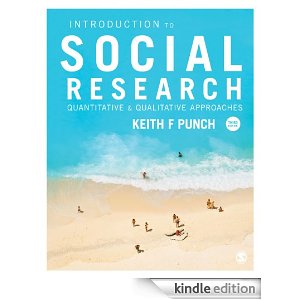
Introduction to Social Research: Quantitative and Qualitative Approaches by Keith Punch

If you looking for an outstanding book on conducting research you might want to consider Keith Punch’s new book, Introduction to Social Research: Quantitative and Qualitative Approaches. Keith has lonKeith Punchg been a leader in research methodology – his in-depth knowledge, his accessible writing style, his concise descriptions, and his realistic approach make his work outstanding. I (Clare) have found his work very helpful. You might find his chapter on grounded theory very useful. Below is a review of the book and here is the link:

http://www.amazon.ca/Introduction-Social-Research-Quantitative-Qualitative-ebook/dp/B00JIVFZGG/ref=sr_1_1?ie=UTF8&qid=1411018834&sr=8-1&keywords=keith+punch

This is a beautifully understated and highly accessible book. It focuses on the issues and practicalities of doing social scientific research, introducing a wide range of methods and approaches to get students thinking and a project underway. This new edition has been thoroughly updated, and there are welcome new chapters on theory, literature searching, research ethics and the internet. The book is authoritative and will be well used by students and teachers of social science research methods. — Amanda Coffey, Professor 20131007 Comprehensive, thoroughgoing and well organised, Punch’s book has a deservedly high reputation among social science researchers. This third edition, with new material on literature searching, ethics, theory and the Internet makes it a must-have for students and professional researchers alike. — Gary Thomas, Professor of Inclusion and Diversity 20131007 In this work, Keith Punch covers all the essentials of social science research with clarity and an obvious command of the subject matter. His coverage of quantitative and qualitative methods from design through to collection and analysis offers breadth and depth perfect for any undergraduate attempting to navigate the research world. I look forward to putting a copy of this latest edition on my shelf and recommending it students. — Dr Zina O’Leary, Unit of Study Coordinator, 20131007 This 3rd edition provides an accessible yet comprehensive and detailed framework for understanding social research. The clear layout with chapter objectives and summary questions offers a robust and practical learning structure for students which guides them through both theoretical and methodological approaches to contemporary research. No research methods course should be without it!! — Dr. Emma Bond, Deputy Director 20131007 All in all, this book is incredibly well structured and free from jargon and over complication. It is a joy to read, and it guides the reader step-by-step towards understanding what social research is all about. — Dr Sophie Lecheler LSE Book Reviews Website

A hard cold truth about teaching and teachers at Canadian universities

An article I (Yiola) came across on Canadian news, the CBC.

http://www.cbc.ca/news/canada/most-university-undergrads-now-taught-by-poorly-paid-part-timers-1.2756024

The increasing numbers of contract employees in academia is not new. We have known for quite some time that many faculty members, usually teaching faculty, have part-time contract positions.

The organizational process to hire well-qualified academic faculty as part-time and contract employees is complex and has many implications:

– funding: it seems universities receive little funding for the renewal or development of permanent or tenure stream faculty and other resources

– work/life conditions for contract faculty:  the article describes the challenges contract faculty experience both at work and in their personal lives (low wages, job instability, heavy workloads)

– culture/work environment: the tensions between tenure and non-tenure, permanent and contract, faculty

– quality of teaching: with the aforementioned stresses placed on teaching and teachers at the university, is there an effect on the quality of teaching?

Clare and Clive have explored and written on the topic. For example:

Kosnik, C., & Beck, C. (2008). In the shadows: Non-tenure-line instructors in preservice teacher education. European Journal of Teacher Education, 31(2), 185-202.

Beck, C., & Kosnik, C. (2003). Contract staff in preservice teacher education. Teaching Education, 14(2), 187-200.

The article speak to all faculties and departments across the university. This holds true for teacher education as well. Upon reading the article and listening to the interview http://www.cbc.ca/news/class-struggle-1.2756899   I cannot help but feel sad for the state of teaching and learning at the University level.  University teachers deserve better… students deserve better.


Don’t Walk, Run to Buy Berliner and Glass’s New Book: 50 Myths and Lies that Threaten America’s Public Schools

This August, David Berliner and Gene Glass published the book 50 Myths and Lies that Threaten America’s Public Schools: The Real Crisis in Education (Teachers College Press, NY). I (Clive) just read a review of it by Paul Hood in Education Review, a publication of the National Education Policy Center.

It is one of those books you wish you had written but is so important you’re glad (and relieved) someone else wrote it, now. It will be a huge shot in the arm for attempts to defend public education against the trend toward standardization, top-down control, and even dismantling. While the book is about U.S. schooling, it struck me in reading the review that the same arguments apply to public schooling in other countries. We have often exaggerated the difference between the achievements/challenges of schooling in the U.S. and elsewhere.

According to the review, James Popham’s back-cover blurb about the book is as follows:

“What do you get when two world-class scholars and a team of talented analysts take a hard look at 50 widely held yet unsound beliefs about U.S. public schools? Well, in this instance you get a flat-out masterpiece that, by persuasively blending argument and evidence, blasts those beliefs into oblivion. Required reading? You bet!”

As Popham notes, the authors enlisted the help of a whole team of academics to write on the various myths, thus adding greatly to the depth and accuracy of the analysis. Taking such a step speaks to the judgment, humility, and public concern of these outstanding individuals. I for one wish to thank them for what they have done – and am running to buy the book!

10 Things Every College Professor Hates

I (Clare) read this amazing blog by Lisa Wade about “things” students do that drive students standing at a wallprofessors crazy! I particularly laughed when I read # 2 – Did I miss anything important?  I know that I will get questions like these ones this year – and plenty of other inappropriate ones (e.g., do you mind if I miss class next week?)
As many of us are gearing up for the school year, you might want to share this blog with your students. The full article can be found in the Business Insider:  http://www.businessinsider.com/10-things-every-college-professor-hates-2014-8?&platform=bi-androidapp

I got this email from an Ivy League student when I arrived to give a speech. She was responsible for making sure that I was delivered to my hotel and knew where to go the next day:

Omg you’re here! Ahh i need to get my s–t together now lol. Jk. Give me a ring when u can/want, my cell is [redacted]. I have class until 1230 but then im free! i will let the teacher she u will be there, shes a darling. Perhaps ill come to the end of the talk and meet you there after. Between the faculty lunch and your talk, we can chat! ill take make sure the rooms are all ready for u. See ya!

To say the least, this did not make me feel confident that my visit would go smoothly.

I will use this poor student to kick off this year’s list of Professors’ Pet Peeves. I reached out to my network and collected some things that really get on instructors’ nerves. Here are the results: some of the “don’ts” for how to interact with your professor or teaching assistant. For what it’s worth, No. 2 was by far the most common complaint.

  1. Don’t use unprofessional correspondence.

Your instructors are not your friends. Correspond with them as if you’re in a workplace, because you are. We’re not saying that you can’t ever write like this, but you do need to demonstrate that you know when such communication is and isn’t appropriate. You don’t wear pajamas to a job interview, right? Same thing.

  1. Don’t ask the professor if you “missed anything important” during an absence.

No, you didn’t miss anything important. We spent the whole hour watching cats play the theremin on YouTube!

Of course you missed something important! We’re college professors! Thinking everything we do is important is an occupational hazard. Here’s an alternative way to phrase it: “I’m so sorry I missed class. I’m sure it was awesome.”

If you’re concerned about what you missed, try this instead: Do the reading, get notes from a classmate (if you don’t have any friends in class, ask the professor if they’ll send an email to help you find a partner to swap notes with), read them over, and drop by office hours to discuss anything you didn’t understand.

  1. Don’t pack up your things as the class is ending.

We get it. The minute hand is closing in on the end of class, there’s a shift in the instructor’s voice, and you hear something like “For next time …” That’s the cue for the students to start putting their stuff away. Once one person does it, it’s like an avalanche of notebooks slapping closed, backpack zippers zipping, and cell phones coming out.

Don’t do it.

Just wait 10 more seconds until the class is actually over. If you don’t, it makes it seem as if you are dying to get out of there and, hey, that hurts our feelings!

  1. Don’t ask a question about the readings or assignments until checking the syllabus first.

It’s easy to send off an email asking your instructor a quick question, but that person put a lot of effort into the syllabus for a reason. Remember, each professor has dozens or hundreds of students. What seems like a small thing on your end can add up to death-by-a-thousand-paper-cuts on our end. Make a good-faith effort to figure out the answer before you ask the professor.

  1. Don’t get mad if you receive critical feedback.

If an instructor takes a red pen and massacres your writing, that’s a sign that they care. Giving negative feedback is hard work, so the red ink means that we’re taking an interest in you and your future. Moreover, we know it’s going to make some students angry with us. We do it anyway because we care enough about you to try to help you become a stronger thinker and writer. It’s counterintuitive, but lots of red ink is probably a sign that the instructor thinks you have a lot of potential.

  1. Don’t grade grub.

Definitely go into office hours to find out how to study better or improve your performance, but don’t go in expecting to change your instructor’s mind about the grade. Put your energy into studying harder on the next exam, bringing your paper idea to the professor or teaching assistant in office hours, doing the reading, and raising your hand in class. That will have more of a payoff in the long run.

  1. Don’t futz with paper formatting.

Paper isn’t long enough? Think you can make the font a teensy bit bigger or the margins a tad bit wider? Think we won’t notice if you use a 12-point font that’s just a little more widely spaced? Don’t do it. We’ve been staring at the printed page for thousands of hours. We have an eagle eye for these kinds of things. Whatever your motivation, here’s what they say to us: “Hi Prof!, I’m trying to trick you into thinking that I’m fulfilling the assignment requirements. I’m lazy and you’re stupid!” Work on the assignment, not the document settings.

  1. Don’t pad your introductions and conclusions with fluff.

Never start off a paper with the phrase, “Since the beginning of time …” “Since the beginning of time, men have engaged in war.” Wait, what? Like, the big bang? And, anyway, how the heck do you know? You better have a damn strong citation for that! “Historically,” “Traditionally,” and “Throughout history” are equally bad offenders. Strike them from your vocabulary now.

In your conclusion, say something smart. Or, barring that, just say what you said. But never say: “Hopefully someday there will be no war.” Duh. We’d all like that, but unless you’ve got ideas as to how to make it that way, such statements are simple hopefulness and inappropriate in an academic paper.

  1. Don’t misrepresent facts as opinions and opinions as facts.

Figure out the difference. Here’s an example of how not to represent a fact, via CNN:

Considering that Clinton’s departure will leave only 16 women in the Senate out of 100 senators, many feminists believe women are underrepresented on Capitol Hill.

  1. Feminists “believe”? Given that women are 51% of the population, 16 out of 100 means that women areunderrepresented on Capitol Hill. This is a social fact, yeah? Now, you can agree or disagree with feminists that this is a problem, but don’t suggest, as CNN does, that the fact itself is an opinion.

This is a common mistake, and it’s frustrating for both instructors and students to get past. Life will be much easier if you know the difference.

  1. Don’t be too cool for school.

You know the student who sits at the back of the class, hunches down in his or her chair, and makes an art of looking bored? Don’t be that person. Professors and teaching assistants are the top 3% of students. They most likely spent more than a decade in college. For better or worse, they value education. To stay on their good side, you should show them that you care, too. And, if you don’t, pretend as if you do.

Using Pinterest in the Classroom

While wedding planning, I (Pooja) used Pinterest, the social media application, for the first time. People from all over the world create and share virtual pin boards. These pin boards are a collection of one’s interests essentially. It’s a great way to gather, organize, and share ideas. It has become very popular for cost-saving DIY (do-it-yourself) ideas for events like weddings, birthday, showers, etc.

However, I recently cam across an article which highlighted ways in which university instructors are using Pinterest in their higher ed courses. Below is an infographic explaining how it is being used (in the U.S. context):

professors-peers-pinterest
Source: http://www.edudemic.com/guides/the-teachers-guide-to-pinterest/