Category Archives: Conferences

Symposium: Day One Reflections

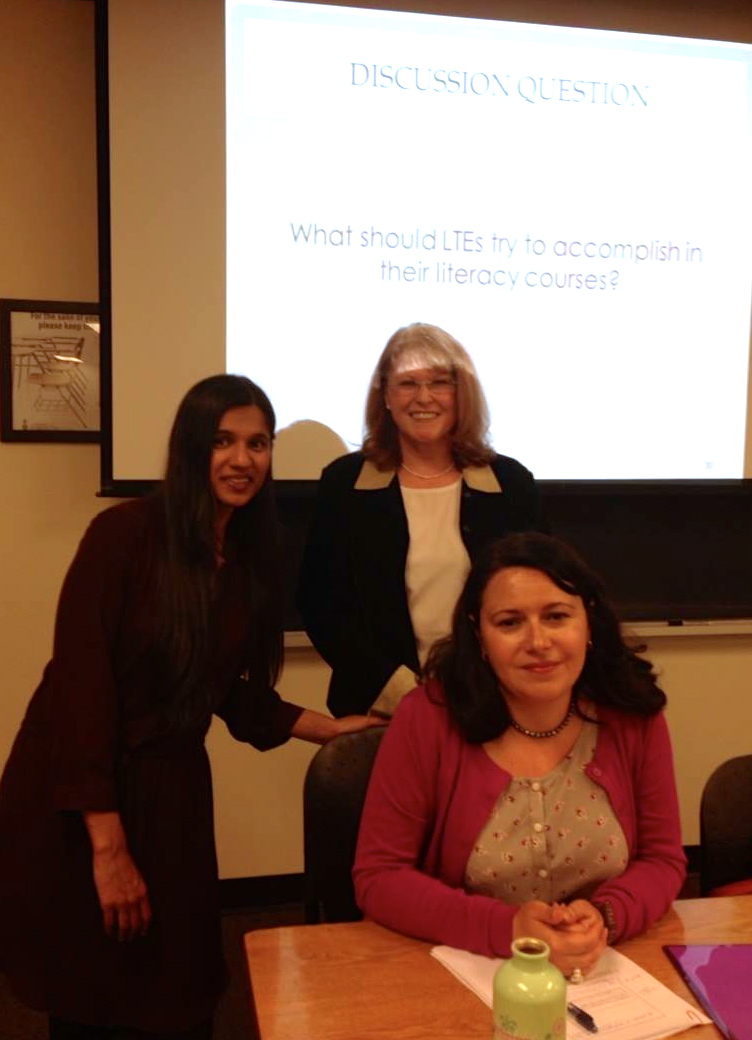
Lin GoodwinThe first day of our Symposium was a smashing success! The large group discussion of “where we are” revealed the extreme pressure on teachers and teacher educators. We heard about the fast and furious rate of reform in some countries – non-stop initiatives coming from the government. These are so prolific that there are often contradictory messages (e.g., be inquiry-based but focus on skills development). The mini presentations addressed a range of issues: what happens when standards are implemented; student teacher expectations for courses versus the teacher Lydia and Cliveeducators’ goals; problems of teacher retention; the vast number of pathways into teaching creates confusion; and teacher educators having different emphases in their courses even when there is a common syllabus. A problem that arose is lack of control over the implementation of standardization. It can take a very different form from the envisaged use of the standards. The place of digital technology in literacy/English education still eludes and needs much more discussion of what to do and how to do it so that technology is used to support learning.
Cathy MiyataThe discussion was rich and far-ranging. A number of participants commented that we rarely have an opportunity to discuss “big issues” in education and teacher education.
Today promises to be another day full of lively discussion.
 

International Symposium: Digital Technology and Literacy/English Teacher Education

Making ConnectionsAs many of our blog followers know we are hosting the Symposium : Rethinking Literacy Teacher Education for the Digital Era: Teacher Educators, Literacy Educators, and Digital Technology Experts Working Together. One of the main activities of the project is bringing together 17 experts from three fields and 4 countries (Canada, US, UK, and Australia) to address the following questions.
• How can literacy/English teacher educators (LTEs) prepare student teachers to develop and implement literacy programs that capitalize on digital technology (DT)?
• What teacher education curriculum changes are required to better prepare future teachers to integrate technology in their own teaching?
• What professional learning support do LTEs need to develop courses that will integrate and make greater use of DT?
The Symposium will be held over two days: June 5 and 6 in London England. We will send updates daily.

As academics we tend to work in our “silo” which although allows us to specialize it has limitations. The symposium will provide an opportunity to work in an inter-disciplinary manner which may help us move forward the field of literacy teacher education. The participants are:

Canada
Clare Kosnik (P.I.)
Clive Beck – Co-applicant – OISE/University of Toronto
Pooja Dharamshi – OISE/University of Toronto
Cathy Miyata – OISE/University of Toronto
Lydia Menna – OISE/University of Toronto
Shawn Bullock – Simon Fraser University

England
Jean Murray – Co-applicant – University of East London
Bethan Marshall – Co-applicant – King’s College
John Yandell – Institute of Education, University of London
Sue Dymoke – University of Leicester
Sam Twiselton – Sheffield Hallam University
Alison Baker – University of East London

U.S.
Lin Goodwin – Co-applicant – Teachers College
Peter Williamson – University of San Francisco

Australia
Simone White – Co-applicant – Monash University
Graham Parr – Monash University
Neil Selwyn – Monash University
Scott Bulfin – Monash University

The Symposium is being held at Tug Agency:
Tug is a search marketing led agency, specialising in pay per click
advertising, biddable display, search engine optimisation, affiliates and 
social media marketing. We’re called Tug because we believe that pull
marketing is the most cost effective way to drive traffic to our clients’ websites,
and the best way to drive ROI positive online conversions.http://www.tugagency.com

Open Street Maps: Taking Action and Focusing on Multiple Perspectives

Nora Young, the host of CBC Radio’s Spark, was the keynote speaker of a conference I (Pooja) attended yesterday. She spoke about data science as a growing field of study, in fact, many universities have created departments of data science.  With the growth, Nora noted, comes a need for what she called critical data literacy. She illustrated the need for critical data literacy with an example of mapping technology. Google maps have quickly become the go-to application for finding directions and/or locating businesses on a map. However, being critically data literate,  guides us to  question like: who gets to decide what appears on a map? The answer is most often large multi-million dollar enterprises like Google.

To disrupt google’s monopoly of the growing online map industry, initiatives like Open Street Maps have been created. In January of 2014, The Guardian commented on the need for applications like Open Street Map. They likened it to  “a wiki-like map that anyone in the world can edit. If a store is missing from the map, it can be added in by a store owner or even a customer. In terms of display… each person or company who creates a map is free to render it how they like..” (Wroclawski, 2014) A site, which allows community members to add and edit a map of a community to which they belong, is powerful because it positions community members as experts.

I am looking forward to bringing this mapping technology into my classroom. I hope my students can create maps of their neighbourhoods.

A snapshot of a map made by community members:

openmap

Read more about Open Street Map:

http://www.theguardian.com/technology/2014/jan/14/why-the-world-needs openstreetmap

The Canadian Society for the Study of Education

conference

This week The Canadian Society for  the Study of Education (CSSE) is being held in St. Catharines, Ontario at Brock University.

The team, Clare, Clive, Lydia, Cathy, Pooja, and me (Yiola) will be sharing a number of presentations over the course of the week. Some of these presentations include the following titles:

Teachers’ Professional Identity Development Over Their First 8 Years, With Implications for Preservice and Inservice Teacher Education

Teachers’ Ongoing Learning over Their First 8 Years, with Implications for In-Service Professional Education

Exploring literacy teacher educators’ negotiations of a critical stance in pre-service teacher education

Teachers’ critical literacy practices in the early years classroom

Instructional Practices of Critical Literacy within an Inquiry-Based Learning Environment

Presenting at conferences is a great way to share research with the community.  For more information about the CSSE conference click here:  

Conference


Sharing Our Research

Today the research group will be presenting work from the project Literacy Teacher Educators: Their Backgrounds, Visions and Practices, at the Ministry of Education/Faculties of Education Forum – Research Practice: Nurturing relationships for teaching, learning and well-being. It will be an interesting and exciting day.

Literacy Teacher Educators: Preparing Teachers for a Changing World (Book Cover)
Literacy Teacher Educators: Preparing Teachers for a Changing World

Wonderful Experience in Bogota

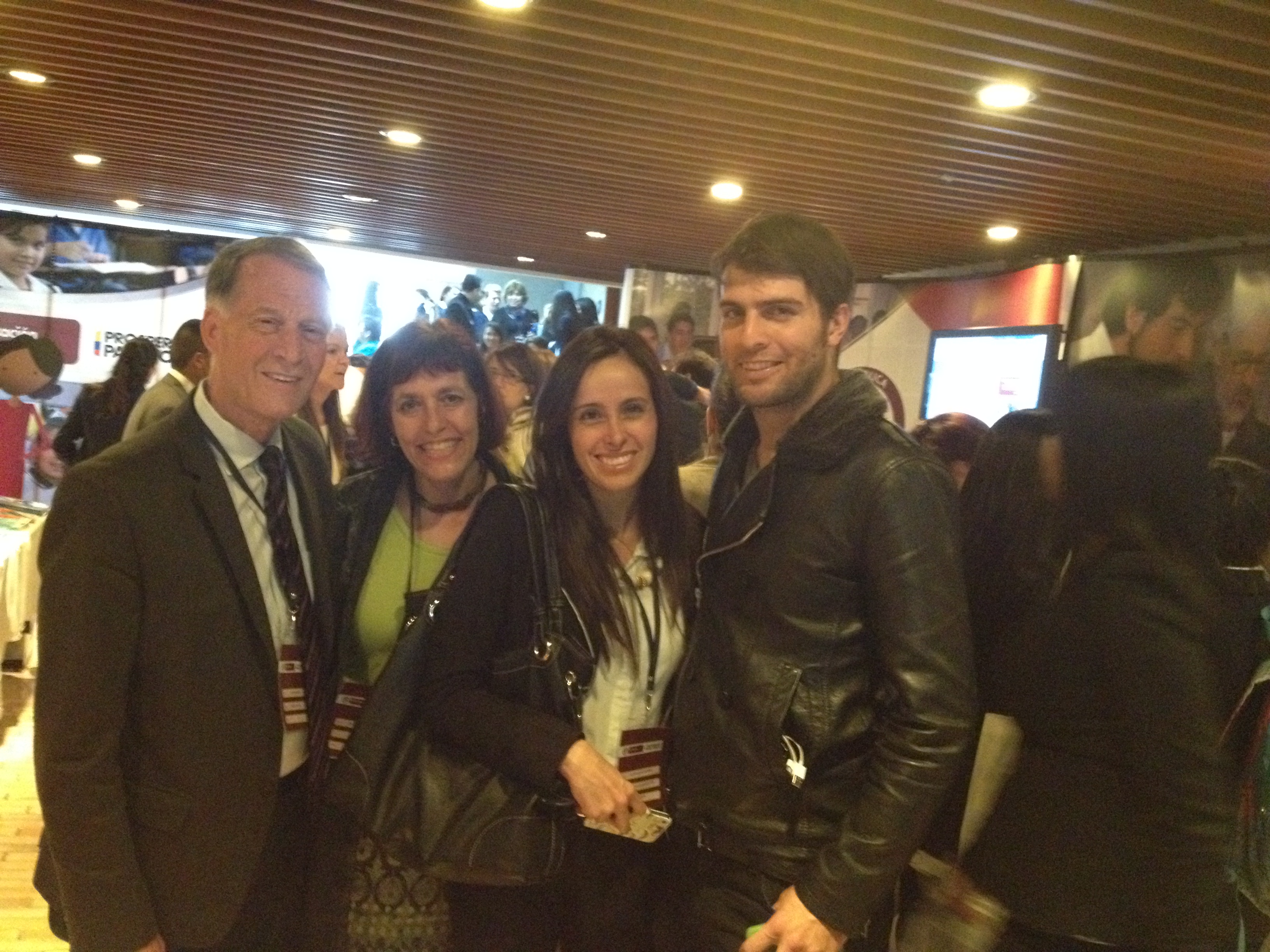
UniversityClive and I (Clare) worked with the Directors of various programs Bogota Teamat the Ministry of Education in Bogota. We did presentations at the Learning for All conference . What a wonderful experience. (More on our time in Bogota at a later date.)
Here are our powerpoint presentations:

Bogota City ViewClive: Priorities in teacher education: the 7 Key Elements of PreserviceStreet Vendor in Bogota Preparation
Bogota Clive#2

Clare: Teacher Educators: Four Spheres of Knowledge Required To teach the 7 Priorities
Bogota Clare 2014

Cafe LatteConference BannerSalsa Poster

Cartagena Colombia: Presentations by Clive and Clare

CartagenaCartagena CountrysideClive and I (Clare) presented at the Unicolombo Universitaria Colombo Internacional in Cartagena (Part of a Ministry of Education initiative). The overall theme of our presentations was the need to offer quality education for all.
Clive’s presentation focused on supporting teacher learning in their on-going learningwhile mine focused on the importance of engaging students by offering a rich literacy program.
About 300 teacher educators and teachers attended our presentations. What a lovely audience! In the Q & A part of the presentation, we had a great interchange about the pressure on the educators to improve scores on PISA.
CCartagena Balconieslick below to see our ppt presentations.

Clive: Priorities in Teacher Education: The 7 Key Elements of Preservice Preparation
Bogota Clive#2
Clare: Literacy Teaching:Engaging All StudentsCrepes and Nutella
Cartagena 2014 CK

Enjoy the photos of this enchanting city which is designated a World Heritage Site.Clive and Clare


Guest Blog: Shelley Murphy

Supporting Student Well-Being through Mindfulness Practices
Shelly MurphyLast week I (Shelley Murphy) had the opportunity to hear Finnish educator and scholar Pasi Sahlberg speak about the quality of Finland’s education system. One of the many things that stood out to me as particularly memorable was Finland’s teachers’ primary focus on supporting student well-being. It got me thinking about the newly published Ontario Ministry of Education document Achieving Excellence: A Renewed Vision for Education in Ontario http://www.edu.gov.on.ca/eng/about/excellent.html. Its focus is on the skills, knowledge, and characteristics learners need for success and well-being and a plan of action for promoting these. I am excited to know that the ministry has recognized the fundamental importance of student well-being and has included it as one of its four core priorities here in Ontario.
One way to promote student well-being and resilience is through mindfulness awareness practices. Mindfulness practice, which has most recently been taught and practiced within the context of medicine, has been increasingly attracting attention in the field of education. When I was an elementary teacher, I used mindfulness practices to help students learn to be more self-aware, less reactive, and to meet each moment with greater attention and presence. As a teacher educator, I now introduce my preservice students to mindfulness awareness practices within my Special-Education courses. There is increasingly convincing data showing that regular mindfulness practices strengthen the areas of the brain that control attention, executive functioning, emotion regulation, and mental flexibility. A myriad of groups and organizations are surfacing to promote mindfulness in our schools for these very reasons (e.g. Discover Mindfulness in Ontario http://discovermindfulness.ca/ ; Mindful Schools in California http://www.mindfulschools.org/ ). Considering the importance of supporting the mental health, resilience, and overall well-being of both school aged students and our preservice teachers, I think mindfulness awareness practices and their applications within educational settings are worth taking a closer look at!

Dilemma for Educators: Focus on Pisa Scores or Improve Quality of Education

Colombian FlagClive and I (Clare) are going to Bogota and Cartagena to present at two conferences: one for teacher educators and one for teacChildren in Colombiahers. (More about our experience to follow.) In our correspondence with our Colombian hosts, who have been incredibly gracious, we get the impression they are very focused on improving Pisa scores. From our reading about Colombia we recognize there is grinding poverty yet they have made huge strides in improving literacy rates. We appreciate the dilemma faced by the Colombians –improve test scores on international measures yet education is under resourced. Being inspired by Pasi Sahlberg (and in keeping with the findings from our research as described in our new book Growing as a Teacher), the focus should not be unilaterally on improving Pisa scores but should be broader — provide quality education. Good teaching will improve literacy achievement and which in turn improve scores on Pisa. As Sahlberg’s data shows, the countries focused on controlling the curriculum and on teaching to the test have declining achievement on Pisa. (See April 19th blog post on this topic.) Drills and mindless worksheets will not engaged those children who do not see themselves as readers. So our message will be – let’s support teachers so they know how to provide relevant, engaging, and appropriate curriculum. The scores on Pisa will take care of themselves. We would love to hear from others who have worked in Colombia.

Pasi Sahlberg: An Inspiring Educator

I (Clare) attended the BEST lecture by Pasi Sahlberg. http://pasisahlberg.com/ He was Finnish Lessonsinspiring and informative. His talk was based on his bestselling book, Finnish Lessons: What Can the World Learn from Educational Change in Finland? http://www.amazon.ca/Finnish-Lessons-Educational-Change-Finland-ebook/dp/B00CDSTBG6/ref=sr_1_1?ie=UTF8&qid=1397850067&sr=8-1&keywords=pasi+sahlberg

His talk went far beyond the book. A few highlights from were:

  • The Finnish public trust teachers.
  • Teachers are respected.
  • We cannot take the Finnish model and transplant it to another context but we can learn from HOW the Finnish people reconceptualized and approached education reform. (The main goal was not to improve PISA scores.)
  • Global Educational Reform Movement (GERM) which has infected countries like the US, UK, Netherland, NZ, and Australia emphasize competition, standardization, test-based accountability, school choice, and human capital. He showed slides of student performance in these countries illustrating that performance on standardized tests has actually gone DOWN – the draconian measures the governments have imposed on teachers have not improved student performance (and probably not student engagement).
  • Finland has a common vision for education that includes great schools for each and every child.
  • The success of Finnish education is not simply a result of improved education initiatives but a whole agenda for society.
  • In Finland if a teacher is struggling, someone helps him/her.

For a copy of ppt presentation (which was amazing) click here: http://pasisahlberg.com/wp-content/uploads/2013/07/OISE-RWB-Jackson-2014.pdf  

Pasi SahlbergI have read his text and highly recommend it to others interested in true reform of education.  Quick fixes do not work but a sustained, comprehensive approach to education is the way we should be going.