A project entitled Great Unsolved Mysteries in Canadian History, engages inquiry-based pedagogy to encourage students’ critical thinking and research skills. The project, based at the University of Victoria, the Université de Sherbrooke and the Ontario Institute for Studies in Education at the University of Toronto, has developed a collection of websites, which invite high school and university students to examine primary source documents, photographic evidence, archival material and historical interpretations, in an effort to solve a historical puzzle (e.g. the mystery of the doomed Franklin expedition; the mysterious death of artist Tom Thomson). John Lutz, University of Victoria history professor and one of the founders of the project noted, “history is too important to be boring, and these mysteries are too intriguing to be left to historians alone.” All the materials and teachers’ guides are free. Link to project site: http://canadianmysteries.ca/en/index.php Link to the CBC article: http://www.cbc.ca/news/canada/british-columbia/how-franklin-expedition-mystery-could-be-solved-by-high-school-students-1.3086927
Category Archives: curriculum; teachers
Trends in YAL
I try to stay connected with current trends in Young Adult (YA) Literature so I can have thoughtful conversations about these texts with the student teachers in our literacy courses. An article by Publishers Weekly highlighted some of complex topics currently being explored in YAL. Some of the themes YA publishers are prompting include texts “that look thoughtfully at mental illness and suicide” as well as “books that tell sophisticated stories about gender identity across the LGBTQIA spectrum”. To find out about specific YA titles exploring these topics see the following link: http://www.publishersweekly.com/pw/by-topic/new-titles/childrens-announcements/article/66587-what-to-expect-when-you-re-expecting-ya.html
School Board Proposes Multi-language Immersion Program
The Toronto Catholic District School Board has plans to establish a multi-language specialty school. The proposed immersion program, being considered for north Scarborough as early as this fall, would offer instruction in French, Spanish, German, and Mandarin. Michael Del Grande, chair of the TCDSB noted “my view is we’re not preparing our students for the world stage, we barely do a passing job with French, and we’re a bilingual country! So we’re asking parents if they’d like to educate their children in the languages of some of the largest economies in the world.” What do you think about this type of immersion program? Should other languages be included in the program?
Link to the Toronto Star article: http://www.thestar.com/yourtoronto/education/2015/04/28/multi-language-elementary-school-proposed-by-toronto-catholic-board.html
But we already DO this at the Laboratory School: Learning from Leaders
Building on Clive’s post from yesterday I (yiola) want to extend the discussion on inquiry- based pedagogy and its many high-level thinking practices. Question posing, experiential learning, researching, sharing, collaborating, exploring, imagining, experimenting — these are but some of the qualities you will find in inquiry-based classrooms. Problem-based and play-based (some use the terms interchangeably) do too. And, these are the practices that I see being used daily at the Laboratory School here in downtown Toronto. It is good practice. Students are empowered, responsible, creative thinkers. They are also happy when they learn. It is good to read then that the Finnish system is moving away from the subject oriented traditions of schooling into a more “topic” based or what we call “inquiry time” approach to learning. It is what we’ve been doing at the laboratory school for a very long time.
Here is an article the speaks to Finland’s transition:
What I find interesting is that the countries out outperform the groundbreaking work of the Nordic country are countries I presume have a very different pedagogy. China — a country whose system is very subject driven, standardized, and competitive in nature. Yes?
I find it interesting to contrast the 2 systems and to consider what the long-term projections will be for the students who exit out of each system.
I see students from our Laboratory school entering high school as creative, capable, high-level thinking individuals. Data shows that in the long term, the Laboratory school graduates go into creative and high performing fields in the arts, academia, public service and corporate sectors.
The article shares:
Welcome to Siltamaki primary school in Helsinki – a school with 240 seven- to 12-year-olds – which has embraced Finland’s new learning style. Its principal, Anne-Mari Jaatinen, explains the school’s philosophy: “We want the pupils to learn in a safe, happy, relaxed and inspired atmosphere.”
We come across children playing chess in a corridor and a game being played whereby children rush around the corridors collecting information about different parts of Africa. Ms Jaatinen describes what is going on as “joyful learning”. She wants more collaboration and communication between pupils to allow them to develop their creative thinking skills.
This is the work of the Laboratory School and more. I look forward to hearing more about Finland’s transitions, the upcoming PISA rankings and to sharing in greater detail just how the Laboratory School here in Toronto is very much a leader in Inquiry-based teaching and learning.
Debating the Common Core
The Washington Post calls attention to the ongoing debate over the Common Core Standards by featuring a letter writing exchange between two school Principals who express their differing views on the standards. The first letter is written by Carol Burris, Principal of South Side High School in New York, who was once a strong supporter of the Common Core but is now a critic of the standards. Burris noted, “I do not think it is a good idea to homogenize standards as untried as the Common Core, across our nation. What we teach our children is far too important to submit to a national experiment. Practicing educators, child development experts and parents should be deeply engaged in the process of standard setting in our states. Standards should be debated, reviewed and refined.” A response will be written by Jayne Ellspermann Principal of West Port High School in Ocala, Florida. See the link provided to read this informative exchange:
Creating an Audit Trail
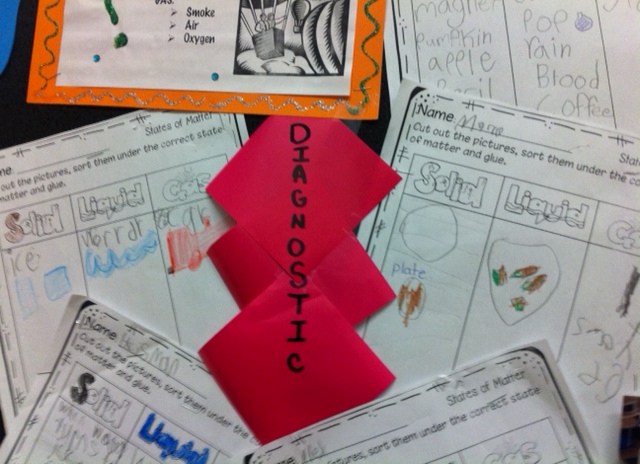
During one of my final practicum visits, I (Cathy) was excited to see one of my student teachers had created an audit trail. When I mentioned this to her, she replied, “I thought it was just a bulletin board.” But it was far more than ‘just a bulletin board’. The student work Melissa had beautifully displayed represented an entire science unit of learning from pre-diagnosis to final summaries.
Audit trails were popularized by Dr. Vivian Vasquez, in her ground breaking critical literacy work with 3-5 year olds. Vasquez says, An audit trail or learning wall, as my three to five year old students called it, is a public display of artifacts gathered together by a teacher and their students that represents their thinking about different issues and topics. This strategy is useful for creating spaces for students to re-visit, reread, analyze, and re-imagine various topics or issues. It is also a powerful tool for connecting past projects or areas of study to newer projects or areas of study. Further, it can be used as a tool for building curriculum as it visibly lays out the journey of the group’s thinking and learning over a period of time.


Encouraging Inquiry at an Early Age
I (Cathy) was inspired by the posting below of a young girl’s science experiment. It actually made make me rethink purchasing organic foods. From an educator’s point of view, it also demonstrated how significant inquiry, experimentation and science literacies are, and the impact they can have, especially when conducted at an early age. While watching the video, I wondered if the process of doing this experiment will influence this young girl’s future educational leanings. I had the pleasure of visiting my own daughter recently and was awed as I watched her conduct experiments with bacteria in her lab. She became a biomedical researcher and is published in medical journals all over the world. Science is her life now, and it all started with simple biology experiments in high school.

Who knows what we inspire in children by encouraging them to build inquiries and conduct purposeful experiments. The young girl in the following video may well be in the same position as my daughter some day.
Visiting the Rishi Valley School… Part 1
I (Pooja) have just returned from an extraordinary two days at the Rishi Valley School in India.There is simply too much for one blog post, so I will share my experiences over a few blog posts. In this blog, I will focus on the principles which guide the school along with a photos of the campus.
The alternative school is guided by principles of holistic education which aim for the growth of student’s intellectual, emotional, physical, artistic, creative, and spiritual potential. The educational philosophies of the Rishi Valley School include:
- To educate students so that they are able to explore both the world and their inner being
- To inculcate a love for nature and respect for all forms of life
- To create an atmosphere of affection, order and freedom without either fear or license
- Not to condition the students in any particular belief, either religious, political or social, so that their minds may remain free to ask fundamental questions, enquire and learn. (http://www.rishivalley.org/school/aims.htm)
The philosopher Jiddu Krishnamurti established the Rishi Valley School in 1962. There are now Krishnamuti schools across India and the world, but this was the first educational site. The school is located “in a sheltered valley in the interior of rural Andhra Pradesh…about 140 km north-east of Bangalore.” (http://www.rishivalley.org/school/aims.htm) When we first arrived we met with the school principal. He listened to us attentively, and when he spoke it was softly and always with purpose. He said something in that meeting that has stuck with me. He said that although the teachers differed in teaching approach, the important quality was that they approached their teaching from a place of care and love. By walking around the campus, speaking with teachers and students, and observing classes I witnessed this in so many ways. For example, each morning the students gather in an open-air auditorium for an assembly. My experiences with assemblies have usually included announcements, performances, or guest speakers. At the Rishi Valley school, the assembly is dedicated to singing. The students and faculty gather in a circle and sing for half an hour. At the end of the school day, after dinner, we gathered in the auditorium again to watch an absorbing documentary on particle physics called Particle Fever.
The following are a few photos of the campus and school activities. I believe they speak volumes about the principles from which the Rishi Valley School runs.
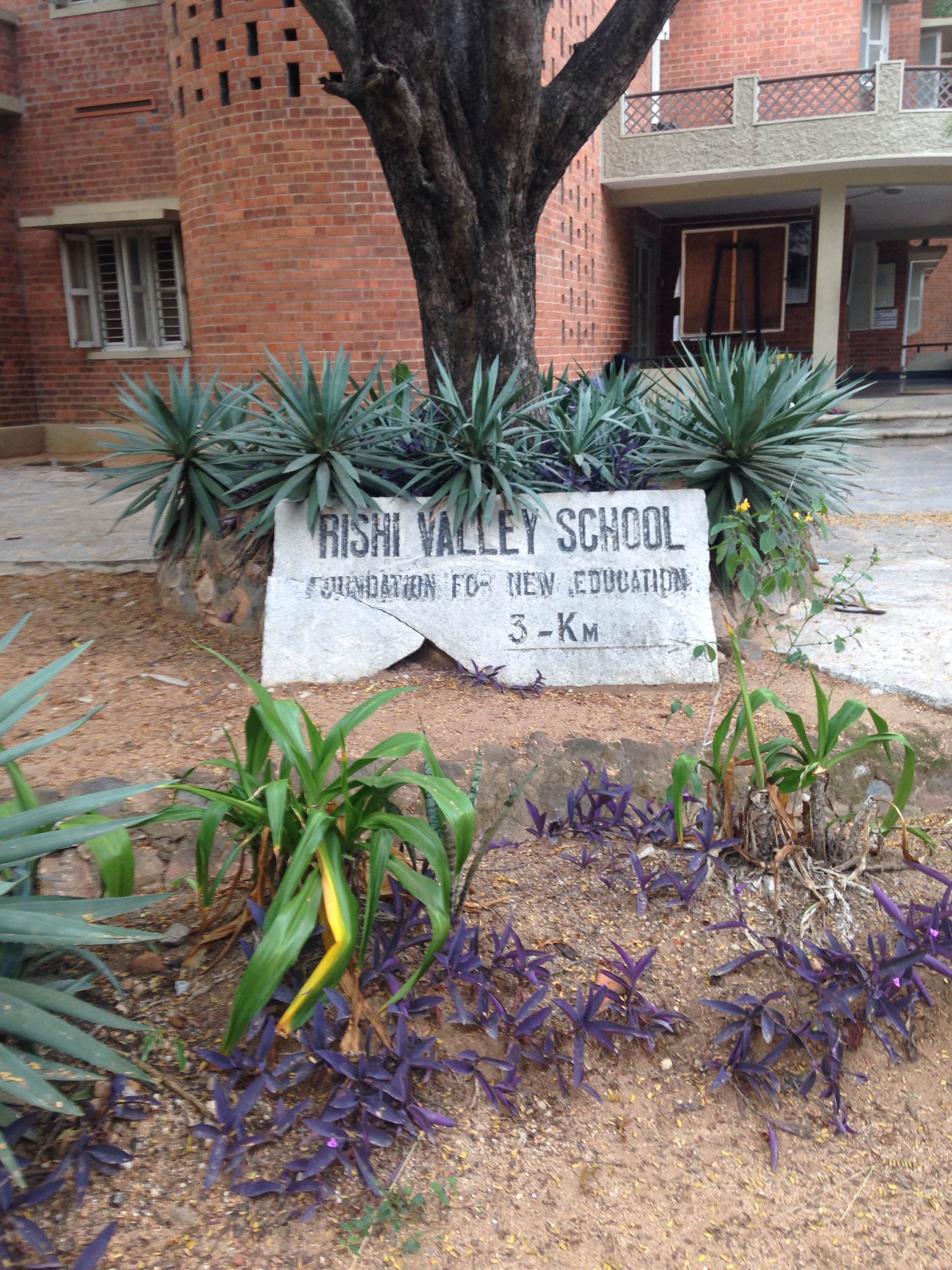
The Rishi Valley School is a boarding school serving student from grade 4-12. There are approximately 325 students and 60 faculty members who live on campus.

The morning all-school assembly. Students and faculty are seated on the ground.

One of the many outdoor classrooms. My friend, a spoken-word artist, had the opportunity to facilitate a class here (More about that in the next blog!).
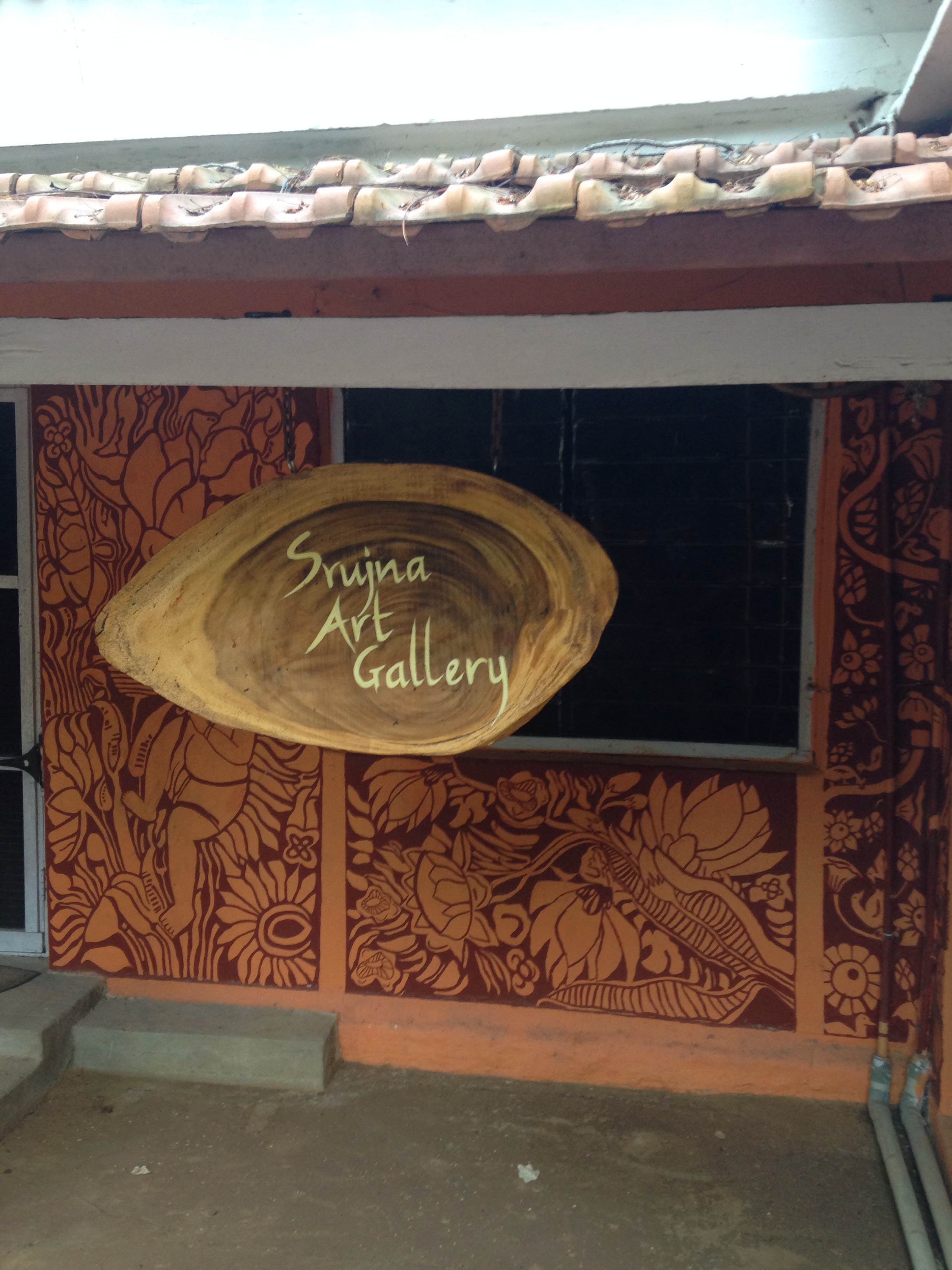
The student art gallery. It was common to see students around the campus working on their art; fine art, poetry, and music permeated the student culture.
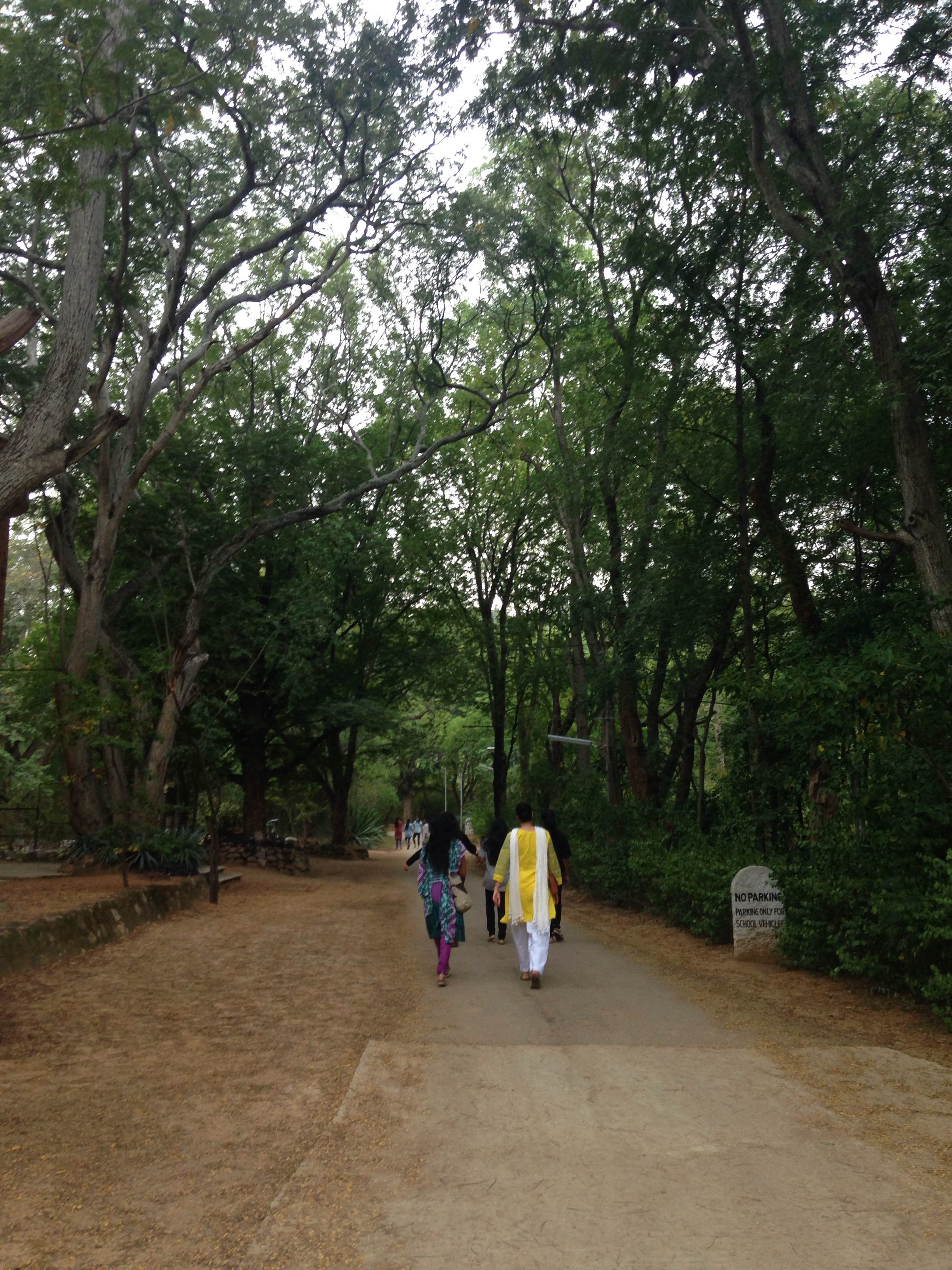
Walking to class is a meditative experience. The campus is spacious, situated on approximately 360 acres of land. There have been over 200 species of birds identified, with the Indian Government officially declaring the school a bird sanctuary.
To read more about the Rishi Valley School: http://www.rishivalley.org/default.html
Stephen King on Teaching Writing
In an interview with the Atlantic Stephen King discussed his time as a high school English teacher. As a teacher of writing King recalled, “it went best for me when I could communicate my own enthusiasm. I can remember teaching Dracula to sophomores and practically screaming, ‘Look at all the different voices in this book! Stoker’s a ventriloquist! I love that!’ I don’t have much use for teachers who “perform,” like they’re onstage, but kids respond to enthusiasm. You can’t command a kid to have fun, but you can make the classroom a place that feels safe, where interesting things happen.” The link to the article is provided below:
http://m.theatlantic.com/education/archive/2014/09/writing-secrets-with-stephen-king/379870/
‘H’ints and ‘H’appiness: Literacy learning in FDK
With the first month of school soon behind us I (Yiola) want to share some examples of my 4 year old daughter’s (Sylvia Clare) literacy learning in Full Day Kindergarten (FDK).
Example 1: Phonemic awareness. Sylvia Clare must be learning about the letter H. On more than one occasion she has demonstrated her understanding of phonemes and phoneme isolation. I said, “Sylvia Clare you must be hungry”. Sylvia Clare paused and responded, “Mommy, is hungry like Henry? huh huh huh.” I paused in surprise of her observation and connection and simply said, “Yes”. Later in the evening I said, “Hendrix and Orion are going to visit soon” and Sylvia Clare responded, “Hendrix is like hungry and Henry, right mommy?”
Example 2: Letter recognition. One night earlier this week while tucking Sylvia Clare in bed I noticed she was curled in the most unusual position. I observed but said nothing. Just as I was about to pull the bed sheets up Sylvia Clare said, “Mommy, what letter do I look like?” I respond, “hmmmm, interesting. I’m thinking you look like an I?” Sylvia Clare laughs, “Noooooo. What letter do I look like mommy?”
She is also taking objects and forming letters. For example, while playing outside, she took two twigs and placed them together to form the letter “V” and asked, “Does this look like a letter mommy? What letter is this?”
Example 3: Vocabulary development and comprehension. More and more Sylvia Clare comes home with stories. Vivid stories. Curious stories. Each day her stories grow in detail and description. The other day she explained she went on a trip to the forest in search of an oak tree. She shared, “On the way to the forest, I held a boy’s hand [she paused and blushed]. His name is *Sam (changed) and he is in SK (senior kindergarten) so he is bigger. I fell down on my way to the forest but I did not get hurt and the teacher gave me a bandaid. The forest close to the park mommy, you know the one we always go to. We went into the forest just a little, not deep in the forest, only at the entrance. There we found a humungous oak tree. It had 4 trunks and they went out like this (uses her arms and points in four different directions). So it really looked like four trees stuck together. We looked at the bark”. I asked if it was an angel oak tree. She was not sure but she continued to share news about her experience.
Example 4: Confidence. Sylvia Clare drew a map of the world at home, wrapped it up and took it to school. I thought nothing of this as I dropped her off in the morning. Then I realized I left her lunch bag at home! I scrambled home and rushed back to the school to bring her lunch. By the time I returned to the school the children were engaged in outdoor play/education/inquiry. I saw Sylvia Clare standing with one of her teachers, her map open and making reference to it. The teacher saw me and smiled, “Sylvia Clare is reading her map and we are now trying to find the treasure”. How wonderful to see play and literacy in harmony. A reader is a person who reads. Sylvia Clare was demonstrating she is a reader. Then, at the end of the day when I went to pick her up she had another paper in hand. I asked, “What did you work on today?” and Sylvia Clare explained that she lost her map so she made another one – she developed a graphic organizer, a way to read, understand and appreciate the world. My thoughts: thank you teachers, for providing the time and space for Sylvia Clare to engage in what interests her and thank you for appreciating those interests.
On her own, without probe, Sylvia Clare is offering hints of literacy teaching and learning. With sly enthusiasm she is sharing her learning with me, in subtle, whimsical ways. She is sharing her achievements and understandings and I can tell she is proud that she is learning new things. What excites me is that her learning is evident; in her sharing, practice and happiness. It is not coming home by way of worksheets or alphabet books. I look forward to seeing and sharing what the upcoming months hold.
 Literacy Teaching and Teacher Education