Category Archives: education

All About Me Books: Power of Writing Your Story

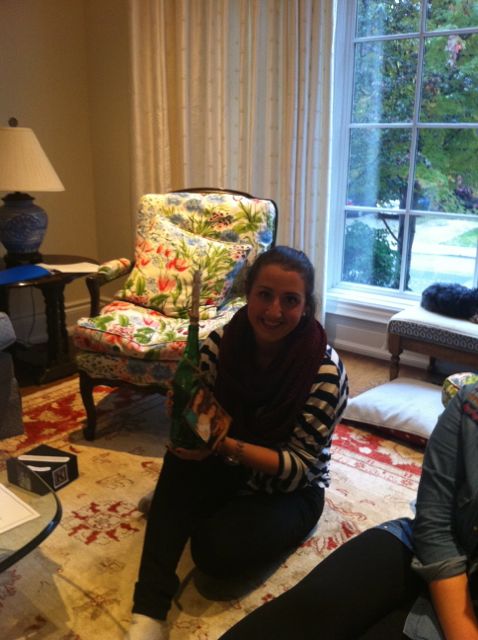
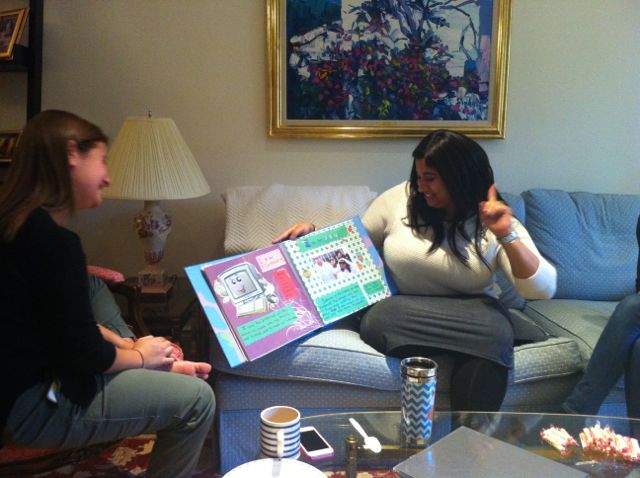
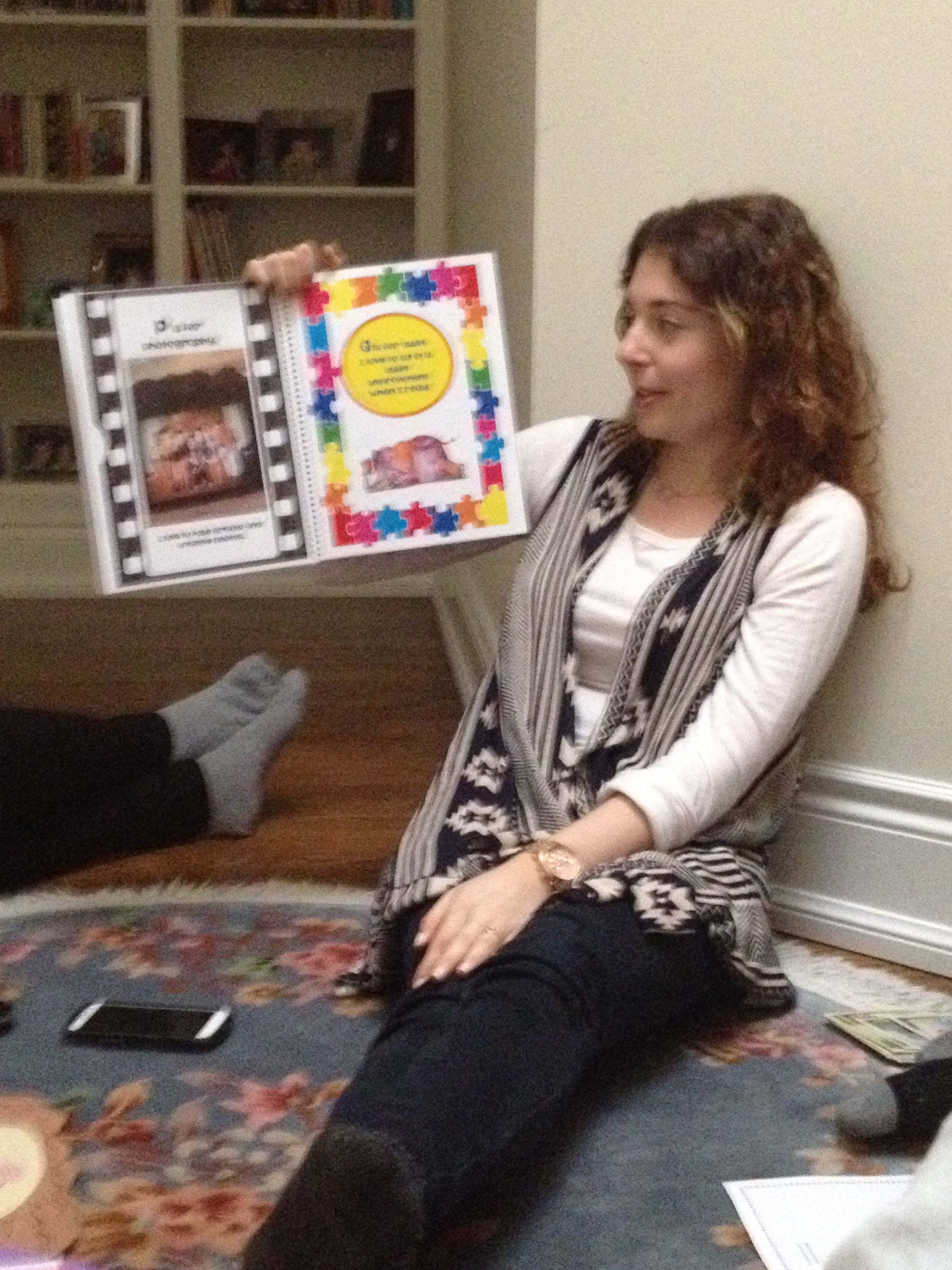
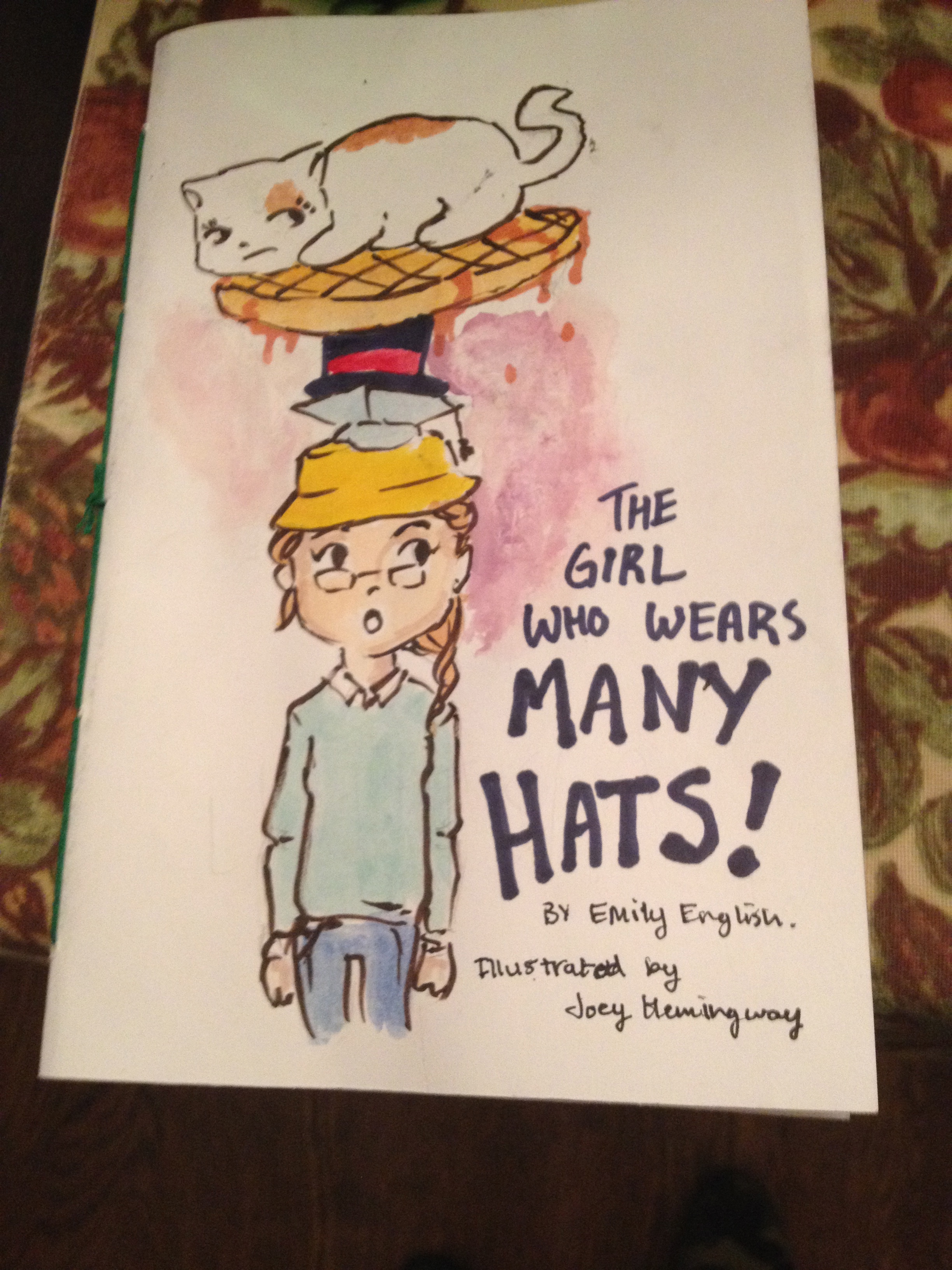
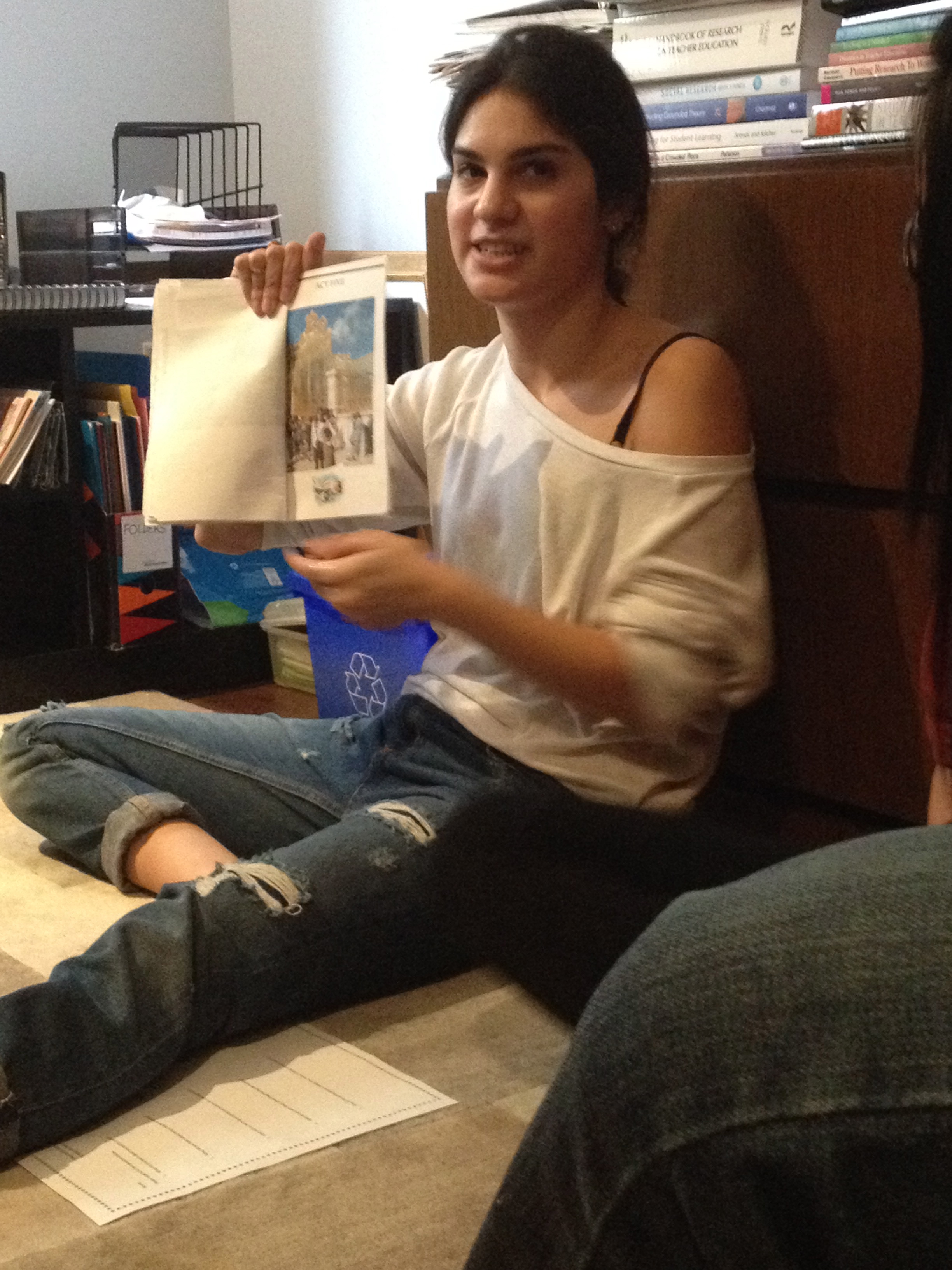
IMG_3099In yesterday’s blog post, Lydia talked about the All About Me book celebration we had with the student teachers in our literacy methods courses. I (Clare) want to add my comments/reflections on the activity. The “assignment” is unusual in that it is ungraded (pass/fail), there is lots of choice, and the finished product is shared with all of the other IMG_3100students. It is not just me, the professor, who reads the assignment – all of the students have an opportunity to learn from their fellow students’ work. The sharing is a wonderful way for them to learn about their fellow students and to learn about many ways to tell a story. Initially, the students are bit resistant to the assignment commenting (complaining!) about it not being graded so why should they do it or that they are not creative so they cannot do it or they cannot see how doing a book about their life will help them learn to be a literacy teacher. The process of writing their books and sharing them transforms IMG_3145their views – they come to understand the power of story, the demands of the writing process, and the importance of audience. Many commented this was the best class they have had in their university studies. One student noted: “I recognize the courage and vulnerability it takes to showcase our own work and know that without a Professor who harnesses this safe environment we wouldn’t have become such a comfortable cohort in our short weeks at OISE.”IMG_3121
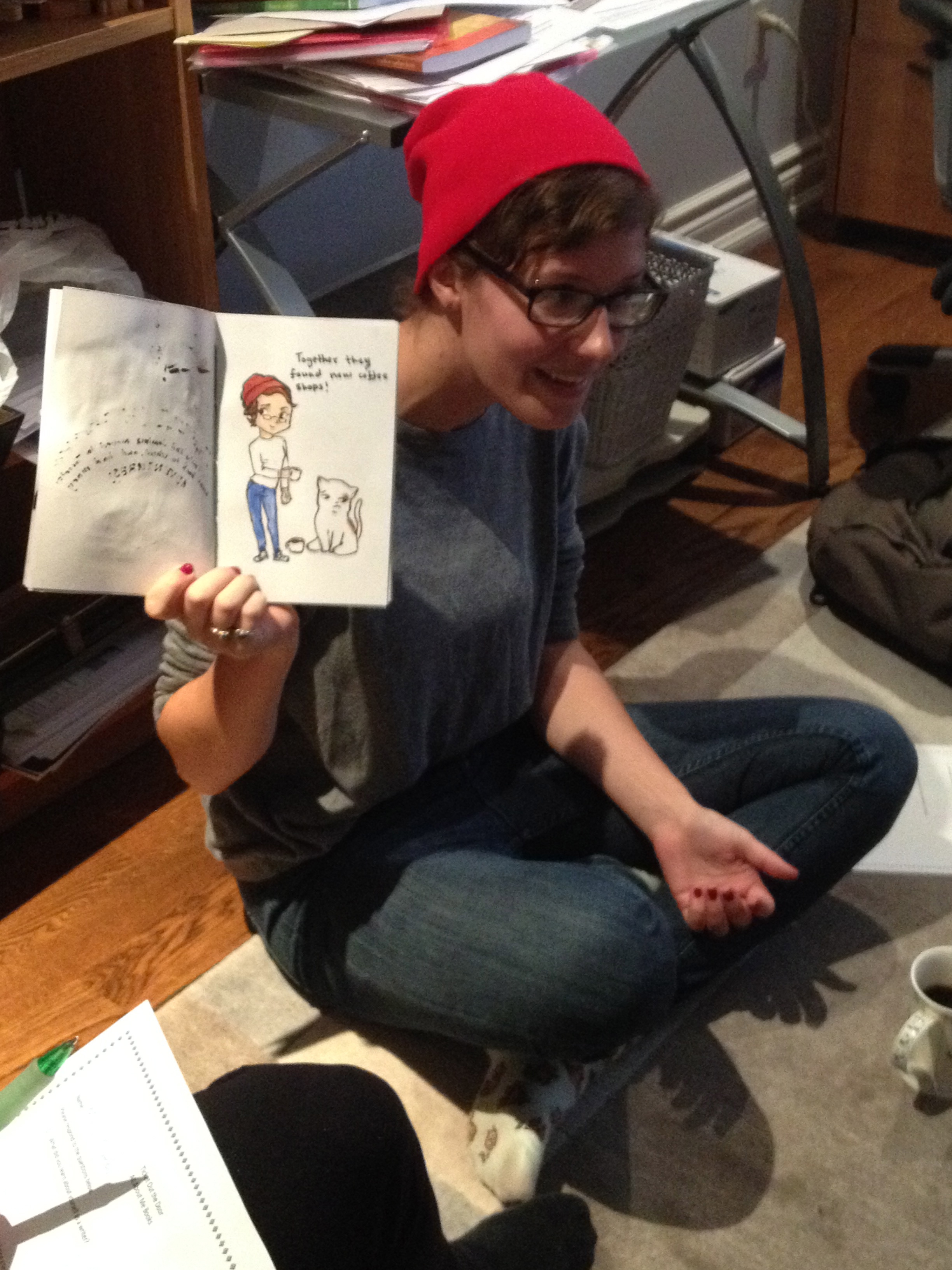
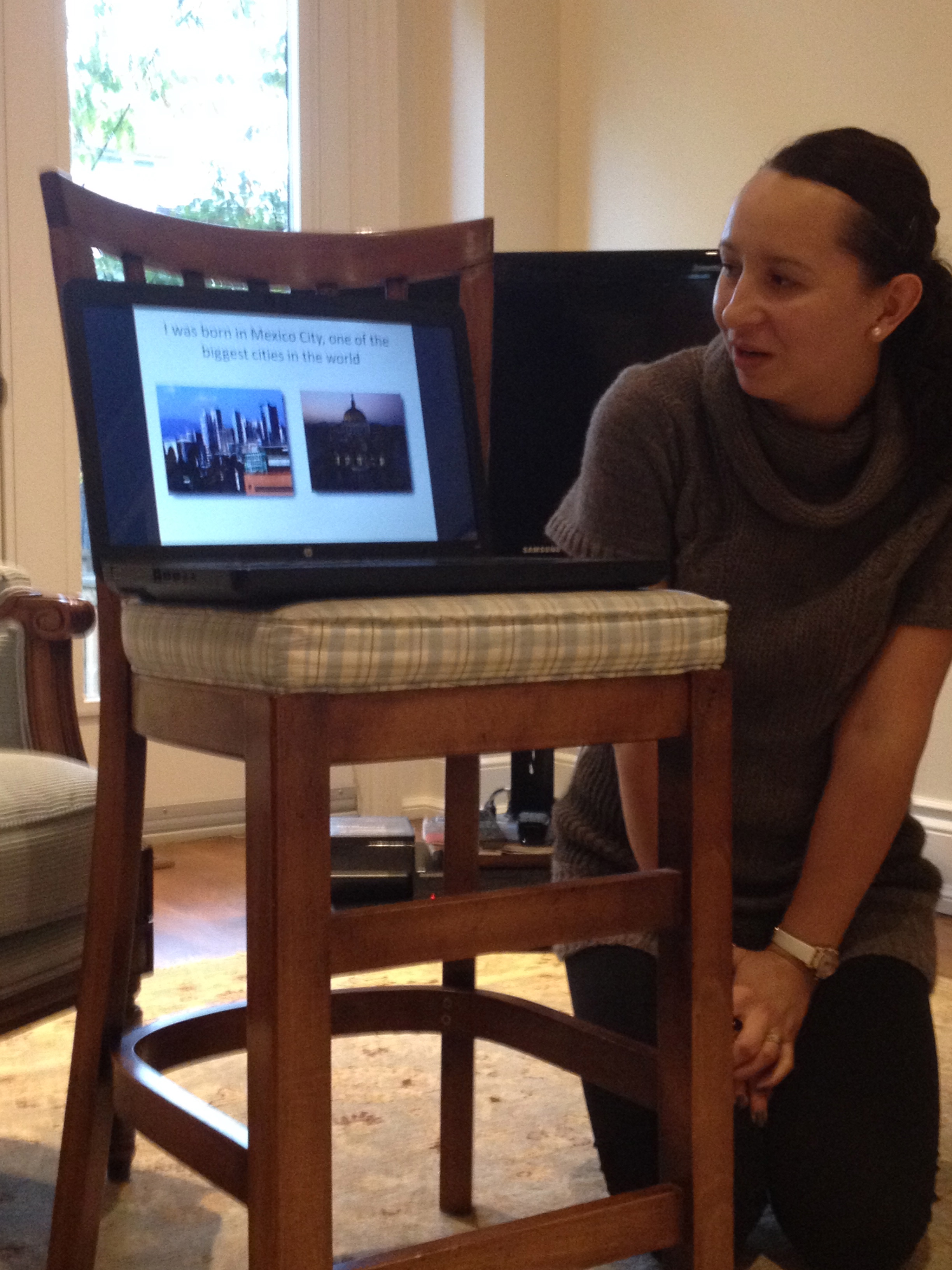
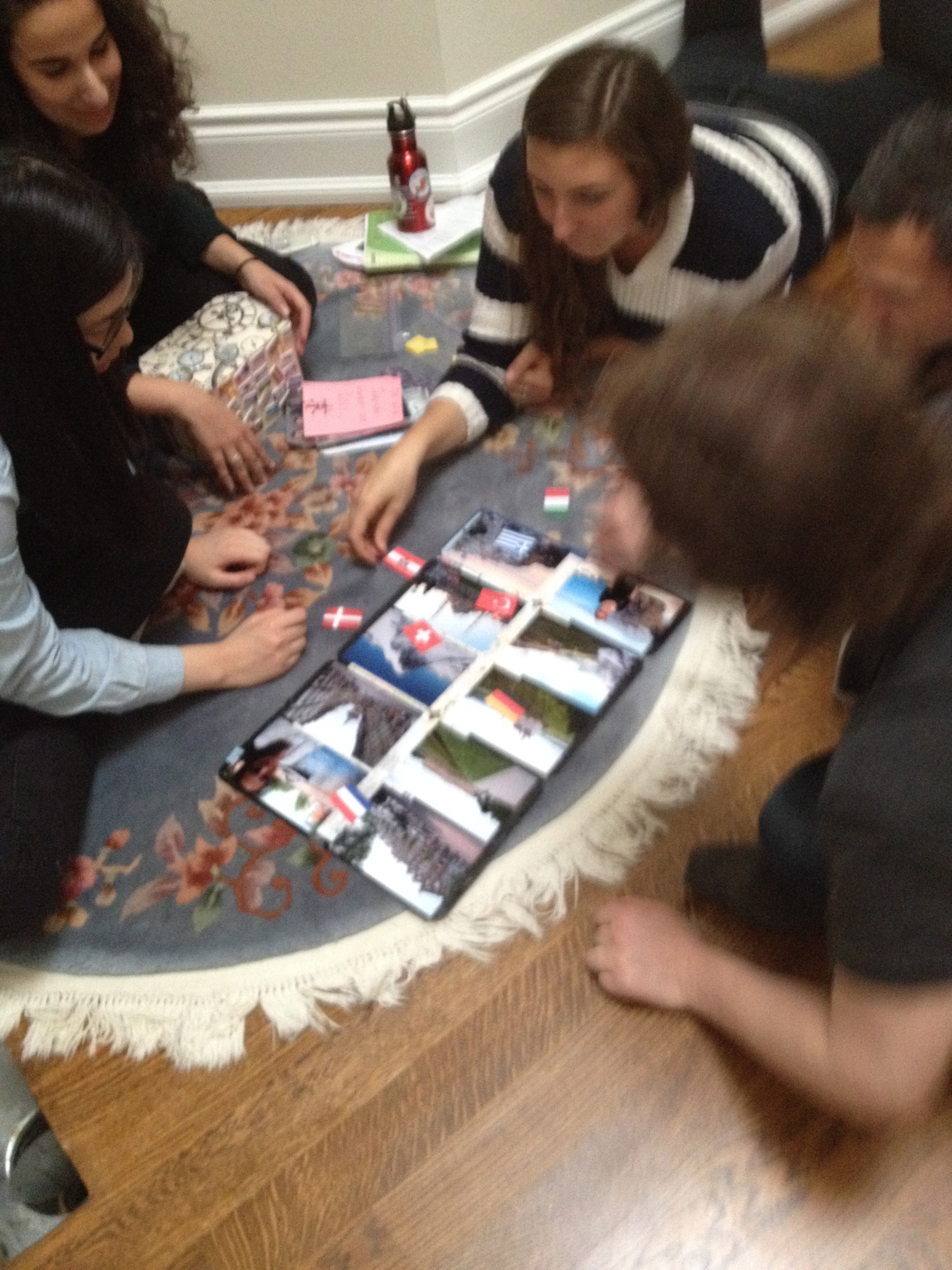
All wanted to know when we were going to do “something” like this again. You will notice in these photos that the students are truly happy and engaged. Like Lydia, I was impressed with their books – their creativity was astounding, the care they took with writing their books was impressive, and their ingenuity humbled me. I learned so much from them and feel so lucky to be teaching such fine individuals.

For the literacy teachers and literacy teacher educators who follow this blog we thought we would share the assignment description with you.

IMG_3152All About Me Books

The creation of this book about you fulfills a number of purposes:

* it celebrates who you areIMG_3140
* it provides your colleagues with an opportunity to get to know you

* it celebrates the diversity of individuals in our class

* it allows your creativity to emerge and through exploration may prove new potential to you

* it provides a good resource for you to use with your students as an artifact, a way of IMG_3138introducing you to your students, a good lesson to use with them and ….
* it allows you to come to understand first-hand the complexity of the IMG_3128composing and publishing processes and it allows you to consider how various literacy formats/genres can be used with students

* it introduces you to children’s books in another way

* it is fun

IMG_3131Criteria

  1. Meaning

The All About Me text must communicate in some way who you are – it could be descriptive, autobiographic, a metaphor, …. but it must say, “This is me!” It is important to identify your intended audience; therefore, the book must match your intended audience. If, for example, you are writing it for young children, the pictures are very important and the text must be simple and IMG_3119accessible to them. If on the other hand, you are writing it for an audience of adolescents, the tone, structure and theme would be very different. Use a structure/format appropriate for the age group you choose as models.


Structure

IMG_3114The All About Me book must be:

* illustrated in some way (use your imagination and ingenuity here).

Any format is fine – text based, artifacts, digital …..IMG_3113
* durable for use in the classroom

* well planned

* well written (adhering to the convention of grammar and spelling)

IMG_3142Possible formats and genres for your book…IMG_3135
 

Accompanying Story on Tape Shape Books
Fairy tale, mystery, make believe Poetry Book
Banners Pop-up Books
Shape Book Wheel Book (using paper fasteners)
Accordion Book Picture Books
ABC book Books with Bookmarks
Books with Pictures and Clipart Book in a box
Books with Photographs Puppet Books
Characters from a Movie or Novel Chart Books
Dioramas Flip Books
Graphic novel/story; Comic format Television Box
Newspaper Momento book
Series of memos Menu
Series of photographs with captions Counting book
I Book Poster
Prezi Powerpoint
Video Other ….. (e.g. rap, song)


All About Me Texts

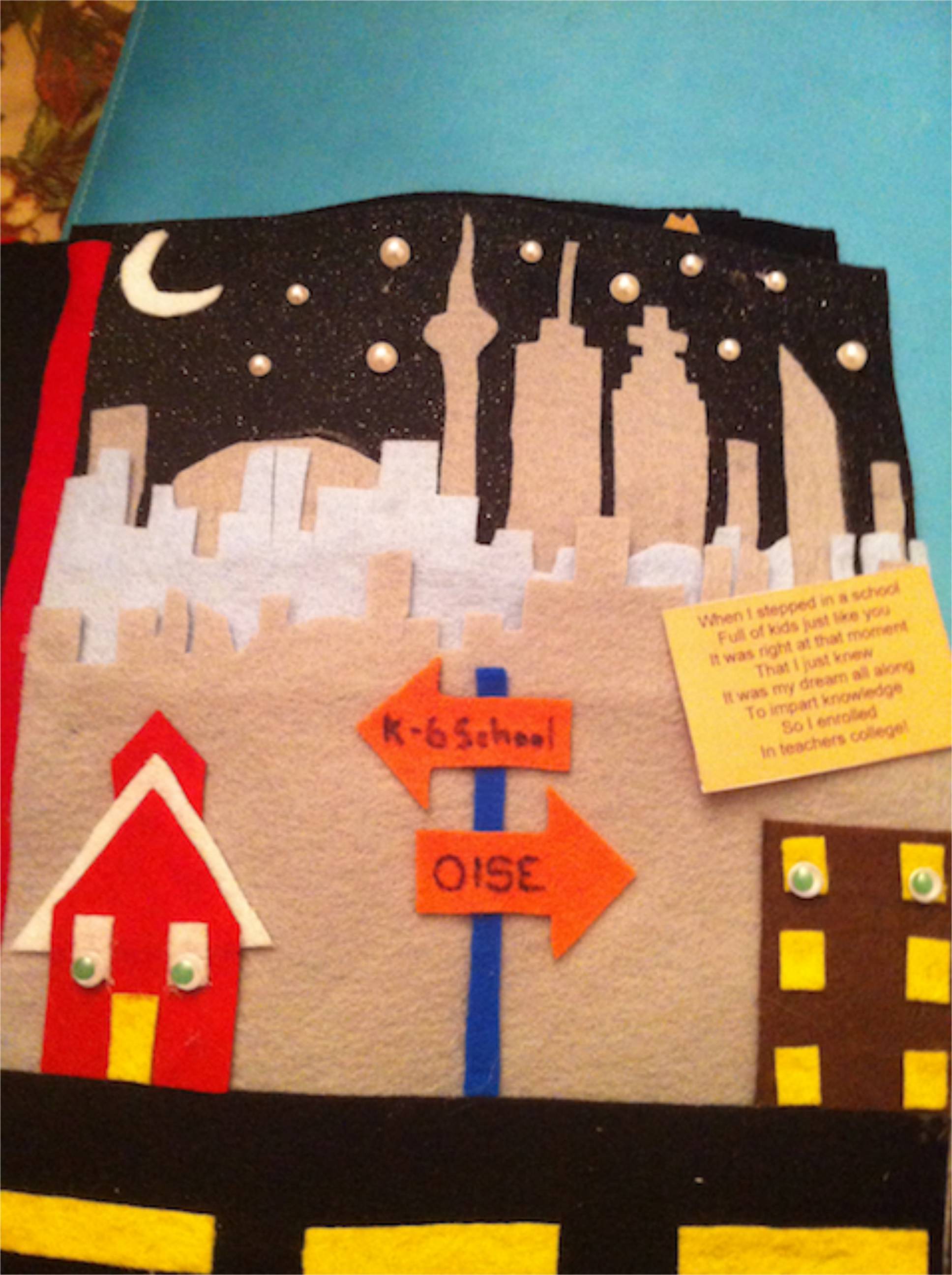
We had an amazing literacy class yesterday. We (Clare and Lydia) along with the student teachers in our P/J and J/I literacy courses shared our All About Me texts. As a class we meet weekly in a designated classroom on campus, but this week class was extra special, as Clare graciously invited us into her home to share our texts in a more personal space. The student teachers engaged a rich array of storytelling formats including – playbills, a message in a bottle, interactive ABC books, puzzles, dual language texts, a personal timeline plotted out with illustrated cityscapes, e-books, comic strips, Pokémon cards, nesting boxes housing artifacts documenting developmental milestone – to share aspects of themselves to an attentive audience of their peers. The depth of thought and creativity communicated through their texts was truly impressive and inspiring. I’m sure the children/youth they’ll be teaching in their upcoming placements will enjoy these texts as much as we all did. It was a truly enjoyable day. Thank you to all the student teachers in our literacy community!!


IMG_1357IMG_1344IMG_1349IMG_1343IMG_1348IMG_3148

Teacher collegiality: A priority in education

Teachers and Teacher Educators alike, I (Yiola) hope you have had a good start to the academic school year. By this time a productive learning environment is in the works, students are settling into routines and relationships and all wheels are in motion. Teaching and learning in classrooms is a complex enterprise. I believe we spend huge amounts of time thinking about and preparing our students for the classroom yet little time is spent on developing safe, supportive, resourceful environments for ourselves as educators.

Enter the social world of teaching for teachers. From novice classroom teachers to veteran teacher educators, research literature clearly shows that the conception that educators perform better when working together professionally is supported by organizational theory models… Such conceptions view authentic teamwork as an essential characteristic of the successful organization as its members interact regularly to share their ideas and expertise and develop common understanding of organizational goals and the means to their attainment (Shah, 2014).

See full article here:

teacher collegiality

Integrated classrooms, full day kindergarten teams, division teams, departments, staff and faculty and informal professional learning communities (PLC), require teamwork, moral support, and encouragement between educators.  What better way to engage in teacher preparation and teaching than feeling supported, appreciated and valued.  What are the key characteristics of collegial work environments?

The research literature indicates considerable consistency in the key characteristics of teacher PLCs. Participants working together regularly over an extended timeline, shared values and vision, practical activities focused on student learning, taking an inquiry stance, being reflective and collaborating and sharing experiences, are characteristics which are consistently highlighted (Susan Owen, 2014).

See full article here:

Owen

A supportive work environment, collegial atmosphere, shared vision, shared workload, appreciation and affirmation of colleague contributions, and genuine interest and commitment to the school/program make a significant difference to educators’ work. While the structure and environments are often built from the top down (i.e. principals or program leaders), much can be done within organizations to foster strong PLCs. These are messages I share with my student teachers as we consider how teachers work with early childhood educators in the kindergarten classrooms, and how the special education teacher communicates with the regular classroom teacher, and how teachers communicate with parents. Exploring how to work collaboratively and how to deal with conflict are important considerations for good teacher practice.

Teaching, service work, and research are approached with interest, enthusiasm, and care because of the collegial work environments that have been established within the PLCs. Below is a picture of wonderful colleagues and my cheering team. I am extremely grateful for the wonderful professional learning communities I am part of at OISE.

10013478_10154025542180121_1297636224_o copy

Left to right: Prof. Gisela Wajskop, me, Prof. Clare Kosnik

Front and centre: Sylvia Clare and Gallaway

Can Reading Comprehension be Taught?

I (Clare) recently read in Teachers College Record a fascinating commentary about reading comprehension by Daniel T. Willingham & Gail LovetteCan Reading Comprehension Be Taught? http://www.tcrecord.org/Content.asp?ContentId=17701Amelia1stDay

For those of you who teach literacy in elementary school or teach literacy methods courses in teacher education programs you might find their analysis of why teaching comprehension very interesting. In my local school districts teaching specific comprehension strategies seems to be the latest bandwagon. On one level I think direct instruction on how to comprehend/make sense of text can help struggling readers.

On the other hand, one of my issues is with the way these strategies are taught. These comprehension strategies are listed on a poster and students are expected to use those specific 8 strategies. They are drilled over and over and over on them. If a student does not “get them” the first ten times of drilling will they ever get them?

So I found Willingham and Lovette’s explanation informative on why this approach can work interesting:

The funny thing about reading comprehension strategy instruction is that it really shouldn’t work, but it does. This commentary seeks to provide insight into how it should work and guidance on effective strategies for implementation.

They provide reasons why teaching comprehension strategies work:phone1

Here’s our interpretation. The vague Ikea instructions aren’t bad advice. You’re better off taking an occasional look at the big picture as opposed to keeping your head down and your little hex wrench turning. Likewise, RCS encourage you to pause as you’re reading, evaluate the big picture, and think about where the text is going. And if the answer is unclear, RCS give students something concrete to try and a way to organize their cognitive resources when they recognize that they do not understand.

 RCS instruction may be at its best in telling students what reading is supposed to be. Reading is not just about decoding; you are meant to understand something. The purpose is communication. This message may be particularly powerful for struggling readers, whose criterion for “understanding” is often too low (Markman, 1979). One of us works extensively with struggling adolescent readers who frequently approach the task of reading as getting to the last word on the page.

I think one of the ways to go forward is to provide students with many comprehension strategies. I know that when I read I use many more than 8 strategies. If you want to read the entire commentary (which is not too long) here is the article. I will definitely use this article with my teacher education students.Can Reading Comprehension Be Taught


Prioritising classroom community and organisation in physical education teacher education

Congratulations to Tim Fletcher and Kellie Baker on their recent publication: Prioritising Tim Fletcherclassroom community and organisation in physical education teacher education

I (Clare) know that it will be of interest to the many teachers and teacher educators who read this blog. Here is the abstract.

This research investigates how teacher candidates in a primary physical education curriculum and methods course learned about and were influenced by efforts to emphasise classroom community and organisation. Qualitative data in the
form of interviews, focus groups, and course artefacts were gathered from nine
participants throughout one academic term. Analysis of data suggested that most
teacher candidates came to recognise pedagogies that fostered a sense of community;
however, only a few were able to connect this to their developing visions
for teaching. Despite this, all participants came to view the development of a
sense of community as one of the most important aspects of their evolving teaching
practice.

Here is the link to the paper: Fletcher & Baker_2014

Walking in the Shoes of Democracy

When I returned from Greece this summer I noticed that my running shoes were very dusty.  Well, that’s an understatement.  They were no longer even white. I kept thinking I should wash them, but I simply couldn’t.  The last place we visited in Greece was the ancient Agora in Athens.   I spent the entire day in awe.  This was where the most influential political and philosophical minds of western civilization  waked, talked and puzzled.  The dirt on my shoes was from the same pathways and roads on which Aristotle, Plato and Socrates paced and argued. It was speculated that Aesop visited Athens and told his most famous fable, The Frogs who Desired a King, in this same Agora to  dissuade the citizens from attempting to depose Peisistratus for another ruler.   My shoes were coated with the dust of democracy!   Who was I to wash it away?  So left them dirty.

That is, until a friend of mine commented on how dirty my shoes were.  At that point I  finally relented and talked myself into washing them.  Into the washing machine they went.  But they came out just as dirty as they went in.  So I washed them again.  Still no change.  It became a challenge.  I took bleach and a toothbrush to them.  They remained a dull grey. Forever altered.  Baffled, I left my shoes to dry in the sun and like any good philosopher, contemplated my  dilemma.   Then it dawned on me.  The dust of democracy was embedded.  Democracy could not be washed away from my shoes any easier than it could from my consciousness.  For me, democracy is an honorable a way of life.    My shoes were a living representation of this precious philosophical and political stance.

As you may have guessed, I have stopped trying to clean my shoes.  I’ve decided they are perfect just the way they are.

agora 2957

Happiness and Teaching – Insights from Dewey

In earlier postings, I (Clive) talked about the need to see teaching and teacher education in very broad terms; to see ourselves as ultimately helping students develop a satisfying, enjoyable or “happy” way of life. This week I came across some wonderful quotes from John Dewey along these lines.

The first is from Democracy and Education (Macmillan, 1916); it emphasizes that we can’t separate our philosophy or theory of education from our philosophy of life.

“[P]hilosophy is at once an explicit formulation of the various interests of life and a propounding of points of view and methods through which a better balance of interests may be effected. Since education is the process through which the needed transformation may be accomplished…philosophy is the theory of education as deliberately conducted in practice” (p. 387).

Two further quotes are from Theory of the Moral Life (Holt, Rinehart & Winston, 1960, orig. 1908, revised 1932). They emphasize again the need for a comprehensive philosophy of life and education, and show the connection between this philosophy and human enjoyment, satisfaction, happiness.

“In isolation, one enjoyment cannot be said to be higher or lower than another…a satisfaction which is seen, by reflection based on large experience, to unify in a harmonious way [one’s] whole system of desires is higher in quality than a good which is such only in relation to a particular want in isolation [satisfactions of the former type together constitute “happiness”] (p. 44). … The office of reflection [is] the formation of a judgment of value in which particular satisfactions are placed as integral parts of conduct as a consistent harmonious whole” (p. 60).

Dewey notes, however, that our philosophy of life and education is never complete: it is always a work in progress.

“The business of reflection in determining the true good cannot be done once for all…. It needs to be done over and over and over again, in terms of the conditions and concrete situations as they arise” (p. 62).

I’m going to share these quotes with my students next week and see what they think – and learn from them. My philosophy of life and education is never complete!


What’s Up at the Public Library?

The other day, Natasha a student teacher in the literacy methods course mentioned the Dial a Story program offered by the Toronto Public Library system. Her recommendation reminded us to stay in touch with the wonderful outreach programs offered by public libraries. Dial A Story is a free service that provides stories for younger children (7 and under) and for older children (up to 12) twenty-four hours a day.  Stories rotate on a daily basis and are currently available in 15 languages including: French, English, Cantonese, Gujarati, Italian, Korean, Mandarin, Polish, Portuguese, Russian, Somali, Spanish, Tamil, Tagalog, and Urdu. Occasionally, Dial A Story features special guest readers such as Toronto Blue Jays baseball players and dancers from the National Ballet of Canada.  A big thank-you to Natasha for reminding to check out the many resources our public libraries have to offer!

http://www.torontopubliclibrary.ca/services/dial-a-story.jsp

phone1phone2

Presenting with a Sense of Humor

Amidst the  growing concern that students of this era are loosing their ability to personally communicate due to too much texting and gaming, here is proof they are at least, not loosing their sense of humor.  In this school talent show, eight grade five boys surprised and delighted their peers,  teachers and parents with a well choreographed, synchronized swimming routine- without the water.

http://www.frequency.com/video/these-kids-performed-synchronised/165638623

I love social media for moments just like this!


‘H’ints and ‘H’appiness: Literacy learning in FDK

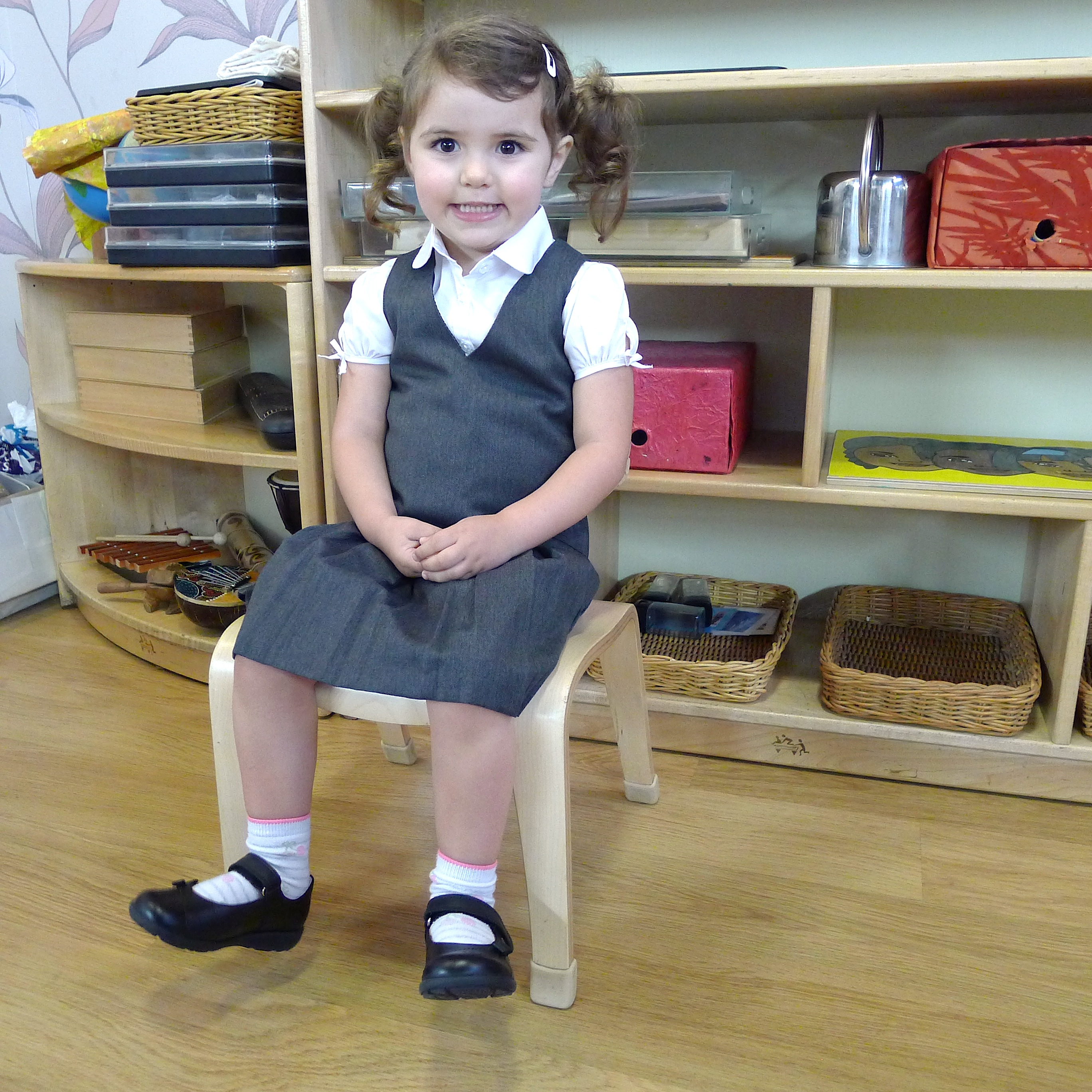
With the first month of school soon behind us I (Yiola) want to share some examples of my 4 year old daughter’s (Sylvia Clare) literacy learning in Full Day Kindergarten (FDK).

Example 1:  Phonemic awareness.  Sylvia Clare must be learning about the letter H.  On more than one occasion she has demonstrated her understanding of phonemes and phoneme isolation.  I said, “Sylvia Clare you must be hungry”. Sylvia Clare paused and responded, “Mommy, is hungry like Henry? huh huh huh.” I paused in surprise of her observation and connection and simply said, “Yes”.   Later in the evening I said, “Hendrix and Orion are going to visit soon” and Sylvia Clare responded, “Hendrix is like hungry and Henry, right mommy?”

Example 2:  Letter recognition.  One night earlier this week while tucking Sylvia Clare in bed I noticed she was curled in the most unusual position. I observed but said nothing. Just as I was about to pull the bed sheets up Sylvia Clare said, “Mommy, what letter do I look like?”   I respond, “hmmmm, interesting. I’m thinking you look like an I?”  Sylvia Clare laughs, “Noooooo. What letter do I look like mommy?”

She is also taking objects and forming letters. For example, while playing outside, she took two twigs and  placed them together to form the letter “V” and asked, “Does this look like a letter mommy? What letter is this?”

Example 3: Vocabulary development and comprehension.  More and more Sylvia Clare comes home with stories. Vivid stories. Curious stories.  Each day her stories grow in detail and description. The other day she explained she went on a trip to the forest in search of an oak tree. She shared,  “On the way to the forest, I held a boy’s hand [she paused and blushed]. His name is *Sam (changed) and he is in SK (senior kindergarten) so he is bigger.  I fell down on my way to the forest but I did not get hurt and the teacher gave me a bandaid. The forest close to the park mommy, you know the one we always go to.  We went into the forest just a little, not deep in the forest, only at the entrance. There we found a humungous oak tree. It had 4 trunks and they went out like this (uses her arms and points in four different directions). So it really looked like four trees stuck together. We looked at the bark”.  I asked if it was an angel oak tree. She was not sure but she continued to share news about her experience.

Example 4: Confidence.  Sylvia Clare drew a map of the world at home, wrapped it up and took it to school. I thought nothing of this as I dropped her off in the morning. Then I realized I left her lunch bag at home! I scrambled home and rushed back to the school to bring her  lunch.  By the time I returned to the school the children were engaged in outdoor play/education/inquiry.  I saw Sylvia Clare standing with one of her teachers, her map open and making reference to it. The teacher saw me and smiled, “Sylvia Clare is reading her map and we are now trying to find the treasure”.  How wonderful to see play and literacy in harmony. A reader is a person who reads. Sylvia Clare was demonstrating she is a reader. Then, at the end of the day when I went to pick her up she had another paper in hand. I asked, “What did you work on today?” and Sylvia Clare explained that she lost her map so she made another one – she developed a graphic organizer, a way to read, understand and appreciate the world. My thoughts:  thank you teachers, for providing the time and space for Sylvia Clare to engage in what interests her and thank you for appreciating those interests.

On her own, without probe, Sylvia Clare is offering hints of literacy teaching and learning.  With sly enthusiasm she is sharing her learning with me, in subtle, whimsical ways. She is sharing her achievements and understandings and I can tell she is proud that she is learning new things.  What excites me is that her learning is evident; in her sharing, practice and happiness. It is not coming home by way of worksheets or alphabet books.  I look forward to seeing and sharing what the upcoming months hold.