Category Archives: education

Engaging with Suffixes

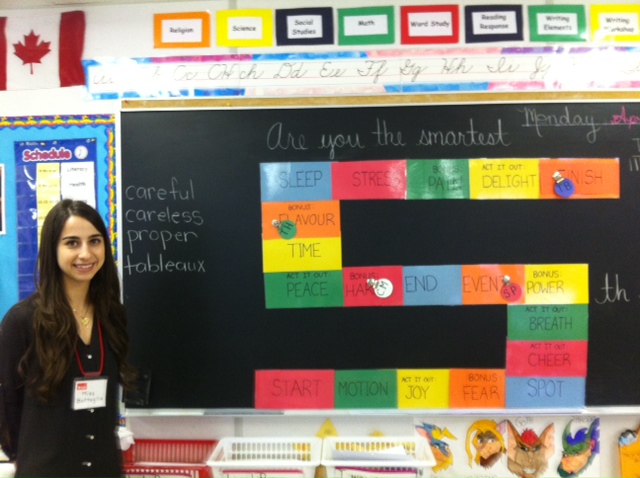
“How to engage students in the understanding and use of suffixes?” was the pressing question on my (Cathy’s) student teacher’s mind. Erica told me she mulled this over for several days, trying to get the pieces to fit together just right.    Her final creation – a suffix game. The wonderfully large, colourful game board alone was enough to grab her grade five students’ attention. Played in teams, each group had to role a gigantic die to move their magnetic counter on the board.   Some spaces on the game board depicted words (e.g. effort, bonus, time) which each team had to add either the suffix ‘less’ or ‘full’ to, and then write each word correctly in a sentence. Small white boards were provided to each team for this task.   Other spaces on the board instructed the teams to create a tableaux depicting the new meaning of the word once the correct suffix was added. A few  spaces on the board provided bonus points.

I have always had a concern about student teachers being focused on ‘fun’ over learning and wondered about the level  of learning these students would experience with this game. This concern, however, was mollified when I witnessed the mistakes the teams were making which forced them to rethink their answers.  The animated group discussions regarding which was correct were very interesting to observe.  When the nutrition bell rang and the grammar lesson came to an end, there were groans and moans of protest. Imagine, grade fives liking grammar. Erica wisely told them they could play again soon.

Erica's Game


Sharing Our Research

Today the research group will be presenting work from the project Literacy Teacher Educators: Their Backgrounds, Visions and Practices, at the Ministry of Education/Faculties of Education Forum – Research Practice: Nurturing relationships for teaching, learning and well-being. It will be an interesting and exciting day.

Literacy Teacher Educators: Preparing Teachers for a Changing World (Book Cover)
Literacy Teacher Educators: Preparing Teachers for a Changing World

A Mighty Girl

mightygirl

My twin niece and nephew are 4 years old. They both have loved books for as long as I can remember. They are currently learning how to string together sounds from the alphabet. As a super-involved aunt and literacy teacher, I try to expose them to a wide variety of texts. I want them to be exposed to texts which promote inclusivity, challenge stereotypes, and inspire creativity. For this reason I was delighted to find out about the Mighty Girl website.

“A Mighty Girl is the world’s largest collection of books, toys, and movies for parents, teachers, and others dedicated to raising smart, confident, and courageous girls.”

The Mighty Girl collection of books aims to disrupt the status quo of how girls are represented in fairytales. The collection of books strives to break the ‘damsel in distress’ mold, and so feature girls in alternative fairytales who are courageous, smart, and daring! I know I’ll be picking up a few of these books to read with my four-year-old niece and nephew! Some of the book titles include:

  • Not All Princesses Dress in Pink (Yolen & Stemple, 2010)
  • Dangerously Ever After (Slater, 2012)
  • Thunder Rose (Nolen, 2007)
  • The Seven Chinese Sisters (Tucker, 2003)

A full list of fairy/folktales on the Might Girl site:

http://www.amightygirl.com/books/fiction/fairy-tales-folktales

The Tyranny of Testing, Part I

I (Clare) found this article extremely interesting. The systematic analysis of the testing culture is well done.

Mike McDaniel's avatarStately McDaniel Manor

credit: learningtrust.org credit: learningtrust.org

At the end of May, 2013, I began what would turn into a four part series on the problem of mandatory, high stakes testing in education. Much has changed since that series. I’ll provide links for the original series at the end of this article, but the series that begins with this article is substantially updated. As is always the case, I don’t know where the series–and the interests of readers–will take me. I simply hope I can provide some useful and thought-provoking ideas.

The school year is drawing to a close.  It’s always a bittersweet time.  It is good to bring the year to a close, to finish all that we’ve worked on for a year and to take some small satisfaction in all we’ve learned.  But it’s a sad time as well, for all too soon, each of my classes, made up of all of…

View original post 3,227 more words

Wonderful Experience in Bogota

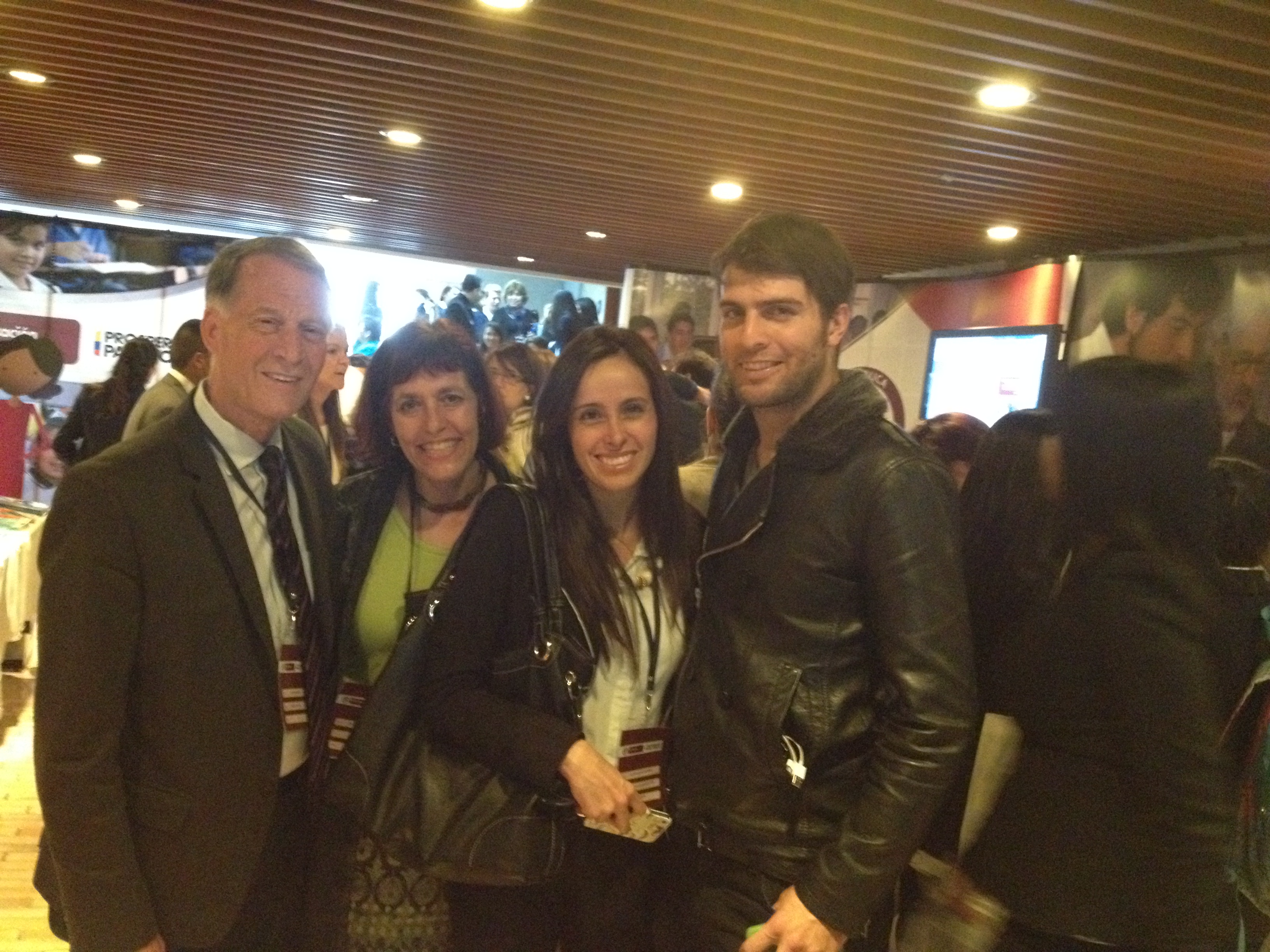
UniversityClive and I (Clare) worked with the Directors of various programs Bogota Teamat the Ministry of Education in Bogota. We did presentations at the Learning for All conference . What a wonderful experience. (More on our time in Bogota at a later date.)

Here are our powerpoint presentations:

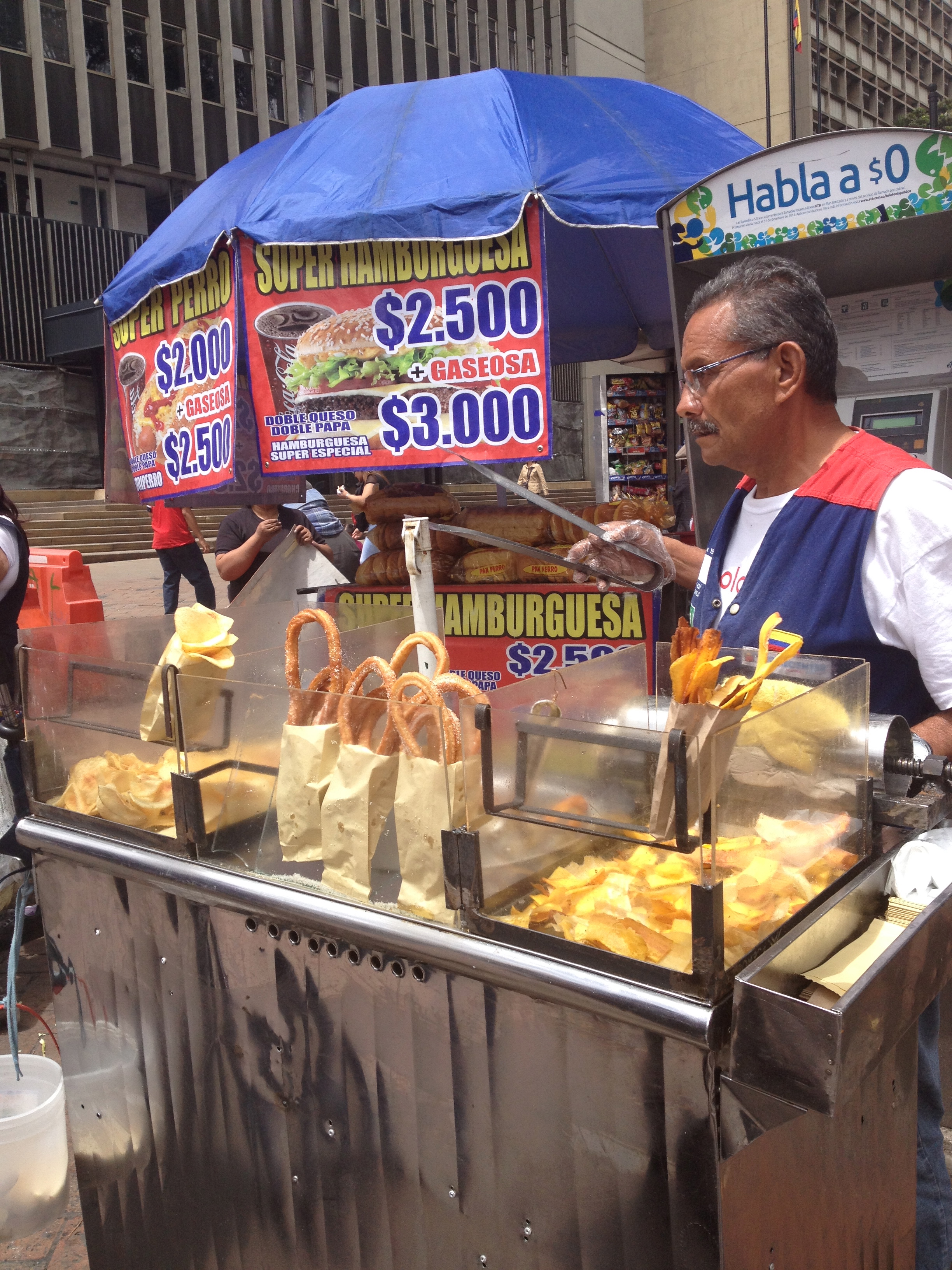
Bogota City ViewClive: Priorities in teacher education: the 7 Key Elements of PreserviceStreet Vendor in Bogota Preparation
Bogota Clive#2

Clare: Teacher Educators: Four Spheres of Knowledge Required To teach the 7 Priorities
Bogota Clare 2014

Cafe LatteConference BannerSalsa Poster

Guest Blog: Monica McGlynn-Stewart

How Does Learning Happen?

Monica McGlynn-StewartOn April 25th, Ontario’s Ministry of Education released a new Early Learning Framework called How Does Learning Happen? Ontario’s Pedagogy for the Early Years. http://www.oise.utoronto.ca/atkinson/UserFiles/File/Policy_Monitor/ON_25_04_14_-_HowLearningHappens.pdf
It is a learning resource for early years settings such as childcare, child and family support programs, and before-and-after school programs. In some ways, it is a departure from the previous early years curriculum framework, Early Learning for Every Child Today (2007). http://www.children.gov.on.ca/htdocs/English/topics/earlychildhood/early_learning_for_every_child_today.aspx
In addition to a statement of principles and guidelines for practice, the older document includes a section referred to as the continuum of development which has separate sections for infants, toddlers, pre-school/kindergarten and school-aged children. Each age group is further divided into five domains, social, emotional, communication, language and literacy, cognitive and physical. Each domain includes a list of specific skills, what educators might see that would indicate that skill, and suggestions for how educators might support those skills. In other words, it is quite detailed about how children develop and how educators can support them. The new document, How Learning Happens does not have this developmental section. It appears to be inspired by New Zealand’s national early childhood curriculum Te Whariki. Like Te Whariki, How Learning Happens focuses on children’s relationships, well-being and inquiry learning, and educator’s collaboration and critical reflection.
As a professor of early childhood education, I think a combination of the emphasis on reflection, relationships, and inquiry learning from Te Whariki and the continuum of development from Early Learning for Every Child today would be helpful, the latter particularly so for new early childhood educators. Over the last 25 years I have seen similar swings in the school curriculum in Ontario. When I first started teaching elementary grades in the late 1980’s, there was an incredibly open-ended primary curriculum which allowed excellent teachers to run fabulous programs, but left less informed and skilled teachers with little to go on (and some less than effective programs). We then had a conservative government in the mid to late 1990’s who introduced a much more prescriptive and reductionist curriculum, making it more difficult to be creative and to integrate the curriculum, but it could be argued that it supported new teachers. Now, with the school curriculum revisions in the last few years, and the new full-day kindergarten play-based curriculum document, we are moving back towards less prescriptive outcomes, subject integration and inquiry learning. I think new educators/teachers need support and explicit guidance, and more experienced, knowledgeable educators/teachers need more freedom to be creative and spontaneous. The question is, how you capture this in a one-size-fits all curriculum document?

Cartagena Colombia: Presentations by Clive and Clare

CartagenaCartagena CountrysideClive and I (Clare) presented at the Unicolombo Universitaria Colombo Internacional in Cartagena (Part of a Ministry of Education initiative). The overall theme of our presentations was the need to offer quality education for all.
Clive’s presentation focused on supporting teacher learning in their on-going learningwhile mine focused on the importance of engaging students by offering a rich literacy program.
About 300 teacher educators and teachers attended our presentations. What a lovely audience! In the Q & A part of the presentation, we had a great interchange about the pressure on the educators to improve scores on PISA.
CCartagena Balconieslick below to see our ppt presentations.

Clive: Priorities in Teacher Education: The 7 Key Elements of Preservice Preparation
Bogota Clive#2
Clare: Literacy Teaching:Engaging All StudentsCrepes and Nutella
Cartagena 2014 CK

Enjoy the photos of this enchanting city which is designated a World Heritage Site.Clive and Clare


“What, exactly, is an Anchor Chart?”

I (Cathy) remember one of my student teachers asking me this at the beginning of the school year. So we made them in our university class: plastered the walls with chart paper summaries, reminders and tips about many different literacy events and grammars. I suspected my student teachers thought they may be mildly useful. But that attitude changed when they got into their first practicum. The student teachers not only saw their mentor teachers using them, they began to see how their students consistently accessed them. They reported to me after their practicum that anchor charts were practical. Their students used the charts to help them remember things and using them (instead of constantly asking the teacher for the answer) helped the students gain independence as learners.

During the second practicum, much to my delight, the anchor charts started to become somewhat of an art form. Justine, especially, excelled at them. “My anchor charts never looked like this!” her mentor teacher declared. I am not sure how much the students appreciated the visual dynamics, but they certainly used them. I watched them look things up on the walls that surrounded them. Useful? Yes! Visually exciting? Absolutely! How useful and interesting can you make yours?Justine's anchor chartsmore anchor charts

Mental Health Education in Teacher Education

Earlier this week I  (Yiola) participated in a Webinar on the teaching of mental health in teacher education. The webinar was called: Reading, Writing, Resiliency: A Briefing on the State of Teacher Education Toward Positive Mental Health.

This post is connected to Shelley’s recent post on Supporting Student Well-being through Mindfulness Practices as it looks closely at what Teacher Education programs are doing to prepare teachers to teach about Mental Health and Wellness.  It was interesting to read Shelley’s blog and learn about what she does and how mindfulness as a form of mental health practices are developed in her course on Special Education. I would love to hear what other teacher educators and classroom teachers do to promote and teach about well-being.

During the webinar I learned some interesting facts:

– parents are concerned and interested to learn more about in 2 key areas related to mental health education: 1) Abuse and its effects on mental health (bullying, emotional abuse, exclusion);  2) Health (depression, substance abuse)

– after (parents and) doctors, teachers are the next care professionals in line who are expected to address children’s mental health

– There is a gap between the strong perception of teachers responsibilities for addressing issues of mental health and their preparedness to do so

In a study conducted on mental health teaching in teacher education in Canada, over 400 courses in 66 teacher education programs were examined against 4 criteria. The 4 criteria were related to the following: course title, words in the course description, topics in the course outlines, practices and relationships. The findings showed that only 2 of the 400 courses met all 4 criteria for the inclusion of mental health learning; 23 courses met 3 of the 4 criteria, 84 courses met 2 of the criteria and 104 courses met just 1 criteria.   This finding suggests that there is very little by way of teaching mental health issues in teacher education programs.

From the study 5 recommendations were made: 1) all teacher education programs should include at least 1 course that focuses on fostering postive mental health and resiliency; 2) classroom management courses reflect proactive resiliency oriented strategies; 3) in-service opportunities need to be available to practicing classroom teachers; 4) provincial curriculum should identify outcomes for health education; and, 5) mental health and resiliency outcomes should be in grades K-12 curriculum.

The webinar was helpful in outlining where we stand today in teacher education and mental health teaching.  I am very keen on thinking about how to move forward in teacher education programming.  Mental health and resiliency content can and should in included in many courses including but not limited to: all curriculum areas (i.e. literacy, social studies, math, health and physical education); special education, methods (i.e. classroom environment, classroom management, collaborative practices).  There needs to be a shift in foci, moving beyond the traditional Health and Physical Education curriculum (i.e. the Healthy Living strand) into a more comprehensive way of thinking about well-being and resiliency.
 

Reading Circles

Last week CBC news profiled the organization Literature for Life, which offers weekly Reading Circle programs to young mothers in various shelters and community centres across the Greater Toronto Area (GTA). The Literature for Life website explains that the program is committed to helping young moms in high-needs neighborhoods across the city “develop a practice of reading in order to access opportunities and achieve economic stability”. The moms participating in the Reading Circles meet weekly, along with a program facilitator, to engage in discussions and writing activities about books that are relevant to their lives. The program also hopes that participating moms will share their enthusiasm for reading with their children. To date, approximately “2,200 moms have participated in the Reading Circles and more than 20,000 books have been distributed” (http://www.literatureforlife.org).

Reading Circles2