Category Archives: education

Getting to Know Our Students

I (Clive) have long believed in having a warm, friendly class community and a good IMG_3114teacher-student relationship. However, my understanding of what this means continues to grow. This term in my graduate course with 22 students I seemed to develop a closer bond with my students than ever before.

As time went by, each would greet me in a friendly, open way with a smile on their face. They told me more personal information about themselves (often in emails about why they couldn’t be at class that evening!) Before and after class, at the break or in emails, they shared with me (and I discussed with them) individual matters, e.g., interest in going on to doctoral work; wanting to teach high school rather than elementary; wanting to take an individual reading course; moving from the public to the private school sector; the struggles of teaching while raising 3 children; not really wanting to be a teacher.

I found this closer relationship had several advantages:

  • There was a higher energy level in our engagement
  • Our interactions – and the class experience generally – were more enjoyable
  • Attendance was higher
  • I could better understand “where they were coming from”

This was quite apart from the help they received by discussing their individual concerns.


Sometimes people worry about an overly close relationship between teachers and students. However, a sensible teacher can figure out what is appropriate and what is not; and in general I feel we are still far too removed from our students. We need to be constantly developing appropriate links with our students, rather than being afraid of links in general.

In terms of appropriateness, one important point is to avoid having favorites. We should go out of our way to have meaningful conversations with – and hence get to know – every single student in our class. They will really appreciate it and our own teaching experience will be enhanced.


OTF Supports Teacher’s Self-Directed Professional Development

pic

The Ontario Teacher’s Federation (OTF) recognizes that teachers need to direct their own learning and professional development. To support this need they now offer a professional development  problem-based learning model which encourages teacher teams the opportunity to create their own learning projects.  The model encourages teachers to: select a team to work with; develop a project; conduct the research; and evaluate the effectiveness.  If the proposal is accepted, the OTF also provides support for the project through a mentoring program. Each team is assigned an expert teacher who will act as their mentor, who assists the team as needed throughout the process.

Through this process teachers are given the opportunity to:

  • become involved in ongoing self-directed learning;
  • spend real time collaborating with colleagues of their choice;
  • work as a team on a project of they deem significant (within the specified areas of focus);
  • have release time to carry out the learning initiative;
  • develop and implement the project over a period of months;
  • deepen their practice and evaluate teaching enhancements generated through your research and discussions; and
  • share their knowledge and resources with colleagues.

This year they have suggested three areas of focus:

  • Using information and communication technologies (ICT) to enhance teaching and learning
  • Supporting capacity building in Kindergarten
  • Supporting teachers in implementing revised curriculum
    • Grades 1-8
      • History and Geography
      • Social Studies
    • Grades 9-12
      • Canadian and World Studies
      • Classical and International Languages
      • First Nation, Métis and Inuit Studies
      • Social Sciences and Humanities
    • Grades 1-12
      • French as a Second Language
      • Health and Physical Education

Deadline for 2016  proposal applications is May 31.

Some  2015 projects were:

Assessment Technology in Primary Physical Education

Cross-Curricular Integrating Technology/Media Studies

iPads for Inclusion

I remember, as a classroom teacher, wishing my school board would allow me the opportunity to identify my own areas of strength and weakness and seek out professional development accordingly.  It is appropriate that the OTF is acknowledging this form of PD and taking a step in the right direction.  It would be helpful if teacher education programs could also offer similar forms of support for their own staff and faculty.

http://www.otffeo.on.ca/en/learning/teacher-learning-co-op-tlc/


Sleep Deprivation: A talk by Dr. Reut Gruber

The Dr. Eric Jackman Institute of Child Study Parent Education Association organized a fabulous event this week on sleep deprivation. I (Clare) attended and felt I learned so much!

The speaker Dr. Reut Gruber (professor at McGill University) walked us through “sleep for gruber-mainsuccess” which included a description of our sleep cycles and some of the consequences of sleep deprivation. Here are a few key points that I found incredibly informative.

  • Sleep is affected by intrinsic biological processes, cultural values, parental beliefs, school start time, and age
  • Sleep deprivation affects academic performance, mental wellness, and physical health
  • Regarding academic performance she said executive functions are affected, not allowing children to filter, make correction decisions, plan, resist distractions and regulate emotions
  • Regarding sleep, learning, and memory she said that we need to sleep so that the new information/learning can be integrated into what is already known. She said that we tend to think that if we expose children to “more” they will become “more brilliant” but knowledge needs to consolidated.
  • She gave a great analogy – if we do not sleep it is like not pressing the “save” button on our computer. Memory consolidation occurs when we sleep. For this process to occur we need to be “offline” that is be asleep.

Her work has been profiled on CNN, CBS …. Here is a link to some of her articles:

http://www.mcgill.ca/psychiatry/channels/news/dr-reut-grubers-research-featured-time-healthland-cbs-news-and-cnn-health-218643


Actor’s insights into Literacy

If we talk about literacy, we have to talk about how to enhance our children’s mastery over the tools needed to live intelligent, creative, and involved lives.

Danny Glover

Danny_Glover_2014

I was curious as to why actor Danny Glover would be credited with such a profound quote on literacy.  Looking into his background I discovered two things about him:

1.Danny Glover suffered dyslexia at school when he was younger and the school staff would label him retarded. This definitely was not very encouraging for him but he ended up finding ways to feel better about himself. He says that dyslexia had given him the feeling that he was not worthy to learn and that the people around him would not care of what would happen to his education. With time he eventually regained his self-esteem and became a great actor.

2. Danny Glover is a political and civil rights activist. For example, while attending San Francisco State University (SFSU), Glover was a member of the Black Students Union, which, along with the Third World Liberation Front and the American Federation of Teachers, collaborated in a five-month student-led strike to establish a Department of Black Studies. The strike was the longest student walkout in U.S. history. It helped create not only the first Department of Black Studies but also the first School of Ethnic Studies in the United States.

I am sure these two factors contribute enormously to Mr. Glover’s insightful views on literacy.  What we make of our backgrounds shape our identities as leaders, particularly in education.  My newly discovered knowledge of Mr. Glover increases my respect for him not only as an actor, but as  a human being.  I look forward to reading more about his journey and commitment to literacy development.

https://en.wikipedia.org/wiki/Danny_Glover#Civil_rights_activism

http://www.disabled-world.com/artman/publish/article_2130.shtml


Why is a constructivist approach to teaching so difficult?

I (Clare) am writing with my research team a paper about literacy teacher educators who use a constructivist approach. I found this amazing quote from Virginia Richardson which seems to succinctly sum up the challenge. I thought I would share it with you because it helped clarify some of the issues. 12801662_10156708871645121_4206799058803873009_n

Constructivist teaching as a theory or practice, however, has only received attention for approximately one decade. Current interest and writing in constructivist teaching leave many issues unresolved. These issues relate, in part, to the difficulty in translating a theory of learning into a theory or practice of teaching, a conversion that has always been difficult and less than satisfactory. However, the nature of constructivism as an individual or group meaning-making process renders this conversion remarkably demanding (Richardson, 2003, p. 1623).

Topics and Methods for Class Debates

In previous postings, I (Clive) have recommended debates as a way to give students a voice in university and school classrooms and also introduce some variety into class activities. Of course, the topics have to be interesting to the students if they are to get really involved; and the overly combative tone of traditional debating needs to be avoided so there are no hard feelings.

This term, in my graduate class of 22, I used two debating topics that worked very well. They were: (1) Teaching Values in School and (2) Formal Professional Development for Teachers. In each case we formed 4 groups (by numbering off from 1 to 4 around the class, including myself) and then assigned “positions” to the groups as follows:

Teaching Values in School

Group 1: On the whole, teachers should keep their values to themselves

Group 2: It is often appropriate for teachers to promote the values they believe in

Group 3: On the whole, schools should advocate general “human” values (e.g., treating women and men equally) even if they conflict with the values of the family

Group 4: On the whole, schools should honor and respect the values of the family, even if they conflict with general “human” values

Formal Professional Development for Teachers

Groups 1 & 3: Formal professional development has a very important role to play in teacher learning and school improvement. Examples of effective formal PD include….

Groups 2 & 4: Formal professional development does not play a major role in teacher learning and school improvement. Examples of more important methods and factors are….

Each group spent 20 minutes preparing their case, with each person in the group proposing and outlining an argument and/or example. Then each group in turn presented their case to the whole class, with every member of the group speaking. Finally, we returned to the whole class circle and went around with each individual saying what they thought about the topic (we didn’t have time to go all the way round the class, but this final activity also proved very valuable).

Notice that the “opposing” positions were softened by using phrases such as “on the whole,” “it is often appropriate,” “not a major role” (rather than “not any role”). Also, the emphasis on giving examples to support one’s case was a big success – I hadn’t used this before.

So, this was my experience. If you have a chance to experiment with debates, let us know what topics you used and how it went – we can do a guest blog!


Photo Journal of my Experience @ AERA

Here are some snapshots and highlights of my experience at AERA this year. If I (yiola) could name the experience I would call it:  Goosebumps and Inspirations… it was just that good.

  1.  I attended a Round Table session (this is where presenters gather at a “round table” and share their research). The Round table is a great opportunity to not only share your work but hear from others in a less formal manner.  This round table was hosted by the  Writing and Literacies special interest group (SIG) and the focus of the round table was critical literacy.  Dr. Barbara Comber from the University of South Australia presented on critical literacy pedagogy in the early years. Her work and my work are closely aligned.

2.I attended a presidential talk that was a tribute to the life and work of Dr. Phil Jackson. The focus of the talk was on the question of education.  I really like what this panel did: each panel member selected a passage from a text written by Dr. Jackson and talked about its significance to them. A paragraph was read from The Practice of Teaching and the idea of transformative teaching… such an important and central idea in progressive education. A piece was read from Handbook of Research on Curriculum: Conceptions of Curriculum and the the idea that school is systematically harming children… and how can we work against that?  Linda Darling-Hammond read a passage from his famous book Life in Classrooms and spoke of the “multi-dimensionality and simultaneously nature of teaching” and the essential relationships associated with teaching. And, one panel member shared from Dr. Jackson’s last book published in 2012, What is Education and spoke of education as pure and simple; something we must rededicate ourselves too over time.

13001211_10156947381755121_1868962252431060235_n

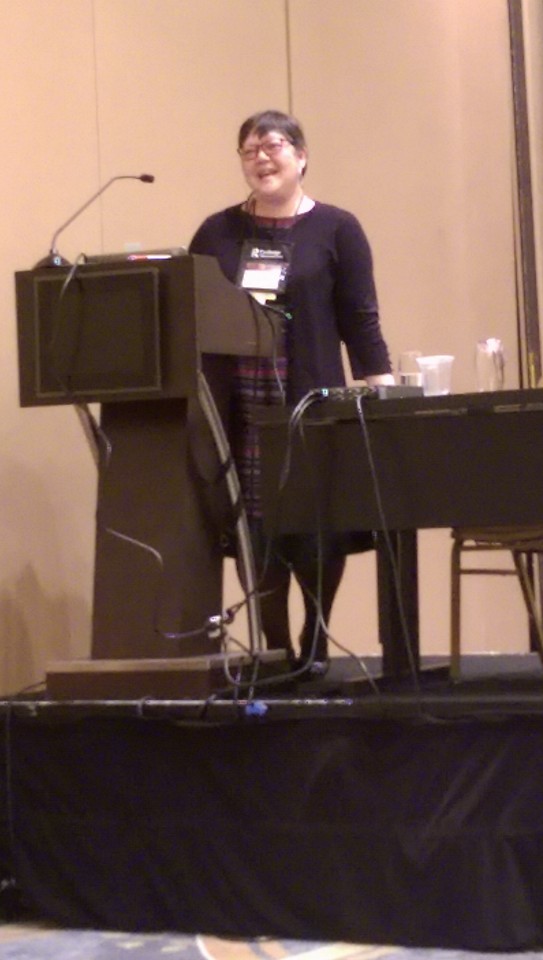
3. I was very fortunate to have the opportunity to listen to the presidential lecture  for Division K hosted by Dr. Lin Goodwin, Teachers College Columbia University.  A remarkable speaker who not only inspires with her words but truly challenged me to think about what quality teacher education requires. What I like most about Dr. Goodwin is her genuine nature. A distinguished academic and also a beautiful human being. Here are some pictures from her talk including slides from her presentation.

12998610_10156947381220121_6198746793740451746_n

13015255_10156947381525121_6392246007407300412_n13043368_10156947381450121_231103480067251929_n12994363_10156947381300121_7467634140817060326_n13012864_10156947381375121_7210803705214951729_n

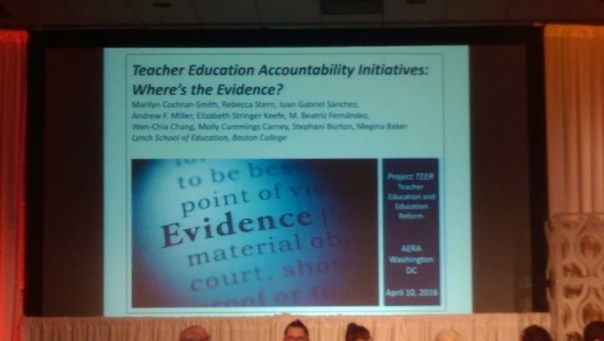
4. Yet another interesting Presidential session with Wayne Au, Marilyn Cochran-Smith, Kevin Kumashiro (and others) that explored policy and standards in Teacher Education. Laden with some controversial findings for the testing systems for new teachers and teacher education programs, the presentations were provocative and interesting:

13055504_10156947381160121_3248944785834068614_n13012858_10156947381050121_2214069562201491393_n

5. The last session I would like to share is one where we presented at the Constructivist SIG. A lovely group of people from across North America, we exchanged ideas of what it means to teach in constructivist ways. Our team leader Dr. Clare Kosnik presented work from the Literacy Teacher Education research and presented on a group of literacy teacher educators who had strong constructivist pedagogies.

Finally, AERA is held at such interesting places. One has to take some time to enjoy the beauty of the district and take in some of the sights.

Social Justice Study at AREA

I was once again thrilled to attend the AERA conference this past week.  It is such a remarkable opportunity- so many knowledgeable and committed educators from around the world.  Quite inspiring.  At the conference this year, one consistent theme emerged in the sessions I attended: Know your students. One particular study in a session entitled Preparing Preservice Teachers to Teach for Social Justice, resonated with me quite profoundly.  The study was called Candidate Change in a Community -Engaged Teacher Education Program and was led by Patricia Clarke from Ball State University.  Patricia maintained, ” a good teacher must understand the context in which a child lives grows and learns.”

Her team conducted a study which examined: preservice teacher candidates’ attitudes towards diversity and community, and how they changed over the course of a semester-long community-engaged experience. As teacher candidates came to know the community in which they were working, their expressed attitudes and beliefs changed from explicit statements of bias and stereotype to ones that sought community involvement and social action. 

This teacher education program at Ball University emphasized community involvement by holding classes in local community centers (as opposed to the university).  Student teachers also attended the local church on Sundays to be part of the community gatherings.  The teacher educators arranged for “community ambassadors” to welcome the student teachers to their neighborhood and guide the student teachers throughout their weeks in the school.  The results were remarkable.  The student teachers moved from “being nervous” and “afraid” in the neighborhood to feeling like a community member.

Patricia closed her session with a sweet anecdote shared by one of her student teachers, which I will share with you here. The student teacher was working in a class of grade two students and asked the children to share the markers.  She handed the basket of markers to the child beside her who seemed a bit confused.  Remembering what she had experienced the previous Sunday when she  attended the community church with the children, she said, “pass the basket like you do at church.” The child nodded, and said “Hallelujah!”  all the of the children immediately responded with “Praise be the Lord!” and they promptly passed the basket of markers around the circle. The student teacher was somewhat surprised by the response, but because of her inclusion in the community completely understood why the children responded they way they did.  She smiled, nodded, and continued on with the lesson.

basket

The commitment of the teacher educators in this program was outstanding and quite inspirational.  I sincerely hope teacher education programs worldwide can learn from not only this study, but the model of teacher education Ball University has implemented.

Arriving in Washington DC

AERA_Logo

I (Cathy) am delighted to be arriving in Washington D.C. today to attend the American Educational Research Association Conference.  I will be presenting a paper entitled, Examining the Influences: Literacy Teacher Educators who us a Multiliteracies Approach. This study is a subset of a larger study on which I have been a researcher.  I examined 7 participants who demonstrated a proclivity toward multilitercies.  As I used a grounded theory approach (which does not begin the research with a hypothesis) I was  both intrigued and surprised by the findings.   Hope you can join me on Monday, April 11, 11:45am to 1:15pm, at the Marriott Marquis, Level Three, Mount Vernon Square.

Abstract:

According to Dewey (1974) “[e]ducation, experience, and life are inextricably intertwined”.  This study examined how early life experiences and other influences affected the practices of 7 literacy teacher educators (LTEs) who currently enact a multiliteracies approach.  Early childhood experiences, mentors along their journey, personal and professional turning points, and developing notions of literacy were explored.  Three findings (a) an innate love of language/literature, (b) inspiring mentorship, and (c) a unique set of dispositional qualities were significant contributing factors to these literacy teacher educators adopting a multiliteracies approach. The participants for this study were a subset from a large-scale study entitled, Literacy Teacher Educators: Their Backgrounds, Visions, and Practices which examines the lives of teacher educators from four countries:  Canada, the USA, England and Australia.   

Hope you can join me!

http://www.aera.net/EventsMeetings/tabid/10063/Default.aspx


Finns aren’t what they used to be


I (Clare) came across this interesting article on Finland by Sean Couglan from the BBC. . But unlike most other articles it is a “counter point” to the Finnish miracle. Thought you might find it interesting. http://www.bbc.com/news/business-32302374·

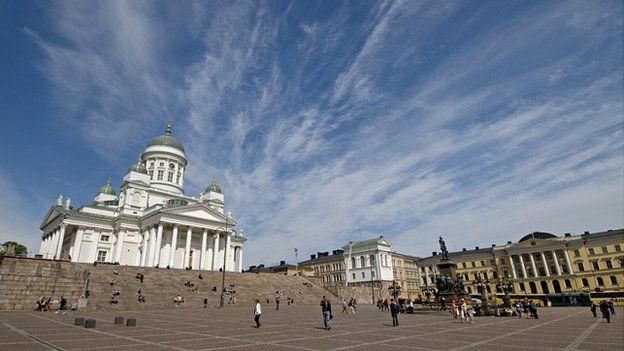
No international education conference is complete without a reference to Finland._82320693_helsinkibbc

Ever since it appeared at the top of international league tables more than a decade ago, it has been endlessly hailed as how to run an education system.

Finland, which faces a general election this week, has been the poster child for education reform and overseas delegations have made pilgrimages to learn from its example.

In particular it has been used to argue that you can have high results without an overbearing system of testing and inspection.

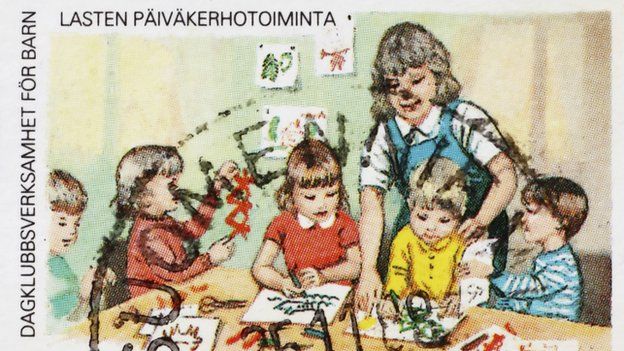
It was the country where pupils did not have to start school until they were seven, enjoyed the longest holidays and then basked in the glow of global approval when they topped the tables in the international Pisa tests. _82320689_finnishstamp

But is the gloss coming off the image of Finland as an education superpower?

More like an Asian tiger

A study from Gabriel Heller Sahlgren, director of research at the Centre for Market Reform of Education, argues that Finland’s education standards are in decline.

He says it is a misunderstanding of Finland’s success to attribute it to a liberal culture without league tables or a formal curriculum and giving much autonomy to teachers.

Finland faces a general election this week

In a report published by the right-wing think tank the Centre for Policy Studies, Mr Sahlgren argues that Finland’s star performance in the 2000 Pisa tests was built on the legacy of an older, very traditional education system, which had been part of the country’s process of nation building.

But this wasn’t the image of Finland wanted by education experts, he says. Instead, when Finland was the top performer in Europe, it was used as a “counter-argument” to the success of east Asian school systems in Singapore, Shanghai and Hong Kong.

While they were seen as successful because of hard work and grindingly long hours, Finland was seen as the way to achieve success with a much more creative and less centralised approach.

Mr Sahlgren, based at the London School of Economics, says there was “never any real evidence” for such an impression.

“It was simplistic, looking at how Finland’s system looked today, without looking at its history.”

Finland’s school system became part of its building of a national identity

Rather than being the opposite of east Asian countries, he says in many ways Finland was like those emerging economies.

Compared with its Nordic neighbours, Finland was a “late developer”, much poorer and with lower levels of education in the early part of the 20th Century.

Finland’s approach of investing heavily in education and seeing rapid improvements was in many ways more like the pattern of Tiger economies in east Asia than the more sluggish progress in western Europe.

‘Fairy stories’

Mr Sahlgren’s research argues there is a reluctance to accept that Finland’s education system, under which many of its successful teachers had trained, had been very structured and centralised.

IFinland has been the European country that matched East Asian countries in education tests

He quotes a research group from the UK visiting schools in Finland in 1996, a few years before the Pisa tests brought the world’s attention to the country’s schools.

“We have moved from school to school and seen almost identical lessons, you could have swapped the teachers over and the children would never have noticed the difference,” said the researchers from the University of East Anglia, observing Finnish classrooms.

Another study challenges what it calls the “misconceptions and misrepresentations” about Finland’s success in the Pisa tests.

Tim Oates, director of assessment research for the Cambridge Assessment exam group, has published a study called “Finnish fairy stories”, in which he debunks what he claims are myths about the Finnish system.

‘Education tourism’

He says the waves of “education tourism” that followed the success in Pisa tests failed to look at how the system had improved.

Image captionHow much of Finland’s success was the legacy of an earlier, more traditional school system?

“They got off the plane and asked the Finns about the system in 2000 – not what it was like during the 1970s and 1980s, when standards were rising.”

He also warns of a tendency for people to use Finland’s school system as a way of confirming what they want to find.

The claim that Finland does not have an Ofsted-style inspection and national testing is an incomplete picture, says Mr Oates. He says there has been a strong system of accountability and inspection and gathering of data.

The difference from a system such as England, says Mr Oates, is how the information is used – for example in Finland exam results are not published in school league tables as they are in England.

Pisa tests 2012 top 10
Reading Maths
1. Shanghai 1. Shanghai
2. Hong Kong 2. Singapore
3. Singapore 3. Hong Kong
4. Japan 4. Taiwan
5. South Korea 5. South Korea
6. Finland 6. Macao
7. Ireland 7. Japan
8. Taiwan 8. Liechtenstein
9. Canada 9. Switzerland
10. Poland 10. Netherlands

It is also misleading to think there are not high-stakes exams or academic selection, he says, with entrance to some secondary schools being determined by test scores.

And Mr Oates argues it is “hopeless myopia” to see Finland’s system as a model of high levels of autonomy.

Finland is facing another set of controversial changes, away from traditional subject teaching. And Mr Sahlgren warns of a school system in decline. It is no longer in the top 10 for maths in Pisa tests, having been in second place in 2003 and 2006.

Andreas Schleicher, the OECD’s director of education and the creator of the Pisa tests, rejects this analysis.

“In the 1960s, Finland was an average performer at best and that was when it had a very traditional education system,” says Mr Schleicher.

“Finland changed its system only in the late 1970s and 1980s and that’s when we saw the results rise. The most recent decline is quite modest,” he said.

Mr Oates says the problem has been that people have used Finland as a way of discussing their own national education debates, without really thinking about what made Finland different.

“People have been seriously misled by stories told by people who have looked at Finland through their own, restricted lens,” he says.